The Complete Guide to Precious Metals Refining
Precious metals have served as the foundation of global finance, industrial innovation, and cultural expression for millennia. However, the gold, silver, and platinum group metals (PGMs) that circulate in our economy rarely exist in their pure state. Whether pulled from the depths of a mine or salvaged from a discarded smartphone, these metals are almost always bonded with impurities, base metals, or other minerals.
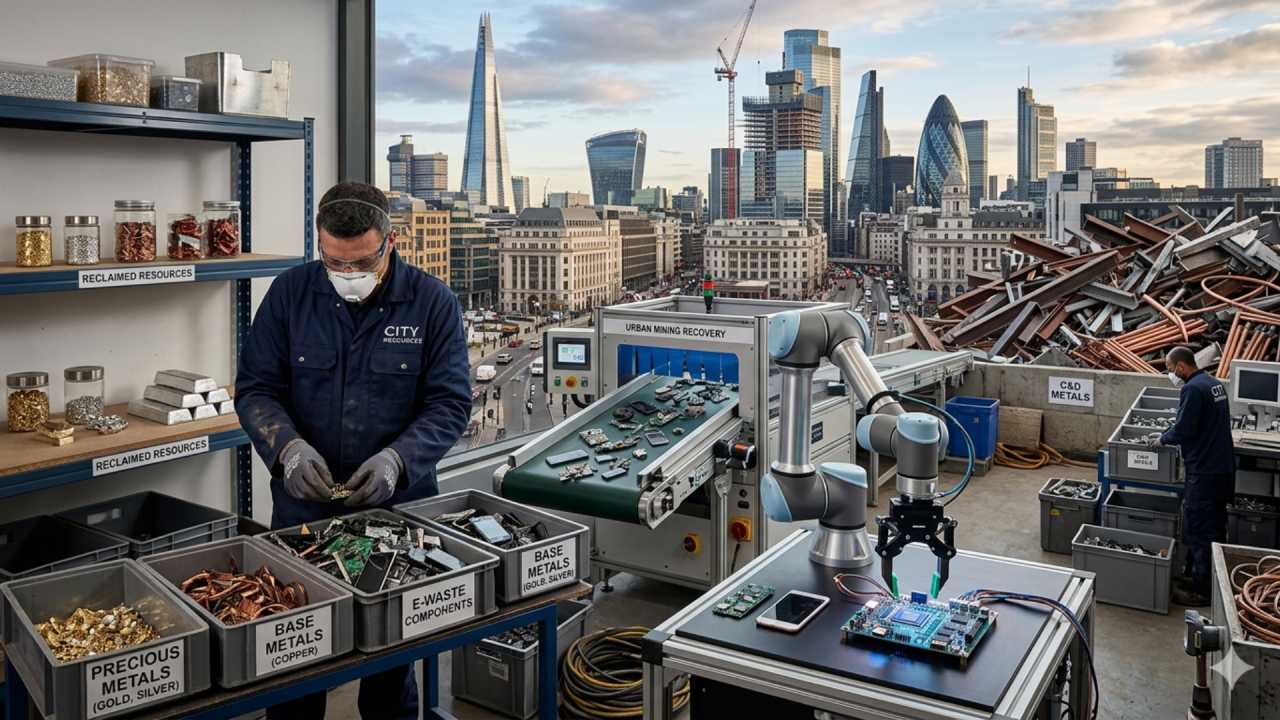
Precious metals refining is the sophisticated industrial process of separating these high-value elements from impurities to achieve a standardized level of purity. This process is the invisible engine of the jewelry trade, the electronics industry, and the investment market. As natural ore grades decline and the global emphasis on sustainability grows, the ability to efficiently recover and purify these metals from secondary sources—often called “urban mining”—has become more critical than ever.
This guide provides a comprehensive deep dive into the world of precious metals refining, exploring the science, the economics, and the industrial standards that govern how the world’s most valuable elements are purified for reuse.
What Is Precious Metals Refining?
To understand refining, one must first distinguish it from smelting. While the terms are often used interchangeably in casual conversation, they represent distinct stages of metallurgical processing. Smelting is the initial process of melting ore or scrap to separate the metal from the rock or “slag.” The result of smelting is often a “doré bar”—a semi-pure alloy that contains a mix of precious and base metals.
Refining is the subsequent step. It is the process of taking that semi-pure material and removing every trace of unwanted elements until the metal reaches a commercially recognized purity level, such as 99.9% (three-nines fine) or 99.99% (four-nines fine).
Measuring Purity
In the refining world, purity is expressed in three primary ways:
-
Karat: Used primarily in jewelry (e.g., 24k is pure gold, while 14k is 58.3% gold).
-
Fineness: Expressed as a decimal or parts per thousand (e.g., .999).
-
PPM (Parts Per Million): Used in industrial and high-tech applications where even trace impurities can alter the conductivity or chemical reactivity of the metal.
Why Refining Matters
The primary purpose of refining is standardization. An investor buying a gold bar needs to know that the weight consists entirely of gold, not a mixture of copper and silver. Similarly, industrial manufacturers require specific purities for catalytic converters or semiconductors to ensure performance. Beyond commerce, refining is a cornerstone of the circular economy. Metals like gold and platinum are infinitely recyclable; once refined, a Roman coin is chemically indistinguishable from gold recovered from a modern circuit board.
Types of Materials That Can Be Refined
The feedstock for a refinery is generally categorized into primary and secondary sources.
Primary Sources
Primary refining deals with material directly from the earth. This includes:
-
Mined Ore: Raw rock containing trace amounts of metal.
-
Concentrates: Partially processed ore where the metal content has been increased through flotation or gravity separation.
-
Doré Bars: Rough bars produced at the mine site, typically consisting of 60-90% gold or silver.
Secondary Sources (Recycling)
The majority of modern refining volume comes from secondary sources, which are often more concentrated than raw ore.
-
Jewelry Scrap: Broken chains, rings, and manufacturing leftovers (polishing dust and “sweeps”).
-
Electronic Waste (e-Waste): Circuit boards, CPUs, and connectors. While the amount of gold per device is small, the sheer volume of global e-waste makes this a massive source of metal.
-
Catalytic Converters: A primary source for Platinum, Palladium, and Rhodium.
-
Dental Scrap: Old crowns and bridges often contain high-grade gold and PGM alloys.
-
Industrial Scrap: Spent catalysts from the pharmaceutical or petroleum industries and silver from x-ray films (though film recycling has declined in the digital age).
The Precious Metals Refining Process
The journey from “scrap” to “pure” is a multi-stage process involving physics, chemistry, and extreme heat.
1. Collection and Sorting
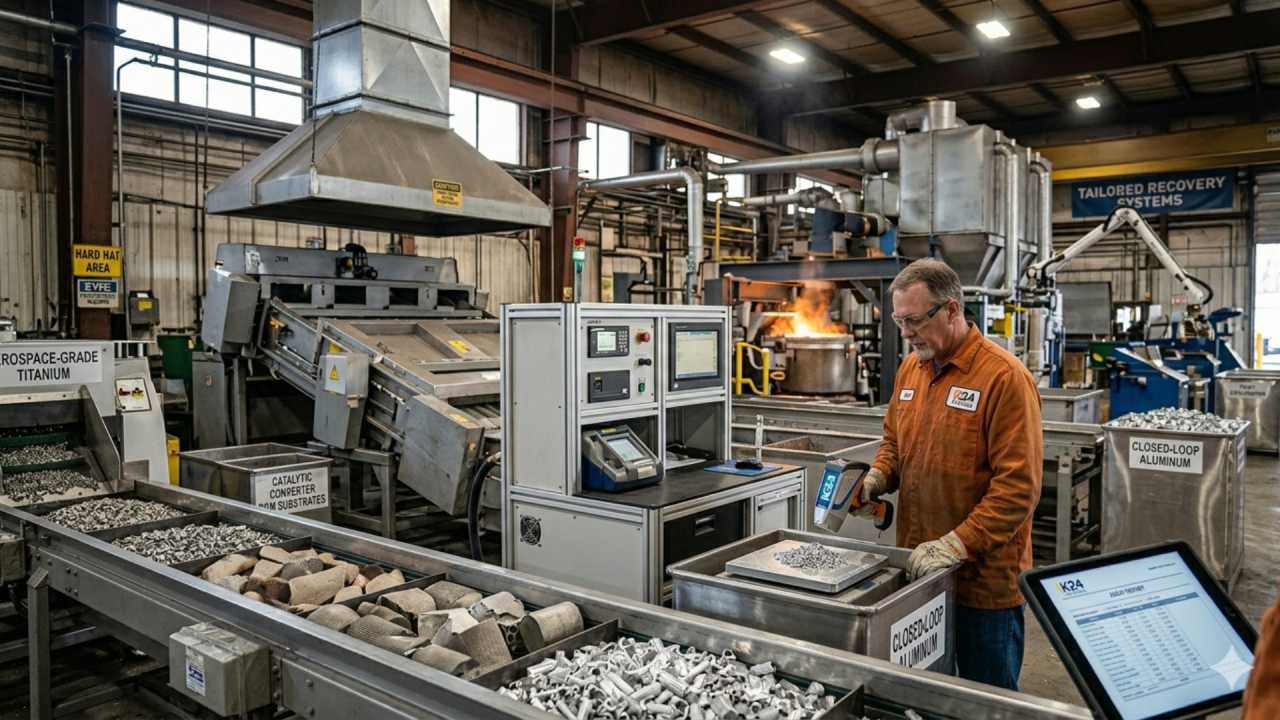
The first step is logistical. Materials must be categorized by their expected metal content. For example, high-grade jewelry scrap is processed differently than low-grade electronic waste. During this stage, refineries use various non-destructive tests, such as magnetic testing and acid stone tests, to perform a preliminary sort.
2. Sampling and Assaying
Before a refinery can pay a client, they must determine exactly how much precious metal is present. This is done through “assaying.”
-
Fire Assay: The “gold standard” of testing. A small sample is melted with lead oxide and fluxes. The precious metals collect in a lead button, which is then heated in a cupel (a bone-ash cup) that absorbs the lead, leaving a tiny bead of pure precious metal to be weighed.
-
XRF (X-Ray Fluorescence): A handheld or benchtop device that shoots X-rays at the metal and measures the returning signals to identify elements. It is fast but only measures the surface of the metal.
-
ICP (Inductively Coupled Plasma): A sample is dissolved in acid and turned into an aerosol, which is then passed through a plasma torch. The light emitted by the atoms identifies the elements and their concentrations with extreme precision.
3. Smelting
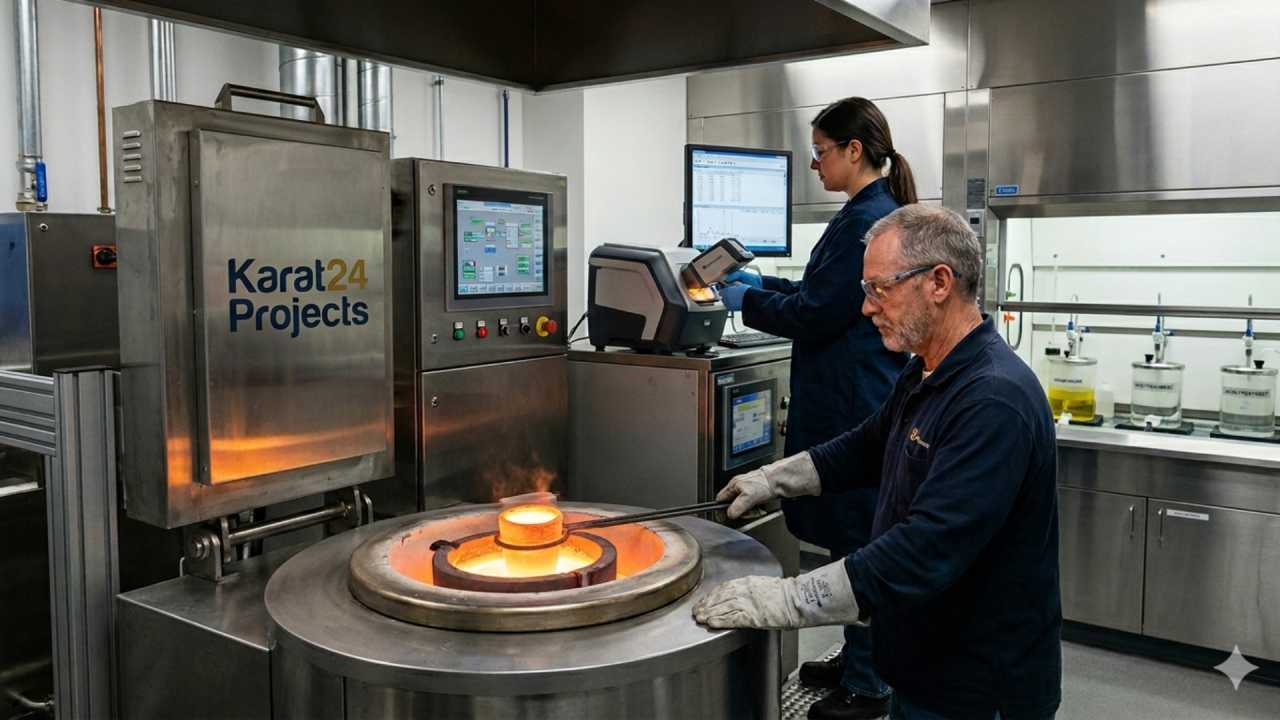
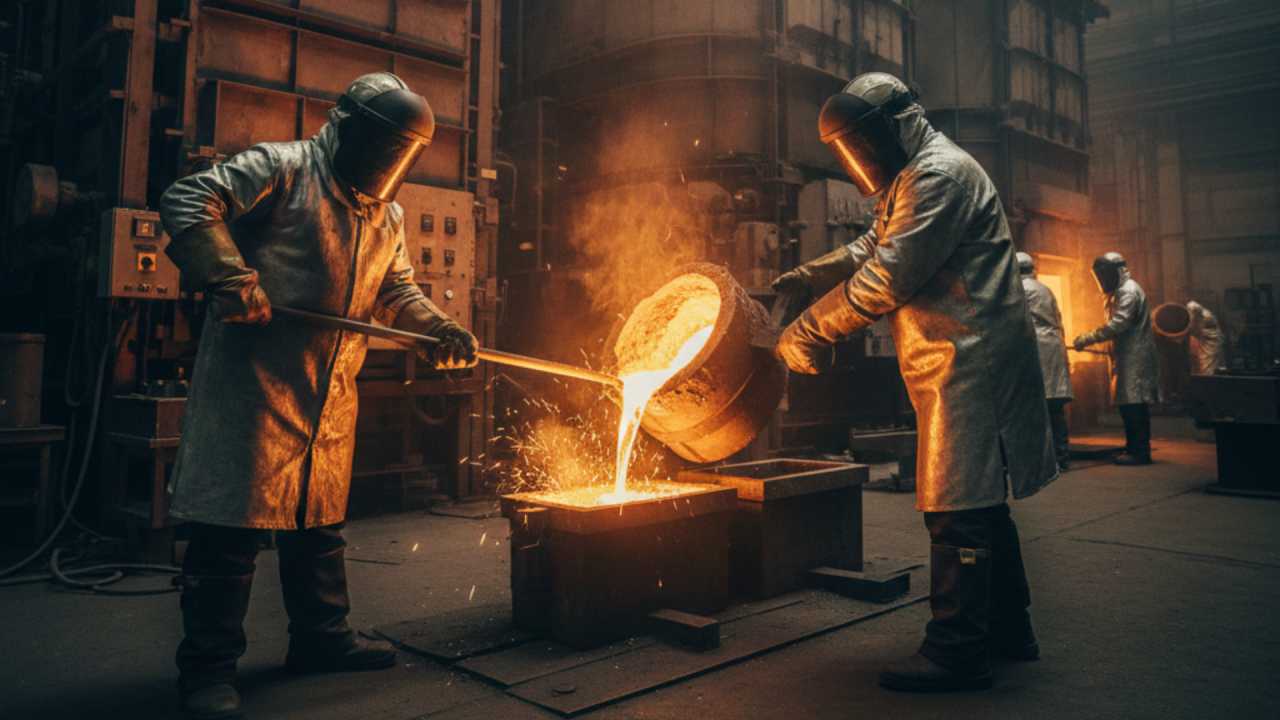
Once the value is established, the material is smelted. In a furnace, the scrap is melted with “fluxes”—chemical agents like borax or soda ash—that bind to impurities like sand, plastic, or base metals. These impurities form a liquid layer called slag, which floats to the top and is poured off, leaving the concentrated metal alloy behind.
4. Chemical Refining Methods
Once the base metals are largely removed, the alloy undergoes chemical separation.
Pyrometallurgical Refining
This involves high-temperature processes where oxygen or other gases are blown through the molten metal to oxidize remaining base metals. While effective for bulk processing, it is often followed by chemical methods to reach high purity.
Hydrometallurgical Refining
This is the most common method for high-purity gold and silver. It uses liquid chemicals to dissolve the metal into a solution.
-
Aqua Regia: A mixture of nitric and hydrochloric acid. It is one of the few substances that can dissolve gold. Once in liquid form, a precipitant (like sodium metabisulfite) is added, which causes the gold to turn back into a solid powder, leaving other metals in the liquid.
-
Nitric Acid: Primarily used to dissolve silver and base metals while leaving gold intact as a solid.
Electrolytic Refining
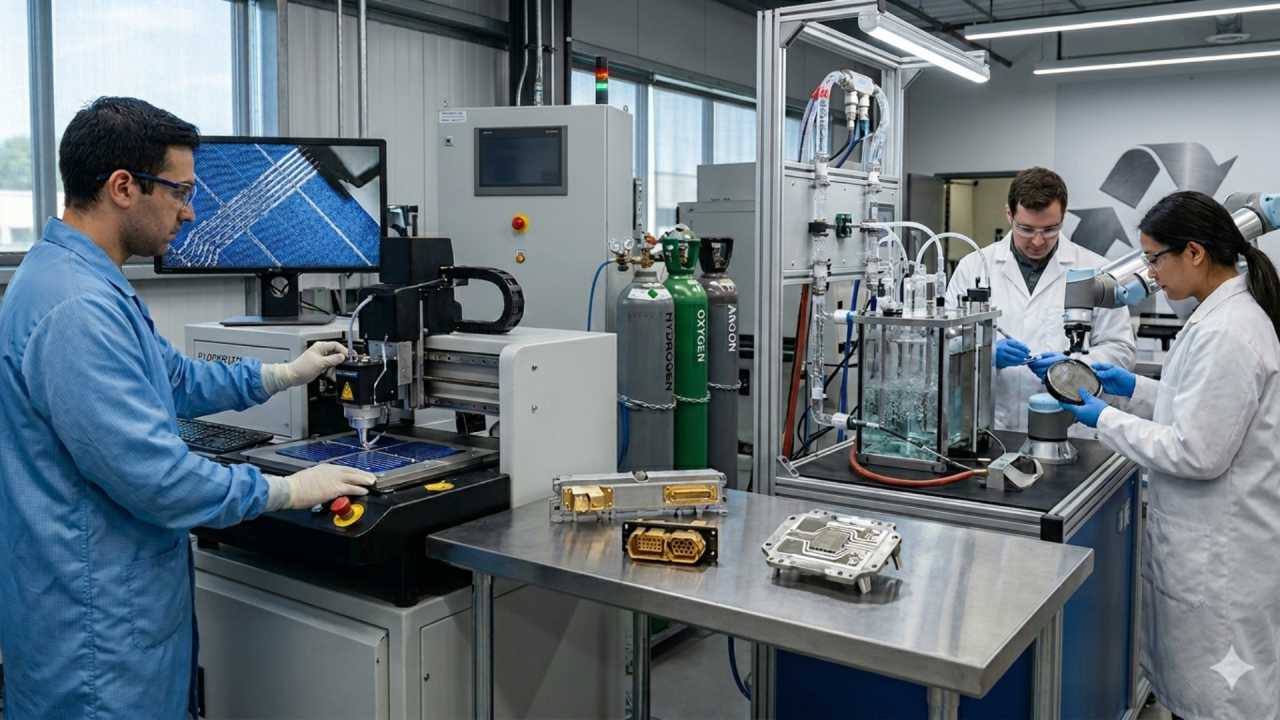
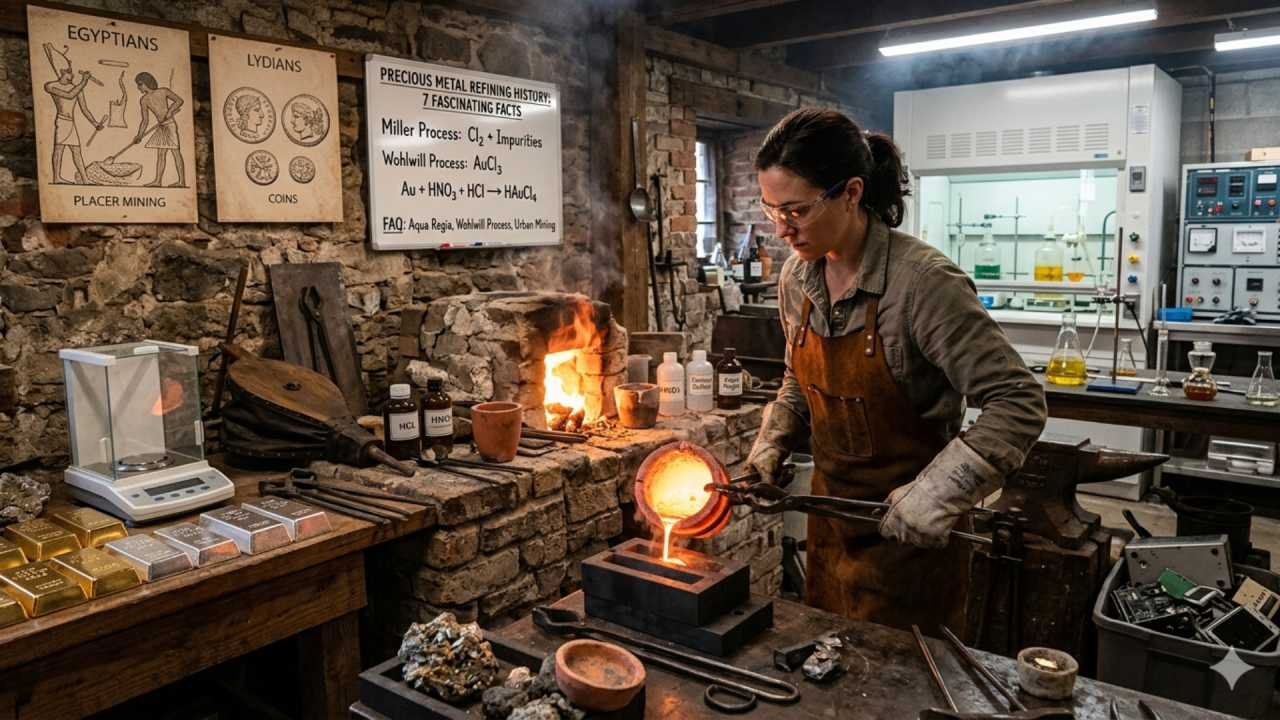
For the highest levels of purity (99.99%), electrolysis is used. In a gold electrolysis cell (the Wohlwill process), a semi-pure gold bar acts as an anode and a thin sheet of pure gold acts as a cathode. When an electric current is applied, gold ions migrate from the anode to the cathode, leaving impurities behind as “anode slime.”
5. Final Purification and Casting
The resulting pure metal is then converted into a marketable form. Depending on the client’s needs, it may be cast into large investment bars, small minted bars, “grain” (small shots used by jewelers), or even fine powders for industrial pastes.
Methods for Specific Precious Metals
Each metal has unique chemical properties that dictate how it must be refined.
Gold Refining
Gold is often refined using the Miller Process or the Wohlwill Process. The Miller Process uses gaseous chlorine to remove impurities while the gold is in a molten state. It is fast and can reach 99.5% purity. To reach 99.99%, the electrolytic Wohlwill process mentioned above is required.
Silver Refining
Silver is most commonly refined through electrolytic refining using a silver nitrate solution. The process is similar to gold electrolysis but specifically tuned to the electrochemical properties of silver.
Platinum Group Metals (PGMs)
Platinum, Palladium, and Rhodium are notoriously difficult to refine. They have extremely high melting points and are chemically similar to one another, making separation complex. Refining PGMs usually involves a series of solvent extractions and ion-exchange processes. Because of the technical difficulty and the amount of chemicals required, PGM refining is significantly more expensive and time-consuming than gold or silver refining.
Environmental and Safety Considerations
Precious metals refining is a chemically intensive industry. The acids used—nitric, hydrochloric, and sulfuric—are highly corrosive and dangerous to handle. Furthermore, the smelting process can release toxic fumes, including lead, arsenic, and mercury, depending on the feedstock.
Safety Protocols
Modern refineries employ advanced “scrubbers” and filtration systems to neutralize acidic vapors and capture airborne metal particles before they leave the facility. Wastewater treatment is also a critical component; refineries must ensure that no heavy metals or toxic chemicals enter the local water supply.
The Green Aspect
Despite the chemical risks, refining is an environmental net positive. Mining new gold is incredibly energy-intensive and often involves the destruction of large tracts of land. In contrast, refining recycled gold uses a fraction of the energy and prevents electronic waste from leaching toxins into landfills. This “circular economy” approach is becoming a major selling point for brands that want to market “sustainable jewelry” or “green tech.”
The Economics of Precious Metals Refining
Refining is a low-margin, high-volume business. For a refinery to be profitable, it must be highly efficient in its recovery rates and precise in its measurements.
Fee Structures
Refiners typically charge in three ways:
-
Treatment Charges: A flat fee per kilogram or ounce of material processed.
-
Refining Charges: A fee based on the amount of pure metal recovered.
-
Account Interest/Holding Fees: If the refiner holds the metal for the client for an extended period.
Many refineries also take a “percentage of recovery.” For example, if a batch of e-waste contains 100 ounces of gold, the refiner might return 98 ounces to the client, keeping 2 ounces as payment for their services.
Market Factors
The profitability of refining is heavily tied to the “spot price” of metals. When the price of gold or rhodium spikes, refineries often see an influx of scrap as people look to cash in. Conversely, when prices are low, the volume of secondary material can dry up. Professional refiners often use “hedging”—financial contracts that lock in a price—to protect themselves from market volatility during the days or weeks it takes to process a batch of metal.
How to Choose a Precious Metals Refiner
For a jeweler or industrial manufacturer, the choice of a refining partner is a high-stakes decision. Thousands of dollars can be lost through inaccurate assays or hidden fees.
Key Criteria for Selection
-
Accreditation: Look for refineries that are members of the London Bullion Market Association (LBMA) or are ISO certified. These certifications indicate that the refinery adheres to strict standards regarding purity, ethical sourcing, and financial stability.
-
Transparency: A reputable refiner will provide a detailed settlement report showing the incoming weight, the assayed content, the recovery rate, and the specific fees charged.
-
Turnaround Time: In a volatile market, time is money. A refiner that takes six weeks to settle a batch exposes the client to significant price risk.
-
Security and Insurance: Ensure the refiner has comprehensive insurance coverage for the material while it is in transit and on their premises.
-
Environmental Compliance: Working with a refiner that flouts environmental laws can lead to “reputational contagion,” where your business is blamed for supporting a polluter.
Future Trends in Precious Metals Refining
The refining industry is currently undergoing a period of rapid technological evolution.
Urban Mining and e-Waste
As the world shifts toward renewable energy and electric vehicles (EVs), the demand for silver, copper, and PGMs is skyrocketing. Traditional mining cannot keep up, leading to a massive push for “urban mining.” We are seeing the development of more efficient chemical processes specifically designed to extract gold and palladium from the complex plastics and resins found in modern electronics.
AI and Automation
Artificial intelligence is being used to improve the sorting of scrap. Advanced optical sensors coupled with AI can identify different types of circuit boards or catalytic converters faster and more accurately than human sorters, ensuring that each batch goes to the optimal refining line.
Supply Chain Transparency and Blockchain
There is an increasing demand for “traceable” metal. Consumers want to know that the gold in their wedding ring didn’t fund a conflict or involve child labor. Some refineries are now using blockchain technology to create a digital “birth certificate” for every bar of metal they produce, documenting its journey from the source to the final product.
Final Thoughts
Precious metals refining is much more than just melting down old jewelry. It is a highly technical, essential industry that bridges the gap between raw, impure materials and the high-standard commodities required by the global market. As our world becomes more technologically advanced and environmentally conscious, the role of the refiner will only become more prominent.
Whether you are an investor looking to understand the provenance of your bullion, a jeweler seeking to maximize the return on your scrap, or an industrialist sourcing materials for the next generation of green technology, understanding the refining process is key to navigating the precious metals landscape. By prioritizing transparency, chemical precision, and environmental responsibility, the refining industry ensures that these “noble” metals continue to serve the needs of humanity for generations to come.