
Precious Metals Refining: From Scrap to Pure Metal
The gleam of a gold bar or the mirror-like finish of a platinum ring represents more than just aesthetic beauty or financial wealth. In the modern era, these objects represent the culmination of a sophisticated, multi-stage industrial journey. While much of the world’s precious metal supply has historically originated from deep-earth mining, the tides are shifting. Today, every discarded smartphone, every broken jewelry clasp, and every retired automotive catalytic converter holds a hidden treasure.
Precious metals—specifically gold, silver, and the platinum group metals (PGMs)—are finite resources. As ore grades in traditional mines decline and the environmental costs of extraction rise, the refining of scrap material has transitioned from a niche secondary market to a cornerstone of the global economy. This process, known as secondary refining or “urban mining,” is the art and science of taking what the world considers “waste” and restoring it to its highest purity.
From the circuit boards of high-performance servers to the dental alloys of the past century, the journey from scrap to pure metal is a testament to human ingenuity. This article explores the technical, economic, and environmental landscapes of precious metals refining, detailing how we recover the world’s most valuable elements to fuel the technologies of tomorrow.
What Are Precious Metals and Why Are They Valuable?
To understand the refining industry, one must first understand the unique properties that elevate certain metals above the rest of the periodic table. Precious metals are rare, naturally occurring metallic chemical elements of high economic value.
Key Precious Metals and Their Properties
-
Gold (Au): Perhaps the most iconic precious metal, gold is prized for its extreme resistance to corrosion and oxidation. It is the most ductile and malleable of all metals, making it indispensable in electronics where reliable, long-term conductivity is required.
-
Silver (Ag): Silver possesses the highest electrical and thermal conductivity of any element, as well as the highest optical reflectivity. While widely used in jewelry and investment, its primary modern demand comes from the solar energy and electronics sectors.
-
Platinum (Pt) and Palladium (Pd): Part of the Platinum Group Metals (PGMs), these are famed for their catalytic properties. They can facilitate chemical reactions without being consumed, making them essential for reducing toxic emissions in vehicle exhaust systems.
-
Rhodium (Rh): Even rarer than gold or platinum, rhodium is used almost exclusively for its incredible ability to reduce nitrogen oxides in automotive emissions.
Industrial vs. Investment Demand
The value of these metals is dual-faceted. On one hand, they serve as a “safe haven” for investors and a hedge against inflation. On the other, they are “workhorse” materials for industry. For example, while gold bars sit in central bank vaults, microscopic amounts of gold reside in nearly every high-end electronic connector. This industrial demand creates a constant “churn” of material that eventually needs to be recovered and refined.
Scarcity and the Green Energy Transition
The scarcity of these metals is a primary driver of their price. For every ton of earth mined, only a few grams of gold or platinum might be recovered. As the world moves toward green energy—relying on silver for photovoltaic cells and PGMs for hydrogen fuel cells—the demand is projected to outpace primary mining supply. This makes the refining of scrap not just a business opportunity, but a strategic necessity for global technological stability.
Sources of Scrap Precious Metals
The “feedstock” for a refinery is incredibly diverse. Unlike a mine, which processes a consistent type of ore, a refinery must be equipped to handle materials ranging from liquid chemical waste to solid metal alloys.
1. Jewelry Scrap
This is the most traditional source of scrap. It includes “post-consumer” waste—broken chains, single earrings, and outdated styles—as well as “industrial” jewelry scrap like the metal dust (lemel) and off-cuts produced by goldsmiths during the manufacturing process.
2. Electronic Waste (E-waste)
E-waste is the fastest-growing source of scrap precious metals. A typical smartphone contains gold, silver, palladium, and copper. While the amount per device is tiny, the sheer volume of billions of devices makes this a massive reservoir of value. High-grade e-waste, such as server motherboards and telecommunications equipment, contains significantly higher concentrations of precious metals than low-grade consumer appliances.
3. Automotive Scrap
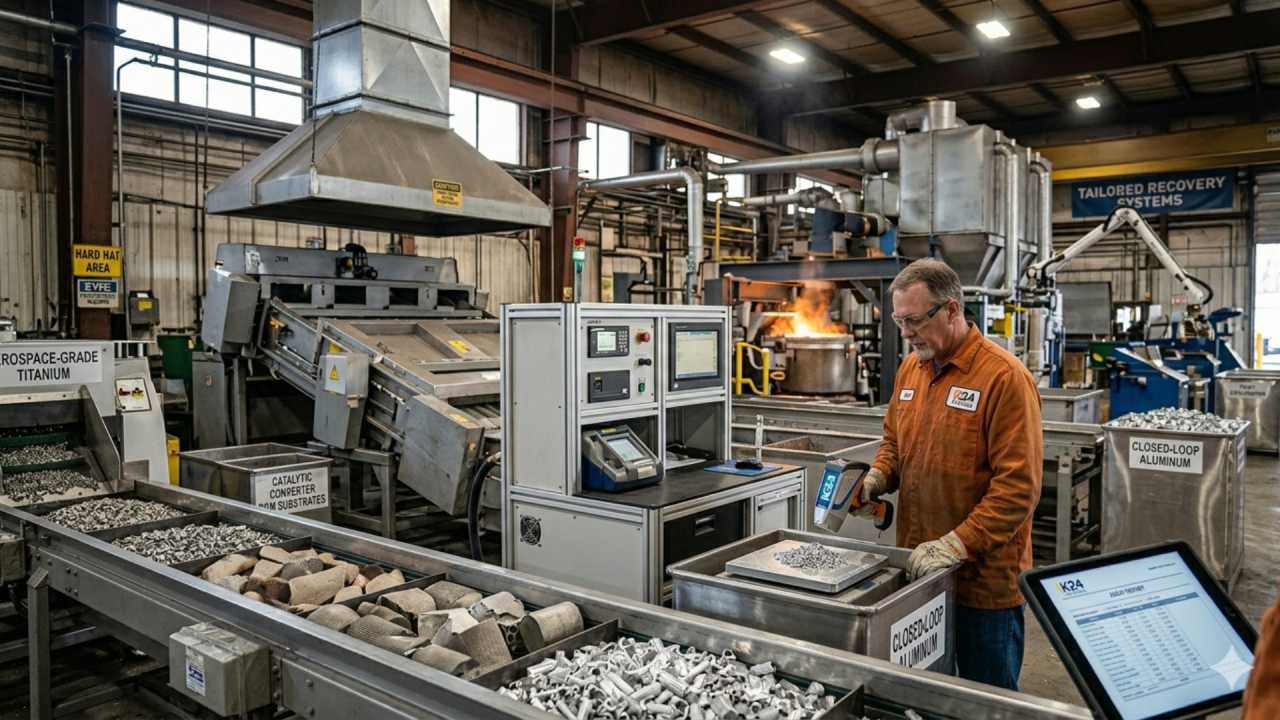
The primary focus here is the catalytic converter. These devices contain a ceramic honeycomb structure coated with platinum, palladium, and rhodium. As vehicles reach the end of their lives, these converters are harvested. Because PGM prices can be extremely high (rhodium, in particular, has seen prices exceeding $10,000 per ounce), this is a high-stakes sector of the refining industry.
4. Industrial and Medical Scrap
Many industrial processes use precious metal catalysts that eventually become “spent” or poisoned. Similarly, the medical and dental fields contribute scrap in the form of silver-bearing X-ray films (though declining due to digital imaging), dental crowns, and platinum-tipped medical devices.
5. Investment Scrap
When investors sell back bullion bars or coins that are damaged or no longer meet “Good Delivery” standards, these items are sent back to the melting pot to be recast into new, certified products.
The Precious Metals Refining Process: Step-by-Step
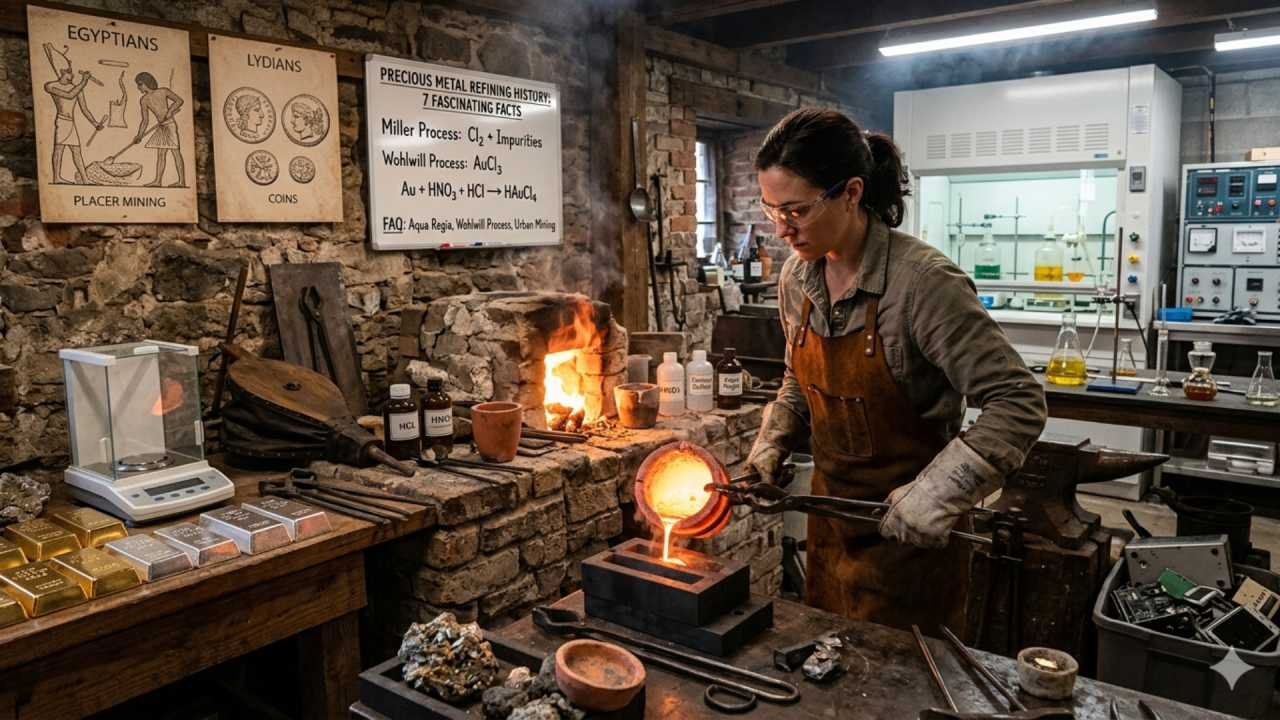
The transformation of heterogeneous scrap into 99.99% pure metal is a complex sequence of mechanical, thermal, and chemical stages. Each step is designed to strip away impurities until only the target atoms remain.
Step 1: Collection and Sorting
The process begins with the rigorous classification of incoming material. Refiners must separate scrap by its “base” (the primary material holding the precious metal). Mixing jewelry with e-waste, for example, would make the subsequent chemical processes inefficient. During this stage, initial weight measurements are taken, and a preliminary estimation of metal content is made.
Step 2: Pre-Treatment
Before any chemistry can happen, the material must be prepared.
-
Shredding and Crushing: E-waste and catalytic converters are ground into fine powders to increase the surface area for chemical reactions.
-
Incineration: Organic materials, such as plastics in circuit boards or oils on industrial scrap, are burned off in controlled environments. The resulting ash contains the concentrated metal.
-
Magnetic Separation: Powerful magnets remove ferrous metals (iron and steel) that would otherwise interfere with the precious metal recovery.
Step 3: Smelting
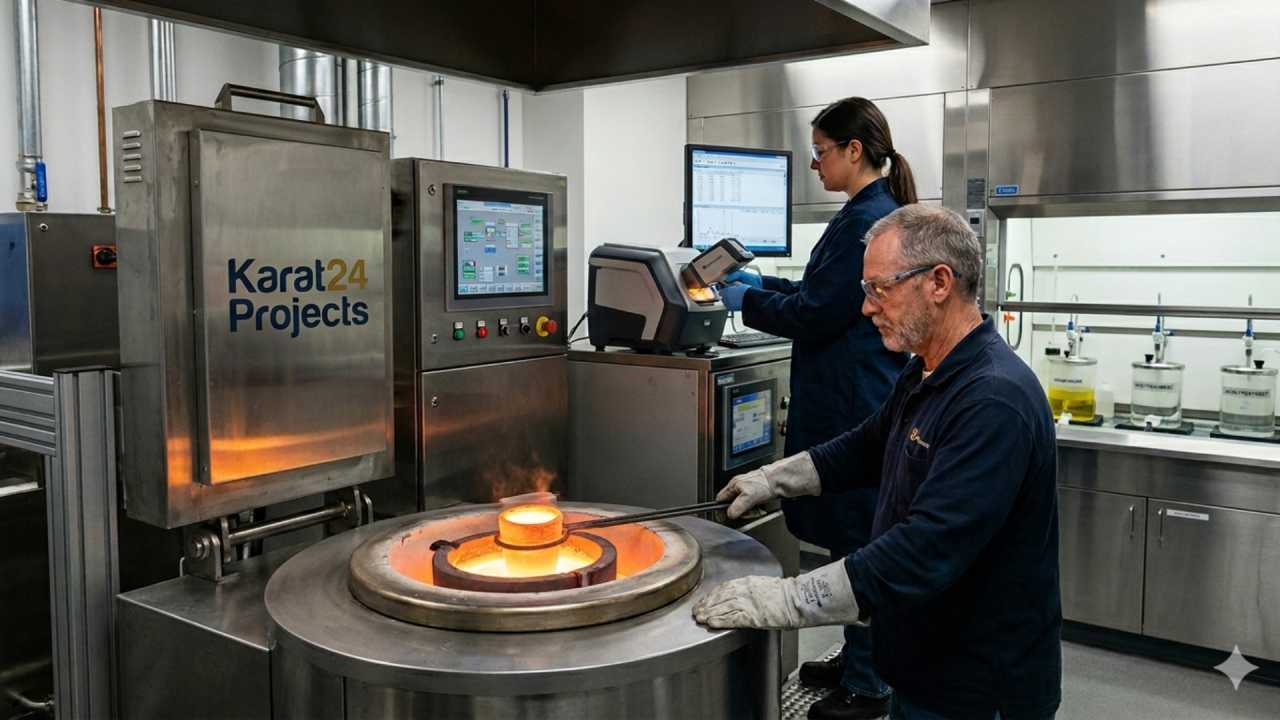
Smelting involves heating the scrap in a furnace to temperatures often exceeding 1,200 degrees Celsius.
-
Flux Addition: Chemical agents called “fluxes” (like borax or silica) are added to the molten mix. The flux binds with impurities (like sand, glass, or base metals) to form “slag.”
-
Separation: The precious metals, being heavier, settle at the bottom of the crucible or furnace, while the lighter slag floats to the top and is poured off. The result is a “doré bar”—a high-value alloy of various precious metals that is ready for final separation.
Step 4: Chemical Refining
This is where the distinct metals are separated from one another. Refiners use two primary methodologies:
Pyrometallurgical Methods
These rely on high heat and the differing melting points or oxidative properties of metals. An example is “cupellation,” where lead and other impurities are oxidized and absorbed, leaving behind a bead of precious metal.
Hydrometallurgical Methods
This is the modern standard for high-purity refining. It involves dissolving the metal into a liquid solution.
-
Aqua Regia: For gold, a mixture of nitric acid and hydrochloric acid (known as “Royal Water”) is used to dissolve the metal. Once in solution, a selective precipitant (like sodium bisulfite) is added, causing the gold to “drop out” of the liquid as a heavy brown sand, leaving other metals in the solution.
-
Solvent Extraction: This uses organic chemicals to pull specific metals (like palladium) out of a complex acidic mix.
Step 5: Electrorefining (Electrolysis)
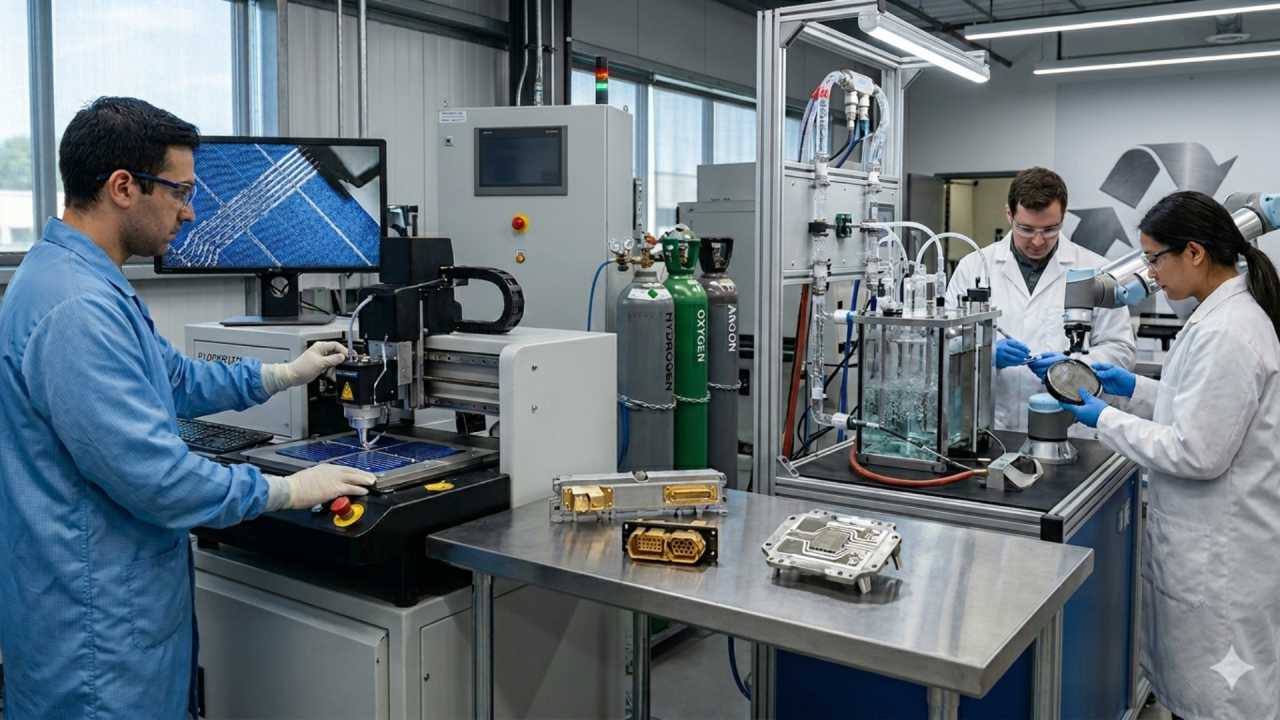
To reach the final “four-nines” (99.99%) purity, electrolysis is often employed. In the Wohlwill process for gold, an impure gold anode is placed in an electrolyte solution. When an electric current is applied, gold ions migrate to a pure gold cathode, while impurities either stay in the solution or fall to the bottom as “anode slime.” This slime is often collected and refined further, as it frequently contains other valuable metals like silver or platinum.
Step 6: Final Casting and Finishing
The purified metal is washed, dried, and melted one last time. It is then cast into its final marketable forms:
-
Bars: Ranging from 1-gram “biscuits” to 400-ounce “Good Delivery” bars.
-
Granules (Shot): Small grains used by jewelers for casting.
-
Sponge: A powdered form of PGMs often used in industrial chemical applications.
Assaying and Quality Control
In the refining world, trust is the primary currency. A refiner must prove exactly how much metal is in a batch to ensure fair payment to the supplier and to guarantee the quality of the final product.
Fire Assay
This is the “gold standard” of testing, used for centuries but still unsurpassed in accuracy. A small sample of the material is melted with lead and flux. The lead collects the precious metals and is then oxidized away in a cupel, leaving a tiny, pure bead of metal that is weighed on a microbalance to determine the original concentration.
X-Ray Fluorescence (XRF)
XRF is a non-destructive method where a device fires X-rays at a sample, causing it to emit fluorescent X-rays characteristic of the elements present. It is fast and excellent for initial sorting, though it only analyzes the surface of the metal.
ICP (Inductively Coupled Plasma)
For ultra-high precision, ICP-OES (Optical Emission Spectrometry) is used. The sample is turned into an aerosol and injected into a plasma torch. The light emitted by the atoms allows the refiner to detect impurities down to the parts-per-billion level. This ensures that a bar labeled 99.99% pure does not contain even a trace of harmful contaminants like lead or cadmium.
Environmental and Sustainability Impact
The environmental argument for refining is overwhelming. Traditional gold mining is one of the most carbon-intensive and ecologically disruptive industries in the world, often involving the movement of tons of earth and the use of cyanide or mercury.
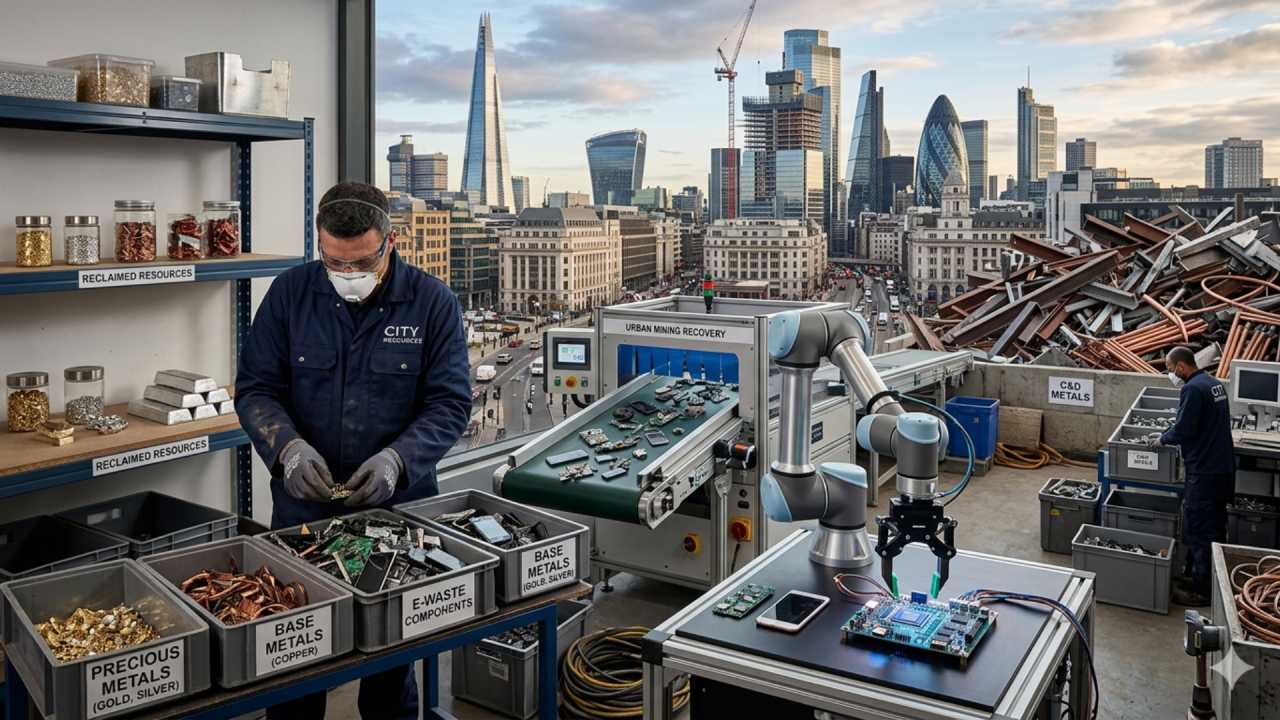
The Power of “Urban Mining”
Recycling gold requires roughly 90% less energy than mining an equivalent amount from the ground. By recovering metals from existing products, we reduce the need for new open-pit mines and tailings dams. This “circular economy” model ensures that once a metal is above ground, it stays in the productive loop indefinitely.
Mitigating Refining Risks
While refining is greener than mining, it is still a chemical-heavy industry. Modern refineries invest heavily in:
-
Scrubbers: Complex filtration systems that neutralize acidic vapors and prevent toxic gases from entering the atmosphere.
-
Water Treatment: Closed-loop systems that neutralize and filter process water, ensuring no heavy metals or acids reach the local water table.
-
Waste Management: The “slag” and “anode slime” produced during refining are often processed to recover base metals like copper and nickel, minimizing the final waste destined for landfills.
Economic Importance of Precious Metal Recycling
The refining industry acts as a massive shock absorber for the global economy. When precious metal prices spike, the volume of scrap entering refineries increases, providing a crucial secondary supply that prevents market shortages.
Supply Chain Stability
For industries like automotive manufacturing or semiconductor production, a steady supply of PGMs and gold is vital. Dependence on primary mines in geopolitically unstable regions can be risky. Secondary refining provides a localized, domestic source of these critical materials, enhancing national economic security.
Revenue and Job Creation
Refining is a multi-billion dollar global industry. It supports a vast ecosystem of “collectors”—from local “we buy gold” shops to large-scale industrial waste management firms. This creates jobs in logistics, chemistry, engineering, and finance. For businesses, implementing a precious metal recovery program can turn a “waste expense” into a “revenue stream.”
Challenges in Precious Metal Refining
Despite its importance, the industry faces significant hurdles.
-
Complexity of Modern Scrap: As devices get smaller and more complex, the “dilution” of precious metals increases. Recovering gold from a 1990s desktop computer is much easier than recovering it from a modern, glue-sealed wearable device.
-
Hazardous Materials: E-waste often contains flame retardants, lead, and beryllium. Refiners must handle these safely to prevent worker exposure and environmental contamination.
-
Market Volatility: Refiners operate on margins. If the price of gold or palladium drops significantly while a batch is being processed, the refiner faces financial risk. Most use sophisticated hedging strategies to manage this.
-
Regulatory Compliance: Refiners must adhere to strict “Anti-Money Laundering” (AML) and “Know Your Customer” (KYC) regulations to ensure they are not inadvertently processing “conflict gold” or the proceeds of crime.
Future Trends in Precious Metals Refining
The next decade will see a revolution in how we recover value from waste.
AI and Robotic Sorting
Artificial Intelligence is already being used to identify and sort e-waste at high speeds. Robots equipped with hyperspectral sensors can identify specific components on a circuit board and remove them, allowing for much higher concentrations of metal to enter the refining stream.
Green Chemistry and Bio-Leaching
Researchers are exploring “eco-friendly” solvents that are less corrosive than aqua regia. Even more fascinating is bio-leaching, where specific strains of bacteria or fungi are used to “eat” the base metals or concentrate the precious metals in a non-toxic, biological process.
Blockchain and Traceability
To combat the issue of conflict metals, the industry is turning to blockchain. By creating a digital “passport” for a batch of metal, a refiner can prove to an end-user (like a luxury watchmaker) that the gold in their product was ethically sourced from recycled materials.
Final Thoughts
The refining of precious metals is a perfect marriage of ancient metallurgy and futuristic science. It is an industry that looks at a pile of discarded electronics or a jar of dental scrap and sees not trash, but a vital resource.
As we move deeper into the 21st century, the importance of this process will only grow. In a world of finite natural resources and increasing environmental consciousness, we can no longer afford the “take-make-dispose” model. Refining precious metals from scrap is the ultimate expression of the circular economy—it supports global industry, stabilizes markets, and protects the planet.
Whether it is the gold in your laptop or the platinum in your car, these metals have likely lived many lives before reaching you, and through the power of refining, they will continue to serve the world for generations to come. Scrap is not waste; it is simply the raw material of the future.