Gold Refining: Processes, Methods & Purity Standards
Gold has remained the ultimate symbol of wealth, stability, and industrial utility for millennia. However, gold is rarely found in its pure state. Whether it is pulled from the deep crust of the earth or reclaimed from a discarded smartphone, gold is almost always alloyed with other metals or trapped within mineral matrices. Gold refining is the sophisticated industrial and chemical process of removing these impurities to achieve a high level of fineness.
The necessity of refining is driven by two primary factors: value and functionality. In the financial world, investment-grade gold must meet strict purity thresholds to be traded on international markets. In the industrial sector, even trace amounts of impurities can alter gold’s conductivity, malleability, and corrosion resistance.
Gold enters the refining stream from diverse sources. Primary gold originates from mining operations, ranging from massive open-pit mines to small-scale artisanal sites. Secondary gold, or “recycled gold,” comes from jewelry, dental alloys, and the burgeoning field of urban mining—extracting gold from electronic waste (e-waste).
To transform these raw materials into the gleaming 24-karat bars recognized worldwide, refiners employ a variety of methods including pyrometallurgical (heat-based), hydrometallurgical (chemical-based), and electrolytic processes. This article provides an in-depth exploration of the technologies, chemistry, and global standards that define the modern gold refining industry.
Understanding Raw Gold: Sources & Composition
Before refining can begin, one must understand the starting material. Gold is a noble metal, meaning it is resistant to oxidation and corrosion, but its chemical “loneliness” is rarely absolute in nature.
1. Primary Sources
Primary gold is newly mined from the earth’s crust. It generally appears in two forms:
-
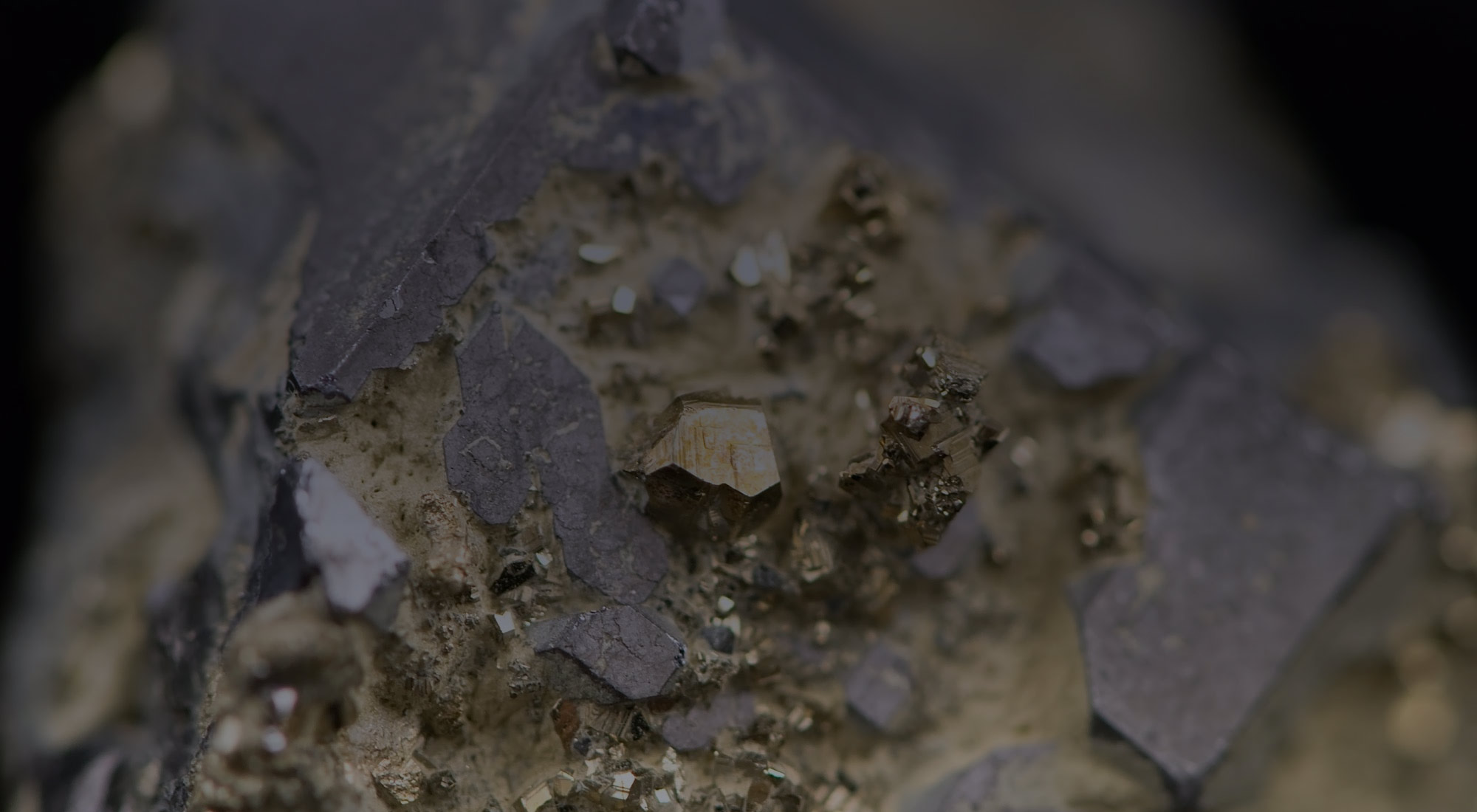
Gold Ore: Gold is often embedded in quartz veins or hosted within sulfide minerals. In these cases, the gold is microscopic and requires extensive crushing and chemical processing to extract.
-
Alluvial Gold: Also known as placer gold, this is found in riverbeds and sedimentary deposits. It has been eroded from its original source and concentrated by water. While often higher in purity than hard-rock ore, it still contains significant silver and copper.
2. Secondary Sources
As the world moves toward a circular economy, secondary gold has become a vital source of supply.
-
Scrap Jewelry: This is the most common secondary source. Jewelry is rarely pure gold; it is alloyed with copper, silver, or nickel to increase hardness.
-
Electronic Waste (E-Waste): Gold is used in circuit boards, connectors, and CPUs due to its excellent conductivity and resistance to tarnish.
-
Industrial and Dental Gold: Specialized alloys used in dentistry (gold-platinum-palladium) or industrial catalysts provide high-value feedstock for refiners.
3. Typical Impurities
Raw gold is essentially a cocktail of elements. Common “contaminants” include:
-
Silver and Copper: The most frequent companions of gold.
-
Base Metals: Zinc, nickel, iron, and lead.
-
Platinum Group Metals (PGMs): Platinum, palladium, and rhodium are often present in complex ores and high-end jewelry scrap.
-
Hazardous Elements: Mercury and arsenic are frequently found in artisanal mining products and must be handled with extreme care during refining.
These impurities affect the gold’s physical properties. For instance, iron makes gold brittle, while copper shifts its color toward red. Refining is the process of stripping these elements away until only the gold atoms remain.
Overview of Gold Refining Methods
Gold refining is not a “one size fits all” operation. The choice of method depends on the initial purity of the material, the desired final purity, the volume of material, and environmental regulations.
-
Pyrometallurgical Methods: These involve the use of extreme heat and furnaces. Smelting and cupellation are the oldest forms of refining, dating back to ancient civilizations. They are effective for bulk processing but often struggle to reach the “four nines” (99.99%) purity level.
-
Hydrometallurgical Methods: These rely on aqueous chemistry. By using acids like aqua regia, gold is dissolved into a solution and then selectively precipitated. This is the gold standard for small-to-medium scale refining and jewelry scrap.
-
Electrolytic Refining: This process uses an electric current to migrate gold ions from an impure anode to a pure cathode. It is the most advanced method, capable of producing the highest possible purity for investment bullion.
-
Modern Eco-Friendly Methods: Recent innovations focus on replacing toxic chemicals like cyanide and mercury with safer alternatives like thiosulfate leaching and closed-loop acid recovery systems.
Fire Refining (Pyrometallurgical Methods)
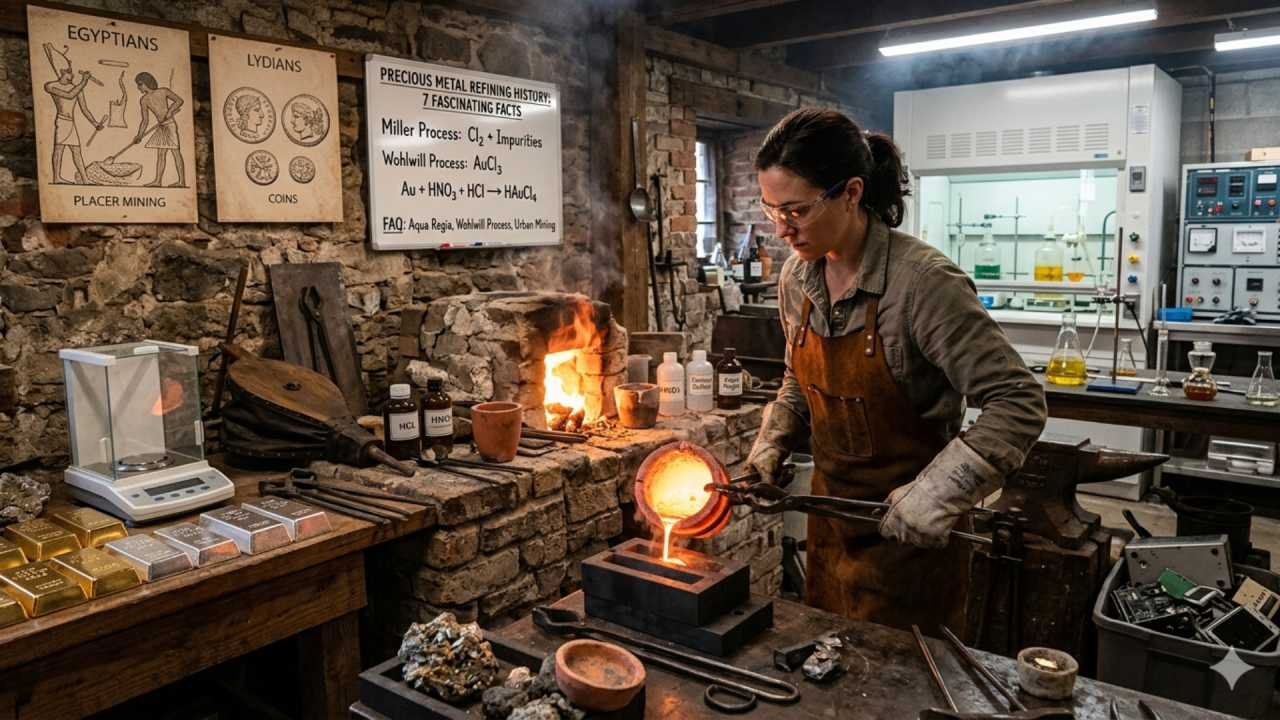
Fire refining remains the foundational step for many large-scale mining operations. It utilizes the different melting points and oxidation levels of metals to separate gold from the “dross.”
1. The Smelting Process
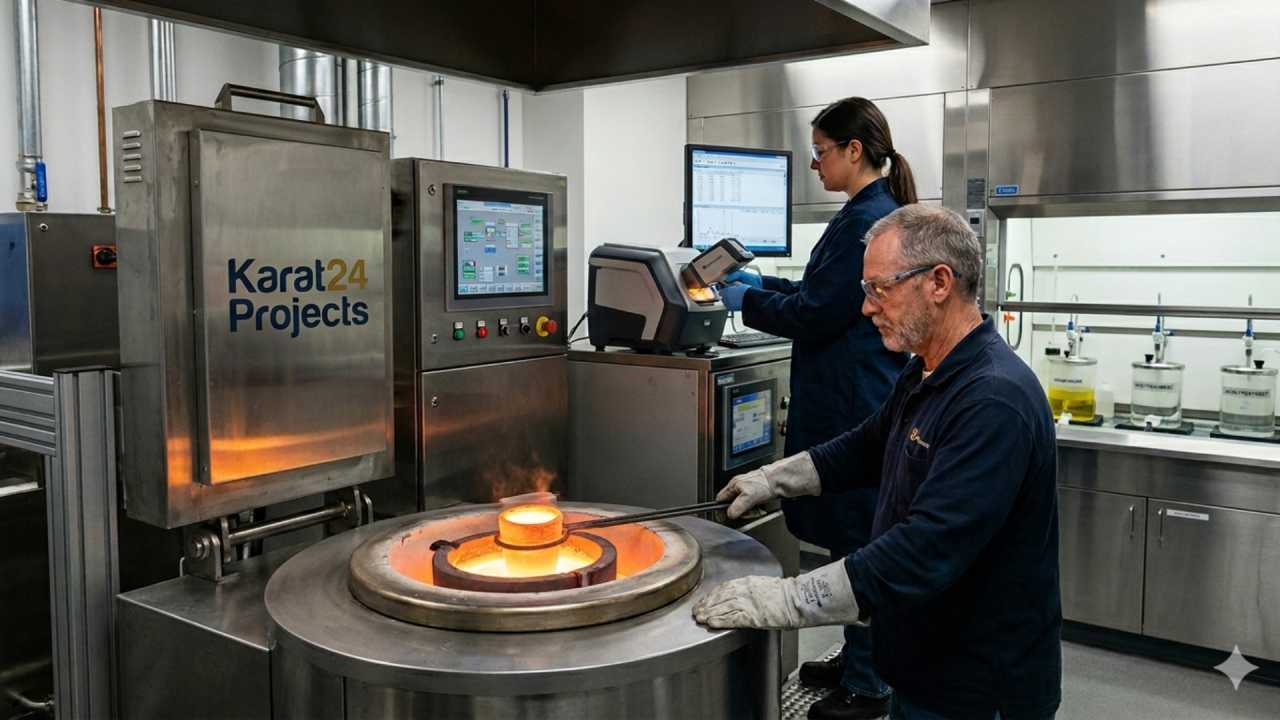
Smelting is the primary method for extracting gold from ore concentrates or heavily contaminated scrap. The material is placed in a furnace and heated well beyond gold’s melting point of 1,064°C.
To facilitate the separation, fluxes are added. Common fluxes include:
-
Borax: Lowers the melting point of the mixture and dissolves metal oxides.
-
Soda Ash: Used to remove silica and quartz.
-
Silica: Helps in the formation of slag.
As the mixture melts, the impurities bond with the flux to form slag, a glassy waste product that floats to the top. The heavier molten gold (and silver) settles at the bottom. This resulting “doré bar” is usually 60% to 90% pure and requires further refining.
2. Cupellation
Cupellation is an ancient but highly effective technique used to separate gold and silver from base metals like lead and copper. The impure metal is melted in a cupel—a shallow, porous dish made of bone ash or magnesium oxide.
A blast of air is directed over the molten metal. The base metals oxidize and are either blown away or absorbed into the porous walls of the cupel. Gold and silver, being noble metals, do not oxidize and remain as a shining bead (the “prill”) at the center.
Advantages and Limitations:
Fire refining is robust and can handle large volumes of very “dirty” material. However, it cannot easily separate gold from silver, and it often releases metal vapors and greenhouse gases, requiring sophisticated filtration systems to meet modern environmental standards.
Chemical Gold Refining Methods (Hydrometallurgical)
When high purity is required—specifically for jewelry or industrial applications—chemical refining is the preferred route.
1. The Aqua Regia Process
“Aqua Regia” is Latin for “Royal Water,” so named because it is one of the few substances capable of dissolving gold. It is a highly corrosive mixture of one part Nitric Acid ($HNO_{3}$) and three to four parts Hydrochloric Acid ($HCl$).
The Procedure:
-
Dissolution: The gold scrap is placed in the acid. The nitric acid acts as an oxidant, while the hydrochloric acid provides chloride ions to form chloroauric acid ($HAuCl_{4}$).
-
Filtration: Once dissolved, the solution is filtered to remove silver (which precipitates as silver chloride) and other undissolved solids.
-
Precipitation: A selective reducing agent, typically Sodium Metabisulfite (SMB) or Ferrous Sulfate, is added to the liquid. This causes the gold to “drop out” of the solution as a fine brown powder known as gold sand.
-
Washing and Melting: The gold sand is washed with distilled water and ammonia, then melted into bars of roughly 99.9% purity.
2. The Miller Process
Developed in the 1860s, the Miller process is used by major mints to refine gold to 99.5% purity quickly. It involves blowing a stream of pure chlorine gas through molten impure gold.
The chlorine reacts with the impurities (silver, copper, zinc) to form chlorides. Most of these chlorides are volatile and evaporate, or they form a slag layer on top of the molten gold. Because gold does not react with chlorine at these high temperatures, it remains in the crucible. This process is favored for its speed and its ability to handle large batches, though it requires strict safety protocols to manage the toxic chlorine gas.
The Wohlwill Process (Electrolytic Refining)
For the absolute highest purity (99.99% or “four nines”), the industry turns to the Wohlwill process. This is an electrolytic method that is essentially the “polishing” step of the refining world.
How it Works:
-
The Anode: A cast bar of impure gold (usually already 95% or higher from the Miller process) acts as the positive electrode.
-
The Cathode: A thin sheet of pure 24K gold or stainless steel acts as the negative electrode.
-
The Electrolyte: A solution of chloroauric acid and hydrochloric acid.
When an electric current is applied, the gold atoms at the anode dissolve into the solution and migrate to the cathode, where they deposit as ultra-pure gold. Impurities like silver form a “slime” at the bottom of the tank, which is later processed to recover silver and platinum group metals.
The Result:
The Wohlwill process is slow and requires a massive inventory of gold to be “locked up” in the tanks as an electrolyte, making it expensive. However, it is the only way to reliably produce the 99.999% purity required for certain high-tech semiconductor applications.
Modern & Eco-Friendly Gold Refining
The environmental footprint of gold refining has historically been heavy, characterized by acid runoff and toxic fumes. Modern refineries are now pivoting toward “Green Gold” initiatives.
-
Cyanide Leaching Alternatives: While cyanide is the industry standard for mining, it is highly toxic. Researchers are implementing Thiosulfate leaching, which is non-toxic and more effective for certain types of carbonaceous ores.
-
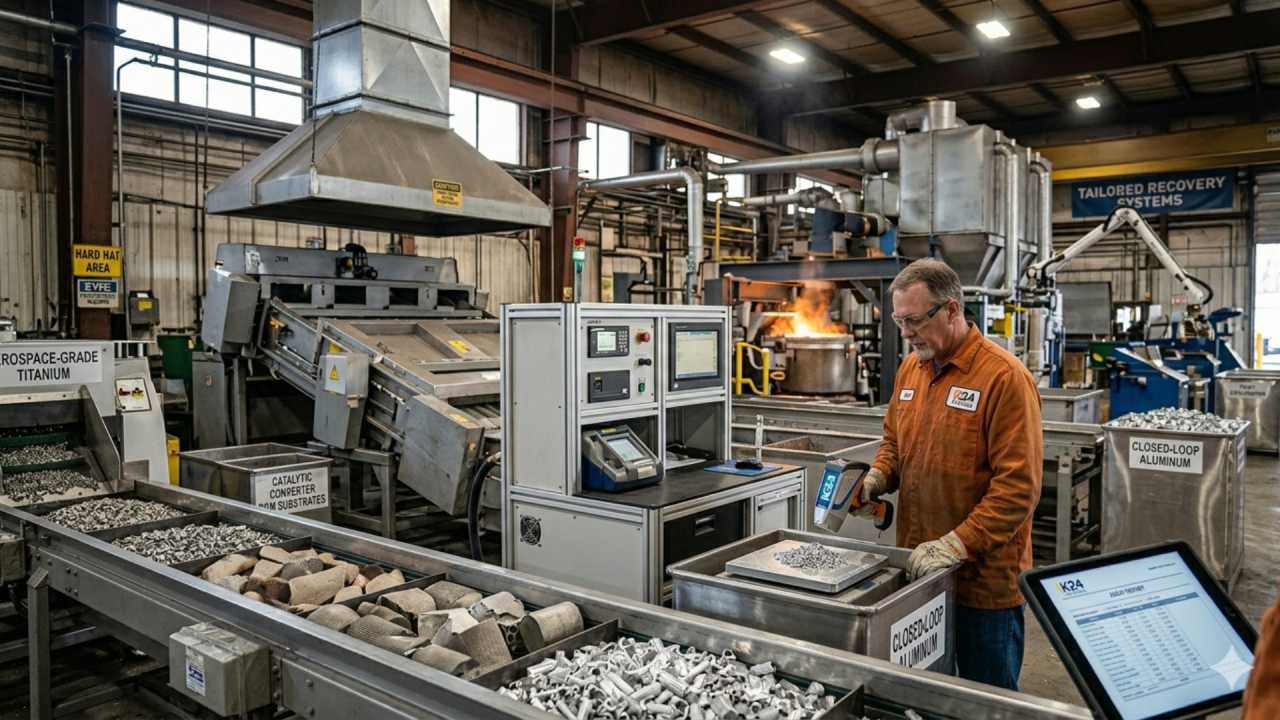
Closed-Loop Systems: Modern facilities now use “scrubbers” to neutralize nitrogen oxide (NOx) fumes from aqua regia processes and recirculate water to prevent chemical discharge into the environment.
-
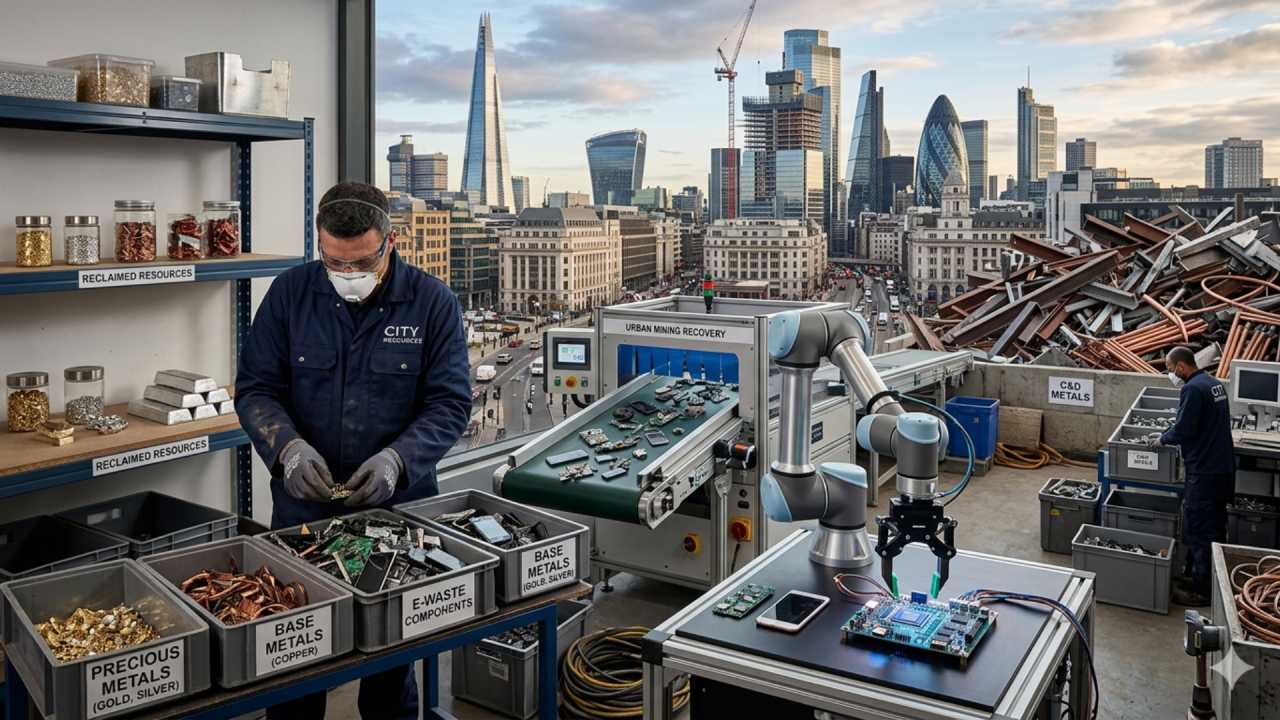
Urban Mining: Refiners are increasingly specializing in e-waste. This reduces the need for destructive terrestrial mining. Extracting gold from a ton of old circuit boards can yield significantly more gold than a ton of raw ore, with a lower carbon footprint.
Gold Purity Standards Explained
Purity is the language of the gold trade. Understanding the different systems is essential for anyone involved in the industry.
1. The Karat System
Used primarily in jewelry, the karat system measures the ratio of gold to other metals in 24 parts.
-
24 Karat: 99.9% pure (Pure gold)
-
22 Karat: 91.6% gold (Common in Indian jewelry)
-
18 Karat: 75.0% gold (Standard for high-end European jewelry)
-
14 Karat: 58.3% gold (Standard for US jewelry)
2. The Fineness System
The fineness system expresses purity in parts per thousand. It is the preferred unit for investment bullion and industrial applications.
-
999.9 (Four Nines): The standard for investment bars (Royal Canadian Mint, etc.).
-
995: The minimum purity required for “Good Delivery” bars on the London market.
-
750: Equivalent to 18K gold.
3. Global Standards & Hallmarking
To ensure trust, gold is regulated by international bodies:
-
LBMA (London Bullion Market Association): Sets the “Good Delivery” standard. A refinery must pass stringent audits to be “LBMA Certified.”
-
Hallmarking: Governments (like the BIS in India or the Assay Offices in the UK) stamp gold items to certify their purity, protecting consumers from fraud.
Assaying & Testing Gold Purity
Refining is meaningless without verification. Assaying is the process of chemically analyzing a metal sample to determine its exact gold content.
-
Fire Assay (Cupellation): This is the “gold standard” of testing. A small sample of the metal is melted with lead and silver, cupelled, and then treated with nitric acid to separate the gold. It is incredibly accurate but destructive.
-
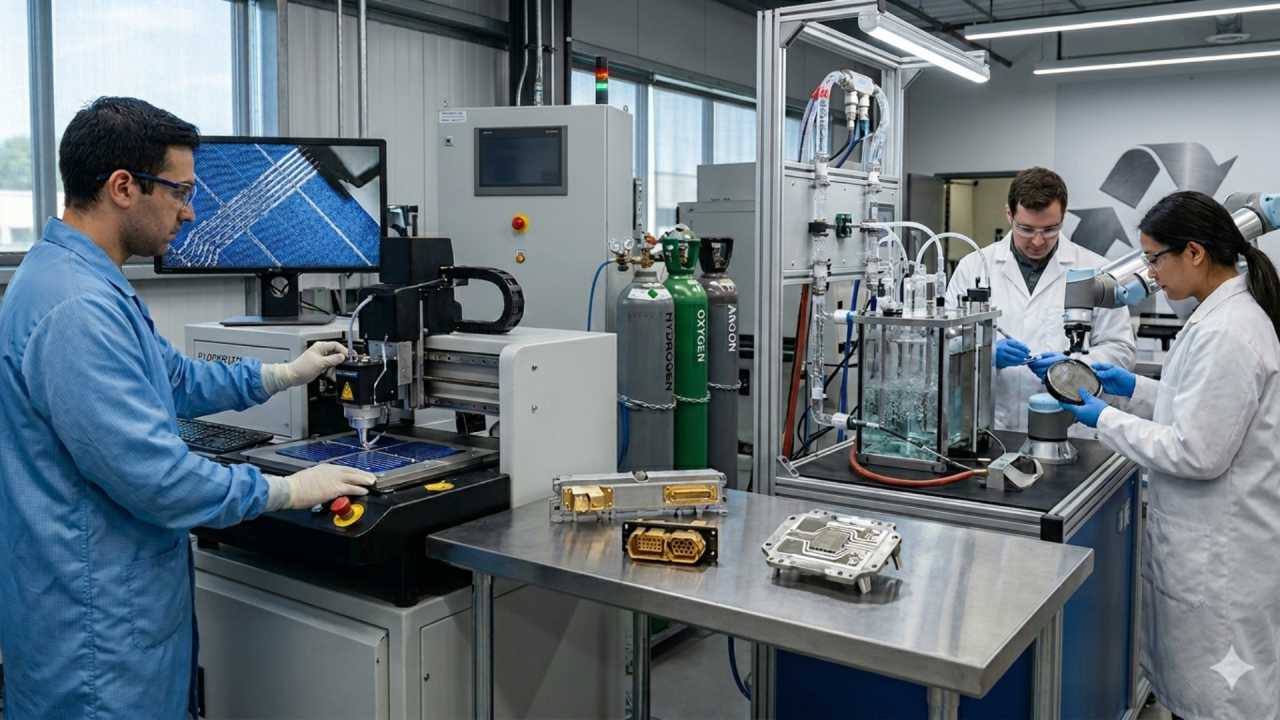
X-Ray Fluorescence (XRF): A non-destructive method where an X-ray beam is fired at the gold. The gold atoms emit secondary X-rays that reveal the metal’s elemental composition. It is fast and widely used in gold-buying shops.
-
The Touchstone Method: An ancient technique where gold is rubbed onto a dark stone, and the resulting streak is treated with various concentrations of acid to observe the reaction.
-
Ultrasound and Density Testing: Used to detect “salted” bars (e.g., gold-plated tungsten) by measuring how sound travels through the metal or calculating its displacement in water.
Equipment Used in Gold Refining
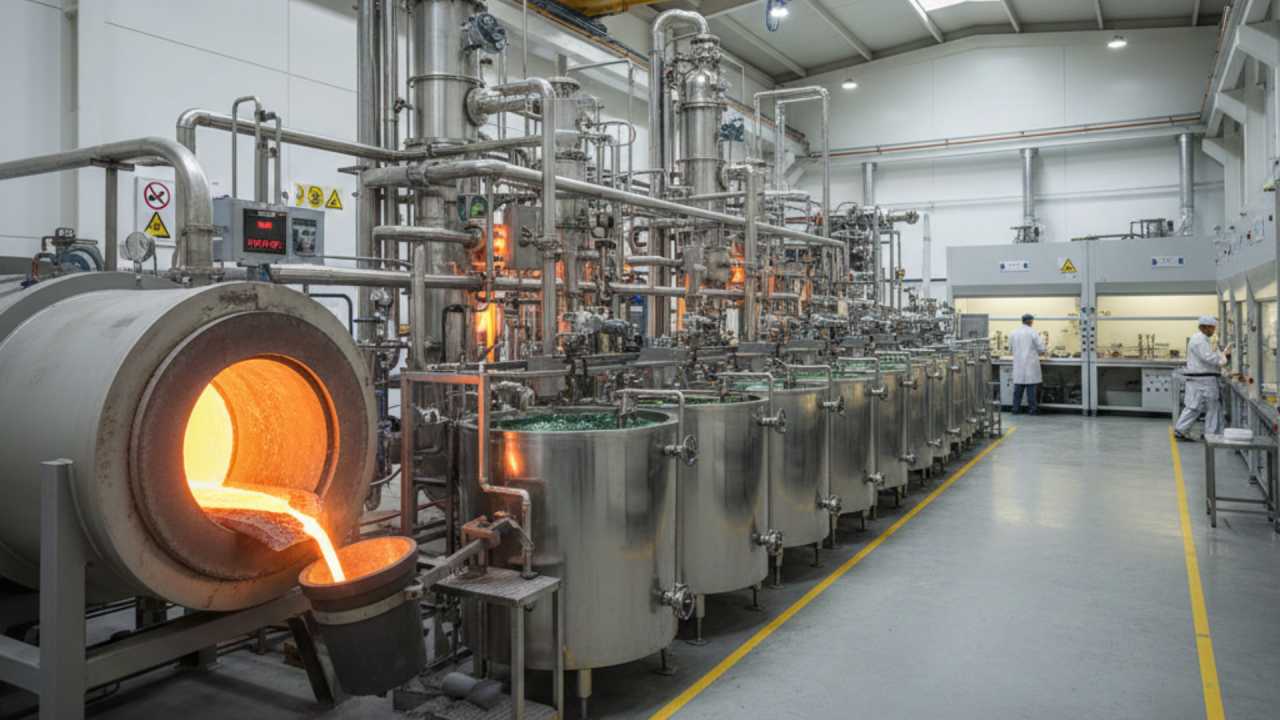
Modern refining requires a blend of heavy machinery and delicate laboratory equipment.
-
Induction Furnaces: These use electromagnetic induction to heat the metal, providing precise temperature control and stirring the melt through magnetic fields.
-
Polypropylene Tanks: Used for acid digestion because they are resistant to the corrosive nature of aqua regia.
-
Fume Scrubbers: Massive filtration systems that pull toxic gases through neutralizing chemical mists before releasing air into the atmosphere.
-
Crucibles: Made of graphite or silicon carbide, these vessels must withstand extreme thermal shock without contaminating the gold.
-
Safety Gear: Refiners must wear acid-resistant suits, respirators with gas-specific cartridges, and thermal-rated face shields.
Safety & Environmental Considerations
The refining of gold involves some of the most dangerous chemicals known to industry. Nitric and hydrochloric acids can cause severe chemical burns, while the NOx gases produced during the aqua regia process can cause pulmonary edema if inhaled.
Refineries must comply with strict Environmental Protection Agency (EPA) or equivalent local regulations. This includes the proper neutralization of waste acids using lime or caustic soda and the secure disposal of “heavy metal” precipitates. Worker safety is managed through rigorous training, specialized Ventilation (HVAC) systems, and constant air quality monitoring.
Economic Importance of Gold Refining
The gold refining industry is the heartbeat of the global gold market. It acts as the bridge between the raw earth and the financial vaults of central banks.
-
Market Liquidity: By converting scrap and raw ore into standardized 999.9 bars, refiners ensure that gold remains a liquid asset that can be traded globally.
-
The Circular Economy: Refining allows the world to reuse gold indefinitely. Nearly all the gold ever mined is still in existence in some form, thanks to the efficiency of the refining process.
-
Technology Enablement: Without the high-purity gold produced by the Wohlwill process, modern computing and telecommunications would be impossible, as the gold components in microchips require absolute consistency.
Final Thoughts
Gold refining is a remarkable intersection of ancient tradition and cutting-edge science. From the roaring furnaces of a smelter to the quiet, precise electrolysis tanks of a high-tech refinery, the goal remains the same: the pursuit of purity.
As we move deeper into the 21st century, the industry is evolving. The focus is shifting from merely achieving “four nines” purity to doing so in a way that is ethically sourced and environmentally sustainable. Whether it is through the reclamation of electronic waste or the adoption of mercury-free mining, the future of gold refining lies in its ability to remain as clean as the metal it produces. Understanding these processes is essential for investors, jewelers, and technologists alike, as it underscores the true value of the world’s most enduring precious metal.