
Best Practices for Safe and Clean Gold Refining Workspace: The Definitive Guide
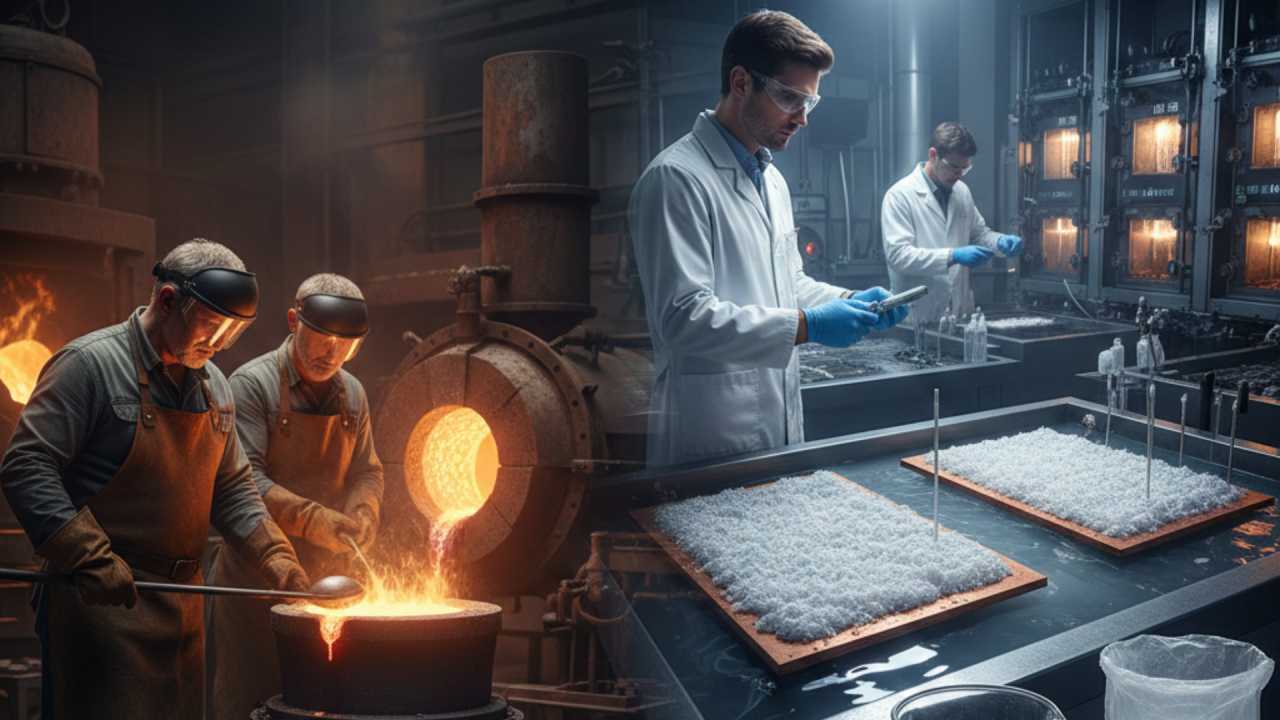
Gold refining is a process that sits at the intersection of high-stakes chemistry, metallurgical skill, and industrial safety. Whether conducted in a professional laboratory, a small jewelry workshop, or a dedicated industrial facility, the refining environment is inherently hazardous. The combination of corrosive acids, toxic fumes, extreme heat, and heavy metals creates a workspace where the margin for error is non-existent.
A well-designed workspace is not merely a matter of convenience; it is a fundamental requirement for the protection of human life, the preservation of the environment, and the maximization of precious metal recovery. A disorganized or poorly ventilated workspace leads to contamination, which directly affects the purity of the final product and results in significant financial loss. This article provides an exhaustive, authoritative guide on the best practices for establishing and maintaining a safe, clean, and compliant gold refining workspace.
Why Workspace Safety Matters in Gold Refining
The environment in which gold is refined dictates the quality of the output and the longevity of the operation. In small workshops, the risk is often a lack of professional-grade infrastructure. In industrial spaces, the risk scales with the volume of chemicals processed. Regardless of the scale, the core principles of safety remain the same.
The benefits of a safe and clean refining workspace are manifold:
-
Health Protection: Preventing the inhalation of nitrogen dioxide, chlorine gas, and lead vapors.
-
Higher Gold Purity: A clean environment prevents ambient dust (silica, iron, or zinc) from contaminating a batch of 99.9% pure gold.
-
Legal Compliance: Avoiding heavy fines or shutdowns from environmental and labor departments.
-
Reduced Accidents: A structured layout prevents spills, trips, and fires.
This guide is designed for hobbyists moving toward professional setups, small-scale refiners, and lab managers seeking to audit their current safety protocols.
Understanding the Hazards of Gold Refining
To build a safe workspace, one must first respect the “enemies” within the room. Gold refining is essentially the process of using aggressive chemistry to force gold into a liquid state so that impurities can be removed.
1. Chemical Hazards
The primary chemicals used—Hydrochloric Acid, Nitric Acid, and Sulfuric Acid—are highly corrosive. However, the greater danger often lies in the reactions. When Nitric Acid and Hydrochloric Acid are mixed to create Aqua Regia, they produce nitrosyl chloride and nitrogen dioxide. These gases are heavier than air and highly toxic, capable of causing pulmonary edema (fluid in the lungs) if inhaled in even moderate concentrations.
Furthermore, the chemicals used to precipitate gold, such as Sulfur Dioxide gas or Sodium Metabisulfite, carry their own risks. Improper mixing of chemicals—such as adding cyanide to an acidic solution—can result in the immediate release of lethal Hydrogen Cyanide gas.
2. Physical Hazards
Refining requires high-temperature environments for melting and drying. Induction furnaces and gas-fired torches pose constant burn risks and serve as ignition sources. The physical weight of “loaded” beakers and crucibles is also a factor; a five-liter beaker of acid is surprisingly heavy and becomes a major hazard if dropped. Sharp tools, pressurized gas cylinders, and the risk of “steam explosions” (when moisture is introduced to molten metal) add layers of physical danger.
3. Environmental Risks
Gold refining is an “extractive” industry. The byproducts are often acidic solutions laden with heavy metals like copper, nickel, lead, and sometimes mercury. If these reach the groundwater, the ecological damage is catastrophic. Airborne contaminants can also settle on local vegetation or be inhaled by the surrounding community.
Legal and Regulatory Considerations
Operating a gold refining workspace is not an isolated activity; it exists within a framework of law. Ignorance of the law is not a defense, especially when hazardous chemicals are involved.
-
Zoning and Permits: Many jurisdictions have strict zoning laws. You cannot legally refine gold in a basement or a garage in a residential neighborhood due to the fire and toxic gas risk. Ensure your facility is in a zone permitted for light industrial use.
-
Safety Data Sheets (SDS): By law, every chemical on-site must have a corresponding SDS. This document outlines the chemical’s properties, hazards, and emergency procedures. These must be accessible to all workers at all times.
-
Waste Handling: Most countries require a “cradle-to-grave” tracking system for hazardous waste. You are responsible for the waste even after it leaves your facility, until a certified disposal company confirms its destruction or neutralization.
Workspace Design and Layout Best Practices
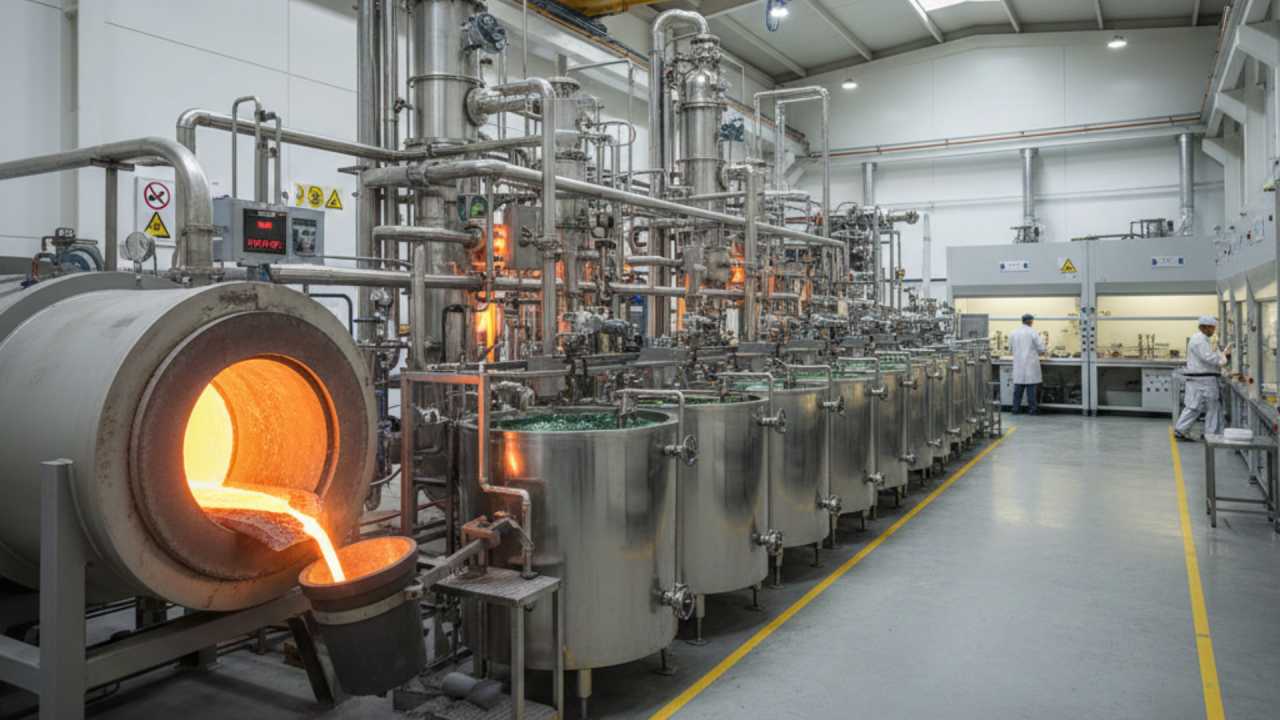
The physical layout of the refinery is the most significant factor in preventing accidents. A “safety-first” design philosophy prioritizes airflow, movement, and the separation of hazardous zones.
1. Choosing the Right Location
The workspace should be a dedicated room. It must not serve a dual purpose (e.g., as a kitchen or general office).
-
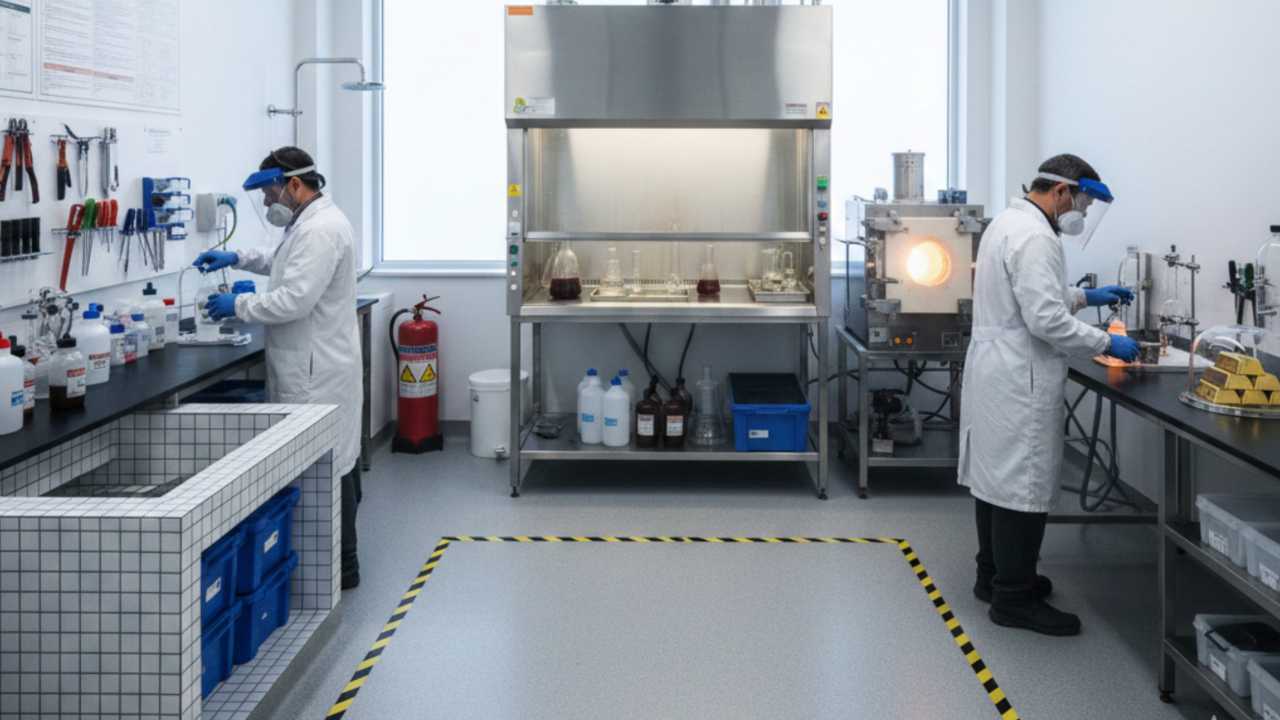
Flooring: The floor must be non-porous and acid-resistant. Standard concrete will be “eaten” by acid over time, turning into dust that can contaminate your gold. Epoxy-coated floors or specialized industrial tiles are the standard.
-
Walls: Walls should be painted with a high-gloss, chemical-resistant paint that can be wiped down.
2. Proper Ventilation Systems
In gold refining, the ventilation system is your “life support.”
-
Localized Exhaust Ventilation (LEV): A fume hood is mandatory. It must be constructed of materials that do not corrode, such as high-density polyethylene (HDPE) or specialized stainless steel.
-
Scrubber Systems: Professional setups utilize a “wet scrubber.” This device pulls the fumes through a mist of neutralizing solution (usually water and soda ash) to “scrub” the acid out of the air before it is vented outside.
-
Make-up Air: For every cubic foot of air your fume hood sucks out, a cubic foot of fresh air must be brought in. Without make-up air, the building develops negative pressure, which can cause back-drafting in water heaters or furnaces.
3. Logical Workflow Layout
A refined workflow prevents “cross-traffic.”
-
The Wet Zone: This is where the acids live. It should have a “lip” or be a recessed area of the floor to contain spills.
-
The Dry Zone: This is where gold is melted. It must be kept bone-dry. Introducing even a drop of water into a crucible of molten gold can cause a “steam explosion” that sprays 1000°C metal across the room.
-
The Storage Zone: Chemicals should be stored at eye level or below. Never store liquid acids on high shelves where they could fall and shatter.
Personal Protective Equipment (PPE)
PPE is the final line of defense. It does not replace a safe workspace, but it saves lives when a beaker breaks or a reaction boils over.
1. Essential PPE for Gold Refining
-
Eye and Face Protection: Standard safety glasses are insufficient. You need chemical splash goggles that seal against the face. When pouring molten metal, a full-face shield is required.
-
Respiratory Protection: Even with a fume hood, keep a half-face respirator with multi-gas/vapor cartridges nearby.
-
Gloves: Use heavy-duty nitrile or neoprene for acids. For melting, use high-grade Kevlar or aluminized gloves that reflect radiant heat.
-
Footwear: No open-toed shoes or mesh sneakers. Leather work boots or chemical-resistant rubber boots are necessary.
2. Proper Use and Maintenance
PPE must be cleaned. Acid residue on the outside of a glove can be transferred to your face the next time you put it on. Replace gloves the moment they show signs of “swelling” or degradation.
Cleanliness and Contamination Control
Cleanliness in a gold refinery is not about aesthetics; it is about economics and purity.
1. Importance of Clean Workspaces
In a refinery, “dust” is often gold. If you have a messy workspace, you are losing money. A clean workspace also ensures that if you are refining 24k gold, it doesn’t get contaminated with iron filings or silver dust from a previous batch.
2. Cleaning Protocols
-
Wet Cleaning: Use wet mops and wipes to ensure dust is captured rather than kicked up into the air.
-
Vacuuming: Only use HEPA-filtered vacuums. A standard shop vac will simply blow fine gold dust and chemical residues back into the air.
-
Tool Care: Beakers and stirring rods should be triple-rinsed with distilled water between uses.
3. Tools and Equipment Organization
Use a “shadow board” or a dedicated cabinet for tools. If a tool is dropped on the floor, it must be cleaned before it touches the gold again. Label everything. A beaker of clear liquid could be water, or it could be Nitric Acid—labels eliminate the “guess and check” method which is lethal in a lab.
Safe Chemical Storage and Handling
Chemicals must be handled with a “respect, don’t fear” attitude.
1. Storage Best Practices
-
Secondary Containment: Place acid bottles inside plastic bins. If the bottle leaks, the bin catches the acid.
-
Incompatible Materials: Never store Nitric Acid near organic solvents like alcohol or acetone. The reaction can be explosive. Never store acids and cyanides in the same room.
-
Ventilated Storage: Some acids “breathe” through their caps. Storage cabinets should ideally be vented to the outside.
2. Spill Prevention and Response
Keep a “Spill Kit” in the room. This should include:
-
Neutralizing agents (Soda Ash for acids, Citric Acid for bases).
-
Absorbent pads.
-
Hazardous waste bags.
-
A “Spill SOP” posted on the wall.
Waste Management and Environmental Responsibility
A refinery is judged by what it throws away.
-
Solid Waste: Used filters and wipedowns contain gold. These should be burned in a controlled furnace to recover the values.
-
Liquid Waste: Spent acids are high in nitrates and heavy metals. They must be neutralized to a pH of 7-9 and the metals must be settled out as a sludge. Only the “clean” salt water should ever be considered for disposal, and even then, only with municipal permission.
-
Metal Recovery from Waste: Many refiners use a “stock pot”—a large vessel where all waste liquids are kept with pieces of scrap copper or iron to cement out any remaining precious metals over time.
Fire Safety and Emergency Preparedness
Fire in a refinery is complicated by the presence of chemicals.
1. Fire Prevention
-
Electrical Safety: Ensure all outlets near the wet zone are GFCI-protected.
-
Gas Safety: Check torch hoses for leaks daily using soapy water.
-
Clutter: A cluttered workspace provides fuel for a fire. Keep the melting area clear of paper, cardboard, and chemicals.
2. Emergency Equipment
-
Fire Extinguishers: Use CO2 or Dry Chemical. Never use water on a metal fire or an acid fire unless specifically instructed by the SDS.
-
Emergency Showers: If acid gets on a worker, they need a high-volume shower immediately.
-
Eyewash Stations: These must be checked weekly to ensure the water is clean and the pressure is correct.
Training, Documentation, and SOPs
A “pro” refinery runs on paperwork. Standard Operating Procedures (SOPs) ensure that even if the head refiner is away, the process is done safely.
-
Training: New workers should be supervised for weeks before handling acids alone.
-
Documentation: Keep a logbook of every batch, every chemical used, and every safety incident.
-
SOPs: “How to Mix Aqua Regia,” “How to Precipitate Gold,” and “How to Clean a Spill” should be printed and laminated near the work areas.
Regular Inspections and Continuous Improvement
A workspace is a living entity.
-
Daily Safety Checks: Inspect the fume hood draw, check for leaking caps, and ensure the floor is clear.
-
Internal Audits: Every quarter, do a “deep dive.” Look behind the cabinets. Is there dust building up? Is the ventilation ducting showing signs of corrosion?
-
Near-Miss Reports: If a beaker almost tipped over, why did it happen? Was the table wobbly? Was the area too crowded? Fix the root cause immediately.
Technology and Automation for Safer Workspaces
Modern technology is making refining safer.
-
Gas Sensors: Digital sensors for $NO_x$ and $Cl_2$ can sound an alarm before a human can smell the gas.
-
Automated Dosing: Peristaltic pumps can move acid from a drum to a beaker, eliminating the need for a human to pour by hand.
-
Digital Logs: Using tablets for logs ensures that data is backed up and can be reviewed by safety officers remotely.
Common Mistakes to Avoid in Gold Refining Workspaces
-
Improper Ventilation: Using a bathroom fan or an open window is the most common—and most dangerous—mistake.
-
Storing Waste in Unlabeled Containers: This leads to “mystery liquids” that are dangerous and expensive to dispose of.
-
Refining Alone: If you pass out from fumes or have a spill, there is no one to call for help. Always use a “buddy system” or a remote monitoring check-in.
-
Neglecting PPE for “Quick Tasks”: Most accidents happen during a “two-minute” job where the worker didn’t bother to put on their goggles.
Sustainability and Responsible Refining Practices
The “Green Refinery” is the new industry standard. This involves:
-
Zero-Discharge Systems: Recycling all water within the plant.
-
Energy Recovery: Using the heat from the melting furnaces to pre-heat other processes.
-
Ethical Sourcing: Ensuring that your workspace is not only clean but that the gold you process is free from conflict or environmental devastation at the mining level.
Final Thoughts: Building a Safer and Cleaner Gold Refining Environment
Building a gold refining workspace is not a project that can be rushed. It requires a significant investment in infrastructure—specifically in ventilation and chemical containment. However, this investment pays for itself through the health of the operators, the purity of the gold, and the avoidance of legal catastrophes.
A clean workspace is the hallmark of a master. It reflects a respect for the chemistry, the metal, and the environment. By following these best practices, you move beyond being someone who “plays with acid” and become a professional refiner who operates with precision, safety, and integrity.
The path to 24k gold begins with a 24k workspace. Keep it clean, keep it ventilated, and always put safety before speed.