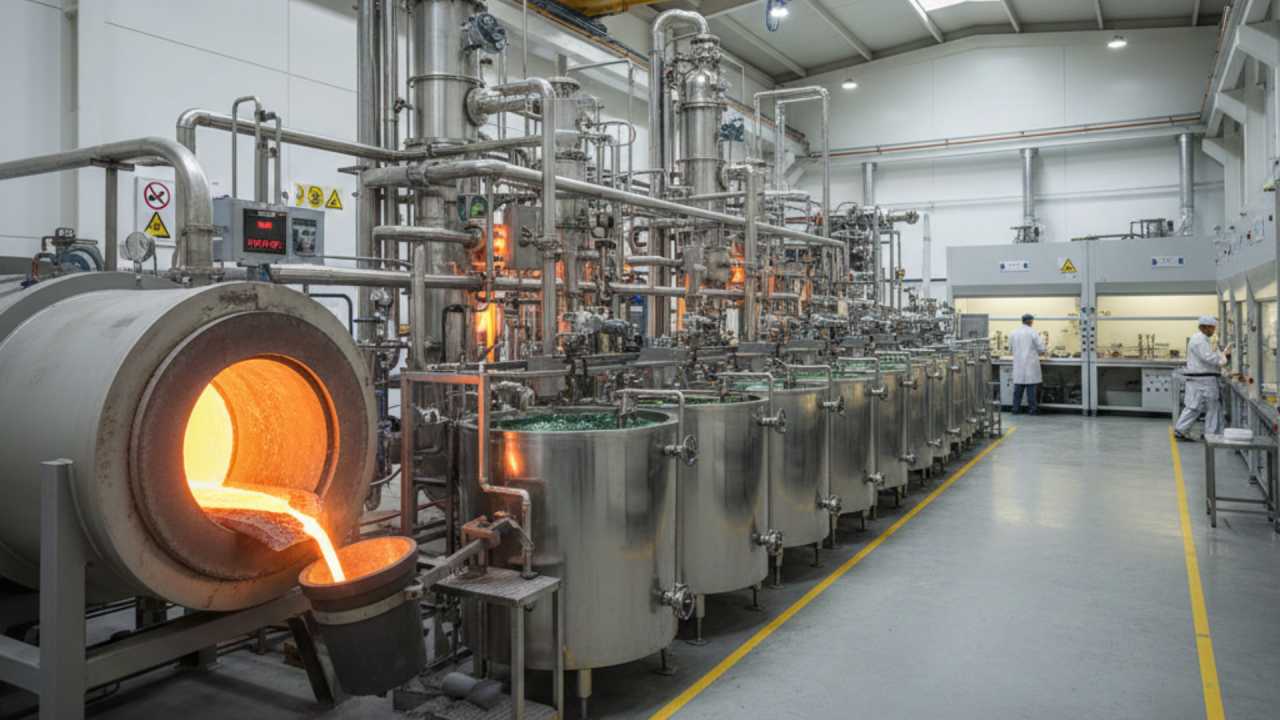



Is Manual Gold Refining Still Viable? Expert Opinions
The glitter of gold has captivated human civilization for millennia, driving conquests, shaping economies, and serving as the ultimate store of value. However, behind the polished bars and intricate jewelry lies a complex process of purification. As we move further into the 21st century, a critical question faces the industry: Is manual gold refining still viable?
In an era defined by high-throughput automation, sophisticated chemical sensors, and massive industrial complexes, the image of a lone refiner over a crucible might seem like a relic of the past. Yet, in many parts of the world—from the artisanal mines of sub-Saharan Africa to the small-scale workshops of Southeast Asia—manual refining remains a daily reality. This topic is not merely an academic exercise; it carries profound implications for industry relevance, the livelihoods of millions of artisanal and small-scale miners (ASM), environmental sustainability, and the shifting economic tides of the global precious metals market.
This article explores the multi-faceted debate surrounding manual gold refining. We will examine the technical foundations of traditional methods, the historical evolution of the craft, and the stark economic realities that pit human labor against machine precision. Through the lens of metallurgists, environmentalists, and market analysts, we will evaluate whether manual refining is a dying art or a resilient necessity in a modern world.
What Is Manual Gold Refining?
Manual gold refining refers to the process of purifying gold using human-operated techniques and basic equipment, rather than fully automated, computer-controlled industrial systems. At its core, refining is the removal of impurities—such as silver, copper, iron, and zinc—from “doré” (unrefined) gold to achieve a purity of 99.5% or higher.
Traditional manual techniques rely on the fundamental chemical and physical properties of metals. Common methods include:
-
Cupellation: A process where alloys are treated under high temperatures to separate noble metals like gold and silver from base metals like lead or copper.
-
Aqua Regia Dissolution: Using a mixture of nitric and hydrochloric acid to dissolve gold into a solution, which is then filtered and precipitated back into solid form.
-
Smelting: Using flux and intense heat to melt the metal and separate slag from the gold.
In contrast, industrial/automated refining utilizes massive electrolytic cells, automated acid-dosing systems, and sophisticated off-gas scrubbing units. While an industrial plant might process hundreds of kilograms of gold per day with minimal human intervention, a manual refiner works with smaller batches, often ranging from a few grams to a few kilograms, relying heavily on visual cues and personal experience to judge the progress of a chemical reaction or a melt.
A Brief History: From Ancient Metallurgy to Today
The history of gold refining is a testament to human ingenuity. For thousands of years, manual methods were the only methods. Ancient Egyptians and Mesopotamians utilized primitive smelting techniques as early as 3000 BCE. They discovered that by heating gold with certain fluxes, they could separate impurities that floated to the surface as slag.
The cupellation process was a significant breakthrough, widely used by the Romans to extract silver and gold from lead ores. During the medieval and colonial eras, the discovery of mineral acids led to the development of “parting”—the separation of gold and silver using nitric acid. For centuries, the “quartation” method (alloying gold with three parts silver to allow the acid to reach the gold) was the gold standard for manual refiners.
The 19th-century Industrial Revolution marked the beginning of the end for the dominance of manual refining. The invention of the Miller Process (using chlorine gas) in 1867 and the Wohlwill Process (electrolytic refining) in 1874 allowed for massive scale and unprecedented purity. However, despite these technological leaps, the manual “wet chemistry” approach survived. It remained the preferred method for jewelers and small-scale miners who lacked the capital to build industrial-sized electrolytic plants. Today, we stand at a crossroads where the historical art of metallurgy meets the stringent demands of a high-tech, regulated global economy.
Traditional Manual Refining Techniques Explained
To understand the viability of manual refining, one must understand the labor-intensive steps involved in the most common traditional methods.
1. Cupellation
In this ancient method, the impure gold is melted with a large amount of lead in a “cupel” (a porous bowl made of bone ash or magnesium oxide). As oxygen is blown over the molten metal, the lead and other base metals oxidize and are absorbed into the cupel, leaving a bead of gold and silver behind.
-
Pros: Low cost of equipment; effective for removing base metals.
-
Cons: Does not separate silver from gold; significant health risk from lead fumes.
2. Aqua Regia Dissolution
This is perhaps the most popular manual method today. The refiner dissolves the gold in a mixture of one part Nitric Acid ($HNO_3$) and three parts Hydrochloric Acid ($HCl$). The gold turns into chloroauric acid. After filtration to remove silver chloride, a precipitant (like Sodium Metabisulfite) is added to turn the liquid gold back into a solid powder.
-
Pros: Can achieve very high purity (99.9%); relatively fast for small batches.
-
Cons: Produces highly toxic nitrogen dioxide fumes; requires careful handling of corrosive acids.
3. The Miller Process (Manual Adaptation)
While primarily industrial, small-scale versions involve bubbling chlorine gas through molten gold. The chlorine reacts with impurities like silver and copper to form chlorides that float to the top.
-
Pros: Extremely fast; doesn’t require massive amounts of acids.
-
Cons: Chlorine gas is lethal; requires specialized safety equipment often missing in manual setups.
Advantages of Manual Refining
Despite the rise of automation, manual refining persists for several practical reasons.
Low Capital Investment
An industrial refinery can cost millions of dollars to commission, requiring specialized machinery and environmental permits. In contrast, a manual aqua regia setup can be established for a few thousand dollars, consisting of glassware, a heating element, and basic chemicals. This low barrier to entry is essential for artisanal mining communities.
Accessibility for Small Operations
For a small-scale miner in a remote region, shipping a few ounces of gold to a major refinery in Switzerland or Perth is often logistically impossible and economically unfeasible due to shipping costs and insurance. Manual refining allows for local value addition, keeping the profit within the community.
Flexibility and Skill Preservation
Manual refiners can handle “scrap” gold of varying and unknown compositions, adapting their process on the fly. This requires a deep metallurgical “feel” that automated systems sometimes struggle with when dealing with non-uniform feedstock. Furthermore, manual refining preserves the traditional knowledge of metallurgy, ensuring that the fundamental science of metal recovery isn’t lost to “black box” technology.
Challenges & Limitations
The arguments against manual refining are significant and center on efficiency, safety, and law.
Health and Safety Risks
Manual refining is inherently dangerous. Without professional-grade fume hoods and scrubbers, the nitrogen dioxide ($NO_2$) produced during aqua regia refining can cause permanent lung damage or death. Many artisanal refiners work in poorly ventilated spaces, exposing themselves and their families to toxic vapors and heavy metal dust.
Environmental Impact
Industrial plants are required to neutralize acids and capture heavy metals before discharging waste. In manual settings, “spent” acids containing traces of copper, lead, and even mercury are frequently dumped into local waterways or soil. This leads to long-term ecological degradation and health crises in mining towns.
Lower Productivity and Purity
Human error is a constant factor. A slight mistake in the precipitation phase can lead to significant gold loss in the waste solution. Furthermore, achieving the “four nines” (99.99%) purity required for high-tech industrial applications is exceedingly difficult in a manual environment compared to the Wohlwill electrolytic process.
Economic Viability Analysis
Is it actually “profitable” to refine gold manually? The answer depends on the scale and the location.
Cost Comparison
In a manual setup, the primary costs are labor and reagents. While acids are relatively cheap, the time required to process one kilogram of gold manually can be 10 to 20 times higher than in an automated plant.
| Feature | Manual Refining | Industrial Refining |
| Setup Cost | Low ($5k – $15k) | High ($2M+) |
| Operational Speed | Slow (hours/days per batch) | Rapid (continuous) |
| Labor Requirement | High (Highly skilled labor) | Low (Supervisory/Technical) |
| Purity Potential | 99.5% – 99.9% | 99.99% |
| Waste Management | Often problematic | Strictly controlled |
Impact of Volatility
When gold prices are high, the “loss” of gold in manual tailings becomes a massive financial drain. A 1% loss on a kilogram of gold at $2,000/oz is a $600+ mistake. As gold prices rise, the economic argument shifts toward industrial precision, where recovery rates often exceed 99.9%.
The ASM Context
For artisanal and small-scale miners (ASM), viability is a matter of survival. Even if manual refining is less efficient, the ability to turn ore into sellable gold within 24 hours provides the liquidity needed to buy food, fuel, and equipment. For these operators, “viability” isn’t about maximizing corporate margins; it’s about immediate cash flow.
Expert Opinions & Industry Perspectives
To get a clearer picture, we look at the perspectives of those on the front lines of metallurgy and economics.
The Metallurgist’s View
“Manual refining is a double-edged sword,” says Dr. Elena Rossi, a chemical engineer specializing in precious metals. “While the chemistry is sound, the lack of process control in manual setups leads to ‘assay drift.’ If you can’t guarantee the purity to the third decimal point, you aren’t viable in the modern bullion market.”
The Artisanal Advocate
On the other side, Samuel Kwesi, a consultant for mining cooperatives in West Africa, argues for the “Necessity of Scale.” “You cannot tell a village co-op to build a $5 million facility. For them, manual refining is the only way to escape the predatory pricing of middleman traders. We shouldn’t ban it; we should professionalize it.”
The Environmentalist’s Stance
Environmental experts are almost universally critical of unmonitored manual refining. “The ‘backyard’ refinery is a disaster for groundwater,” says Marcus Thorne, a researcher in industrial pollution. “Until manual refiners can adopt closed-loop acid recycling, their process remains ecologically non-viable in a world that prioritizes ESG (Environmental, Social, and Governance) standards.”
The Middle Ground: Hybrid Approaches
Many experts now advocate for a hybrid model. This involves using manual labor for the initial stages of refining but employing “mini-automated” systems for the dangerous chemical reactions. This keeps costs low while significantly increasing safety and purity.
Modern Alternatives: Hybrid & Emerging Methods
If traditional manual refining is struggling, what is replacing it? We are seeing a rise in “Appropriate Technology.”
-
Modular Refineries: These are “refineries in a box”—shipping containers pre-fitted with automated scrubbers and electrolytic cells. They offer the local control of manual refining with the safety of industrial plants.
-
Eco-Friendly Leaching: Researchers are developing non-toxic alternatives to aqua regia and cyanide, such as thiosulfate or glycine-based leaching. These are safer for manual operators to handle.
-
Digital Integration: Using smartphone-connected sensors to monitor pH levels and temperature during manual precipitation. This reduces human error and brings a level of “data-driven” precision to the manual bench.
Case Studies: Real-World Examples
Success: The Boroo Co-op (Philippines)
A group of artisanal miners in the Philippines transitioned from crude mercury amalgamation to a community-managed “wet chemistry” center. By pooling resources, they bought high-quality fume hoods and implemented a waste-neutralization protocol. Their gold now fetches a higher price because they can guarantee a consistent 99.5% purity.
Failure: The Backyard Surge (India)
In several urban centers, “backyard” manual refineries were shut down by the government due to a spike in respiratory illnesses among neighbors. These operations were economically viable in the short term but failed due to “social license” and regulatory crackdown, proving that economic viability cannot be separated from legal compliance.
Sustainability, Regulation & the Future
The future of manual gold refining will be written by regulators and consumers, not just the refiners themselves.
Tightening Regulations
Governments worldwide are cracking down on “informal” refining. To be viable in the future, a manual refiner must be licensed. This requires meeting strict environmental standards that many currently cannot afford.
Ethical Sourcing
The modern consumer wants to know if their wedding ring was refined using child labor or toxic chemicals. The OECD Due Diligence Guidance is putting pressure on the entire supply chain. Manual operations that cannot prove their ethical and environmental credentials will find themselves locked out of the official market, forced to sell at a discount to the “shadow” market.
Predictions for 2030
Over the next decade, pure manual refining—done with open-air beakers and no safety gear—will likely become obsolete in all but the most lawless regions. It will be replaced by “Assisted Manual Refining,” where the human touch remains, but the dangerous and imprecise parts of the process are handled by small, affordable, smart machines.
Final Thoughts
Is manual gold refining still viable?
The answer is a nuanced “Yes, but with conditions.” Manual refining remains a vital economic bridge for millions of people in the developing world and a useful tool for niche artisans. Its low capital requirements and local accessibility ensure it won’t disappear overnight.
However, the “viability” of the old ways is shrinking. In a world of tightening environmental laws, rising safety standards, and a demand for extreme purity, the traditional manual refiner must evolve. Viability in the 21st century requires a shift from “backyard chemistry” to “responsible metallurgy.” By adopting hybrid technologies, improving waste management, and seeking formal regulation, manual refining can transition from a hazardous relic of the past into a sustainable, professionalized component of the global gold supply chain.
The future of gold is not just about the metal’s purity, but the purity of the process itself