

Precious Metal Recovery: Charting the Business Model Opportunities in the Circular Economy
The relentless march of technological innovation, coupled with a global emphasis on sustainability, has positioned the recovery of precious metals—such as Gold (Au), Silver (Ag), Platinum (Pt), and Palladium (Pd)—at the forefront of the new industrial economy. Precious metal recovery is the systematic process of extracting and purifying these high-value elements from secondary sources, including end-of-life products, industrial waste streams, and manufacturing scrap. Historically, the primary source of these metals has been mining virgin ore, a process associated with significant environmental impact, high energy consumption, and increasing geopolitical risk.
Today, the economic and environmental calculus has shifted dramatically. A single ton of e-waste, for example, can contain 40 to 80 times more gold than a ton of primary ore. This stark difference has turned “urban mining” into a critical economic sector. The demand for precious metals is skyrocketing, driven by their indispensable role in high-tech applications—from catalytic converters in automobiles and miniaturized circuitry in consumer electronics to advanced components in renewable energy infrastructure. Consequently, the business of precious metal recovery is no longer a peripheral waste management function but a central, high-margin opportunity within the global push toward a truly circular economy. This article explores the intricate landscape of this industry, detailing the core technologies, emerging business models, and significant future opportunities for investors and entrepreneurs.
Overview of Precious Metals
Precious metals are defined by their rarity, high economic value, and superior chemical properties, such as excellent conductivity, corrosion resistance, and catalytic activity. The primary metals targeted for recovery include:
- Gold (Au): Essential in microelectronics (printed circuit boards, connectors) due to its superior conductivity and resistance to tarnishing, as well as being a perennial staple in the jewelry and investment sectors.
- Silver (Ag): Widely used in solar panels (photovoltaics), electrical switches, LEDs, and specialized batteries, making its industrial demand robust and diverse.
- Platinum Group Metals (PGMs): This group includes Platinum (Pt), Palladium (Pd), Rhodium (Rh), Ruthenium (Ru), Iridium (Ir), and Osmium (Os). Platinum and Palladium are the most economically significant, primarily used as catalysts in the automotive industry (catalytic converters) to reduce harmful emissions. Their demand is highly coupled with global vehicle production, including the complex needs of hybrid and fuel-cell electric vehicles.
The economic value of recovering these metals is evident in their commodity prices, which directly impact profitability. Environmentally, the recovery process significantly reduces the need for energy-intensive mining operations, limits the disposal of hazardous e-waste in landfills, and conserves finite natural resources, creating a robust framework for environmental, social, and corporate governance (ESG) compliance.
The Precious Metal Recovery Industry Landscape
The global market for precious metal recovery is robust and expanding. The broader precious metals e-waste recovery market alone was estimated at over $10.7 billion in 2024 and is projected to reach over $14.3 billion by 2029, indicating a strong Compound Annual Growth Rate (CAGR) driven by increased e-waste generation and growing industrial demand.
Key Drivers and Trends:
- Exponential E-Waste Growth: The short lifespan of consumer electronics ensures a continually escalating feedstock of metal-rich materials.
- Stringent Environmental Regulation: Globally, regulations like the EU’s Waste Electrical and Electronic Equipment (WEEE) Directive mandate higher recovery rates, pushing industries toward formal recycling channels.
- Resource Scarcity and Geopolitical Risk: Dependence on primary mining (often concentrated in politically sensitive regions) encourages domestic recovery operations as a means of securing supply chains.
- Technological Advancements: Continuous R&D into cleaner, more efficient extraction technologies improves recovery yields and reduces operational costs.
Industry Structure and Key Players: The landscape is characterized by a few large, integrated, global refiners (like Umicore and Johnson Matthey) that handle high-volume, complex refining processes, alongside a fragmented layer of smaller, regional collectors, pre-processors, and specialized technology firms. Regulation heavily influences operations, dictating environmental standards for chemical use, emissions, and waste disposal. Geographic dominance currently sees the Asia-Pacific region as the largest market, largely due to its manufacturing concentration, while Europe is emerging as a fast-growing hub, spurred by strict circular economy policies.
Technologies for Precious Metal Recovery
The efficiency and profitability of a recovery business are fundamentally tied to the technology employed, which must balance high recovery rates with environmental compliance and cost-effectiveness. Recovery processes generally fall into three main categories:
- Mechanical/Physical Separation (Pre-processing):
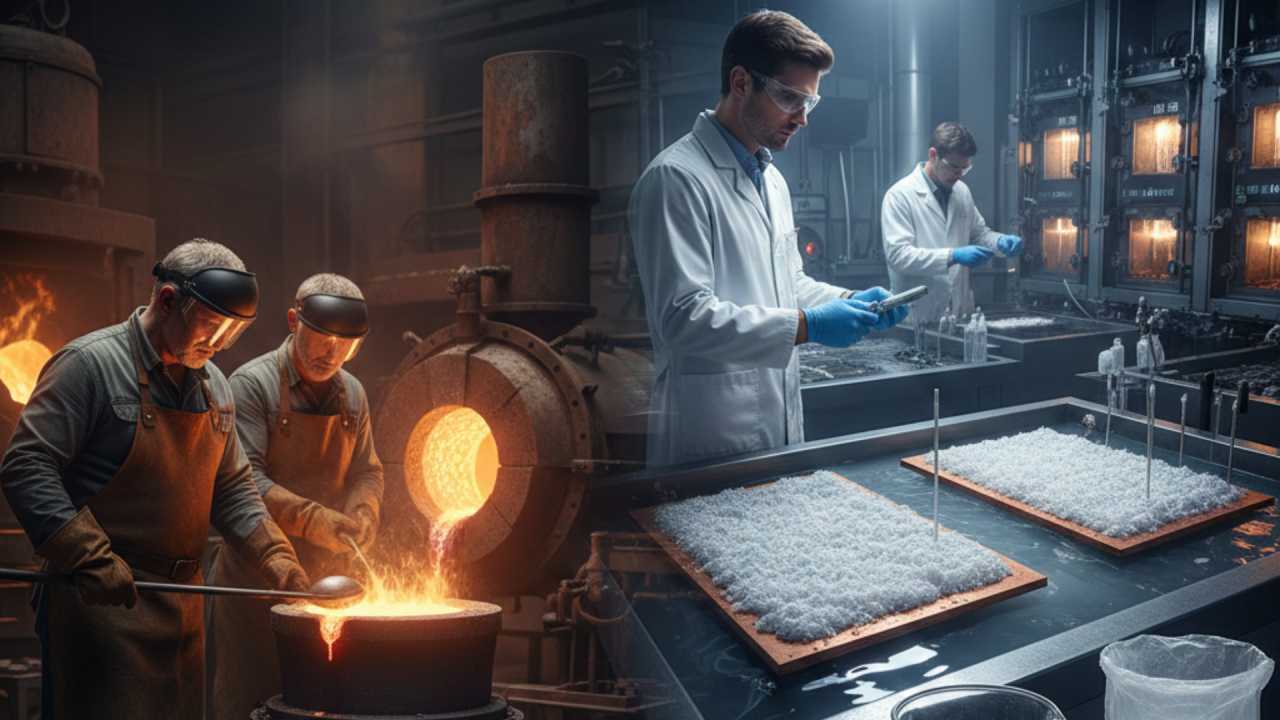
- Description: This initial stage uses physical methods to concentrate the metal-bearing material, increasing the efficiency of subsequent processes. Techniques include manual dismantling, shredding, crushing, magnetic separation (to remove ferrous metals), eddy current separation (for non-ferrous metals), and air or density separation.
- Pros: Low energy consumption, minimal chemical use, and effective in generating a high-grade concentrate.
- Cons: Cannot separate metals at the fine level; often results in a mixed powder that still requires metallurgical refining.
- Pyrometallurgy (Smelting):
- Description: The process involves smelting the scrap material in a furnace at high temperatures (over ). The precious metals are captured in a molten metal collector (often copper or lead), which is then refined.
- Pros: Highly effective for processing large, complex, and heterogeneous waste streams (like unsorted e-waste) and achieving high recovery rates for PGMs and gold.
- Cons: Extremely high energy demand, significant capital investment, and the generation of toxic off-gases (dioxins/furans) and slag, necessitating costly, sophisticated emission control systems.
- Hydrometallurgy (Chemical Leaching):
- Description: This involves dissolving the metals in an aqueous solution (lixiviant), typically strong acids (like nitric or hydrochloric acid) or less toxic alternatives (e.g., thiourea, thiosulfate). The dissolved metals are then selectively recovered from the solution through precipitation or electrowinning.
- Pros: Operates at low temperatures, offering lower energy costs and the potential for selective metal recovery, leading to high-purity products. It is often favored for lower-volume, pre-processed materials.
- Cons: Generates significant volumes of wastewater and sludge that require extensive treatment, and the use of powerful chemicals, like cyanide (though increasingly replaced), carries high safety and environmental risks.
- Emerging Technologies (Bio- and Green Metallurgy):
- Description:
- Bio-metallurgy: Uses microorganisms (bacteria or fungi) to selectively leach metals (bioleaching).
- Green Chemistry: Development of less hazardous, highly selective leaching agents, such as ionic liquids or organic acids.
- Pros: Low operational cost, minimal environmental footprint, and high selectivity.
- Cons: Bioleaching is currently slow and not fully industrialized for high-volume, complex e-waste; green chemistry lixiviants are often expensive.
- Description:
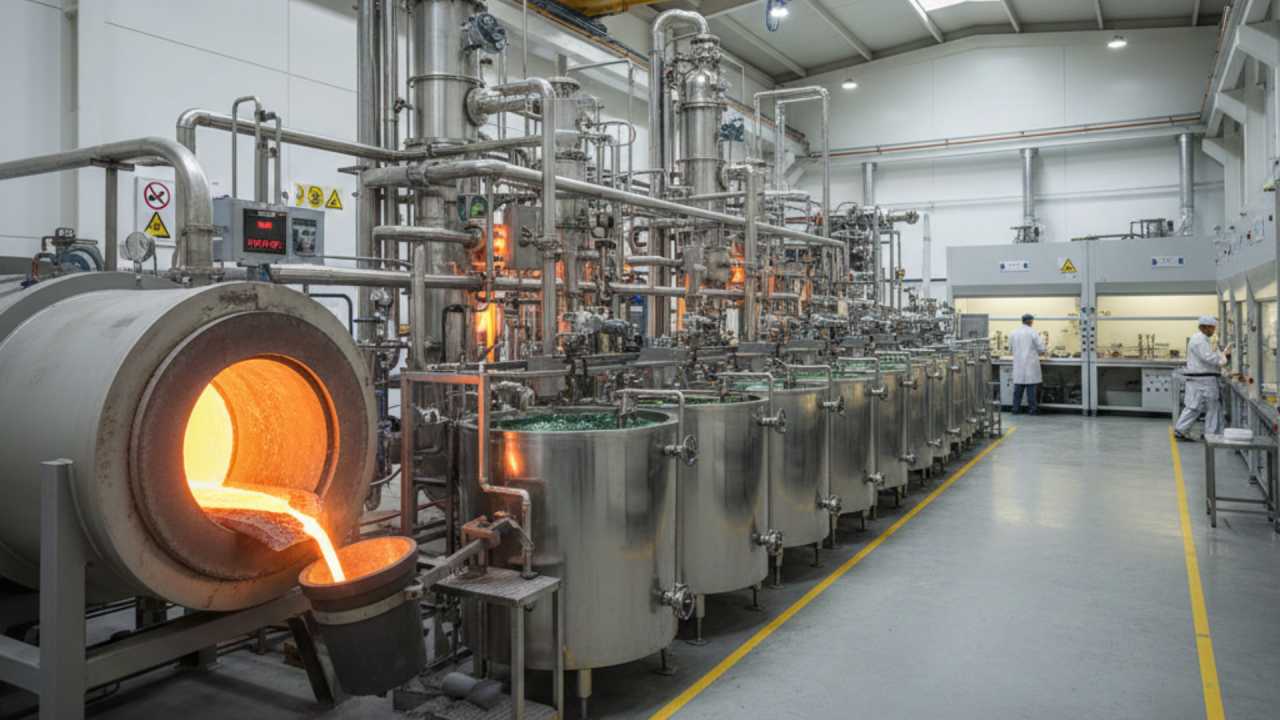
The choice of technology dictates a business’s operational profile, capital expenditure, and regulatory burden. Large refiners often use a hybrid approach, leveraging pyrometallurgy for volume processing and hydrometallurgy for high-purity final separation.
Business Models in Precious Metal Recovery
The value chain in precious metal recovery is complex, giving rise to several distinct and profitable business models. The most successful ventures often adopt a hybrid or integrated approach.
- Integrated Recycling and Refining Companies (The Giants):
- Model: A full-spectrum, closed-loop model that handles everything from the receipt of raw scrap (e-waste, catalysts, industrial residues) to pre-processing, primary smelting, and final electrolytic or chemical refining to produce bullion or high-purity metal salts.
- Revenue: Derived from the difference between the recovered metal value and the cost of the raw material (feedstock), plus refining fees. High capital intensity but offers maximum value capture and supply chain control. (e.g., Umicore, BASF, Johnson Matthey).
- Collection and Aggregation Services (The Feedstock Managers):
- Model: Focuses on sourcing, collecting, sorting, and consolidating scrap materials from numerous small-scale generators (e.g., local recyclers, businesses, municipal waste streams, and collectors). They perform basic mechanical pre-processing (crushing/shredding) and then sell the concentrated material to large-scale refiners.
- Revenue: Margin on the volume and grade of concentrated material sold; often operates on a fee-for-service basis with businesses to manage their waste. Low capital intensity, but highly dependent on logistics and efficient sorting technology. This model is critical for addressing the fragmented e-waste supply chain.
- Technology and Equipment Providers (The Innovators):
- Model: Designs, manufactures, and sells/licenses specialized recovery machinery, proprietary chemicals, or software solutions. This includes advanced crushers, spectroscopic analysis tools for accurate assaying, and specialized hydrometallurgical or bioleaching plant designs.
- Revenue: Sale of capital equipment, licensing fees for patented processes, and ongoing maintenance/service contracts for plant operations. Less exposed to volatile metal prices, focusing instead on R&D and intellectual property (IP).
- Specialized Consulting and Assay Services (The Enablers):
- Model: Provides independent, accurate material testing (assaying), supply chain compliance/traceability (increasingly via blockchain), and regulatory guidance for scrap generators and refiners. Also includes financial consultancies that help structure metal financing (e.g., streaming and royalty models, such as seen in the mining sector but adapted for recycling).
- Revenue: Fixed consulting fees, transaction fees for verified traceability, and percentage-based fees for assay services. Very low capital requirements, relying entirely on expertise and reputation for quality control.
- Reverse Logistics and Manufacturer Take-Back Programs:
- Model: Works directly with Original Equipment Manufacturers (OEMs) (like HP, Apple, or automotive firms) to create a closed-loop system for their products. The company manages the secure collection, data destruction, and processing of end-of-life products, ensuring recovered metals go back into the manufacturer’s supply chain.
- Revenue: Service contracts with OEMs, coupled with the value of the recovered metals (often returned to the OEM). Aligns perfectly with corporate sustainability and CSR goals.
Market Opportunities and Segments
The total addressable market for precious metal recovery is segmented across multiple high-volume and high-concentration sources, each presenting unique logistical and technical challenges.
- E-Waste (Waste Electrical and Electronic Equipment – WEEE):
- Opportunity: The most publicized segment, fueled by the staggering global output of over 50 million tons of e-waste annually, with a low formal recycling rate of under . High concentrations of gold, silver, palladium, and copper are found in printed circuit boards (PCBs), connectors, and chips.
- Focus: Developing efficient, high-throughput systems for complex material separation and clean hydrometallurgical or bio-metallurgical extraction to deal with the mixture of plastics and base metals.
- Automotive Recycling (Catalytic Converters):
- Opportunity: Exhaust catalysts are the single richest source of Platinum Group Metals (PGMs), particularly Platinum, Palladium, and Rhodium. The end-of-life (EOL) cycle of vehicles, even with the rise of EVs, ensures a consistent, high-value stream.
- Focus: Sourcing scrap converters, accurate ceramic monolith crushing, sampling, and high-temperature refining. EV battery recycling is an emerging adjacent opportunity, focusing on lithium, cobalt, and nickel, but still contains some precious metals in associated electronics.
- Industrial Scraps and Residues:
- Opportunity: High-purity, predictable waste streams from manufacturing processes, such as spent industrial catalysts (petrochemical, pharmaceutical), plating residues, photographic waste, and electronic manufacturing scrap (trimmings, faulty batches).
- Focus: Because the material composition is usually known and homogeneous, recovery is simpler and more efficient. The opportunity lies in forging long-term, closed-loop service contracts with high-volume industrial clients.
- Jewelry and Luxury Goods:
- Opportunity: A traditional and high-purity source of gold and silver. This includes consumer-led ‘cash for gold’ operations and scrap from jewelry manufacturing and repair. The market is increasingly driven by consumers seeking “ethical” or “recycled gold,” creating a premium niche.
- Focus: Maintaining rigorous integrity and verification (chain of custody) to guarantee the purity and source of the recycled metal, especially to meet the high standards of luxury brands.
- Investment/Trading and Financial Services:
- Opportunity: Beyond physical recovery, there is a financial opportunity in the precious metal streaming and royalty model applied to recycling. A financier provides capital to a recycler in exchange for a percentage of future recovered metal at a fixed, low price, mitigating the recycler’s initial capital risk.
- Focus: Developing financial instruments and risk models that account for the variability of recycled feedstock versus traditional mining output.
Economic Drivers and Profitability
The economic viability of precious metal recovery is fundamentally dictated by a delicate balance of commodity prices, technological efficiency, and operational costs.
1. Costs and Capital Needs:
- Capital Expenditure (CapEx): High. Setting up a fully integrated refinery (pyrometallurgical or large-scale hydrometallurgical plant) requires tens to hundreds of millions of dollars for specialized equipment (furnaces, reactors, pollution control) and site development. This favors large incumbent players or requires significant venture capital for startups.
- Operational Expenditure (OpEx): Dominated by three factors:
- Feedstock Acquisition: The single largest variable cost is purchasing the raw scrap (e-waste, catalysts). Competition and metal price volatility heavily influence this cost.
- Energy: Pyrometallurgical operations are energy-intensive. Hydrometallurgical operations are less so but require significant energy for ventilation and effluent treatment.
- Chemicals/Reagents: A high and continuous expense for hydrometallurgical processes, though costs can be mitigated by effective reagent regeneration and recycling systems.
2. Revenue Streams and Value Chain:
- Primary Revenue: Sale of high-purity refined metal (bullion, pellets, or powder) on global commodity markets. Revenue is directly tied to the highly volatile spot prices of Gold, Platinum, and Palladium.
- Secondary Revenue (The Margin Maker):
- Refining/Toll Fees: Charging customers a fee for processing their material. This provides a stable service-based income stream, insulating the business from metal price fluctuations.
- Base Metal Recovery: Extracting and selling high-volume base metals (Copper, Aluminum, Nickel) recovered during pre-processing and initial smelting. While lower value per unit, the high volume provides essential revenue to offset operating costs.
3. Profitability and Margins:
- High-Volume Refiners: Profitability is secured through economies of scale, maximizing throughput, and achieving high recovery rates (often ) using integrated technologies. Margin is generated from processing complex, lower-grade material that smaller players cannot handle.
- Specialist Recyclers: Focus on ultra-high-value streams (e.g., specific electronic components, high-concentration catalysts) where margins are higher, or on providing a unique, high-value service like certified secure data destruction coupled with recovery.
- Risk Mitigation: The most successful businesses hedge their exposure to commodity price volatility using financial instruments and maintain a diversified feedstock portfolio (e-waste, automotive, industrial) to balance supply risk.
Sustainability and Environmental Impact
Precious metal recovery is fundamentally a sustainability-driven industry, directly contributing to the global movement toward a circular economy. The environmental benefits far exceed those of traditional mining.
Benefits of Recycling vs. Primary Mining:
- Lower Carbon Footprint: Recycling precious metals significantly reduces the energy required compared to mining, extracting, and processing virgin ore. For instance, studies suggest that recovering gold from e-waste requires substantially less energy and generates a fraction of the emissions compared to gold mining.
- Resource Conservation: By closing the material loop, recycling conserves finite natural resources. The recovered metals are of the same purity as newly mined metals and can be used infinitely without degradation.
- Waste Diversion and Pollution Reduction: E-waste, in particular, contains toxic and hazardous substances (lead, mercury, cadmium) that are prevented from entering landfills or being subjected to crude, highly polluting, informal recycling methods (e.g., acid dumping). Modern refineries ensure safe containment and treatment of these hazardous residuals.
- Water Usage: While hydrometallurgical processes use water and chemicals, the overall water footprint is often lower and more controllable than the massive water demands and associated acid mine drainage risks of virgin mining.
Corporate Social Responsibility (CSR) and the Circular Economy: Companies that engage in certified, ethical precious metal recovery gain a competitive advantage by strengthening their CSR profile. The emphasis on traceability and ethical sourcing has led to the adoption of standards like the Responsible Minerals Initiative (RMI). The circular economy model views end-of-life products not as waste but as “above-ground mines.” The precious metal recovery industry is the physical engine that enables this vision, providing manufacturers with an environmentally superior option for sourcing their critical materials. This alignment with global climate goals and consumer ethics is a long-term growth driver.
Challenges and Barriers
Despite the clear opportunities, the precious metal recovery sector faces substantial technical, regulatory, and logistical hurdles that entrepreneurs must navigate.
- Technical Challenges and Material Complexity:
- Dispersed Concentration: Precious metals in modern electronics are often thinly dispersed across complex, multi-layer materials (e.g., PCBs), making pre-separation difficult.
- Material Matrix: The mixture of plastics, ceramics, and various base metals within e-waste complicates both pyrometallurgical (higher slag formation) and hydrometallurgical (complex, mixed effluent) processing.
- Miniaturization: As electronic components shrink, the individual concentration of precious metals decreases, demanding higher precision and lower-cost extraction methods to maintain profitability.
- Regulatory and Compliance Barriers:
- Strict Environmental Rules: The use of strong acids or high-heat processes requires stringent environmental permitting, monitoring, and significant investment in pollution abatement, which increases the barrier to entry.
- Transboundary Waste Shipments: International regulations (like the Basel Convention) govern the movement of e-waste, often complicating the sourcing of feedstock from developing nations where collection rates are highest.
- Inconsistent Global Standards: A lack of globally harmonized definitions and standards for e-waste classification and recycling processes complicates operations for multinational firms.
- Supply Chain and Market Competition:
- Feedstock Security: The supply of high-grade scrap is highly competitive. Informal or unregulated recycling networks often capture a large portion of the stream, leading to inefficiencies and unethical practices.
- Price Volatility: Fluctuations in Gold, Platinum, and Palladium prices introduce significant market risk, requiring sophisticated financial risk management strategies to stabilize cash flow and profitability.
- Capital Intensity: The high CapEx required for sophisticated refining facilities creates a market advantage for established, well-capitalized players, making it difficult for new entrants to compete on scale.
- Awareness and Collection Issues:
- Consumer Behavior: Consumers often hoard electronics or dispose of them improperly, leading to a loss of valuable material from the formal recycling chain.
- Data Security: The perceived risk of data breaches prevents businesses and consumers from entrusting their old devices to recyclers, necessitating significant investment in certified data destruction services.
Future Trends and Innovations
The future of precious metal recovery will be shaped by technology, data, and market integration.
- AI and Automation: Artificial intelligence (AI) is already being deployed in sorting and pre-processing to identify, categorize, and separate complex materials faster and more accurately than manual labor. Machine learning algorithms can also optimize refinery process parameters (temperature, chemical dosage) in real-time, boosting efficiency and yield.
- Blockchain and Traceability: Distributed Ledger Technology (Blockchain) is emerging as a critical tool for creating immutable, transparent records of the entire supply chain. This will enable refiners to offer “certified ethically recycled” metals, which can command a premium, and satisfy the stringent due diligence requirements of end-users (e.g., electronics and luxury brands).
- Advanced Metallurgy: Research into non-toxic, highly selective “green” solvents (ionic liquids, deep eutectic solvents) promises to deliver the efficiency of hydrometallurgy without the environmental risk of strong acids, potentially lowering OpEx and compliance costs.
- Emerging Markets and Infrastructure: As developing nations industrialize and their middle classes grow, the volume of e-waste and automotive catalysts will surge, creating massive opportunities for infrastructure investment in local collection and processing facilities, often supported by international partnerships.
- Industry Collaboration: Future success will hinge on unprecedented collaboration between OEMs, recyclers, technology providers, and regulators to standardize collection, design products for disassembly (Design for Recycling), and create genuine closed-loop material flows.
Case Studies / Success Stories
Umicore (Integrated Global Leader): The Belgian materials technology group, Umicore, is often cited as a benchmark. Their business model is a masterclass in integration, using a highly efficient, proprietary pyrometallurgical process at their Hoboken facility to process the world’s most complex scrap streams, from e-waste to industrial catalysts. They achieve an impressive recovery rate for over 17 metals. Their success is built on: 1) Scale (allowing for high-volume, low-cost processing), 2) Technological IP (constant R&D to refine processes), and 3) Closed-loop partnerships with industrial clients, positioning them not just as a waste handler but as a key materials partner in the circular economy.
Boliden (Hybrid Model): The Swedish mining and metallurgy group, Boliden, uses its primary copper and lead smelters to process electronic scrap as a high-grade secondary feedstock. They leverage their existing large-scale, high-temperature infrastructure to recover precious metals efficiently, demonstrating a successful hybrid model where existing primary metal production assets are adapted to handle secondary materials, thereby utilizing spare capacity and hedging against volatility in primary ore grades.
Precious Metals Streamers (Financial Innovation): While historically focused on mining, firms like Wheaton Precious Metals and Franco-Nevada are models for how financial streaming could be adapted to recycling. A recycler secures an upfront cash injection for a facility expansion in exchange for a fixed percentage of future recovered gold or silver at a set low price. This de-risks the CapEx for the recycler while providing the financial partner with a low-cost, ESG-friendly supply of metal.
Final Thoughts
The precious metal recovery industry has transitioned from a niche waste management activity to a vital, high-tech component of global resource security. The confluence of mounting e-waste, resource scarcity, and aggressive environmental regulation has created a robust economic landscape valued in the tens of billions of dollars.
The opportunities are defined by smart specialization: whether through the high-volume, integrated refining model, the essential logistics of the collection services, or the intellectual property underlying cutting-edge green technologies. Success hinges on mastering the technical complexities of processing heterogeneous scrap, securing stable feedstock through robust partnerships, and navigating the volatile commodity price environment. For investors, entrepreneurs, and established industrial players, precious metal recovery represents an investment in essential infrastructure for the circular economy—a sector where profitability, sustainability, and technological innovation converge to create significant long-term value. The time to invest in our “urban mines” is now.