
Understanding Precious Metals Refining Techniques
The allure of precious metals has shaped human civilization for millennia. From the golden masks of Tutankhamun to the platinum components in modern fuel cells, these elements—gold, silver, platinum, palladium, and rhodium—possess unique chemical and physical properties that make them indispensable. However, these metals are rarely found in their pure form in nature. They are typically bound within complex ores or mixed with base metals. Refining is the critical bridge between the raw, unrefined material extracted from the earth and the high-purity product required for investment, jewelry, and advanced technology.
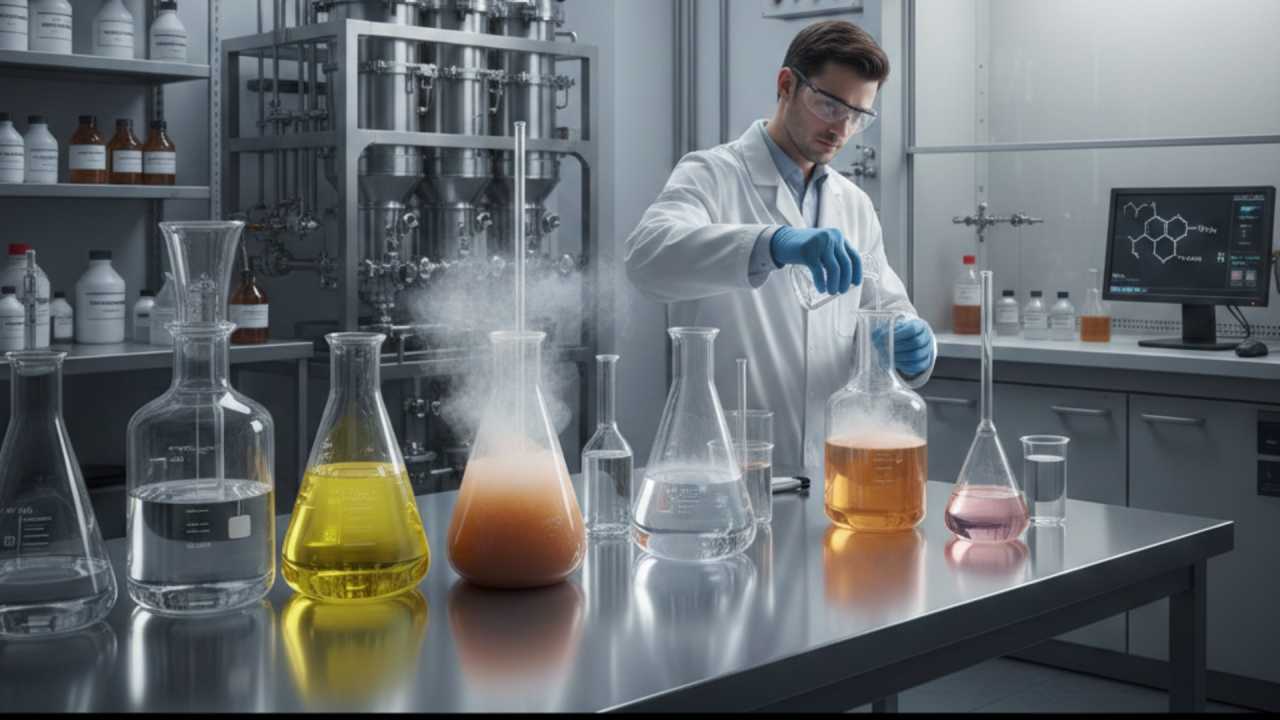
Refining is distinct from mining. While mining focuses on the extraction of ore from the ground, refining is the sophisticated chemical and metallurgical process of purifying those metals to their elemental form. As the global demand for electronics, medical devices, and green energy solutions grows, the need for high-purity precious metals has never been greater. This article explores the intricate world of precious metal refining, from traditional fire-based methods to cutting-edge electrochemical and biological innovations.
Overview of Precious Metals and Their Uses
To understand refining, one must first understand the materials being processed. Precious metals are naturally occurring metallic chemical elements of high economic value. Chemically, they are less reactive than most elements, which contributes to their luster and resistance to corrosion—qualities that make them “noble.”
Primary Precious Metals
The primary focus of the refining industry lies in five key metals:
-
Gold (Au): The most famous of all, valued for its conductivity, malleability, and immunity to oxidation.
-
Silver (Ag): Known for having the highest electrical and thermal conductivity of any element, making it essential for industrial applications.
-
Platinum (Pt): A dense, stable metal with a high melting point, crucial for catalysis.
-
Palladium (Pd): A member of the Platinum Group Metals (PGMs), prized for its ability to absorb hydrogen and its role in automotive emissions control.
-
Rhodium (Rh): One of the rarest and most valuable metals, used primarily in catalytic converters to reduce nitrogen oxides.
Industrial and Commercial Applications
The demand for these metals is driven by diverse sectors. In jewelry, gold and silver remain the gold standard (literally) for aesthetic value. In electronics, gold and silver are used in circuit boards, connectors, and semiconductors due to their reliability and conductivity.
The automotive industry is perhaps the largest consumer of PGMs, using them in catalytic converters to strip pollutants from exhaust gases. In medicine, platinum is used in chemotherapy drugs and pacemakers. More recently, the renewable energy sector has begun relying on silver for photovoltaic cells in solar panels and platinum for hydrogen fuel cells. Finally, investment in the form of bullion coins and bars provides a hedge against inflation, requiring metals refined to 99.9% or even 99.99% purity.
Importance of High Purity
In the world of precious metals, purity is synonymous with value and functionality. Industrial tolerance levels are incredibly tight; a trace amount of an impurity like lead or bismuth can render a gold wire brittle, causing a multi-million dollar satellite component to fail. Furthermore, the global market relies on assaying and hallmarking to verify purity, ensuring that a “four-nines” (99.99%) gold bar truly contains the weight and quality advertised.
The Refining Process: From Ore to Pure Metal
The journey from a rock in the ground to a shimmering bar of gold is long and arduous. It typically follows three broad phases: mining, smelting, and refining.
1. Mining and Initial Processing
Once the ore is extracted, it undergoes crushing and milling to turn large rocks into a fine powder. Because precious metal concentrations are often low—sometimes only a few grams per ton of rock—concentration techniques like froth flotation or gravity separation are used to discard the bulk of the waste rock (tailings).
2. Smelting
The concentrated ore is then sent to a furnace. Smelting uses heat and chemical reducing agents to decompose the ore, driving off unwanted elements like sulfur and oxygen. The result is often a dore bar, a semi-pure alloy containing a mixture of precious metals and some base metals (like copper or iron). While dore bars look like metal, they are far from the purity required by the market.
3. The Refining Stage
This is where the true purification happens. Through chemical, thermal, or electrolytic means, the dore bars are broken down, and the target metals are isolated. The goal is to reach commercial purity, usually 99.5% for silver and 99.9% to 99.99% for gold and PGMs.
Major Precious Metal Refining Techniques
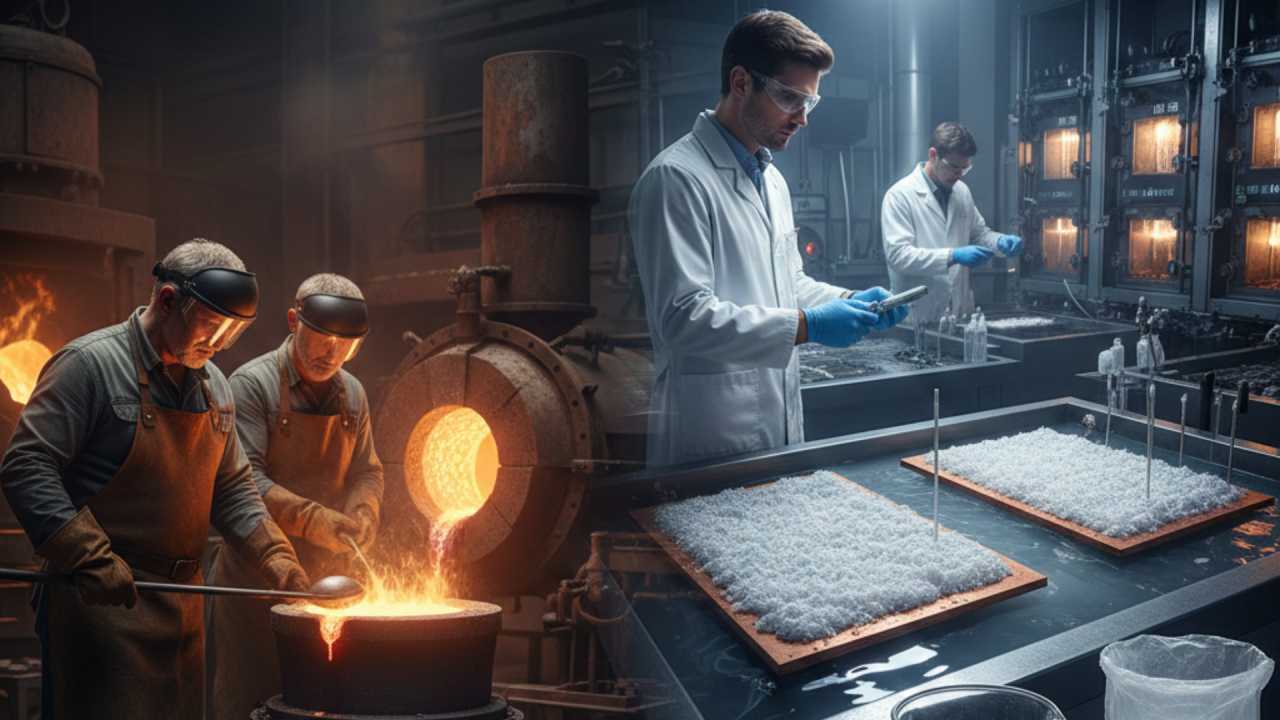
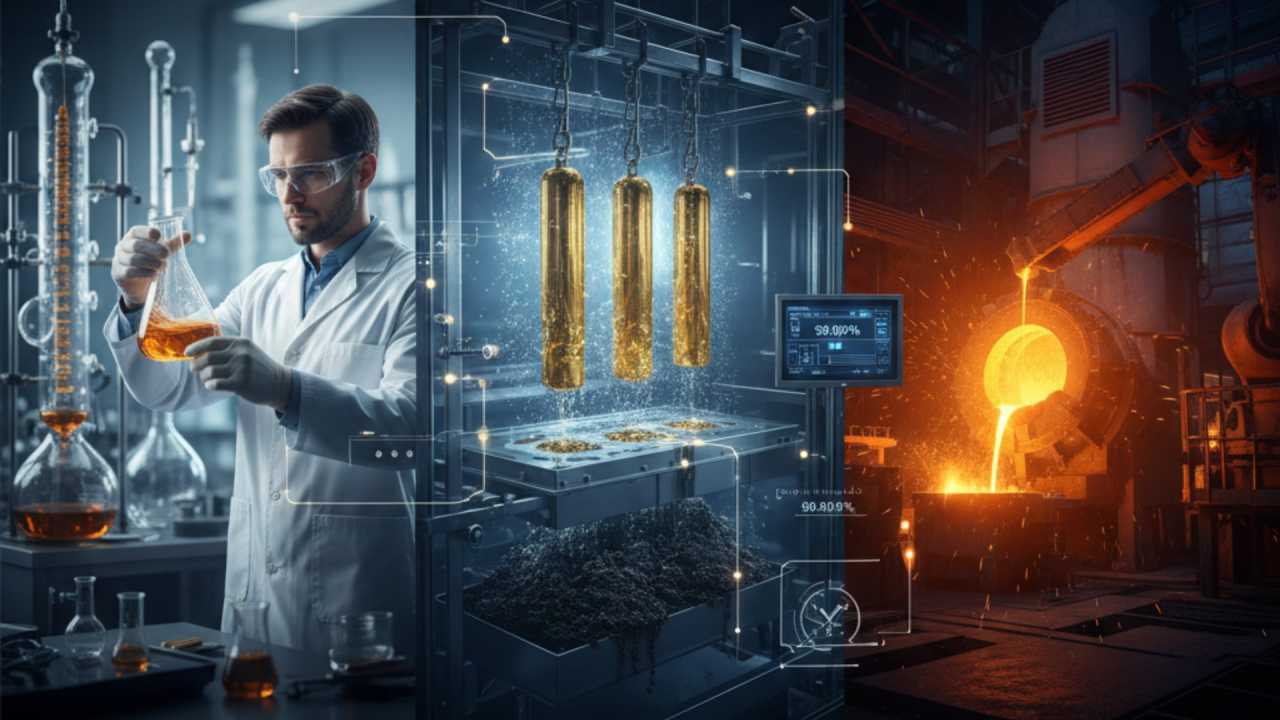
Refining techniques are generally categorized into three main “branches” of metallurgy: pyrometallurgy (heat), hydrometallurgy (liquids), and electrometallurgy (electricity).
1. Pyrometallurgical Refining
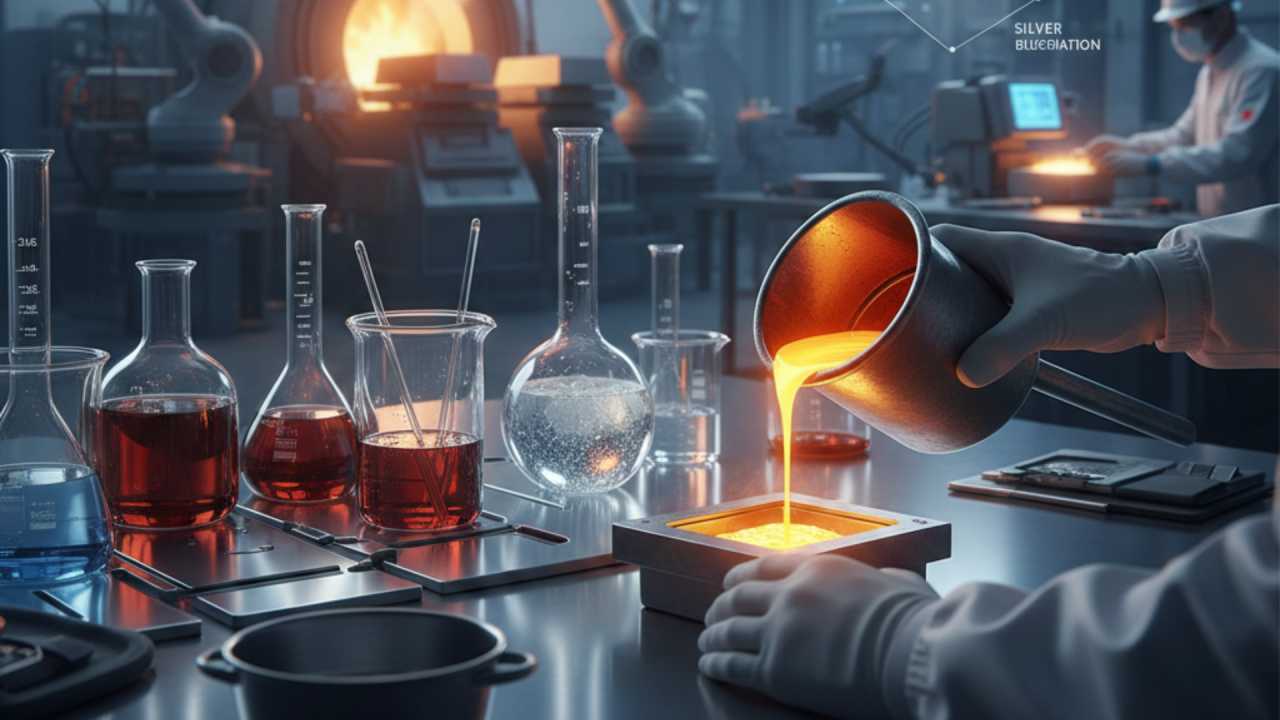
Pyrometallurgy is the oldest form of refining, relying on high temperatures to separate metals based on their oxidation states and melting points.
-
Cupellation: A historic process where an alloy is melted in a “cupel” (a shallow porous bowl). Lead and other base metals oxidize and are absorbed into the cupel or volatized, leaving behind a bead of gold and silver.
-
The Miller Process: This is the primary method for large-scale gold refining. Gaseous chlorine is bubbled through molten gold. The impurities (like silver, copper, and iron) react with the chlorine to form chlorides, which float to the top as a slag or evaporate. This process can quickly reach a purity of 99.5%.
-
Advantages and Disadvantages: Pyrometallurgy is fast and handles high volumes, but it is incredibly energy-intensive and produces significant atmospheric emissions that must be scrubbed to prevent environmental damage.
2. Hydrometallurgical Refining
Hydrometallurgy involves using aqueous solutions (acids and chemicals) to dissolve metals and then selectively precipitate them.
-
Aqua Regia Process: “Royal Water,” a mixture of nitric and hydrochloric acids, is used to dissolve gold. Once in solution, the gold is precipitated out using a reducing agent like sulfur dioxide or sodium metabisulfite. This method can achieve 99.99% purity.
-
Cyanidation: A common technique for extracting gold from low-grade ore. A weak cyanide solution dissolves the gold, which is later recovered using zinc precipitation or carbon adsorption.
-
Solvent Extraction: Used heavily for Platinum Group Metals. Complex mixtures of metals are dissolved in acid, and specific organic solvents are used to “pull” individual metals out of the liquid one by one.
-
Safety and Environment: Hydrometallurgy allows for very high purity but involves handling toxic substances like cyanide and strong acids. Careful wastewater management is mandatory.
3. Electrolytic Refining
Electrolytic refining, or electrorefining, uses electricity to transfer metal from an impure source to a pure source through an electrolyte solution.
-
The Wohlwill Process: This is the gold standard for achieving 99.999% purity. An impure gold anode is placed in a solution of chloroauric acid. When an electric current is applied, the gold dissolves from the anode and deposits onto a pure gold cathode. Impurities either stay in the solution or fall to the bottom as “anode slime.”
-
Moebius and Thum Processes: These are the equivalent processes for silver refining, using silver nitrate as the electrolyte.
-
Advantages: This method is highly controlled and yields the highest possible purity levels. It is also scalable and allows for the recovery of valuable by-products from the anode slime.
4. Bioleaching and Emerging Green Techniques
The environmental footprint of traditional refining has led to the rise of bioleaching. This process uses specific strains of bacteria (such as Acidithiobacillus ferrooxidans) to break down mineral sulfides and release the trapped precious metals.
-
Eco-friendly: It requires less energy than smelting and avoids some of the harshest chemicals.
-
Current Use: Currently, it is mostly used for low-grade ores where traditional methods aren’t economically viable, but research is ongoing to apply this to e-waste recycling.
Refining of Specific Metals
Each metal presents unique chemical challenges that dictate the refining path chosen.
Gold Refining
Gold is typically refined via the Miller Process for speed and bulk, followed by the Wohlwill Process if ultra-high purity is required. For scrap jewelry or small-scale operations, the Aqua Regia method remains the most common because it requires less specialized machinery than the gas-based Miller process.
Silver Refining
Most silver is produced as a by-product of copper, lead, or zinc refining. Once the silver is concentrated into dore bars, it is almost exclusively refined through electrolytic methods. Silver’s high conductivity makes it an ideal candidate for electrolysis, where 99.9% purity is easily maintained.
Platinum Group Metals (PGMs)
Refining PGMs (Platinum, Palladium, Rhodium, Iridium, Osmium, Ruthenium) is the most complex task in metallurgy. Because these metals have very similar chemical properties, they are always found together. Refining them involves a “separation train”—a sequence of dozens of chemical steps involving solvent extraction and ion exchange. The technical difficulty is one reason why PGMs are so expensive; the refining process alone can take several weeks.
Environmental and Safety Considerations
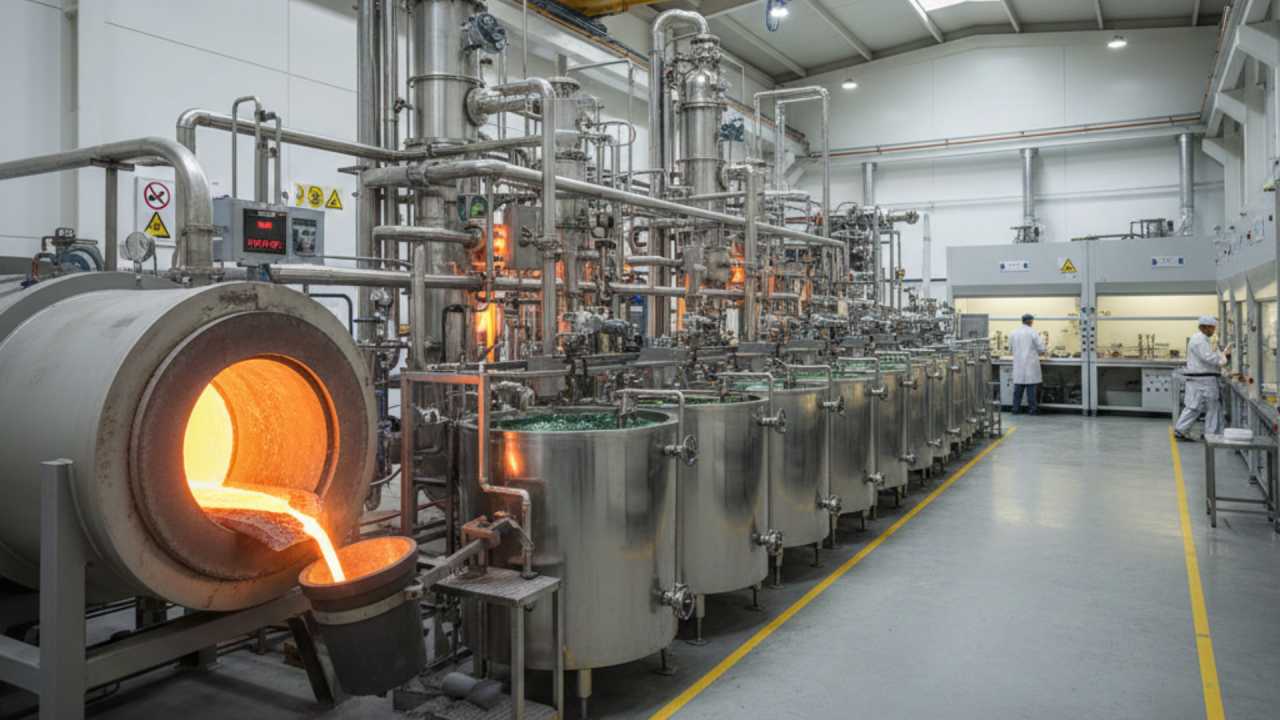
The refining industry faces intense scrutiny regarding its environmental impact. The use of toxic chemicals like cyanide and the emission of sulfur dioxide during smelting pose significant risks.
-
Wastewater Treatment: Refineries must employ sophisticated closed-loop systems to ensure that no acidic or cyanide-laced water enters the local ecosystem.
-
Air Filtration: High-tech scrubbers are used to capture metal dust and toxic gases before they leave the facility.
-
Worker Safety: Because of the high temperatures and corrosive chemicals, refineries require strict PPE (Personal Protective Equipment) and automated systems to minimize human exposure.
-
The Green Shift: There is a massive industry-wide push toward ESG (Environmental, Social, and Governance) compliance. Investors increasingly demand “clean gold,” leading to more transparent supply chains and lower-emission refining.
Recycling and Secondary Refining: The Rise of “Urban Mining”
As the cost of traditional mining rises and ore grades decline, secondary refining (recycling) has become a multi-billion dollar industry.
E-Waste Recovery
Our discarded smartphones and laptops are concentrated “mines” of precious metals. A ton of old circuit boards can contain 40 to 80 times more gold than a ton of raw ore. Modern refineries are increasingly pivoting to process e-waste, using shredded electronics as their primary “feedstock.”
Catalytic Converters
The recycling of automotive catalysts is the primary source of “recycled” palladium and rhodium. As vehicles reach the end of their lives, these converters are collected, crushed, and the ceramic honeycombs are refined to recover the PGM coatings.
Circular Economy
Recycling uses significantly less energy than primary mining. For example, refining recycled aluminum takes 95% less energy than producing it from ore; while the ratio is different for gold, the reduction in carbon footprint is similarly dramatic. This “circular economy” approach is essential for the long-term sustainability of the tech industry.
Quality Control and Assaying
In the precious metals trade, trust is verified by science. No transaction of refined metal occurs without an assay.
-
Fire Assay: The “gold standard” of testing. A small sample of the metal is melted with lead and flux to separate the precious metal, which is then weighed with extreme precision.
-
X-Ray Fluorescence (XRF): A non-destructive method that uses X-rays to determine the elemental composition of a sample in seconds.
-
ICP (Inductively Coupled Plasma) Testing: A high-tech method where the metal is vaporized in a plasma torch and analyzed by a spectrometer to detect impurities down to parts per billion.
These rigorous tests ensure that a jeweler or an industrial manufacturer is getting exactly what they paid for, maintaining the integrity of the global commodities market.
Economic Factors in Precious Metal Refining
The refining business is highly sensitive to external economic pressures.
-
Spot Prices: The volatility of metal prices on the London Bullion Market (LBMA) affects the margins of refiners. If the price of gold drops, the incentive to refine low-grade scrap diminishes.
-
Energy Costs: Since smelting and electrolysis are energy-intensive, the cost of electricity and natural gas is a major overhead for any refinery.
-
Scale: Large-scale refineries benefit from economies of scale, allowing them to process thousands of tons of material with lower costs per ounce compared to boutique operations.
Future Trends in Precious Metals Refining
Looking ahead, the refining industry is on the cusp of a technological revolution.
Automation and AI
Artificial Intelligence is now being used to optimize the “leaching” process, using sensors to monitor chemical concentrations in real-time and adjust inputs for maximum efficiency. Robotics are also taking over the most dangerous tasks in smelting and pouring molten metal.
Cleaner Chemical Alternatives
Researchers are looking for “green” solvents to replace cyanide and aqua regia. Ionic liquids—salts that are liquid at room temperature—show promise as non-toxic, recyclable alternatives for dissolving precious metals.
The EV Revolution
The shift toward Electric Vehicles (EVs) will change the demand landscape. While EVs don’t use PGM-based catalytic converters, they require massive amounts of silver for electronic components and platinum for future hydrogen fuel cells. Refineries are already retooling to handle these shifting needs.
Growth of ESG
As consumers become more conscious of the origins of their products, “traceability” will become a standard feature. Blockchain technology is already being used to track gold from a specific mine through the refinery to the final customer, ensuring that the metal was sourced ethically and refined sustainably.
Final Thoughts
Precious metals refining is a masterclass in the application of chemistry and physics. It is a process that has evolved from the simple fire-pits of the Bronze Age to the ultra-precise electrolytic labs of today. As we move deeper into a high-tech, green-energy future, the ability to purify these rare elements efficiently and sustainably will remain a cornerstone of global industry. Whether it is recovering gold from a discarded phone or refining platinum for a clean-energy vehicle, the art and science of refining ensure that these “precious” materials continue to drive human progress.