
What Type of Precious Metals Refining Machine Is Best for Urban Mining?
The rapid evolution of technology has created a unique environmental and economic paradox. While our devices become smarter, more powerful, and more compact, they also contribute to a burgeoning mountain of electronic waste (e-waste). However, within this mountain lies a literal gold mine. Urban mining—the process of recovering precious metals from end-of-life electronics, automotive catalysts, and industrial scrap—has shifted from a niche environmental initiative to a multi-billion-dollar industrial necessity.
As the demand for gold, silver, and platinum group metals (PGMs) outpaces the output of traditional mines, the efficiency of the recovery process becomes paramount. The “best” machine for urban mining isn’t a one-size-fits-all solution; it is a strategic choice dictated by the nature of the waste, the required purity, and the scale of the operation. To understand which technology reigns supreme, we must dive deep into the mechanics of recovery.
What is Urban Mining?
Urban mining is the systematic extraction of valuable resources from the waste generated by modern cities, rather than from the earth’s crust. While traditional mining involves digging massive open pits to find trace amounts of ore, urban mining focuses on “technospheric” deposits—the vast stock of materials already in use or discarded within human society.
Origin and Growth of the Concept
The term was popularized in the 1980s by researchers like Hideo Nanjyo, but it has only recently gained mainstream traction due to the soaring prices of rare earth elements and precious metals. Unlike traditional mining, which is geographically bound to where minerals naturally occur, urban mining can happen anywhere there is a high density of human activity.
The E-Waste Gold Mine
The primary “ore” for urban mining is electronic waste. This includes:
-
Printed Circuit Boards (PCBs): Found in everything from smartphones to washing machines, these are high-value targets rich in gold and silver.
-
Connectors and Contacts: Often heavily plated with gold to ensure conductivity.
-
Automotive Catalytic Converters: The world’s primary secondary source for Platinum, Palladium, and Rhodium.
-
Batteries: Increasingly vital for the recovery of cobalt, lithium, and nickel.
Global Trends and Sustainability
According to the Global E-waste Monitor, the world produces over 50 million metric tons of e-waste annually. Only about 20% is formally recycled. This represents an enormous lost economic opportunity. Beyond the money, urban mining is a sustainability mandate. Extracting a ton of gold from a traditional mine requires the displacement of hundreds of tons of rock and the use of vast quantities of water and cyanide. In contrast, a ton of discarded circuit boards can contain 40 to 800 times more gold than a ton of raw ore.
Precious Metals in Urban Waste
To choose the right machine, a refiner must understand exactly what they are hunting. The economic viability of an urban mining operation depends on the concentration and current market value of the target metals.
The Primary Targets
-
Gold (Au): The “holy grail” of urban mining. Its high conductivity and resistance to corrosion make it indispensable for high-end electronics.
-
Silver (Ag): Widely used in solder, switches, and multilayer ceramic capacitors (MLCCs).
-
Platinum Group Metals (PGMs): This group, including Platinum (Pt), Palladium (Pd), and Rhodium (Rh), is found in massive concentrations within catalytic converters. Rhodium, in particular, often trades at prices many times higher than gold.
Secondary but Vital Metals
While not classified as “precious,” metals like Copper (Cu), Tin (Sn), and Nickel (Ni) are recovered in such large volumes that they often cover the entire operational cost of the refining facility, allowing the precious metal recovery to be pure profit.
Typical Concentrations
In the world of geology, a “rich” gold vein might have 10 grams of gold per ton of rock ($10 \text{ g/t}$). In urban mining, a ton of mobile phone PCBs can contain up to $300 \text{ to } 350 \text{ grams}$ of gold. This staggering difference in concentration is why the refining machine market is currently exploding.
The Refining Process: From E-Waste to Refined Metals
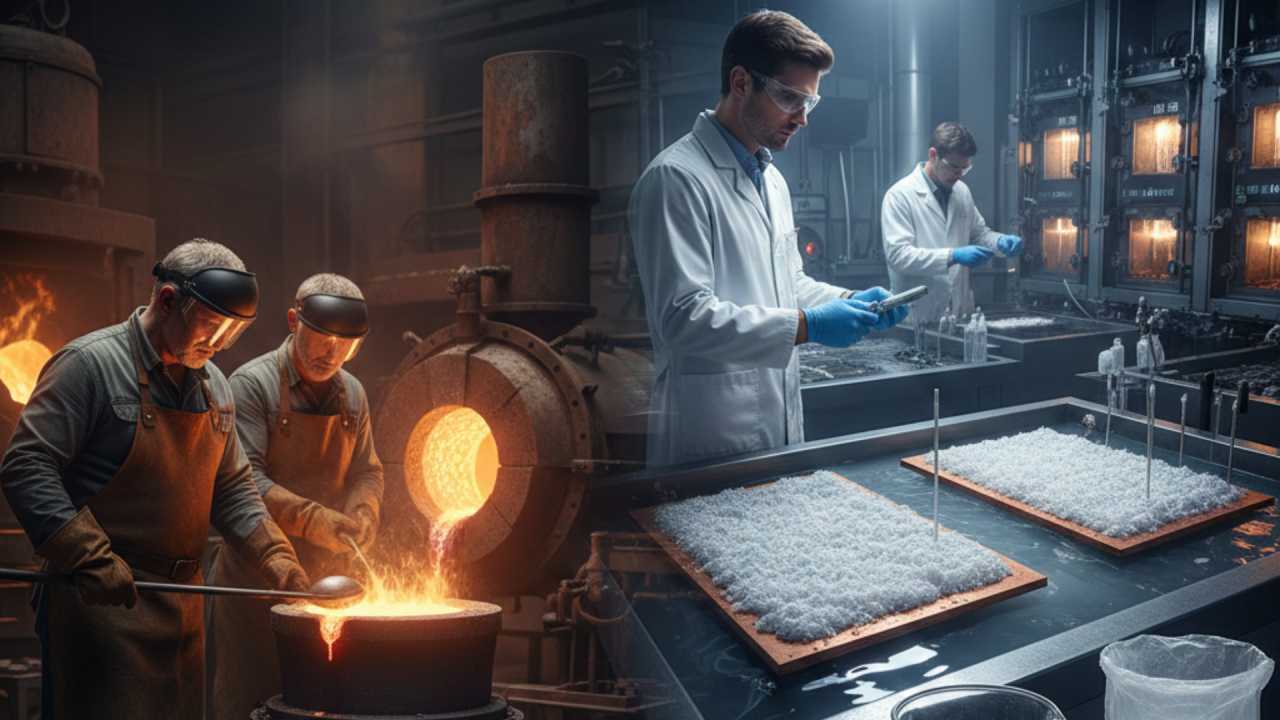
The journey from a discarded laptop to a 99.99% pure gold bar involves several distinct stages. Refining machines are typically categorized by which stage of this process they handle.
1. Sorting & Dismantling
This is the “upstream” phase. Before any chemical or thermal action occurs, the waste must be organized. Manual dismantling allows for the removal of batteries (which can explode in shredders) and hazardous components like mercury switches.
2. Pre-processing: Shredding & Grinding
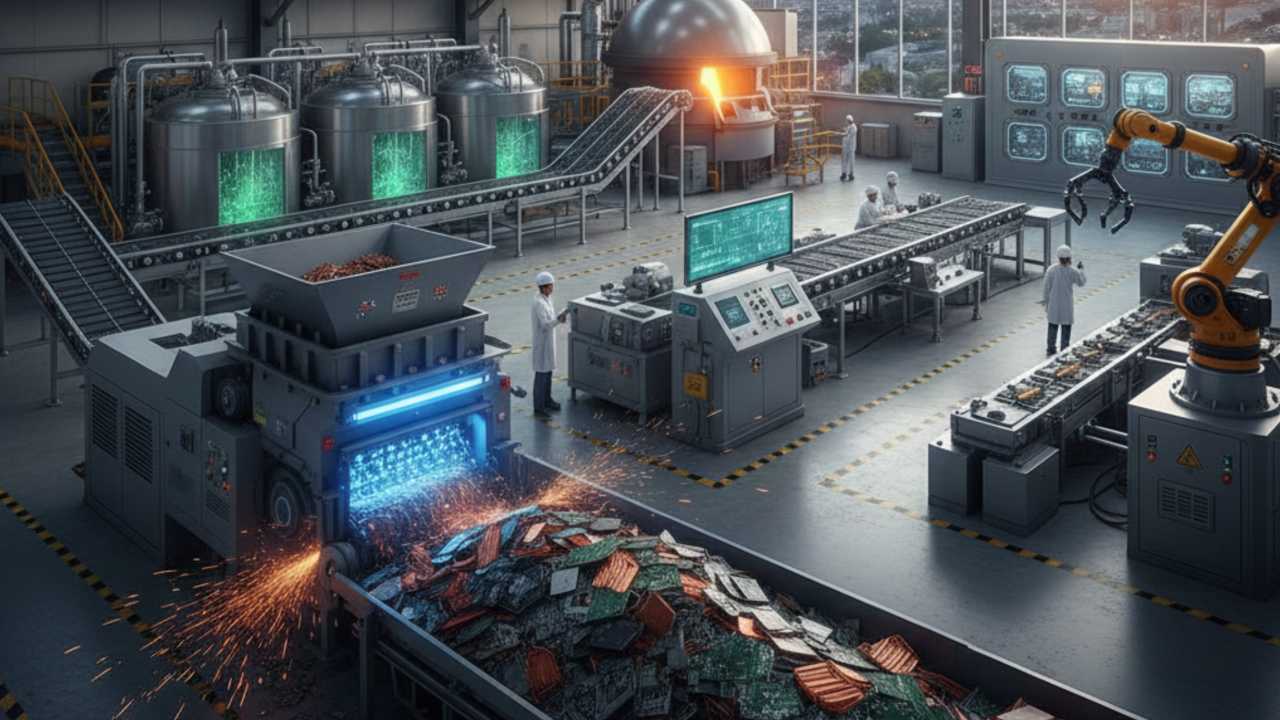
To expose the metals trapped inside plastic casings and resin-bonded boards, the material must be reduced in size. Shredders and hammer mills turn bulky waste into a fine granulate, increasing the surface area for subsequent chemical or thermal reactions.
3. Chemical and Physical Separation
This stage uses physical properties—such as magnetism, density, or electrical conductivity—to separate metallic fractions from non-metallic ones (plastics and glass). Eddy current separators are common here to eject non-ferrous metals like aluminum and copper from the stream.
4. Smelting or Hydrometallurgical Refining
This is the “downstream” phase where the actual refining happens. Through either extreme heat or chemical solutions, the metals are isolated into their pure forms.
Types of Precious Metals Refining Machines
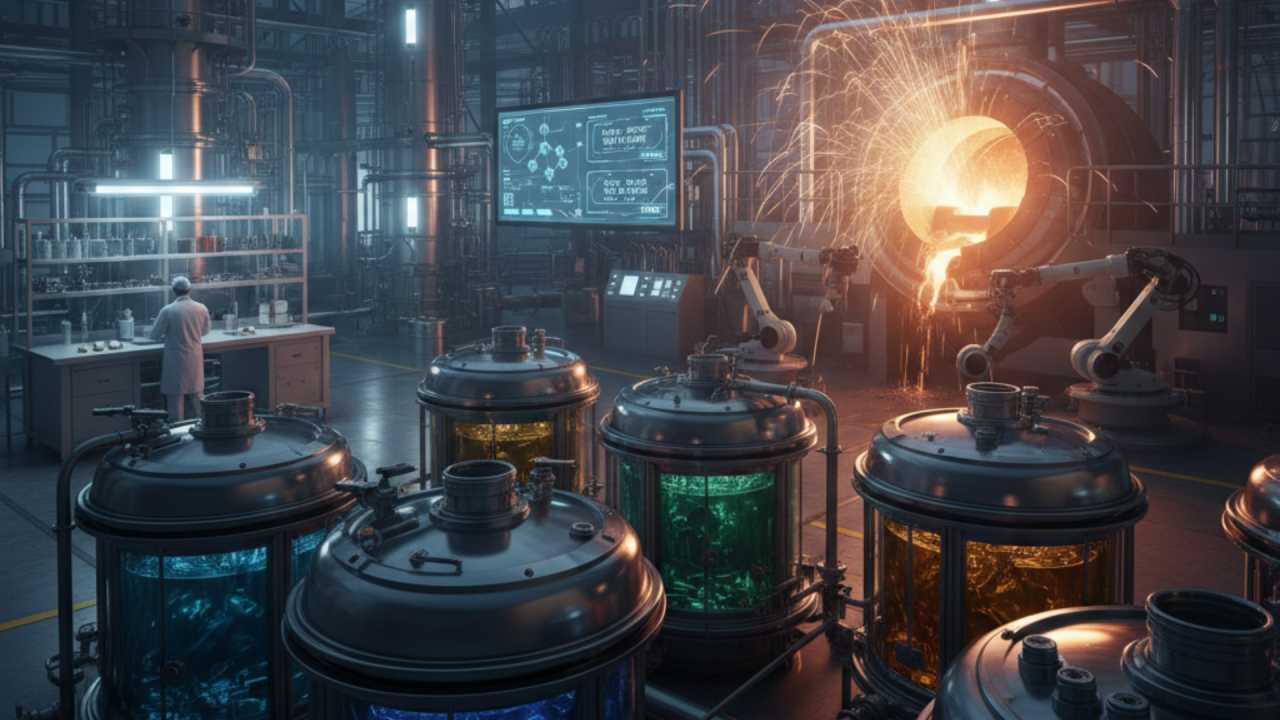
Choosing the right equipment requires a balance between throughput, purity, environmental footprint, and capital expenditure.
1. Mechanical and Shredding Systems
These machines are the workhorses of the pre-processing stage. High-speed granulators and heavy-duty shredders break down complex assemblies into manageable pieces.
-
How they work: Using high-torque blades or hammers, they reduce e-waste to particles often smaller than $10 \text{ mm}$.
-
Pros: High throughput; dry process (no chemicals); essential for bulk e-waste.
-
Cons: They do not produce pure metal; they only prepare the material. They can also cause “fines” (micro-dust) where precious metal is lost if not captured by high-end dust collection systems.
2. Pyrometallurgical (Smelting & Melting) Machines
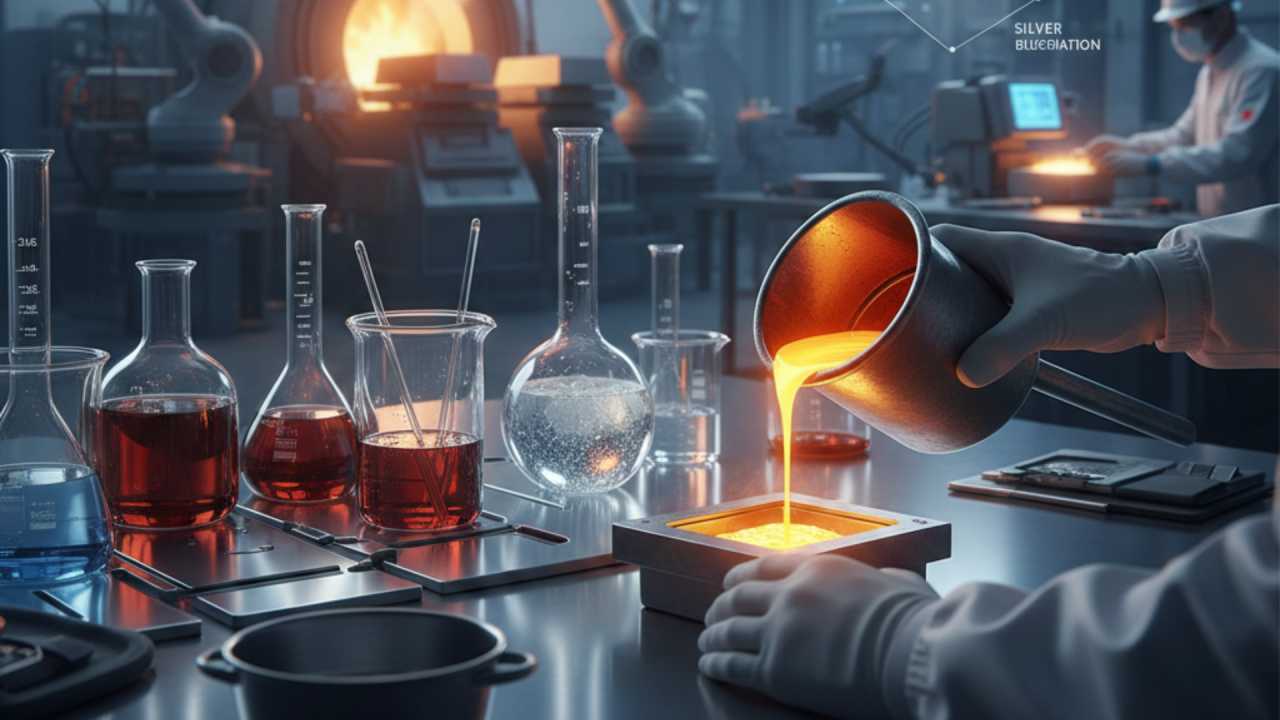
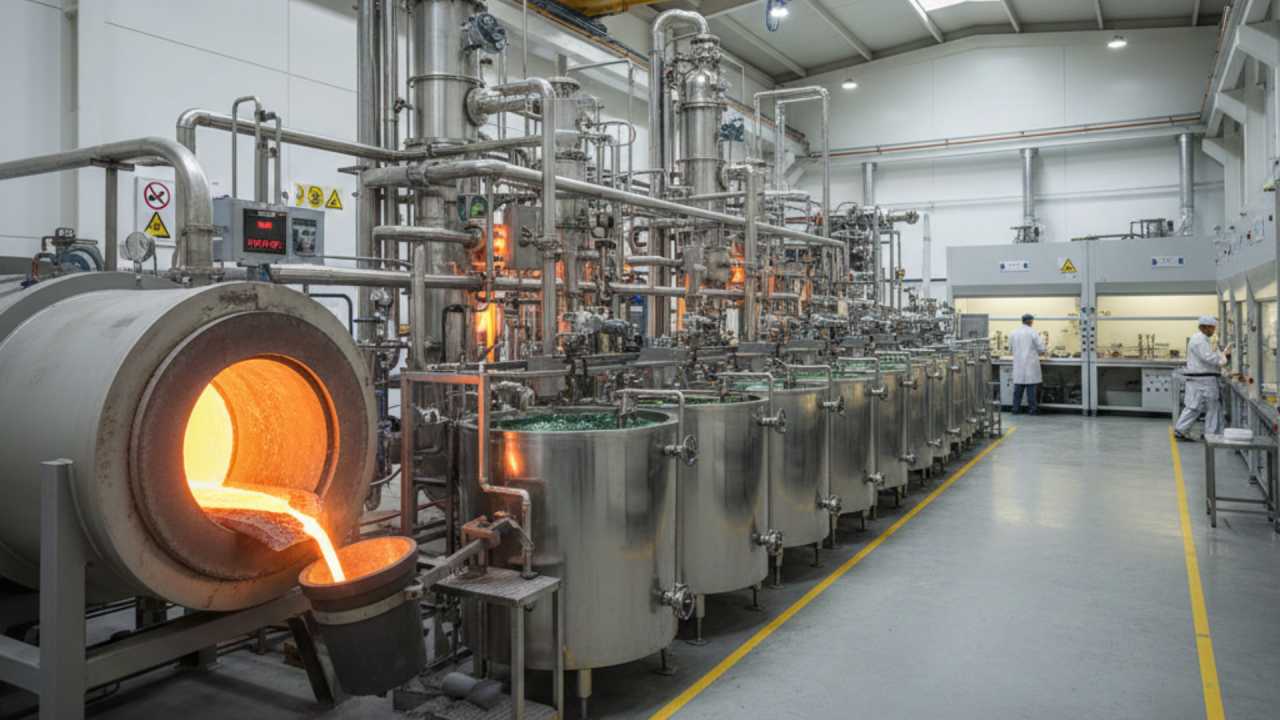
Pyrometallurgy uses high temperatures to melt the scrap and separate metals. Induction furnaces, rotary kilns, and cupola furnaces are the standard equipment here.
-
How they work: The shredded scrap is heated (often exceeding $1200°C$) with “fluxes” (chemicals like borax or soda ash). The precious metals form a heavy molten alloy at the bottom, while the impurities form a glass-like “slag” on top.
-
Pros: Extremely effective for bulk processing; can handle varied feedstocks simultaneously; very mature technology.
-
Cons: Extremely high energy consumption; significant CO2 footprint; requires sophisticated “scrubbers” to capture toxic fumes; not efficient for low-grade waste due to heat loss.
3. Hydrometallurgical Refining Systems
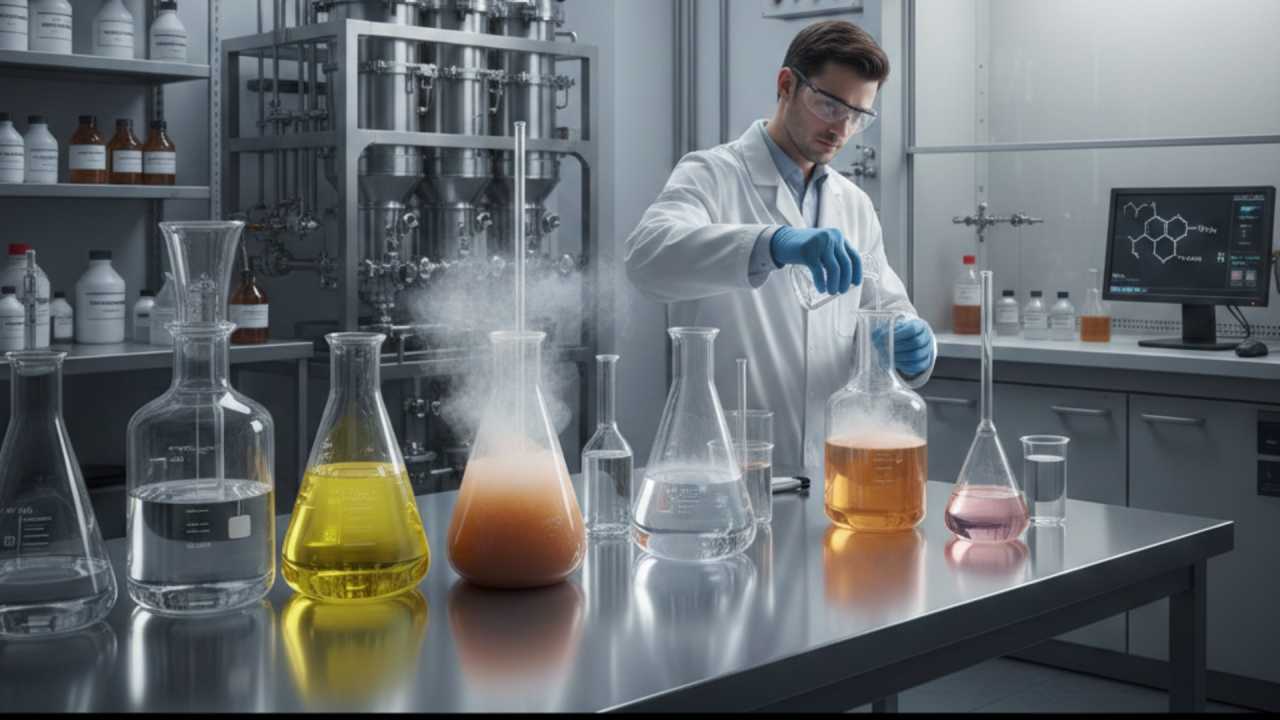
This is the “wet chemistry” approach, involving leaching tanks, filter presses, and precipitation units.
-
How they work: The scrap is submerged in a leaching solution—often Aqua Regia (a mixture of hydrochloric and nitric acids) or cyanide-free alternatives. The acids dissolve the metals into a liquid state. Specific reagents are then added to the liquid to make the gold or silver “precipitate” out as a solid powder.
-
Pros: Capable of achieving extremely high purity ($99.99\%$); lower energy usage than smelting; highly selective (you can target just gold and leave the copper behind).
-
Cons: Involves handling hazardous acids; requires complex wastewater treatment; slower throughput than smelting.
4. Electrochemical & Electrorefining Machines
Often used as the final step to reach “investment grade” purity, these machines use electrolysis.
-
How they work: An impure metal bar (the anode) is placed in a chemical bath. When an electric current is applied, pure metal ions migrate through the liquid and deposit onto a starter sheet (the cathode).
-
Pros: Highest possible purity; relatively quiet and clean; can be scaled from a desktop unit to an industrial line.
-
Cons: Requires a very stable and expensive power source; the electrolyte solutions must be carefully managed.
5. RFID & AI-Assisted Sorting Machines
The newest category of “machine” in urban mining doesn’t use heat or chemicals. Instead, it uses computer vision and X-ray fluorescence (XRF).
-
Pros: Drastically improves the efficiency of the “upstream” process; identifies specific components (like high-value CPU chips) before they get diluted in a shredder.
-
Cons: High initial capital cost; does not “refine” the metal, only sorts it.
Factors to Consider When Choosing a Refining Machine
To determine which machine is “best,” you must evaluate several operational constraints.
1. Type of Waste Material
If you are processing automotive catalysts, you need a system capable of handling ceramic substrates—usually a combination of high-intensity grinding and specialized acid leaching for PGMs. If you are processing jewelry scrap, a small-scale, high-precision hydrometallurgical unit is often more profitable than a large smelter.
2. Expected Throughput & Scale
-
Micro-Refiners: For those starting in a garage or small warehouse, a modular Aqua Regia plant that can process $5 \text{ to } 10 \text{ kg}$ of gold per day is ideal.
-
Industrial Hubs: These require continuous feed induction furnaces capable of handling tons of material per hour.
3. Desired Metal Purity
Are you selling “doré bars” (semi-pure alloys) to a larger refinery, or are you aiming for 24-karat gold for the bullion market? Electrorefining machines are non-negotiable for those seeking the latter.
4. Environmental & Legal Regulations
Regulations like the Clean Air Act or local watershed protections can dictate your choice. A smelting operation in an urban center may face impossible hurdles regarding air quality permits, making a closed-loop hydrometallurgical system (which captures all fumes and liquids) a more viable path.
5. Cost & ROI
Refining is a margin business. You must calculate the Capital Expenditure (CAPEX) of the machine against the Operating Expenditure (OPEX)—chemicals, electricity, and labor. A machine that recovers 99% of the gold but costs $500$ per hour to run might be less profitable than a 95% recovery machine that costs $50$ per hour.
Case Studies / Example Scenarios
Scenario 1: The Small Urban Startup
A small company in London focuses on collecting discarded iPhones. They chose a desktop-scale automated hydrometallurgical unit.
-
The Equipment: A closed-loop leaching system with an integrated fume scrubber.
-
The Result: They avoid the need for massive industrial permits and produce high-purity gold sponge that local jewelers buy at a premium. The small footprint allows them to operate in an urban business park.
Scenario 2: The Regional E-Waste Processor
A large facility in the Midwest handles all municipal e-waste for three states. They utilize a multi-stage mechanical and pyrometallurgical line.
-
The Equipment: Industrial shredders, eddy-current separators, and a large induction furnace.
-
The Result: They process massive volumes of low-grade waste (old printers, VCRs, microwaves). While their final product is a mixed metal alloy, the sheer volume ensures high profitability when they sell that alloy to a secondary global refiner.
Future Technologies in Precious Metals Refining
The future of urban mining is “Green and Intelligent.”
-
Bio-leaching: Using specialized bacteria to “eat” and isolate metals. This could eventually replace harsh acids.
-
Nanotech Adsorbents: Using microscopic structures to “grab” gold atoms out of dilute solutions with near-zero waste.
-
Robotic Dismantling: AI-driven robots that can unscrew and deconstruct a phone in seconds, yielding much cleaner material than a shredder ever could.
Final Thoughts
The “best” precious metals refining machine for urban mining is the one that aligns with your feedstock and your regulatory environment. For most modern urban mining ventures, the trend is moving away from the “burn it all” approach of traditional smelting and toward the precision and selectivity of automated hydrometallurgical and electrochemical systems.
As we transition to a circular economy, these machines are no longer just industrial tools—they are the critical infrastructure of a sustainable future. By turning our “waste” into “wealth,” we ensure that the gold in our pockets today doesn’t come at the expense of the planet tomorrow.