
Unlock the Potential of Your Precious Metal Waste
In the drawers of our desks, the engines of our cars, and the basements of industrial facilities lies a hidden fortune. Most people associate precious metals like gold, silver, and platinum exclusively with shimmering jewelry or bars locked in bank vaults. However, a significant portion of the world’s wealth is currently disguised as “waste.” Precious metal waste—ranging from discarded electronics and spent catalytic converters to dental alloys and industrial byproducts—represents one of the most undervalued resources of the modern era.
The importance of tapping into this resource cannot be overstated. Economically, we are looking at a multibillion-dollar industry where “trash” can be converted into liquid capital. Environmentally, the stakes are even higher. To put the scale of this opportunity into perspective, consider this striking fact: it is estimated that there is now more gold in one ton of discarded mobile phones than there is in one ton of gold ore mined directly from the earth. While traditional mining requires the displacement of tons of rock and the use of harsh chemicals to extract a few grams of metal, our landfills are essentially “urban mines” waiting to be tapped.
By unlocking the potential of precious metal waste, we bridge the gap between economic gain and environmental stewardship. This article explores how individuals and businesses can identify, recover, and monetize these materials, contributing to a more sustainable and profitable circular economy.
Understanding Precious Metal Waste
To unlock the value of precious metal waste, one must first be able to recognize it. It rarely looks like the finished products found in a luxury storefront. Instead, it is often embedded in complex assemblies or coated in layers of corrosion and dust.
Industrial and Electronic Scrap
This is perhaps the largest category of precious metal waste. E-waste is a goldmine—literally. Circuit boards, processors, and connectors utilize gold, silver, and palladium because of their superior conductivity and resistance to corrosion. Beyond consumer electronics, the automotive industry is a massive source of platinum group metals (PGMs). Catalytic converters, designed to reduce harmful emissions, contain significant amounts of platinum, palladium, and rhodium.
Jewelry and Personal Items
This category is the most recognizable but still prone to being overlooked. Broken chains, single earrings, and outdated watch casings are frequently tossed aside. Even gold-filled or plated items, while less valuable than solid bullion, contain recoverable amounts of gold when processed in bulk.
Dental and Medical Waste
For decades, silver and gold alloys were the standard for dental crowns, bridges, and inlays. When these are replaced, the old material is often forgotten, yet it remains high-purity precious metal. In the medical field, certain implants, cardiac catheters, and diagnostic equipment utilize platinum and iridium for their biocompatibility and radiopacity.
Common Misconceptions
A prevailing myth is that small items or low-grade scraps are not worth the effort. People often assume that if an object isn’t “solid gold,” it has no value. In reality, the secondary metals market thrives on volume. A single computer might have a negligible amount of gold, but ten thousand computers represent a massive industrial recovery project. Understanding that precious metals are valuable even at the microscopic level is the first step toward successful reclamation.
Economic Value of Precious Metal Waste
The economic argument for reclaiming precious metals is anchored in the fundamental laws of supply and demand. As the world’s easily accessible primary ore deposits are depleted, the cost of traditional mining rises. This makes the recovery of metals from waste—often referred to as “urban mining”—increasingly competitive and profitable.
Revenue Potential and Cost Efficiency
The monetary potential of reclaiming metals is staggering. For example, rhodium, often found in catalytic converters, has at times traded at prices significantly higher than gold. For a business, recycling industrial catalysts or high-end electronics is not just an environmental choice; it is a direct boost to the bottom line.
Recovering metals from waste is frequently more cost-effective than primary extraction. In traditional mining, companies must manage land acquisition, massive excavation equipment, and complex refining of low-yield ore. Conversely, recycled waste often contains a much higher concentration of the desired metal. For instance, the energy required to recycle aluminum is about 5% of the energy needed to produce it from bauxite ore. While the ratios differ for gold and silver, the principle remains: refined waste is a “head start” in the production cycle.
Market Demand
The demand for these metals is driven by the green energy transition and the tech explosion. Silver is a critical component in solar panels; platinum and iridium are essential for hydrogen fuel cells. As these industries grow, the “secondary supply” provided by recycled waste becomes a vital stabilizer for market prices. Companies that master the art of waste recovery find themselves holding assets that are essentially “recession-proof,” as the intrinsic value of the metals remains high regardless of currency fluctuations.
Environmental Impact and Sustainability
The environmental cost of traditional mining is immense. Open-pit mining can lead to deforestation, habitat destruction, and the contamination of local water sources through “acid mine drainage.” By shifting our focus to precious metal waste, we can drastically reduce the ecological footprint of our resource consumption.
Energy and Chemical Reduction
Recycling precious metals saves an incredible amount of energy compared to mining. The process of smelting and refining recycled gold produces up to 99% less greenhouse gas emissions than primary mining. Furthermore, mining often involves the use of cyanide and mercury to separate gold from rock, which poses a severe risk to ecosystems if leaked. While recycling still requires chemical processing, it occurs in controlled, closed-loop environments where chemicals can be neutralized or reused, rather than released into the wild.
The Circular Economy
Precious metal recycling is a cornerstone of the circular economy—a system aimed at eliminating waste and the continual use of resources. Instead of the traditional “take-make-dispose” model, a circular approach ensures that once a metal is extracted from the earth, it remains in the economy indefinitely. Every ounce of silver recovered from a discarded X-ray film or a circuit board is an ounce that doesn’t need to be ripped from the ground.
Statistics show that if we were to capture even 50% of the gold currently lost in global e-waste, we could meet a substantial portion of the demand for new electronics without a single new mine. This transition isn’t just “green washing”; it is a necessary evolution for a planet with finite resources.
Methods of Recovering Precious Metals
The recovery of precious metals is a journey from complex mixtures to high-purity elements. It involves a combination of mechanical, thermal, and chemical processes.
Mechanical Separation
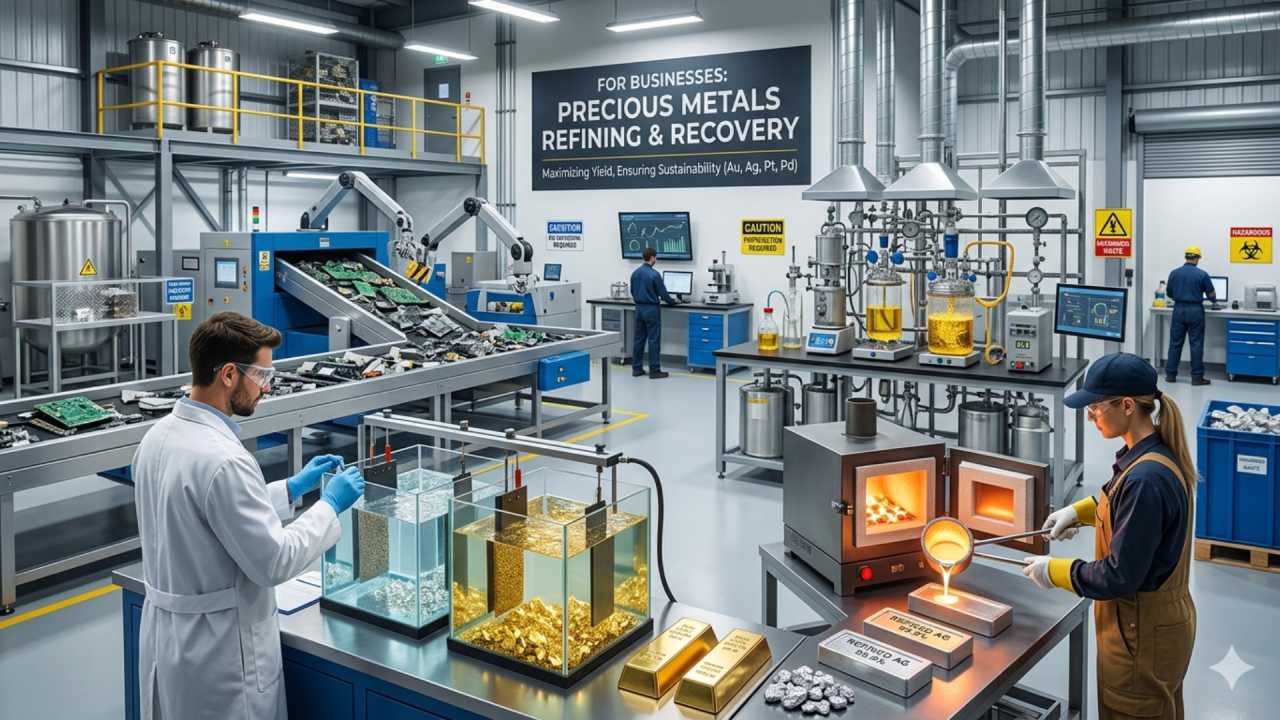
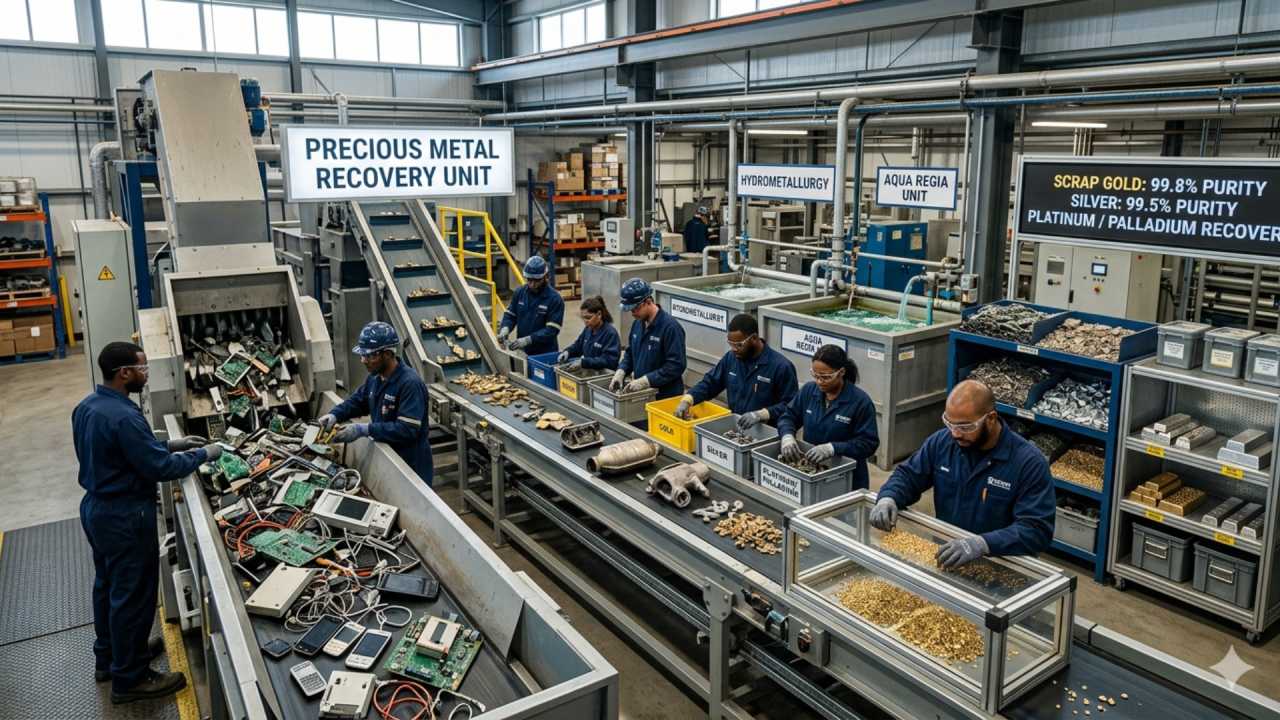
The first step, especially for electronics and automotive scrap, is physical breakdown. Shredders and hammer mills reduce bulky items into smaller fragments. Magnets are used to remove ferrous metals (like iron and steel), while eddy current separators push out non-ferrous metals like aluminum and copper. This leaves a “concentrate” that is rich in precious metals.
Chemical and Pyrometallurgical Recovery
Once the materials are concentrated, they undergo more intense processing.
-
Pyrometallurgy: This involves smelting the scrap in high-temperature furnaces. The precious metals melt and collect in a collector metal (like copper or lead), which is then refined further.
-
Hydrometallurgy: This method uses aqueous solutions (like aqua regia or cyanide-based leaches) to dissolve the precious metals, separating them from the base metals and plastics. The metals are then “precipitated” out of the liquid in a pure form.
DIY vs. Professional Recovery
While there is a growing community of “backyard refiners” who use chemicals to recover gold at home, this is generally discouraged for the average person. The chemicals involved, such as concentrated nitric and hydrochloric acids, produce toxic fumes and can cause severe chemical burns. Professional refiners have the specialized equipment, air filtration systems, and safety protocols to handle these substances legally and safely. For most individuals and businesses, the best “recovery method” is to partner with a certified refiner who uses state-of-the-art technology to maximize yield while following environmental regulations.
Identifying Valuable Waste
The key to profiting from waste is knowing what you have. Identification requires a mix of visual inspection and technical testing.
Visual Cues and Hallmarks
For jewelry and dental scrap, look for hallmarks (e.g., 14k, 18k, 925). In electronics, gold is usually found on “fingers” (the edge connectors of cards) and on the pins of CPUs. In industrial settings, catalysts often look like ceramic honeycombs or small pellets coated in a dark, metallic soot.
Testing Tools
-
Acid Testing: A basic and affordable method where a small scratch is made on a stone and tested with different concentrations of acid to determine the karat of gold.
-
XRF Analyzers: X-ray Fluorescence (XRF) scanners are the gold standard for non-destructive testing. These handheld devices can tell you the exact elemental composition of a piece of metal in seconds.
-
Electronic Testers: Often used for gold and platinum, these measure electrical conductivity to distinguish between precious metals and base metal fakes.
Estimating yield is a matter of weight and purity. If you have 100 grams of 14k gold scrap, you know that 58.3% of that weight is pure gold. For complex items like circuit boards, yield is calculated by the ton, with “high-grade” boards offering significantly more value than “low-grade” peripheral boards.
How to Monetize Precious Metal Waste
Once you have identified and collected your waste, the next step is converting it into cash. The secondary metals market can be complex, so a strategic approach is necessary.
Choosing the Right Buyer
-
Refiners: These are the best option for large quantities or industrial scrap. They melt the metal down and pay based on the “assay” (the purity test). They charge a refining fee but usually offer the highest percentage of the market price.
-
Specialized Recyclers: Some companies focus specifically on one type of waste, like catalytic converters or e-waste. They are experts in valuing these specific items.
-
Jewelers/Pawn Shops: Good for small, one-off items, but they often pay lower rates because they act as middlemen who will eventually sell to a refiner themselves.
Negotiation and Pricing
Always check the “spot price” of the metals you are selling before entering a negotiation. This is the current market price for an ounce of pure metal. Be prepared for a “melt spread”—the difference between the spot price and what the buyer pays you. A fair offer for scrap jewelry is usually 70% to 90% of the spot value, depending on the volume.
Legal and Tax Considerations
In many jurisdictions, selling large amounts of precious metals requires documentation to prevent money laundering and the sale of stolen goods. Keep detailed records of your transactions. Furthermore, profits from the sale of reclaimed metals may be subject to capital gains tax or business income tax.
Precautions and Common Pitfalls
The world of precious metal recycling is not without its risks. Being aware of these pitfalls can save you from financial loss or physical harm.
Avoiding Scams
The most common pitfall is the “lowball” offer. Some buyers rely on the seller’s lack of knowledge, offering a flat fee for a bag of scrap that might contain high-value palladium or platinum. Always insist on a transparent weighing and testing process. If a buyer refuses to explain how they calculated their offer, walk away.
Safety and Health Hazards
For those tempted by DIY recovery, the dangers are real. Inhaling fumes from acid baths can lead to permanent lung damage. Furthermore, electronic waste often contains hazardous materials like lead, mercury, and cadmium. Breaking apart old CRT monitors or certain batteries can release these toxins into your home or workspace. Always wear appropriate personal protective equipment (PPE) and work in well-ventilated areas, or better yet, leave the chemical processing to the professionals.
Regulatory Compliance
Large-scale recycling of e-waste and industrial scrap is often governed by environmental laws (such as the RCRA in the United States). Improperly disposing of the “leftovers” after you’ve stripped the precious metals can result in heavy fines. Ensure you are working with downstream partners who are certified in responsible electronics recycling.
Future Trends in Precious Metal Recycling
The future of precious metal recovery is being shaped by two forces: technological innovation and global policy.
Technological Advances
Scientists are currently developing “bio-leaching” techniques, which use specialized bacteria to “eat” and isolate precious metals from electronic waste. This could eventually replace harsh chemical acids with a much greener, biological process. Additionally, AI-powered sorting robots are becoming more common in recycling facilities, allowing for the rapid and accurate separation of materials that were previously too labor-intensive to process.
Policy and the Green Transition
Governments are increasingly implementing “Extended Producer Responsibility” (EPR) laws. These laws hold manufacturers accountable for the entire lifecycle of their products, incentivizing them to design electronics that are easier to disassemble and recycle. As the world shifts toward electric vehicles and renewable energy, the “closed-loop” battery recycling industry is set to explode, creating a massive new market for cobalt, lithium, and the silver and copper often found in these systems.
Final Thoughts
Precious metal waste is far more than just a byproduct of modern life; it is a dormant reservoir of wealth and a vital tool for environmental preservation. By shifting our perspective and viewing “scrap” as a resource, we can unlock significant economic value while reducing the destructive impact of traditional mining.
Whether you are an individual clearing out a jewelry box, a small business owner with a stack of old computers, or an industrial manager looking to optimize your waste stream, the potential is there for the taking. The process requires diligence, a bit of technical knowledge, and a commitment to safety and sustainability.
Take the first step today. Audit your waste, research local refiners, and stop letting your precious metals gather dust. In an era where resources are becoming increasingly scarce, the ability to reclaim what was once lost is not just a smart financial move—it is a contribution to a more sustainable future for the entire planet. The fortune in your waste is waiting to be unlocked.