
High-Purity Precious Metal Refining for Industrial Use
Precious metals—primarily gold, silver, and the platinum group metals such as platinum, palladium, rhodium, ruthenium, and iridium—occupy a unique position in the global economy. While they have historically been valued as stores of wealth and elements of adornment, their modern significance is increasingly defined by their indispensable role in industrial technology. These metals possess extraordinary physical and chemical properties, including high electrical conductivity, exceptional resistance to corrosion, and unique catalytic capabilities. However, to harness these properties effectively in a professional or industrial setting, the metals must be brought to a state of extreme purity.
In the contemporary industrial landscape, the difference between 99% purity and 99.99% purity is not merely a matter of prestige; it is a functional requirement. High-purity metals are the backbone of semiconductors, aerospace components, sophisticated medical devices, and high-efficiency chemical catalysts. As global industries push toward miniaturization and higher performance, the demand for refined metals that meet stringent international standards has surged.
Refining is the critical bridge between raw source materials—whether mined from the earth or recovered from recycled waste—and the high-specification end products required by manufacturers. This process involves the systematic removal of base metals and other impurities to ensure the final material performs reliably under extreme conditions. As market dynamics shift toward sustainability and “urban mining,” the science of refining has become more complex, necessitating a deep understanding of chemical and thermal processes to maintain global supply chains.
Overview of Precious Metal Refining
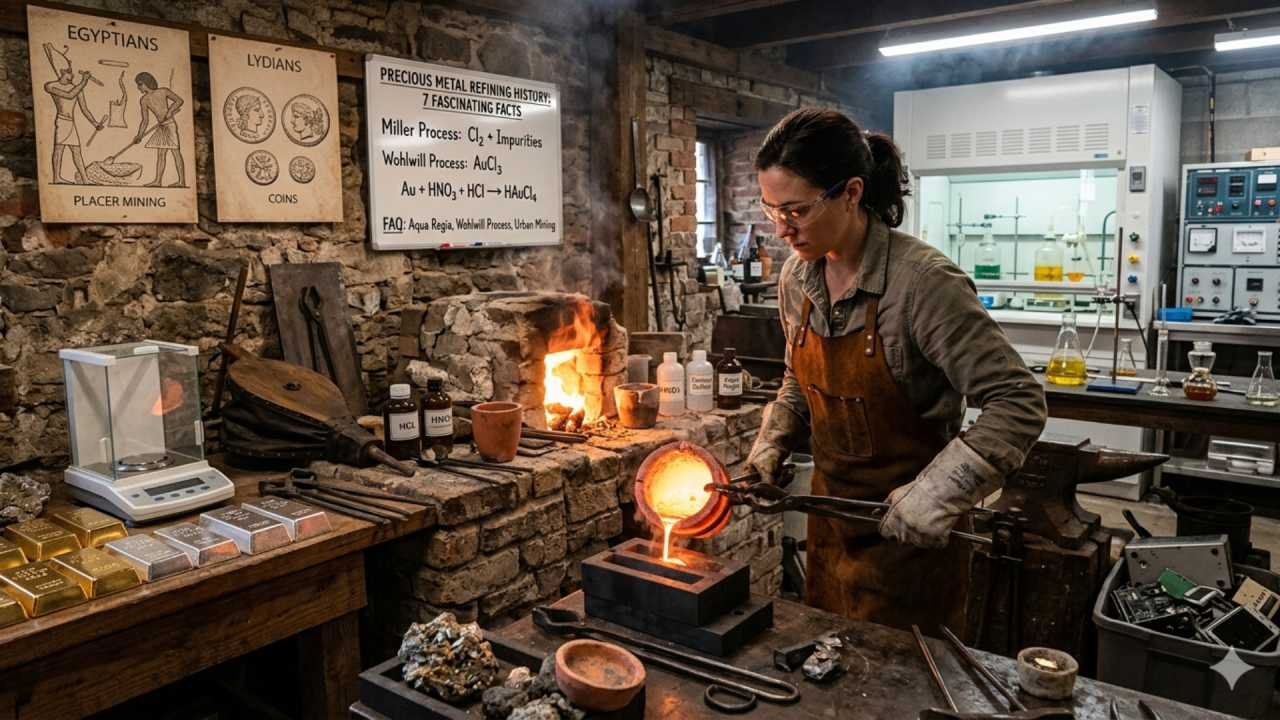
The history of refining is as old as civilization itself. Early methods, such as cupellation, relied on high heat to separate precious metals from base metals like lead. This process took advantage of the fact that precious metals do not oxidize at high temperatures, while base metals do. Another ancient technique, the aqua regia process, utilized a powerful mixture of acids to dissolve gold, allowing for its separation from silver and other insoluble materials. While these foundational methods are still recognized today, the scale and precision of modern industrial refining have evolved dramatically.
Today, purity standards are governed by the specific needs of the end-user. In the bullion market, a purity of 99.5% might be acceptable, but for industrial applications in electronics or medicine, “four-nines” gold (99.99%) is often the baseline. Reaching these levels requires sophisticated multi-stage processing. Modern refining is no longer just about separation; it is about the molecular-level isolation of the target element.
The shift toward more stringent purity has been driven by the sensitivity of modern equipment. Even trace amounts of iron, copper, or lead in a gold bonding wire can lead to brittle connections and device failure. Furthermore, the refining industry now operates under intense regulatory scrutiny. Modern plants must balance the pursuit of high purity with environmental responsibility, managing chemical effluents and energy consumption to meet both local and international safety standards.
Sources of Precious Metals
The feedstock for precious metal refineries generally falls into three categories: primary, secondary, and industrial scrap.
Primary sources consist of newly mined ores. These materials often contain very low concentrations of precious metals, requiring extensive crushing, grinding, and initial chemical concentration before they even reach a refinery. For example, several tons of ore might be processed to produce just one ounce of gold.
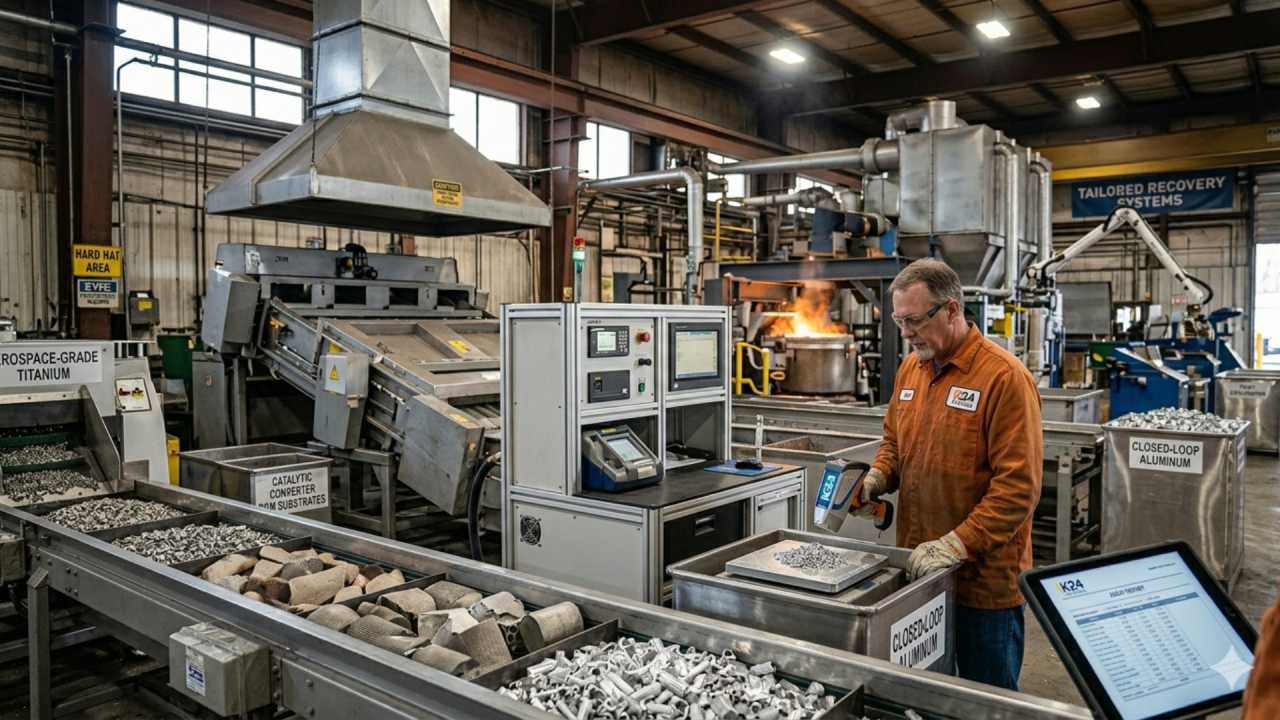
Secondary sources have become a dominant force in the industry, often referred to as “urban mining.” This involves the recovery of metals from end-of-life products, such as electronic waste, old jewelry, and spent catalytic converters from automobiles. Electronic waste is particularly rich in gold, silver, and copper, while catalytic converters are a primary source for platinum, palladium, and rhodium.
Industrial scrap represents the byproduct of manufacturing processes. This includes “skeletons” from stamped metal parts, plating solutions that have reached the end of their lives, and floor sweeps from jewelry manufacturing. This source is highly valued because the purity of the scrap is often known, making the refining process more predictable.
The primary challenge across all these sources is heterogeneity. A refinery might receive a shipment of circuit boards mixed with plastics, flame retardants, and various base metals. Successfully isolating the precious metal from such a complex mixture requires a sophisticated combination of physical sorting and chemical treatment.
Refining Methods
To achieve the ultra-high purity required for industrial use, refineries employ a variety of methods tailored to the specific metal and the nature of the impurities present. These are generally categorized into pyrometallurgical, hydrometallurgical, and electrochemical processes.
1 Pyrometallurgical Methods
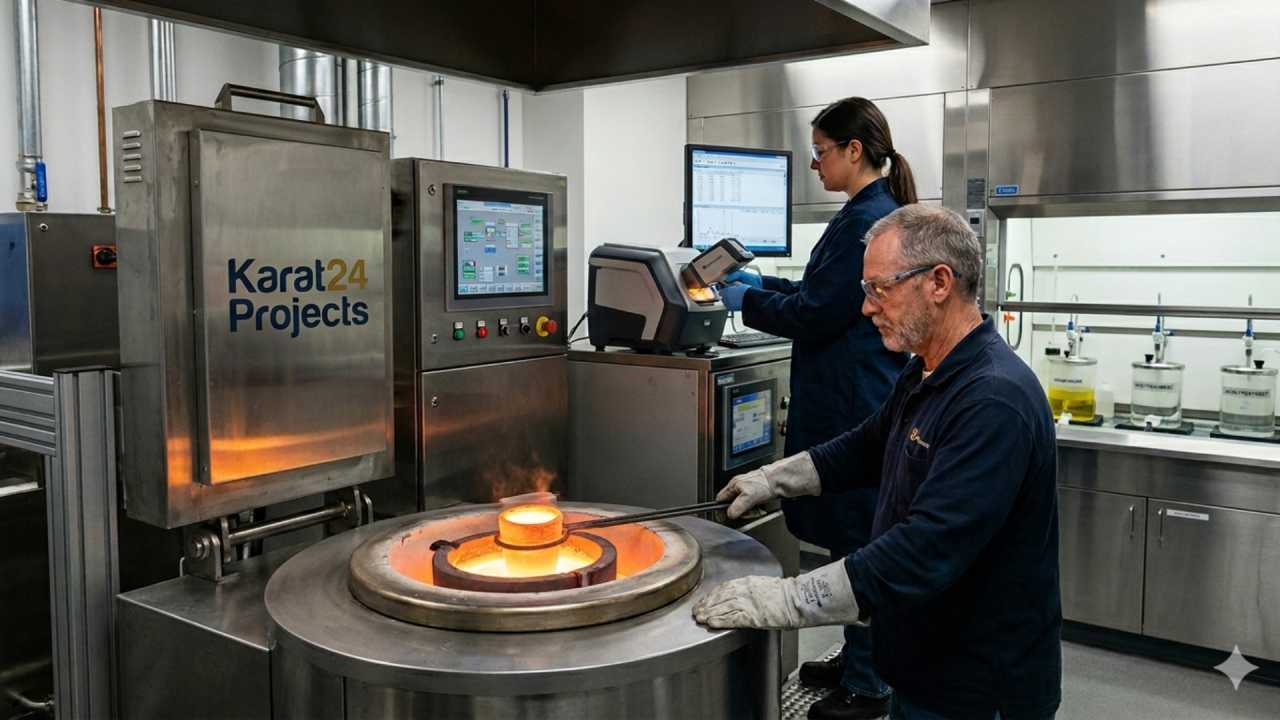
Pyrometallurgy involves the use of high temperatures to bring about physical and chemical changes in the materials. Smelting is the most common process here, where the material is melted in a furnace along with fluxes. These fluxes react with impurities to form a slag that floats on top of the molten metal, allowing the concentrated precious metal “bullion” to be poured off from the bottom.
Another significant pyrometallurgical technique is chlorination, often referred to as the Miller process. In this method, gaseous chlorine is bubbled through molten gold. The chlorine reacts with base metal impurities to form chlorides, which either volatilize or form a separate slag layer. This process is highly efficient and fast, capable of bringing gold purity to approximately 99.5% very quickly. However, it is not suitable for achieving 99.99% purity on its own and requires substantial ventilation and safety systems to handle the toxic chlorine gas.
2 Hydrometallurgical Methods
Hydrometallurgy relies on aqueous chemistry to recover and refine metals. This is often the preferred route for high-purity applications because it allows for more precise control over the chemical reactions.
The most famous hydrometallurgical method is the aqua regia process. By using a specific blend of nitric and hydrochloric acids, gold is dissolved into a solution. This solution is then filtered to remove insoluble silver chloride and other solids. Once the solution is clear, a selective precipitant is added, which causes only the gold to “drop out” of the liquid as a fine powder. This powder is then washed and melted. This method is highly effective for producing gold at 99.99% purity.
For silver, leaching with cyanide solutions is common, though strictly regulated due to toxicity. For platinum group metals, complex sequences of solvent extraction and precipitation are required because these metals behave very similarly to one another chemically and are difficult to separate.
3 Electrochemical Refining
Electrochemical refining, or electrolysis, is the gold standard for reaching the highest possible purity levels. In this process, an impure metal anode and a high-purity cathode are placed in an electrolyte solution. When an electric current is applied, the metal dissolves from the anode and migrates through the solution to deposit onto the cathode.
In gold refining, this is known as the Wohlwill process. It takes the 99.5% gold produced by the Miller process and refines it further to 99.999% purity if necessary. The impurities either remain in the electrolyte or fall to the bottom of the tank as “anode slime,” which is later processed to recover other precious metals like silver or platinum group metals.
Electrolysis is also the primary method for silver refining. Silver is dissolved in a silver nitrate electrolyte, and the pure silver crystals that grow on the cathode are collected, washed, and melted. This process is highly effective at removing traces of copper, lead, and gold from the silver.
4 Emerging Technologies
The industry is currently exploring “green” refining technologies to reduce the reliance on harsh acids and high energy consumption. Ion-exchange resins are increasingly used to “catch” specific metal ions from dilute solutions, making them ideal for recovering trace amounts of metals from wastewater. Solvent extraction, which uses organic liquids to selectively pull metals out of acid baths, is also becoming more common for platinum group metal separation.
Additionally, membrane technologies are being developed to filter ions at a molecular level. These methods aim to create a “circular economy” where chemicals are recycled within the refinery, minimizing waste and reducing the environmental footprint of the operation.
Purity Assessment and Quality Control
Achieving high purity is meaningless if it cannot be verified. Quality control is the cornerstone of industrial refining. Refineries utilize several analytical techniques to ensure their products meet the required specifications.
X-ray Fluorescence (XRF) is a common tool for rapid, non-destructive testing. It provides a quick snapshot of the metal’s composition, though it may not be sensitive enough to detect very low levels of trace contaminants. For higher precision, Inductively Coupled Plasma Mass Spectrometry (ICP-MS) is used. This technology can detect impurities at parts-per-billion levels, ensuring that a sample of 99.99% gold truly contains less than 100 parts per million of total impurities.
Atomic Absorption Spectroscopy (AAS) is another vital tool, often used to check for specific base metal contaminants like iron or copper. Beyond chemical analysis, physical standards such as those set by the International Organization for Standardization (ISO) or the American Society for Testing and Materials (ASTM) provide the benchmarks that refineries must hit to sell their products to industrial manufacturers.
Consistency is key. An industrial user needs to know that the gold or silver they buy today will behave exactly like the batch they bought six months ago. Trace contaminants can change the melting point, conductivity, or hardness of the metal, which can disrupt automated manufacturing lines.
Industrial Applications
The demand for high-purity precious metals is driven by several high-tech sectors:
-
Electronics: This is the largest industrial consumer of gold and silver. Because silver has the highest electrical conductivity of any element, it is used in high-end switches and conductive pastes. Gold, being highly conductive and completely resistant to tarnish, is used for plating connectors and for the incredibly thin bonding wires that connect silicon chips to their packages.
-
Automotive: Platinum, palladium, and rhodium are essential components in catalytic converters. These metals act as catalysts to convert toxic exhaust gases into less harmful substances. As emission standards tighten globally, the need for these metals—and the high-purity refining required to produce them—continues to grow.
-
Medical and Dental: Platinum is used in cancer-fighting drugs and in the electrodes for pacemakers. Gold and silver are used in dental alloys and in diagnostic tools due to their biocompatibility and stability within the human body.
-
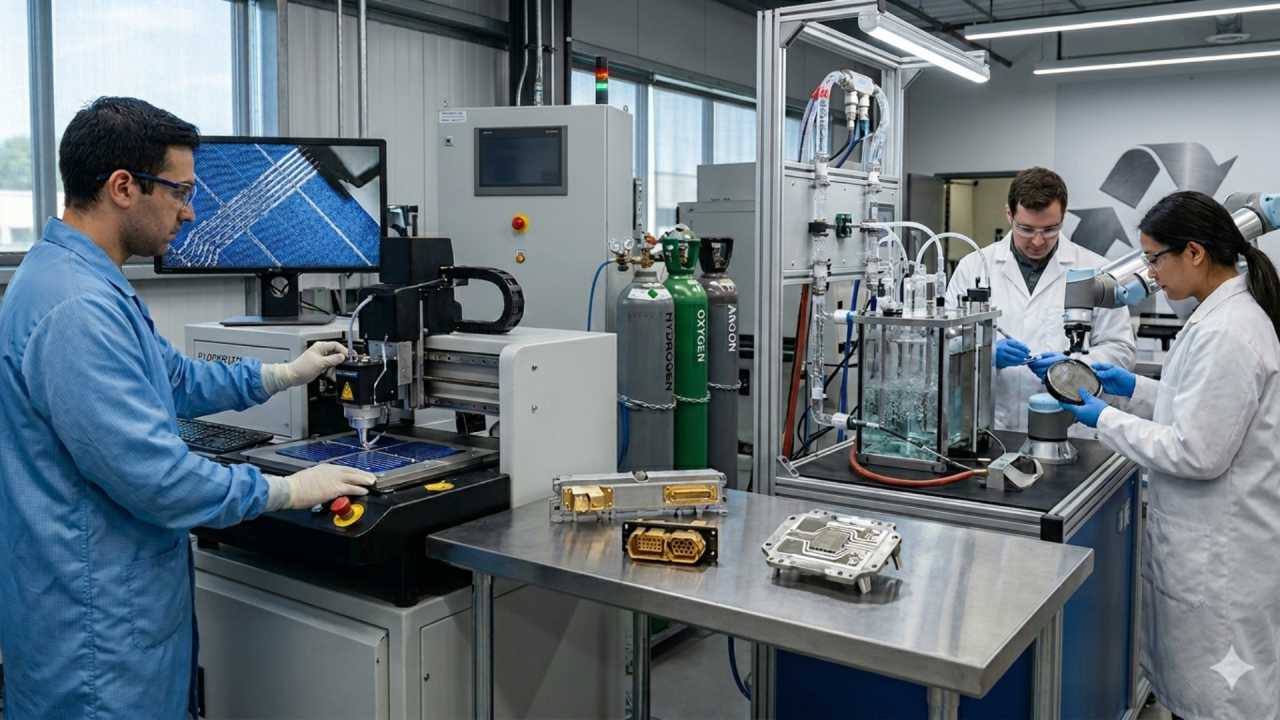
Aerospace and Energy: High-performance alloys containing rhenium or silver are used in jet engines and satellites. In the energy sector, silver is a critical component in the production of photovoltaic cells for solar panels. Platinum is also a key material for fuel cells, which are part of the transition to hydrogen energy.
Environmental, Safety, and Regulatory Considerations
Refining precious metals is an inherently hazardous process involving concentrated acids, toxic gases, and extreme heat. Worker safety is paramount. Modern refineries utilize advanced fume hoods, scrubbers, and automated chemical dosing systems to minimize human exposure to dangerous substances. Personal protective equipment, rigorous training, and real-time air monitoring are standard requirements in a professional facility.
From an environmental perspective, the industry is focused on waste management. The chemicals used in hydrometallurgy must be neutralized and treated before disposal. Many refineries now implement “zero-discharge” systems where water and acids are distilled and reused.
Regulatory compliance involves adhering to local pollution control boards and international frameworks regarding the “responsible sourcing” of metals. Refineries must prove that their feedstock does not come from conflict zones or contribute to human rights abuses, adding a layer of administrative complexity to the technical process.
Economic and Market Factors
The economy of refining is tied to the “spread” between the price of raw material and the value of the pure metal. Because precious metals are expensive, refineries must operate with high efficiency to minimize “metal loss” during the process. Even a 1% loss of material during refining can represent a massive financial hit.
Market demand is influenced by technological shifts. For instance, the rise of electric vehicles (EVs) has changed the demand for palladium (used in internal combustion engines) while increasing interest in silver for electronic controls. Supply chain stability is also a factor; many precious metals are mined in only a few locations globally, making recycled “urban mined” metals a critical strategic reserve for many countries.
Future Trends
The future of refining lies in automation and digitalization. “Smart refineries” use sensors to monitor chemical concentrations and temperatures in real-time, allowing for adjustments that maximize purity while minimizing chemical use.
We are also seeing a push toward even higher purity levels. As quantum computing and advanced semiconductors develop, the industry is beginning to look at “five-nines” (99.999%) or even “six-nines” purity. Achieving these levels will require even more advanced clean-room environments and specialized electrochemical techniques.
The circular economy will continue to be a major theme. The goal is to create a closed loop where every milligram of precious metal used in a consumer product is eventually recovered and refined back to its original purity, reducing the need for destructive mining practices.
Final Thoughts
High-purity precious metal refining is a sophisticated blend of ancient wisdom and cutting-edge science. It serves as an invisible but vital foundation for the modern world. Without the ability to refine gold, silver, and platinum group metals to extreme purity, our electronics would fail, our air would be more polluted, and our medical advancements would stall.
As technology continues to advance, the refining industry must evolve alongside it—adopting greener methods, higher safety standards, and more precise analytical tools. By focusing on sustainability and technical excellence, the refining sector ensures that these “noble” metals continue to drive human innovation for decades to come.