History of Precious Metal Refining: Interesting Facts
The history of civilization is inextricably linked to the human pursuit of precious metals. Long before gold, silver, platinum, and palladium powered high-tech industries or stabilized global financial markets, they captivated ancient peoples with their brilliant luster, near-indestructibility, and remarkable rarity. However, the glittering artifacts unearthed from ancient tombs and the pristine coins traded across classical empires did not simply emerge from the earth in their final, flawless forms. Raw geological deposits are almost always contaminated with base metals, quartz, soil, and other impurities. To unlock the true brilliance and utility of these materials, humanity had to develop the science and art of precious metal refining.
Precious metal refining is the industrial or chemical process of purifying raw ore, scrap metal, or alloys to isolate specific precious elements at exceptionally high levels of purity. Throughout history, the evolution of refining techniques has directly dictated the evolution of society itself. Refining transformed stubborn, unyielding earth into standardized currency that fueled international trade, dazzling jewelry that established social hierarchies, sacred religious artifacts that connected mortals to the divine, and eventually, the critical industrial components that drove the Industrial Revolution and the modern technological age. Without the ability to reliably separate pure precious elements from their natural matrices, the global economic and cultural landscape would be unrecognizable.
From the smoky, charcoal-fired hearths of the ancient Nile to the highly sophisticated chemical and electrochemical plants of the modern world, the story of refining is a testament to human ingenuity. It is a narrative filled with accidental discoveries, desperate economic necessities, and brilliant scientific breakthroughs. This deep dive explores seven fascinating facts that highlight how the history of precious metal refining shaped the ancient world, laid the groundwork for modern chemistry, and continues to redefine our relationship with wealth and natural resources.
Ancient Egyptians Perfected Early Gold Refining
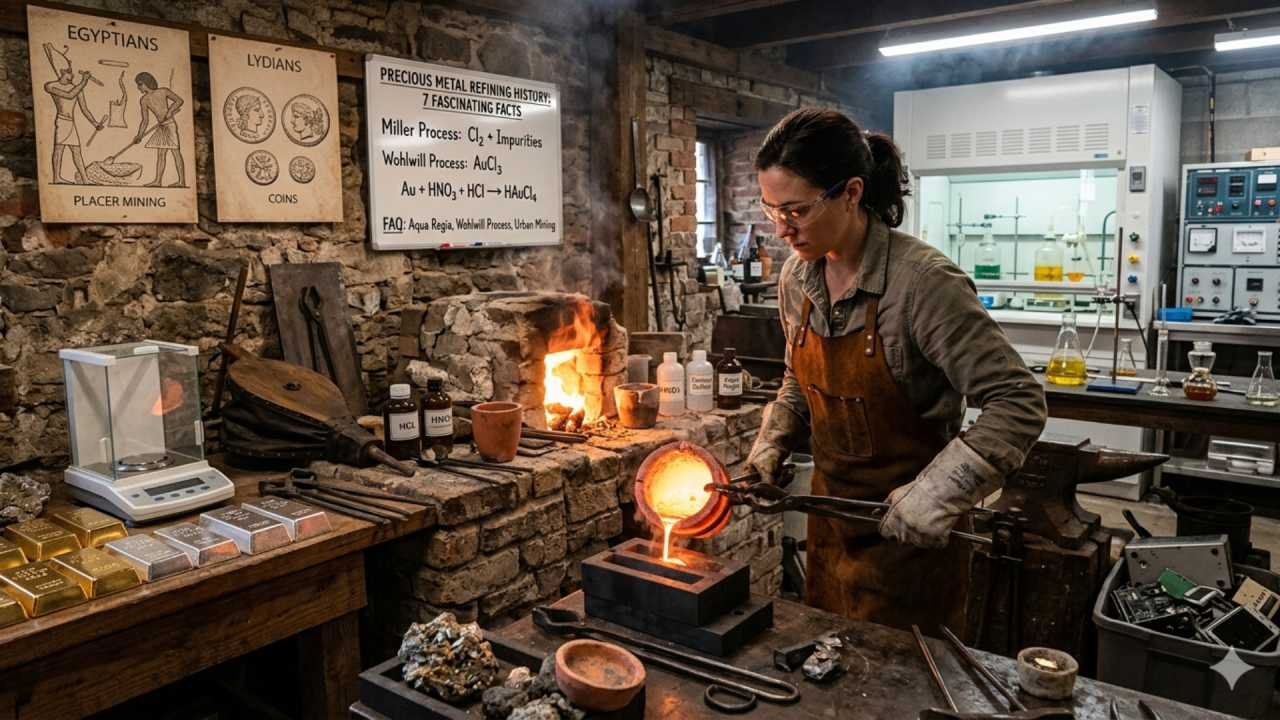
The ancient Egyptians held an almost spiritual obsession with gold. They considered it the flesh of the gods, particularly the sun god Ra, because its brilliant yellow sheen never tarnished, corroded, or faded over time. As early as 3000 BCE, Egyptian artisans and state-controlled operations were working with gold on an unprecedented scale. While early efforts relied on finding pure alluvial gold dust and nuggets washed down by rivers, the insatiable demand of the pharaohs quickly forced the kingdom to develop advanced mining and rudimentary refining operations.
The heart of the Egyptian gold supply lay in the harsh, arid landscapes of Nubia, a region whose very name may be derived from the ancient Egyptian word for gold, nub. To extract precious metals from the hard quartz veins found in these mountainous regions, Egyptian laborers utilized primitive yet highly coordinated crushing, washing, and smelting techniques. Fire-setting was used to crack the quartz rock: massive fires were built against the rock faces, which were then suddenly doused with cold water, causing the stone to shatter. Workers then crushed the fragments into a fine powder using heavy stone mortars and pestles.
Once pulverized, the golden dust was spread over inclined stone tables or animal skins, and water was poured over the mixture. Because gold has an exceptionally high specific gravity, the heavy gold particles settled into the crevices or the fur, while the lighter quartz sand washed away. This concentrated material was then gathered and placed into clay crucibles. The Egyptians utilized charcoal fires fueled by blowpipes—and later, foot-operated bellows—to achieve temperatures high enough to melt the metals, allowing them to skim off surface slag and cast raw bullion blocks.
What makes the Egyptian refining legacy truly astonishing is that their purity standards were surprisingly advanced for the Bronze Age. Although they did not possess the mineral acids used by later chemists, they understood how to manipulate melting points and air currents to improve the quality of their metal. They could distinguish between different grades of gold, recognizing that ore from certain regions possessed greater purity and ductility. This rigorous attention to refining allowed Egyptian craftsmen to create legendary ceremonial objects, such as the solid gold death mask of King Tutankhamun and the intricate jewelry worn by the royal court. These artifacts were not merely decorative; they required highly purified metal that could be beaten into incredibly thin gold leaf or drawn into fine wire without fracturing, demonstrating a sophisticated, empirical understanding of metallurgical properties thousands of years before the advent of modern chemistry.
How Lydia Created Pure Gold Coins
While the Egyptians treated gold as a symbol of divine royalty, the Kingdom of Lydia—situated in the western region of modern-day Turkey—transformed precious metals into the bedrock of global commerce. During the seventh century BCE, the Lydians achieved a monumental metallurgical breakthrough that would forever alter the course of human economic history: they developed the methods required to separate gold from silver on a commercial scale, leading to the creation of the world’s first standardized coinage.
The Lydian geopolitical advantage stemmed from the Pactolus River, which flowed through their capital city of Sardis. The river beds were rich with abundant deposits of electrum, a naturally occurring, pale-yellow alloy composed of varying mixtures of gold and silver, along with trace amounts of copper. While electrum was highly prized, its natural composition was wildly unpredictable. One batch might contain seventy percent gold, while another might contain only forty percent. Because merchants had no easy way to determine the exact ratio of metals in an electrum nugget during a hectic market transaction, it was difficult to use raw electrum as a reliable, universally trusted medium of exchange.
To solve this problem, Lydian refiners under the reign of King Alyattes, and later his son King Croesus, pioneered the process of cementation to isolate pure gold and silver. Lydian artisans placed the raw electrum into ceramic vessels filled with a mixture of common salt (sodium chloride) and brick dust or clay. The vessels were then sealed and placed into furnaces where they were heated to a steady temperature below the melting point of gold for many hours.
At these sustained high temperatures, the salt reacted with the silver content within the solid alloy, converting the silver into silver chloride gas. This gas migrated out of the gold matrix and was absorbed by the surrounding brick dust and clay, leaving behind a porous, highly purified sponge of solid gold. The silver chloride trapped in the clay was subsequently recovered through separate smelting techniques, yielding pure silver.
This ability to reliably separate the two metals allowed King Croesus to introduce a bimetallic monetary system. The Lydian mint began striking coins of pure gold (staters) and pure silver, each stamped with the royal emblem of a roaring lion and a bull. These coins possessed guaranteed, uniform weights and purities, completely eliminating the need for merchants to weigh and test metal during every transaction. The breakthrough sparked a massive expansion of regional trade, established Lydia as an economic superpower, and laid the foundation for modern monetary systems. To this day, the phrase “as rich as Croesus” remains a testament to the staggering wealth generated by this single refining innovation.
Alchemists Helped Build Modern Refining Science
During the medieval and Renaissance periods, the study of metals was dominated by alchemy. Operating under a complex blend of philosophy, mysticism, and early experimentation, alchemists pursued several grand objectives. Chief among these was chrysopoeia—the transmutation of base metals, such as lead, tin, or copper, into noble gold. They believed that all metals were composed of varying proportions of sulfur and mercury, and that by purifying these foundational principles, one could cure the “sickness” of base metals and elevate them to the perfection of gold.
To the modern eye, the spiritual and mystical writings of medieval alchemists can seem like unscientific nonsense. However, behind the allegorical language of dragons, green lions, and chemical weddings lay a massive amount of rigorous, hands-on laboratory work. In their endless quest to fabricate gold, alchemists subjected every known mineral, salt, and metal to intense heat, prolonged boiling, and violent reactions. In doing so, they accidentally transformed the field of metallurgy and built the practical framework for modern refining science.
Alchemists developed and perfected an array of sophisticated laboratory equipment that remained the industry standard for centuries. They designed specialized furnaces capable of maintaining precise, variable temperatures, and they refined the design of the alembic and the retort—glass and ceramic vessels used for distillation. By experimenting with the thermal degradation of various minerals, alchemists discovered and isolated powerful mineral acids, including sulfuric acid and nitric acid. The introduction of these acids allowed for the rapid dissolution and selective precipitation of metals, a massive leap forward from the slow, heat-intensive dry smelting practices of the ancient world.
Furthermore, alchemists advanced the critical practice of assaying, which is the compositional analysis of an ore or alloy to determine its precise precious metal content. They refined the ancient technique of cupellation, where an alloy of gold, silver, and lead is melted in a porous clay or bone-ash cup called a cupel. When exposed to a blast of air, the base metals and lead oxidize and are either blown away or absorbed by the porous cupel, leaving a pristine bead of pure gold and silver behind.
By standardizing these analytical techniques to verify whether they had actually created gold, alchemists provided kings, mint masters, and mining operations with the exact scientific tools needed to detect counterfeit coins, evaluate mining yields, and purify precious metals on a commercial scale. The transition from mysticism to metallurgy was gradual, but the empirical discoveries of alchemy directly birthed the modern chemical refining industry.
Aqua Regia Revealed Gold’s Hidden Vulnerability
For thousands of years, gold was considered completely indestructible. It does not rust when exposed to moisture, it does not oxidize when heated in an open fire, and it remains completely unaffected by standard mineral acids. Nitric acid can easily dissolve silver, copper, and base metals, but when dropped onto gold, it leaves the metal completely unmarred—a property that gave rise to the phrase “the acid test.” This absolute chemical resilience contributed immensely to gold’s status as the ultimate store of value. However, this illusion of invulnerability was shattered during the Islamic Golden Age with the discovery of a terrifyingly potent liquid mixture: aqua regia.
The discovery of aqua regia is historically attributed to the eighth-century polymath and alchemist Jabir ibn Hayyan, known in the West as Geber. Jabir revolutionized early chemistry by systematically recording his experiments and isolating numerous chemical compounds. He discovered that by distilling a mixture of common salt, alum, and ammonium chloride with sulfuric and nitric acids, he could produce a volatile, fumes-emitting liquid that possessed unprecedented corrosive power. Later medieval European alchemists named this liquid aqua regia, which translates from Latin as “royal water,” because it was the only substance capable of conquering the king of metals.
Aqua regia is a highly corrosive, deeply colored solution prepared by mixing concentrated nitric acid and concentrated hydrochloric acid, typically in a volume ratio of one to three. Neither of these acids can dissolve gold on its own, but when combined, they work together in a unique chemical synergy. The nitric acid acts as a powerful oxidant, dissolving a microscopic amount of gold into gold ions. Simultaneously, the hydrochloric acid provides an abundant supply of chloride ions. These chloride ions react with the gold ions to form a stable coordination complex called tetrachloroaurate. This reaction effectively removes the free gold ions from the solution, allowing the nitric acid to continue dissolving more gold until the metal completely vanishes into a clear, reddish-orange liquid.
The discovery of aqua regia completely changed precious metal purification and assaying. For the first time, refiners could take highly contaminated gold scrap, dissolve the entire mixture into a solution, and then use selective chemical reducing agents—such as ferrous sulfate—to cause only the pure gold to precipitate out as a fine, heavy brown powder. When this powder was collected and melted, it yielded gold of an unprecedented purity that was completely free of silver, platinum, or base metal contaminants. This liquid-phase refining method provided a level of precision that dry, furnace-based fire refining could never match, making aqua regia an indispensable tool in industrial laboratories and state mints down through the centuries.
Gold Rush Era Triggered Major Refining Innovations
The nineteenth century witnessed a series of massive, frantic migrations that reshaped global demographics and geography: the great gold rushes. It began with the discovery of gold at Sutter’s Mill in California, which triggered the legendary 1849 Gold Rush. This was quickly followed by massive discoveries in New South Wales and Victoria, Australia, and later, the freezing valleys of the Klondike in Canada. Within a matter of decades, hundreds of thousands of prospectors descended upon these remote frontiers, pulling staggering quantities of raw gold out of riverbeds and deep underground quartz veins.
The sheer, overwhelming volume of gold entering the global market created an immediate logistical crisis for central banks, government mints, and commercial assay offices. Prior to these discoveries, precious metal refining was largely a small-scale, artisan craft practiced by localized institutions using traditional, slow methods. The sudden influx of millions of troy ounces of raw, unrefined bullion completely overwhelmed existing facilities. Mints in London, Paris, San Francisco, and Philadelphia found themselves facing massive backlogs of raw ore that were heavily contaminated with silver, copper, iron, and erratic quantities of materials like arsenic and tellurium.
To prevent economic stagnation and ensure that this new wealth could be rapidly converted into circulating currency, the refining sector had to evolve from a specialized craft into a full-scale, heavy chemical industry. The pressure of the gold rushes accelerated metallurgical innovation worldwide, forcing the construction of massive, industrial-scale refineries capable of processing tons of metal daily.
Refiners began adapting large-scale industrial chemical processes to the precious metal sector. The older method of parting gold and silver using concentrated nitric acid was gradually replaced by the more cost-effective and efficient sulfuric acid parting process. In this method, silver-bearing gold bullion was boiled in massive iron vats filled with concentrated sulfuric acid. The acid dissolved the silver and base metals into soluble sulfates, leaving the insoluble gold behind as a clean residue. The dissolved silver was then recovered by placing copper plates into the liquid solution, causing the silver to precipitate out in pristine metallic form.
These industrial advancements also saw the birth of rigorous, state-run assay offices designed to handle high-throughput testing. The evolution of the refining industry during this era shifted the economic balance of power. It allowed nations to rapidly absorb massive amounts of newly discovered wealth, stabilized the global gold standard that underpinned international trade, and proved that metallurgical science had to keep pace with the frantic speed of human exploration and expansion.
The Miller and Wohlwill Processes Set New Purity Standards
By the late nineteenth century, industrial manufacturing, global finance, and emerging electrical sciences demanded precious metals with purities that went far beyond what simple acid-parting methods could reliably deliver. Traditional chemical separation techniques were excellent for producing jewelry-grade gold, but they frequently left behind minute, trace percentages of silver, platinum-group metals, and base contaminants. To bridge this gap, two landmark refining techniques were developed within a few years of each other: the Miller Process and the Wohlwill Process. Remarkably, both methods revolutionized the metallurgical landscape so profoundly that they remain foundational pillars of the global refining industry today.
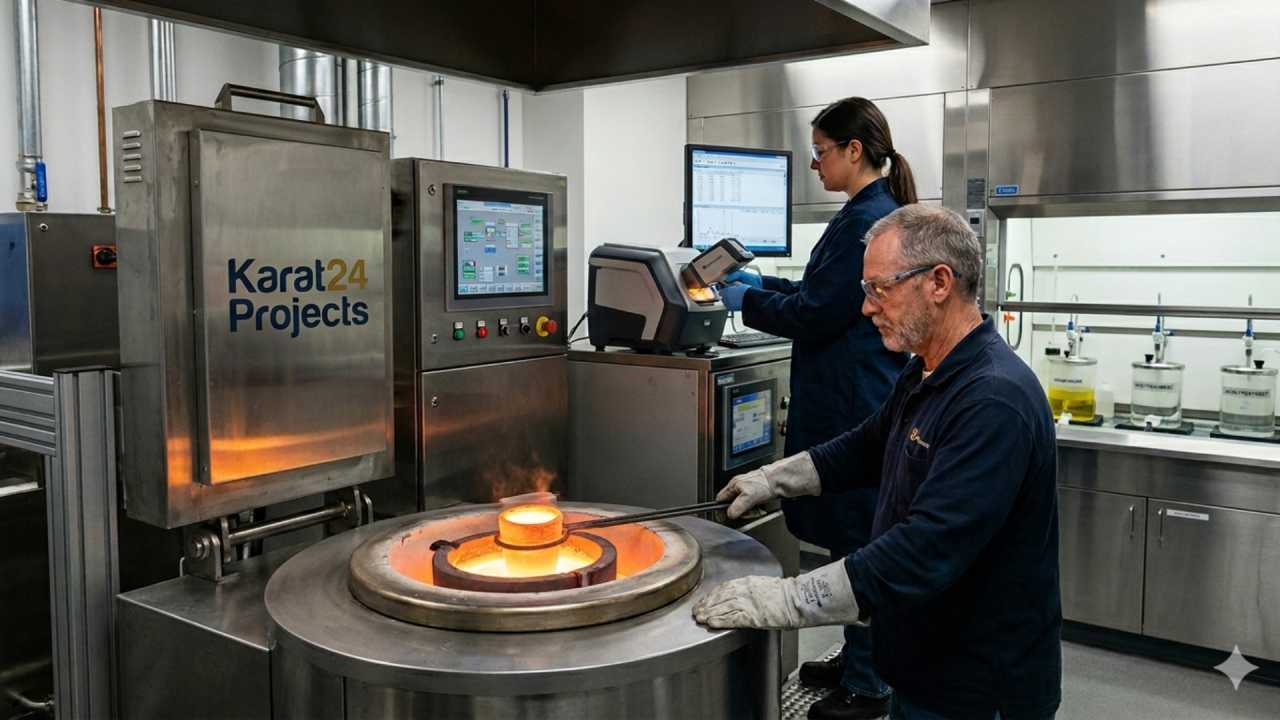
The Miller Process was invented in 1867 by Francis Bowyer Miller, an assayer at the Sydney Mint in Australia. Miller discovered that pure gaseous chlorine could be used to rapidly purify gold while it was in a molten state. In this process, raw gold bullion is melted in a clay crucible inside a specialized furnace. Once the metal is completely liquid, a refractory tube is lowered into the molten bath, and pure chlorine gas is bubbled through the mixture.
Gold has a relatively low affinity for chlorine at high temperatures, whereas the impurities—such as copper, iron, antimony, and silver—have a much higher affinity for it. As the chlorine gas rises through the liquid metal, it reacts preferentially with these impurities, converting them into volatile or liquid chlorides. The chlorides of iron and base metals vaporize and are captured by ventilation systems, while the silver chloride turns into a liquid oil that rises to the surface, forming a distinct layer on top of the dense, pure molten gold. Refiners can easily skim this chloride layer off or allow the gold to solidify underneath it. The Miller Process is incredibly fast and efficient, quickly elevating gold purity to approximately 99.5 percent.
| Refining Process | Mechanism Type | Operational Cost | Achieved Purity | Primary Advantage |
| Miller Process | Pyrometallurgical (Gas-in-Melt) | Low to Moderate | ~99.5% | Extremely fast; handles huge volumes of bulk bullion |
| Wohlwill Process | Electrochemical (Aqueous) | High | 99.99%+ | Eliminates platinum-group metals; yields ultra-pure gold |
For advanced electrical applications, investment-grade bullion bars, and scientific equipment, 99.5 percent purity is insufficient. To achieve the coveted “four-nines” purity standard (99.99 percent or higher), the gold must undergo the Wohlwill Process. Invented in 1874 by Emil Wohlwill at the Norddeutsche Affinerie in Hamburg, Germany, this method is an electrochemical refining technique.
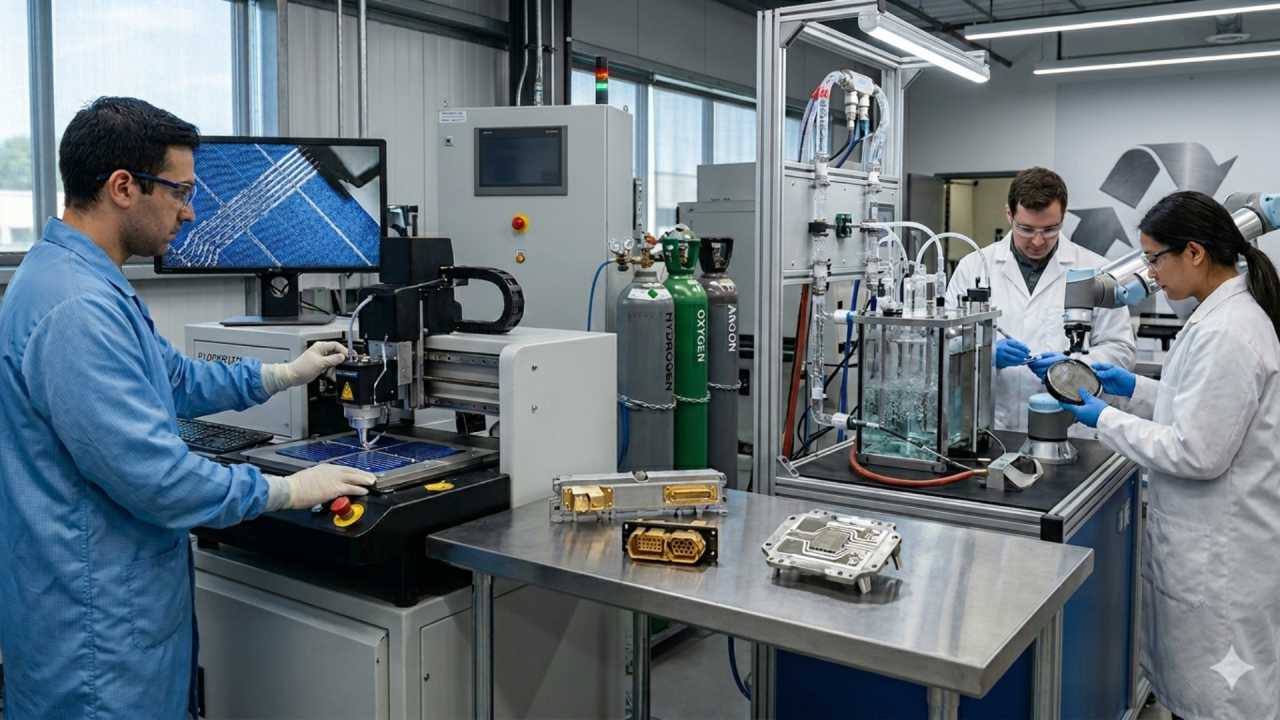
In the Wohlwill Process, an unrefined anode cast from Miller-grade gold is suspended in an electrolytic bath composed of a hydrochloric acid and gold chloride solution. A thin sheet of pure, 99.99 percent gold is placed opposite it to act as the cathode. When a powerful electric current is passed through the system, the unrefined gold anode dissolves into the acid solution.
The gold ions migrate across the liquid gap and deposit themselves with absolute precision onto the pure gold cathode, building up a thick plate of ultra-pure metal. Crucially, any silver impurities present in the anode react with the chlorine to form an insoluble silver chloride powder that sloughs off and sinks to the bottom of the tank as anode slime, while valuable platinum-group metals dissolve into the solution without depositing onto the cathode. By operating these two processes in sequence—using the rapid Miller process to do the heavy lifting and the precise Wohlwill process for the final purification—modern refineries can process massive industrial quantities of gold to a near-flawless standard of purity.
Urban Mining Is Reshaping Precious Metal Refining
As society enters an era defined by rapid technological turnover and a growing awareness of ecological boundaries, the traditional paradigm of precious metal refining is undergoing its most radical transformation since the Industrial Revolution. For millennia, the refining industry operated as a linear progression: ore was pulled from the earth, purified at a refinery, and manufactured into goods. Today, a revolutionary concept known as urban mining is turning this model on its head, proving that tomorrow’s most valuable precious metal reserves are located within our major cities rather than buried deep underground.
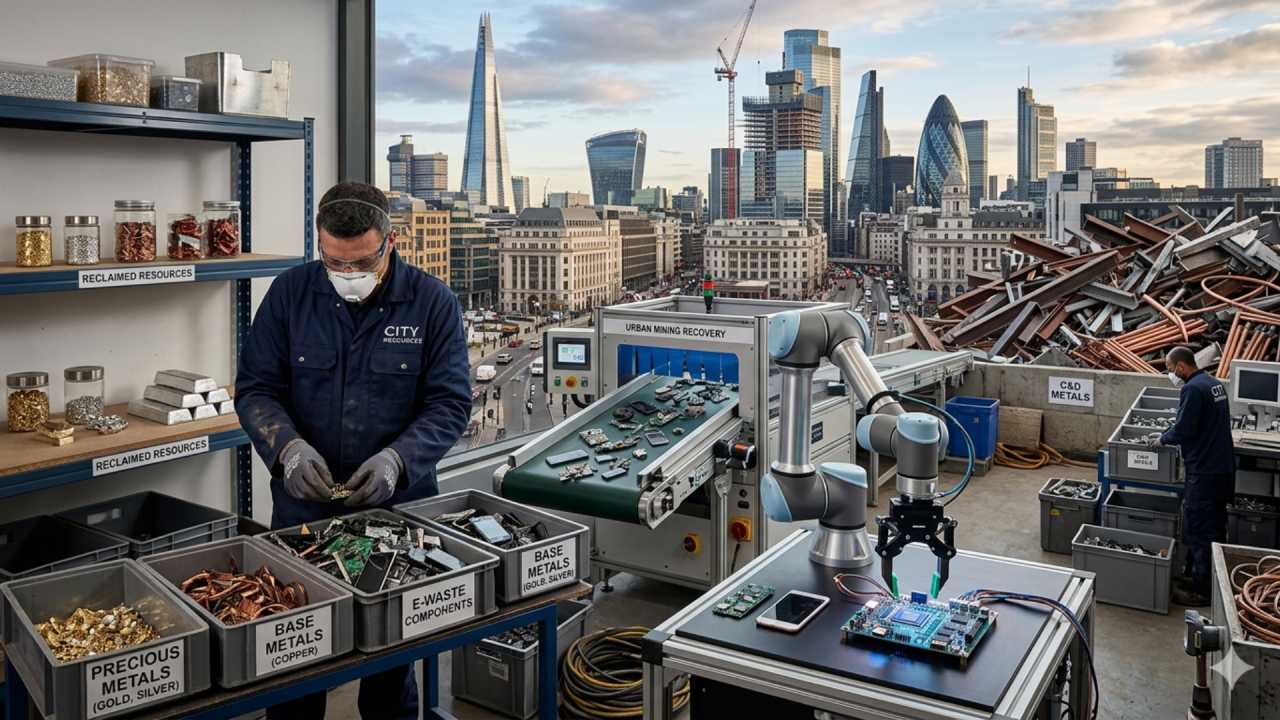
Urban mining is the process of reclaiming precious metals and other valuable materials from discarded electronic waste (e-waste), including old smartphones, computers, tablets, televisions, and industrial circuit boards. Modern consumer electronics are incredibly complex devices that rely heavily on the unique physical and electrical properties of precious elements. Gold is utilized for its exceptional electrical conductivity and complete resistance to corrosion on critical microprocessor pins and contact points. Silver lines the conductive traces of printed circuit boards, while platinum and palladium are used in multilayer ceramic capacitors and complex semiconductor chips.
The concentration of precious metals in modern electronics is astonishingly high when compared directly to geological formations. While a traditional, high-grade underground gold mine might yield between one and five grams of pure gold per ton of excavated rock, a single ton of discarded smartphone circuit boards can yield upwards of two hundred to three hundred grams of pure gold, along with substantial quantities of silver and copper. This massive difference in concentration makes e-waste an incredibly lucrative, highly concentrated source of precious metals.
However, refining these materials presents unique and difficult metallurgical challenges. Unlike raw ore, which typically consists of metals bound up in natural rock, electronic scrap is an intricate, highly engineered mixture of plastics, flame retardants, ceramics, fiberglass, and a dizzying array of interconnected metals. Refining urban waste requires advanced, eco-friendly hydrometallurgical and pyrometallurgical processing techniques.
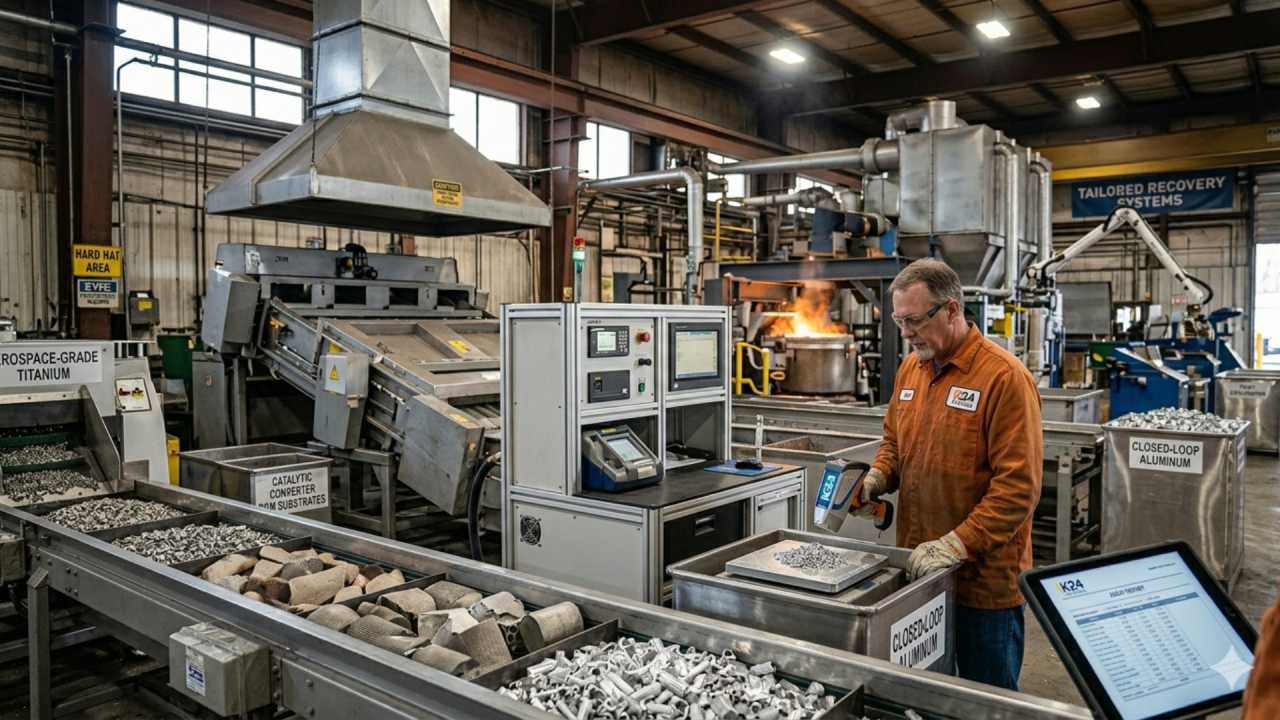
Modern urban recycling facilities utilize automated shredding and optical sorting systems to isolate the metal-rich fractions of e-waste. These concentrates are then processed in advanced eco-refineries that use closed-loop chemical leaching solutions or energy-efficient smelting furnaces designed to capture volatile plastics emissions while cleanly separating the precious elements from copper and base metal matrices.
The transition toward urban mining is heavily driven by both economic realities and environmental imperatives. Extracting gold from old electronics consumes a small fraction of the energy and water required to dig, crush, and process raw ore from an open-pit mine, while drastically reducing the carbon footprint and habitat destruction associated with traditional mining operations. By turning electronic waste back into high-purity investment bars and industrial-grade raw materials, urban mining fulfills the core promise of a circular economy, ensuring that the precious metals mined by previous generations continue to power the innovations of the future.
The Legacy of Refining
The history of precious metal refining is far more than a timeline of technical achievements; it is a mirror of human progress itself. Every major leap forward in refining technology—whether born from the practical needs of Lydian merchants, the accidental discoveries of medieval alchemists, or the industrial pressures of the global gold rushes—has immediately unlocked new economic, cultural, and scientific possibilities for society.
Today, the refining industry continues to evolve, balancing the timeless pursuit of absolute purity with the critical modern demands for sustainability and resource conservation. As urban mining and green metallurgy continue to reshape the field, the core mission of the refiner remains exactly what it was in the ancient world: to take that which is mixed, impure, and hidden, and transform it into something of enduring, flawless value.
Frequently Asked Questions
What is the oldest method of refining gold?
The oldest verified industrial method for refining gold to a high standard of purity is salt cementation, which dates back to at least the sixth century BCE in ancient Lydia. This dry pyrometallurgical process involved heating unrefined gold alloys (like electrum) in sealed clay vessels with common salt and brick dust for several hours. The salt reacted with the silver impurities to form silver chloride gas, leaving behind a purified porous sponge of gold. Before this, the oldest method for concentrated separation was placer washing and cupellation, practiced by the ancient Egyptians around 3000 BCE to separate gold from lighter river sands and base metals using bone-ash crucibles.
How does the Miller process refine gold?
The Miller process is a large-scale industrial pyrometallurgical technique that purifies gold by bubbling pure chlorine gas through molten, liquid bullion. Because base metals and silver have a much higher chemical affinity for chlorine than gold does at high temperatures, they react first. These impurities convert into chlorides; base metal chlorides quickly vaporize, while silver chloride forms a distinct liquid oil layer that floats to the surface of the molten gold bath. This floating slag layer is mechanically skimmed off, rapidly elevating the gold purity to approximately 99.5% fineness.
What is the difference between the Miller process and the Wohlwill process?
The primary difference lies in the mechanism used and the final purity achieved. The Miller process is a furnace-based chemical reaction using chlorine gas that is highly efficient for bulk processing, but it maxes out at about 99.5% purity. The Wohlwill process is an advanced electrochemical technique that takes Miller-grade gold and dissolves it as an anode in an electrolytic bath of hydrochloric acid and gold chloride. Under an electric current, pure gold deposits onto a cathode, leaving trace impurities like platinum-group metals behind in the liquid. The Wohlwill process achieves ultra-pure investment standards of 99.99% or higher (“four-nines” gold).
Why can aqua regia dissolve pure gold when other acids cannot?
Aqua regia can dissolve pure gold because of the powerful chemical synergy between its two components: concentrated nitric acid and concentrated hydrochloric acid (typically mixed in a one-to-three volume ratio). Nitric acid acts as a fierce oxidizer, converting a minute amount of solid gold surface atoms into gold ions. Simultaneously, hydrochloric acid supplies a dense concentration of chloride ions, which immediately lock those gold ions into a highly stable, soluble liquid complex called tetrachloroaurate. This continuous loop prevents the gold from re-solidifying, forcing the metal to dissolve completely into a reddish-orange liquid solution.
How is urban mining used to recover precious metals?
Urban mining is the sustainable practice of reclaiming high-purity precious metals like gold, silver, platinum, and palladium directly from discarded electronic waste (e-waste), such as smartphones, microprocessors, and circuit boards. Instead of extracting raw ore from traditional underground mines, specialized recycling facilities mechanically shred electronic scrap, isolate the metal-bearing fractions using optical and magnetic sorters, and then process the concentrated material through advanced chemical leaching (hydromallurgy) or eco-friendly smelting furnaces (pyrometallurgy) to cleanly isolate and purify the individual precious elements for reuse in the circular economy.