
The Role of Precious Metals in Green Tech Success
The global transition toward clean energy is no longer a distant aspiration; it is an active, fast-accelerating industrial shift. As nations, industries, and consumers seek to drastically reduce carbon emissions and decouple economic growth from environmental degradation, the demand for clean energy infrastructure has skyrocketed. However, the software, algorithms, and digital interfaces of the modern world rely fundamentally on physical hardware. At the core of this hardware lies a specialized group of chemical elements known as precious metals. Far from being mere symbols of wealth or assets stored in banking vaults, these materials serve as the structural and chemical foundation of modern sustainability goals.
Green technology depends heavily on precious metals for efficiency, durability, and innovation. Whether capturing photons from the sun, converting hydrogen into electricity, managing the high-voltage systems of electric vehicles, or stabilizing the complex communication networks of smart electrical grids, these elements perform tasks that no other materials can. Their unique physical and chemical characteristics make them indispensable enablers of the green revolution. Without a stable, scalable, and technologically optimized supply of these critical minerals for clean energy, the global transition to a sustainable infrastructure would stall. Understanding how these metals function within green technology reveals the profound intersection between geology, chemistry, and environmental science that will dictate the success of our global energy transition.
Understanding Precious Metals and Their Unique Properties
To understand why precious metals are so foundational to sustainable technology, one must first examine what defines them and why their inherent physical properties are so difficult, and often impossible, to replicate with more common base metals like iron, aluminum, or standard copper.
What Are Precious Metals?
Precious metals are naturally occurring metallic chemical elements characterized by their rarity, economic value, and distinct chemical reactivity. While the broader category of critical minerals for clean energy includes base metals like lithium, cobalt, and nickel, the true precious metals category is highly specific. It includes:
-
Gold: Celebrated for its absolute resistance to oxidation and extreme ductility.
-
Silver: Possessing the highest electrical and thermal conductivity of any element on the periodic table.
-
The Platinum Group Metals (PGMs): A dense cluster of elements including Platinum, Palladium, Rhodium, Iridium, Ruthenium, and Osmium. These metals are defined by their extraordinarily high melting points, remarkable mechanical strength, and exceptional catalytic properties.
Why They Matter
The industrial preference for precious metals over cheaper alternatives comes down to a suite of unmatched physical and chemical characteristics:
-
Excellent Conductivity: Silver and gold allow electricity and heat to flow with minimal resistance. In high-efficiency green electronics, minimizing resistance equates directly to preventing energy loss in the form of waste heat.
-
Corrosion Resistance: Precious metals do not rust or degrade when exposed to moisture, oxygen, or aggressive chemical environments. This quality guarantees that green infrastructure can operate outdoors for decades without failure.
-
High Catalytic Activity: The platinum group metals can accelerate chemical reactions lowering the required activation energy without being consumed in the process. This is the bedrock of hydrogen conversion and chemical synthesis.
-
Durability Under Extreme Conditions: These metals maintain their structural integrity at temperatures that would melt or warp common structural materials.
-
Long Operational Lifespan: By preventing wear, degradation, and chemical breakdown, precious metals extend the working life of green tech components, reducing the need for frequent, resource-intensive replacements.
In the demanding architectures of solar panels, wind turbine sensors, hydrogen electrolyzers, and electric car drivetrains, these properties ensure maximum efficiency and systemic reliability. When a component must operate flawlessly for twenty-five years in the freezing cold or blistering heat, using anything less than a precious metal introduces points of failure that jeopardize the economic viability of clean energy installations.
Silver: The Backbone of Solar Energy
Solar power has emerged as one of the fastest-growing sources of renewable electricity worldwide. Yet, the rapid expansion of solar energy innovation is tethered directly to the availability of silver. Silver is arguably the single most critical precious metal in the current renewable energy landscape due to its ubiquitous use in solar photovoltaic cells.
Role in Photovoltaic Cells
A standard crystalline silicon solar cell relies on the photovoltaic effect to convert sunlight into usable electricity. When photons strike the silicon wafer, they dislodge electrons, creating an electrical current. However, that current must be collected and transferred out of the cell with as little resistance as possible.
This is where silver plays its vital role. During manufacturing, a highly specialized conductive paste made of silver microparticles is screen-printed onto the front and back surfaces of the silicon wafers. These printed lines form fine fingers and thicker busbars. When the cell is heated, the silver paste fires into the silicon, establishing an optimal electrical connection. Because silver exhibits the lowest electrical resistance of any metal at room temperature, it allows the generated electrons to flow freely out of the cell and into the electrical grid.
Importance in Solar Growth
The sheer volume of global solar installations has created a massive, sustained demand trend for silver. Millions of solar panels are manufactured annually, and each one requires a measurable amount of this precious metal. As utility-scale solar farms and residential rooftop arrays expand across continents, the solar industry has grown to consume a significant percentage of the total global annual silver supply. This makes the renewable energy supply chain deeply sensitive to the extraction and processing dynamics of silver mining.
Efficiency Benefits
The inclusion of silver translates directly into higher energy conversion rates. Lower-quality metals would resist the flow of electrons, causing a portion of the captured solar energy to dissipate as heat before it could ever leave the panel. Furthermore, silver provides unmatched reliability over decades. Solar panels are expected to sit under intense ultraviolet radiation, experiencing extreme temperature swings between day and night, for twenty-five to thirty years. Silver’s resistance to thermal expansion strains and oxidation ensures that the electrical pathways do not crack, degrade, or corrode over this multi-decade operational lifespan.
Challenges
Despite its performance benefits, the reliance on silver presents clear structural challenges:
-
Rising Silver Demand: The exponential growth of the solar sector threatens to outpace annual silver production, creating structural deficits in the silver market.
-
Cost Pressures: Silver is an expensive commodity. Its price volatility directly influences the per-watt manufacturing cost of solar modules.
-
Thrifting Efforts: To mitigate these risks, solar manufacturers engage in “thrifting”—the process of engineering ways to reduce the silver content per panel. This includes developing advanced printing techniques that create thinner silver lines or exploring alternative paste formulations.
Can Solar Power Thrive Without Silver?
The short answer is not without compromising performance. While researchers have experimented with using base metals like copper or nickel as substitutes for silver paste, these alternatives introduce significant engineering hurdles. Copper oxidizes rapidly during the high-temperature manufacturing process and can migrate into the silicon wafer over time, destroying the cell’s electrical properties. Nickel lacks the ultra-high conductivity of silver. While next-generation solar technologies like perovskite-silicon tandems aim to change how light is absorbed, their electrical extraction networks still rely heavily on the elite performance of silver. For the foreseeable future, expanding solar power means expanding silver usage.
Platinum Group Metals and the Hydrogen Economy
If silver acts as the engine of solar power, the Platinum Group Metals (PGMs) serve as the foundation of the emerging hydrogen economy. Green hydrogen, produced by splitting water using renewable electricity, is widely viewed as the ultimate solution for decarbonizing heavy industries, long-haul shipping, aviation, and seasonal energy storage. This entire technological ecosystem is chemically reliant on PGMs, specifically platinum and iridium.
What Are Platinum Group Metals?
The PGMs are a family of six elemental metals: platinum, palladium, rhodium, iridium, ruthenium, and osmium. They are generally found together in the same mineral deposits, largely concentrated in a few geographic regions globally. Their defining characteristic in green technology materials is their ability to act as highly stable, extraordinarily active catalysts.
Fuel Cells
In a hydrogen fuel cell, hydrogen gas and oxygen from the air are combined electrochemically to produce electricity, with the only byproduct being pure water vapor. This process takes place across a specialized proton-exchange membrane (PEM).
Platinum acts as the catalyst on the anode and cathode of these fuel cells. It facilitates the dissociation of hydrogen molecules into protons and electrons at the anode, and coordinates the reaction of those protons with oxygen to form water at the cathode. The high catalytic activity of platinum allows this reaction to occur rapidly at low temperatures, resulting in exceptional fuel cell efficiency and power density.
Green Hydrogen Production
Before hydrogen can be used in a fuel cell, it must be produced sustainably. Green hydrogen generation relies on devices called electrolyzers, which run an electric current through water to separate oxygen from hydrogen.
The most efficient and flexible units for integration with variable solar and wind power are Proton Exchange Membrane electrolyzers. These systems operate in highly acidic, high-voltage environments that would dissolve almost any common metal.
-
Iridium is used at the anode because it is one of the few elements capable of resisting this intense electrochemical corrosion while maintaining the catalytic efficiency needed to drive the oxygen evolution reaction.
-
Platinum is used simultaneously at the cathode to facilitate the hydrogen evolution reaction.
Applications
The unique properties of PGMs enable hydrogen technology to expand into several critical deep-decarbonization sectors:
-
Hydrogen-Powered Vehicles: Heavy-duty trucks, buses, and trains require the fast refueling times and high energy densities that PEM fuel cells provide, allowing them to haul freight over long distances without the weight penalties of massive battery packs.
-
Industrial Decarbonization: Steel manufacturing, chemical production, and oil refining can replace fossil fuels with green hydrogen as both a clean fuel and a chemical feedstock.
-
Energy Storage Systems: Stationary fuel cells and electrolyzers allow utilities to convert excess solar and wind power generated during peak times into hydrogen gas, storing it indefinitely and converting it back into grid electricity during periods of low renewable generation.
Why Hydrogen Technology Depends on Rare Catalysts
The reliance on platinum and iridium highlights a critical vulnerability within the green tech sustainability framework. Iridium is one of the absolute rarest elements in the Earth’s crust, mined as a minor byproduct of platinum and nickel extraction. The chemical realities of PEM electrolysis mean that trying to substitute iridium with base metals leads to immediate catalyst degradation and a catastrophic drop in efficiency. Consequently, the scalability of the global hydrogen economy is bound to scientific innovations that can drastically minimize the amount of PGM material required per kilowatt of capacity, ensuring these rare catalysts are used as efficiently as possible.
Precious Metals in Electric Vehicles
The automotive industry is undergoing its most profound transformation since the invention of the assembly line, shifting away from internal combustion engines toward electric vehicles (EVs). While public attention often focuses on the heavy volumes of lithium, nickel, and cobalt found inside EV battery packs, precious metals are quietly serving as the digital nervous system and high-power conduits that make electric mobility safe, efficient, and reliable.
EV Electronics
An electric vehicle is essentially a high-voltage mobile computer. It handles vastly more electrical current and data processing than a traditional gasoline car. This demanding electrical environment necessitates the widespread application of silver and gold across the vehicle’s electronic architecture.
Silver is heavily utilized in EV electrical contacts, relays, and switches. Because an EV operates at high voltages (often 400V to 800V), the physical connections within the wiring harnesses must handle high currents without generating localized resistance. Localized resistance leads to heat generation, which degrades components and wastes precious battery power.
Gold, on the other hand, is applied as an ultra-thin plating over critical electronic connectors, semiconductor microchips, and safety-critical sensors, such as those governing airbag deployment, anti-lock braking, and autonomous driving radar. Gold’s complete immunity to atmospheric corrosion ensures that these vital connections never tarnish or oxidize, guaranteeing lifetime signal integrity in the damp, vibrating, and salt-exposed environments that vehicles navigate daily.
Battery Management Systems
The performance and safety of an EV depend on its Battery Management System (BMS). The BMS constantly monitors the temperature, voltage, and state of charge of thousands of individual battery cells bundled into the main pack. To do this accurately, the system relies on high-precision sensors and microcircuitry populated with precious metal connections. The extreme reliability and superior conductivity of these metals ensure that data is transmitted to the central control unit with zero latency, allowing the vehicle to balance cell charging dynamically, prevent dangerous thermal runaway events, and optimize overall vehicle efficiency.
Charging Infrastructure
The role of precious metals extends far beyond the chassis of the vehicle itself and deeply into the surrounding charging ecosystem. High-power DC fast-charging stations must pump hundreds of kilowatts of electricity into a vehicle’s battery pack in under twenty minutes. The heavy-duty connectors, internal power inverters, and grid integration technologies housed within these charging stations utilize silver-alloy contacts to manage the massive thermal and electrical loads without melting or suffering from electrical arcing.
Vehicle Efficiency
Ultimately, every milligram of precious metal integrated into an electric vehicle contributes to improved performance and reduced energy losses. By optimizing the pathway of electricity from the charging port, through the battery and inverter, and finally into the electric traction motor, precious metals maximize the vehicle’s driving range per charge. In an industry where adding a few miles of range can cost manufacturers millions in battery chemistry adjustments, the inclusion of highly conductive precious metals in the circuitry is a cost-effective necessity.
Precious Metals and Energy-Efficient Electronics
Beyond localized clean energy generation and transportation, the green tech revolution encompasses a broader, invisible infrastructure: the global computational and communication matrix that manages energy distribution, data storage, and industrial automation. As our world becomes increasingly digitized, making our electronics energy-efficient is a primary pillar of sustainable technology.
Smart Grids
Traditional electrical grids are designed for one-way power flow from centralized fossil fuel plants to passive consumers. Modern clean energy grids, however, must handle bi-directional power flows from highly volatile, decentralized sources like wind turbines and rooftop solar arrays.
Managing this complexity requires smart grids equipped with advanced communication systems, automated substations, and intelligent power management equipment. Precious metals are heavily integrated into the high-frequency switching components and localized edge-computing units that allow these smart grids to balance supply and demand in real time, dramatically reducing structural grid losses and preventing blackouts.
Internet of Things (IoT)
The Internet of Things (IoT) involves deployment of billions of automated, low-power sensors across cities, agricultural fields, and industrial plants to monitor resource usage. These sensors track everything from water pipeline leaks to room-by-room HVAC efficiency in commercial buildings. Because these sensors are often placed in inaccessible locations and must run for a decade on tiny batteries or ambient energy-harvesting modules, their internal circuitry must be exceptionally efficient. Gold bond wires and silver-printed circuit board traces ensure these IoT devices consume the absolute minimum amount of power during data processing and transmission cycles.
Green Data Centers
The explosion of cloud computing, digital services, and artificial intelligence has made data centers some of the largest consumers of electricity globally. A major portion of this energy is not used for computing itself, but is wasted as heat or consumed by massive cooling systems designed to prevent servers from overheating.
By utilizing advanced electronic components that feature gold-plated contacts and palladium-bearing multi-layer ceramic capacitors, hardware designers can build servers with highly efficient circuitry. This reduces the inherent electrical resistance within the processors and power supplies, leading to reduced energy consumption and lower cooling demands, effectively shrinking the carbon footprint of global digital infrastructure.
| System Component | Primary Precious Metal Utilization |
| Smart Grid Switchgear | Silver alloys to prevent arcing and electrical loss |
| IoT Sensors | Gold bonding wires for corrosion-free connectivity |
| Green Data Centers | Palladium capacitors for high-temperature stability |
Sustainable Electronics Manufacturing
Finally, the inclusion of precious metals directly supports sustainable electronics manufacturing by fostering longer product life cycles and drastically reduced maintenance requirements. Devices built with cheap base-metal contacts are prone to fretting corrosion, a phenomenon where micro-vibrations cause electrical connections to degrade over time, leading to premature device failure. By stabilizing these connection points with gold and palladium, electronics last longer, delaying their entry into the waste stream and minimizing the consumption of raw manufacturing materials.
Supply Chain Challenges and Sustainability Concerns
While the technological benefits of precious metals are indisputable, their integration into green technology creates a paradox: the technologies designed to save the planet are dependent on an extractive industry that carries significant environmental, ethical, and geopolitical baggage. Addressing these supply chain challenges is critical to achieving true green tech sustainability.
Limited Availability
Precious metals are, by definition, rare. Furthermore, their natural deposits are heavily concentrated in a small handful of geographic jurisdictions. For example, a vast majority of the world’s platinum and iridium mining is concentrated in South Africa, followed by Russia and parts of North America.
This extreme geographic concentration creates massive supply chain vulnerabilities. Political instability, labor disputes, localized energy crises, or shifting geopolitical alliances in these primary mining regions can instantly disrupt the global availability of materials like platinum group metals, creating immediate bottlenecks for solar and hydrogen technology manufacturers worldwide.
Environmental Issues
Mining precious metals is an incredibly resource-intensive process. Because these elements exist in microscopic concentrations within the Earth’s crust, mining operations must excavate, crush, and process millions of tons of rock to recover a relatively small volume of finished metal. This process carries heavy environmental impacts:
-
High Water Use: Refining operations require vast quantities of water, often in arid regions where local communities face water scarcity.
-
Carbon Emissions: The heavy machinery, grinding mills, and high-temperature smelters required for refining run predominantly on fossil fuels, contributing to global greenhouse gas emissions.
-
Tailings Management: The chemical extraction processes use compounds like cyanide or acids, generating large volumes of toxic waste tailings that must be permanently contained to prevent the contamination of local ecosystems and water tables.
Ethical Sourcing
The high economic value of precious metals means they are frequently mined in regions plagued by weak governance, leading to severe ethical concerns. Artisanal and small-scale gold or silver mining can sometimes be linked to hazardous working conditions, child labor, and the illicit financing of regional conflicts. To combat this, the green technology sector has become a primary driver of responsible mining initiatives and advanced traceability programs. Companies increasingly demand audited supply chains that utilize technologies like blockchain to track a metal from its specific mine of origin to the final component, ensuring that clean energy products do not inadvertently support human rights abuses.
Market Volatility
Because precious metals are traded on global commodity exchanges, their prices are subject to intense speculation and structural volatility. The table below highlights how the structural scarcity of these clean energy metals can lead to massive price swings based on shifts in global supply and industrial demand:
| Metal | Primary Green Tech Role | Major Global Supply Risk Factor |
| Silver | Solar Photovoltaic Cells, EV Contacts | Highly sensitive to industrial output and mining sector strikes |
| Platinum | Hydrogen Fuel Cells, PEM Electrolyzers | Extreme geographic concentration in South African power grid |
| Iridium | Green Hydrogen Electrolyzers | Extreme scarcity; mined only as a minor byproduct of other metals |
| Palladium | High-Efficiency Circuitry, Capacitors | Geopolitical sanctions and trade restrictions on major northern exporters |
These price fluctuations present major financial risks for green tech companies. A sudden spike in the price of iridium or silver can instantly eliminate the profit margins of an electrolyzer or solar panel manufacturer, demonstrating why stabilizing the renewable energy supply chain is an absolute priority for governments and corporations alike.
Recycling: The Circular Economy Opportunity
Given the severe environmental and geopolitical challenges associated with primary mining, creating a robust circular economy through recycling represents the single greatest opportunity to secure a sustainable supply of precious metals for green technology.
Urban Mining
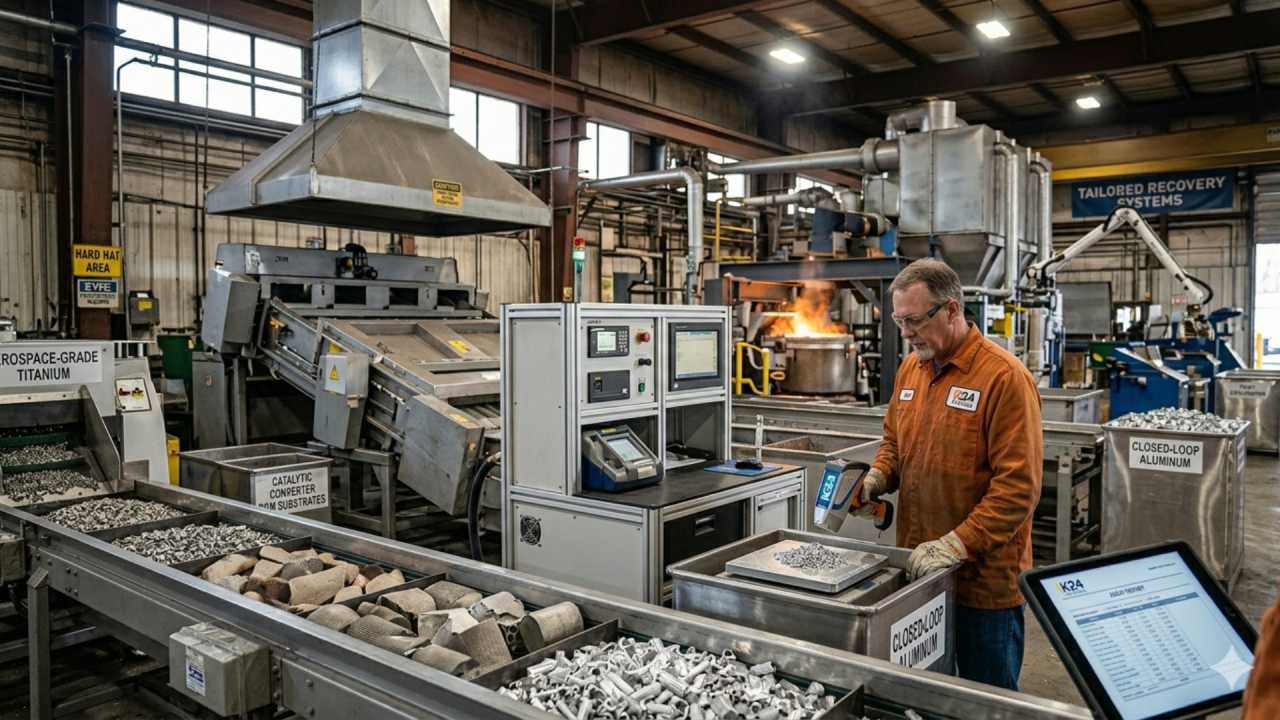
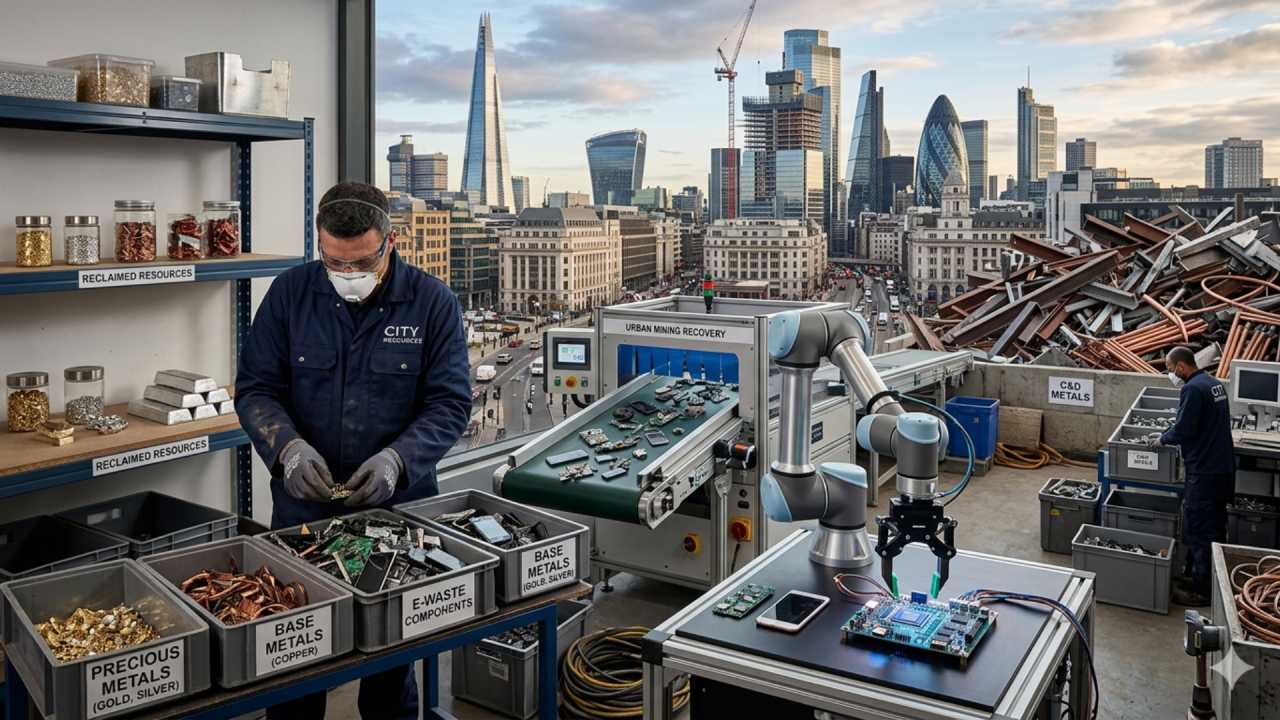
Urban mining—the process of recovering valuable metals from discarded electronic waste (e-waste), industrial scrap, and end-of-life appliances—holds immense promise. A single ton of discarded circuit boards can contain a concentration of gold and silver that is significantly higher than a ton of raw ore extracted from a traditional mine. By aggressively scaling up automated e-waste collection and processing infrastructure, society can turn a growing waste management crisis into a sustainable, domestic source of high-purity precious metals, bypassing the need for new disruptive open-pit mines.
Solar Panel Recycling
As the early generations of solar installations begin to reach the end of their twenty-five-year operational lifespans, the world faces a looming wave of decommissioned solar modules. Historically, these panels were often landfilled because recovering their components was economically uncompetitive.
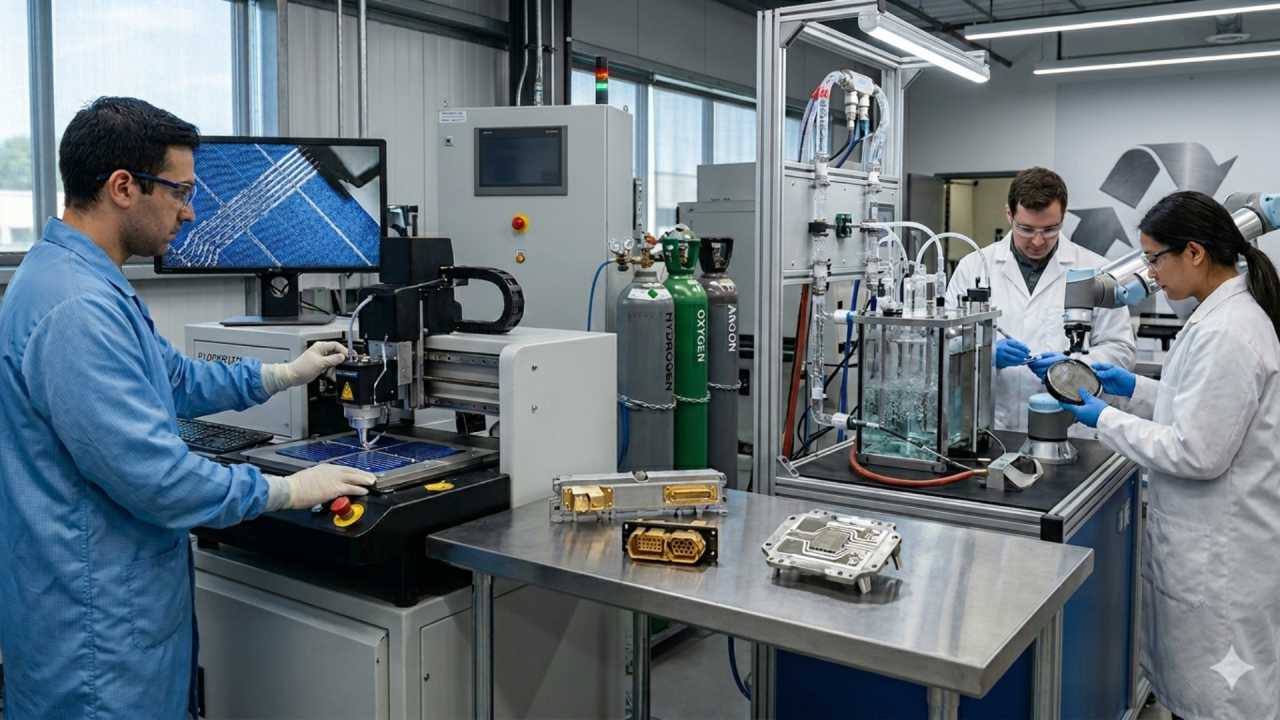
However, the rising volume of retired panels has catalyzed a new solar panel recycling industry. Modern mechanical and chemical recycling processes are now capable of stripping away the glass and protective polymers to isolate and recover the high-value silver paste from the embedded silicon cells. Scaling this industry ensures that the silver used to build the solar boom can be captured and continuously cycled into the next generation of higher-efficiency photovoltaic modules.
Battery and Fuel Cell Recovery
A similar imperative applies to the hydrogen and electric vehicle sectors. The platinum and iridium catalysts utilized within PEM fuel cells and green hydrogen electrolyzers do not degrade or disappear during operation; they remain fully intact within the structural matrix of the worn-out membranes.
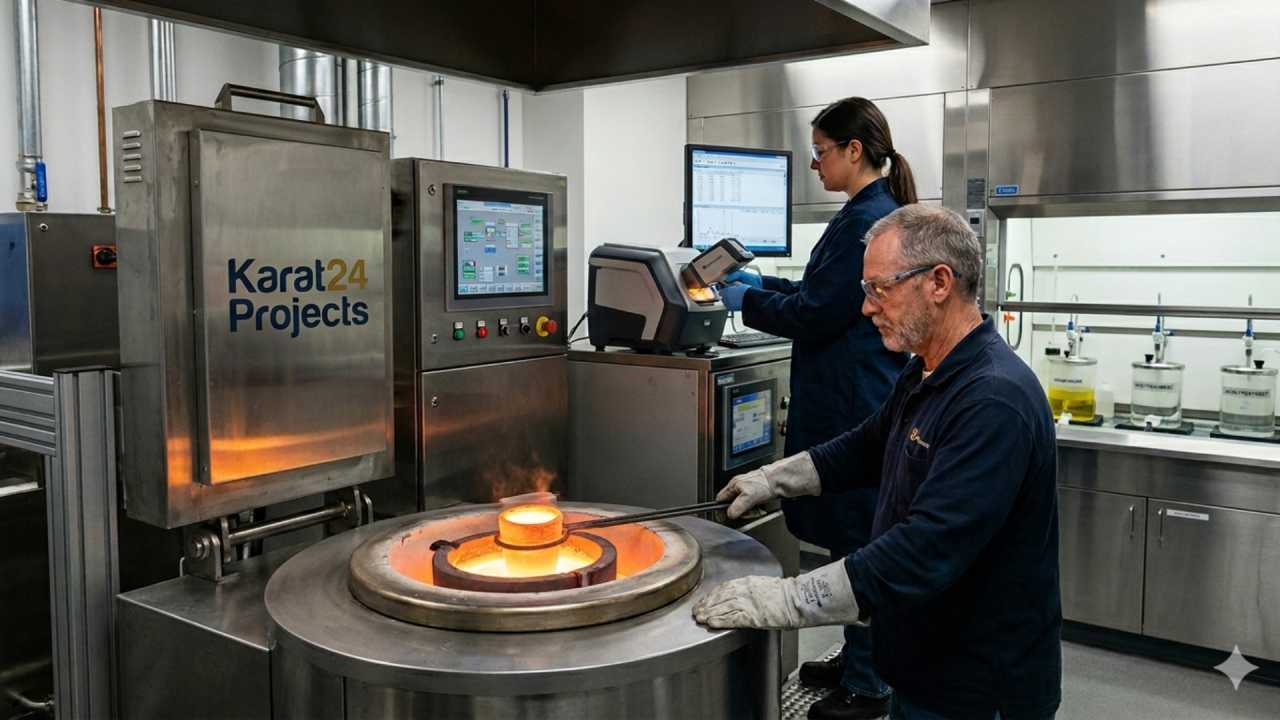
Specialized hydrometallurgical recycling facilities can dissolve these spent membranes and recover nearly 100% of the contained platinum group metals at a fraction of the energy cost of primary mining. Similarly, as the current generation of electric vehicles eventually reach their end-of-life, recycling their sophisticated battery management electronics will yield significant quantities of gold and silver.
Benefits
Embracing this circular economy framework provides three transformative benefits to the green technology sector:
-
Reduced Mining Pressure: Every kilogram of gold, silver, or platinum recovered via recycling reduces the economic demand for primary geological extraction, preserving natural landscapes and conserving water.
-
Lower Environmental Footprint: Secondary refining of recycled metals emits up to 90% less carbon dioxide than processing raw, low-grade ore from the ground.
-
Supply Security: Recycling establishes a decentralized, localized supply of critical minerals that is entirely immune to foreign geopolitical conflicts, trade embargoes, or international shipping disruptions.
Future Innovations and Market Outlook
The relationship between precious metals and green technology is dynamic. As scientific research progresses, the industry is witnessing a continuous race between the development of next-generation clean energy systems and the engineering required to manage material dependencies.
Emerging Technologies
Looking ahead, several emerging innovations are poised to reshape material demand. In the solar sector, researchers are perfecting perovskite-silicon tandem cells, which stack different light-absorbing materials to break through the theoretical efficiency ceilings of standard silicon panels. In the hydrogen space, scientists are developing anion exchange membrane (AEM) electrolyzers, which attempt to operate in alkaline environments rather than acidic ones, potentially opening the door to utilizing less-scarce catalysts. Meanwhile, solid-state battery technology for electric vehicles promises to drastically alter the internal electronic architecture of transport, creating new touchpoints for precious metal integration.
Research into Substitutes
A substantial portion of global research funding is currently dedicated to finding substitutes for precious metals or, at the very least, minimizing their usage through advanced nano-engineering. For instance, researchers are utilizing advanced computational chemistry to design catalyst structures that coat ultra-thin layers of platinum atoms over cheaper core metals like copper or cobalt. This approach aims to preserve the elite surface catalytic activity of the precious metal while using only a fraction of the total volume. In the electronics sector, scientists are exploring graphene and other advanced carbon-based nanomaterials to see if they can supplement or replace silver in specific low-voltage conductive applications.
Demand Forecasts
Despite these intensive efforts toward substitution and thrifting, overall demand forecasts for precious metals in the clean energy sector remain aggressively positive. The scale of the global energy transition is simply too massive for substitution to completely offset volume growth.
As hundreds of gigawatts of new solar capacity are deployed annually, and as the global automotive fleet transitions away from internal combustion, the total volume of silver, gold, and platinum group metals required by the green tech sector is projected to climb steadily over the coming decades. The clean energy transition will remain a dominant structural driver of the global precious metals market.
Investment and Industry Trends
This long-term demand outlook has transformed precious metals into assets of immense strategic importance for governments and corporations alike. Major automotive manufacturers are now entering into direct long-term supply agreements with mining and recycling companies to secure their future access to platinum group metals and electronic-grade silver, bypassing traditional spot market middlemen.
Simultaneously, sovereign governments are establishing national stockpiles and funding localized recycling initiatives, recognizing that securing these critical green technology materials is a matter of long-term economic resilience and energy security.
Conclusion
The green tech revolution is often discussed in abstract terms—as a shift toward cleaner air, digital grids, and carbon-neutral targets. However, the physical reality of this transition is deeply rooted in materials science. Precious metals are not secondary components or optional luxuries in this landscape; they are the essential enablers of the clean energy transition.
From the high-conductivity silver lanes that capture solar energy to the indestructible platinum group metal catalysts that drive the hydrogen economy, and from the flawless gold connectors in electric vehicle brains to the palladium-reliant components of green data centers, these elements provide performance characteristics that cannot be matched by any common alternatives.
As the clean energy transition accelerates globally, managing the lifecycle of these precious materials will become increasingly critical. The industry must balance its reliance on these metals by aggressively pursuing responsible, traceable mining practices alongside an industrial-scale commitment to circular economy recycling. By reclaiming these valuable elements through urban mining, solar panel recovery, and fuel cell recycling, society can insulate itself from supply chain vulnerabilities and minimize the environmental costs of extraction. Ultimately, the success of our sustainable technology future will not be measured just by the clean energy we generate, but by the intelligence, efficiency, and responsibility with which we manage the precious physical resources that make that energy possible.
Frequently Asked Questions
Why is silver used in solar panels instead of cheaper metals like copper?
Silver possesses the absolute highest electrical and thermal conductivity of any element on the periodic table. While copper is an excellent conductor for standard electrical wiring, it oxidizes rapidly when subjected to the high temperatures required during solar cell manufacturing. Oxidized copper creates immense localized electrical resistance, turning captured sunlight into wasted heat and drastically lowering the efficiency of the photovoltaic cell. Furthermore, silver microparticles provide the unique chemical stability needed to withstand decades of intense ultraviolet radiation and moisture without corroding, ensuring a solar panel maintains a twenty-five-year operational lifespan.
How much silver is used in a standard solar panel?
On average, a modern crystalline silicon solar panel contains roughly 20 grams of physical silver, mostly concentrated in the screen-printed conductive paste that forms the micro-fine fingers and busbars on the silicon wafer surface. Due to rising raw material costs and supply strain, the solar manufacturing industry actively utilizes a process called “thrifting.” This engineering effort uses advanced manufacturing deposition techniques to reduce the volume of silver per cell; however, the exponential growth of global utility-scale solar farms continues to drive overall silver demand upward despite these material-saving innovations.
What is the role of platinum in hydrogen fuel cells?
Platinum serves as the primary catalyst responsible for accelerating the electrochemical reaction inside a Proton Exchange Membrane (PEM) fuel cell. When hydrogen gas enters the anode side of the cell, the platinum catalyst forces the hydrogen molecules to split into protons and electrons. The electrons are routed through an external circuit to generate clean electrical energy, while the protons pass through the membrane to combine with oxygen at the cathode—a process also accelerated by platinum. Because of its elite catalytic activity, platinum allows this entire clean energy conversion to occur rapidly at low temperatures with maximum power density.
Why does green hydrogen production rely on iridium?
Green hydrogen is generated through water electrolysis, a process that splits water molecules into oxygen and hydrogen gas using renewable electricity. The most efficient systems, PEM electrolyzers, generate a highly acidic, high-voltage, and highly corrosive chemical environment at the anode. Iridium is one of the rarest and most chemically stable elements on Earth, making it one of the only known materials capable of acting as an effective oxygen evolution catalyst without dissolving or degrading under these intense electrochemical conditions.
What is the difference between precious metals and critical minerals in green tech?
While both material classes are fundamental to the clean energy transition, they differ significantly in their chemical classification and primary utility:
| Material Type | Core Green Tech Examples | Primary Functional Role |
| Precious Metals | Silver, Gold, Platinum, Iridium | Utilized in ultra-low volumes for extreme electrical conductivity, corrosion resistance, and high chemical catalysis. |
| Critical Minerals | Lithium, Cobalt, Nickel, Graphite | Utilized in heavy mass volumes for energy storage capacity within battery chemistries and magnetic field generation in motors. |
How does the circular economy reduce green tech mining pressures?
The clean technologies designed to protect the planet carry a heavy upfront carbon and environmental cost during primary geological mining. Circular economy initiatives focus on “urban mining”—the collection and advanced recycling of end-of-life electronics, decommissioned solar modules, and spent fuel cell membranes. Reclaiming precious metals through hydrometallurgical recycling paths yields high-purity elements at up to 90% lower carbon emissions than extracting low-grade raw ore from the ground, creating a secure, localized supply chain that reduces destructive open-pit mining operations.