
Accurate & Fast Refining Services You Can Trust
The global landscape of precious metal management demands absolute precision, rapid execution, and unwavering integrity. Whether dealing with high-grade industrial scrap, complex electronic components, dental alloys, or post-consumer jewelry, the financial stakes involved in precious metal recovery are immense. For businesses that rely on the reclamation of gold, silver, platinum, and palladium, the selection of a refining partner is not merely a utility decision—it is a critical strategic choice that directly impacts the bottom line, operational liquidity, and corporate compliance.
In recent years, the market has witnessed an unprecedented surge in the demand for professional precious metal refining. As primary mining resources become more capital-intensive and environmentally challenging to extract, the secondary recovery of metals has shifted from an alternative option to an absolute economic necessity. In this high-stakes environment, even a microscopic variance in the calculation of metal purity can lead to thousands of dollars in lost revenue. Conversely, unnecessary delays in processing time can lock up essential capital, stalling production schedules and disrupting vital cash flow.
To navigate these challenges successfully, businesses require a refinery that masterfully balances two seemingly opposing forces: uncompromising accuracy and maximum operational speed. Achieving this balance requires an investment in state-of-the-art laboratory infrastructure, highly disciplined security protocols, and deep metallurgical expertise. Karat24 Projects has established itself at the forefront of this demanding sector, providing the reliable refining solutions that modern industries require to optimize their metal assets safely, transparently, and efficiently.
What Are Refining Services?
Precious metal refining is the highly sophisticated chemical, thermal, and electrochemical processing of materials to separate and purify valuable metals from base metals, impurities, and non-metallic substances. Unlike basic melting or smelting, which simply consolidates material into a uniform mass, true refining upgrades the purity of the target metals to investment-grade levels, often reaching 99.9% or 99.99% purity.
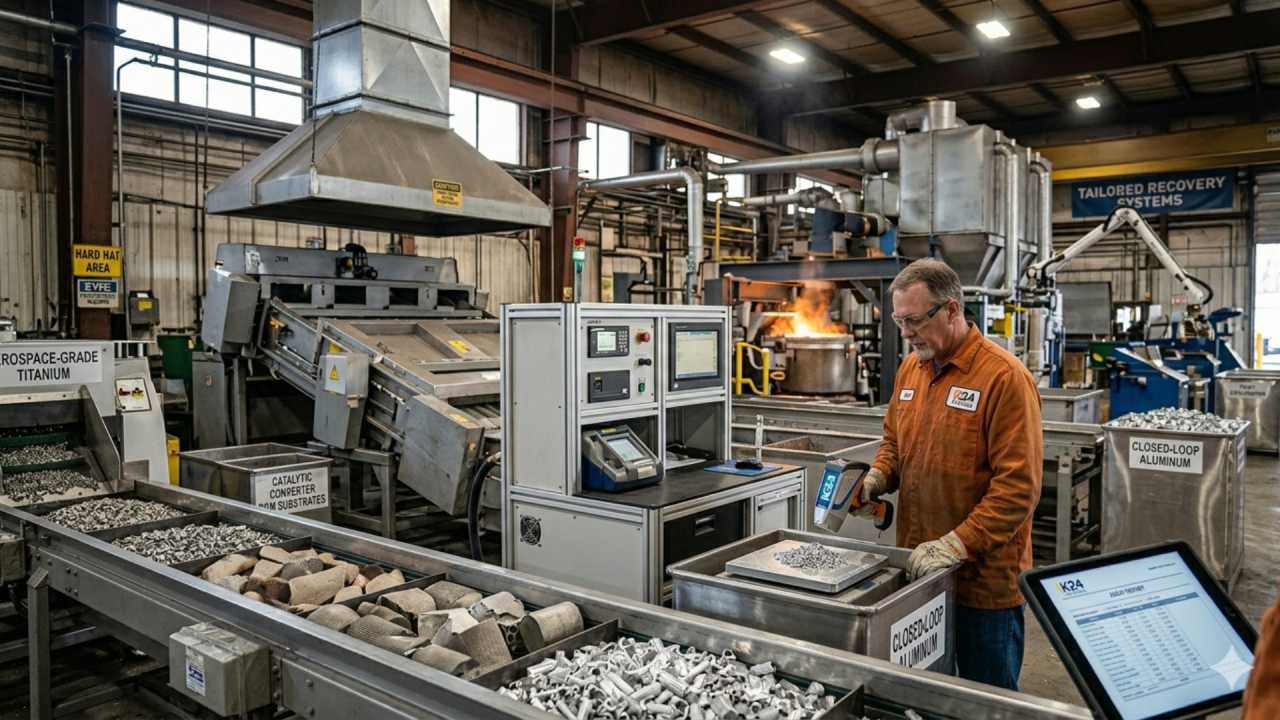
The scope of materials managed by a professional refinery is extensive, encompassing an array of precious metals, each requiring specialized chemical pathways for optimal extraction:
-
Gold: Sourced from jewelry manufacturing scrap, old inventories, electronic waste, and mining concentrates.
-
Silver: Recovered from industrial films, electrical contacts, mirror manufacturing byproducts, and silverware.
-
Platinum: Extracted from catalytic converters, laboratory equipment, high-end jewelry scrap, and medical devices.
-
Palladium: Reclaimed from multi-layer ceramic capacitors, chemical catalysts, and specialized dental alloys.
Because precious metals are utilized across a wide spectrum of modern technologies, a diverse range of industries relies on dedicated refining and assaying services to maintain their circular economies:
Jewelry and Watch Manufacturing
Manufacturers, custom designers, and retail jewelers generate substantial volumes of bench sweeps, filings, polishing dust, and casting scrap. Regular reclamation of these materials is necessary to recover working capital and minimize overhead costs.
Electronics and Semiconductor Industries
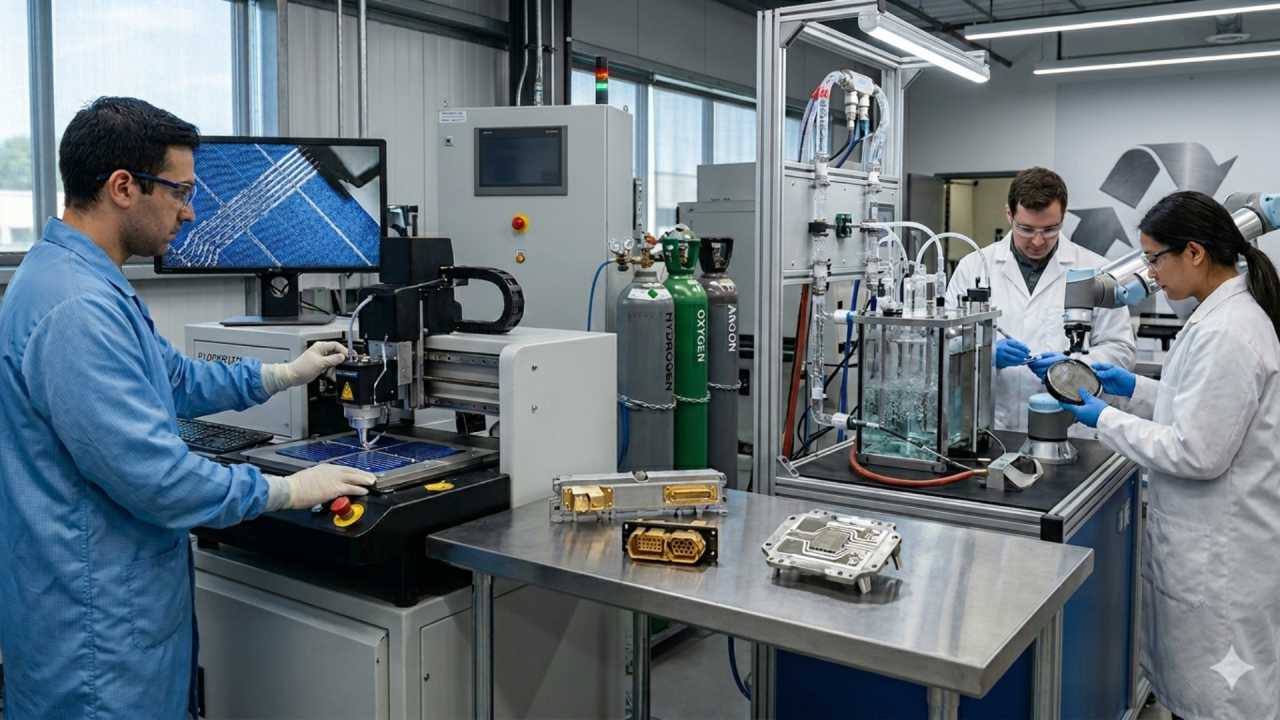
Modern circuit boards, sensors, and connectors utilize gold and silver for their superior electrical conductivity and corrosion resistance. Specialized refining isolates these microscopic metal deposits from complex plastic and ceramic matrices.
Dental Laboratories and Clinics
Dental scrap, including old crowns, bridges, inlays, and partial frameworks, frequently contains high concentrations of gold, platinum, and palladium blended with base metals.
Industrial Manufacturing and Chemical Processing
Many industrial processes utilize precious metals as catalysts or in high-temperature tooling. Spent catalysts and production scraps represent a highly concentrated source of valuable metals that require systematic recovery.
Demolition and Industrial Recycling
As older manufacturing plants, telecommunication hubs, and aerospace facilities are decommissioned, specialized salvage operations extract precious metal-bearing components that require industrial-scale refining solutions.
The Importance of Accurate Refining
In the precious metals industry, accuracy is the absolute foundation of financial viability and operational trust. Because the market value of these metals fluctuates constantly on global commodities exchanges, even a minor discrepancy in the determination of material purity can result in significant financial discrepancies. For instance, an error of just 0.5% in assessing a large lot of gold scrap can translate to thousands of dollars in lost revenue for the client. Therefore, utilizing advanced assaying techniques and laboratory verification is vital to ensuring fair payouts and safeguarding business margins.
Accurate refining eliminates guesswork by replacing visual estimations with rigorous scientific analysis. When a lot arrives at the refinery, it must undergo a meticulous preparation process to ensure homogeneity before testing. If a sample is not completely uniform, any subsequent analysis will be flawed, leading to incorrect valuations. By implementing strict quality control procedures at every phase of evaluation, metal refining experts ensure that clients receive a true, verifiable calculation of their asset value, maintaining total compliance with international industry standards.
To deliver this level of precision, a premier refining laboratory utilizes a tiered testing methodology, combining traditional, time-tested practices with modern instrumental analysis:
Fire Assay Testing
Widely recognized as the gold standard for gold and silver analysis, fire assaying involves fusing the metal sample with fluxing agents and lead oxide at temperatures exceeding 1000°C. The precious metals are separated from base metals through cupellation and chemical parting, providing an accuracy rate of up to 1 part in 10,000.
X-Ray Fluorescence (XRF) Analysis
A rapid, non-destructive analytical technique that irradiates a metal sample with high-energy X-rays. The emitted secondary X-rays reveal the unique elemental signature of the material, allowing technicians to identify the exact composition of multiple metals within seconds.
Inductively Coupled Plasma (ICP) Mass Spectrometry
For complex lots containing platinum group metals or ultra-low concentrations of precious materials, ICP testing provides trace-element analysis down to parts-per-billion sensitivity. This ensures that every fraction of a pennyweight of metal is fully accounted for.
| Assaying Method | Primary Application | Key Benefit | Typical Accuracy Level |
| Fire Assay | Gold & Silver | Ultimate industry standard | High Precision ($99.99\%$) |
| XRF Analysis | Multi-metal lots, initial triage | Non-destructive & rapid | Semi-Quantitative ($\pm 0.1\%$) |
| ICP Spectrometry | Platinum Group Metals, Trace residues | Detects micro-impurities | Ultra-Precision (Parts-per-billion) |
Why Speed Matters in Refining Services
While accuracy guarantees the correctness of a financial payout, refinery turnaround time directly dictates a business’s operational agility and financial health. In any industry handling high-value physical inventory, capital locked up in processing is capital that cannot be used to fund payroll, purchase raw materials, or invest in market opportunities. A slow, sluggish refining cycle forces companies to carry higher inventory holding costs and exposes them to market volatility during the processing window.
Fast refining services mitigate these risks by compressing the timeframe between material delivery and settlement. When a business can reliably convert its production scrap or secondary scrap into liquid capital within a predictable window, it optimizes its cash flow and strengthens its operational resilience. This rapid cycle is particularly crucial for businesses operating on tight margins or those handling urgent production requirements where replacement raw materials must be acquired immediately.
At Karat24 Projects, minimizing turnaround time is achieved without compromising precision, thanks to a multi-layered approach to operational efficiency:
-
Efficient Workflows: Standardized reception, logging, and preparation stages eliminate administrative bottlenecks and keep materials moving systematically through the plant.
-
Modern Refining Equipment: High-induction melting furnaces, rapid cooling systems, and automated chemical reactors accelerate physical and chemical separation processes safely.
-
Experienced Technicians: Well-trained metallurgical staff anticipate processing challenges, preventing chemical delays or melting errors that can slow down production.
-
Streamlined Reporting: Integrated digital asset management platforms instantly link laboratory assay results to customer accounts, automating settlement calculations and reducing administrative delays.
Key Characteristics of a Refining Company You Can Trust
The precious metals refining industry operates heavily on trust. Because materials are frequently melted down, transformed, or chemically altered during processing, clients must have absolute confidence that their partner operates with total transparency and integrity. A trusted refining company does not hide behind complex yield formulas or opaque fee structures; instead, it provides open, clear visibility into every phase of the recovery cycle.
To establish and maintain this trust, a premier service provider must exhibit specific structural characteristics and client-centric practices:
Transparent Pricing and Fee Structures
A reputable refinery outlines all processing fees, melting charges, and assay costs upfront. There are no hidden deductions, unexpected treatment surcharges, or unexplained weight losses. The valuation formula is clearly presented, linking returns directly to verifiable spot market prices.
Honest, Verifiable Evaluations
Clients are provided with detailed, official assay certificates that detail the precise weights and purities of all recovered metals. Trustworthy refineries often provide split-sampling options, allowing a portion of the homogenized sample to be sent to an independent third-party laboratory for verification if requested.
Certified Processes and Compliance
Operational legitimacy is backed by formal credentials. A reliable refinery maintains proper state and federal licensing, adheres strictly to Anti-Money Laundering (AML) regulations, and complies with Know Your Customer (KYC) protocols to ensure all processed materials originate from legitimate, legal sources.
Secure Handling and Comprehensive Support
From the moment material arrives, it is treated as a high-security asset. Dedicated customer support representatives are available to guide clients through the logistics, provide status updates, and answer technical questions regarding complex material compositions.
When evaluating a long-term refining partner, businesses should look for established trust signals that confirm these capabilities:
-
Years of Documented Experience: Decades of active operations indicate a business model built on sustained client satisfaction and reliable performance.
-
Industry Certifications: Active memberships and compliance certifications with respected metallurgical and trade organizations.
-
Verified Client Testimonials: Authentic feedback from manufacturers, industrial groups, and jewelry brands confirming consistency in payouts and timing.
-
Comprehensive Case Studies: Documented examples of complex material recoveries where the refinery successfully extracted maximum value from difficult, low-yield materials.
Technology Behind Accurate and Fast Refining
The modern precious metal refinery resembles an advanced chemical and physical sciences laboratory far more than an old-world industrial foundry. The integration of advanced technology has transformed the speed and accuracy of precious metal recovery, replacing manually intensive, slow procedures with automated, highly reliable systems.
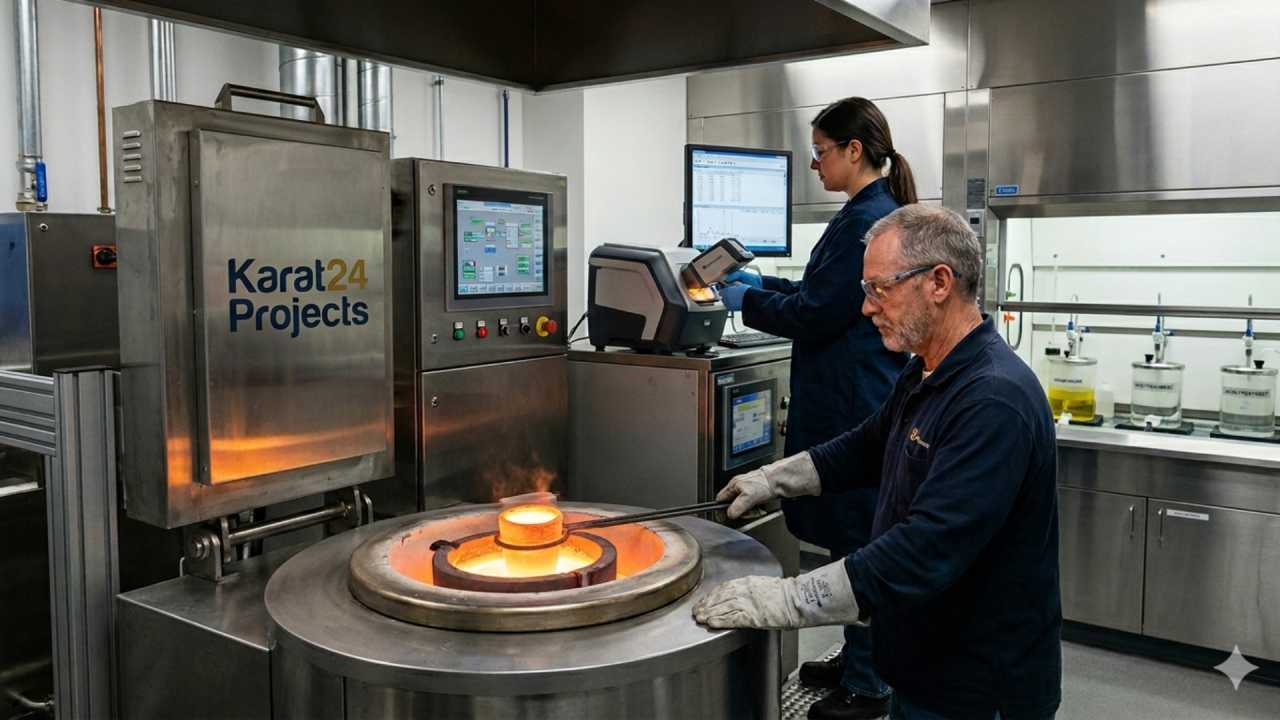
Automated testing and processing infrastructure plays a central role in mitigating human error. In manual material handling, minor errors in weighing, temperature control, or chemical dosing can alter assay results or reduce overall metal recovery yields. Modern facilities utilize computerized induction furnaces that maintain precise thermal parameters, ensuring completely homogenous melts without vaporizing volatile elements or leaving precious metals trapped within the slag.
Digital tracking systems further enhance this technological framework. Every incoming lot is assigned a unique barcoded identity upon arrival, linking it to a centralized enterprise resource planning system. This digital footprint tracks the material through weighing, melting, sampling, assaying, and final chemical refining. Technicians can monitor the real-time status of any batch, ensuring optimal resource allocation and preventing any cross-contamination between different client lots.
Furthermore, state-of-the-art laboratory equipment, such as computerized XRF spectrometers and automated titration systems, delivers consistent results day after day. These systems are paired with advanced environmental controls, including high-efficiency particulate air (HEPA) filtration and scrubbers, which capture microscopic metal particles from the plant’s airflow. This dual-focus approach protects both the surrounding environment and the client’s yield by ensuring that no precious metal escapes through exhaust systems.
Security and Chain of Custody Procedures
When transporting and processing high-value assets like precious metals, risk management is a paramount concern. A secure refining process requires a flawless chain of custody that guarantees accountability from the moment the material leaves the client’s custody until the final settlement is paid out. Any gap in security can expose assets to loss, disputes, or internal errors.
A professional refinery implements a highly controlled intake and processing protocol designed to eliminate vulnerability:
Material Tracking and Dual-Control Weighing
Upon receipt, packages are inspected for signs of tampering, photographed, and weighed on high-precision, calibrated scales. This initial weight is recorded under dual-control protocols, where two technicians must verify and sign off on the intake data simultaneously.
Secure Transport and Armored Logistics
For high-value shipments, a trusted refinery coordinates transport using insured, armored logistics providers. This ensures that assets are protected by professional security personnel and tracked via real-time GPS during transit.
Monitored Production Zones and Auditable Processes
The entire refining facility is monitored by continuous high-definition surveillance systems covering melting rooms, sampling stations, and assay laboratories. This recorded surveillance provides an auditable history of every lot, allowing for complete verification of material handling at any point in time.
The Importance of Visibility: A clear, documented chain of custody gives clients complete peace of mind. Knowing exactly where materials are, who is handling them, and how they are being protected allows businesses to manage their valuable assets with total confidence.
Environmental Responsibility in Modern Refining
Modern refining is no longer solely focused on extraction efficiency; it must also prioritize environmental stewardship. The chemical processes required to separate precious metals from impurities involve complex compounds, acids, and high-temperature thermal reactions. Responsible gold refining services and silver refining operations must implement sustainable practices to ensure these processes do not harm the local ecosystem.
Environmental responsibility is also a key trust signal for forward-thinking businesses. Many consumer-facing brands, electronic manufacturers, and corporate entities are required to verify that their entire supply chain—including recycling and refining partners—adheres to strict green standards. Partnering with an environmentally compliant refinery helps businesses strengthen their own corporate social responsibility goals.
Key environmental practices executed by industry leaders include:
-
Closed-Loop Chemical Systems: Recycling and neutralizing acids and chemical reagents within the plant, preventing hazardous discharges and minimizing chemical waste.
-
Advanced Scrubber Technologies: Using multi-stage air filtration and chemical gas scrubbers to neutralize emissions from melting and refining furnaces, ensuring clean air exhaust.
-
Responsible Solid Waste Management: Treating slag and non-metallic byproducts systematically to isolate and safely dispose of any hazardous elements in full compliance with local regulations.
-
Energy-Efficient Infrastructure: Utilizing modern, high-efficiency induction furnaces that reduce carbon footprints and lower energy consumption per ounce of refined metal.
How to Choose the Right Refining Partner
Selecting a refining partner is a long-term operational decision that directly affects your business’s financial health. To help navigate this selection process, use this comprehensive evaluation checklist to ensure your chosen provider meets the highest standards of accuracy, speed, and safety:
Licensing and Regulatory Compliance
-
Does the refinery hold all necessary local, state, and federal operational licenses?
-
Are they fully compliant with international anti-money laundering and know-your-customer regulations?
-
Can they provide documentation proving their legal and regulatory standing?
Processing Speed and Turnaround Promises
-
What is the standard turnaround time for your specific material type (e.g., sweeps vs. bullion)?
-
Does the company offer expedited processing options for urgent capital requirements?
-
Are their stated timelines backed by operational capacity and efficient workflows?
Technology and Assaying Capabilities
-
Does the refinery use advanced assaying techniques like fire assay, XRF, and ICP?
-
Are their scales calibrated regularly by certified external agencies?
-
Can they process complex, low-grade materials with high recovery yields?
Transparency and Reporting
-
Are all fees, charges, and minimum weight requirements clearly outlined in writing?
-
Do they provide clear, detailed assay certificates for every processed lot?
-
Is there a transparent process in place for settling valuation discrepancies or requesting split samples?
Security and Insurance
-
Is your material fully insured from the moment it arrives at the facility or during transit?
-
Does the refinery utilize high-definition surveillance and strict chain-of-custody protocols?
-
Are intake weights verified under dual-custodian controls?
Reputation and Client Feedback
-
Does the company have a proven track record within your specific industry?
-
Are customer reviews and professional testimonials consistently positive?
-
Can they provide references or case studies demonstrating their expertise?
Why Customers Continue to Choose Reliable Refining Services
The ultimate measure of a refinery’s success is the loyalty of its client base. In an industry where competition is fierce, companies that prioritize consistent accuracy, dependable turnaround times, and transparent refining services form lasting partnerships that span decades.
When a business finds a refining partner it can trust completely, it eliminates a major variable from its operational equation. Executives and production managers no longer need to worry about unexpected settlement shortfalls or unexplained delays that disrupt cash flow. Instead, they can treat their secondary scrap and production scrap as predictable, highly liquid assets that flow smoothly back into their working capital.
Furthermore, top-tier refineries like Karat24 Projects do not treat clients as mere transactions. They take the time to understand each business’s unique production cycles, material types, and cash flow requirements, providing personalized support and tailored recovery programs. Whether it is adjusting pickup schedules, optimizing chemical processing for unique industrial alloys, or offering flexible settlement structures (such as cash payouts, wire transfers, or physical metal return), a dedicated partner adapts to the specific needs of your business. This commitment to client success yields consistently higher returns and ensures smooth, worry-free operations at every step.
Final Thoughts
The processing of precious metals is a demanding discipline where precision, speed, and integrity are paramount. As the industrial and commercial demand for gold, silver, platinum, and palladium continues to grow, businesses cannot afford to risk their valuable assets with unverified or inefficient refining partners. A single inaccurate assay or a lengthy processing delay can quickly erode operational margins and disrupt vital cash flow.
Partnering with a trusted refining company ensures that your materials are analyzed using advanced assaying techniques, handled within a highly secure chain of custody, and processed using fast, environmentally responsible workflows. True transparency, clear pricing structures, and verifiable reporting form the bedrock of a successful, long-term refining relationship.
Protect your business’s bottom line and optimize your precious metal recovery by working with established metal refining experts. Contact Karat24 Projects today to speak with a dedicated specialist, request a secure shipment kit, or discover how our accurate and fast refining services can streamline your metal asset management and deliver the maximum value your business deserves.
Frequently Asked Questions
What is the most accurate method for precious metal refining and assaying services?
The most accurate method for determining the exact purity of precious metals is the fire assay testing method. Widely regarded as the global industry standard for gold and silver, fire assaying involves melting the material at temperatures exceeding 1000°C to separate base impurities from noble metals. For platinum group metals or complex electronic scrap, premier refining laboratories combine fire assaying with Inductively Coupled Plasma (ICP) Mass Spectrometry to detect trace elements down to parts-per-billion, ensuring total valuation precision.
How is the refinery turnaround time calculated for industrial scrap?
The total refinery turnaround time depends heavily on the form of the material submitted. For high-purity bullion, coins, or clean manufacturing scrap, processing and settlement can often be completed within 24 to 48 hours. However, for complex materials like low-grade bench sweeps, dental alloys, or industrial catalysts, the material must first undergo extensive thermal homogenization (melting and blending) and sampling before chemical assaying can begin. A reliable refining company will provide clear, upfront timeline estimates based on the specific matrix of your lot.
Why should businesses choose transparent refining services over standard cash-for-gold buyers?
Standard cash-for-gold buyers typically rely on rapid, surface-level visual inspections or basic acid tests, which often underestimate the true value of complex alloys. In contrast, transparent refining services provide a comprehensive scientific breakdown of your entire lot. A trusted refining partner like Karat24 Projects issues official assay certificates detailing the exact weight before and after the melt, the precise percentage of all recovered precious metals, and explicit fee deductions tied directly to live, verifiable market spot prices.
What security protocols are used to guarantee a secure refining process?
To ensure complete asset protection, top-tier refineries implement a multi-layered chain of custody protocol. This includes:
-
Dual-custodian weight verification immediately upon shipment intake.
-
Continuous high-definition surveillance monitoring across all melting, sampling, and laboratory analysis zones.
-
Coordination with fully insured, armored logistics providers for transit. This rigorous tracking ensures that an auditable, transparent history exists for your high-value assets from the moment they leave your hands until the final settlement is paid out.
Can a gold refining company process mixed precious metal lots containing silver and platinum?
Yes, multi-metal recovery is a standard capability of advanced precious metal refining facilities. Mixed scrap—such as dental residues, manufacturing sweeps, or electronic waste—frequently contains a blend of gold, silver, platinum, and palladium. Specialized refineries use complex chemical, thermal, and electrochemical separation pathways to isolate each element individually, allowing you to maximize the return on all precious metals present in a single batch.