Precious Metal Refining Professionals You Can Trust | Accurate & Secure
Why Trust Matters in Precious Metal Refining
The world of precious metals is one of intrinsic value, historical significance, and complex chemistry. Precious metal refining is the sophisticated process of separating and purifying gold, silver, platinum, and palladium from various forms of scrap, industrial by-products, and raw ores. Because the materials handled in this industry are of such high financial value, the entire sector operates on a foundation of trust. Without a reliable refining partner, the risks of financial loss, purity disputes, and ethical compromises become significant.
For jewelers, industrial manufacturers, investors, and recyclers, the refinery is the bridge between raw, unrefined material and liquid capital. When a jeweler sends a batch of scrap gold to a professional refiner, they are not just sending metal; they are sending their profit margins and their hard-earned business assets. If a refiner lacks integrity, even a minor discrepancy in the measured purity or the total weight can result in thousands of dollars in lost revenue. This is why karat24 projects emphasizes that transparency is the most valuable commodity a refinery can offer.
Trust is also critical due to the regulatory and ethical landscape of the modern world. With increasing scrutiny on “conflict minerals” and the environmental impact of mining, professional refiners must act as gatekeepers. They ensure that the metals entering the global supply chain are not only pure in a chemical sense but also pure in an ethical sense. As we explore the intricacies of this industry, it becomes clear that a “trusted professional” is defined by more than just their furnace temperature; they are defined by their accuracy, their ethics, and their commitment to the client’s success.
What Precious Metal Refining Professionals Actually Do
A common misconception is that refining is simply melting metal down. In reality, it is a high-stakes combination of advanced metallurgy, analytical chemistry, and logistics. Trusted professionals manage a complex lifecycle that begins the moment a shipment arrives at their facility.
Collection and Evaluation
The process starts with the secure intake of materials. This can range from high-grade bullion to low-grade industrial sludge. Professionals must accurately weigh and categorize these materials before any processing begins. At this stage, companies like karat24 projects implement strict chain-of-custody protocols to ensure that every gram of material is accounted for.
Assaying: The Science of Purity
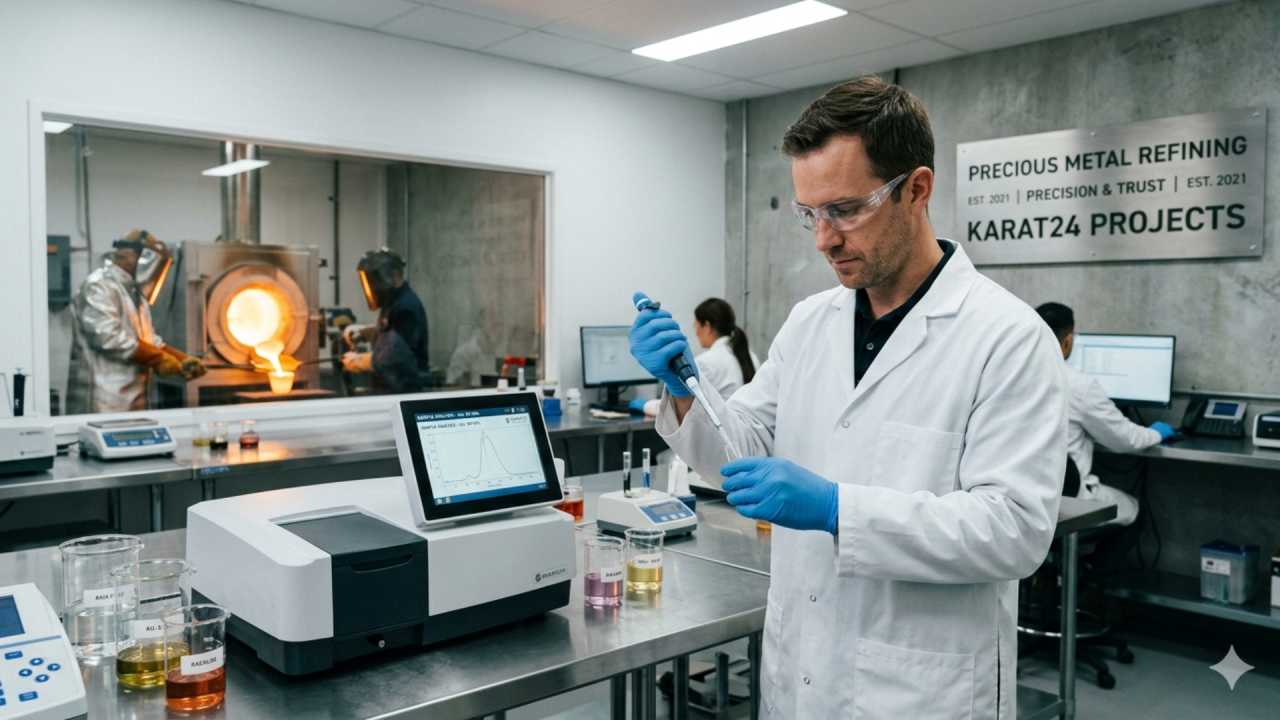
Assaying is perhaps the most critical task a refiner performs. It is the process of determining the exact ratio of precious metals within a sample. Professionals use various methods, such as fire assay or X-ray fluorescence (XRF), to provide a definitive “map” of what a shipment contains. This step dictates the final payout to the client, making its accuracy the ultimate litmus test for a refiner’s honesty.
The Refinement Process
Once the composition is known, the metal undergoes purification. Depending on the material, this may involve chemical baths to dissolve impurities, electrolytic cells to migrate pure metal atoms, or thermal processes to burn off non-metallic components. The goal is to reach “investment grade” purity, typically 99.9% or 99.99%.
Final Output and Settlement
The end of the refining journey results in high-purity bars, grains, or sponge. Trusted professionals then provide a detailed settlement report, matching the final output against the initial assay. This closing of the loop provides the client with the liquidity they need to reinvest in their business or sell into the open market.
Types of Materials They Handle
Modern precious metal refining is not limited to the gold coins or jewelry one might imagine. Professionals handle a staggering array of inputs from across the global economy.
-
Jewelry Scrap and Old Ornaments: This is the most visible side of the industry. It includes broken chains, outdated rings, and manufacturing offcuts. Because jewelry is often alloyed with copper, nickel, or zinc, refiners must be experts at stripping away these base metals.
-
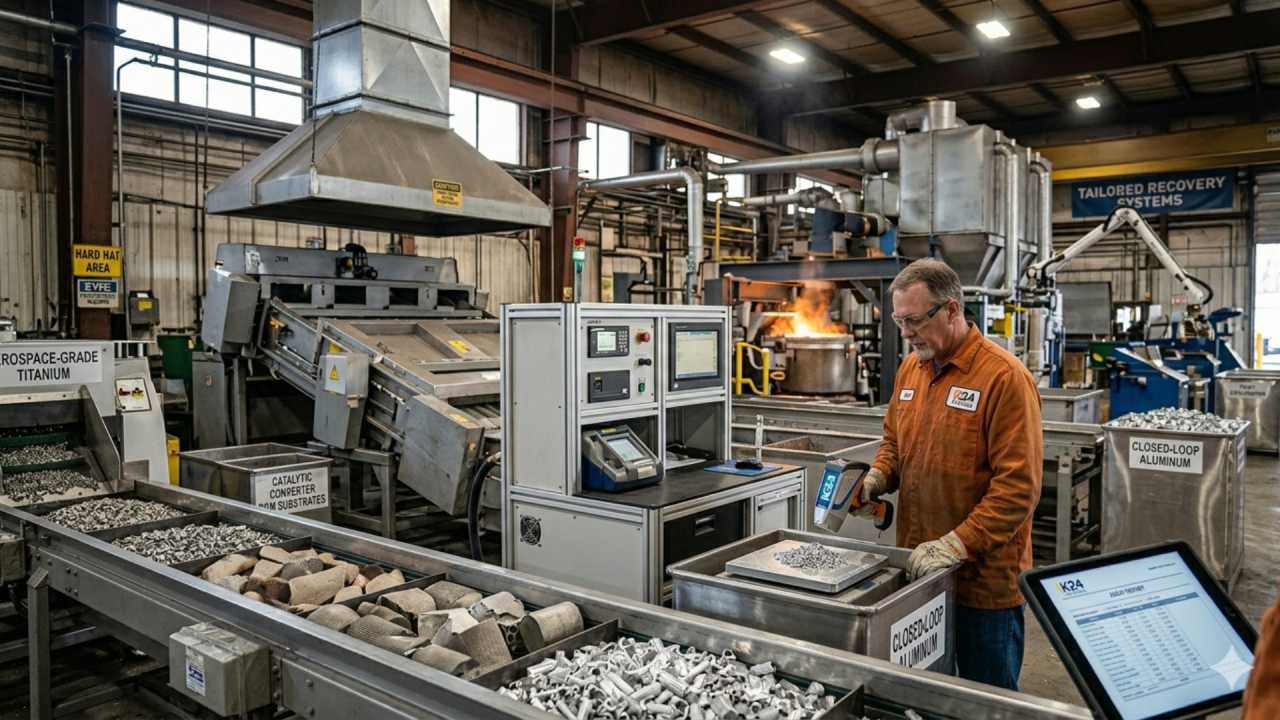
Industrial By-products: Electronics are a massive source of precious metals. Circuit boards, connectors, and semiconductors contain gold and silver. Additionally, the automotive industry provides catalytic converters, which are rich in platinum-group metals (PGMs) like platinum, palladium, and rhodium.
-
Mining Outputs: Refiners work with mining companies to process “doré bars”—semi-pure alloys produced at the mine site—and raw ore concentrates that require extensive chemical separation.
-
Dental and Medical Gold: Older dental crowns and bridges often use high-purity gold and palladium alloys. In the medical field, certain implants and diagnostic equipment also utilize precious metals due to their biocompatibility and conductivity.
-
Photographic and Laboratory Waste: Though less common today, silver is still recovered from certain types of X-ray film and laboratory catalysts used in chemical manufacturing.
By handling such diverse materials, professional refiners like those associated with karat24 projects play a vital role in the circular economy, ensuring that these finite resources are never truly “wasted.”
The Refining Process Explained (Step-by-Step)
To understand why some professionals are more trusted than others, one must understand the technical rigor of the refining process. Transparency in these steps is what separates a world-class operation from a backyard melter.
1. Sampling and Weighing
Upon arrival, the material is weighed on high-precision, calibrated scales. If the material is non-homogeneous (like a box of mixed jewelry), it must be melted into a single “melt” or sampled through specific grinding and vacuum processes to ensure the sample taken for testing represents the whole batch.
2. Assaying
The “fire assay” remains the gold standard for gold refining. A small sample is melted with lead and flux; the lead absorbs the precious metals, and the impurities are absorbed by a “cupel” (a bone-ash crucible). More modern facilities also use Inductively Coupled Plasma (ICP) spectrometry, which can detect trace elements down to parts per billion.
3. Melting and Separation
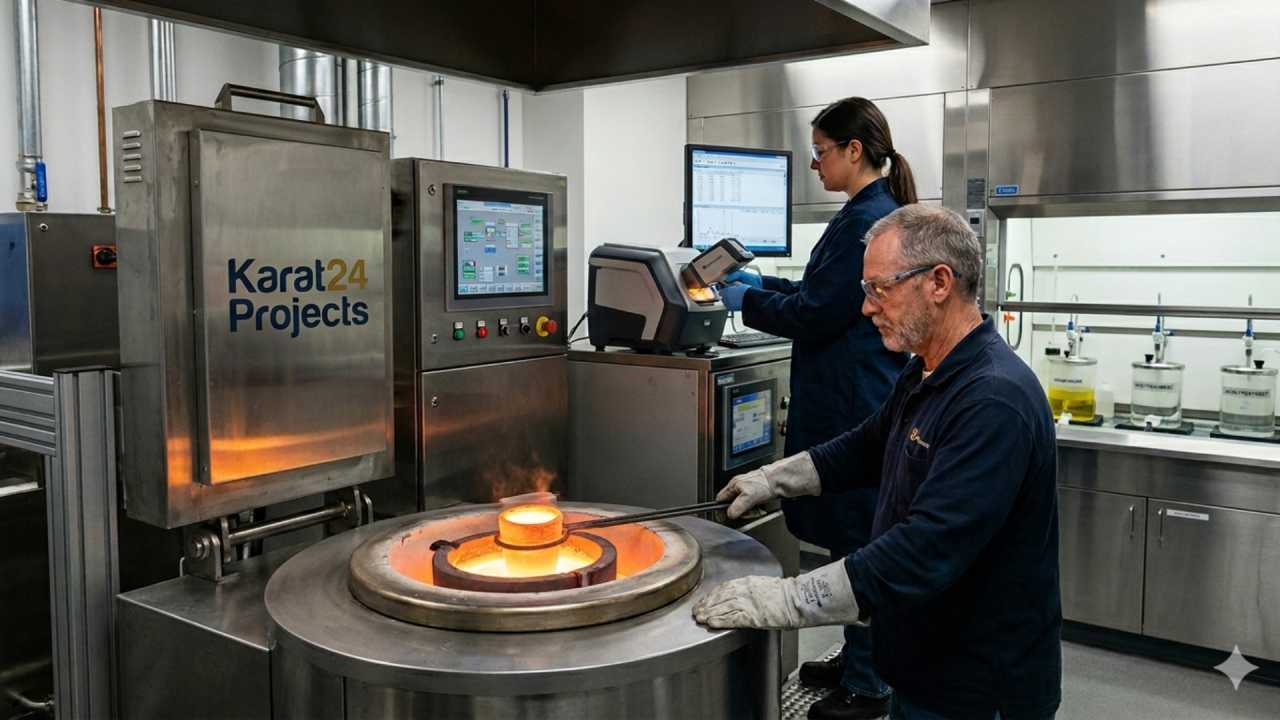
The bulk material is placed in induction furnaces. During this stage, fluxing agents are added to help separate the “slag” (impurities) from the molten metal. The resulting metal is often cast into thin anodes for the next stage of purification.
4. Chemical and Electrolytic Purification
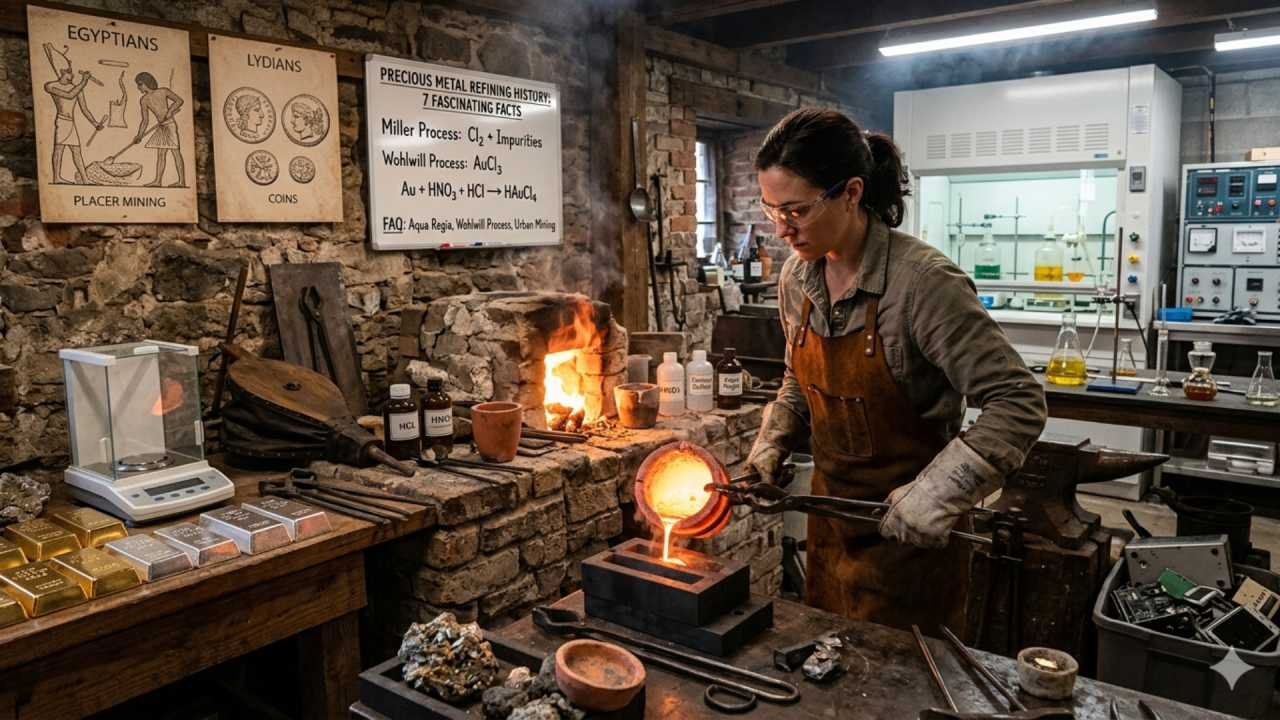
For gold, the Wohlwill process (electrolytic) or the Miller process (chlorination) is often used. The Miller process involves bubbling chlorine gas through molten gold; the impurities form chlorides and float to the top. The Wohlwill process produces higher purity (99.99%) by using an electrochemical cell where gold migrates from an impure anode to a pure cathode.
5. Final Refining and Casting
The purified metal is collected, washed, and melted one last time to be cast into standardized forms like bars, coins, or “shot” (small grains). Each piece is typically stamped with the refiner’s hallmark and its purity, serving as a guarantee of quality.
Key Qualities of Trusted Refining Professionals
When looking for a refining partner, certain “non-negotiables” define a true professional. These qualities ensure that the client is protected both financially and legally.
Certifications and Accreditations
A trusted refiner often holds certifications from recognized industry bodies. The London Bullion Market Association (LBMA) “Good Delivery” list is the most prestigious. Being on this list means the refiner meets strict standards for purity, weight, and ethical sourcing. Other certifications might include ISO 9001 for quality management or ISO 14001 for environmental standards.
Transparent Pricing and Fee Structures
Hidden fees are the enemy of trust. A professional refiner provides a clear breakdown of “treatment charges” and “refining charges.” They should be able to explain exactly how their fees are calculated based on the weight and type of material. karat24 projects advocates for a “no-surprises” model where clients know the costs upfront.
Accurate and Verifiable Assays
A refiner should allow for “witnessed assays” or provide “umpire samples.” An umpire sample is a portion of the material kept aside in case the client disagrees with the refiner’s result. If there is a dispute, the third sample is sent to an independent lab. A refiner who refuses to provide an umpire sample should be viewed with caution.
Secure Handling and Insured Logistics
Precious metals are high-risk targets for theft. Professional refiners utilize armored transport services and maintain comprehensive insurance policies that cover the material from the moment it leaves the client’s door until the settlement is finalized.
Ethical Sourcing and Compliance
In the modern market, “clean” gold is just as important as “pure” gold. Trusted professionals perform deep due diligence on their suppliers to ensure they are not inadvertently funding conflict or using child labor. This is often referred to as Know Your Customer (KYC) and Anti-Money Laundering (AML) compliance.
Technology and Innovation in Modern Refining
The image of a man in a leather apron pouring molten metal into a mold is largely a thing of the past. Today’s leading refiners are technology companies.
Advanced Analytical Tools
The use of X-ray Fluorescence (XRF) allows for non-destructive testing of metals in seconds. While not as deep-penetrating as a fire assay, it provides an immediate baseline. Digital tracking systems now allow clients to log into a portal and see exactly where their material is in the refining pipeline in real-time.
Automation and Precision
Automated casting lines ensure that every grain or bar is identical in weight and appearance. This reduces human error and increases the speed of processing. Precision in temperature control during induction melting also ensures that volatile metals (like silver in a gold alloy) are not lost to evaporation, maximizing the client’s yield.
Environmentally Friendly Techniques
Innovation is also driving “green” refining. Traditional refining can produce harsh chemical fumes and waste. Modern facilities use closed-loop systems that capture and neutralize gases, and some are even pioneering “bio-leaching,” which uses specialized bacteria to extract metals from ore without the use of toxic cyanide or mercury.
Environmental and Ethical Responsibilities
Precious metal refining sits at the heart of the sustainability movement. Because metals can be recycled indefinitely without losing their properties, refiners are essential to reducing the world’s reliance on destructive mining practices.
Responsible Sourcing
Trusted professionals adhere to the OECD Due Diligence Guidance for Responsible Supply Chains. This means they meticulously track the origin of their materials. For a company like karat24 projects, ensuring that every gram of gold is “conflict-free” is not just a legal requirement but a core brand value.
Compliance with Environmental Regulations
Refining involves chemicals like nitric acid, sulfuric acid, and chlorine. Professional refiners invest millions in air filtration and water treatment plants to ensure that their facility does not harm the local ecosystem. They are subject to frequent audits by environmental protection agencies to ensure compliance.
The “Circular Economy” Contribution
By efficiently recovering metals from “e-waste” (old phones and computers), refiners prevent hazardous materials from ending up in landfills. This “urban mining” is significantly more energy-efficient than traditional mining, making the refining professional a key player in the global effort to combat climate change.
Industries That Rely on Precious Metal Refiners
The reach of a professional refiner extends far beyond the local jewelry store. Several massive industries would grind to a halt without their services.
-
Electronics and Semiconductors: Modern life depends on gold’s conductivity and resistance to corrosion. Refiners provide the high-purity gold used in the tiny bonding wires of microchips.
-
Automotive Industry: The “Green Revolution” in cars relies on PGMs. Platinum and palladium in catalytic converters reduce harmful emissions. As these vehicles reach the end of their lives, refiners recover these precious elements for use in new cars.
-
Medical and Dental: From gold-plated pacemakers to silver-infused wound dressings, the medical field requires ultra-pure metals. Refiners provide the raw materials that meet stringent medical-grade standards.
-
Investment and Bullion: Central banks and private investors require a steady supply of stamped, verified bullion bars. Refiners are the only entities capable of converting raw scrap into these internationally recognized stores of value.
-
Aerospace: High-temperature alloys used in jet engines often contain precious metals to prevent oxidation at extreme altitudes. Refiners recycle these specialty alloys when engines are decommissioned.
Common Risks and How Professionals Mitigate Them
Despite the professional nature of the industry, risks still exist. Understanding how trusted refiners mitigate these risks is essential for any business owner.
Under-reporting of Metal Content
The most common form of fraud is a refiner reporting a lower purity than what actually exists in the scrap. Trusted professionals mitigate this by offering “transparent assays.” They allow clients to see the laboratory results and, in some cases, even watch the sampling process via video link or in person.
Hidden Fees and “Weight Loss”
Some low-tier refiners lure clients with low “refining fees” but then take a large percentage of the weight as a “melting loss” or “burn-off.” While some weight loss is natural (from dirt or non-metallic parts), a professional refiner will provide a detailed mass-balance sheet showing exactly where every gram went.
Material Loss and Theft
Without proper security, material can “disappear” during the process. Trusted facilities use 24/7 surveillance, metal detectors for staff, and dual-authorization protocols for entering high-value vaults. At karat24 projects, the security of the client’s asset is treated with the same importance as the refining itself.
Fraudulent Operators
In an unregulated environment, anyone can call themselves a “refiner.” Trusted professionals distinguish themselves through history, physical location (not just a PO box), and a portfolio of long-term, satisfied clients who can verify their reputation.
How to Choose the Right Refining Professional
Choosing a refiner is a high-consequence decision. Here is a guide to making the right choice:
Questions to Ask
-
What is your primary assay method? (Look for Fire Assay or ICP).
-
Can I witness the melt or the sampling?
-
Do you provide an umpire sample for every lot?
-
What are your settlement terms (how fast do I get paid)?
-
Are you certified by any international bullion associations?
Red Flags to Watch For
-
Vague Payouts: If they can’t give you a clear percentage or fee schedule, walk away.
-
Lack of Insurance: If the refiner asks you to ship your metal without providing a certificate of insurance, your assets are at risk.
-
Unrealistically High Payouts: If a refiner promises a payout higher than the current spot price minus reasonable costs, they are likely making up the difference by misreporting weights or purity elsewhere.
The Importance of Audits
A truly professional refinery welcomes third-party audits. Whether it’s a financial audit or an operational audit by an industry body, these “second sets of eyes” ensure that the refiner’s internal processes are as clean as the metal they produce.
Pricing, Fees, and Payment Structures
The financial side of refining can be daunting for the uninitiated. Professional refiners typically use a combination of the following:
-
Treatment Charges (TC): This is usually a flat fee per ounce or per kilogram of material processed. It covers the labor and energy required for the melt.
-
Refining Charges (RC): This is often a percentage-based fee that covers the chemical purification process.
-
Accountability/Retention: This is the percentage of the precious metal the refiner returns to you. For example, a refiner might offer “98% return on gold.” This means they keep 2% to cover their overhead and profit.
-
Settlement Timelines: Depending on the material, settlement can take anywhere from 24 hours to several weeks. “Easy” scrap like high-grade gold bars settles quickly, while complex industrial sludge takes longer to assay and refine.
Trusted professionals like karat24 projects use the current “Spot Price” (the current market price for raw metal) at the time of settlement to ensure the client gets a fair market rate.
Case Studies or Real-World Examples
To see how these principles work in practice, consider these scenarios:
Scenario 1: The Local Jeweler
A family-owned jewelry store accumulates 500 grams of scrap over six months. They send it to a trusted refiner. The refiner melts the lot, takes a sample, and performs a fire assay. They find the gold content is exactly 14-karat (58.3% purity). The jeweler receives a settlement based on 291.5 grams of pure gold, minus a small refining fee. Because the refiner provided a detailed report, the jeweler can reconcile this against their own records, maintaining their business’s profitability.
Scenario 2: The E-Waste Recycler
An electronics recycling firm processes 10 tons of circuit boards. The “pre-refining” involves grinding the boards into a fine powder. A professional refiner takes representative samples of this powder. Using ICP analysis, they detect not just gold, but silver, copper, and palladium. The recycler receives a multi-metal payout, turning what many would consider “trash” into a significant revenue stream.
Scenario 3: The Mining Operation
A small-scale mining project produces “doré” bars that are 80% gold and 20% silver. They ship these to a professional refinery. The refiner separates the metals, provides the mine with 99.99% pure gold bars stamped with the refinery’s hallmark, which the mine then sells to an international bank. The refiner’s hallmark is what makes the metal “tradable” on the global market.
Future Trends in Precious Metal Refining
The industry is evolving rapidly. As we look toward the future, several trends are shaping how professionals operate.
-
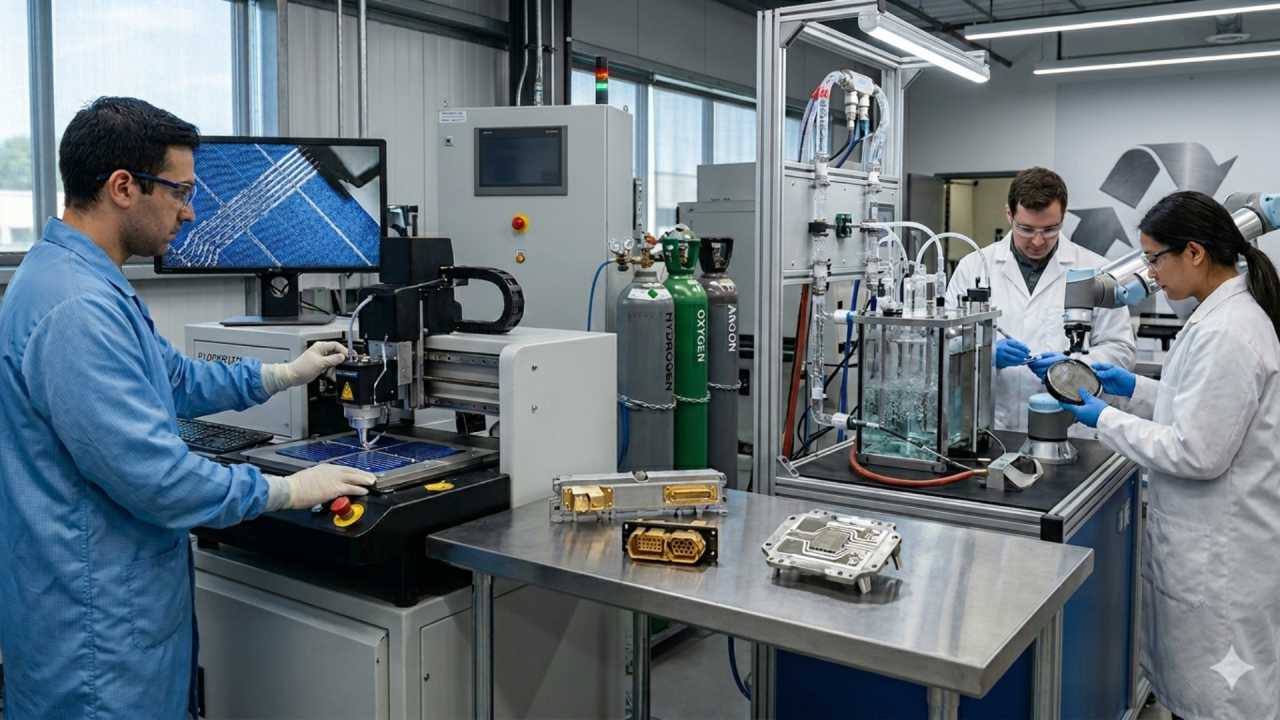
Increased Demand from Green Tech: Solar panels require silver, and electric vehicle batteries require various precious and semi-precious metals. Refiners are pivoting to handle these new types of “green scrap.”
-
Blockchain and Traceability: Digital ledgers are being used to track metal from the mine to the refiner to the end-consumer. This “digital passport” ensures that the metal’s ethical and purity history is immutable and transparent.
-
Urban Mining Dominance: As traditional mining becomes more expensive and environmentally regulated, the role of the refiner as an “urban miner” will grow. It is expected that a larger percentage of the world’s annual gold supply will come from recycled sources rather than new mines.
-
Stricter Global Regulations: Governments are cracking down on “cash for gold” schemes and unregulated melting houses to prevent money laundering. This will drive more business toward established, professional, and compliant refiners who operate with full transparency.
Final Thoughts: Building Long-Term Trust in Refining Partnerships
The relationship between a precious metal owner and a refiner is more than a simple transaction; it is a partnership. In an industry where a fraction of a percent can mean the difference between profit and loss, the value of working with a trusted professional cannot be overstated.
By prioritizing transparency, investing in the latest technology, and adhering to the highest ethical standards, professional refiners provide a vital service to the global economy. Companies like karat24 projects demonstrate that when you combine metallurgical expertise with unwavering integrity, you create a foundation for long-term success.
For anyone handling precious metals—whether you are a jeweler, an industrialist, or an investor—the message is clear: do not settle for anything less than a professional who can prove their accuracy, secure your assets, and stand behind their hallmark. In the world of precious metals, trust is the only thing that truly glitters.