How Precious Metals Are Refined: The Chemical Science Behind Purity
What Is Precious Metal Refining?
Precious metals occupy a unique space in human civilization. For thousands of years, gold, silver, platinum, and palladium have served as symbols of wealth, mediums of exchange, and essential components in fine craftsmanship. In the modern era, their value has expanded far beyond wealth preservation. These materials are now foundational to global technological infrastructure, driving advancements in medical devices, aerospace engineering, high-end electronics, and green energy systems.
However, precious metals are rarely discovered or recovered in their pure form. Whether extracted from deep within the earth or gathered from discarded post-consumer goods, these metals are almost always bound to other materials. Raw mined ore contains vast quantities of waste rock, sulfur, iron, and base metals. Similarly, recycled scrap is typically alloyed with copper, nickel, plastics, and glass. In this raw or unrefined state, the metals cannot fulfill their technical or economic potential.
Precious metal refining is the sophisticated industrial and chemical process of separating these valuable elements from unwanted materials. This process upgrades raw inflows into standardized, high-purity forms that are globally tradable and industrially viable. Purity is paramount. For an investment bullion bar, an exact purity level ensures global market liquidity. For an electronic circuit board or a biological implant, even a microscopic trace of contamination can lead to catastrophic system failure. Refining removes these risks, utilizing controlled chemical and physical transformations to unlock the true utility of these extraordinary elements.
Where Precious Metals Come From
The global supply chain for precious metals relies on two primary channels: primary mining and secondary recycling. Each source presents distinct challenges to the refiner, requiring specialized preprocessing before chemical purification can begin.
Mining
Traditional primary production involves extracting metal-bearing ore from open-pit or underground mines. Precious metals are distributed through the earth’s crust in remarkably low concentrations. In many gold mines, processing a full metric ton of raw rock yields only a few grams of pure gold. The valuable metals are chemically bound or physically locked within complex mineral matrices, surrounded by quartz, silicates, iron sulfides, and heavy base metals like lead and zinc. Refiners processing mined material must handle immense volumes of bulk materials, using physical and thermal methods to concentrate the metal content before advanced chemical isolation can take place.
Recycling
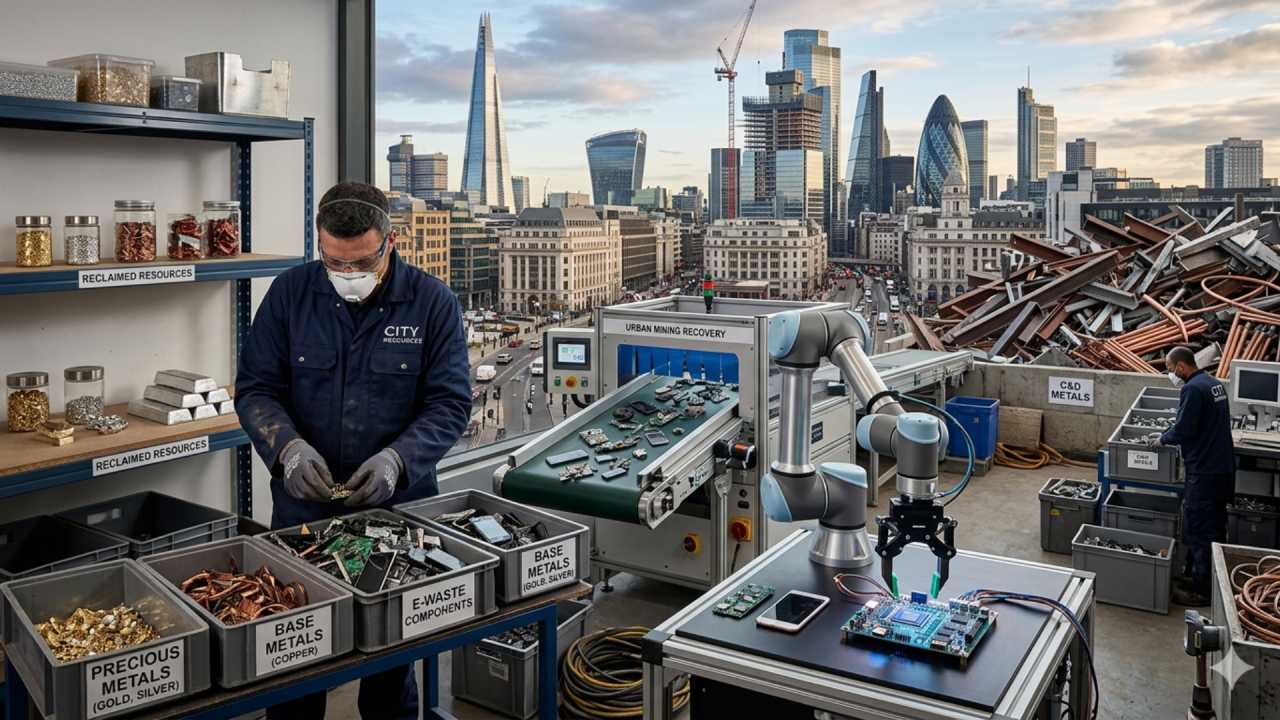
Secondary production, often referred to as secondary refining or urban mining, involves recovering precious metals from existing products at the end of their lifecycles. This sector has grown rapidly due to economic incentives and a global push toward a circular economy. The sources of recyclable precious metals are highly diverse:
-
Old Jewelry and Silverware: Discarded or broken items are melted down to reclaim their high-value components.
-
Electronic Waste: Cell phones, computers, and servers contain gold-plated connectors, silver solder, and palladium-layered ceramic capacitors. Remarkably, a single metric ton of electronic waste can contain significantly more gold than a metric ton of high-grade mined ore.
-
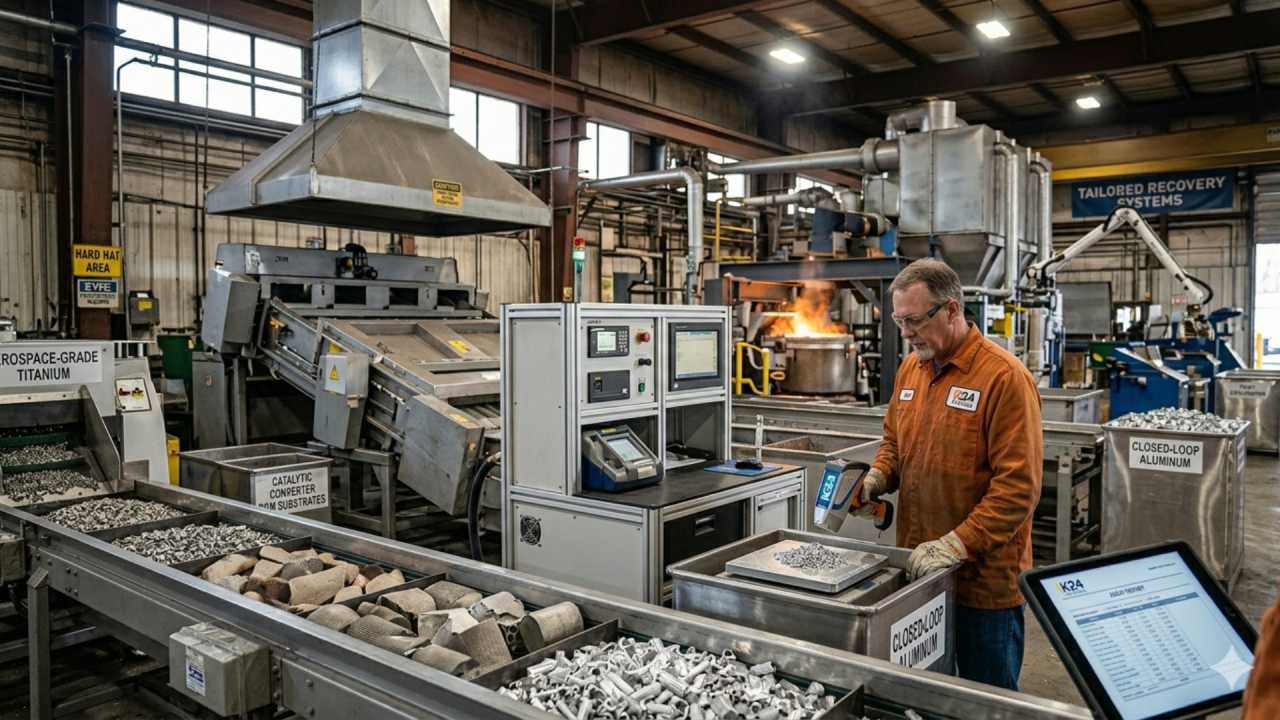
Catalytic Converters: Automotive exhaust systems are rich sources of platinum, palladium, and rhodium, which act as catalysts to reduce toxic vehicular emissions.
-
Industrial and Medical Scrap: Turbine blades, chemical processing catalysts, and dental alloys provide highly concentrated streams of precious metals.
The rise of urban mining reflects a fundamental shift in sustainable refining. Reclaiming metals from existing products bypasses the massive energy expenditures and landscape disruptions associated with traditional mining, making secondary refining a cornerstone of modern industrial supply chains.
The Basic Science Behind Refining
At its core, the science of refining relies on exploiting the unique physical and chemical properties of different elements. Every metal interacts with its environment in a specific manner. By understanding these differences, refiners can systematically dissolve, separate, and isolate individual elements from a complex mixture.
Chemical Separation
Chemical separation is governed by reactivity. Different metals react to chemical agents at different rates and under different conditions. Gold, for instance, is famously unreactive and naturally resistant to corrosion, oxidation, and most single acids. Base metals like iron, copper, and nickel react readily with oxygen or standard acidic solutions. Refiners use this variance to their advantage. By exposing a mixed alloy to selective chemical solutions, they can dissolve the base metals while leaving the precious metals untouched in solid form, or vice versa.
Heat Treatment
Pyrometallurgy, or heat treatment, leverages differences in melting points and affinities for oxygen. When a complex mixture of metals is heated to extreme temperatures in a furnace, certain impurities oxidize rapidly and form a lightweight slag that floats to the surface. Other elements volatilize into gases and are captured by filtration systems, while dense, semi-pure metal mixtures settle at the bottom of the melting crucible.
Dissolving and Filtering
A primary objective in many refining pathways is to convert solid metals into liquid solutions. Once a metal is dissolved into an aqueous chemical bath, it exists as individual charged ions dispersed uniformly through the liquid. This allows refiners to pass the liquid through micro-filtration systems to remove all undissolved solids, sand, and insoluble compounds. After filtering, specific chemical agents are introduced to the liquid to alter its chemistry, forcing only the targeted precious metal to change back from a liquid ion into a solid, pure crystalline powder.
Electrochemical Purification
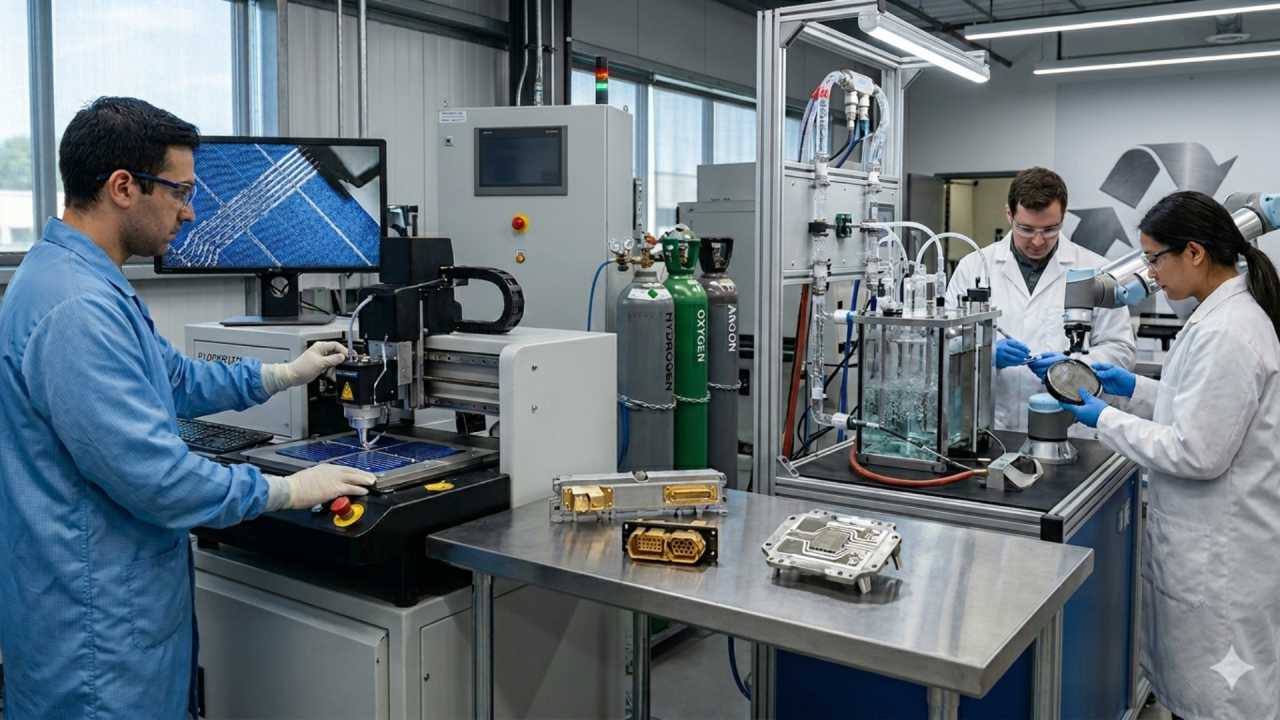
Electrorefining uses electrical energy to drive highly precise chemical separations. By submerging impure metal blocks into a specialized liquid solution and passing a controlled electric current through the system, refiners can force specific metal atoms to dissolve at one electrode and deposit onto another. Because different metals require different amounts of electrical energy to move, this process allows for the ultra-purification of metals, separating elements that behave almost identically in standard chemical reactions.
First Steps: Crushing, Melting, and Separation
Before complex chemical reactions can be introduced, raw feedstocks must undergo mechanical and thermal preprocessing to homogenize the material and eliminate bulk impurities.
Crushing and Grinding
For mined ores and certain industrial materials like automotive catalyst bricks, the first step is mechanical size reduction. Massive industrial crushers and ball mills grind the solid rock or ceramic structures into fine, sand-like particles. This drastically increases the surface area of the material, ensuring that subsequent chemical treatments can come into direct contact with every microscopic particle of precious metal hidden within the matrix.
Concentration
Once ground, the material undergoes concentration to separate the valuable mineral particles from the worthless waste rock, known as gangue. This is often achieved through gravity separation, taking advantage of the high density of precious metals, or through froth flotation, a process where specific chemicals cause the metal-bearing particles to attach to air bubbles and float to the surface of a treatment tank, where they are skimmed off.
Smelting
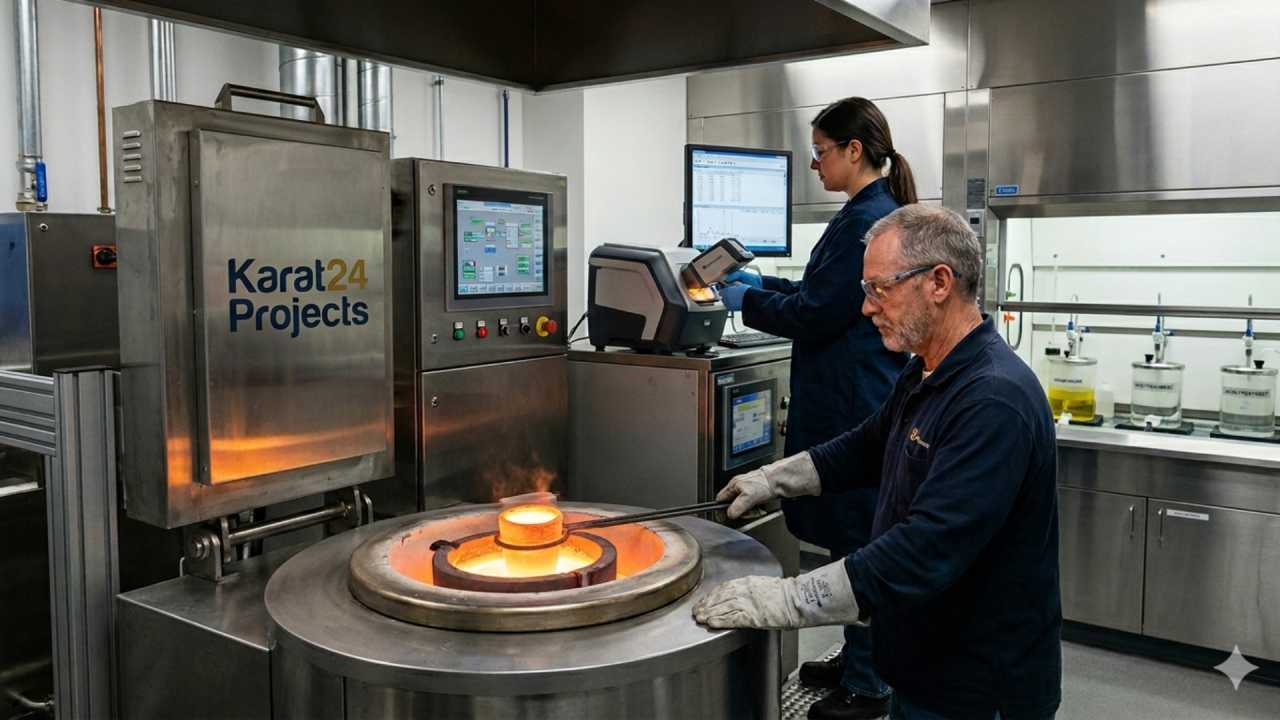
The concentrated mineral or collected metallic scrap is then subjected to smelting, a high-heat furnace process. The material is mixed with fluxing agents, chemical compounds that lower the melting point of the mixture and promote the separation of impurities. When heated to temperatures often exceeding one thousand degrees Celsius, the mixture melts completely.
Inside the furnace, a critical separation occurs. Impurities bind with the flux to form a molten glass-like substance called slag. Base metals like copper, lead, and iron oxidize and migrate into this slag layer. Because the slag is less dense than molten metal, it floats to the top and is poured off.
The remaining dense, molten material consists of a concentrated blend of precious metals. This liquid is poured into molds to cool, creating intermediate blocks known as dore bars or mixed-metal concentrates. These bars are highly concentrated compared to raw ore or scrap, but they are still far from pure, serving as the starting material for high-fidelity chemical refining.
How Gold Is Chemically Refined
Gold refining is the largest and most commercially prominent sector of the precious metals industry. To take raw dore bars or jewelry scrap and elevate them to investment-grade or industrial-grade purity, refiners utilize two primary industrial methodologies.
The Miller Process
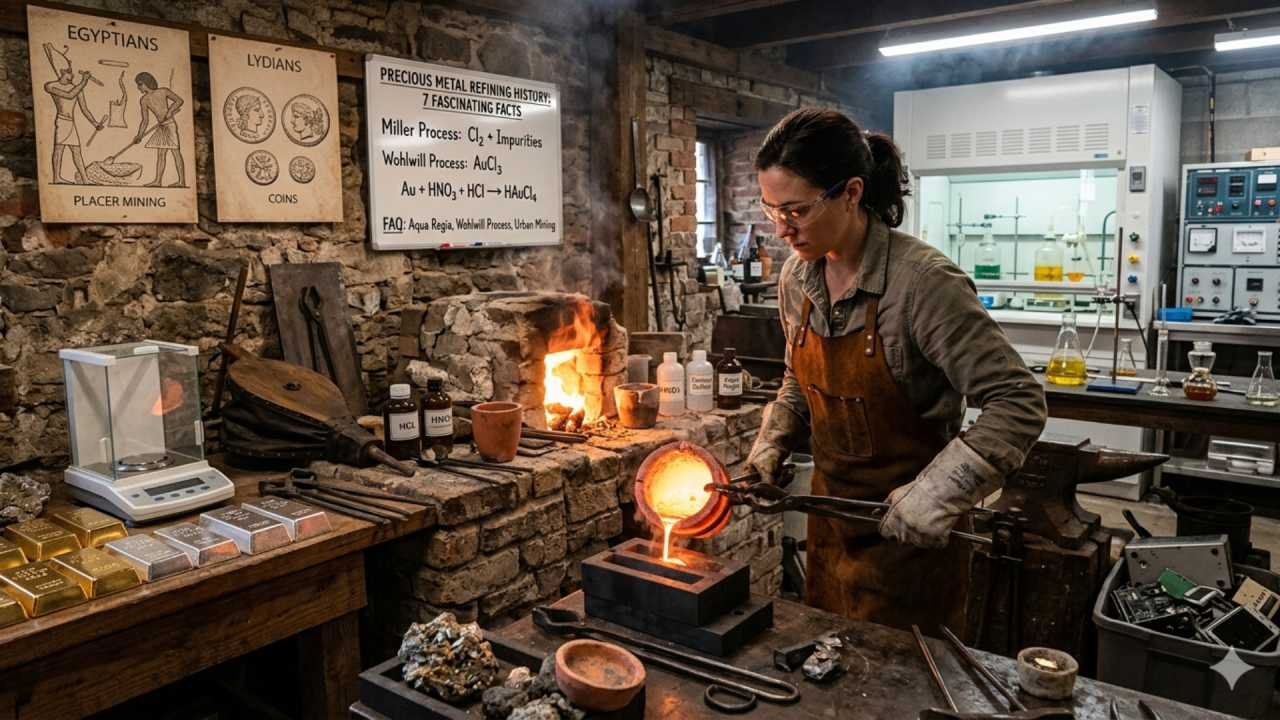
The Miller process is a pyrometallurgical technique used to rapidly upgrade gold purity up to approximately 99.5%. In this process, gaseous chlorine is bubbled directly into a furnace containing molten gold alloy.
The science relies on preferential chemical affinity. Elements like silver, copper, iron, and zinc react with chlorine gas long before gold does. As the chlorine gas passes through the liquid metal, it binds with these base metal impurities, converting them into metal chlorides. These chlorides are either volatile and escape as vapors to be captured by industrial scrubbers, or they form a molten salt layer that floats on top of the dense liquid gold. Once the base metals are entirely consumed, the chlorine begins to react with the gold itself, signaling to the operator that the process is complete. The slag is skimmed away, leaving behind gold that is pure enough for many commercial applications, though not yet sufficient for advanced electronics or fine bullion bars.
The Wohlwill Process and Advanced Chemical Refining
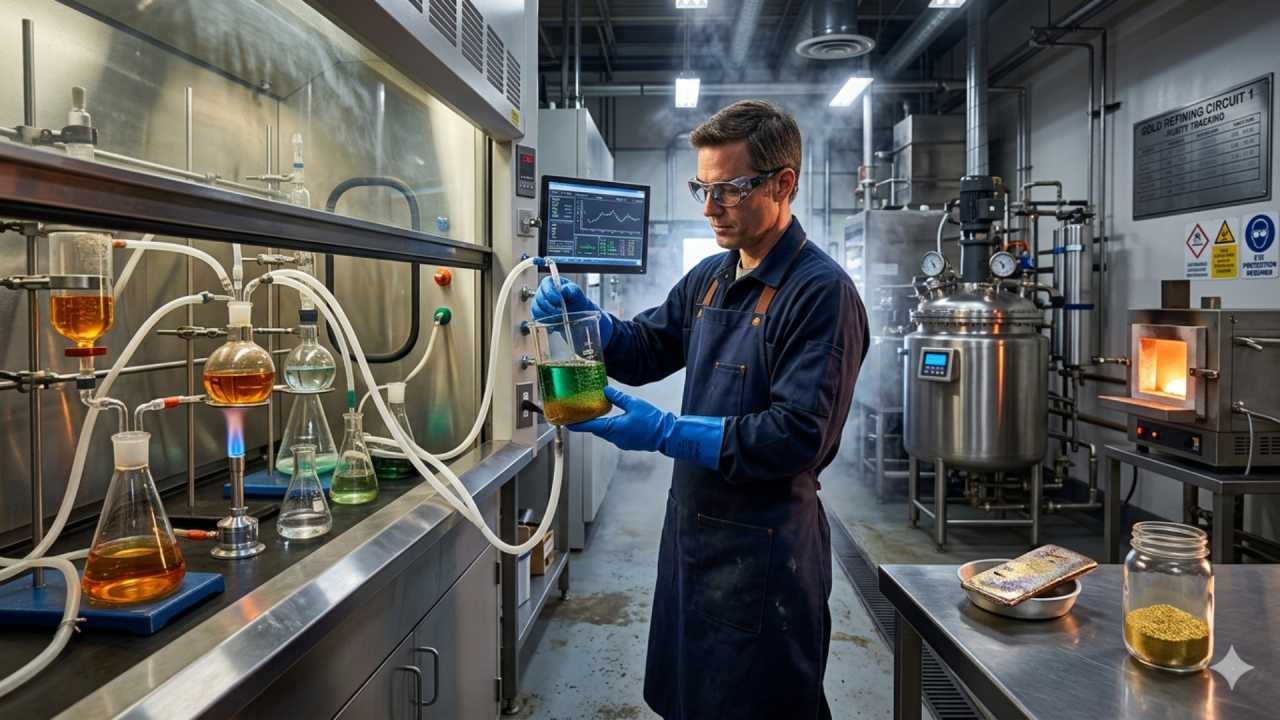
To reach the ultimate standard of ultra-high purity, typically 99.99% or greater, refiners deploy wet chemical and electrolytic refining techniques. The most prominent chemical method involves dissolving the gold in a highly potent, specialized chemical mixture capable of breaking down noble metals.
Once the gold alloy is fully dissolved into this liquid solution, the silver impurities react to form an insoluble solid salt that drops to the bottom of the tank as a heavy sludge. The liquid, which now holds the gold in an ionic state, is carefully filtered to remove this sediment.
Next, a specific chemical reducing agent is stirred into the clear liquid. This agent selectively targets the gold ions, forcing them to accept electrons and convert back into solid, heavy metallic grains of pure gold, while leaving any remaining traces of copper or nickel dissolved in the liquid. The pure gold powder settles to the bottom of the container, where it is thoroughly washed with purified water, dried, and melted into high-purity investment bars.
Alternatively, the Wohlwill process achieves this through electrolysis. The gold alloy is cast into an anode block and suspended in an acidic liquid bath. A pure sheet of gold is suspended opposite it to act as a cathode. When a precise electric current is applied, gold atoms dissolve from the impure anode, migrate across the liquid, and plate onto the cathode sheet as a highly regular, flawless atomic structure of 99.99% pure gold. The impurities either remain locked in the acid solution or fall to the floor of the tank as a valuable byproduct sludge.
This level of temperature, chemical, and electrical control is mandatory. Industrial electronics rely on micro-wires made of gold to transmit data flawlessly; even a minute trace of iron or copper contamination within those components would alter electrical resistance, leading to equipment failure. Similarly, international gold markets demand verified 99.99% purity to maintain trust and liquidity across global financial networks.
Science Behind Silver Purification
Silver purification shares some conceptual similarities with gold processing, but it operates under a distinct set of chemical and physical rules due to the higher reactivity of silver compared to its more noble counterpart. Silver scrap and dore bars frequently contain significant amounts of copper, alongside trace amounts of gold, platinum, and lead.
The primary industrial method for achieving high-purity silver is electrolytic refining, widely executed via specialized equipment known as Balbach-Thum or Moebius cells. In this configuration, intermediate silver bars are placed into an electrochemical cell filled with a liquid solution of silver nitrate and weak acid. The impure silver bar acts as the positive electrode, while a sheet of pure silver or stainless steel acts as the negative electrode.
When an electric current is passed through the cell, silver and base metals like copper dissolve into the liquid at the positive electrode. However, the system is tuned to a precise electrical voltage that exploits the specific electrochemical properties of silver. At this specific voltage, only silver ions are compelled to migrate across the liquid and deposit onto the negative electrode. The silver accumulates as exceptionally pure, shimmering crystals that are continuously scraped from the electrode by automated mechanical paddles to prevent short circuits.
Meanwhile, base metal impurities like copper have a much lower affinity for electrons under these conditions; they remain completely dissolved in the liquid solution, unable to contaminate the growing silver crystals. Noble metals like gold and platinum do not dissolve at all under this specific electrical voltage; they remain as solids, detaching from the melting bar and settling to the bottom of the tank in a dense cloth basket. This collected material is called “anode slime” and is highly prized, as it is forwarded directly to gold and platinum refining circuits for separate extraction. Through this elegant process, silver is routinely brought to a commercial purity of 99.9%, making it ready for use in industrial solar panels, automotive electronics, and high-quality silverware.
Why Platinum Refining Is More Complex
While gold and silver can be isolated through relatively straightforward chemical or electrochemical steps, the Platinum Group Metals—consisting of platinum, palladium, rhodium, ruthenium, iridium, and osmium—present an entirely different tier of scientific and industrial difficulty. These metals are among the rarest elements in the earth’s crust and are characterized by extremely high melting points, remarkable resistance to chemical wear, and nearly identical chemical behaviors.
The Challenge of Chemical Similarity
The primary obstacle in platinum refining is that these metals behave like chemical siblings. If you add a chemical to dissolve platinum, palladium will often dissolve alongside it. If you attempt to precipitate rhodium, iridium may follow. Because their atomic radii and electron configurations are so similar, separating them requires a meticulous, multi-stage chemical sequence that resembles an industrial jigsaw puzzle.
The process typically begins by subjecting the complex scrap material, such as spent automotive catalytic converters or industrial chemical catalysts, to aggressive, highly concentrated hot chemical solutions. This step brings the platinum and palladium into a liquid state while leaving highly unreactive elements like rhodium and iridium behind in the solid residue.
Once in solution, the liquid must undergo fractional precipitation. Refiners add specific chemical salts in a highly controlled sequence, carefully adjusting temperature and acidity at each step. For example, an ammonium salt is added to target the platinum ions specifically, causing them to bind into a complex chemical solid that precipitates out of the liquid as a bright yellow powder. The liquid is filtered to collect this powder, which is then isolated, washed, and heated in a high-temperature furnace to drive off the chemical salts, leaving behind pure, sponge-like platinum metal.
The remaining liquid, still rich in palladium, is then treated with a different chemical agent, such as chlorine gas or an organic compound, to force the palladium to drop out of the solution as a separate solid compound. This step-by-step extraction continues down the line to isolate rhodium and the other rare group members.
Because these sequences are highly sensitive to minor variations in chemical concentration, modern platinum group refining is increasingly handled by advanced automated laboratories and specialized facilities utilizing solvent extraction technology. This process is expensive and time-consuming, but absolutely vital. Platinum group metals are critical components in hydrogen fuel cells, medical pacemakers, and clean-energy technologies, where material performance under extreme stress requires absolute elemental purity.
The Role of Electrochemistry in Refining
Electrochemistry is the ultimate refining tool for achieving the extreme levels of purity demanded by modern industry. While thermal smelting and simple chemical precipitation are highly effective at handling bulk materials, they often struggle to remove the final fraction of a percent of contamination. Electrochemistry solves this by utilizing electricity as a highly selective scalpel.
The fundamental mechanism relies on a controlled electric current passed through a fluid medium containing dissolved metals. Because every distinct chemical element possesses a unique electrical potential—a specific threshold of electrical energy required to alter its physical state from a dissolved ion to a solid metal—refiners can calibrate an electrochemical cell to target one specific metal with extreme precision.
By maintaining the electrical voltage at an exact level, industrial operators ensure that only the ions of the desired precious metal receive the electrons necessary to crystallize onto the collection sheets. If the voltage is held stable, weaker impurities cannot deposit and are forced to stay in the liquid bath, while stronger impurities cannot dissolve in the first place and drop out of the reaction harmlessly as a sediment.
Furthermore, electrochemistry offers high operational efficiency. It allows refiners to continuously recover pure metals from complex solutions without continuously consuming massive quantities of consumable chemical reagents. The electricity itself acts as the primary reagent, driving the purification forward with a high degree of industrial precision and enabling automated, continuous manufacturing setups that keep pace with global industrial demands.
Environmental and Safety Challenges
The immense value of precious metals means that refining them is an economically lucrative endeavor, but the chemical science that makes purification possible also introduces substantial environmental and industrial safety challenges. Operating a refinery requires strict adherence to safety protocols and the deployment of advanced engineering controls to protect workers and the surrounding ecosystem.
Chemical Risks and Industrial Waste
The primary hazard in precious metal refining stems from the chemicals required to dissolve noble metals. Refineries utilize large volumes of highly concentrated acids and hazardous gases. These chemicals emit corrosive, highly toxic fumes that can cause severe respiratory damage and structural corrosion if left unmanaged.
Additionally, the liquid waste streams generated during processing are highly complex. Once a precious metal is extracted from a chemical bath, the remaining liquid is often highly acidic and heavily contaminated with toxic base metals like lead, copper, cadmium, and nickel. Discharging this liquid into municipal water systems would result in devastating environmental contamination, poisoning aquatic life and destroying water resources. Smelting operations also present risks, releasing fine metallic dust, sulfur dioxide, and carbon emissions into the air.
The Shift Toward Sustainable Refining
To mitigate these risks, the modern refining industry has invested heavily in sustainable refining technologies and eco-friendly chemistry initiatives:
-
Scrubber Systems: Advanced industrial air filtration and wet scrubbers are installed above all furnaces and chemical tanks to neutralize toxic gases and capture airborne metal particles before they can escape into the atmosphere.
-
Closed-Loop Wastewater Treatment: Refineries increasingly operate zero-discharge water systems. Wastewater is processed on-site using neutralizing agents, flocculants, and reverse osmosis systems. The clean water is recycled back into the refinery, while the base metal contaminants are compressed into solid cakes and sent to specialized base-metal recyclers.
-
Green Chemistry: Researchers are actively developing alternative, non-toxic organic solvents and biodegradable chemical mixtures capable of dissolving gold and precious metals without creating hazardous fumes or toxic waste secondary streams.
-
Energy-Efficient Recycled Systems: Because secondary refining from electronic waste and catalytic converters requires a fraction of the energy consumed by primary mining operations, expanding the circular economy acts as a major environmental benefit, reducing the global ecological footprint of precious metal acquisition.
How Refiners Test Metal Purity
A refinery’s reputation relies entirely on its ability to guarantee the exact composition of its final products. To verify that purification processes have succeeded, refiners employ sophisticated analytical testing methods, known as assaying.
| Assaying Method | Type of Analysis | Description | Best Used For |
| Fire Assay | Destructive / Thermal | The historical gold standard. Metal samples are melted with flux and lead oxide in a clay crucible. Base metals oxidize and are absorbed, leaving a pure metal bead for micro-weighing. | High-accuracy gold and silver bullion verification. |
| X-ray Fluorescence (XRF) | Non-Destructive / Digital | An X-ray beam is fired at the metal surface, causing the atoms to emit characteristic secondary X-rays. A digital sensor identifies the elements present within seconds. | Rapid, day-to-day testing of jewelry scrap and incoming raw materials. |
| ICP-OES / ICP-MS | Destructive / Instrumental | A liquid metal sample is injected into an argon plasma torch heated to 10,000°C. The vaporized atoms emit distinct light or mass signatures detected by automated instruments. | Ultra-high purity verification (99.999%), tracking parts-per-million impurities. |
Through this multi-layered testing regime, refineries provide the certifications and hallmarks that allow investors, electronics manufacturers, and aerospace clients to utilize precious metals with absolute confidence.
The Future of Precious Metal Refining
As technology advances and the global geopolitical landscape shifts, the precious metal refining industry is undergoing an industrial evolution. The future of refining is defined by automation, intelligent data management, and a deeper reliance on secondary recycling.
Automation and Intelligent Processing
Modern refineries are moving away from manual chemical handling toward fully automated, enclosed robotic refining systems. Artificial intelligence and advanced sensor arrays are being integrated into chemical reactors and electrochemical cells. These systems monitor chemical concentrations, temperatures, and voltages in real-time, instantly adjusting variables to optimize processing efficiency, minimize chemical waste, and maximize metal recovery rates. This keeps human operators safe from direct contact with hazardous chemicals while vastly increasing throughput consistency.
The Ascendancy of Electronic Waste
The composition of global metal inflows is changing rapidly. With billions of consumer electronics reaching the end of their functional lifecycles annually, the volume of electronic waste is growing faster than traditional mine outputs. The future of precious metal refining will increasingly focus on processing these complex, multi-material streams. Refiners are building dedicated facilities designed exclusively to shred, sort, and chemically extract gold, silver, copper, and palladium from circuit boards and lithium-ion vehicle batteries with unprecedented efficiency.
By advancing green chemistry and expanding automated recycling infrastructures, the refining industry is transforming into a sustainable pillar of modern technology, ensuring that the world’s rarest and most valuable elements are preserved, purified, and reused for generations to come.
Final Thoughts
The journey of a precious metal from raw, contaminated rock or discarded consumer scrap to an ultra-pure asset is a testament to human ingenuity and industrial sophistication. As we have seen, precious metal refining is not a singular action, but a highly choreographed sequence of mechanical, thermal, chemical, and electrochemical disciplines. It is an industry that relies on the fundamental rules of chemical reactivity and atomic behavior to isolate the planet’s rarest elements.
By exploiting differences in melting points, acid solubilities, and electrical potentials, refiners successfully remove unwanted base metals and contaminants, transforming complex raw materials into pure gold, silver, platinum, and palladium. This pursuit of purity is what enables our most advanced technologies to function, gives stability to international financial systems, and preserves value within the global circular economy.
As environmental awareness grows and technology progresses, the refining industry continues to adapt, pioneering cleaner chemical alternatives, zero-discharge recycling facilities, and automated processing systems. Behind every gleaming investment gold bar, every high-performance smartphone component, and every clean-energy catalyst is a highly sophisticated refining network built on centuries of chemical discovery and ongoing industrial innovation.
Frequently Asked Questions
What is the step-by-step chemical process for refining gold at home safely?
Refining gold at home is highly discouraged due to the extreme dangers associated with toxic gases, chemical burns, and explosions. Professional refineries use a multi-step sequence that begins by dissolving gold scrap in a highly specific mixture of concentrated hydrochloric acid and nitric acid, known as aqua regia. This reaction converts solid gold into liquid chloroauric acid. Once the gold is completely dissolved, the solution is filtered to remove silver chloride solids. Next, a selective reducing agent, typically sulfur dioxide gas or sodium metabisulfite powder, is introduced to the liquid. This chemical causes the gold ions to precipitate out of the solution as a fine brown powder. The powder is then filtered, washed thoroughly with water and ammonia, and melted in a crucible using a borax flux to create high-purity gold bullion. For safety reasons, this entire sequence requires professional fume hoods, acid-resistant equipment, and advanced wastewater treatment systems.
How do industrial refineries separate gold from silver in mixed scrap metal?
Industrial refineries typically separate gold from silver using two primary methods depending on the silver content of the alloy. If the scrap contains more than 70% silver, it undergoes a chemical process called “inquartation” or parting, where the alloy is treated with concentrated nitric acid. Nitric acid selectively dissolves the silver and base metals into a liquid solution of silver nitrate, leaving the gold behind as an untouched solid residue. If the scrap consists of gold-dominant dore bars with lower silver content, the Miller process is preferred. In this pyrometallurgical process, chlorine gas is bubbled directly into the molten metal mixture. The silver and base metals react with the chlorine first, creating molten metal chlorides that float to the surface as a separate layer, allowing the refiner to skim the silver away from the pure molten gold.
Why is platinum group metal refining more expensive than gold and silver purification?
Platinum group metal refining is significantly more expensive due to the extreme chemical resistance and structural similarity of the elements involved. Unlike gold and silver, which can be easily dissolved or separated using single-stage acids or straightforward electrolysis, platinum group metals (including platinum, palladium, and rhodium) resist standard chemical treatments. They require highly complex, multi-stage chemical pathways involving fractional crystallization, solvent extraction, and precise ion-exchange chromatography. Because these metals behave similarly in chemical reactions, isolating them requires large quantities of expensive chemical reagents, highly specialized corrosion-resistant machinery, and strict temperature controls. Furthermore, the low yield of these metals from materials like automotive catalytic converters means that processing times are much longer, which drives up industrial operational costs.
What is the difference between smelting and chemical refining of precious metals?
The difference between smelting and chemical refining lies in the mechanism of separation and the final purity level achieved. Smelting is a high-temperature pyrometallurgical process where raw ore or metallic scrap is melted in a furnace alongside fluxing agents. The primary goal of smelting is to achieve bulk separation; it burns off organic materials and forces base metal impurities to bind with the flux to form a lightweight slag, leaving behind a concentrated, mixed-metal alloy called a dore bar. Chemical refining, on the other hand, is a wet-chemical or electrochemical process that happens after smelting. It uses liquid acids, selective precipitation, or electrical currents to separate individual precious metals from each other at an atomic level, upgrading the metal from a semi-pure mixture to an ultra-high purity state of 99.9% or 99.99%.
How does electronic waste recycling contribute to sustainable precious metal sourcing?
Electronic waste recycling, or urban mining, contributes to sustainable sourcing by dramatically reducing the environmental degradation and energy expenditures associated with traditional mining. Processing a metric ton of discarded smartphones or computer circuit boards can yield up to one hundred times more gold than processing a metric ton of raw underground rock ore. By reclaiming gold, silver, and palladium from end-of-lifecycle electronics, refiners lower the global demand for new open-pit mining operations, which prevents landscape destruction and reduces toxic tailing waste. Furthermore, secondary chemical refining of electronic scrap generates significantly lower carbon emissions and consumes less water than primary mineral extraction, creating a highly efficient circular economy for industrial materials.