How New Technology Is Transforming the Precious Metals Industry
The precious metals industry, once defined by the grit of manual labor and the opaque nature of global trade, is undergoing a profound digital and mechanical metamorphosis. For centuries, the extraction and trading of gold, silver, platinum, and palladium relied on traditional methods that changed little in principle. However, as the world moves toward a more digitized, sustainable, and transparent global economy, the stakes for the precious metals sector have never been higher.
Precious metals are no longer just symbols of wealth or decorative assets for jewelry. They are the backbone of modern industrial utility. Silver is essential for solar panels and electronic circuitry; platinum and palladium are critical for catalytic converters and the emerging green hydrogen economy; and gold remains the ultimate hedge against fiscal instability. As demand surges from the electric vehicle (EV) sector, healthcare, and high-end electronics, the industry is turning to cutting-edge technology to meet these needs efficiently and ethically.
This article explores the rapid technological transformation occurring across the precious metals value chain—from the use of Artificial Intelligence (AI) in exploration to the implementation of blockchain for ethical sourcing and the rise of “green” mining techniques. By integrating automation, data analytics, and fintech, the industry is shedding its reputation as a slow-moving giant and emerging as a high-tech frontier.
Traditional Industry Challenges
To understand the magnitude of the current technological shift, one must first recognize the systemic challenges that have plagued the precious metals industry for decades. Historically, mining has been an environmentally taxing and socially complex endeavor.
Environmental and Social Concerns
Traditional mining methods are often associated with high carbon emissions, massive water consumption, and the use of toxic chemicals like cyanide and mercury in processing. Furthermore, the industry has struggled with the “blood gold” narrative—the reality that precious metals can sometimes fund conflict or involve exploitative labor practices. Proving that a specific ounce of gold was sourced ethically has traditionally been nearly impossible once it entered the global refining stream.
Inefficiencies and Risk
Exploration is inherently a high-risk, high-reward gamble. Traditionally, geologists relied on manual mapping, core sampling, and expensive drilling campaigns that often yielded no results. The “success rate” for finding economically viable deposits has been historically low, leading to billions of dollars in wasted capital.
Market Opacity
In the trading sphere, the precious metals market was long characterized by high barriers to entry and opaque pricing. For the average investor, purchasing physical gold involved significant premiums, storage concerns, and the ever-present risk of counterfeit products. Fraud in the bullion market—ranging from tungsten-filled bars to forged certificates—remains a multi-million dollar problem that erodes market trust.
AI and Data Analytics in Exploration and Mining
The era of “educated guessing” in mineral exploration is coming to an end. Artificial Intelligence and big data analytics are now the primary tools for identifying the next generation of tier-one deposits.
Predictive Modeling
AI algorithms can process vast amounts of geological data—including satellite imagery, seismic surveys, geochemical samples, and historical drilling logs—far faster and more accurately than human teams. By identifying subtle patterns in Earth’s crust that indicate the presence of mineralization, AI-driven software can create “heat maps” of potential deposits. This reduces the need for speculative drilling, saving companies millions in operational costs while minimizing the environmental footprint of exploration.
Real-Time Operational Data
Once a mine is operational, data analytics move from the crust to the equipment. Modern mines are equipped with thousands of sensors that monitor everything from the vibration of a drill bit to the chemical composition of the ore being processed. This “Intelligent Mining” allows for real-time adjustments to maximize yield. If the ore grade drops, the system can immediately notify engineers to adjust the processing chemicals or pivot the mining direction.
Predictive Maintenance
One of the most significant cost-savers in mining is predictive maintenance. Heavy machinery, such as massive haul trucks and underground loaders, is incredibly expensive to repair once it breaks down. AI models analyze sensor data to predict when a component is likely to fail, allowing crews to perform maintenance during scheduled downtime. This prevents catastrophic failures that can halt production for days or weeks.
Automation, Robotics, and Smart Mining
The image of a miner with a pickaxe has been replaced by a technician in a remote control room. Automation is fundamentally changing the physical act of mining, making it safer and more productive.
Autonomous Haulage and Drilling
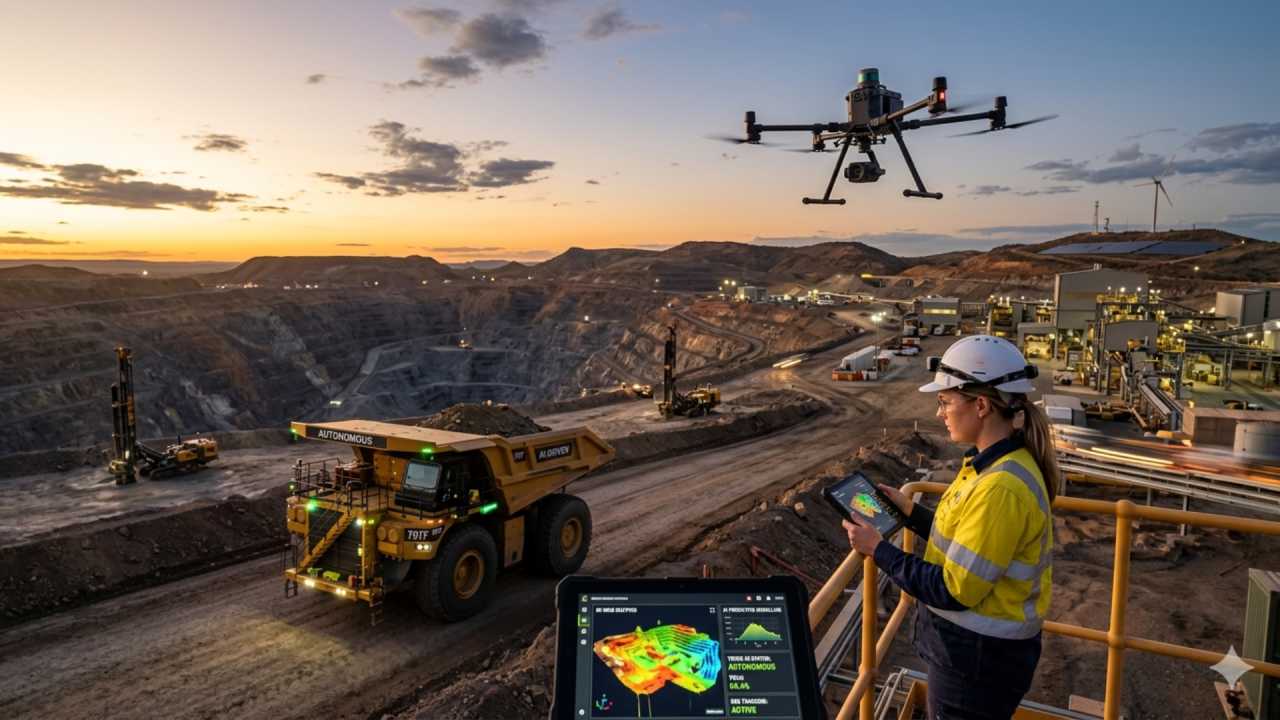
In many of the world’s largest gold and copper-gold mines, massive trucks the size of houses now move without drivers. These autonomous haulage systems (AHS) use GPS, radar, and laser sensors to navigate complex mine sites 24 hours a day. Unlike human operators, autonomous vehicles don’t need shift changes or lunch breaks, and they operate with a level of precision that reduces fuel consumption and tire wear.
Drones and Underground Robotics
Drones have become indispensable for site inspection and mapping. In open-pit mines, drones provide high-resolution 3D maps that help engineers monitor high-wall stability and stockpile volumes. Underground, where GPS signals cannot reach, specialized drones and legged robots (resembling mechanical dogs) are used to explore dangerous, unstable, or inaccessible shafts. This keeps human workers out of harm’s way, significantly reducing workplace fatalities.
The Smart Mine Ecosystem
The “Smart Mine” integrates these various technologies into a single Internet of Things (IoT) ecosystem. In this environment, every piece of equipment, every sensor, and every worker is connected. This connectivity allows for “ventilation on demand” systems, which only pump fresh air into areas where sensors detect human or machine activity, leading to massive energy savings.
Blockchain and Supply Chain Transparency
Perhaps the most disruptive force in the precious metals industry today is blockchain technology. By providing an immutable, decentralized ledger, blockchain addresses the industry’s greatest weakness: the lack of transparency.
Traceability from Mine to Market
Blockchain allows for the creation of a “digital twin” for every ounce of metal produced. When gold is mined, its origin, weight, and purity are recorded on the blockchain. As it moves to the refiner, the shipper, and finally the jeweler or investor, every transaction is verified and added to the chain. This creates a permanent, unalterable record of custody.
For the consumer, this means they can scan a QR code on a gold bar or a piece of jewelry and see exactly which mine it came from and whether that mine adheres to ESG (Environmental, Social, and Governance) standards. This level of accountability is essential for eliminating conflict minerals from the global supply chain.
Smart Contracts
In the world of bullion trading, “smart contracts” are automating the settlement process. These are self-executing contracts with the terms of the agreement directly written into code. When certain conditions are met (e.g., the delivery of a shipment of silver), the payment is automatically released. This reduces the need for intermediaries, lowers transaction costs, and eliminates the risk of payment defaults.
Green Technologies and Sustainable Mining
As the world prioritizes decarbonization, the precious metals industry is under intense pressure to reduce its environmental impact. Technology is the primary lever for achieving these “green” goals.
Renewable Energy Integration
Mining is an energy-intensive industry, often located in remote areas. Traditionally, these sites relied on diesel generators. Today, mining companies are investing heavily in on-site solar and wind farms, coupled with large-scale battery storage. Some mines are even transitioning to fully electric underground fleets, which not only reduces carbon emissions but also eliminates the heat and toxic exhaust fumes generated by diesel engines, further reducing the need for massive ventilation systems.
Advanced Extraction Methods
New chemical and biological processes are making ore processing cleaner. Bio-mining, or “bioleaching,” uses specialized bacteria to extract metals from ore, offering a much more environmentally friendly alternative to traditional smelting or chemical leaching. Additionally, closed-loop water recycling systems allow mines to reuse up to 90% of their water, a critical innovation for operations in water-scarce regions like Australia or the Atacama Desert.
ESG and Investor Pressure
Institutional investors now demand rigorous ESG reporting. Technology facilitates this by providing accurate, real-time data on carbon emissions, water usage, and waste management. Companies that fail to adopt these green technologies find themselves locked out of capital markets, as “green” gold and silver begin to command a premium over metals with questionable environmental pedigrees.
Digital Trading, Fintech, and Market Access
Technology has democratized access to precious metals, moving the market from the vaults of London and New York to the smartphones of retail investors.
Tokenization and Fractional Ownership
One of the most significant barriers to investing in precious metals was the “unit size.” Buying a standard 400-ounce gold bar is out of reach for most people. However, through tokenization, a physical gold bar can be divided into thousands of digital tokens on a blockchain. Each token represents ownership of a specific fraction of that bar. This allows a retail investor to buy $10 worth of gold, held securely in a vault, with the same ease as buying a stock.
Mobile Trading and Liquidity
Fintech platforms have streamlined the buying and selling process. Investors can now trade precious metals 24/7 with narrow spreads and instant settlement. This increased liquidity has made precious metals a more attractive asset class for a younger, tech-savvy generation of investors who value the stability of gold but the convenience of digital banking.
Recycling and Urban Mining Innovations
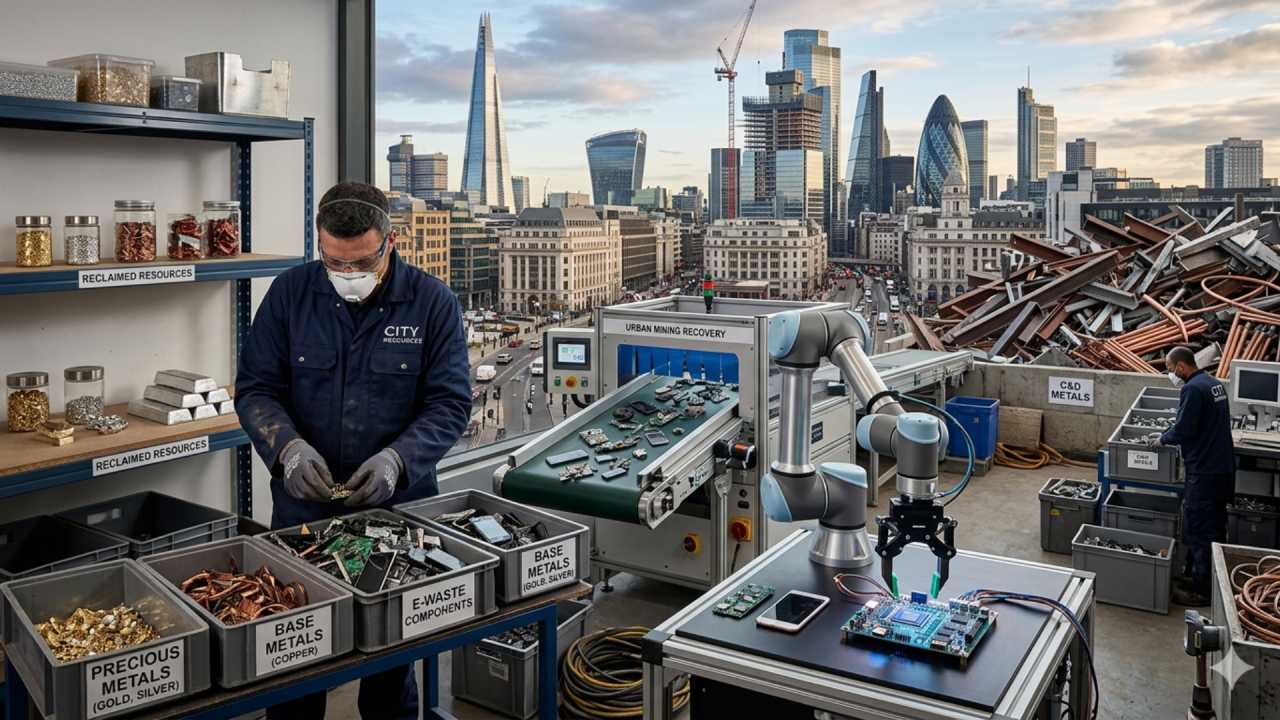
As high-grade ore deposits become harder to find, the industry is increasingly looking toward “urban mining”—the recovery of precious metals from electronic waste (e-waste).
The E-Waste Goldmine
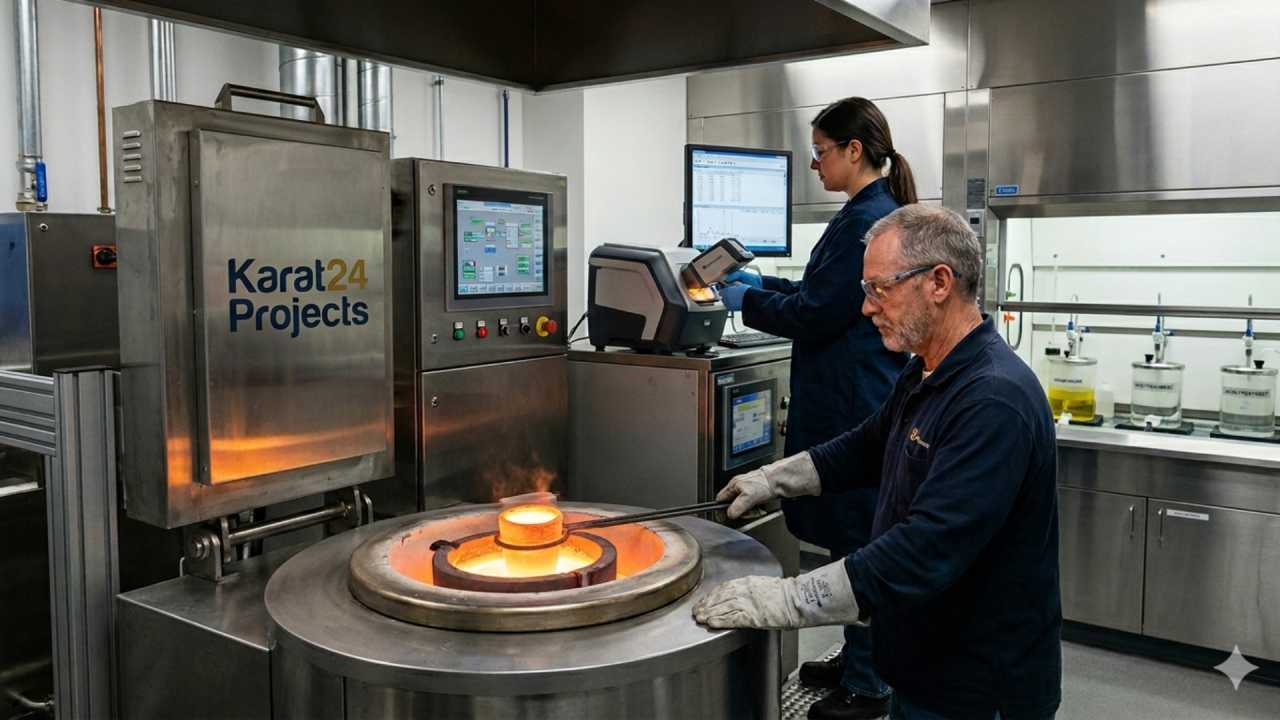
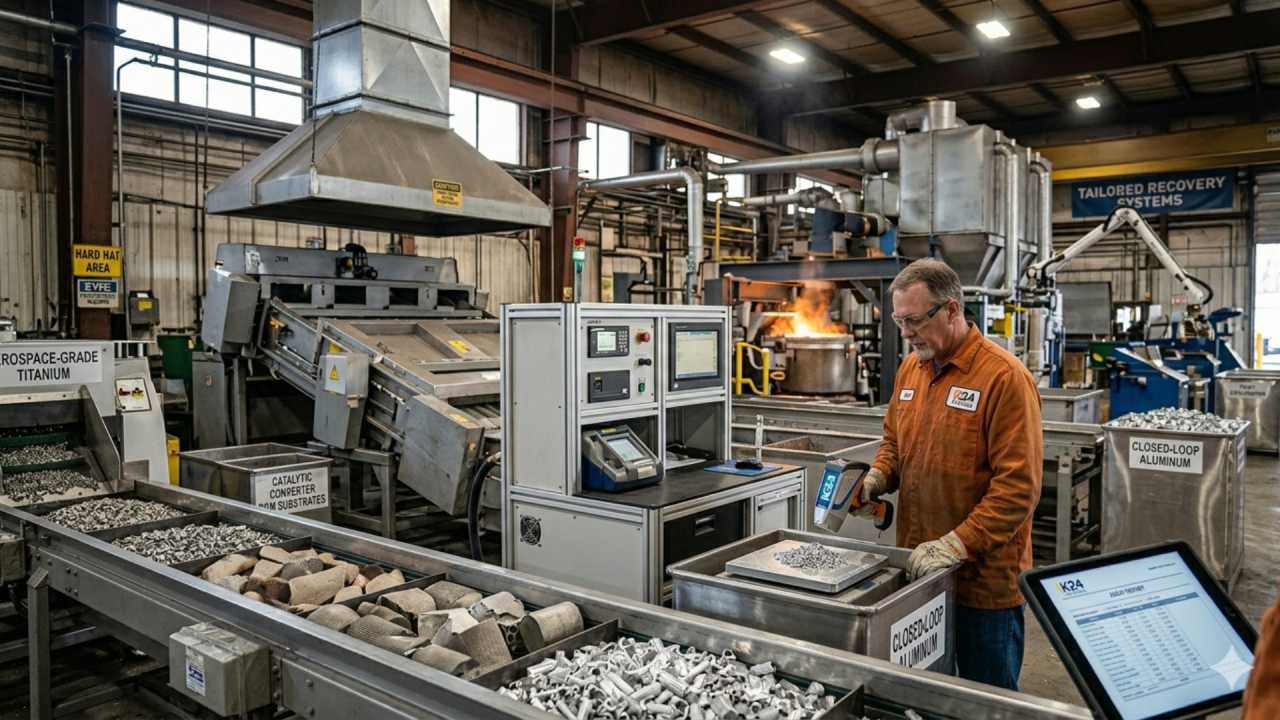
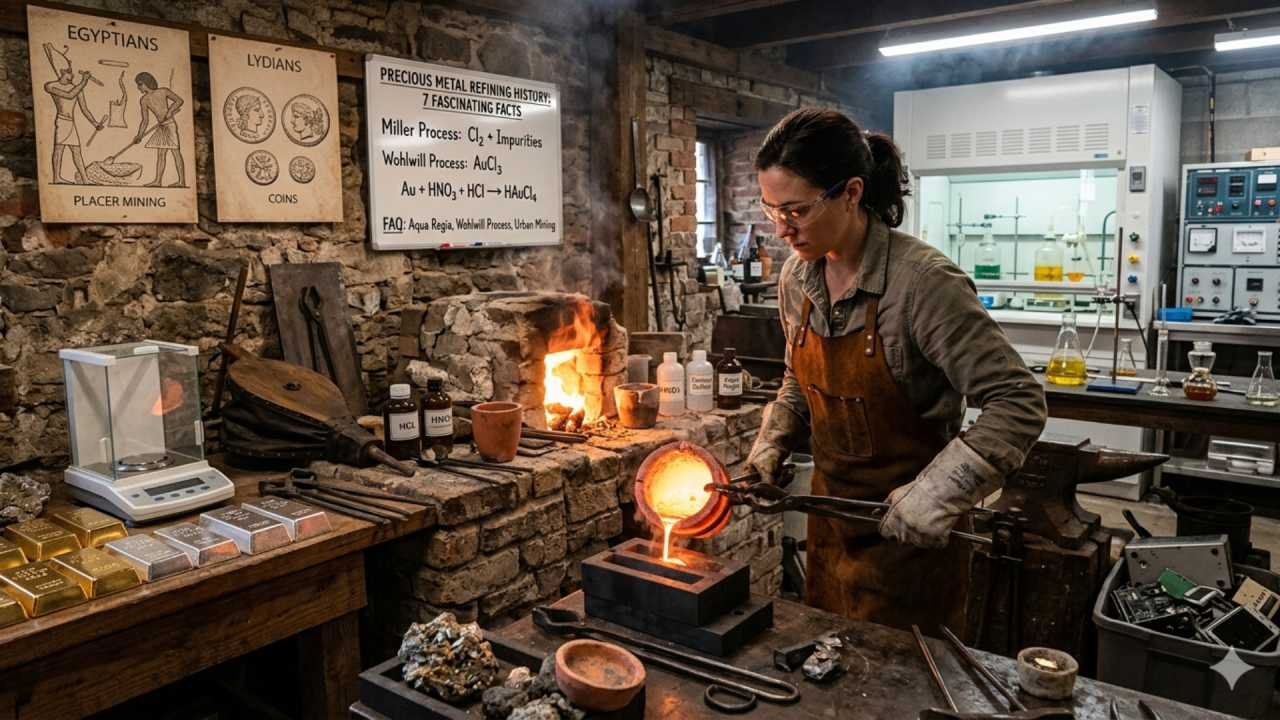
Computers, smartphones, and circuit boards contain significant amounts of gold, silver, and palladium. However, traditional recycling methods were often inefficient or hazardous. New hydrometallurgical and pyrometallurgical technologies are now allowing for recovery rates of over 95%.
Circular Economy Impact
Recycling metals requires significantly less energy than mining them from the ground. For example, recovering gold from e-waste produces 80% less CO2 than primary mining. Technology that enables efficient urban mining is a cornerstone of the “circular economy,” ensuring that the precious metals already in circulation are reused indefinitely. This reduces the pressure on natural ecosystems and provides a domestic source of critical minerals for countries without significant mining reserves.
Risks and Limitations of New Technologies
While the benefits of technology are clear, the transition is not without its hurdles.
High Implementation Costs
The “Smart Mine” requires a massive upfront capital investment. For smaller mining companies, the cost of autonomous fleets, AI software, and private 5G networks can be prohibitive. This risks creating a “digital divide” in the industry, where only the largest conglomerates can afford to be efficient and sustainable.
Cybersecurity
As the industry becomes more connected, it becomes more vulnerable. A cyberattack on an autonomous mine’s control system or a breach of a digital bullion exchange could have catastrophic consequences. Protecting the “digital twin” of a gold bar is just as important as protecting the physical bar itself.
Job Displacement
The rise of robotics and AI inevitably leads to concerns about the future of work. While technology creates new high-tech roles in data science and remote operations, it reduces the need for traditional manual labor. Mining-dependent communities face significant economic shifts as companies prioritize automation to remain competitive.
Future Outlook
The convergence of AI, blockchain, and green energy is setting the stage for a “Precious Metals 2.0” era. In the coming years, we can expect to see even more radical innovations, such as deep-sea mining robots and asteroid prospecting, though these remain in the experimental stages.
The immediate future will be defined by the “interconnectivity of everything.” We are moving toward a world where a consumer can buy a fraction of a “green” gold token, knowing with 100% certainty that the metal was mined by an electric fleet, processed with renewable energy, and sourced from a mine that provides fair wages—all verified by an unhackable digital ledger.
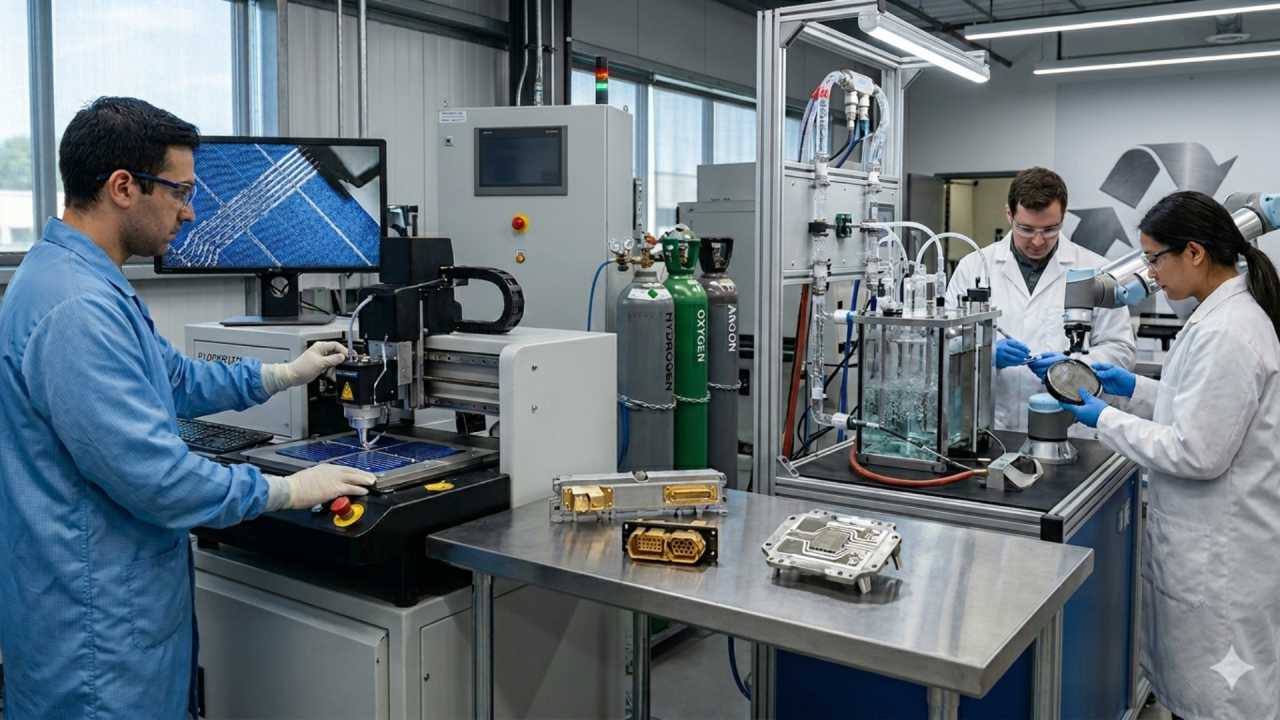
Furthermore, the role of precious metals in the energy transition will only grow. Silver’s role in photovoltaics and the platinum group metals’ roles in hydrogen fuel cells mean that these metals are not just stores of value; they are the literal “fuel” of the green revolution. The technology used to produce them must be as advanced as the products they go into.
Final Thoughts
The precious metals industry is at a historical crossroads. The transition from traditional, labor-intensive methods to a high-tech, data-driven model is no longer optional—it is a matter of survival. Technology is providing the solutions to the industry’s oldest problems: risk, opacity, and environmental degradation.
While the challenges of cost and cybersecurity remain, the benefits of a more transparent, efficient, and sustainable industry are far-reaching. For investors, it means more trust and accessibility. For the planet, it means a lower environmental toll. And for the industry itself, it means a future where precious metals remain as relevant to the digital age as they were to the civilizations of antiquity. The “Old World” of mining is gone; in its place is a sophisticated, tech-forward sector that is finally ready to meet the demands of the modern world.
Frequently Asked Questions About Precious Metals Technology
What is the future of the gold mining industry?
The future of gold mining is increasingly focused on sustainable extraction and technological integration. Expect to see a total shift toward “Smart Mines” where AI-driven predictive modeling identifies deposits and autonomous machinery handles the physical labor. This transition will lower operational costs and significantly improve safety by removing human workers from hazardous underground environments.
How does blockchain improve ethical sourcing in precious metals?
Blockchain acts as an unalterable digital ledger that tracks a metal’s journey from the mine site to the end consumer. By creating a “digital twin” of a physical gold or silver bar, companies can provide a transparent provenance record. This helps buyers verify that their metal is conflict-free and adheres to global environmental and labor standards.
Is urban mining more sustainable than traditional mining?
Yes, urban mining—the process of recovering precious metals from e-waste like smartphones and circuit boards—is significantly more sustainable. It requires up to 80% less energy and produces a fraction of the carbon emissions compared to traditional underground mining. As natural reserves become harder to access, recycling existing tech will become a primary source of industrial metals.
Can AI predict gold and silver price volatility?
AI and machine learning are now used by institutional investors to analyze global economic indicators, geopolitical news, and historical market data to forecast precious metal price trends. While no system can predict prices with 100% accuracy, AI models can identify complex patterns that human analysts might miss, providing a more data-driven approach to market volatility.
What are the benefits of autonomous vehicles in mining?
Autonomous haulage systems (AHS) increase productivity by operating 24/7 without the need for breaks or shift changes. These vehicles also improve fuel efficiency and reduce equipment wear through precise driving. Most importantly, they remove human operators from high-risk environments, leading to a massive reduction in workplace accidents in the industrial mining sector.
Why is ESG important for precious metal investors?
ESG (Environmental, Social, and Governance) criteria have become a benchmark for modern investors. Technology enables mining companies to provide accurate, real-time data on their water usage, carbon footprint, and community impact. Precious metals produced with high ESG ratings often command a price premium and are more likely to be included in institutional investment portfolios.
How is the electric vehicle (EV) market impacting silver demand?
The shift toward electric vehicles is a major driver for industrial silver demand. Silver has the highest electrical and thermal conductivity of all metals, making it essential for EV power electronics, battery management systems, and charging infrastructure. As EV production scales globally, the pressure on silver supply chains will continue to grow.