Technology Transforming Precious Metal Recovery: Trends & Innovations
The modern world is built upon a foundation of precious metals. From the gold in the circuit boards of our smartphones to the platinum and palladium in automotive catalytic converters, these elements are the invisible drivers of the digital and green energy revolutions. However, the traditional methods used to obtain these metals—primarily large-scale mining—are increasingly at odds with the global push for sustainability.
Precious metal recovery, the process of extracting elements like gold, silver, and the platinum group metals (PGMs) from secondary sources, has emerged as a critical industrial frontier. As high-grade natural ores deplete, the focus is shifting toward “secondary mining” from industrial waste, spent catalysts, and the ever-growing mountain of electronic waste (e-waste).
The stakes are high. E-waste is currently the fastest-growing waste stream globally, yet it contains concentrations of precious metals that are often dozens of times higher than those found in raw Earth ores. This transition from “digging deeper” to “recovering smarter” is being driven by a suite of revolutionary technologies. By integrating biotechnology, artificial intelligence, and green chemistry, the industry is transforming precious metal recovery from a hazardous, energy-intensive necessity into a high-tech cornerstone of the circular economy.
Traditional Recovery Methods vs Modern Needs
For decades, the extraction of precious metals has relied on two primary metallurgical pillars: pyrometallurgy and hydrometallurgy. While effective at a massive scale, these conventional techniques face significant limitations when confronted with modern environmental standards and the complexity of contemporary waste streams.
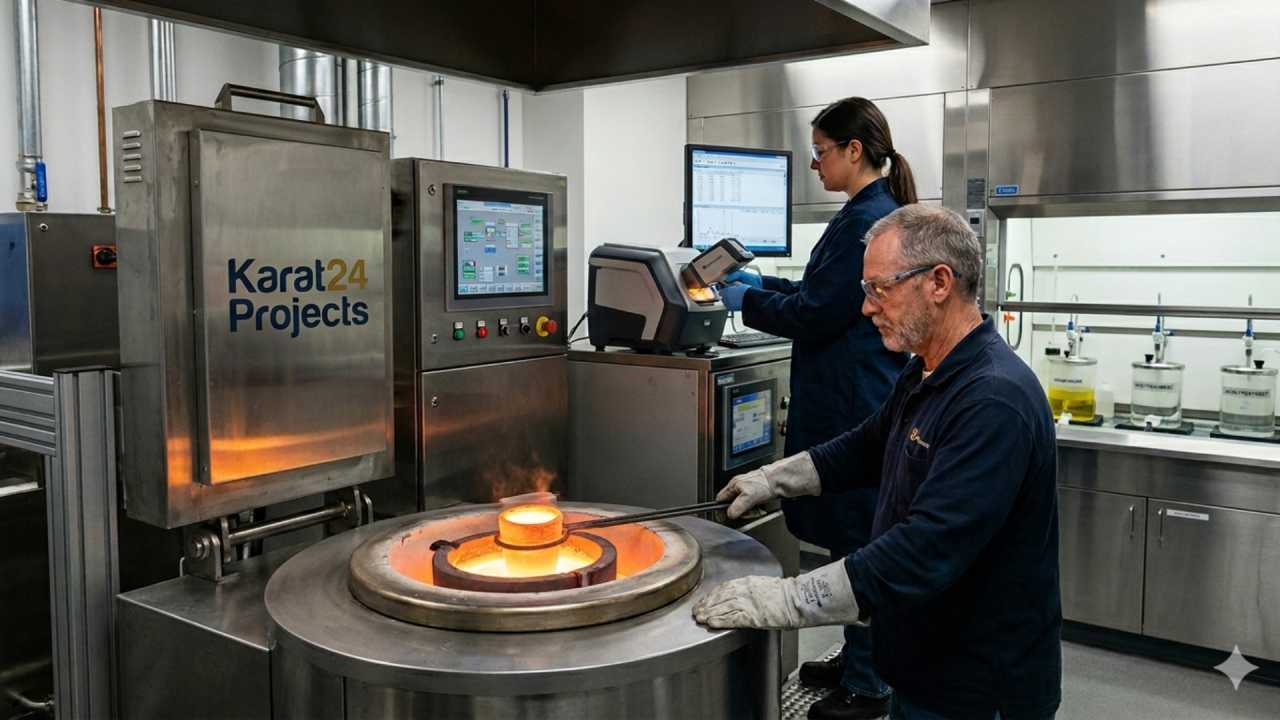
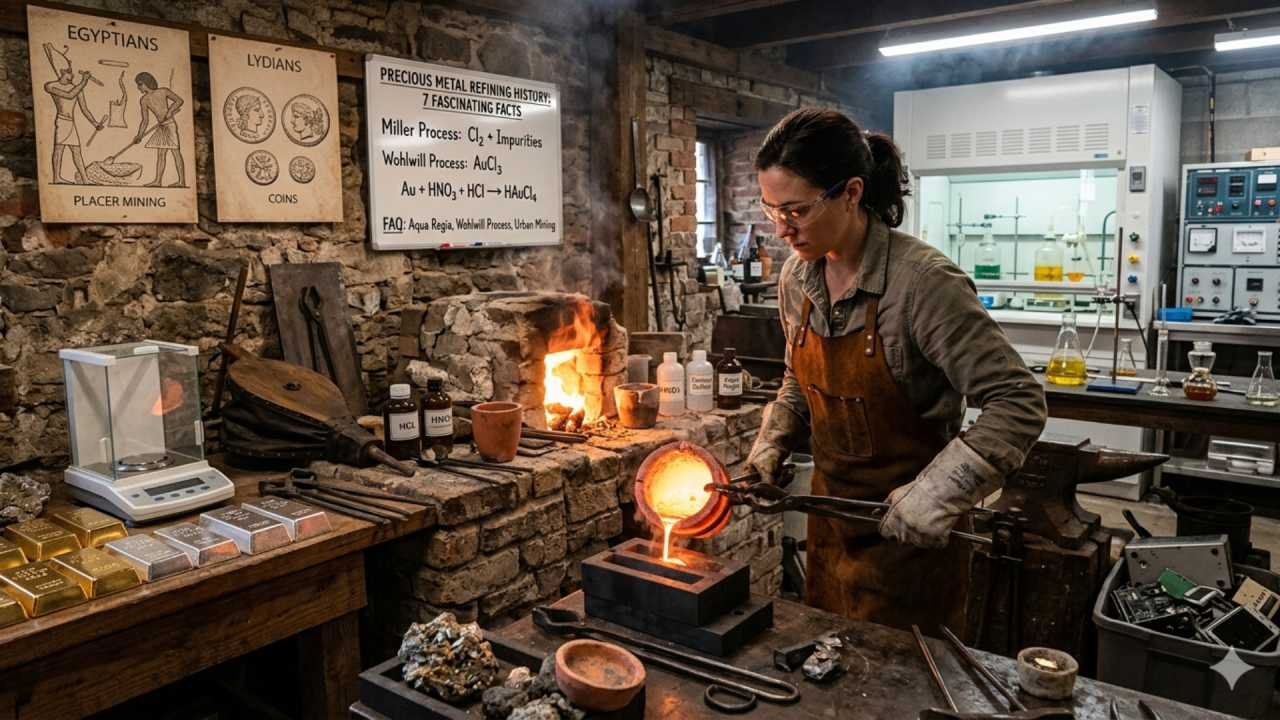
Pyrometallurgy, or smelting, involves heating materials to extreme temperatures to melt and separate metals. While robust, it is an energy-intensive process that releases substantial greenhouse gases and potentially toxic fumes. Furthermore, it is often poorly suited for complex e-waste, where valuable metals are intertwined with plastics and ceramics that can create hazardous byproducts when burned.
Hydrometallurgy uses chemical solutions—historically including aggressive substances like cyanide or strong acids—to leach metals from solids into a liquid state. While more selective than smelting, traditional leaching poses severe environmental risks due to the toxicity of the reagents and the challenge of treating the resulting wastewater.
Modern needs demand higher selectivity (the ability to pull gold out of a mix of copper and nickel), higher efficiency (recovering even trace amounts), and significantly lower environmental footprints. As natural resources become scarcer, the “low-hanging fruit” of high-grade ore is gone. Innovation is no longer an option; it is a prerequisite for the survival of the industry.
Key Technologies Revolutionizing Precious Metal Recovery
The intersection of engineering, biology, and data science has birthed a new generation of recovery techniques. These technologies are not just incremental improvements; they represent a fundamental shift in how we interact with discarded materials.
Biotechnology and Bioleaching
Biotechnology is perhaps the most radical departure from traditional metallurgy. Instead of intense heat or harsh chemicals, this field employs microorganisms—bacteria and fungi—to do the heavy lifting. Bioleaching involves using specific microbes that naturally “eat” or dissolve minerals to release the trapped precious metals.
For example, certain strains of Acidithiobacillus bacteria can oxidize sulfur-bearing ores, releasing gold or silver into a solution where they can be easily captured. The advantages are compelling: bioleaching operates at ambient temperatures and pressures, drastically reducing energy costs. It is inherently “greener” as it replaces toxic cyanide with biological processes. While slower than chemical leaching, the low operational cost and environmental safety make it an ideal candidate for treating low-grade ores and complex e-waste.
Advanced Hydrometallurgical Processes
If biotechnology is the “natural” path, advanced hydrometallurgy is the “refined” one. Scientists are developing green solvents and ionic liquids—essentially salts that are liquid at room temperature—to replace traditional acids. These solvents are non-volatile and non-flammable, making them much safer for workers and the environment.
The real revolution here lies in selectivity. New chemical “ligands” act like molecular keys, designed to bind only to specific atoms like gold or palladium while ignoring the surrounding base metals like iron or aluminum. This allows for a “one-pot” recovery process where high-purity metals can be extracted in fewer steps, reducing both waste and cost.
Urban Mining and E-Waste Recycling Technologies
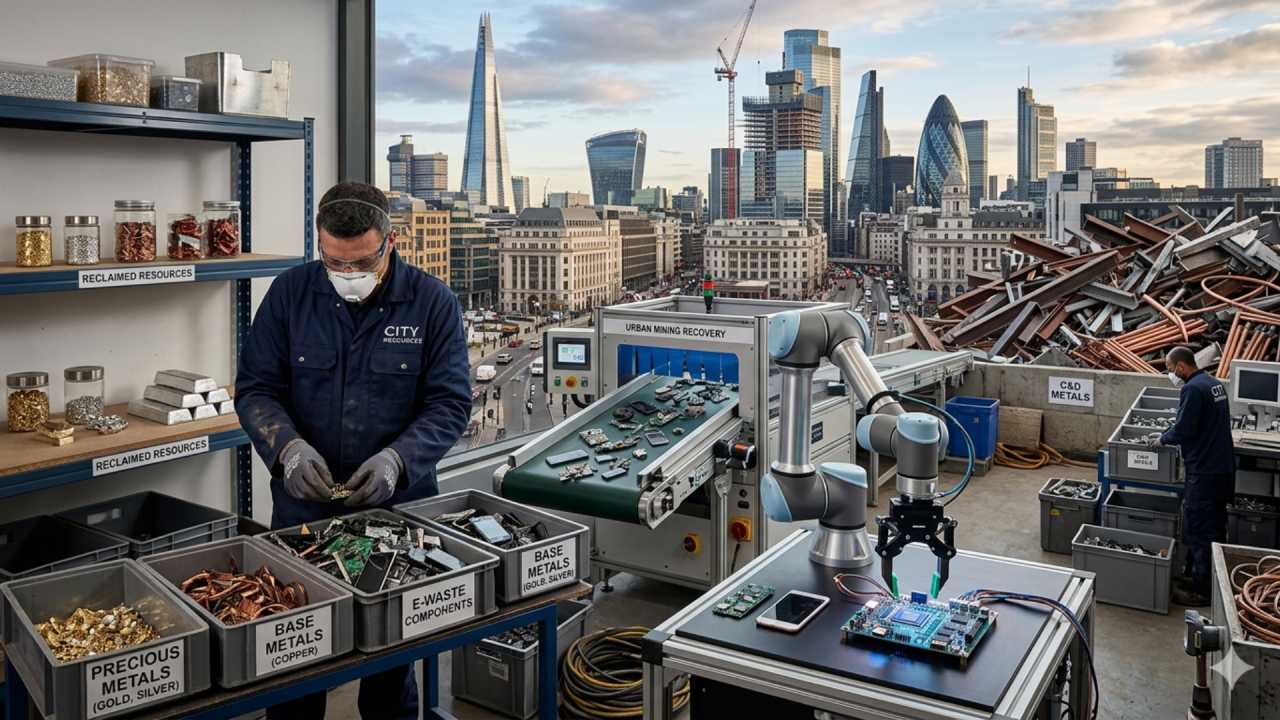
The concept of urban mining treats cities as the new mines of the future. A ton of old mobile phones contains roughly 100 times more gold than a ton of gold ore. To tap into this, new mechanical and automated technologies have been developed to handle the physical complexity of electronics.
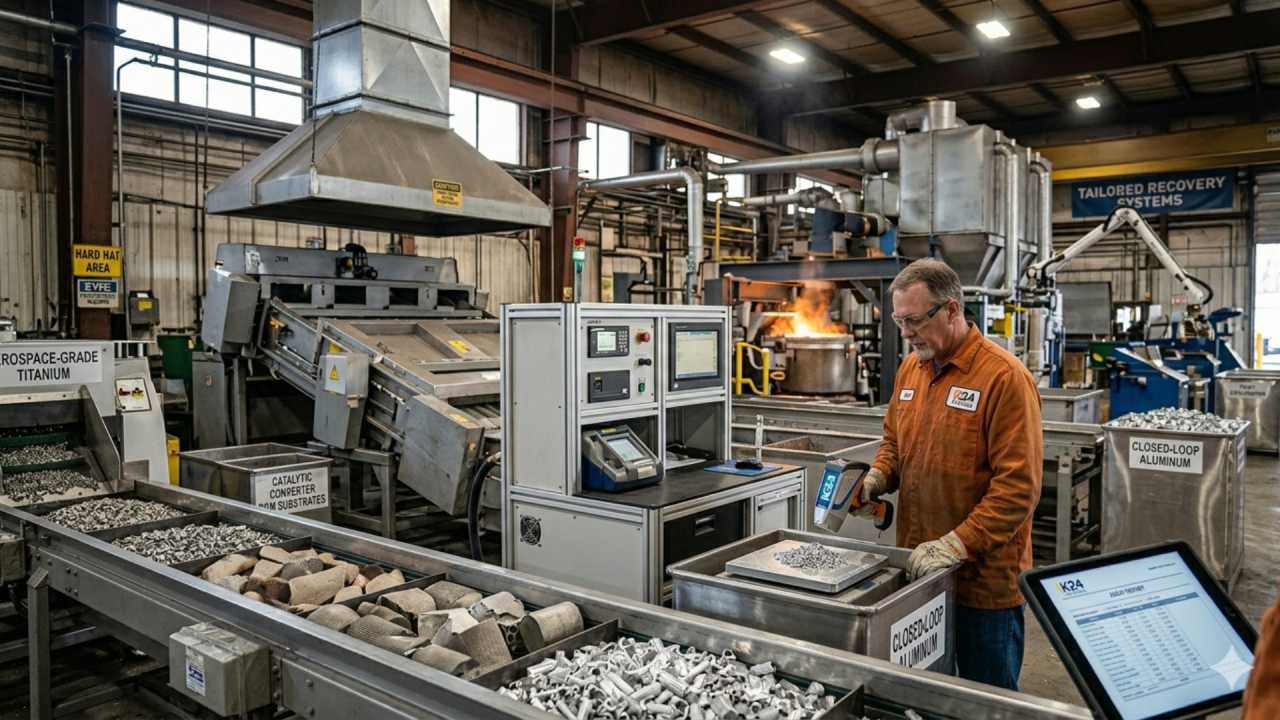
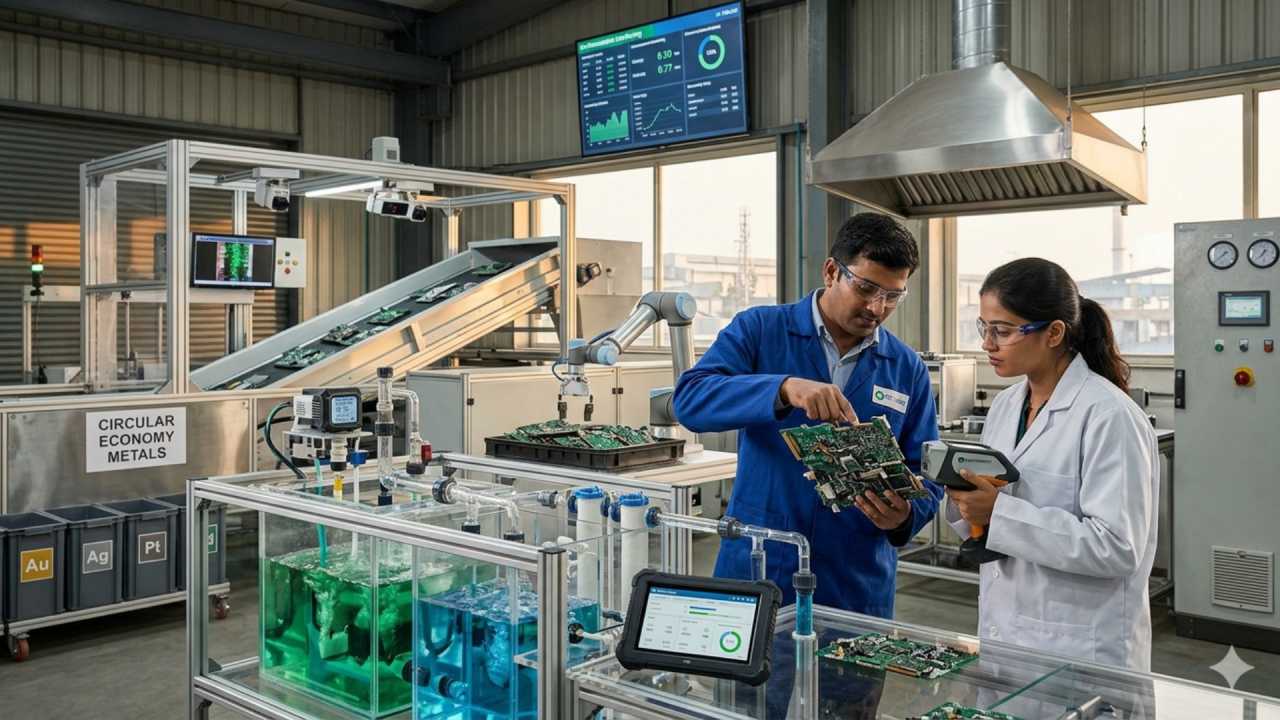
Sophisticated shredding and liberation systems break down devices into fine powders without losing trace amounts of precious metals in the dust. Following this, automated sorting using sensors (like X-ray fluorescence or optical cameras) can identify and separate high-value components, such as circuit boards, from less valuable plastics and glass before chemical processing even begins. This mechanical precision ensures that the downstream chemical recovery is as efficient as possible.
Artificial Intelligence and Automation
Artificial Intelligence (AI) is the “brain” of the modern recovery plant. In the past, recovery rates fluctuated based on the inconsistent quality of the input waste. Today, AI-driven sorting uses machine learning to identify specific types of scrap at lightning speed, far outperforming human sorters.
Beyond sorting, AI is used for process optimization. Sensors throughout a recovery facility feed real-time data into algorithms that adjust chemical concentrations, temperatures, and flow rates to maximize yield. Predictive analytics can even forecast when a specific batch of waste will be most profitable to process, allowing companies to manage their inventory and energy use with surgical precision.
Nanotechnology
At the microscopic level, nanotechnology is providing new tools for capturing trace metals from dilute solutions. Nanomaterials, such as magnetic nanoparticles coated with specific chemical receptors, can be introduced into wastewater. These particles seek out and bind to precious metal ions.
Once the “capture” is complete, a simple magnetic field can pull the nanoparticles—and their precious cargo—out of the water. This allows for the recovery of metals from industrial runoff that was previously considered “too thin” to be economically viable. Nanotechnology turns what was once an environmental liability (metal-laden wastewater) into a secondary revenue stream.
Electrochemical Recovery Techniques
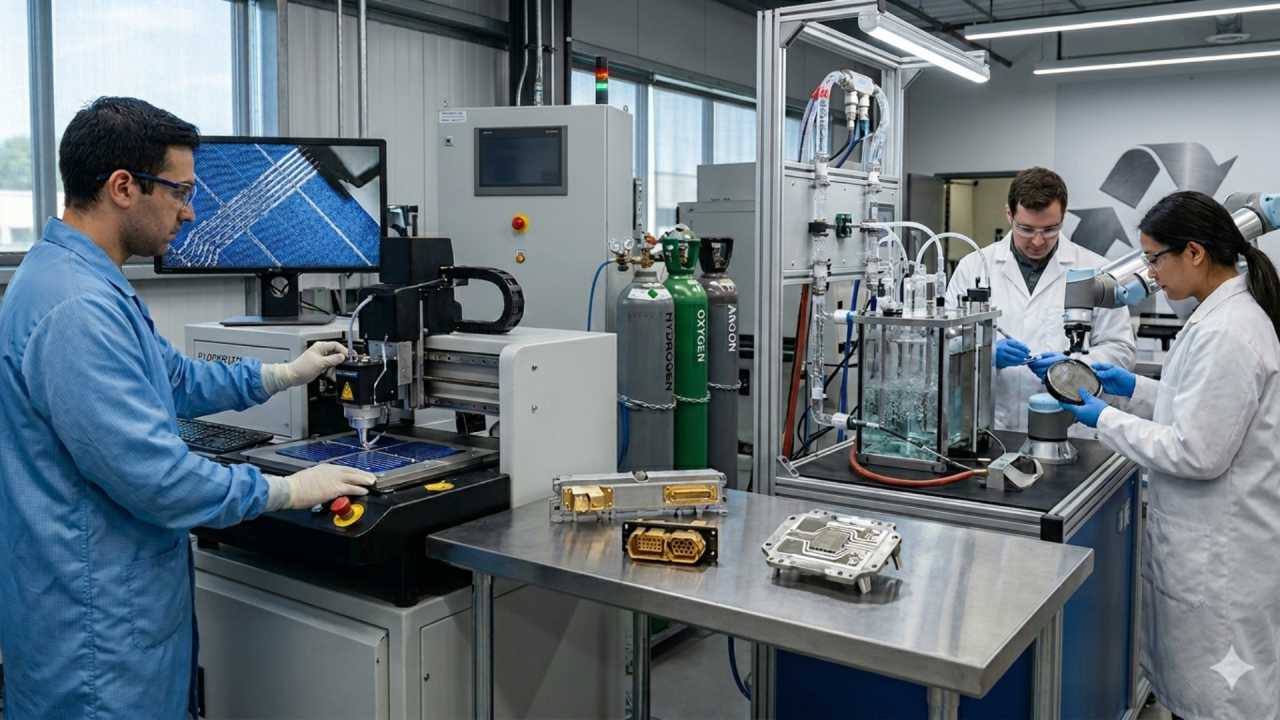
Electrochemical methods, such as electrowinning and electrorefining, use electrical currents to deposit dissolved metals onto a cathode. Modern advancements have made these systems incredibly precise. By finely tuning the voltage, operators can “target” specific metals. For instance, at one voltage, silver might plate out; at a slightly different voltage, gold follows.
These closed-loop systems are highly efficient because the chemicals used in the process can often be recycled back into the start of the system, minimizing the discharge of waste. Precision recovery from dilute or complex solutions is now possible with a level of purity that meets the stringent requirements of the electronics and jewelry industries.
Environmental and Economic Benefits
The shift toward technology-led recovery offers a rare “win-win” scenario for both the planet and the balance sheet.
-
Conservation of Resources: Every gram of gold recovered from a circuit board is a gram that doesn’t need to be mined from the Earth. This preserves natural landscapes and reduces the massive land-use footprint of traditional mining.
-
Carbon Footprint Reduction: Secondary recovery typically uses a fraction of the energy required for primary mining. Smelting recycled aluminum, for example, uses 95% less energy than producing it from ore; while the ratios for precious metals vary, the energy savings are consistently substantial.
-
Waste Transformation: By turning e-waste and industrial sludge into a resource, we mitigate the risk of heavy metal leaching in landfills, protecting groundwater and local ecosystems.
-
Economic Resilience: As geopolitical tensions and supply chain disruptions affect the mining of “critical minerals,” localized recovery provides a stable, domestic source of essential metals. This supports the circular economy, where the value of a product is retained even at the end of its life.
Challenges and Limitations
Despite the promising horizon, the road to universal high-tech recovery is not without hurdles.
The most significant barrier is high initial investment. Building a facility equipped with AI-sorting robots, bioleaching tanks, and nano-filtration systems requires massive capital. For many smaller recycling firms, the “old way” remains the only affordable way.
Scalability is another concern, particularly for biotechnology. While a lab-grown colony of bacteria can easily process a few kilograms of waste, scaling that up to handle thousands of tons of industrial output requires complex bioreactor designs and careful environmental controls.
Furthermore, waste complexity is a moving target. As electronics manufacturers develop new alloys and miniaturized components, recovery technology must constantly evolve to keep up. A recovery process designed for today’s smartphones might be obsolete when the next generation of flexible, organic electronics hits the market.
Case Studies and Real-World Success
Success stories are popping up across the globe, proving that these technologies are ready for the mainstream.
In Europe, specialized “urban mining” plants are now using automated disassembly robots to strip down end-of-life vehicles and electronics, achieving recovery rates for gold and copper that exceed 98%. In North America, companies are utilizing AI-optimized leaching to extract gold from old computer motherboards, using a fraction of the water and chemicals required by traditional methods.
In Asia, where the concentration of e-waste is highest, large-scale bioleaching facilities are being integrated into industrial zones. These plants process hundreds of tons of printed circuit boards annually, using locally sourced microbial cultures to provide a low-cost, low-impact alternative to the hazardous “backyard” smelting that previously plagued the region.
Future Trends and Innovations
Looking forward, the integration of recovery technology into the very fabric of our cities is the next logical step.
-
Blockchain for Traceability: Blockchain technology will likely be used to track the “life” of a precious metal. From the moment it is mined (or recovered) to its use in a laptop, and back to the recovery plant, a digital ledger will ensure ethical sourcing and verify the “recycled” status of the material.
-
Smart City Integration: Imagine a city where waste bins are “smart” enough to pre-sort electronics using sensors, feeding them directly into localized, automated recovery micro-hubs.
-
Molecular Printing: Advances in 3D printing at the molecular level might allow for the creation of “designer” recovery agents that can be printed on-demand to deal with new, specific waste streams.
-
Green Chemistry Sovereignty: As more countries adopt “right to repair” and “circularity” laws, the demand for green chemistry will drive a surge in localized, small-scale recovery plants that can operate safely within urban centers.
Final Thoughts
Technology has redefined the relationship between society and its waste. Precious metal recovery is no longer just a scavenging operation; it is a sophisticated, data-driven industry that stands at the heart of global sustainability efforts.
By harnessing the power of biology, the precision of nanotechnology, and the intelligence of AI, we are learning to treat our discarded items not as trash, but as a “distributed mine.” While challenges in cost and scalability remain, the trajectory is clear: the future of precious metals lies not in the deep pits of the Earth, but in the innovative technologies that allow us to reclaim what we have already used. As we move toward a truly circular economy, the ability to recover these valuable elements will be as essential to our progress as the ability to discover them was in ages past.
Frequently Asked Questions About Precious Metal Recovery
What is the most efficient way to recover gold from e-waste at home?
While many hobbyists use “aqua regia” or acid baths, these are extremely hazardous without industrial ventilation. The most efficient and safe modern method involves non-toxic gold stripping solutions or specialized electrochemical cells. However, for the general public, using a certified urban mining service is the most effective way to ensure 100% of the metal is recovered without environmental contamination.
Is bioleaching better than chemical leaching for precious metal extraction?
Bioleaching is generally considered superior in terms of environmental impact and operational cost, especially for low-grade ores. While chemical leaching (using cyanide or acids) is faster, bioleaching uses living microorganisms to break down minerals, making it a “green” alternative that avoids the production of toxic wastewater and reduces the carbon footprint of the recovery process.
How does AI improve the profitability of precious metal recycling?
Artificial Intelligence increases profitability by drastically reducing labor costs and increasing the “purity” of the initial sort. AI-powered sensors can identify rare earth elements and precious metals in a mix of thousands of components per minute. By ensuring that only high-value materials enter the expensive chemical recovery phase, companies minimize waste and maximize their final yield.
Can platinum and palladium be recovered from hydrogen fuel cells?
Yes. As the green energy sector grows, the recovery of Platinum Group Metals (PGMs) from spent hydrogen fuel cells and catalytic converters has become a high-priority industry. New electrochemical recovery techniques are being developed specifically to strip these metals from the complex membranes found in fuel cells, ensuring the “green” energy cycle remains sustainable.
What are the environmental risks of traditional smelting vs. modern urban mining?
Traditional smelting (pyrometallurgy) releases high levels of sulfur dioxide and heavy metal particulates into the atmosphere. In contrast, modern urban mining focuses on mechanical separation and closed-loop hydrometallurgy. These modern systems are designed to capture and reuse all chemical reagents, resulting in near-zero atmospheric emissions and a significantly smaller physical footprint.
Why is the circular economy important for the precious metals market?
The circular economy is vital because precious metals are finite resources. By using technology to create a “closed loop”—where every smartphone or computer is recycled back into the supply chain—we reduce global dependence on primary mining. This stabilizes market prices, secures supply chains for tech manufacturers, and protects the environment from the degradation associated with traditional mining.