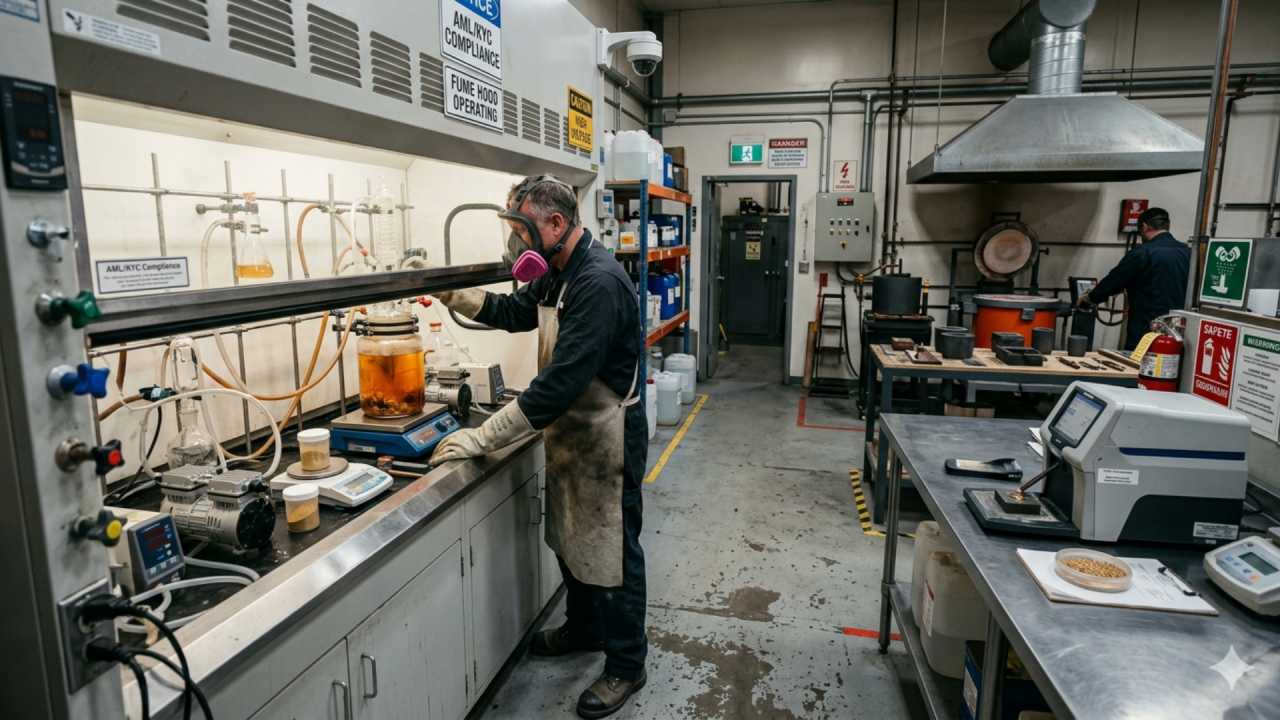
How to Build a Gold Refining Business: The Definitive Blueprint for Precious Metals Success
Gold refining occupies a unique position in the global economy. Unlike traditional manufacturing businesses that face volatile market demands or rapidly changing technology cycles, gold refineries deal in a universally liquid asset. The demand for gold remains constant, driven by jewelry production, central bank reserves, electronics manufacturing, and investment portfolios.
Building a gold refining business offers an exceptionally high-margin opportunity within the precious metals ecosystem. While gold traders and pawn shops survive on minor transactional spreads, a refiner sits at the top of the local recycling supply chain. By converting raw, scrap, or low-purity gold into 24-karat investment-grade bullion, a well-run refinery secures consistent, scalable profits.
However, entering this industry is not a matter of simply purchasing a furnace and buying scrap metal. It is a highly specialized trade that demands deep technical competence, rigorous operational discipline, structural risk mitigation, and strict adherence to environmental and financial regulations. This comprehensive guide provides a detailed operational, financial, and technical blueprint to help entrepreneurs navigate the journey from a startup concept to a fully operational, compliant, and profitable gold refinery.
Understanding the Gold Refining Industry
To operate a successful refinery, you must first master its precise role in the precious metals lifecycle. Many newcomers confuse refining with trading or recycling, but these business models represent distinct operational layers.
-
Gold Trading: Involves buying and selling bullion or coins with minor transactional spreads. It requires no chemical processing or material manipulation.
-
Gold Recycling: Focuses on aggregating scrap jewelry, dental metals, and minor components, often acting as a middleman between retail consumers and processing facilities.
-
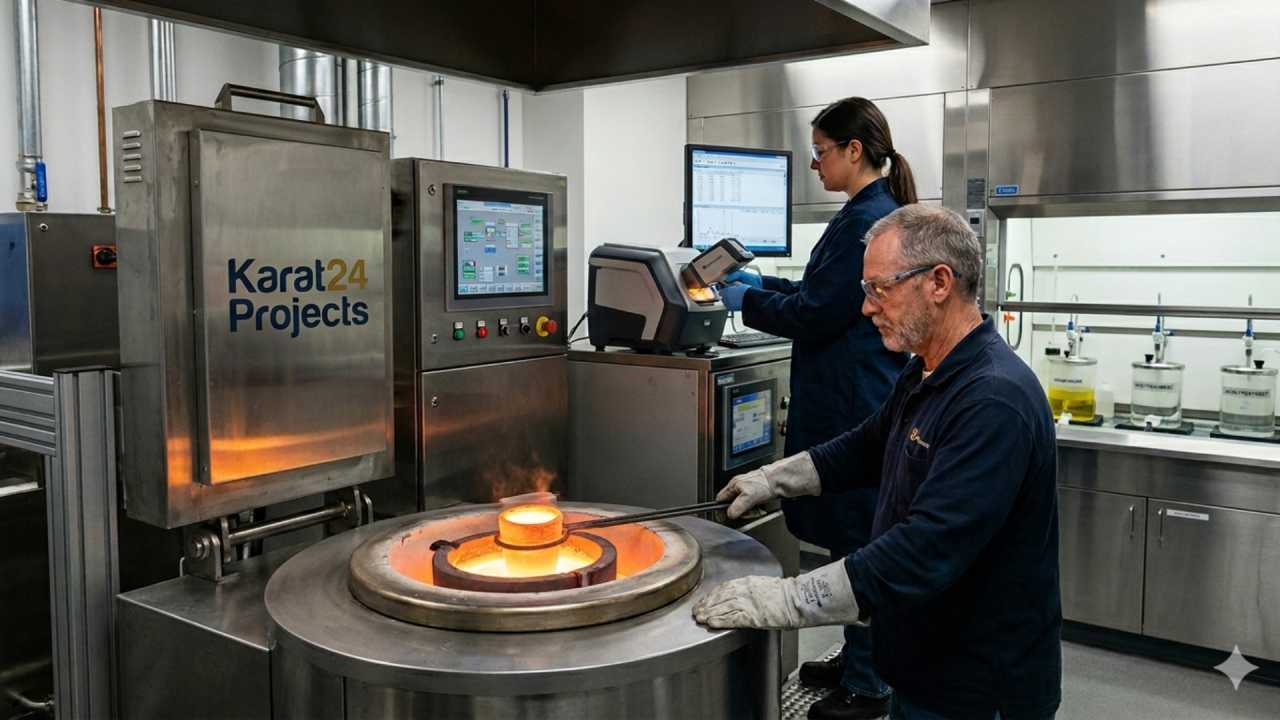
Gold Refining: The industrial process of taking impure gold alloys—whether from jewelry scrap, mining concentrates, or industrial byproducts—and utilizing chemical or electrochemical engineering to isolate the gold molecules, removing all base metals and pathfinder elements until a purity level of 99.9% (999 fine) or 99.99% (9999 fine) is achieved.
Core Value Streams and Global Demands
Refineries act as liquidity providers. They generate revenue through multiple mone
tization streams, including processing fees, asset-recovery premiums, and the arbitrage spread between unrefined buying prices and refined selling prices.
The industry is underpinned by strict global standards. The standard unit of transactional trust is purity. Gold purity is determined by its karats (with 24K being pure gold) or its millesimal fineness (999.9 parts per thousand being the standard for investment-grade bullion). Refineries play a vital economic role by certifying this purity, providing institutional trust, and reintroducing recycled precious metals back into the global supply chain.
Choosing Your Business Model
The scope of your initial setup is dictated by your targeted feed material, capital availability, and operational space. Refiners generally adopt one of four core operational models.
Small-Scale Scrap Refining
This model focuses primarily on urban scrap gold sourcing, including broken estate jewelry, dental castings, and pawn shop inventories. The entry barrier is comparatively low, requiring an industrial shop or specialized boutique lab space rather than a heavy industrial factory. It is the most accessible model for new entrepreneurs, allowing the refinery to grow dynamically alongside its cash flow.
Industrial Mining Refining
Industrial operations ingest dore bars (semi-pure gold alloys produced on-site at mine fields) and raw mining concentrates. This model requires massive capital deployment, automated machinery, heavy-duty induction melting systems, and long-term contracts with regional or international mining houses.
E-Waste Gold Recovery
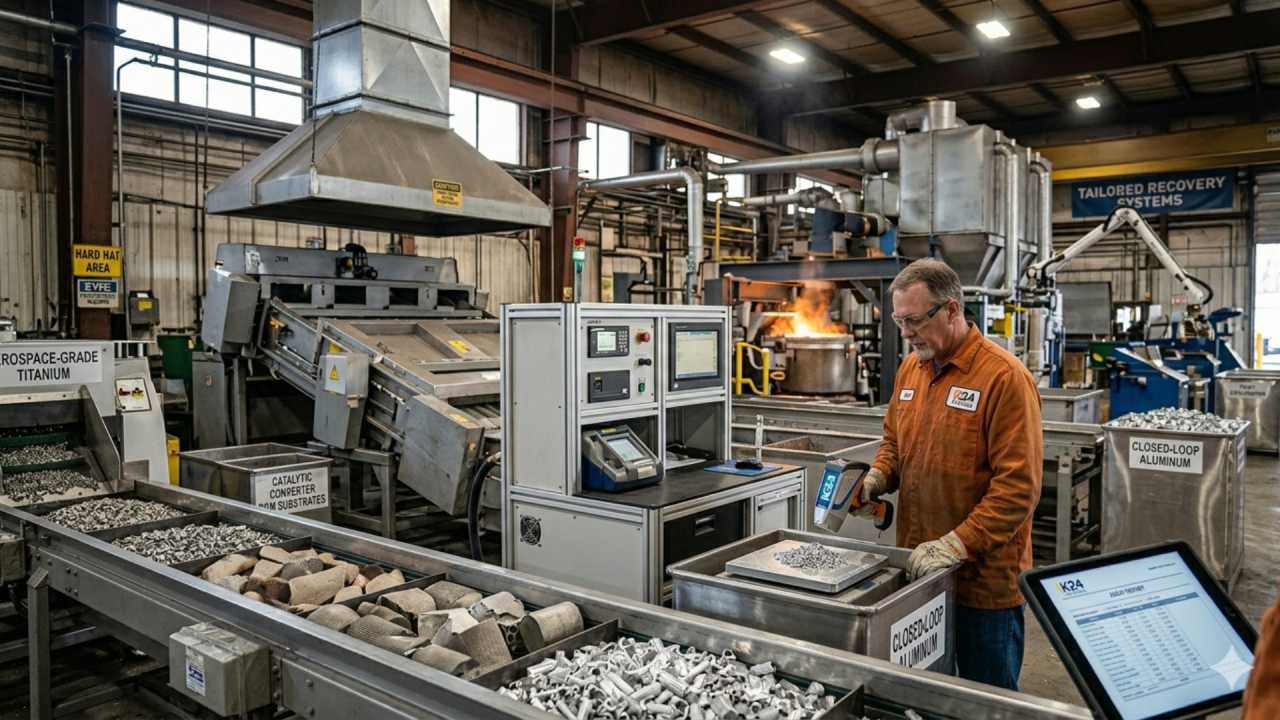
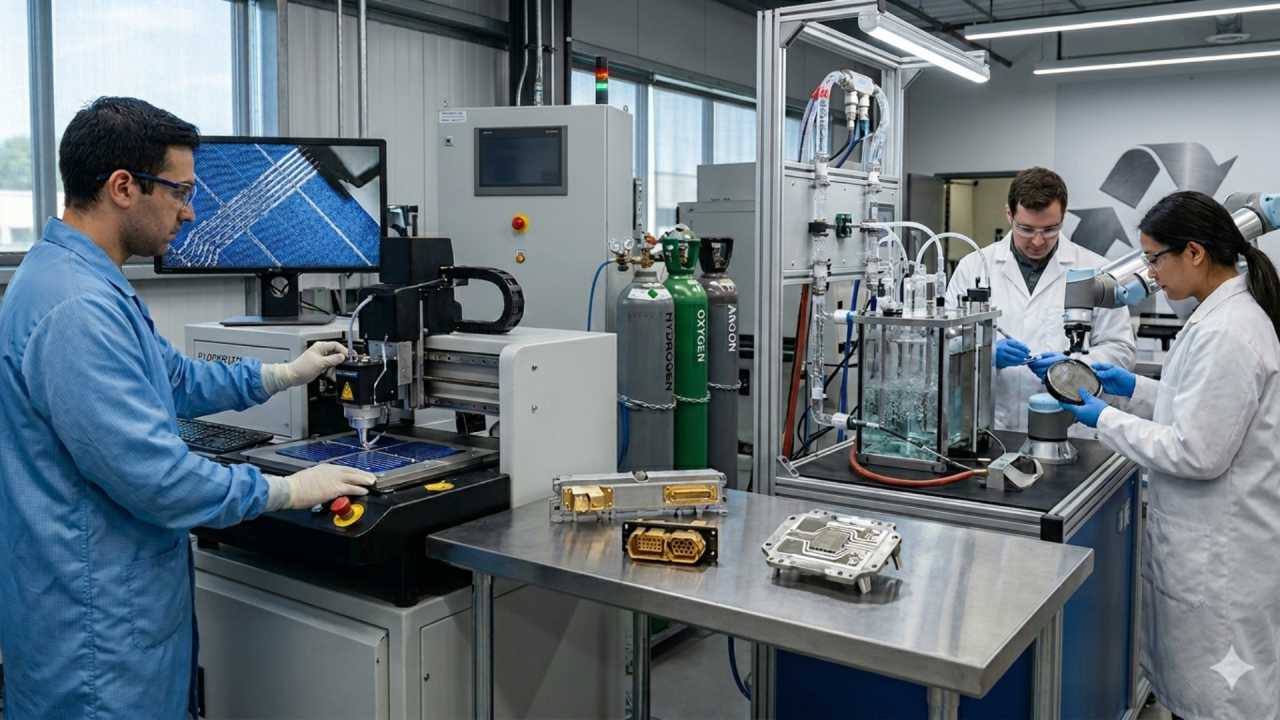
A highly technical, modern niche involving the extraction of trace precious metals from circuit boards, server CPUs, connectors, and end-of-life mobile devices. While the feedstock can often be acquired for a low cost, the volume of material required is massive, and separating gold from complex amalgams of plastics, copper, iron, and silicon introduces substantial chemical and environmental challenges.
Toll Refining
In this B2B service-oriented model, the refinery does not own the gold inventory. Instead, clients—such as large-scale jewelry manufacturers or industrial mining firms—bring their unrefined gold to the facility. The refinery processes the batch, charges a fixed percentage or per-ounce toll fee for its chemical purification services, and returns the certified fine bullion back to the client. This model drastically minimizes working capital requirements and shields the business from commodity price volatility.
Legal Requirements and Compliance Structuring
Gold is a highly liquid alternative currency. Consequently, the precious metals sector faces intense regulatory oversight to prevent environmental destruction and financial crime. Your legal framework must be built defensively before any equipment is powered on.
Critical Regulatory Notice: Failing to properly implement Anti-Money Laundering (AML) protocols and environmental emissions controls will result in rapid business closure, heavy civil fines, or criminal prosecution. This industry requires structured legal consultation.
Financial Compliance and Anti-Money Laundering (AML)
Because gold can be used to launder illicit capital, governments enforce strict Know Your Customer (KYC) compliance frameworks. In the United States, refiners must register with the Financial Crimes Enforcement Network (FinCEN) as a Money Services Business (MSB) or implement an equivalent domestic program.
-
KYC Sourcing Framework: Every vendor supplying scrap or unrefined material must undergo rigorous identity verification. You must collect corporate filings, tax identification numbers, government-issued IDs, and verifiable physical addresses.
-
Source of Wealth (SOW) Audits: Refiners must ensure their gold suppliers are not sourcing material from conflict zones, illegal mining operations, or child labor networks. Maintain a detailed, time-stamped chain of custody for every ounce of gold entering the facility.
-
Suspicious Activity Reporting (SAR): Train your operations staff to flag anomalous transactions, such as clients attempting cash-only high-volume deals or bringing in unmarked gold bars without a verifiable commercial history.
Environmental, Health, and Safety Licensing
Refining gold requires heavy chemical intervention, creating hazardous gases, acidic wastewater, and toxic particulates.
-
Air Discharge Permits: Acidic dissolution processes release highly corrosive nitrogen dioxide gas and chlorine fumes. Refineries must install industrial scrubbing mechanisms and acquire localized clean-air agency authorizations.
-
Hazardous Materials Management: You must register with environmental protection offices for the structured management, storage, and neutral containment of volatile chemical inputs like hydrochloric acid and nitric acid.
-
Industrial Discharge Agreements: Wastewater cannot be disposed of via domestic municipal sewage systems. It must be chemically neutralized to an acceptable pH value and stripped of trace heavy metals through internal water-treatment setups prior to authorized discharge.
Startup Costs and Capital Requirements
The capital required to establish a functioning gold refinery fluctuates based on scale, but the budget can generally be divided into specialized equipment, security architecture, and operational liquid capital.
Equipment and Facility Cost Breakdown
| Operational Category | Essential Infrastructure Assets | Estimated Investment Range (USD) |
| Facility Infrastructure | Blast-hardened vaults, commercial chemical flooring, industrial acid ventilation, gas containment, scrubbers. | $45,000 – $120,000 |
| Thermal Processing | Medium-frequency induction melting furnaces, heavy-duty graphite crucibles, protective casting molds, slag skimmers. | $15,000 – $65,000 |
| Chemical Extraction | Borosilicate glass reaction vessels, acid-resistant pneumatic pumps, digestion tanks, chemical filter presses. | $10,000 – $40,000 |
| Analytical Testing | X-Ray Fluorescence (XRF) analyzers, precision micro-balances, cupellation assay laboratory ovens. | $25,000 – $85,000 |
| Security & Surveillance | Biometric access locks, high-definition continuous CCTV arrays, seismic motion sensors, physical armed check-ins. | $20,000 – $50,000 |
| Initial Fluid Capital | Working cash reserve to acquire raw material inventory from initial retail or pawn suppliers before refined sales hit accounts. | $100,000 – $500,000 |
Scaled Startup Tiers
-
Small-Scale Boutique Laboratory: Approximately $85,000 – $150,000 (excluding inventory cash). Processes small batches of jewelry scrap manually using localized chemical hoods.
-
Mid-Scale Automated Facility: Approximately $250,000 – $600,000. Features automated glass lines, high-frequency melting infrastructure, and in-house X-Ray spectrometry analysis tools.
-
Industrial Enterprise Refinery: $1,500,000+. Features fully integrated electrolytic processing loops, extensive security protocols, large-scale toll capabilities, and official bullion minting certifications.
Gold Refining Methods Explained
Choosing your extraction methodology dictates your facility layout, safety protocols, and operational speed. There are four primary refining techniques utilized globally.
The Aqua Regia Process
The Aqua Regia process is the gold standard for mid-market and small-scale refineries due to its high efficiency and moderate capital requirements. This process relies on a freshly prepared acid mixture containing a 3:1 ratio of hydrochloric acid to nitric acid.
-
Dissolution: In the reaction vessel, the raw gold alloy is submerged in the acid mixture. The nitric acid acts as a powerful oxidizer, allowing the hydrochloric acid to dissolve the gold, converting it into chloroauric acid in a liquid solution. Base metals like copper, nickel, and zinc dissolve alongside the gold, while silver precipitates out as solid silver chloride mud.
-
Filtration: The solution is filtered to completely isolate the solid silver chloride and any undissolved particulates from the gold-bearing liquid.
-
Selective Precipitation: A selective reducing chemical agent—most commonly Sodium Metabisulfite (SMB)—is introduced into the clear liquid. This forces the dissolved gold ions to drop out of the chemical solution, precipitating as a heavy, fine, dull brown metallic gold powder.
-
Washing and Consolidation: The solution is siphoned off. The gold sand is washed with distilled water and ammonia, dried, placed inside a clay-graphite crucible, and melted down to produce a solid gold bar of 99.5% to 99.99% fine purity.
The Electrolytic Wohlwill Process
For ultra-high purity demands (99.999% fineness), refineries upgrade to the Wohlwill process. This electrochemical methodology utilizes an unrefined gold bar as the anode (positive electrode) and a pure sheet of 24K gold as the cathode (negative electrode). Both elements are suspended in an electrolyte bath of chloroauric acid mixed with hydrochloric acid.
When a direct electric current is applied, gold molecules dissolve from the unrefined anode and travel through the electrolyte solution to deposit cleanly onto the pure gold cathode. Impurities like silver drop to the bottom of the tank as anode slime, while base metals remain suspended in the acid bath. While this process yields unparalleled purity, it requires significant electrical energy and locks up precious metal inventory in tanks for long processing windows, adding to operational overhead.
The Miller Process
The Miller process is an industrial pyrometallurgical method used for large-scale, high-volume operations. It involves blowing a stream of pure, gaseous chlorine through a crucible filled with molten gold alloy.
Because base metals and silver react with chlorine more readily than gold, they convert into gaseous or liquid chlorides (such as copper chloride and silver chloride) before the gold does. These chloride compounds rise to the surface as a light slag layer, which is skimmed off manually or mechanically. The Miller process is extremely fast and efficient, but it caps out at roughly 99.5% purity, meaning the resulting gold bars are often sent to a Wohlwill loop for final purification.
Cupellation
Cupellation is an accurate fire assay technique used primarily for diagnostic testing rather than bulk purification. A minute, precisely weighed sample of gold alloy is wrapped in lead foil and placed inside a porous ceramic cup called a cupel. The cupel is fired inside a high-temperature assay furnace.
Under extreme heat, the base metals oxidize completely and are absorbed into the porous walls of the cupel, leaving behind a pristine, tiny bead of pure gold and silver. This bead is treated with nitric acid to dissolve the silver, allowing the chemist to weigh the remaining gold and calculate the precise purity of the original batch down to parts per million.
Technical Comparison Profile
| Purification Method | Achievable Fineness Target | Operational Scale Capability | Primary Structural Input | Capital Overhead Profile |
| Aqua Regia | 99.9% – 99.99% | Small to Medium Batches | Hydrochloric & Nitric Acids | Balanced / Accessible |
| Wohlwill Loop | 99.99% – 99.999% | Industrial Enterprise | Chloroauric Acid & Power | High Infrastructure Costs |
| Miller Process | 99.5% Max | High-Volume Industrial | Pure Chlorine Gas | High / Complex Safety |
| Cupellation | Diagnostic Assay Only | Analytical Micro-Scale | Lead Foil & Target Sample | Low / Laboratory Scaled |
Setting Up Operations Safely
An uncompromised safety architecture is non-negotiable. Operating an industrial chemical processing plant requires active engineering controls to mitigate risks from intense heat and highly corrosive compounds.
Gas Containment and Acid Mist Management
The chemical reactions involved in gold refining release dense clouds of nitrogen dioxide, a toxic, reddish-brown gas that causes severe respiratory damage upon inhalation.
-
Industrial Fume Scrubbers: All chemical digestion vessels must be completely sealed or ducted directly into a vertical counter-current chemical packing scrubber. This system sprays an alkaline neutralizing fluid (such as a sodium hydroxide solution) over the rising fumes, neutralizing the acidic gases before discharging clean air through the facility stack.
-
Acid-Resistant Extraction Paths: Traditional metal ductwork will corrode within weeks of exposure to acid fumes. Use high-density polypropylene (HDPP) or polyvinylidene fluoride (PVDF) duct networks, paired with explosion-proof, chemical-rated fans.
Personal Protective Equipment (PPE) Matrix
| Operational Zone | Essential Protective Gear Required | Target Risk Mitigation |
| Chemical Wet-Lab Area | Full-face acid respirator, heavy neoprene gloves, chemical-resistant apron, steel-toed rubber boots. | Severe acid burns, toxic gas inhalation, chemical splashes. |
| Thermal Foundry Zone | Aluminized proximity suit, gold-coated thermal face shield, Kevlar casting gauntlets, metatarsal guards. | Molten metal splatters, extreme radiant heat, thermal burns. |
Emergency Countermeasures
-
Deluge Equipment Stations: Install plumbed eyewash stations and high-flow drench showers within a 10-second walking distance of all chemical reaction areas.
-
Acid Neutralization Toolkits: Keep bulk dry stocks of sodium bicarbonate (baking soda) on hand to rapidly contain and neutralize minor chemical spills on laboratory floors.
-
Gas Detection Arrays: Mount digital electrochemical sensor networks at key positions across the facility floors to monitor air quality for ambient chlorine, nitrogen oxides, and carbon monoxide.
Sourcing Raw Precious Metal Supply
Your refinery cannot survive without a consistent supply of unrefined material. To maintain high facility utilization rates, you must cultivate diverse sourcing relationships.
Sourcing Channels
-
Pawn and Secondary Jewelry Stores: Establish commercial accounts with local pawn brokers and gold buyers. Offer them faster settlement times and a higher payout percentage (96% – 98% of the spot price, depending on volume) than distant national refineries can provide.
-
Industrial Partnerships: Partner with regional electronics scrap processors, high-end dental laboratories handling crown metals, and manufacturing jewelers who generate gold dust and sweeps on their factory floors.
-
Artisanal and Small-Scale Mining Houses: In regions with active mining sectors, contract with local mining operations to refine their unrefined dore bars.
Verification Controls and Material Acceptance Rules
To avoid heavy losses from fraud, implement strict material testing protocols.
-
Homogenization Via Melting: Never rely on surface testing alone for raw scrap lots. Counterfeiters often coat heavy tungsten bars in thick layers of 18K gold, which can easily trick basic surface acid tests. Instead, melt incoming lots into a uniform liquid bar, stir the molten metal thoroughly, and extract a clean pin sample for analytical verification.
-
X-Ray Fluorescence Spectrometry (XRF): Analyze the pin sample using an in-house XRF spectrometer to determine its precise elemental composition within seconds.
-
Rejecting Suspicious Goods: Implement a strict policy against accepting raw material from unregistered walk-in clients who cannot provide a clean commercial paper trail. Protecting your facility from receiving stolen goods is paramount to maintaining your operating licenses.
Marketing, Branding, and Customer Acquisition
In the precious metals industry, credibility and reputation are your most valuable marketing assets. Trust is paramount when clients hand over high-value, unrefined inventory.
Building Institutional Trust
-
Independent Third-Party Auditing: Secure regular, independent purity audits of your minted bullion products. Achieving ISO 9001 quality management certification or earning an endorsement from respected regional precious metals associations will instantly elevate your brand.
-
Transparent Settlement Reporting: Provide every client with a detailed, transparent breakdown of their processing lot. This should include the recorded intake mass, certified XRF analysis results, exact chemical processing recovery rates, and a transparent fee deduction log.
| Transaction Metrics | Recorded Values / Percentages |
| Gross Intake Weight | 1,250.00 Grams |
| Assayed Gold Purity | 58.33% (14K Alloy Equivalent) |
| Calculated Fine Gold Mass | 729.12 Grams |
| Refinery Recovery Efficiency | 99.85% |
| Net Recovered Gold | 728.02 Grams |
| Base Processing Fee | 1.50% |
| Net Client Bullion Payout | 717.10 Grams Fine Gold |
-
Accelerated Payout Options: In the scrap market, liquidity is king. Offering clients immediate partial payouts based on initial assay estimates—rather than making them wait weeks for full chemical processing—will help you capture significant market share from slower competitors.
Marketing and Outreach Strategies
-
Industry Network Integration: Attend national jewelry manufacturing conventions, pawn association exhibitions, and electronics recycling summits to connect with high-volume enterprise suppliers.
-
B2B Content Engines: Publish technical case studies on asset recovery metrics, explainers on evaluating complex alloys, and guides on optimization strategies for manufacturing floor waste. This positions your refinery as an expert technical partner rather than a simple toll processor.
Business Profitability and Financial Architecture
Refining profitability is fundamentally built on processing efficiency, volume throughput, and systematic risk management.
The Mechanics of Refinery Spreads
Refining income is generated through three distinct financial mechanisms:
-
The Buy-Sell Arbitrage Spread: Purchasing raw material at a discount relative to its true fine gold content (e.g., buying scrap gold at 92% – 95% of spot value) and selling the refined 24K bars at 99.5% – 100% of the current market price.
-
Toll Processing Surcharges: Charging a predictable processing fee per ounce or a percentage-based cut of the total volume for corporate processing accounts.
-
Secondary Metal Recoveries: Raw gold scrap often contains meaningful traces of silver, copper, and platinum group metals. By recovering and separating these secondary metals during the chemical refining process, your refinery can capture bonus revenue streams that are not included in your primary client payouts.
Protecting Margins Against Commodity Price Volatility
The gold market is highly volatile. If you buy scrap gold on Monday and the spot price drops 4% by Thursday while the batch is still in the acid tanks, your profit margin can instantly evaporate. To prevent this, you must run a strict hedging program.
-
Back-to-Back Spot Positions: The moment you acquire an unrefined lot of gold from a client, open an equivalent short position on a commodity exchange (or through an institutional trading desk). When the refined gold is later sold on the physical market, close the short hedge out. Any losses sustained from drops in the physical spot price will be cleanly offset by gains in the short derivative trade.
-
Pool Account Infrastructure: Allow high-volume commercial clients to maintain unrefined gold balances in digital credit pools. This allows you to process materials fluidly without triggering unnecessary physical sell orders during down market cycles.
Common Operational Risks and Mitigation
Operating a refinery introduces complex strategic challenges. Managing these risks effectively separates enduring facilities from bankrupt startups.
Security Vulnerabilities and Internal Shrinkage
Gold is a dense, high-value asset that is highly vulnerable to internal theft and external security threats. A single handful of pure gold dust can easily be worth thousands of dollars.
-
Layered Physical Access Control: Restrict access to chemical collection rooms and secure vaults using multi-factor biometric locks, requiring dual-employee authorization for entry.
-
Comprehensive Material Mass Balances: Implement strict weight tracking at every step of the refinery line. Weigh the gold mass before melting, after casting, before chemical dissolution, and after final precipitation. Any anomalous variance in weight must trigger an immediate lockdown and audit of the line.
-
Zero-Pocket Apparel Uniforms: Require all processing lab staff to wear specialized, pocket-free uniforms, and mandate that everyone pass through sensitive metal detection screening arrays whenever they exit the processing floor.
Regulatory and Environmental Vulnerabilities
Environmental agencies have the authority to suspend your operations immediately if a scrubber fails or if untreated acidic water leaks into public systems.
To mitigate this, build your facility with redundant critical infrastructure. Install dual, parallel gas scrubbing towers so that if one unit requires mechanical maintenance, your processing line can remain online safely. Additionally, build structural concrete containment basins around your chemical storage tanks to ensure that any accidental leaks are completely contained within the facility.
Scaling Your Business Operations
Once your core gold refining line is stable and consistently profitable, look toward strategic expansion to capture broader market share.
-
Expanding into Alternative Precious Metals: The operational infrastructure used to process gold can be modified to refine silver and platinum group metals (including platinum and palladium). Silver refining requires installing specialized silver electrolytic cells, while platinum separation requires advanced chemical precipitation setups using ammonium chloride. Adding these metals to your service catalog allows you to serve as a comprehensive, single-source processing partner for industrial clients.
-
Upgrading to Automated E-Waste Processing Lines: As your capital reserves grow, build out automated processing lines to handle complex electronics scrap. This involves installing heavy-duty mechanical shredders, industrial magnetic separators to pull out ferrous metals, and advanced pyrometallurgical furnaces to efficiently process raw circuit board material before final chemical treatments.
-
Launching an Institutional Minting Brand: Transition your business from bulk metal delivery to a premium retail product asset. By investing in heavy-duty hydraulic blanking presses and precision coin coining dies, your refinery can stamp its own branded investment bars and collectible rounds. This allows you to capture additional manufacturing premiums directly from retail investors and wholesale bullion distributors worldwide.
Final Thoughts
Building a gold refining business requires balancing precise chemical engineering with rigorous corporate compliance. It is an industry with high entry barriers, but it rewards disciplined operators with exceptional financial stability and high profit margins.
Success relies on starting with a clear, well-defined business model, constructing a highly compliant sourcing pipeline, and implementing uncompromising safety and security protocols on your production floor. By starting with a highly efficient, small-scale operational footprint and scaling your capacity systematically as your supplier relationships grow, you can build a highly profitable enterprise that converts unrefined scrap into the ultimate global asset: certified, pure investment gold.
Frequently Asked Questions (FAQ)
What are the legal requirements to open a gold refinery business?
To legally establish a gold refinery, you must satisfy federal financial regulations and local environmental laws. In the United States, you must register as a Money Services Business (MSB) with the Financial Crimes Enforcement Network (FinCEN) and implement strict Anti-Money Laundering (AML) and Know Your Customer (KYC) frameworks. Environmentally, you are required to secure an Air Discharge Permit for gas emissions and sign an Industrial Discharge Agreement with waste management authorities to handle neutralized chemical runoff and heavy metal containment.
How much capital is needed for a gold refinery startup?
The capital requirements vary significantly based on your operational tier:
-
Small-Scale Boutique Laboratory: $85,000 to $150,000 covers fundamental chemical hoods, basic glassware, and a localized ventilation infrastructure.
-
Mid-Scale Automated Facility: $250,000 to $600,000 provides high-frequency induction melting systems, digital XRF analyzers, and automated glass reaction lines.
-
Industrial Enterprise Refinery: $1,500,000+ is required to build out fully integrated electrolytic Wohlwill loops, advanced security vaults, and to maintain the extensive cash float required for bulk inventory turnover.
What is the most profitable gold refining process for small businesses?
The Aqua Regia process is the most profitable and practical methodology for small-to-midsize refining startups. It offers the best balance between low initial capital investment and high-purity output (99.9% fine gold). Unlike the Wohlwill process, which requires high electrical overhead and ties up expensive gold inventory in electrolyte baths for days, Aqua Regia chemically dissolves and precipitates gold within hours, allowing a startup to maintain a rapid cash flow cycle.
How do precious metal refineries minimize financial risk from gold price volatility?
Refineries manage market risk by implementing a strict hedging program using back-to-back spot positions. The moment an unrefined scrap lot is purchased from a supplier, the refinery opens an equivalent short position on a commodity exchange or with an institutional bullion trading desk. Once the chemical purification is complete and the physical 24K bullion is sold, the short hedge is closed out. This ensures that any loss caused by a drop in the physical market price is completely offset by gains in the derivative trade.
How do you extract gold from electronic waste cleanly and safely?
E-waste gold recovery requires a combination of mechanical processing and hydrometallurgical extraction. First, post-consumer circuit boards and server CPUs undergo wet mechanical crushing and magnetic separation to isolate plastic and ferrous materials from the precious metal alloys. The remaining copper-precious metal matrix is treated chemically using customized acid stripping circuits. To operate safely and cleanly, the entire line must be enclosed in high-density polypropylene ductwork connected to a vertical counter-current chemical packing scrubber that completely neutralizes toxic acid mists before air release.
What is toll refining and how does its profit margin work?
Toll refining is a business-to-business (B2B) service model where the refinery does not buy or own the gold inventory. Instead, industrial clients like mining firms or massive jewelry manufacturers provide their own unrefined material. The refinery processes the lot for a fixed per-ounce processing fee or a small percentage-based surcharge of the total volume. While the raw profit margins per ounce are lower than buying scrap outright, toll refining provides highly predictable revenue streams with zero exposure to commodity price drops and requires significantly less working capital.
Which testing equipment is required to verify gold purity accurately?
To protect your business from counterfeit materials and tungsten-filled bars, you must utilize a strict two-step verification matrix:
| Testing Asset | Primary Technical Purpose | Operational Importance |
| Induction Melting Furnace | Homogenizes irregular scrap lots into a single liquid bar. | Prevents fraud from thick surface-plated gold bars. |
| X-Ray Fluorescence (XRF) Analyzer | Conducts instant, non-destructive elemental analysis on pin samples. | Identifies exact karats and pathfinder base metals in seconds. |
| Cupellation Assay Oven | Destructively separates base metals through high-temperature oxidation. | Serves as the ultimate diagnostic test for high-value settlements. |
How can a new gold recycling business secure a consistent supply chain?
New refiners must establish strong, high-volume commercial relationships with local pawn networks, estate jewelry buyers, and independent retail gold buying shops. To win these clients away from large, distant national facilities, you should offer hyper-competitive settlement rates—typically paying out 96% to 98% of the market spot price based on volume—paired with accelerated 24-hour payout options. Providing transparent, itemized assay breakdown reports is critical to establishing long-term B2B supply trust.