The Future of Precious Metal Refining in the Manufacturing Industry
Precious metal refining is the highly sophisticated chemical and metallurgical process of purifying complex, raw, or scrap materials to extract elemental metals of exceptionally high purity. For generations, this practice was primarily associated with the creation of currency, bullion, and fine jewelry. However, the modern industrial landscape has undergone a profound shift. Today, precious metals like gold, silver, platinum, palladium, rhodium, and iridium are no longer just symbols of wealth; they are the foundational pillars of advanced manufacturing. Without these elements, the production of high-performance electronics, medical devices, aerospace components, and green energy infrastructure would grind to a halt.
The industrial world is experiencing an unprecedented surge in demand for these materials, driven by the synchronized expansion of several deep-tech sectors. The relentless growth of semiconductor fabrication, the global transition toward electric vehicles, the miniaturization of consumer electronics, and the deployment of hydrogen fuel cells have placed immense pressure on the global supply of precious metals. At the same time, traditional mining methods face severe headwinds, including declining ore grades, escalating geopolitical tensions, and rigorous environmental scrutiny.
As a result, precious metal refining is transforming from a secondary backend operation into a central strategic asset for global supply chains. The industry is shifting from traditional extraction-based refining to AI-driven, sustainable, circular refining ecosystems. Manufacturers are recognizing that securing a resilient, localized, and ethically sustainable supply of high-purity precious metals is critical to maintaining a competitive edge. This article explores how technological breakthroughs, environmental imperatives, and geopolitical rebalancing are reshaping the future of precious metal refining within the global manufacturing sector.
Understanding Precious Metal Refining
To fully grasp the evolution of this sector, it is essential to distinguish between mining, smelting, and refining. Mining is the physical extraction of crude ore from the earth’s crust. Smelting is the initial pyrometallurgical process that melts the ore to separate the bulk metals from worthless rock, producing a crude metal alloy or matte. Refining is the final, most complex stage, where this crude alloy is subjected to precise chemical, electrochemical, or thermal treatments to eliminate the final fractions of impurities, often achieving purity levels of 99.99% or higher.
Refining is generally categorized into primary and secondary streams. Primary refining processes newly mined ores, whereas secondary refining processes scrap materials, such as industrial waste, spent chemical catalysts, decommissioned aerospace components, and electronic scrap.
Core Refining Methodologies
The purification of precious metals relies on a diverse toolkit of chemical and thermal processes, each tailored to the unique properties of the target element:
-
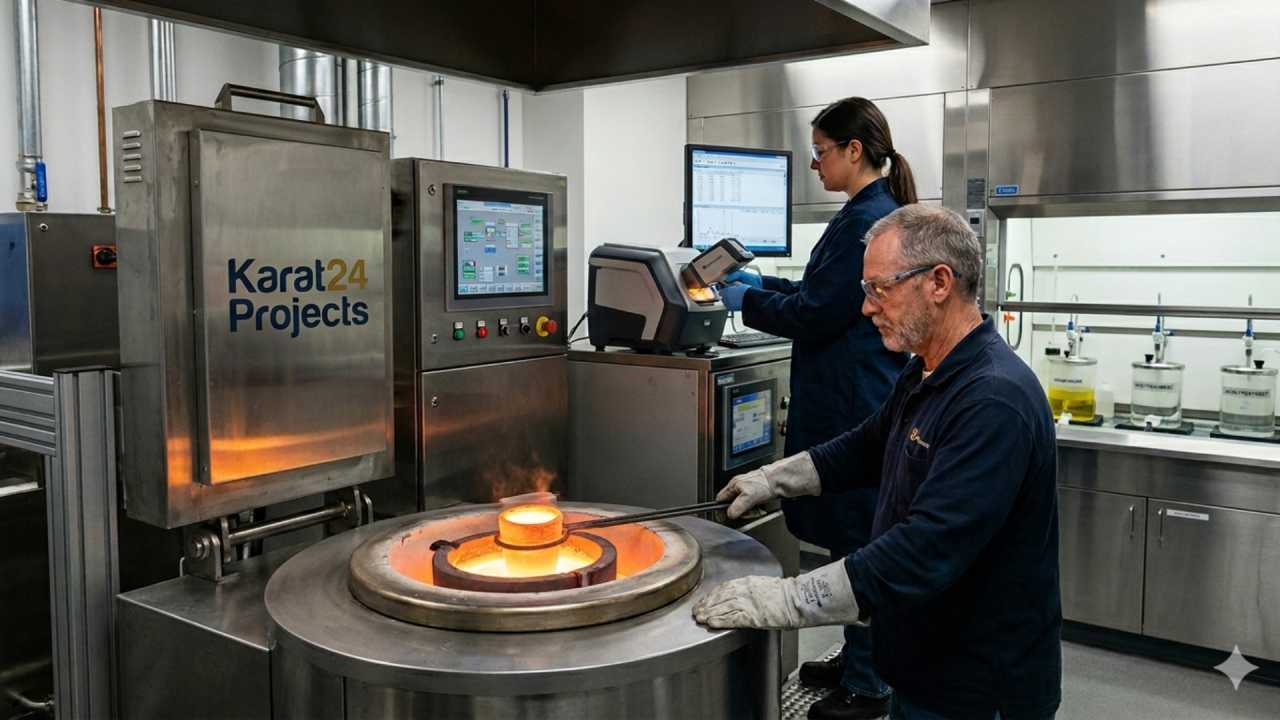
Pyrometallurgical Refining: Utilizes extreme heat in furnaces to separate metals based on their differing affinities for oxygen, slag-forming elements, or specific melting points. It is highly effective for bulk processing but energy-intensive.
-
Hydrometallurgical Refining: Involves the use of aqueous chemistry to dissolve, separate, and precipitate metals. It operates at much lower temperatures than pyrometallurgy and allows for highly selective separation.
-
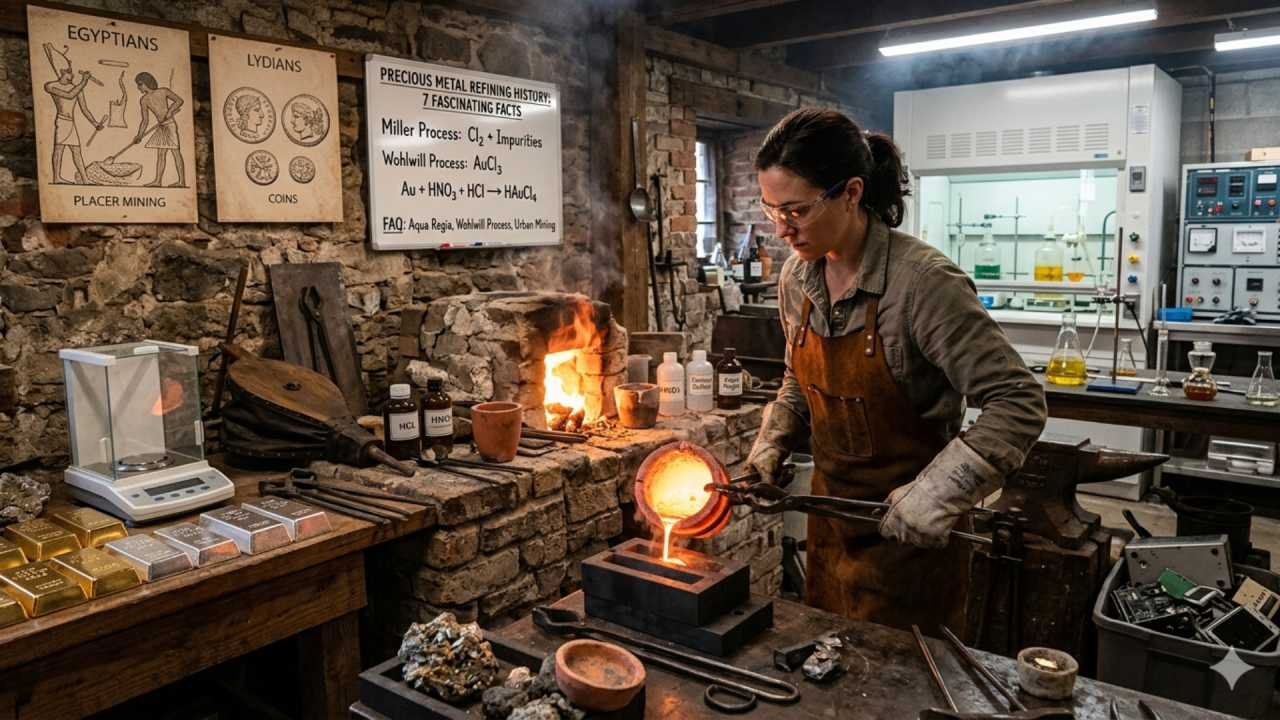
The Aqua Regia Process: A classic hydrometallurgical method using a highly corrosive mixture of nitric acid and hydrochloric acid to dissolve gold and platinum group metals, allowing them to be selectively precipitated out of solution.
-
Electrolytic Refining: Uses electrical currents passed through an electrolyte solution to transfer impure metal from an anode and deposit it as an ultra-pure layer onto a cathode.
-
The Miller Process: A pyrometallurgical technique that blows chlorine gas through molten gold. The impurities form chloride compounds that float to the top as slag, purifying the gold to approximately 99.5%.
-
The Wohlwill Process: An electrochemical process used to elevate gold from the Miller process to ultra-high purities of 99.999% using an electrolyte of gold chloride and hydrochloric acid.
Ultra-High Purity and Industrial Standards
In advanced manufacturing, particularly within the semiconductor and microelectronics industries, standard purity levels are insufficient. Minor trace impurities at the parts-per-billion level can cause catastrophic failures in silicon wafers, microscopic wire bonds, and thin-film coatings. Consequently, modern refining facilities must consistently achieve ultra-high purity grades. Meeting these stringent criteria requires advanced analytical chemistry, cleanroom processing environments, and flawless quality control protocols, establishing a high barrier to entry for modern refining operations.
Why Manufacturing Industries Depend on Precious Metals
The unique physical and chemical characteristics of precious metals make them utterly irreplaceable across a vast spectrum of advanced industrial applications. They possess unmatched electrical conductivity, exceptional thermal resistance, profound catalytic activity, and superior resistance to corrosion and oxidation.
Electronics and Semiconductors
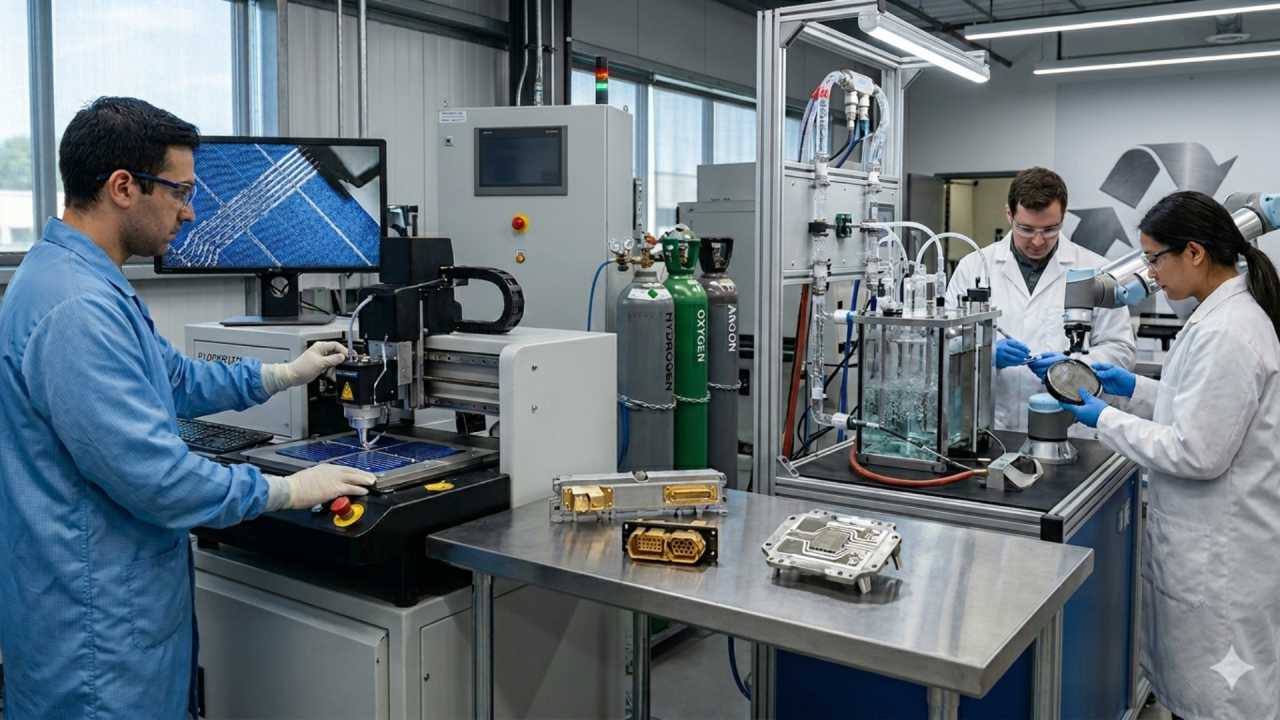
In the electronics sector, gold and silver are prized for their peerless electrical conductivity and resistance to tarnish. Gold is utilized extensively in printed circuit boards, microscopic bonding wires, and high-frequency connectors, ensuring flawless signal transmission in smartphones, supercomputers, and servers. Silver remains the material of choice for conductive pastes, solar cell contacts, and high-capacity switches. Within semiconductor fabrication, target materials made of ultra-pure precious metals are sputtered onto silicon substrates to create the nanoscale pathways that power modern microprocessors and memory chips.
Automotive and Electric Vehicles
The automotive sector has historically been the largest consumer of platinum group metals (PGMs), which include platinum, palladium, and rhodium. These metals serve as the active catalytic agents within internal combustion engine catalytic converters, transforming toxic exhaust gases into safer emissions. As the automotive industry shifts toward electric vehicles (EVs) and alternative powertrains, the demand profile is evolving rather than shrinking. Platinum and palladium are vital components in hydrogen fuel cell technologies and are increasingly integrated into specialized battery chemistries, high-voltage power electronics, and autonomous driving sensor suites.
Aerospace and Defense
Aerospace manufacturing demands materials that can withstand extreme environments. Platinum and rhodium are alloyed with base metals to create structural components for jet engines, rocket nozzles, and missile guidance systems. These precious metal alloys maintain structural integrity, oxidation resistance, and thermal stability at temperatures well above the failure points of standard steel or titanium alloys. Furthermore, gold-coated films are widely deployed on satellites and space vehicles as highly effective shields against solar radiation and thermal energy.
Medical Devices and Life Sciences
The biocompatibility of certain precious metals makes them indispensable to the medical sector. Platinum and its alloys are highly ductile, electrically conductive, and chemically inert, making them the ideal material for pacemaker electrodes, neurological implants, and guide wires used in minimally invasive surgeries. Additionally, gold nanoparticles and silver-based compounds are extensively utilized in advanced diagnostic equipment, targeted drug delivery systems, and antimicrobial medical coatings.
Renewable Energy Infrastructure
The global transition toward a low-carbon economy relies heavily on precious metals. Photovoltaic solar panels use substantial volumes of silver paste to collect and conduct the electricity generated by solar cells. Concurrently, the burgeoning green hydrogen economy relies on iridium and platinum as catalysts within proton exchange membrane (PEM) electrolyzers, which split water into hydrogen and oxygen using renewable electricity. Because industrial demand is now overtaking traditional jewelry demand in some segments, securing a steady supply of these metals is directly tied to the pace of global technological advancement.
Major Challenges Facing the Refining Industry
Despite its critical importance, the precious metal refining industry faces a complex web of environmental, economic, and geopolitical challenges that threaten its traditional operating models.
Environmental Impact and Carbon Footprint
Traditional refining methods, particularly pyrometallurgical operations, require massive amounts of energy to sustain the extreme temperatures needed for melting and smelting. This reliance on fossil-fuel-powered grids contributes heavily to global carbon emissions. Furthermore, hydrometallurgical processes generate millions of gallons of highly acidic, toxic wastewater containing heavy metals, cyanides, and strong acids. Safely treating, managing, and disposing of this chemical waste is an ongoing regulatory and environmental challenge.
Traditional Refining Pitfalls:
High Energy Usage -> High Carbon Footprint
Corrosive Reagents -> Toxic Chemical Waste & Complex Disposal
Resource Scarcity and Geopolitical Vulnerability
The primary extraction of precious metals is plagued by declining ore grades, meaning mining operations must process significantly more rock to retrieve the same volume of metal, escalating both costs and environmental degradation. Compounding this issue is the high concentration of primary deposits in a small handful of nations. For instance, a vast majority of the world’s platinum and rhodium is mined in South Africa, while Russia is a dominant supplier of palladium. This geographic concentration exposes global manufacturers to severe supply chain shocks, political instability, and trade wars.
Escalating Operational and Compliance Costs
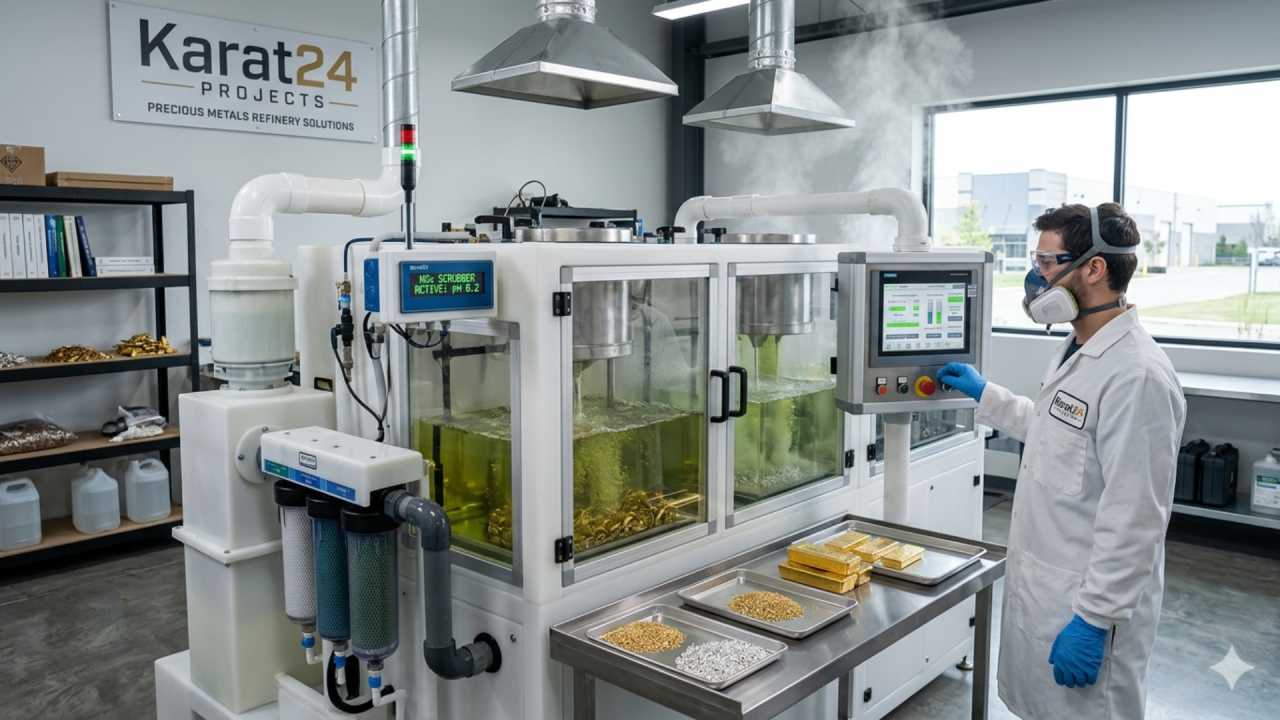
Operating a modern refining facility involves navigating volatile energy prices, rising chemical procurement costs, and complex global logistics. Beyond these operational inputs, the cost of regulatory compliance is rising steeply. Refiners must invest heavily in advanced emissions-control scrubbers, zero-liquid-discharge water treatment facilities, and extensive worker safety protocols to comply with increasingly strict local and international environmental protection laws.
Regulatory Pressures and Responsible Sourcing
Modern manufacturing enterprises are held to rigorous Environmental, Social, and Governance (ESG) standards by investors, consumers, and regulatory bodies. Consequently, manufacturers now demand absolute transparency regarding the origin of their raw materials. Refiners are under intense pressure to prove that their metals are ethically sourced, completely free from connection to conflict zones, human rights abuses, or illegal mining operations, and possess a verifiably low carbon footprint. This paradigm shift requires refiners to completely re-engineer their tracking, auditing, and sourcing frameworks.
The Rise of Sustainable and Green Refining
In response to these multi-faceted challenges, the precious metal refining industry is undergoing an environmental renaissance, pivoting decisively toward a circular economy model. Instead of relying solely on primary mined materials, the future of the industry lies in urban mining, electronic waste recovery, and closed-loop manufacturing partnerships.
Urban Mining and E-Waste Recovery
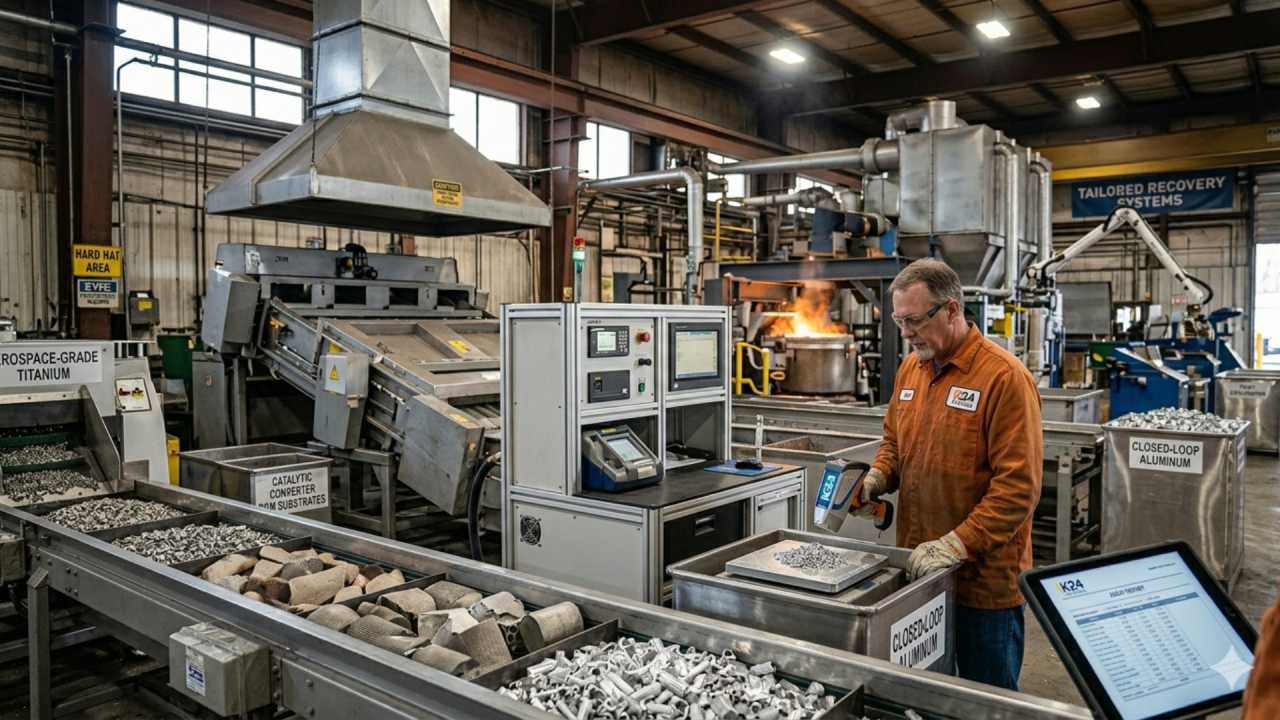
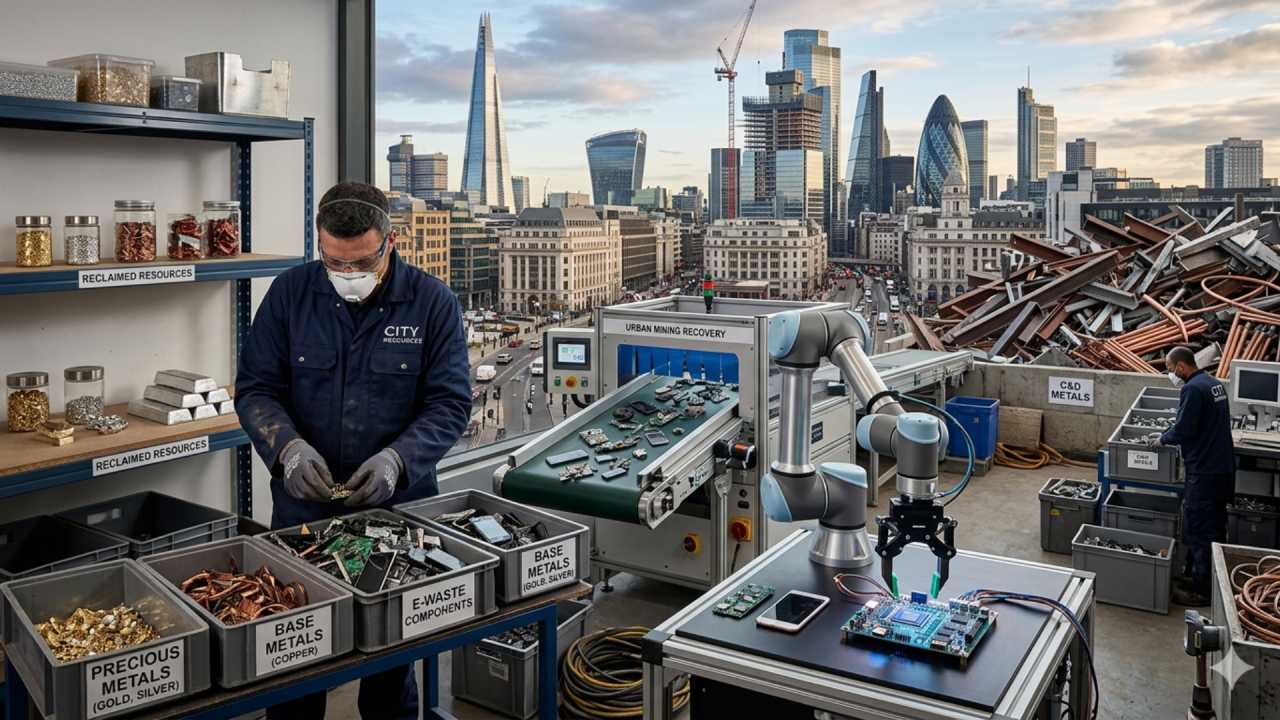
Urban mining is the process of reclaiming precious metals from discarded consumer goods, end-of-life electronics, and industrial scrap. Electronic waste, or e-waste, represents a remarkably rich source of these elements. A single ton of decommissioned circuit boards can contain up to forty times more gold than a ton of primary gold ore, all while requiring a fraction of the energy to extract. Specialized secondary refiners are mastering the art of collecting, shredding, and processing electronic scrap, automotive catalytic converters, and industrial catalysts to reintegrate pure metals back into the production cycle.
Low-Emission Hydrometallurgy and Renewable Energy
To mitigate their carbon footprints, forward-thinking refining facilities are transitioning to renewable energy sources, such as solar, wind, and geothermal energy, to power their operations. Concurrently, pyrometallurgical furnaces are being replaced or supplemented by advanced, low-emission hydrometallurgical processes. These modern chemical pathways operate at lower ambient temperatures, significantly reducing direct greenhouse gas emissions while maintaining high extraction yields.
Advanced Water Recycling and Closed-Loop Systems
Water is a critical medium in hydrometallurgical refining. Next-generation facilities are implementing zero-liquid-discharge (ZLD) systems. These sophisticated wastewater treatment loops utilize advanced filtration, reverse osmosis, and thermal evaporation to continuously purify and reuse process water within the facility. This approach prevents toxic chemical discharge into local ecosystems and dramatically reduces the refinery’s total freshwater consumption.
Bioleaching and Biomining
One of the most exciting frontiers in green refining is bioleaching, which utilizes specialized, non-pathogenic bacteria and microorganisms to naturally dissolve and isolate precious metals from complex scrap materials.
By leveraging biological processes instead of aggressive chemicals like aqua regia or cyanides, bioleaching offers an environmentally benign alternative that runs at low temperatures, produces minimal hazardous waste, and provides a viable path for processing low-grade electronic scrap. Because manufacturers increasingly prefer recycled precious metals due to lower emissions, green refining has evolved from a niche public-relations initiative into a core commercial necessity.
AI, Automation, and Smart Refining Technologies
The integration of Industry 4.0 principles is fundamentally altering how refineries operate, bringing unprecedented levels of precision, safety, and efficiency to a historically conservative sector.
AI-Driven Process Optimization and Digital Twins
Precious metal refining involves complex chemical reactions where even minor fluctuations in temperature, pressure, fluid flow, or chemical concentration can significantly impact final purity and yield. Artificial intelligence and machine learning algorithms are now deployed to continuously analyze data streams from thousands of sensors embedded within refining circuits. These AI systems make real-time micro-adjustments to maximize extraction efficiency and predict precise purity outcomes.
Furthermore, engineers are using digital twins—highly accurate, real-time virtual simulations of entire refining plants—to test operational modifications, train technicians, and run stress-test scenarios without risking actual production disruptions.
Automation, Robotics, and IoT
Refinery environments can be hazardous, characterized by molten metals, toxic chemical fumes, and heavy machinery. Advanced automation and robotics are taking over dangerous tasks, such as furnace skimming, chemical pouring, and material handling. Robotic arms equipped with specialized computer vision systems can sort electronic scrap at blinding speeds, isolating high-value components before they enter the chemical extraction phase.
At the same time, the Internet of Things (IoT) enables comprehensive asset tracking and predictive maintenance. Smart sensors monitor the structural health of furnaces, pipes, and pumps, alerting operators to potential maintenance needs well before a catastrophic equipment failure occurs.
Blockchain for Traceability and Ethical Sourcing
To satisfy the stringent compliance and ESG demands of modern manufacturers, the refining sector is embracing blockchain technology. By recording every transaction, shipment, and refining stage on an immutable, decentralized digital ledger, refiners can create an unalterable digital passport for every batch of metal produced. This cryptographic audit trail tracks the metal from its origin—whether a specific mine or an e-waste aggregation facility—directly to the final industrial end-user, ensuring absolute transparency, verifying conflict-free origins, and proving authentic recycled credentials.
Recycling Will Dominate the Future of Refining
The long-term trajectory of the precious metal refining industry points toward a future where secondary recycling completely dominates the supply landscape. The reliance on primary mining is increasingly viewed as an unsustainable vulnerability due to volatile geopolitics, escalating extraction costs, and heavy carbon liabilities.
| Aspect | Primary Mining & Refining | Secondary Recycling & Refining |
| Energy Consumption | Exceptionally high; intensive digging and crushing | Significantly lower; processes concentrated scrap |
| Environmental Impact | High landscape degradation and tailing waste | Low footprint; diverts waste from landfills |
| Supply Chain Stability | Vulnerable to geopolitical shocks and localized reserves | Highly resilient; distributed globally across urban areas |
| Yield Efficiency | Low yield per ton of raw material processed | High yield per ton of concentrated electronic scrap |
Urban mining reduces dependence on volatile mining supply chains and transforms major metropolitan areas into the new “ore deposits” of the world. Industrial manufacturing scrap, spent chemical catalysts, and decommissioned aerospace hardware represent continuous, highly concentrated streams of feedstock that can be endlessly recycled without any degradation in the inherent physical properties of the precious metals.
A major catalyst for this trend is the rapid rise of electric vehicle battery recycling and fuel cell reclamation infrastructure. As early-generation EVs and hydrogen-powered systems reach the end of their functional lifespans, industrial-scale refining facilities are pivoting to capture these massive scrap volumes. By establishing dedicated, closed-loop recycling agreements directly with original equipment manufacturers (OEMs), future refiners will operate within self-sustaining loops, collecting spent industrial assets, refining them to ultra-high purities, and feeding them directly back into factory production lines.
Regional Trends and Global Competition
The geopolitical landscape of precious metal refining is undergoing a dramatic realignment as major economic blocs realize the strategic importance of critical mineral independence.
Global Refining Landscape:
- Asia-Pacific: Unrivaled scale and industrial infrastructure
- Europe: Pioneering strict ESG rules and closed-loop regulations
- North America: Intense push for reshoring and domestic security
- India: Exploding electronics sector driving domestic e-waste solutions
Asia-Pacific
The Asia-Pacific region, led by China, has long maintained a dominant position in the refining ecosystem. This dominance is built on massive processing capacity, established industrial infrastructure, and proximity to the world’s primary electronics manufacturing hubs. However, this high concentration has spurred other nations to take aggressive defensive measures to secure their own supply chains.
Europe
Europe has positioned itself as the global pioneer in sustainability-focused refining. Driven by strict regional environmental mandates, European refiners are investing heavily in carbon-neutral operations, advanced hydrometallurgical recycling, and circular economy integration. European regulations place immense pressure on manufacturers to verify the low-carbon and ethical status of their materials, making the region a incubator for green refining breakthroughs.
North America
In North America, the primary focus is on reshoring refining capacity to ensure critical mineral independence. Governments are enacting strategic policies, providing tax incentives, and awarding direct grants to build out domestic secondary refining facilities. The objective is to reduce reliance on foreign processing hubs and ensure that domestic defense, aerospace, and semiconductor industries have uninterrupted access to localized sources of ultra-pure precious metals.
India
India represents a dynamic, rapidly expanding actor in the global refining arena. Driven by a massive domestic electronics manufacturing push and a soaring volume of locally generated electronic waste, the country is actively building out modern, formalized refining infrastructure. Backed by forward-looking government initiatives targeting critical minerals, India is rapidly transitioning away from informal, environmentally damaging backyard recycling methods toward state-of-the-art, automated, and ecologically compliant refining facilities.
Future Innovations to Watch
As the industry looks ahead, several disruptive technological innovations are poised to completely redefine the boundaries of precious metal extraction and purification.
-
Nano-Refining Technologies: Utilizing engineered nanomaterials and functionalized membranes to selectively capture specific precious metal ions from complex liquid mixtures at molecular levels, maximizing yields from incredibly low-grade solutions.
-
Hydrogen-Powered Refining Plants: Replacing fossil fuels with green hydrogen in pyrometallurgical furnaces, eliminating direct carbon emissions from high-temperature melting operations.
-
Green Chemistry Alternatives: Developing non-toxic, biodegradable organic solvents and ionic liquids to entirely replace aggressive acids like aqua regia, drastically reducing the environmental liability of chemical refining.
-
Autonomous Refining Facilities: Designing fully modular, containerized, and completely autonomous refining units that can be deployed directly to manufacturing sites or e-waste collection centers, eliminating the costs and risks of transporting unrefined hazardous scrap across borders.
-
Advanced Solvent Extraction: Deploying highly selective, multi-stage liquid-liquid extraction techniques optimized by AI to isolate individual platinum group metals with unmatched speed and minimal chemical consumption.
-
Cross-Mineral Integration: Merging precious metal refining pipelines with rare earth element and critical battery mineral recovery systems, allowing a single smart facility to process all high-value components of a modern electronic device simultaneously.
Final Thoughts
Precious metal refining has officially outgrown its historical roots to become a critical strategic pillar of modern advanced manufacturing. The continuous expansion of next-generation electronics, electric transport, aerospace engineering, and clean energy solutions depends entirely on a reliable, uninterrupted flow of ultra-high purity metals. Confronted by resource scarcity, challenging geopolitics, and urgent environmental imperatives, the industry is successfully executing an ambitious transformation.
The future of this sector belongs to smart, automated, and deeply sustainable circular ecosystems. By integrating artificial intelligence, robotics, and blockchain traceability, refiners are maximizing operational efficiency while meeting the stringent ESG standards demanded by modern industry. Simultaneously, the structural pivot toward urban mining and advanced e-waste recycling is decoupling the supply of precious metals from the ecological and geopolitical vulnerabilities of traditional primary extraction.
Ultimately, the future of precious metal refining will not only determine manufacturing efficiency but also influence the sustainability and resilience of global industrial economies. The enterprises and nations that successfully master these advanced, closed-loop technologies will secure a formidable, sustainable foundation for the next great era of global technological innovation.
Frequently Asked Questions
What is the most environmentally friendly method for precious metal refining?
The most environmentally friendly method currently emerging in the industry is low-emission hydrometallurgical refining, supplemented by bioleaching (biomining). Unlike traditional pyrometallurgical smelting, which relies on fossil-fuel-powered furnaces and generates significant carbon emissions, modern hydromedallurgy operates at lower ambient temperatures. When paired with closed-loop water recycling systems and biodegradable organic solvents, it minimizes toxic chemical runoff. Bioleaching goes a step further by using non-pathogenic bacteria to naturally isolate precious metals, offering a highly sustainable, low-energy alternative to aggressive acids.
How much gold can be recovered from electronic waste recycling?
The yield of gold recovered from electronic waste recycling is remarkably high compared to traditional mining. On average, one ton of discarded computer circuit boards can yield between 100 to 400 grams of gold, along with substantial amounts of silver, palladium, and copper. In contrast, one ton of primary gold ore from a mine typically yields only 1 to 5 grams of gold. This massive discrepancy is why industrial manufacturers are heavily investing in urban mining, as electronic scrap represents a far more concentrated and accessible resource than raw earth.
Why are platinum group metals critical for electric vehicles and green technology?
Platinum group metals (PGMs)—which include platinum, palladium, and rhodium—are essential to green technology due to their unmatched catalytic properties and thermal stability. While famously used to reduce emissions in internal combustion engines, they are critical to the electric vehicle (EV) transition and hydrogen economy. Platinum and palladium serve as the primary catalysts in proton exchange membrane (PEM) fuel cells and hydrogen electrolyzers. They facilitate the chemical reaction that converts hydrogen into electricity (and vice versa) with high efficiency, making them irreplaceable for long-haul hydrogen transport and clean energy infrastructure.
What is the difference between primary and secondary precious metal refining?
The difference lies entirely in the source material used as feedstock:
-
Primary refining involves processing newly mined ores extracted directly from the earth. This stream requires energy-intensive crushing, smelting, and multi-stage chemical purification to isolate trace metals from raw rock.
-
Secondary refining processes existing scrap materials, including end-of-life electronics, spent industrial chemical catalysts, decommissioned aerospace alloys, and manufacturing waste. Secondary refining is the cornerstone of the circular economy, requiring significantly less energy and carrying a fraction of the carbon footprint of primary mining.
How does blockchain technology ensure ethical sourcing in the metal supply chain?
Blockchain technology ensures ethical sourcing by creating an unalterable, decentralized digital ledger that tracks precious metals from their point of origin to the final manufactured product. Every time a batch of metal is mined, recycled, shipped, or refined, it receives a cryptographic “digital passport.” Because the data cannot be falsified or deleted retroactively, industrial manufacturers can verify that their gold, silver, or platinum group metals are completely conflict-free, compliant with global ESG regulations, and authentically sourced from verified recycling or fair-mined facilities.