How Gold Refining Machines Turn Scrap into Profitable Gold Recovery
In the quiet corners of jewelry workshops, the dusty bins of electronics recycling centers, and the clinical drawers of dental offices, a fortune is hiding in plain sight. This fortune isn’t found in gleaming bars or polished coins; it exists as microscopic flakes, tarnished wires, and jagged scraps of “waste.” For centuries, the allure of gold has driven explorers to the ends of the earth, yet today, some of the most accessible gold reserves are not buried deep within the crust of the earth, but scattered throughout our landfills and industrial runoff.
The concept of turning “dust into dollars” is the fundamental premise of the gold refining industry. Every year, tons of gold-bearing scrap are discarded or sold at a steep discount because the owners lack the means to extract the pure value held within. From the fine filings on a jeweler’s bench to the intricate gold-plated connectors in a discarded smartphone, the metal is there, waiting for the right technology to reclaim it.
However, the leap from recognizing value to realizing profit is significant. Investing in a gold refining machine represents a shift from being a mere collector of scrap to becoming a primary producer of high-purity bullion. This transition offers the potential for massive margins, but it is not a venture for the faint of heart. Success in this field is built on a tripod of scale, technical efficiency, and rigorous regulatory compliance. While the machine provides the capability, the business owner must provide the strategy to ensure that the “dust” they process truly yields a golden return. This article explores the mechanics, economics, and realities of investing in gold refining technology to determine if it is the right path for your capital.
What Is Gold Refining?
At its core, gold refining is the metallurgical process of purifying impure gold—often referred to as “doré” or “scrap”—to a high level of purity, typically 99.5% or higher. While smelting simply melts metals together to create an alloy or remove large-scale impurities, refining uses chemical or electrochemical processes to separate gold from other metals like silver, copper, nickel, and zinc.
The raw material for refining comes from several primary streams:
-
Jewelry Waste: This includes “bench sweeps” (the dust collected from a jeweler’s floor), old stock, broken pieces, and polishing residues.
-
Dental Gold: Old bridges, crowns, and inlays often contain high-karat gold alloys mixed with other precious metals like palladium.
-
Electronics (E-Waste): Modern technology relies on gold for its excellent conductivity and corrosion resistance. Motherboards, CPUs, and connectors all contain thin layers of gold that can be harvested.
-
Industrial Residues: Plating solutions, catalysts, and manufacturing byproducts often hold significant quantities of gold in liquid or powder form.
It is vital to distinguish between recycling, smelting, and refining. Recycling is the broad umbrella of collecting waste to be reused. Smelting is a thermal process used to extract a metal from its ore or to melt scrap into a uniform (but still impure) bar. Refining is the final, most sophisticated step. It is the surgical precision of chemistry that takes an 18-karat ring—which is only 75% gold—and strips away the copper and silver until only 24-karat gold remains. This “fine gold” is the universal currency of the global market, and reaching that purity is where the true value is unlocked.
How a Gold Refining Machine Works
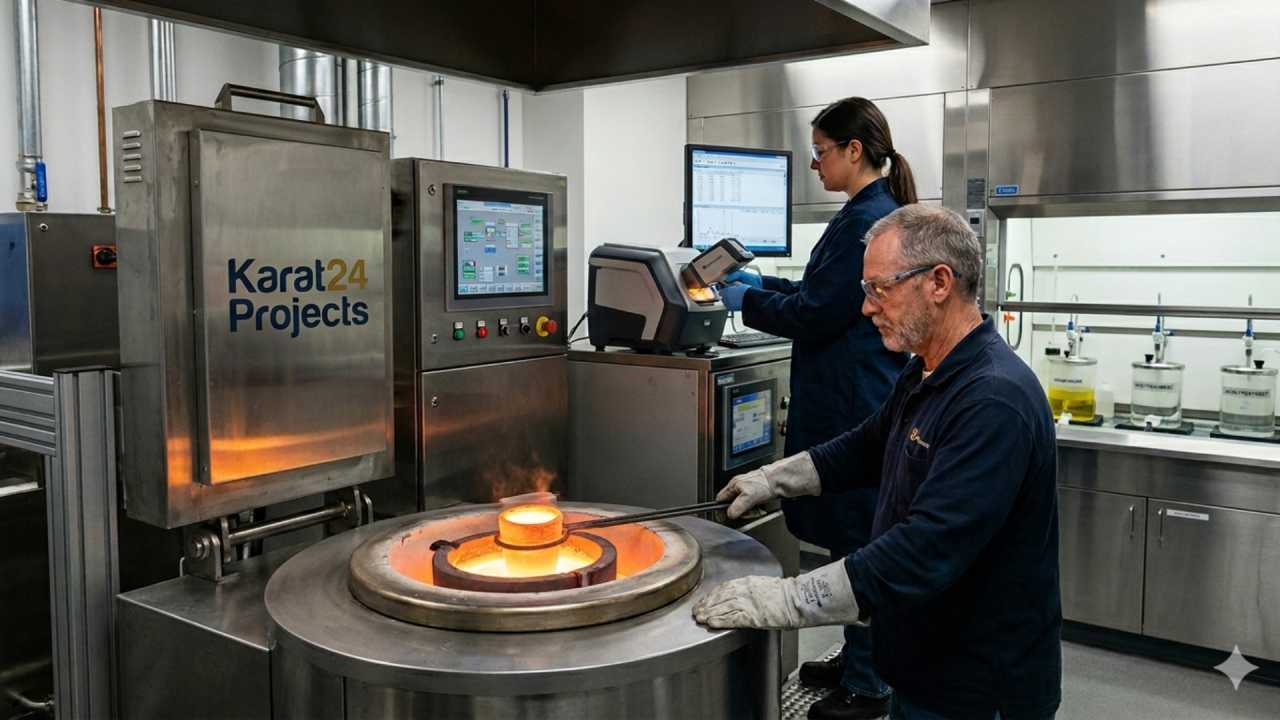
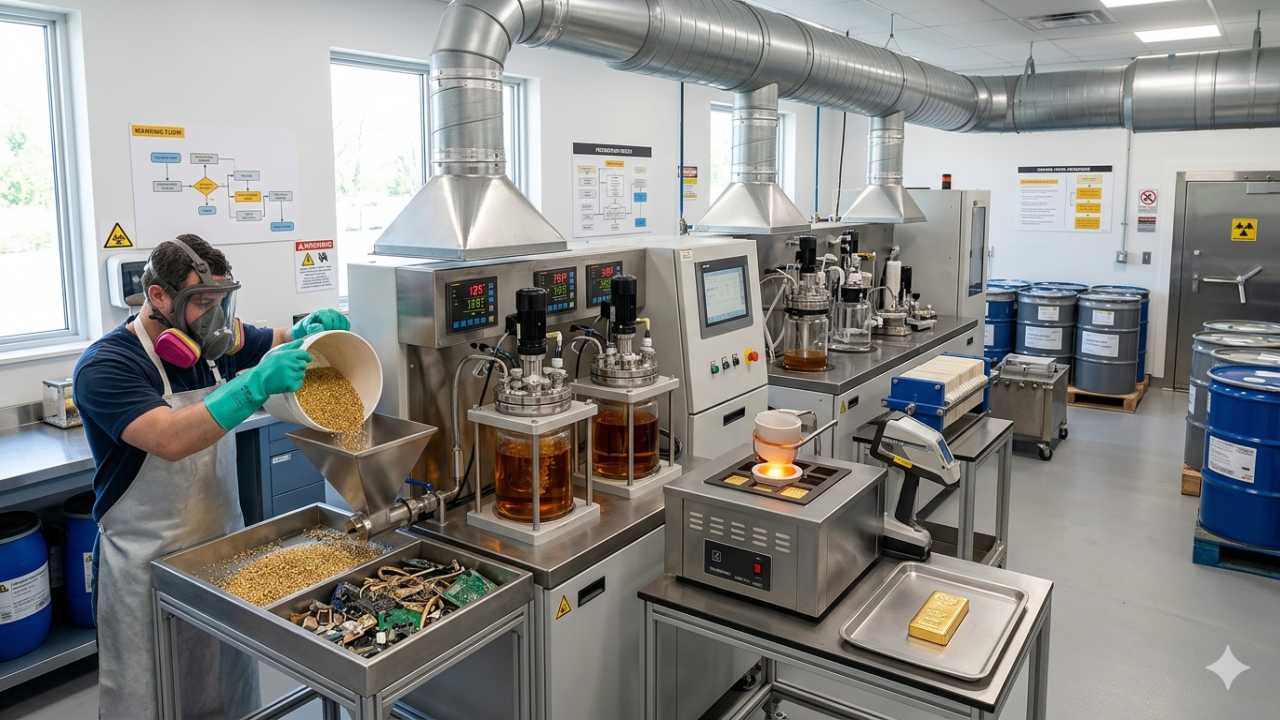
The modern gold refining machine is a sophisticated piece of equipment designed to automate and contain complex chemical reactions. While the methods vary depending on the machine’s design and the nature of the scrap, the general workflow follows a structured sequence:
Collection and Sorting
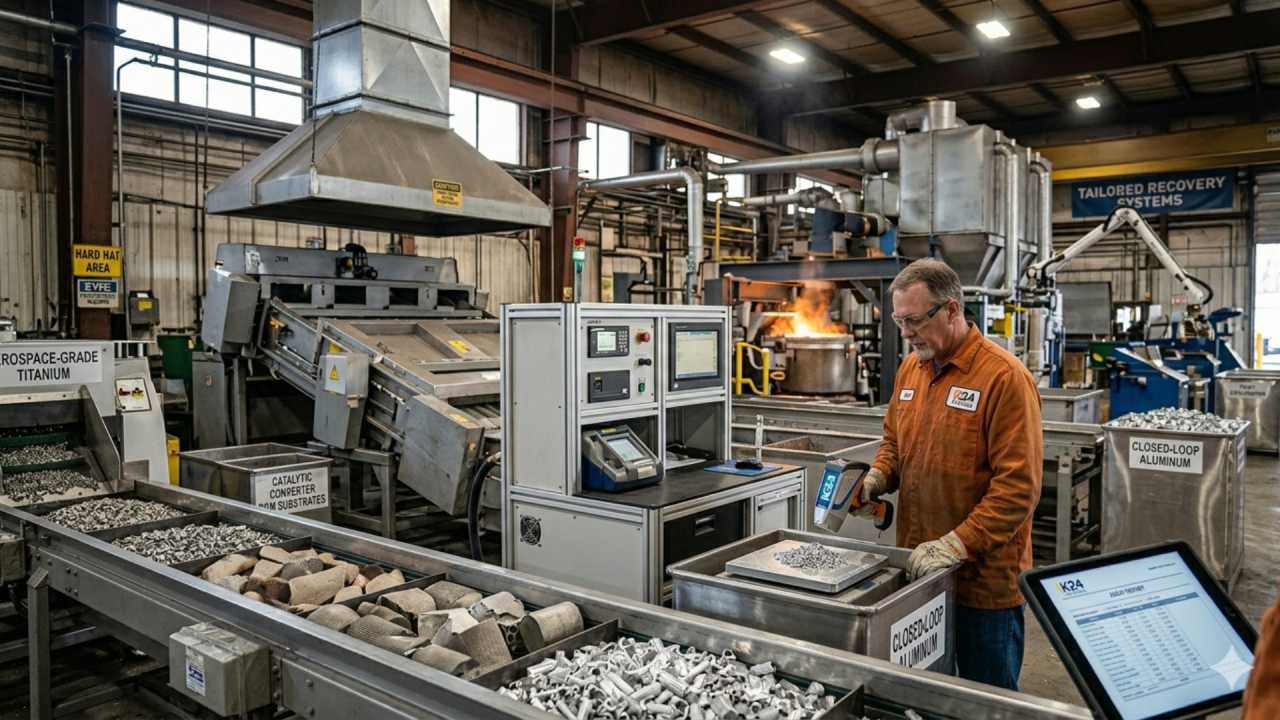
Before a single machine is turned on, the scrap must be categorized. Electronics scrap requires a different approach than jewelry scrap. Sorting ensures that the chemical concentrations are optimized for the specific alloys being processed.
Pre-treatment
In many cases, the scrap cannot go directly into the refiner. It may need to be crushed, shredded (especially in the case of e-waste), or melted into small grains known as “shot.” Creating shot increases the surface area of the metal, allowing chemicals to react more efficiently and quickly.
The Refining Process
Most commercial machines utilize one of two primary methods:
-
The Aqua Regia Method: This is the most common for small to medium-sized machines. Aqua regia is a mixture of nitric acid and hydrochloric acid. The machine circulates this potent mixture to dissolve the gold into a liquid solution (gold chloride). Once dissolved, other metals are filtered out, and a selective precipitant is added to the liquid, causing the gold to “drop out” of the solution as a heavy brown powder.
-
Electrolytic Refining (Wohlwill Process): Often used for larger-scale operations, this involves using an impure gold anode and a pure gold cathode in an electrolyte solution. An electric current transfers the gold from the anode to the cathode, leaving impurities behind.
Purification and Casting
Once the gold is recovered as a powder (sponge), it is washed, dried, and melted in a high-frequency induction furnace. The molten gold is then cast into bars or grains. The result is a product with purity levels ranging from 99.5% (investment grade) to 99.99% (four-nines fine), depending on the machine’s efficiency and the operator’s skill.
Industrial refining systems are often closed-loop, meaning they include scrubbers to neutralize toxic fumes and systems to recover and reuse chemicals, making the process safer and more cost-effective over time.
The Economics: Where the Profit Comes From
The financial logic of owning a refining machine is centered on the “spread”—the difference between the price at which you buy scrap and the price at which you sell refined gold. When you sell scrap gold to a third-party refinery, they charge a fee and often pay you only a percentage (e.g., 90% to 98%) of the contained gold value. By owning the machine, you capture that missing percentage and eliminate the third-party fees.
The Profit Formula
Profitability is driven by the following equation:
Margin = (Market Value of Recovered Gold) – (Cost of Scrap + Operational Expenses)
The key drivers of this margin include:
-
Recovery Rate: If your machine is inefficient and leaves 2% of the gold in the waste solution, that is a direct hit to your bottom line. High-quality machines aim for near 100% recovery.
-
Input Quality: 1 kilogram of 18k jewelry scrap will yield approximately 750 grams of pure gold. Conversely, 1 kilogram of computer circuit boards may only yield a fraction of a gram. Understanding the “yield” of your source material is essential for accurate pricing.
-
Market Volatility: Gold is a commodity. If you buy scrap when gold is at $2,000/oz and finish refining it when the price has dropped to $1,900/oz, your margins may vanish. Successful refiners often use “hedging” or process gold quickly to minimize exposure to price swings.
Scenario Analysis
Consider a mid-sized jeweler who collects 10 kilograms of miscellaneous scrap per month with an average purity of 58.5% (14k).
-
Total Gold Content: 5,850 grams.
-
Third-Party Refining: A refinery might pay 95% of the spot price. At a spot price of $60/gram, the jeweler receives $333,450.
-
In-House Refining: The jeweler recovers 99.8% of the gold (5,838 grams). Selling this at full spot price yields $350,280.
-
Gross Gain: $16,830 per month. After subtracting chemical and labor costs (approx. $2,000), the jeweler nets an extra $14,830 monthly.
At this rate, a machine costing $50,000 would pay for itself in less than four months.
Initial Investment & Operating Costs
While the profit potential is high, the “barrier to entry” is significant. A gold refining machine is not a standalone appliance; it is the heart of a specialized laboratory.
Capital Expenditures (CapEx)
-
The Machine: A small, “tabletop” aqua regia system for a boutique jeweler might cost between $5,000 and $15,000. Industrial-scale systems capable of processing hundreds of kilograms per week can cost $100,000 to $500,000+.
-
Support Infrastructure: You cannot run these machines in a standard garage. You need specialized ventilation (fume scrubbers) to handle acid vapors, acid-resistant flooring, and secure storage for both chemicals and precious metals.
-
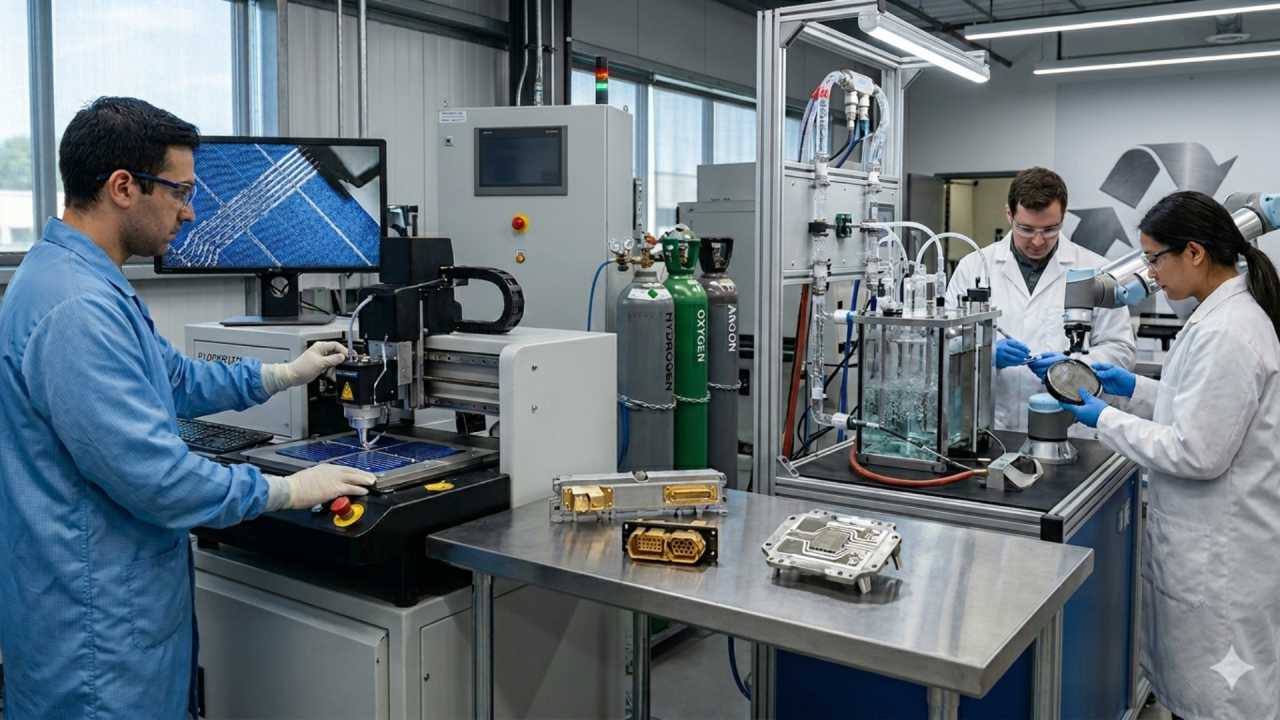
Assay Equipment: To know what you are buying and what you have produced, you need an X-ray Fluorescence (XRF) analyzer. These devices, which provide a chemical breakdown of metal samples, cost between $15,000 and $30,000.
Operating Expenses (OpEx)
-
Chemicals: You will go through significant quantities of hydrochloric acid, nitric acid, urea, and sodium metabisulfite (the precipitant).
-
Energy: Melting gold requires high-temperature furnaces, usually induction-based, which consume considerable electricity.
-
Waste Disposal: The “barren” solution left after the gold is removed is toxic and contains heavy metals. It must be treated and disposed of according to environmental laws, which carries a recurring cost.
It is critical to remember that this is an active business. It requires skilled labor to handle chemicals safely and monitor the reactions. It is not a “set it and forget it” investment.
Profit Potential: Realistic ROI Scenarios
The Return on Investment (ROI) for a gold refining machine depends largely on the volume of material processed.
Small-Scale Operations
For a small jewelry shop or a hobbyist moving into professional trading, the ROI is often driven by “saving” rather than “earning.” By refining their own bench sweeps and trade-ins, they keep the 5%–10% they used to lose to the big refineries. The break-even point for a $10,000 setup usually occurs within the first year of consistent operation.
Medium to Industrial Scale
For dedicated e-waste recyclers or metal traders, the machine is a high-volume engine. These operations rely on thin margins but massive throughput. The risk here is the “supply chain.” If the machine sits idle because you cannot source enough scrap electronics or scrap jewelry, the overhead (rent, labor, permits) will quickly erode your capital.
Factors That Kill ROI
-
Inconsistent Sourcing: Paying too much for scrap because of poor assaying.
-
Inefficient Recovery: Losing gold in the “sludge” due to improper chemical balancing.
-
Regulatory Fines: Failing to manage acid fumes or liquid waste can result in massive fines that can shut down an operation overnight.
The most successful investors are those who already have a “locked-in” source of scrap before they buy the machine.
Risks and Challenges
Investing in gold refining is a high-stakes endeavor involving chemistry, finance, and security.
Chemical and Physical Hazards
The acids used in refining are extremely corrosive and can cause permanent injury or death if mishandled. Furthermore, the fumes produced—particularly nitrogen dioxide—are highly toxic. A failure in the ventilation system is a life-threatening event.
Environmental and Legal Risks
The refining industry is heavily scrutinized. In many jurisdictions, you are legally responsible for the “cradle-to-grave” life of the chemicals you use. If your waste treatment fails and heavy metals enter the local water supply, the legal consequences are severe.
Market and Supply Risks
The price of gold is influenced by global geopolitics, interest rates, and currency fluctuations. A sudden drop in the price of gold while you are holding a large inventory of unrefined scrap can lead to a “margin squeeze.” Additionally, as more people enter the recycling space, the competition for scrap gold increases, driving up the “input cost” and narrowing your profit margins.
Security
Where there is gold, there is risk. A refining facility is a target for theft. Investing in high-grade vaults, 24-hour surveillance, and rigorous employee background checks is an absolute necessity, adding to the total cost of the operation.
Legal and Environmental Considerations
Before purchasing a machine, an investor must navigate a labyrinth of regulations. These typically fall into three categories:
-
Environmental Permits: Most cities require specific permits for the discharge of industrial wastewater and the emission of fumes. You will likely need to prove that your “scrubber” system meets local air quality standards.
-
Trade Licensing: In many countries, dealing in precious metals requires a specific “Precious Metals Dealer” license. This often involves “Anti-Money Laundering” (AML) and “Know Your Customer” (KYC) protocols to ensure you aren’t unknowingly processing stolen gold or being used for money laundering.
-
Waste Disposal: The “spent” acids cannot be poured down the drain. You must contract with certified hazardous waste disposal companies to haul away the neutralized sludge.
Operating “under the radar” is not a viable strategy. The chemical signatures of gold refining are easy for environmental agencies to detect, and the penalties for unlicensed refining are often criminal, not just civil.
Who Should Invest in a Gold Refining Machine?
An investment in a gold refining machine is most logical for entities that already sit at a point of “aggregation” in the gold supply chain.
-
Jewelry Manufacturers: Those who produce large volumes of jewelry can recover their own scrap and “up-cycle” it immediately into new products, saving on both refining fees and the cost of buying new bullion.
-
E-Waste Recyclers: Companies that process thousands of tons of computers and phones can significantly increase their profitability by extracting the gold themselves rather than selling the “boards” to overseas smelters.
-
Pawn Shops and Metal Traders: Businesses that buy significant amounts of “street gold” from the public can use a small refining unit to convert that varied jewelry into standardized, sellable bars.
Who should avoid it? Casual investors looking for passive income or hobbyists without a background in chemistry or industrial management. The complexity of the process and the narrow margins for error mean that without a professional approach, it is very easy to lose money.
Future of Gold Recycling and Refining
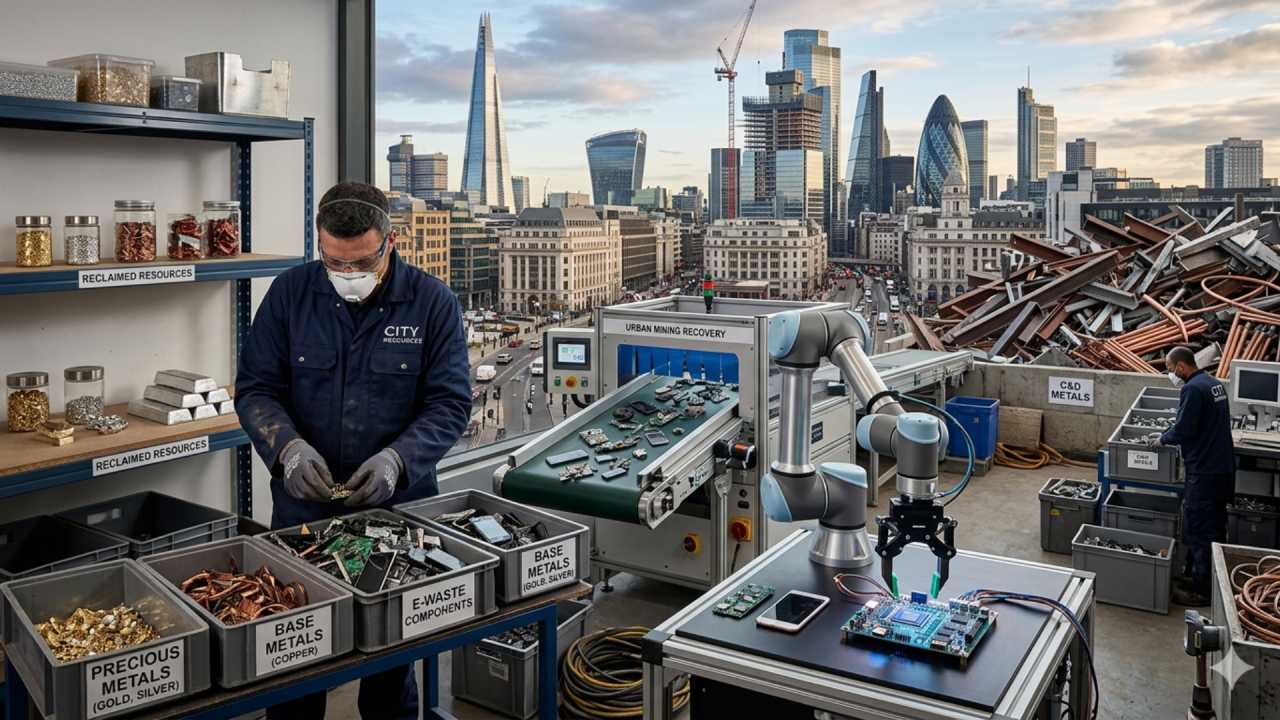
The “Urban Mine” is becoming more valuable than the traditional mine. As the grades of gold ore in the earth continue to decline—often requiring the processing of a ton of rock to get just one gram of gold—the concentration of gold in our waste becomes more attractive. A ton of old mobile phones contains significantly more gold than a ton of gold ore.
We are seeing a global shift toward a circular economy. Consumers and governments are increasingly demanding that metals be reused rather than mined anew. This trend is driving the development of “greener” refining technologies, such as bio-leaching (using bacteria to extract gold) and non-toxic chemical alternatives to cyanide and strong acids.
Automation is also playing a larger role. Modern machines are becoming “smarter,” using sensors to monitor chemical concentrations in real-time, which reduces the need for constant human intervention and increases the safety and efficiency of the process.
Final Thoughts: Turning Waste into Value
Investing in a gold refining machine is the ultimate “value-add” play in the precious metals industry. It allows an investor to step behind the curtain of the global gold market and capture profits that are usually reserved for massive industrial conglomerates. The transformation of dull, dusty scrap into shimmering 24-karat gold is not just a fascinating chemical process; it is a powerful economic engine.
However, the “Dollars” only follow the “Dust” if the investor is prepared for the realities of the trade. It requires a disciplined approach to sourcing, a deep commitment to safety and environmental stewardship, and a clear-eyed understanding of the costs involved.
A gold refining machine is a tool, not a miracle. For the right person—one with a steady supply of material and the technical resolve to run a tight operation—it can turn a waste stream into a permanent source of wealth. In a world where resources are finite, the ability to reclaim and purify what has been discarded is more than just a good business move; it is a vital part of the future economy. Success in this field doesn’t go to the person who finds the most gold, but to the person who can refine it most efficiently.