Investing in Precious Metals: Why Refining Offers Greater Control & Flexibility
In an era defined by economic shifts, currency fluctuations, and the constant specter of inflation, the allure of precious metals remains undiminished. For centuries, gold, silver, and platinum have served as the ultimate hedge—a store of value that does not rely on the promises of a government or the stability of a banking system. However, as the global financial landscape becomes increasingly complex, the traditional methods of “buying and holding” are being scrutinized by sophisticated investors.
While owning physical bullion or investing in gold-backed securities provides exposure to price movements, these methods often leave the investor at the mercy of market intermediaries, retail markups, and rigid liquidation structures. This is where the strategic advantage of precious metal refining comes into play. Refining is more than just a chemical process; it is a powerful tool for financial optimization. By understanding and utilizing the refining process, investors can unlock a level of control and flexibility that traditional investment channels simply cannot match.
Overview of Precious Metal Investment Options
Before delving into the mechanics of refining, it is essential to understand the baseline—how most people currently interact with precious metals. The market is broadly divided into physical assets, paper assets, and equity-based exposure.
Physical Bullion: Coins and Bars
The most direct form of investment is the purchase of physical bullion. Investors buy minted coins or cast bars from dealers, storing them in private safes or bank lockers. While this offers the security of physical possession, it comes with high “premiums over spot.” When you buy a one-ounce gold coin, you aren’t just paying for the gold; you are paying for the minting, the distribution, and the dealer’s profit margin.
ETFs and Paper Gold
Exchange-Traded Funds (ETFs) allow investors to track the price of gold or silver without the hassle of storage. While convenient and highly liquid, paper gold lacks the primary benefit of precious metals: tangibility. In a systemic financial crisis, an ETF is a contract, not a physical asset you can hold in your hand. Furthermore, management fees eat into long-term returns.
Mining Stocks
Investing in companies that extract metal offers a way to gain leveraged exposure to prices. However, mining stocks carry operational risks—strikes, environmental regulations, and poor corporate management can cause a mining stock to plummet even when the price of gold is rising.
Jewelry as Investment
In many cultures, particularly in India, jewelry is the primary vehicle for gold ownership. It serves a dual purpose: adornment and a “rainy day” fund. However, jewelry is the least efficient way to invest. Between “making charges” (labor costs) and the impurities found in lower-karat alloys, the spread between the purchase price and the resale value is often massive.
The common thread among these options is passivity. Most investors are price-takers. They buy at the retail price and sell at the wholesale price, losing a significant percentage of their wealth to the middleman at every turn.
What Is Precious Metal Refining?
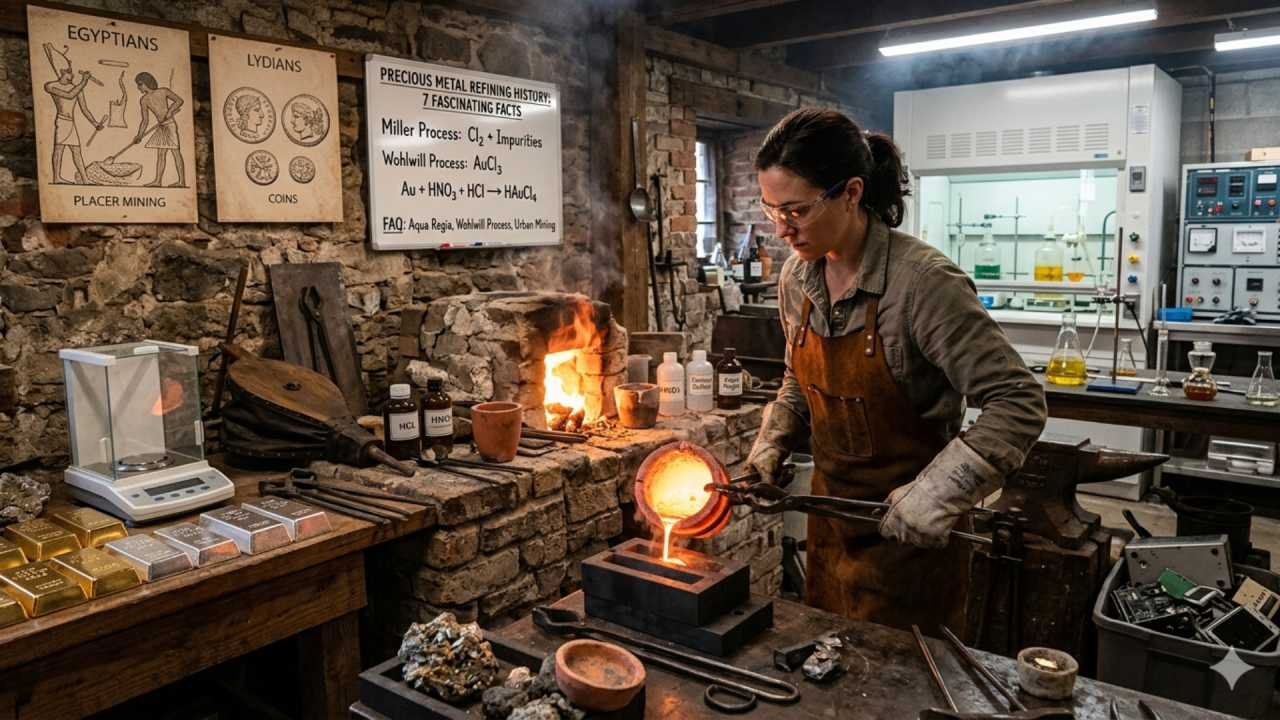
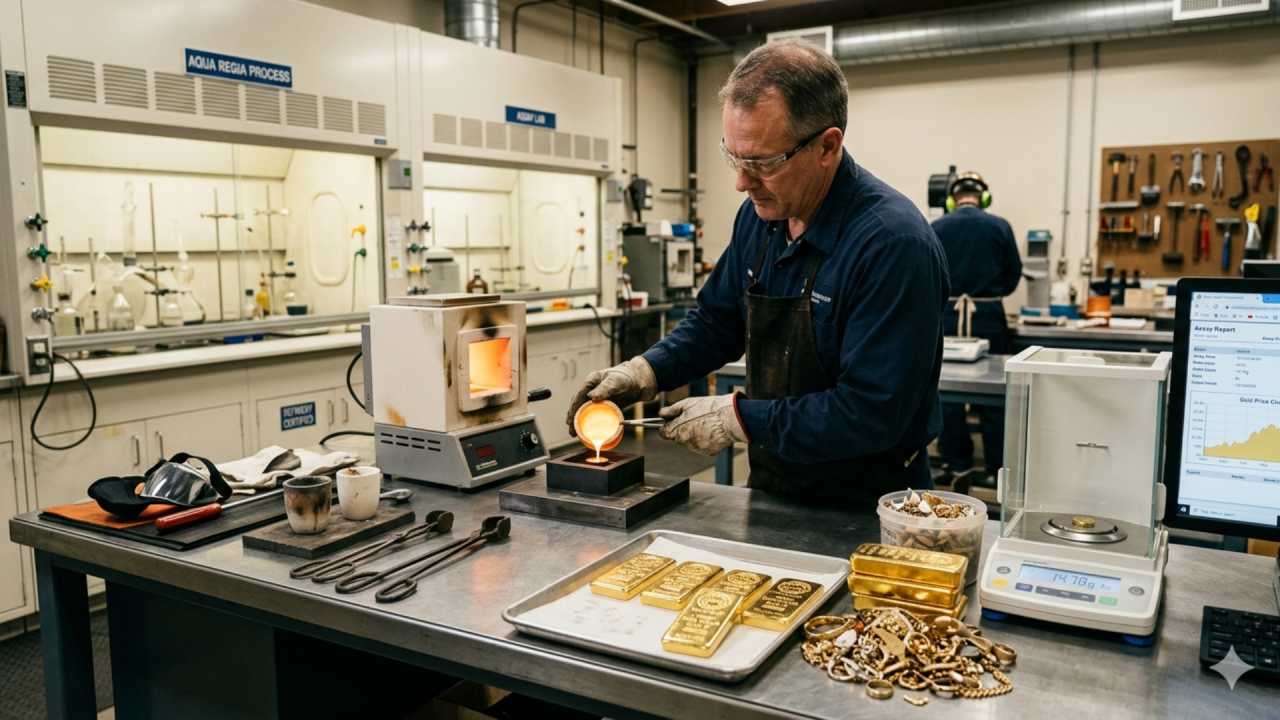
Precious metal refining is the process of purifying “impure” metal sources to create high-purity bullion. It is the bridge between scrap or raw material and investment-grade assets. While often viewed as an industrial back-end process, it is accessible to traders, jewelers, and large-scale private investors.
The process typically follows a specific lifecycle:
-
Collection: Gathering materials such as old jewelry, industrial scrap, dental gold, or damaged coins.
-
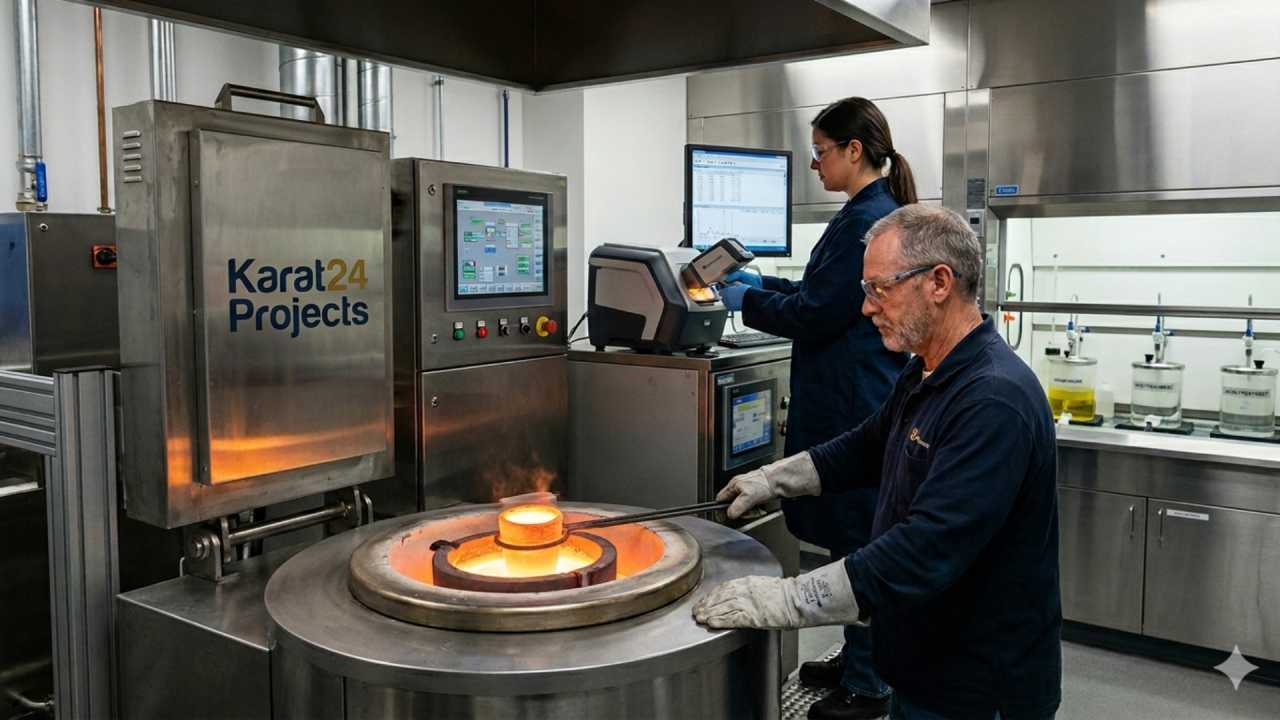
Melting: The material is heated in a furnace to create a homogenous molten mass.
-
Assaying: A small sample is taken to determine the exact percentage of precious metal content (e.g., 75% gold, 10% silver, 15% copper).
-
Purification: Using chemical (aqua regia) or electrochemical (Wohlwill process) methods, the base metals and impurities are stripped away.
-
Conversion: The resulting pure metal is cast into bars, granules, or “grain” of a certified purity level—usually 99.9% (999 fineness) or 99.99% (9999 fineness).
By engaging in this process, an investor stops being a consumer of finished goods and starts being a producer of raw value.
Why Refining Offers Greater Control
The core argument for refining as an investment strategy is the shift from a passive stance to an active one. When you own “raw” or “unrefined” assets, you hold the keys to their transformation.
Control Over Purity and Quality
When you buy a gold bar from a secondary market dealer, you are trusting the hallmark and the previous owner’s storage conditions. When you refine your own scrap or “low-grade” bullion, you oversee the assay process. You receive a certification that proves the purity of the metal from the moment it leaves the refinery. This eliminates the “trust gap” that often plagues private metal transactions.
Timing the Market for Maximum Gain
Traditional bullion holders often feel pressured to sell their entire holdings when they need liquidity. Refining allows for a more nuanced approach. An investor can hold a large quantity of scrap or “dore” bars (semi-pure bars) and choose the exact moment to refine and sell. Since refined 9999 bullion is the most liquid form of the asset, having the ability to convert scrap into investment-grade metal on demand allows you to capture price peaks with surgical precision.
Independence from Retail Markups
Every time you buy a minted coin, you are paying a “branding tax.” Refineries charge a fee for their service, but these fees are often a fraction of the premiums charged by retail mints. By sourcing scrap—such as broken jewelry or industrial components—and refining it into bars, the cost per ounce of the final 24K gold is significantly lower than buying that same ounce from a high-end dealer.
Transparency in Valuation
The refining process is based on hard science. The assay tells you exactly how many grams of pure gold are in your lot. There is no subjective “valuation” based on the “artistry” of a piece of jewelry or the “collectibility” of a coin. It is a transparent, weight-based calculation that ensures you receive the full market value of your metal.
Flexibility Advantages of Refining
Flexibility is the ability to adapt to changing financial needs. Standard bullion bars are rigid; a one-kilogram bar is difficult to use if you only need to liquidate $5,000 worth of value.
Converting Idle Assets
Many families and businesses sit on “dead capital”—broken jewelry, outdated electronics, or old coins that aren’t quite “collectible” but are valuable. Refining allows these idle assets to be converted into a standardized, liquid form. It turns a box of tangled necklaces into a stack of 100g investment bars.
Partial Liquidation
Refining allows for customized output. If you bring 500 grams of gold to a refinery, you don’t have to receive one 500g bar back. You can request five 100g bars or even gold “grain.” This granular control allows for partial liquidation in the future, selling only what is necessary while keeping the rest in a highly tradable format.
Custom Output for Manufacturers
For those involved in the jewelry trade or industrial manufacturing, refining is a circular tool. You can refine your waste or scrap and have the refinery return the metal in the specific form you need for your next production cycle—be it wire, sheets, or casting grain. This reduces the need to constantly buy and sell on the open market, saving on transaction costs.
Cost Efficiency and Margin Optimization
In the world of investing, what you save is just as important as what you earn. Refining is inherently more cost-efficient than retail purchasing for those dealing in volume.
Buying Bullion vs. Refining Scrap
The “spread” is the difference between the price at which you can buy gold and the price at which you can sell it. For retail bullion, this spread can be anywhere from 3% to 10% depending on the size of the unit. For jewelry, it can be as high as 25% due to making charges. Refining fees, by contrast, are typically based on a flat rate or a very small percentage of the total value. By purchasing scrap metal at “melt value” and refining it, an investor can often acquire pure gold at a price much closer to the global spot price than any retail store could offer.
Eliminating Hidden Costs
When you buy gold in many jurisdictions, you are subject to various taxes and “making charges.” In India, for example, the Goods and Services Tax (GST) applies to the full value of a jewelry purchase. When you refine gold you already own, you are paying for a service, not a new product, which can lead to significant tax efficiencies depending on local regulations. You are optimizing your existing holdings rather than entering a new, taxed transaction.
Refining vs. Traditional Investment Channels
To truly appreciate the value of refining, one must look at it side-by-side with common alternatives.
| Feature | Physical Bullion | Gold ETFs | Refining (Active) |
| Physical Possession | Yes | No | Yes |
| Premiums over Spot | Moderate to High | Low (but has fees) | Very Low |
| Purity Control | Fixed | N/A | Total Control |
| Liquidity | High | Very High | High (post-refining) |
| Form Flexibility | Limited | None | High (Custom bars/grain) |
| Source of Profit | Price appreciation | Price appreciation | Price + Margin optimization |
Refining transforms the investor from a spectator into a participant. While an ETF investor waits for the “line on the chart” to go up, a refining-focused investor looks for “value-add” opportunities—such as buying undervalued scrap, purifying it, and selling it at the premium price commanded by 24K bullion.
Who Should Consider Refining?
Refining is not for the casual investor looking to buy a single gram of gold. It is a strategy for those who view precious metals as a core component of their wealth or business operations.
-
Jewelers and Traders: For those in the trade, refining is a necessity. It allows them to recycle “old gold” from customers back into workable material without losing money to third-party wholesalers.
-
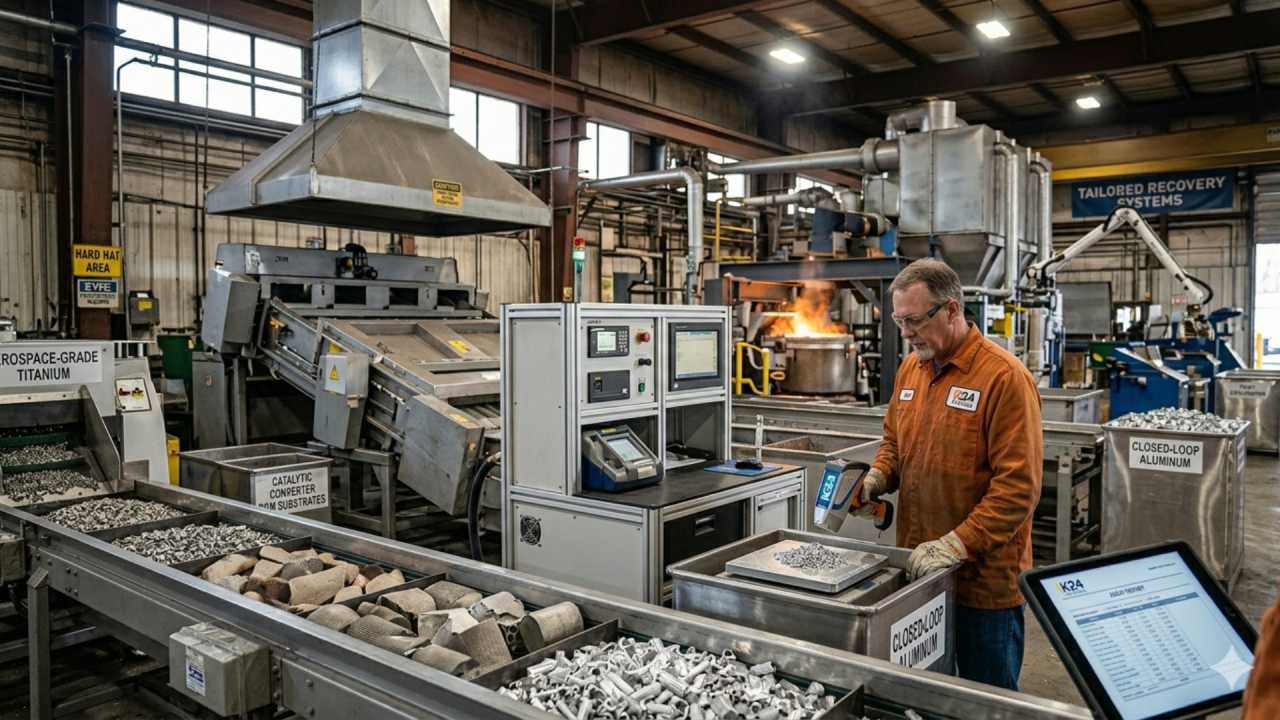
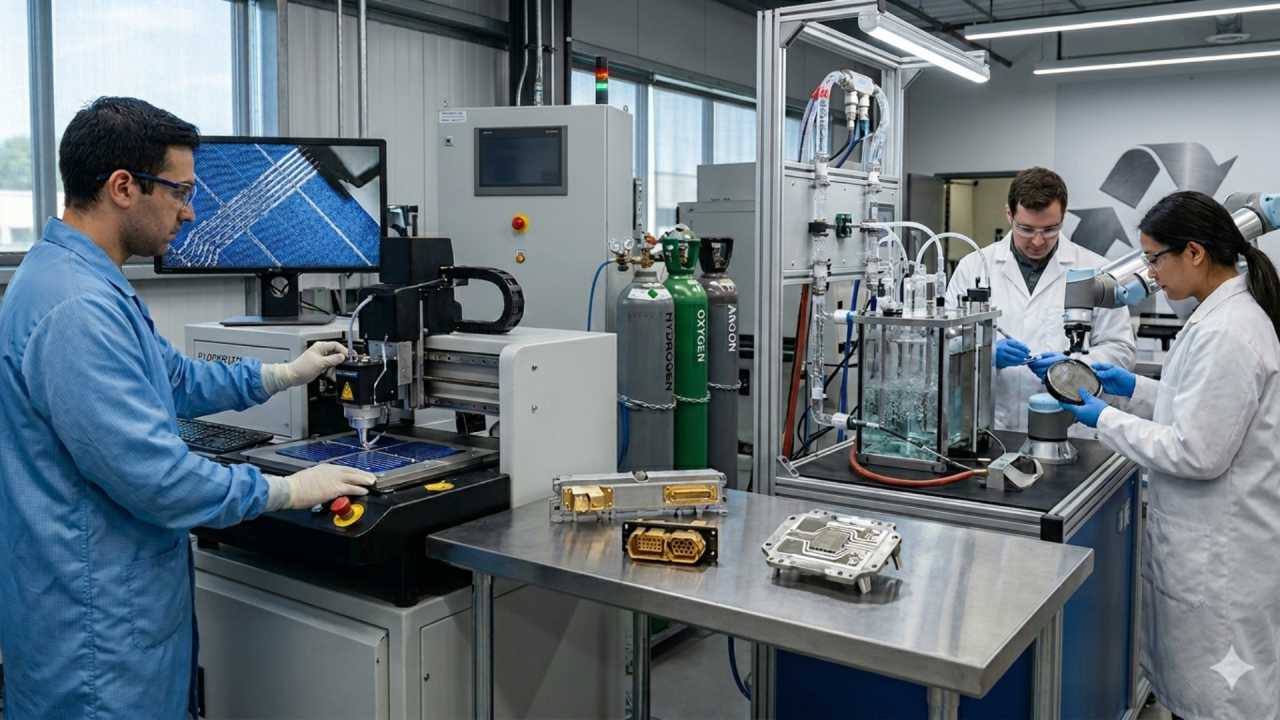
Industrial Users: Companies in the electronics, medical, and aerospace sectors often produce waste that contains trace amounts of gold, silver, or palladium. Professional refining recovers this value, often turning a waste-disposal cost into a revenue stream.
-
High-Net-Worth Individuals (HNWIs): For those with significant gold holdings, refining offers a way to consolidate disparate assets (inherited jewelry, various coins) into a streamlined, audited, and easily transportable bullion portfolio.
-
Family Estates: Families holding large amounts of traditional jewelry often find that refining a portion of it into standardized bars makes it much easier to divide assets among heirs fairly and transparently.
Risks and Challenges of Refining
No investment strategy is without risk. To use refining effectively, one must be aware of the pitfalls.
The Need for Trusted Partners
The biggest risk in refining is “theft by chemistry.” If a refinery is not reputable, they may under-report the assay results, claiming your gold is 70% pure when it is actually 75%. Finding a refinery with a long-standing reputation and third-party certifications is non-negotiable.
Assay Accuracy
Small discrepancies in testing can lead to large financial losses. Investors should look for refineries that use X-ray Fluorescence (XRF) and fire assay methods to ensure the highest degree of precision.
Regulatory Compliance
Precious metals are highly regulated to prevent money laundering. Investors must ensure that their refining partner follows “Know Your Customer” (KYC) and “Anti-Money Laundering” (AML) protocols. This includes documenting the source of the metal to ensure it is “conflict-free.”
How to Choose a Reliable Refining Partner
If you decide to pursue refining as a strategy, your choice of partner will determine your success. A reliable refinery should offer:
-
Certifications: Look for refineries accredited by major bodies such as the London Bullion Market Association (LBMA) or national standards like the Bureau of Indian Standards (BIS).
-
Transparency: A good refinery will allow you to witness the melting process or provide a detailed, line-item assay report.
-
Clear Pricing: Avoid refineries that have “hidden” losses or complicated fee structures. You should know exactly what the melting fee, the assay fee, and the refining charge per gram will be before the process begins.
-
Security and Insurance: The facility must be high-security, and your metal should be insured from the moment it is received until it is returned or sold.
Regulatory and Tax Considerations
In many regions, especially India, the movement and processing of gold are subject to strict oversight.
GST and Indirect Taxes
In India, the GST on gold jewelry is 3%, while the GST on refining services is calculated differently. Investors should consult with a tax professional to understand how refining scrap into bullion affects their tax liability. Often, refining is treated as “job work,” which may have different implications than a straight purchase.
Capital Gains
Converting scrap jewelry into bullion bars may be considered a “transfer” of assets in some tax jurisdictions, potentially triggering capital gains tax even if the metal is not sold for cash. Keeping meticulous records of the “cost of acquisition” of the original scrap is vital for minimizing tax burdens later.
Traceability
With the rise of “Green Gold” and ethical sourcing standards, having a paper trail that shows your metal was refined from legitimate recycled sources can actually increase its resale value to institutional buyers who are concerned with ESG (Environmental, Social, and Governance) criteria.
Technology and Innovation in Refining
The refining industry is undergoing a digital and chemical revolution. Gone are the days of “backyard” smelting with dangerous chemicals and imprecise results.
Advanced Chemical Processes
Modern refineries use closed-loop chemical systems that maximize the recovery of “minor” metals like silver and copper, which were often lost in older processes. This ensures that every bit of value is extracted from the input material.
Digital Tracking and Blockchain
Some forward-thinking refineries are now using blockchain technology to create a “digital twin” for every bar they produce. This allows an investor to track the provenance of their gold from the refinery to the vault, providing an immutable record of purity and origin. This technology makes the refined bars much more liquid in the global market.
Eco-Friendly Refining
Traditional refining can be hard on the environment. However, the industry is shifting toward “thiosulfate leaching” and other non-toxic methods. For the modern investor, choosing an eco-friendly refinery isn’t just about ethics; it’s about future-proofing the asset against tightening environmental regulations.
Sustainability and the Circular Economy Angle
The environmental impact of mining is immense. To produce a single ounce of gold, tons of earth must be moved and processed. Refining plays a critical role in the “circular economy” of precious metals.
By refining existing scrap, investors are essentially participating in a massive recycling program. This reduces the global demand for newly mined ore, lowering the carbon footprint associated with their investment. As the world moves toward more sustainable financial systems, “recycled gold” is beginning to command a premium in certain markets. Investors who focus on refining are positioning themselves on the right side of this global shift toward sustainability.
Case Examples of Refining Success
Scenario 1: The Family Estate
A family inherits a large collection of heavy, ornate jewelry that is no longer in style. If they sell it to a jeweler, they are offered 20% below the spot price because the jeweler “doesn’t want the stones” and cites the “low purity” of the alloy. Instead, the family takes the collection to a professional refinery. They pay a small fee to have the stones removed and the gold purified. They receive back 9999 investment bars, which they can then store easily or sell at the full market price, netting 15% more than the jeweler’s offer.
Scenario 2: The Small-Scale Trader
An entrepreneur notices that local pawn shops and estate sales often sell “scrap” silver and gold at deep discounts. He buys these pieces over six months. Once he has accumulated several kilograms, he sends the lot to a refinery. By consolidating and purifying this “undervalued” metal, he creates high-purity bullion. The difference between his purchase price (plus refining fees) and the final bullion value represents a significant profit margin that “buy-and-hold” investors never see.
Future Outlook: Why Refining Will Gain Importance
As we look toward the future of wealth management, several trends suggest that refining will become a mainstream strategy for serious investors.
-
Rising Demand vs. Peak Gold: As high-grade gold deposits become harder to find, the world will rely more heavily on recycling. Those who control the refining pipeline will be the ones who control the supply.
-
Asset Efficiency: In a high-inflation environment, holding “dead” assets is a liability. Investors will increasingly seek to maximize the “yield” of their holdings by ensuring their metal is in its most liquid, highest-purity form.
-
Digital Bullion Ecosystems: We are seeing the rise of platforms that allow you to “tokenized” physical gold. These platforms require the gold to be of a specific, certified purity (usually 9999). Refining is the “on-ramp” for turning physical scrap into digital, tradable wealth.
Final Thoughts: Control, Flexibility, and Strategic Advantage
Investing in precious metals is a time-tested way to preserve wealth, but the way you invest determines how much of that wealth you actually keep. Passive ownership—whether through jewelry, retail coins, or paper ETFs—leaves you vulnerable to high fees, wide spreads, and a lack of control.
Precious metal refining flips the script. It empowers the investor to:
-
Eliminate the middleman by sourcing raw materials and creating their own bullion.
-
Optimize margins by paying for a service rather than a brand.
-
Ensure absolute purity through direct oversight of the assay process.
-
Adapt to any financial situation through custom output and partial liquidation.
In the final analysis, refining is more than a technical process; it is a strategic philosophy. It transforms precious metal from a static “thing” you own into a dynamic “tool” you manage. For the investor who values independence and precision, refining offers a level of control and flexibility that is, quite literally, unmatched in the world of hard assets.
Frequently Asked Questions (FAQ)
To help you navigate the complexities of precious metal refining and maximize your investment potential, here are answers to the most common queries.
Is it cheaper to refine your own gold than to buy bullion?
In most cases, refining scrap gold is significantly more cost-effective than purchasing minted bullion. When you buy retail gold bars or coins, you pay for the “premium over spot,” which includes minting, distribution, and dealer commissions. By sourcing scrap metal (like old jewelry or dental gold) and paying a flat refining fee, your total cost per gram of pure metal is often much closer to the global spot price.
How do I turn old jewelry into investment-grade gold bars?
The process is straightforward when working with a certified refinery. You submit your jewelry, which is then melted into a homogeneous “dore” bar and assayed to determine exact purity. The refinery then uses chemical or electrochemical processes to strip away base metals, leaving 99.9% or 99.99% pure gold. This pure gold is then cast into standardized bars or “grain” that can be easily sold or traded on the global bullion market.
What are the benefits of refining for high-net-worth individuals?
For individuals with significant holdings, refining offers asset consolidation and enhanced liquidity. Large estates often hold a mix of jewelry, coins of varying purities, and miscellaneous items. Refining these into a uniform set of 1-kg or 100-g bars streamlines storage, simplifies auditing for tax purposes, and ensures that the assets meet international trading standards, making them easier to liquidate in large volumes.
Can I refine silver and platinum-group metals as well?
Yes. Professional refineries are equipped to handle silver, platinum, and palladium. While the chemical processes differ—silver often uses an electrolytic process known as the Moebius cell—the goal remains the same: removing impurities to reach investment-grade fineness. This is particularly valuable for industrial scrap or older silver items that have significant “tarnish” or alloy contamination.
How do I ensure I am not losing money during the assay process?
To protect your investment, choose a refinery that uses Fire Assay or X-ray Fluorescence (XRF) technology. Fire assay is considered the “gold standard” for accuracy. Additionally, look for a partner that offers “witnessed melting,” allowing you to see the material weighed before and after it is melted into a bar. Transparency is the best defense against under-reporting of metal purity.
What are the tax implications of refining gold?
Tax laws vary by region, but refining is often treated as a service (job work) rather than a new purchase. This can be more tax-efficient than buying new jewelry, which often carries significant consumption taxes like GST. However, when you eventually sell the refined bars, you may be subject to capital gains tax. Always keep your original purchase receipts for scrap metal to establish a clear “cost basis” for your investment.
Is refined gold “Conflict-Free” and ESG-compliant?
Refining existing metal is one of the most sustainable ways to invest. By recycling “above-ground” gold, you reduce the environmental impact associated with large-scale mining. Most reputable refineries now provide certifications stating that their output is “Conflict-Free,” which can increase the desirability and resale value of your bars to ethical investors and institutional buyers.