Precious Metal Refining Experts | Your Reliable Refining Partner
In a world driven by technological advancement and a heightening awareness of resource scarcity, the recovery of value from materials has become more than just a business necessity—it is a cornerstone of global sustainability. Precious metal refining stands at the intersection of high-stakes finance, advanced chemistry, and environmental stewardship. Whether it is the reclamation of gold from discarded electronics, the purification of silver from industrial processes, or the recovery of platinum group metals from automotive catalysts, the refining industry ensures that these finite resources remain in circulation.
Why Precious Metal Refining Matters
Precious metal refining is the unsung engine of several trillion-dollar industries. While mining provides the initial supply of metals like gold, silver, platinum, and palladium, it is the refining process that maintains their lifecycle. In the jewelry industry, refining allows for the transformation of old, broken, or unsold pieces into pure, workable bullion. In the electronics sector, it facilitates the recovery of conductive materials from microscopic circuits.
The importance of refining lies primarily in two areas: purity and value recovery. In their raw or scrap form, precious metals are often mixed with base metals, plastics, or organic contaminants. Refining is the scientific process of stripping away these impurities to achieve a standardized level of purity—often 99.9% or higher. For a business, choosing the right refining partner is not merely a logistical decision; it is a strategic one. A trusted partner ensures that every milligram of value is accounted for, providing the transparency and technical precision necessary to maximize the return on investment.
As the global community shifts toward a circular economy, the demand for secondary refining (recycling) is skyrocketing. Mining is energy-intensive and geographically limited; refining recycled materials, by contrast, often requires significantly less energy and helps mitigate the environmental impact of extraction. In this landscape, a refining partner acts as a bridge between waste and wealth.
What Is Precious Metal Refining?
To the uninitiated, refining might seem like a simple process of melting metal. However, it is a complex sequence of chemical and metallurgical procedures designed to isolate specific elements.
Defining the Process
At its core, refining is the purification of an impure metal. Unlike “smelting,” which simply extracts a metal from its ore, refining focuses on taking a metallic substance that is already partially concentrated and removing the final traces of unwanted elements.
From Scrap to Standard
The industry generally deals with three types of materials:
-
Raw Materials: Unrefined ores or “doré” bars produced at mine sites.
-
Scrap: End-of-life products such as jewelry, dental alloys, or electronic components.
-
Refined Metal: The final product, usually in the form of bars, grains, or sponges, meeting international purity standards (such as Good Delivery status).
The goal of the refiner is to take the “input”—regardless of how dirty or complex it may be—and produce an “output” that is indistinguishable from newly mined material.
Types of Precious Metals and Their Sources
A comprehensive refining partner must be equipped to handle a diverse array of metals, each with its own chemical properties and market drivers.
Gold (Au)
Gold remains the primary focus for many in the refining world. Its sources are vast, ranging from high-grade jewelry scrap to low-grade “e-waste” like computer processors and gold-plated connectors. Because gold is chemically inert, it is highly recyclable, meaning that nearly all the gold ever mined is still in existence in some form.
Silver (Ag)
Silver is found in massive quantities in industrial applications. It is a critical component in solar panels (photovoltaics), silver-oxide batteries, and medical equipment due to its antimicrobial properties. Secondary silver often comes from photographic film waste, industrial catalysts, and silverware.
Platinum Group Metals (PGMs)
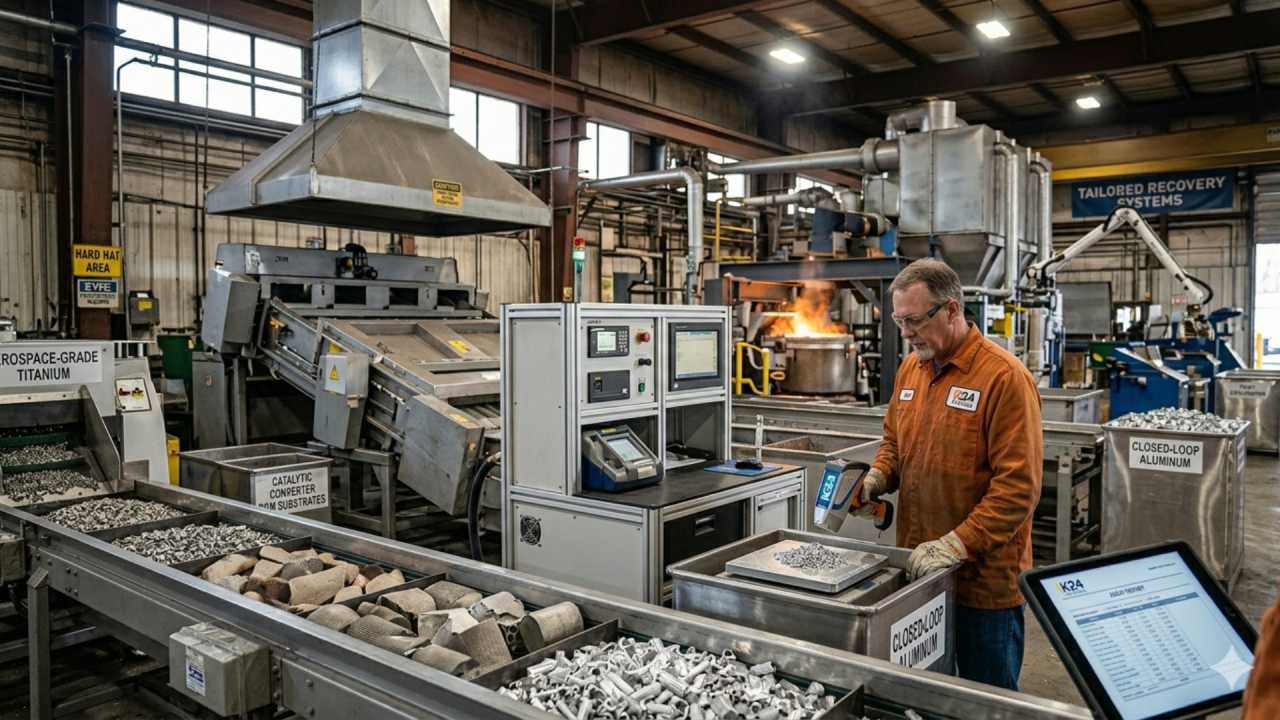
This group includes platinum (Pt), palladium (Pd), rhodium (Rh), iridium (Ir), ruthenium (Ru), and osmium (Os). These are among the rarest and most expensive metals on Earth. Their primary secondary source is the automotive industry, specifically catalytic converters, which use these metals to reduce toxic emissions. They are also vital in the chemical and petroleum refining industries as catalysts.
The Refining Process: Step-by-Step
The journey from a box of scrap to a gleaming bar of pure gold is one of precision and rigorous control.
Collection and Evaluation
The process begins with the receipt of material. Every shipment is weighed on high-precision scales and logged into a tracking system. This stage is critical for maintaining a chain of custody, ensuring that the client’s material is segregated and identifiable throughout its stay at the facility.
Sampling and Assaying
Before the bulk of the refining happens, the refiner must determine exactly how much precious metal is present. This is done through assaying. Since scrap is rarely uniform, the material is often melted into a homogeneous “melt” from which a small, representative sample is taken. This sample is analyzed using techniques like X-ray Fluorescence (XRF) or Fire Assay (the gold standard of accuracy) to determine the exact percentage of precious metals.
Pre-treatment
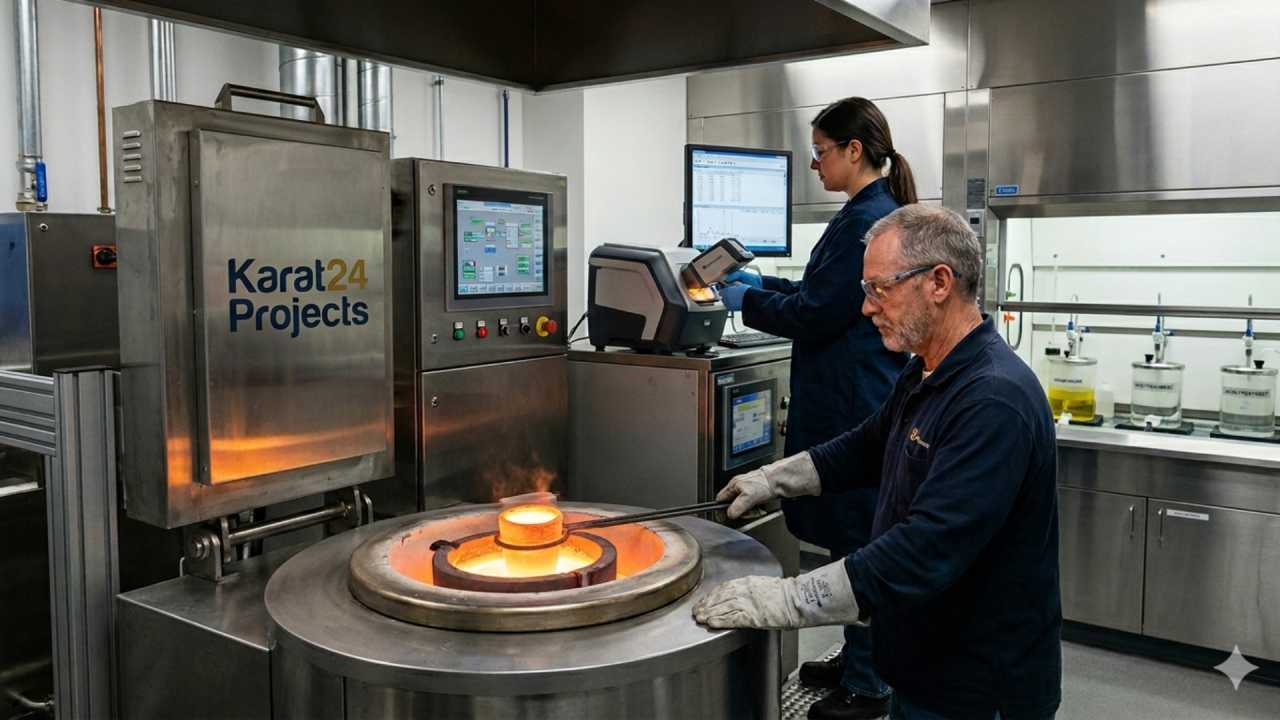
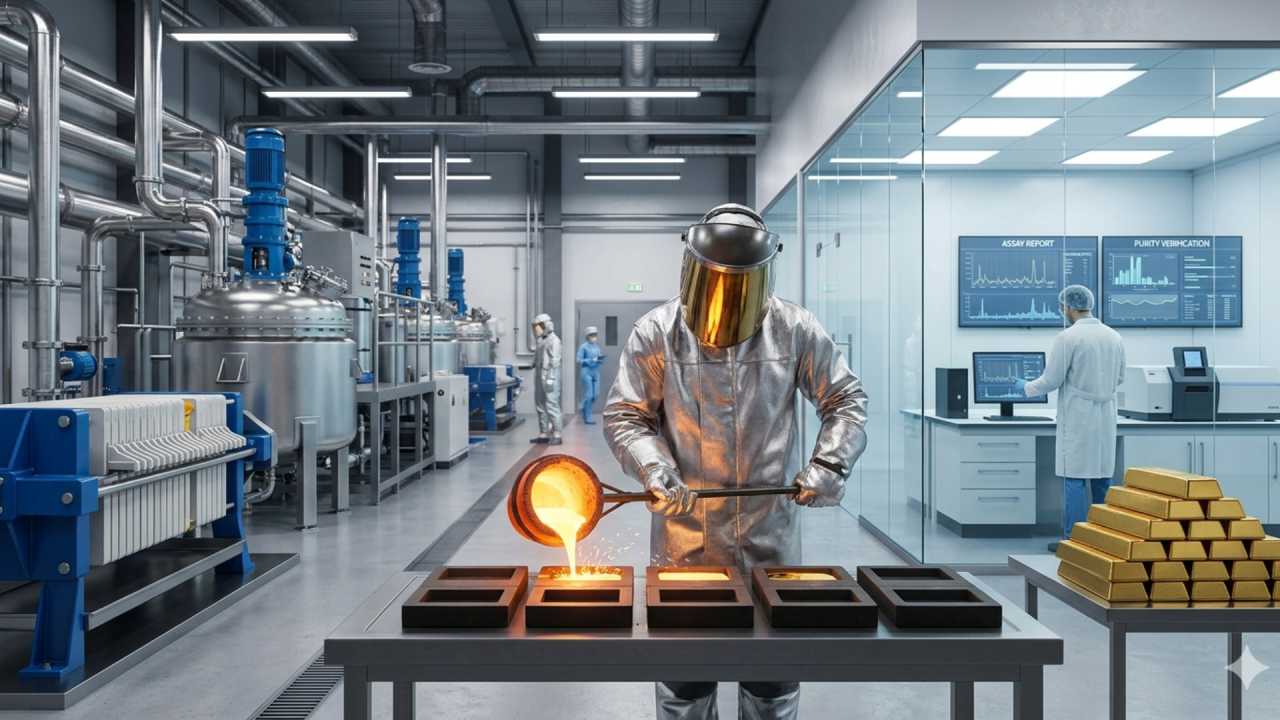
Many materials cannot go straight into a chemical bath. They may need to be crushed, incinerated (to remove plastic or paper), or magnetically separated (to remove iron and steel). For jewelry, the material is often melted in an induction furnace to create a consistent alloy.
Primary Refining Methods
Depending on the metal and the required purity, one of three main methods is typically used:
-
Pyrometallurgy: This involves using high heat in furnaces to separate metals based on their melting points and their affinity for oxygen. Impurities are often turned into “slag,” which floats to the top and can be skimmed off.
-
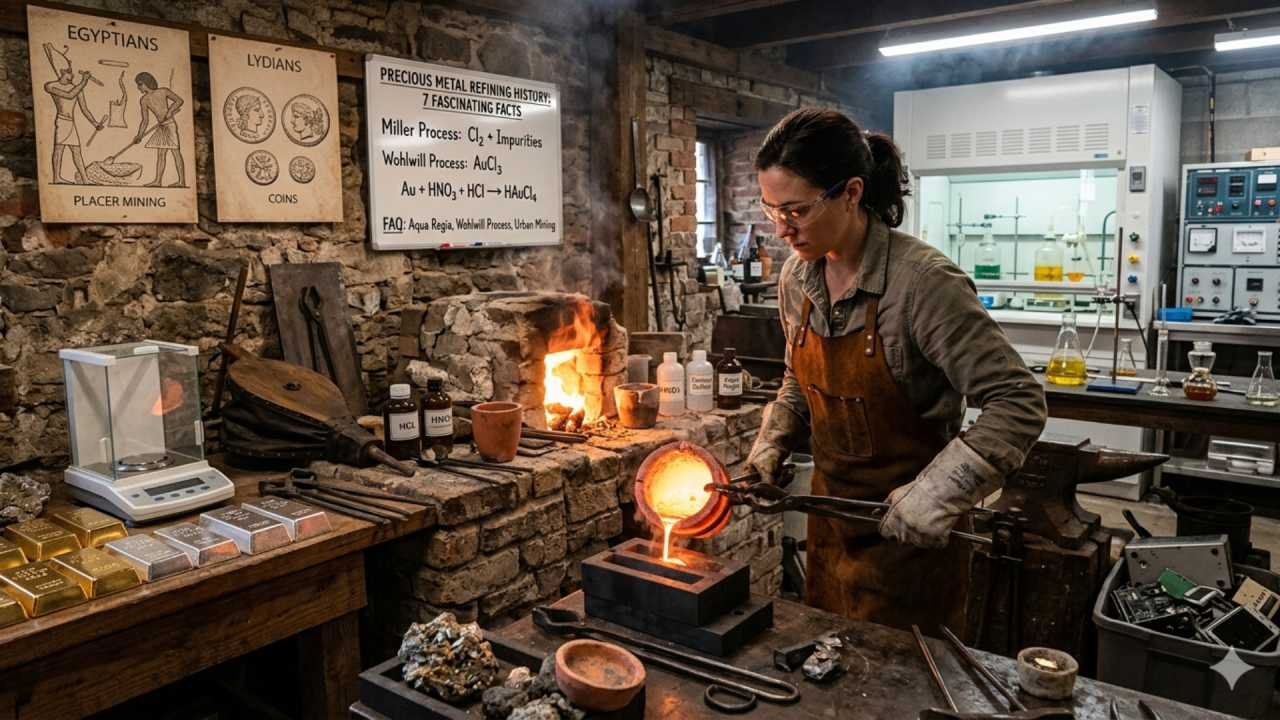
Hydrometallurgy: This is the most common method for high-purity gold. It involves dissolving the metal in acids (like Aqua Regia, a mix of nitric and hydrochloric acid). Once in liquid form, specific chemicals are added to “precipitate” the gold back into a solid, leaving the impurities in the liquid.
-
Electrorefining: This uses an electric current to move metal ions from an impure anode to a pure cathode through an electrolyte solution. This process is highly effective for achieving the 99.99% purity required for investment-grade bars.
Final Purification and Casting
Once the metal is recovered, it undergoes a final wash and is dried. It is then melted one last time and cast into the desired format—whether that be 1-kilo bars, 400-ounce “London Good Delivery” bars, or small grains for industrial use.
Importance of Accurate Assaying and Transparency
In the refining industry, the assay is the “moment of truth.” If a refiner’s assay is off by even 0.5%, it can represent a loss of thousands of dollars for the client.
The Role of the Assay
Assaying is the chemical analysis that determines the purity of the metal. A reliable partner utilizes multiple methods to verify results. Fire Assay, a technique used for centuries, remains the most trusted because it physically separates the precious metal from the sample. Modern laboratories also use Inductively Coupled Plasma (ICP) spectrometry to detect trace impurities down to parts per billion.
Transparency and Settlements
Transparency is the foundation of a long-term partnership. A reputable refiner provides a detailed “Settlement Report” that breaks down:
-
The incoming weight of the material.
-
The weight after melting (to account for any “burn-off” of non-metallic contaminants).
-
The final assay results for each metal (Gold, Silver, Platinum, etc.).
-
The current market price (London Fix or similar) used for the valuation.
-
Refining fees and net payout.
Without this level of detail, a client is essentially flying blind. A partner who encourages “witnessed sampling”—where the client or a third-party auditor watches the sample being taken—demonstrates a high level of integrity.
Environmental and Regulatory Considerations
Modern refining is a heavily regulated industry, and for good reason. The chemicals used (acids, cyanides) and the byproducts created (fumes, wastewater) can be hazardous if not managed correctly.
Sustainability and Emissions
A top-tier refining partner invests heavily in scrubber systems and wastewater treatment plants. Scrubbers neutralize the acidic vapors produced during the hydrometallurgical process, ensuring that the air released from the facility is clean. Similarly, water used in the process must be treated to remove all heavy metals before being discharged or recycled back into the plant.
Regulatory Compliance
Compliance is not optional. Refiners must adhere to local and international laws, including:
-
Anti-Money Laundering (AML) and Know Your Customer (KYC): Ensuring that the metal being refined does not come from illegal sources or fund conflict.
-
Responsible Sourcing: Adhering to guidelines such as those set by the OECD to ensure that mining and recycling practices respect human rights.
-
Environmental Permits: Regular audits by environmental agencies to ensure emissions stay within legal limits.
When you choose a compliant partner, you are protecting your own business from the legal and reputational risks associated with “dirty” metal.
Industries That Depend on Refining Services
The reach of precious metal refining is much broader than many realize.
Jewelry Manufacturers and Retailers
This is the most traditional sector. Jewelers generate significant amounts of “bench sweeps” (dust from jewelry making), polishing buffs, and scrap pieces. A refiner allows them to turn this waste back into pure casting grain or cash to fund their next collection.
Electronics and E-Waste Recyclers
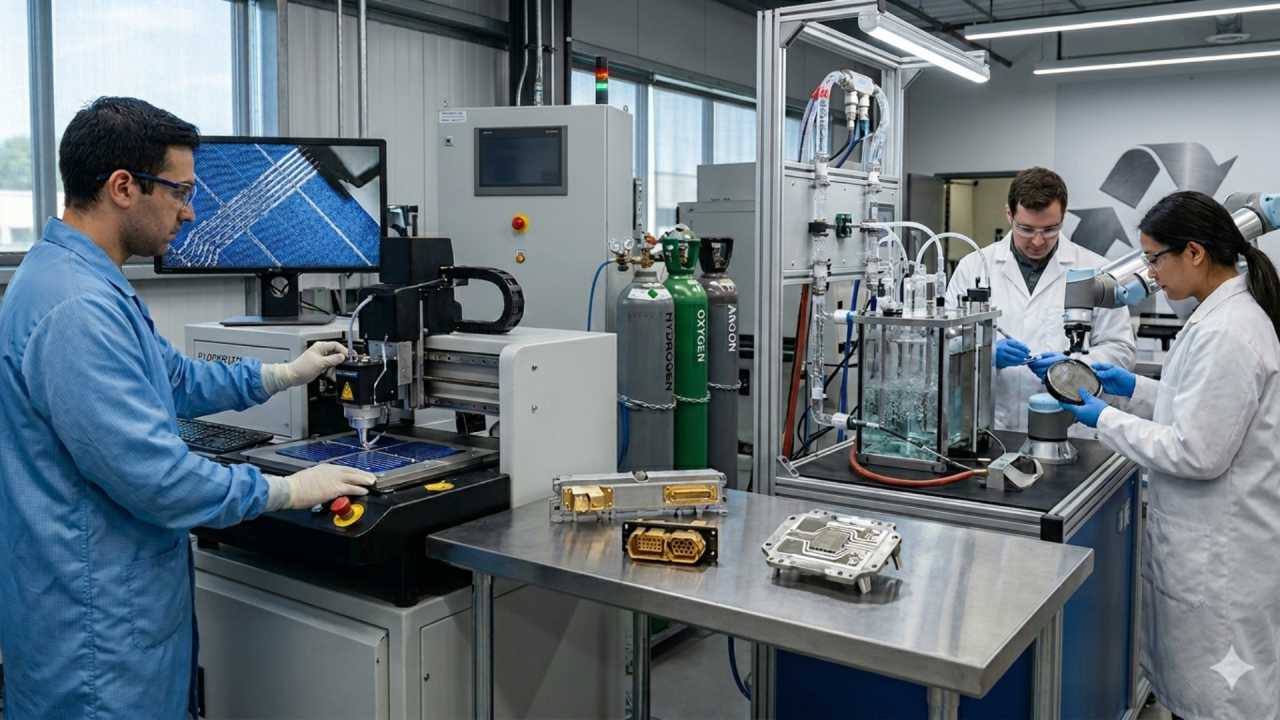
Computers, smartphones, and servers contain gold, silver, and palladium. While the amount per device is small, the sheer volume of global e-waste makes this a massive source of precious metals. Refiners specialized in e-waste use complex mechanical and chemical processes to extract these values from circuit boards.
Automotive Industry
The transition to cleaner air relies on the catalytic converter. These devices contain platinum, palladium, and rhodium. When a car is scrapped, the “honeycomb” inside the converter is processed by refiners to recover these incredibly valuable PGMs.
Medical and Aerospace
In the medical field, platinum is used in pacemakers and silver is used in specialized bandages and surgical tools. In aerospace, gold is used for heat shielding and electrical contacts. Both industries require high-precision refining to manage their specialized alloys and scrap.
Challenges in Precious Metal Refining
Refining is not without its hurdles. It requires a balance of high-end technology and deep industrial experience.
Complex Material Compositions
Modern scrap is becoming more complex. A single electronic component might contain a dozen different elements bonded together. Separating these without losing the precious metal requires sophisticated “pre-treatment” and a deep understanding of chemical reactions.
Price Volatility
Precious metal prices fluctuate by the second. This volatility creates risk for both the refiner and the client. A professional refining partner offers “hedging” services or flexible settlement options to help clients lock in prices and protect their margins.
Handling Hazardous Materials
The refining process involves high temperatures and corrosive chemicals. Maintaining a safe environment for workers and the surrounding community requires constant vigilance, training, and investment in safety equipment.
What Makes a Reliable Refining Partner?
Choosing a refiner is a decision based on trust, but that trust should be backed by tangible evidence.
Experience and Technical Expertise
There is no substitute for time on the floor. A refiner who has handled everything from dental gold to industrial catalysts has the “institutional memory” to deal with unexpected challenges in the melt. Look for a partner with a long track record and a team of certified chemists and metallurgists.
Competitive Pricing and Fast Settlements
In business, cash flow is king. A refiner who takes months to settle a lot is essentially holding your capital hostage. Reliable partners offer transparent fee structures—no hidden charges for “treatment” or “environmental disposal”—and strive for the fastest possible turnaround times without sacrificing accuracy.
Certifications
Certifications are a shorthand for quality. Look for ISO 9001 (Quality Management), ISO 14001 (Environmental Management), and industry-specific endorsements like the Responsible Jewellery Council (RJC) or inclusion on “Good Delivery” lists.
Benefits of Choosing the Right Partner
When you find the right refining partner, the relationship moves from transactional to transformational.
Maximized Returns
The most obvious benefit is the bottom line. Through superior sampling and recovery techniques, a high-quality refiner will consistently return more metal—and thus more value—than a lower-tier “middleman” or less-equipped facility.
Reduced Risk
By working with a compliant, insured, and transparent refiner, you eliminate the risks of fraud, legal entanglements, or environmental liabilities. You gain the peace of mind that comes from knowing your materials are being handled ethically and professionally.
Efficiency and Convenience
A good partner makes the process easy. This includes providing specialized shipping containers, assisting with customs documentation for international shipments, and offering various settlement options (cash, bank wire, or physical return of metal).
Technology and Innovation in Modern Refining
The “old world” image of refining is rapidly being replaced by a high-tech reality.
Automation and Digital Tracking
Modern refineries use automated systems to monitor every stage of the process. Digital “dashboards” allow clients to track their lots in real-time, from arrival to final assay. This eliminates human error and provides an extra layer of security.
Green Technologies
The “Green Gold” movement is real. Innovative refiners are exploring “closed-loop” chemical processes where acids are recycled rather than neutralized and discarded. Some are even experimenting with biological leaching—using bacteria to extract metals—which could drastically reduce the chemical footprint of the industry.
Data-Driven Optimization
By analyzing data from thousands of previous melts, refiners can now predict the best chemical “recipe” for a specific type of scrap, maximizing recovery rates and reducing processing time.
Case Study: The Jewelry Scrap Transformation
To illustrate the value of a refining partnership, let’s look at a hypothetical jewelry manufacturer. This manufacturer produces 500 kilograms of gold jewelry annually. In the process, they generate roughly 10 kilograms of “waste”—a mix of bench dust, floor sweeps, and defective pieces.
Without a Trusted Partner:
The manufacturer sells the sweeps to a local scrap dealer for a flat fee. The dealer, unable to accurately assay the dust, offers a “safe” (low) price to cover their own risk. The manufacturer receives 60% of the actual metal value.
With a Professional Refining Partner:
The manufacturer sends the 10 kilograms to a professional refiner.
-
Incineration: The dust is burned to remove organic matter (skin cells, sandpaper grit).
-
Melt and Sample: The remaining metallic ash is melted with a flux. A sample is taken.
-
The Assay: The lab finds that the 10kg of waste actually contained 2.5kg of pure gold.
-
The Settlement: The refiner charges a transparent fee for processing. The manufacturer receives 98% of the market value for those 2.5 kilograms.
The difference in revenue is substantial, often representing the difference between a profitable year and a struggling one.
Global Market Trends in Precious Metals
The refining industry is heavily influenced by global shifts. As the world moves toward electrification, the demand for silver and PGMs is expected to remain robust. Furthermore, as “urban mining”—the recovery of metals from cities and landfills—becomes more sophisticated, the role of the refiner as a recycler will only grow.
Central banks and investors continue to see gold as a hedge against inflation. This keeps the supply of gold scrap steady, as high prices encourage individuals and businesses to liquidate their holdings. A partner who understands these market trends can provide valuable insights on when to sell and when to hold your refined metal.
Final Thoughts: Building Long-Term Partnerships
Precious metal refining is a precise science, a demanding industrial process, and a vital service for a sustainable future. But at its heart, it is a business of relationships. When you choose a refining partner, you are choosing someone to handle your most valuable assets.
The ideal partner offers more than just a chemical process; they offer a transparent window into the value of your materials. They provide the technical expertise to handle complex alloys, the integrity to report accurate assays, and the environmental consciousness to operate responsibly.
By focusing on accuracy, transparency, and innovation, a true refining partner does more than just purify metal—they provide the stability and trust necessary for your business to thrive in a volatile global market. Whether you are a small jewelry shop or a massive industrial conglomerate, the right refining partnership is the key to unlocking the full potential of your precious metal resources. In the end, refining is about more than just what you take out of the metal; it is about what you put into the partnership. Trust, expertise, and a commitment to excellence are the most precious elements of all.