Investing in Precious Metals Refining: The Comprehensive Guide
The allure of precious metals—gold, silver, platinum, and palladium—has remained a constant throughout human history. While most investors focus on the price of a gold bar or the stock performance of a massive mining operation, there is a critical, high-value segment of the supply chain that often goes overlooked: precious metals refining.
Refining is the industrial heart of the precious metals market. It is the process that bridges the gap between raw, impure earth and the high-purity assets required by central banks, high-tech manufacturers, and jewelry houses. As the global economy pivots toward sustainability and a “circular” model, the importance of refining—and specifically the recycling of existing metals—has never been higher.
This article provides an in-depth exploration of the precious metals refining industry, offering investors a roadmap to understanding the technology, the market dynamics, and the strategic opportunities within this specialized sector.
What Is Precious Metals Refining?
To understand the investment potential, one must first understand the process. Refining is not mining; it is the chemical and metallurgical purification of metal.
The Definition and Purpose
The primary purpose of a refinery is to take “input material”—which could be anything from a rough gold nugget to a bag of discarded computer chips—and remove all impurities until the metal reaches a standardized purity level. For gold, this is typically 99.9% (three-nines) or 99.99% (four-nines). For industrial applications like semiconductors, even higher “five-nines” purity may be required.
Mining vs. Refining vs. Recycling
It is helpful to view the industry as a three-stage ecosystem:
-
Mining (Primary Production): The extraction of metal from the earth’s crust. This is a high-risk, capital-intensive venture subject to geological uncertainty and long lead times.
-
Refining (Processing): The conversion of mine output (doré bars) or scrap into pure form. Refiners are service providers; they charge for their technical expertise and industrial capacity.
-
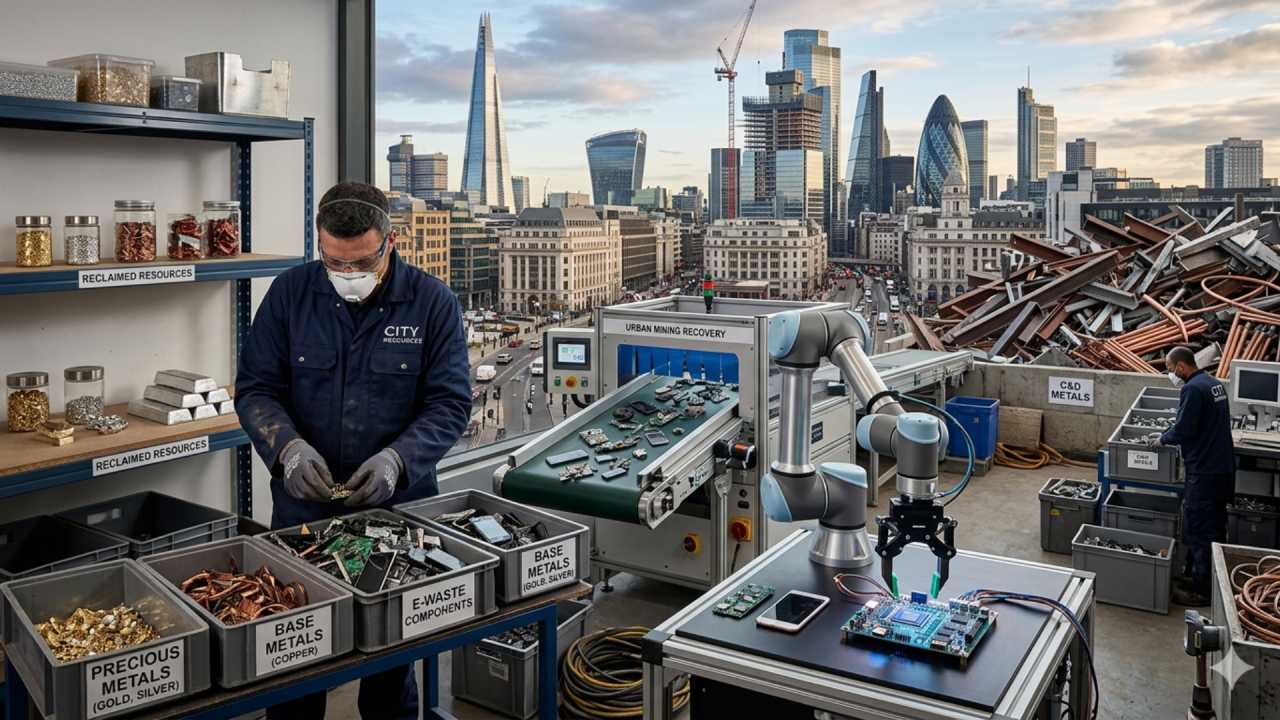
Recycling (Urban Mining): The collection and pre-processing of “end-of-life” products. This is the fastest-growing feedstock for refiners, driven by the sheer volume of electronics and automotive catalysts being decommissioned globally.
Sources of Raw Material
A modern refinery survives on a diverse “diet” of feedstocks:
-
Mining Output: Freshly smelted doré bars from mines, which typically contain 60-90% precious metal.
-
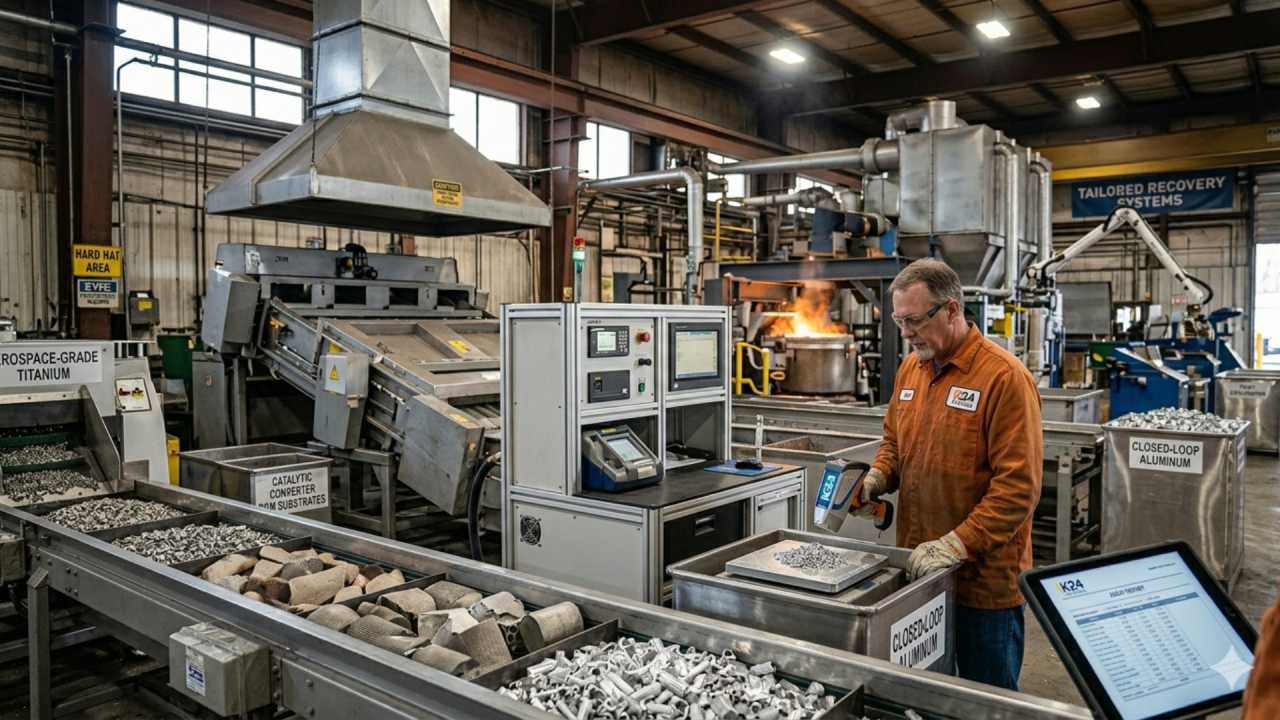
Industrial Scrap: Platinum-rich catalytic converters, silver-coated medical components, and gold-plated connectors from telecommunications equipment.
-
Jewelry and Dental Scrap: Post-consumer waste that is melted down and “re-refined” to enter the market as new product.
Overview of Refining Methods
The technology behind refining determines a facility’s efficiency, cost structure, and environmental impact. There are three primary metallurgical paths:
Pyrometallurgy
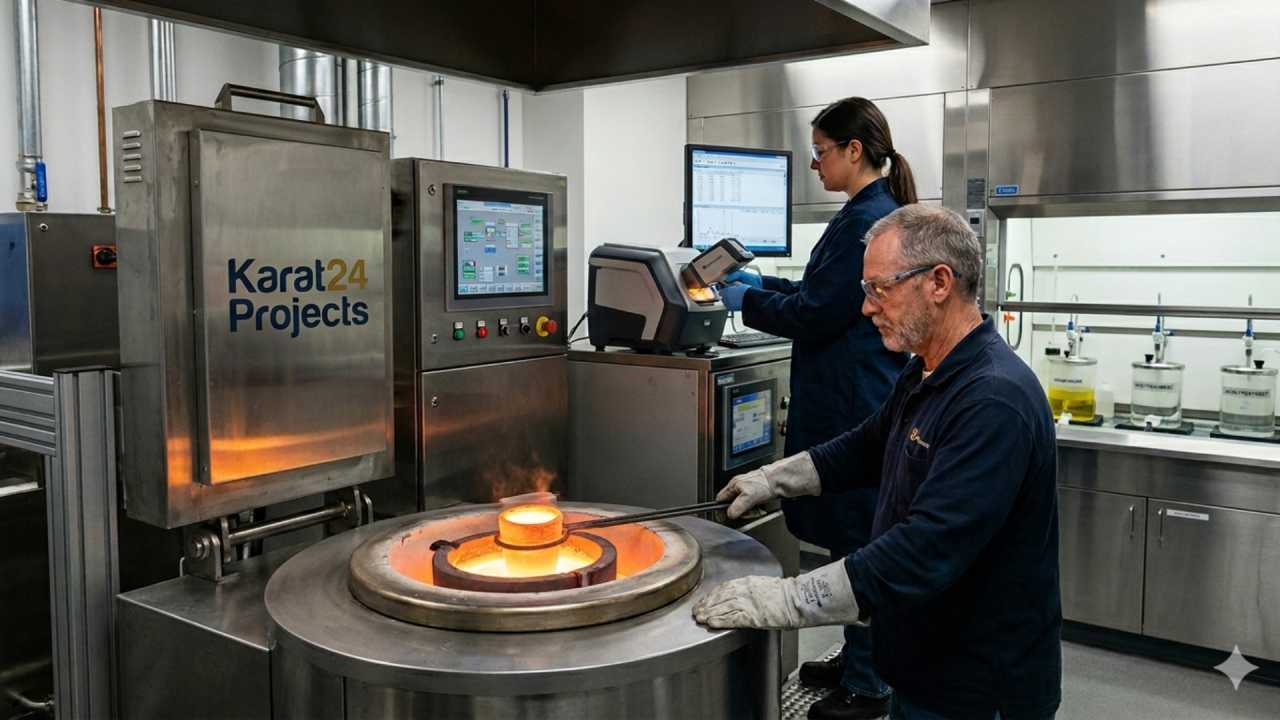
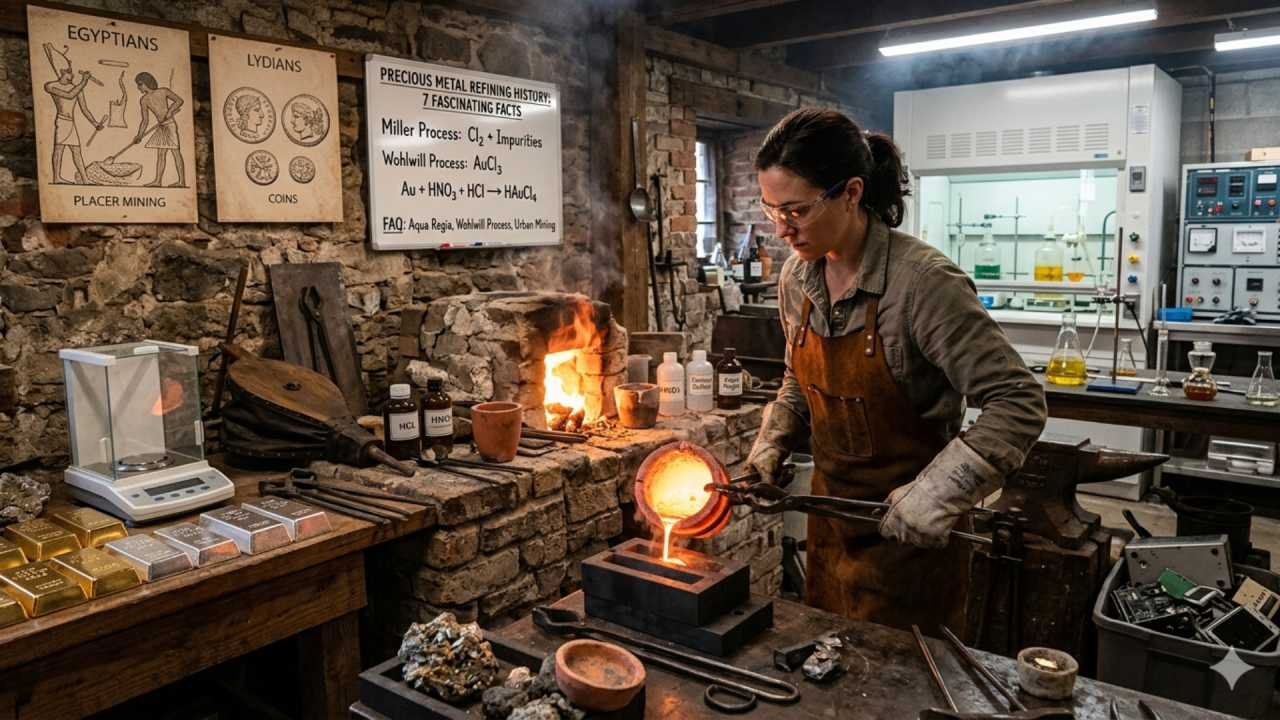
This is the “fire” method. It involves smelting the material in high-temperature furnaces. By adding specific “fluxes” (chemicals that bind to impurities), the unwanted metals are separated into a layer of slag, leaving the precious metals behind. This is highly effective for large-scale processing but requires enormous amounts of energy.
Hydrometallurgy
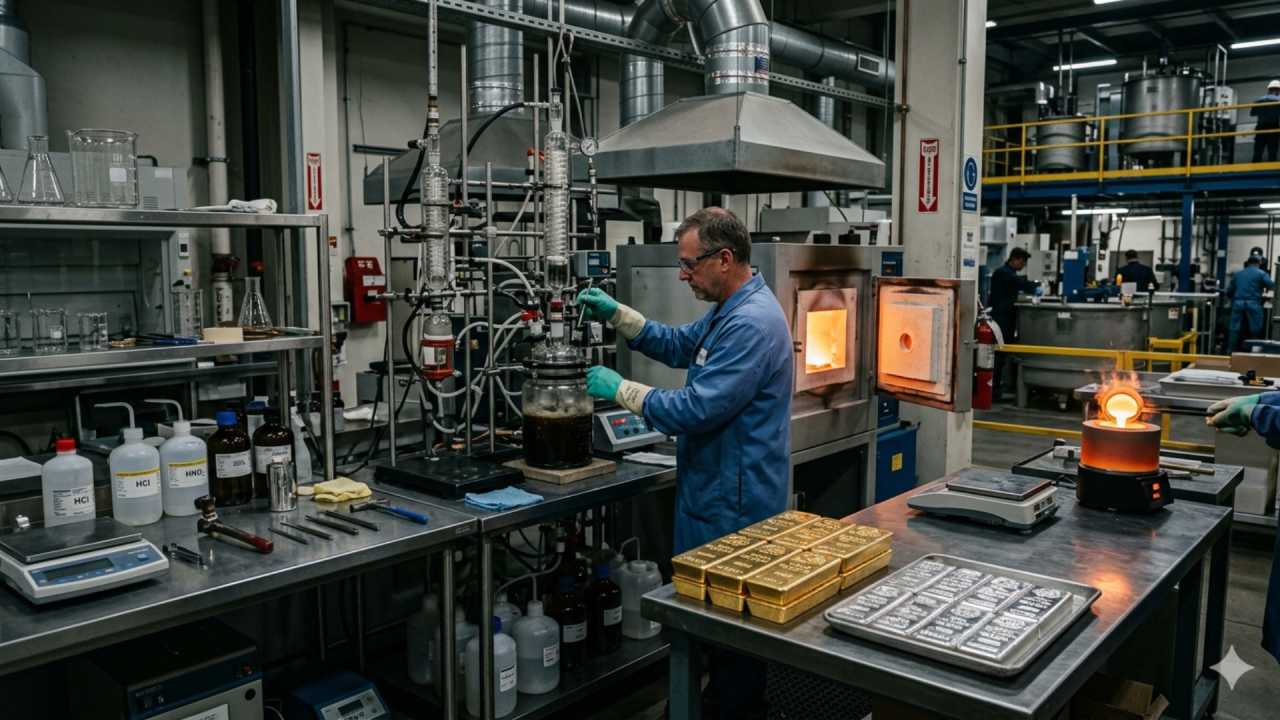
This is the “liquid” method. Metals are dissolved into a chemical solution (often using aqua regia or cyanide-based leaches). Once in liquid form, specific reagents are added to “precipitate” the precious metals out of the solution one by one. This method allows for extremely high purity levels and is often used for silver and gold.
Electrorefining
In this process, an impure metal slab acts as an anode in a chemical bath. When an electric current is applied, the pure metal migrates to a cathode, leaving the impurities at the bottom of the tank. This is the standard for producing high-purity silver and copper.
The Global Precious Metals Market
The demand for refined metals is no longer just about wedding rings and central bank vaults. It is increasingly driven by the “Green Revolution.”
Industrial Demand Drivers
-
Electronics: Every smartphone contains roughly 0.034 grams of gold and a significant amount of silver. With billions of devices produced annually, the “digital mine” is massive.
-
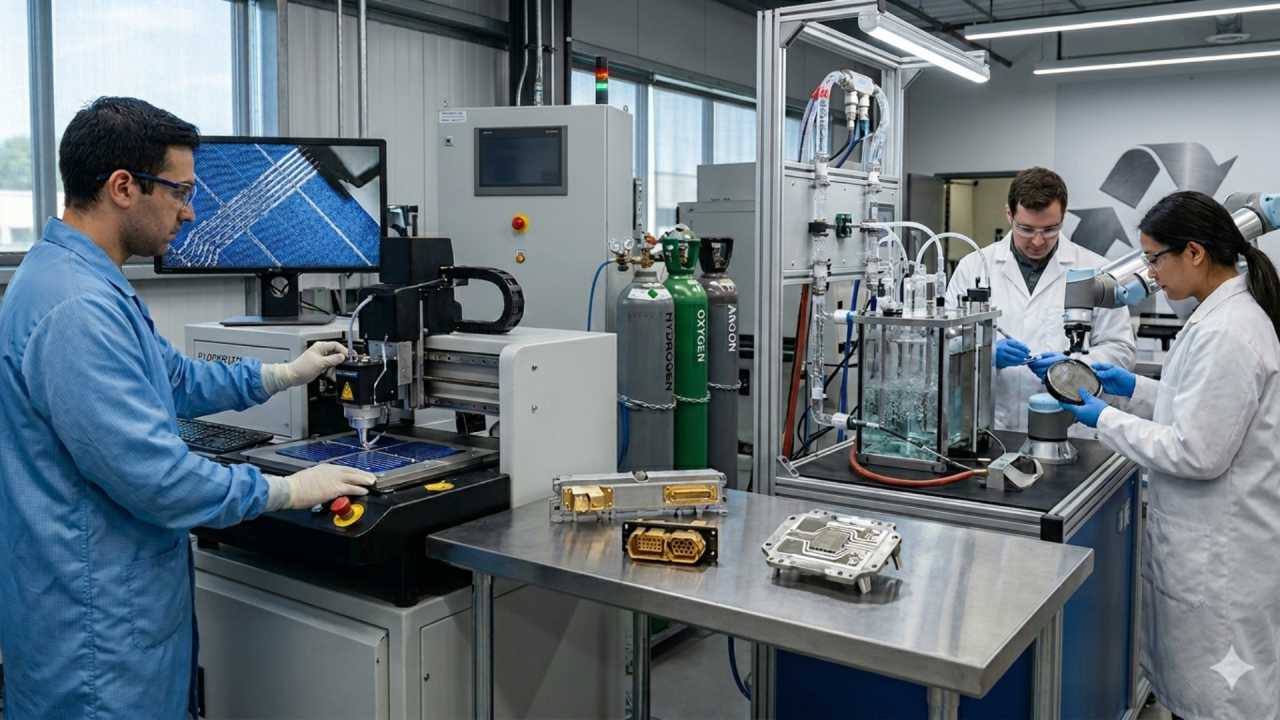
Electric Vehicles (EVs) and Hydrogen: While EVs use less palladium than internal combustion engines, the infrastructure for the “hydrogen economy” relies heavily on platinum catalysts. Silver remains the backbone of the solar industry due to its unmatched electrical conductivity.
-
Medical Technology: Gold and silver are used in everything from pace-makers to rapid diagnostic tests due to their biocompatibility and antimicrobial properties.
Supply Constraints and the Recycling Pivot
Primary mining supply is struggling to keep pace with demand. Many of the world’s “easy” gold deposits have already been mined. This creates a supply-demand gap that can only be filled by the secondary market—recycling. Refiners who specialize in processing complex scrap (like e-waste) are positioned to capture this growing market share.
Why Invest in Precious Metals Refining?
For the strategic investor, refining offers several advantages over traditional commodity plays.
Margin-Based Stability
Unlike a mining company, which may become unprofitable if the price of gold falls below its “All-In Sustaining Cost” (AISC), a refinery often operates on a toll-milling or fee-for-service basis. They charge a percentage of the metal processed or a flat fee per ounce. This makes their revenue streams more predictable and less sensitive to the daily “spot price” volatility of the metals themselves.
The “Circular Economy” Angle
Institutional investors are under pressure to divest from environmentally damaging industries. Traditional mining often involves significant carbon emissions and habitat destruction. Refining, particularly when focused on recycling, fits perfectly into the ESG (Environmental, Social, and Governance) framework. It is the ultimate “green” investment in the metals space.
Inflation Hedge
While the refinery is a service business, they often retain a small percentage of the metal they process as part of their fee (known as the “retention rate”). As inflation rises and the value of precious metals increases, the value of this “retained” metal grows, providing a natural hedge against currency devaluation.
Types of Investment Opportunities
Investors can choose their level of involvement, from passive stock ownership to active infrastructure development.
Direct Investment: Building the Infrastructure
Building a refinery is a major undertaking. It requires specialized industrial zoning, advanced security systems, and high-capacity chemical processing units.
-
Capital Requirements: A mid-sized refinery can cost between $10 million and $50 million to commission, depending on the metals processed.
-
Location Strategy: Proximity to “feedstock” is key. A refinery located near a major electronics manufacturing hub or a mining district has a significant logistical advantage.
Equity Investment: Public and Private Markets
-
Publicly Traded Refiners: Large conglomerates often have refining divisions. Investing in these companies provides liquidity and professional management.
-
Startups and Venture Capital: There is a surge of “urban mining” startups developing new, non-toxic ways to extract gold from e-waste. These offer high growth potential but come with higher risk.
Partnerships and Joint Ventures
Many investors enter the space by partnering with existing scrap collection networks. By providing the capital to upgrade a collection facility into a full-scale refinery, an investor can capture more of the value chain.
How the Refining Business Works: The Value Chain
To judge a refining investment, you must understand how they make money and where the “leaks” happen.
The Step-by-Step Process
-
Sourcing: The refinery competes to buy scrap or doré. This is a game of relationships and logistics.
-
Assaying (The Moment of Truth): Before the seller is paid, the refinery must determine the exact metal content. Small errors in the assay lab can lead to massive financial losses or disputes with suppliers.
-
Processing: The material is melted and chemically treated.
-
Sale and Minting: The pure metal is sold back to the market. Many refiners add value by “minting” their own branded bars, which carry a premium over the raw metal price.
Revenue Streams
-
Treatment Charges (TCs): Flat fees for processing.
-
Refining Charges (RCs): Fees based on the purity and volume of the metal.
-
Metal Gain: If a refinery’s technology is more efficient than their assay suggests, they keep the “excess” metal recovered. This is often the most profitable part of the business.
Technology and Innovation in Refining
The refiners of the future look more like high-tech labs than heavy-duty smelters.
Automation and AI
AI-powered sensors are now used to “scan” piles of e-waste and automatically sort components by their precious metal content. This reduces labor costs and increases the “grade” of the material entering the furnace.
Green Refining
Traditional refining uses harsh acids and produces toxic gases. Innovation is focused on “Closed-Loop” systems where chemicals are recycled within the plant, and “bio-leaching,” which uses specialized bacteria to separate metals from ore.
Traceability and Blockchain
In an era of “conflict-free” sourcing, refiners are using blockchain to track a gold bar from the moment it leaves the mine until it reaches the consumer. Refiners who can prove their metal is ethically sourced can charge a “provenance premium.”
Regulatory and Environmental Considerations
This is the most significant “moat” for existing refiners. The regulatory burden is immense.
-
Environmental Laws: Waste disposal is the biggest challenge. Refiners must comply with strict regulations regarding the neutralization of acids and the filtration of heavy metals from air emissions.
-
Licensing: Obtaining the necessary permits to handle hazardous materials can take years.
-
Financial Regulations: Because gold is used for money laundering, refiners are subject to Anti-Money Laundering (AML) and Combatting the Financing of Terrorism (CFT) laws. They must perform deep due diligence on every supplier.
Risks and Challenges
No investment is a “sure thing.” Investors must be aware of:
-
Price Volatility: While fees are stable, the value of the “work-in-progress” inventory can fluctuate. A sudden drop in metal prices while a refinery is holding tons of scrap can hurt the balance sheet.
-
Technological Obsolescence: A new, cheaper way to extract silver from solar panels could make an old, expensive refinery obsolete overnight.
-
Supply Chain Disruption: If a major mining region faces political instability, or if e-waste export laws change, a refinery might find itself with “empty furnaces.”
Cost Structure and Profitability
Understanding the difference between CAPEX (Capital Expenditure) and OPEX (Operating Expenditure) is vital.
-
CAPEX: High initial costs for machinery, security, and environmental scrubbing systems.
-
OPEX: Energy is the largest ongoing cost, followed by specialized chemicals (reagents) and high-skill labor (metallurgists and assayers).
-
Break-Even Analysis: A refinery must maintain a certain “throughput” (volume) to cover its fixed costs. Investors should look for facilities that have secured long-term supply contracts to ensure they stay above this break-even point.
Case Studies and Industry Examples
Success: The Swiss Model
Switzerland refines roughly 70% of the world’s gold. Companies like PAMP and Valcambi have succeeded by focusing on “Good Delivery” status and high-end minting. Their success is built on a reputation for absolute integrity and precision.
Failure: The Risks of “Dirty” Feedstock
Several refiners in the past decade have faced bankruptcy or massive fines after being caught processing gold from illegal mines in the Amazon or conflict zones. This highlights the “reputational risk” inherent in the business. Due diligence on a refinery’s sourcing policy is just as important as its balance sheet.
Future Trends in Precious Metals Refining
The next decade will likely see a shift in what we refine.
-
The Rise of Platinum Group Metals (PGMs): As the world moves toward green hydrogen, the demand for platinum and iridium refining will surge.
-
Localized Refining: Currently, much of the world’s scrap is shipped to a few major hubs. We are seeing a trend toward “micro-refineries” located closer to the source of the waste to save on shipping costs and carbon footprints.
How to Get Started as an Investor
If you are considering this sector, follow this checklist:
-
Assess the Technology: Is the refinery using modern, efficient, and environmentally compliant methods?
-
Verify the Certifications: Is the refinery LBMA (London Bullion Market Association) or RJC (Responsible Jewellery Council) certified?
-
Analyze the Feedstock: Does the company have diverse sources of material, or are they reliant on a single mine or scrap contract?
-
Evaluate the Management: Do they have experience in metallurgy and, more importantly, in navigating the complex regulatory landscape?
Final Thoughts
Investing in precious metals refining is a play on the fundamental architecture of the global economy. It is a sector that rewards technical knowledge, regulatory compliance, and logistical efficiency. While it lacks the “lottery ticket” excitement of a new mining discovery, it offers a more stable, industrial approach to the world of precious metals.
As we move toward a future where every gram of metal must be accounted for and recycled, the refiner stands as the essential gatekeeper. For the investor who values sustainability, industrial utility, and consistent margins, the refining sector is an area of the market that demands a closer look.
The opportunity lies in the transition from “extracting wealth” to “managing wealth.” In the circular economy, the refinery is the new mine.