Understanding Metal Purity: Why It Matters in Gold and Metal Refining
The concept of purity is the heartbeat of the precious metals industry. Whether it is a wedding band glistening on a finger, a gold bar tucked away in a central bank vault, or the microscopic circuitry inside a smartphone, the level of purity determines the object’s value, functionality, and longevity. In the world of metallurgy, purity is not merely a measure of cleanliness; it is a rigorous scientific standard that defines the chemical composition of a substance.
When we speak of refining gold and other metals, we are discussing the systematic removal of “impurities”—other elements that naturally occur alongside the primary metal. While these secondary elements are sometimes useful when intentionally added to create alloys, their presence in raw ore often hinders the metal’s performance. Gold, silver, platinum, and even industrial metals like copper are treated with distinct levels of reverence and technical scrutiny because even a fractional difference in purity can translate to thousands of dollars in market value or the success or failure of a high-tech mission.
Understanding purity is essential for investors, manufacturers, and consumers alike. It is the bridge between the raw, earth-crusted ore pulled from a mine and the shimmering, high-value asset that powers the global economy and advanced technology.
What Is Metal Purity?
In metallurgy, purity refers to the ratio of the primary metal to any secondary elements or impurities within a given sample. It is a measure of chemical “singleness.” A perfectly pure metal would consist of atoms from only one element on the periodic table. However, achieving 100% purity is a physical impossibility due to the omnipresence of environmental gases and microscopic contaminants; therefore, “pure” in a commercial sense usually refers to levels exceeding 99.9%.
The Karat System
For gold, the most culturally significant measure of purity is the Karat system. This ancient system divides the metal into 24 parts.
-
24 Karat (24K): This is the purest form of gold available, containing 99.9% or more gold. It is exceptionally soft and has a distinct, deep yellow luster.
-
22 Karat (22K): Comprising 22 parts gold and 2 parts other metals (usually copper or silver), this is common in traditional investment jewelry.
-
18 Karat (18K): Consisting of 75% gold, this is the standard for high-end Western jewelry, balancing the richness of gold with the durability provided by alloyed metals.
Fineness and Percentages
In the professional bullion and refining markets, the Karat system is often replaced by millesimal fineness. This expresses purity in parts per thousand. For example:
-
.999 Fine: Often called “three-nines fine,” this is the standard for investment-grade gold bars.
-
.9999 Fine: “Four-nines fine” is the ultra-high purity required for certain sovereign coins, like the Canadian Gold Maple Leaf.
-
.925 Fine: This is the standard for Sterling Silver, meaning it contains 92.5% silver and 7.5% other metals (typically copper).
Pure Metals vs. Alloys
It is crucial to distinguish between a pure metal and an alloy. An alloy is a metal made by combining two or more metallic elements, especially to give greater strength or resistance to corrosion. While purity is the goal of refining, alloying is the goal of manufacturing. You refine to get the purest base possible, then alloy it precisely to achieve specific physical properties.
Why Metals Are Rarely Pure in Nature
Metals are almost never found in their pure “native” state. This is due to the chemical reactivity of elements and the chaotic geological processes that form the Earth’s crust. Except for “noble metals” like gold and platinum, which are chemically inert and can occasionally be found as nuggets, most metals exist as ores.
An ore is a type of rock that contains a high enough concentration of a mineral with a metal inside it to be profitably mined. For example, iron is found as hematite or magnetite, and lead is found as galena. These metals are chemically bonded to oxygen, sulfur, or silica. Even gold, though found in its metallic form, is usually encased in quartz veins or mixed with silver (an alloy called electrum) and copper.
During the geological formation of these deposits, high heat and pressure mix various elements. When a mining company extracts ore, they aren’t just pulling out gold; they are pulling out a cocktail of iron, zinc, silver, copper, and arsenic. This natural “impurity” is the reason the refining industry exists. Without the ability to separate these elements, the gold would be too brittle to work, and the copper would be too poor a conductor to use in wiring.
The Refining Process Overview
Refining is the industrial process of purifying an impure metal. It is the final stage of the journey from the mine to the market. This process is complex and varies depending on the specific metal and the desired end purity.
From Ore to Concentrate
Before refining begins, the ore must be processed. It is crushed into a fine powder and then “concentrated” using methods like froth flotation or gravity separation. This removes much of the waste rock (gangue), leaving a material that is rich in metal but still chemically impure.
Smelting
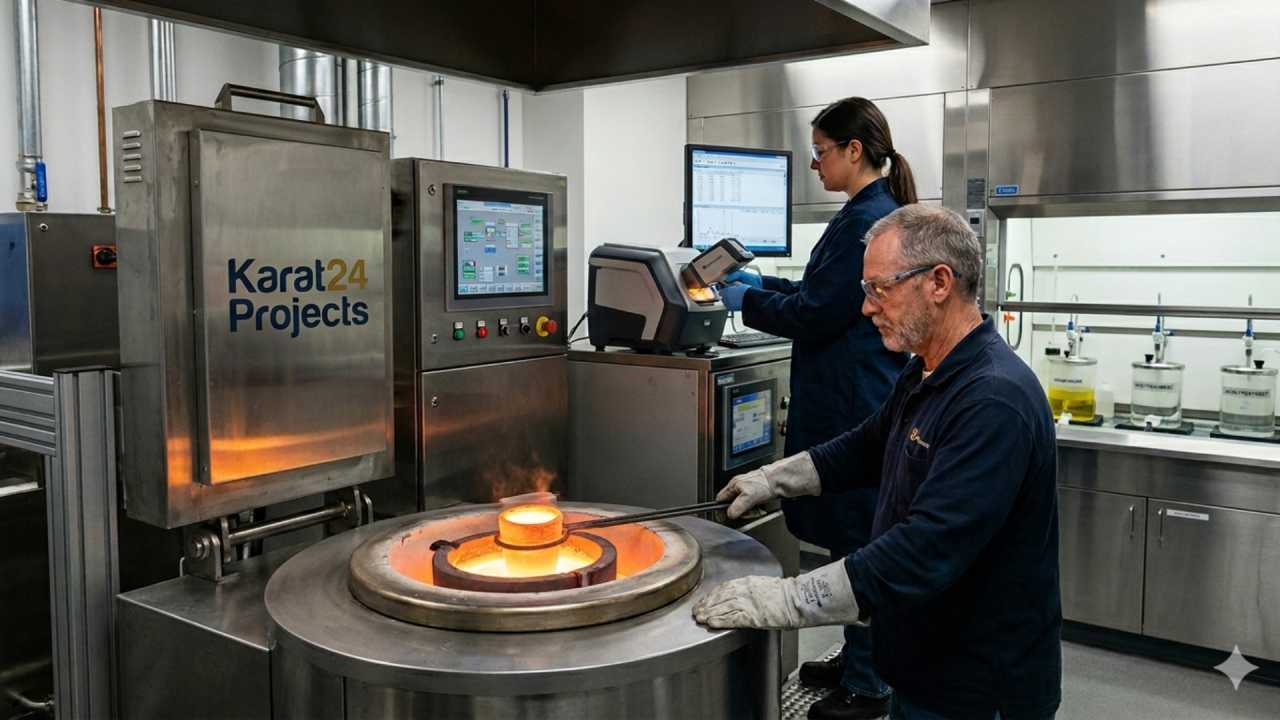
Smelting is the process of applying heat to ore in order to extract a base metal. It is a form of extractive metallurgy. It uses heat and a chemical reducing agent (like coke or charcoal) to decompose the ore, driving off other elements as gases or slag and leaving the metal behind. However, smelted metal is usually only 95% to 98% pure—not enough for the high standards of the bullion or electronics markets.
Chemical and Electrolytic Refining
To reach “four-nines” purity, specialized chemical processes are required:
-
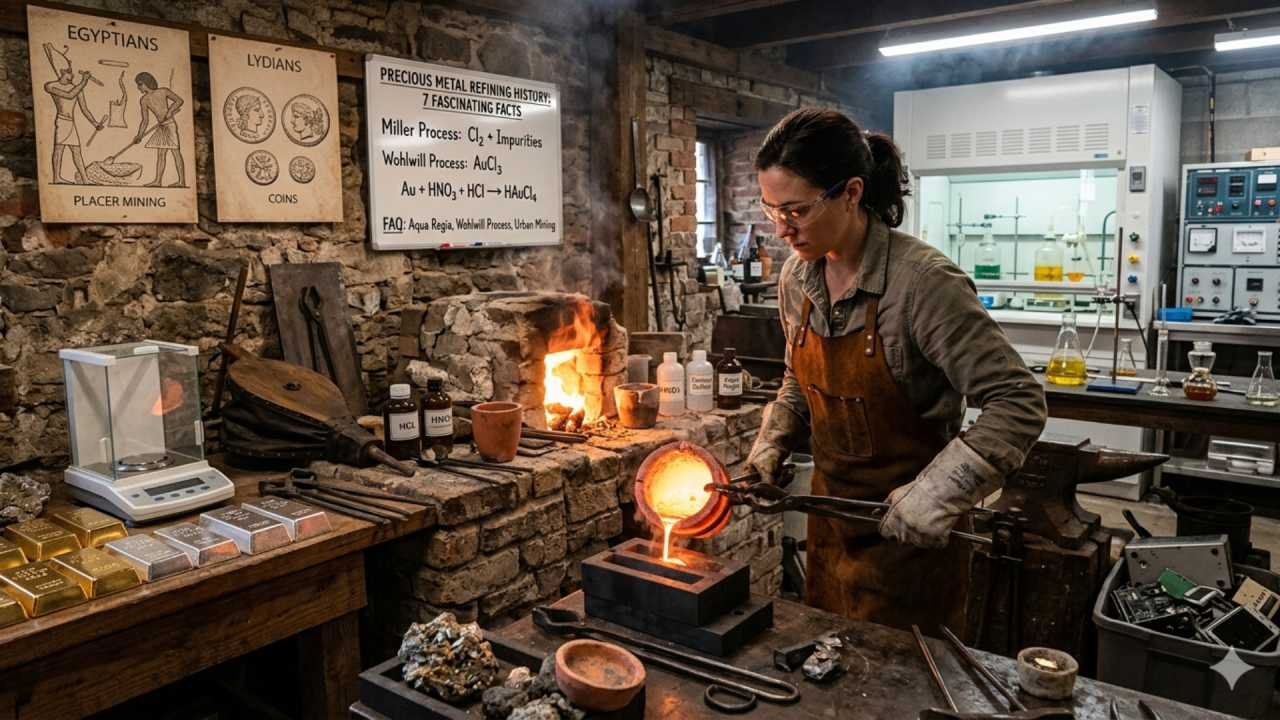
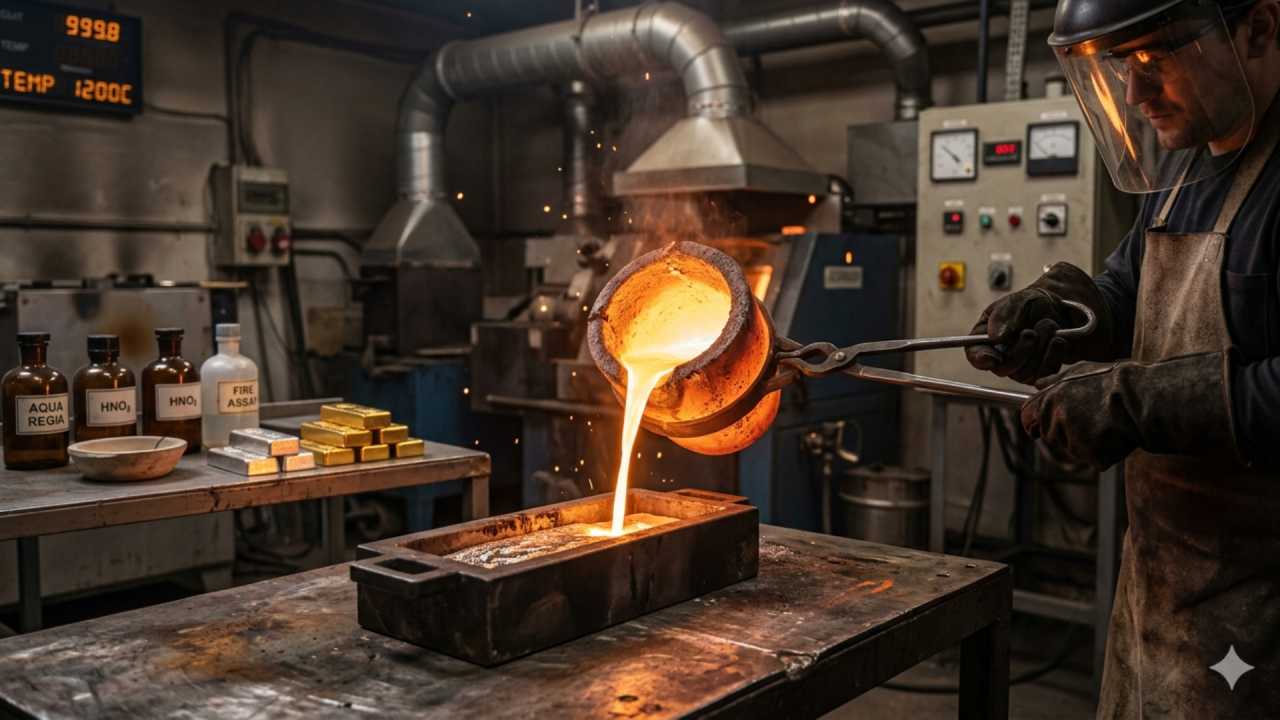
The Miller Process: This involves bubbling chlorine gas through molten gold. The impurities in the gold (like silver and base metals) react with the chlorine to form chlorides, which float to the top as a scum that can be skimmed off. This can reach about 99.5% purity.
-
The Wohlwill Process: To reach 99.99% purity, electrolysis is used. An impure gold anode is placed in an electrolyte solution of hydroauric acid. When an electric current is applied, the gold dissolves from the anode and deposits onto a pure gold cathode, leaving impurities behind in the solution or as “anode slime.”
-
Aqua Regia: For smaller-scale refining, gold is dissolved in a mixture of nitric and hydrochloric acid (Aqua Regia). The gold is then precipitated out of the liquid using a selective chemical, leaving the impurities dissolved in the acid.
Measuring Purity
If a refinery claims a bar is 99.9% pure, that claim must be verified. Accuracy in measurement is the foundation of trust in the metals trade.
Fire Assay
The Fire Assay is the “gold standard” of purity testing and has been used for centuries. It involves melting a small sample of the metal with “fluxes” and lead. The lead collects the precious metals, while the impurities are absorbed into a porous crucible called a cupel. The resulting “bead” of metal is then chemically weighed and analyzed. It is incredibly accurate but destructive, as a piece of the metal must be melted.
X-Ray Fluorescence (XRF)
XRF is a non-destructive method widely used by jewelers and pawn shops. An XRF machine fires X-rays at the metal, causing the atoms to emit fluorescent X-rays characteristic of each element. The machine analyzes these rays to give a percentage breakdown of the metal’s composition. While fast, it often only measures the surface of the metal.
Spectroscopy
Inductively Coupled Plasma (ICP) spectroscopy is a high-tech method where a sample is turned into a plasma. The light emitted by the plasma is analyzed to detect impurities down to parts per billion. This is used by refineries to ensure their “five-nines” (.99999) gold is truly as pure as claimed.
Why Purity Matters Economically
The economic implications of purity are massive. In the global commodities market, gold is priced based on its “fine” weight. If you have a one-kilogram bar of 18K gold, you only have 750 grams of actual gold. The market price of gold applies only to that 750 grams.
Investment-Grade Bullion
For gold to be considered “Good Delivery” by the London Bullion Market Association (LBMA)—the global authority—it must meet strict purity standards (minimum 99.5%). Investors prefer higher purity because it ensures high liquidity. A bar that is .9999 fine is universally recognized and can be sold anywhere in the world without the need for extensive re-refining.
Industrial and Aerospace Demand
In the industrial sector, purity is not about prestige; it is about performance. In electronics, gold is used for plating connectors because it does not corrode. However, if the gold is not pure, the impurities can migrate to the surface, causing oxidation and eventual failure of the device. In aerospace, where components face extreme temperatures, the presence of even a tiny amount of an impurity like bismuth can make a metal alloy brittle and prone to cracking, leading to catastrophic failure.
Purity in Different Metals
While gold gets the most attention, purity is equally vital for other metals, though the “ideal” purity varies.
-
Silver: While 99.9% silver is used for investment, Sterling Silver (92.5%) is the standard for functional items. Pure silver is too soft for cutlery or jewelry that must withstand daily wear.
-
Platinum: This metal is almost always used in high concentrations (95% or higher) because of its rarity and the specific catalytic properties that require high purity.
-
Copper: For electrical wiring, copper must be at least 99.9% pure (Electrolytic Tough Pitch copper). Just 0.05% of an impurity like arsenic can reduce the electrical conductivity of copper by 15%, leading to massive energy waste in power grids.
Applications Where Purity Is Critical
Medical Devices
Gold and platinum are used in pacemakers, stents, and cochlear implants because they are “biocompatible.” This means the human body does not reject them. However, this biocompatibility depends entirely on purity. If the gold used in a medical implant contains traces of nickel or lead, it could cause an allergic reaction or toxicity in the patient.
Microchips and Nanotechnology
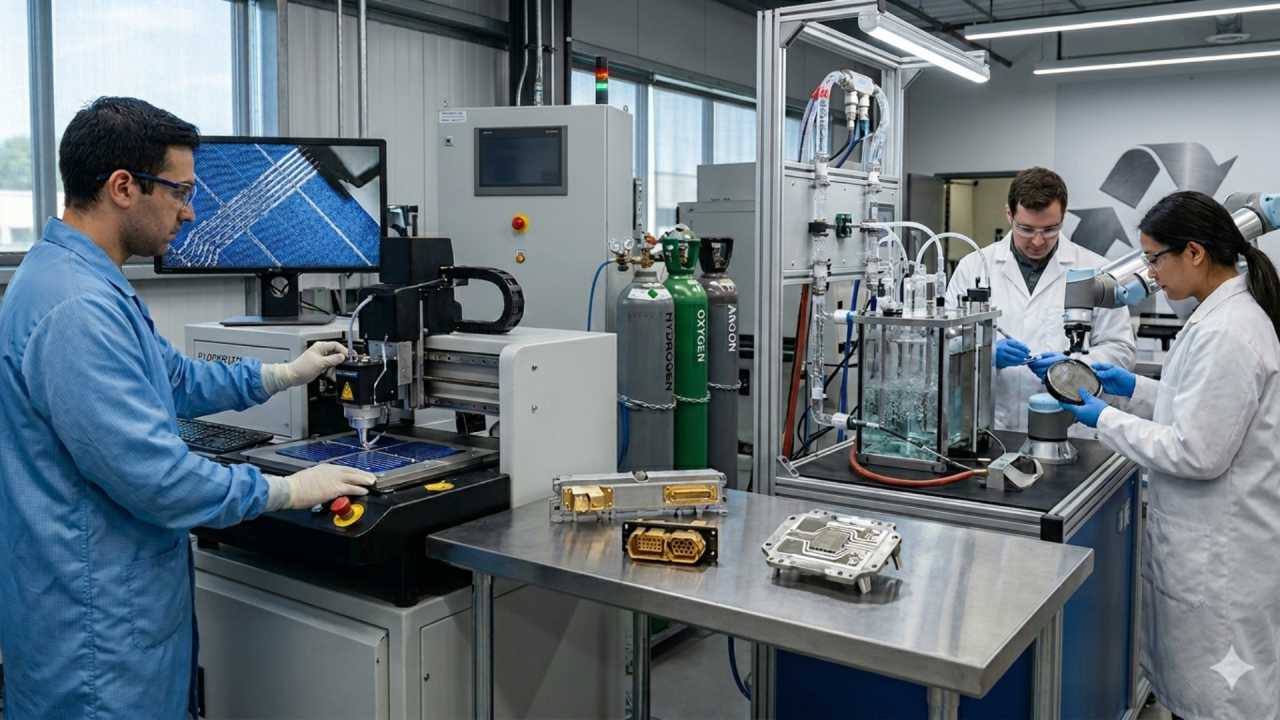
In the fabrication of semiconductors, metals are used in layers only a few atoms thick. At this scale, a single atom of an unwanted impurity can disrupt the flow of electrons, ruining a microchip. Refiners now produce “ultra-pure” metals (up to 99.9999% purity) specifically for the tech industry.
Chemical Catalysts
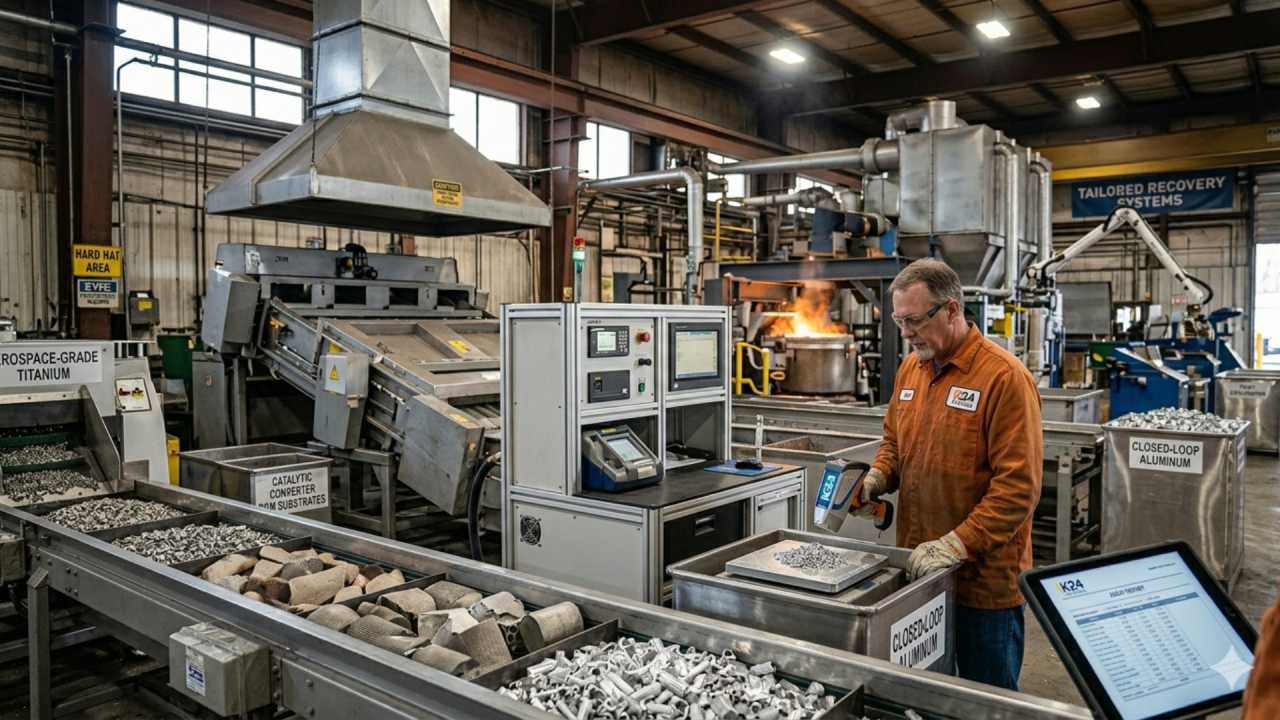
Platinum, palladium, and rhodium are used as catalysts in automotive catalytic converters to reduce harmful emissions. The efficiency of these chemical reactions relies on the surface area of the pure metal atoms. Impurities “poison” the catalyst, making it less effective at cleaning the air.
Challenges in Achieving High Purity
Achieving high purity is a game of diminishing returns. Moving a metal from 90% to 95% purity is relatively straightforward and inexpensive. Moving it from 99.9% to 99.99% is significantly more difficult, requiring cleaner environments, more expensive chemicals, and more electricity.
Energy Consumption
Electrolytic refining requires vast amounts of constant electricity. As refineries strive for higher purity, the energy “cost per gram” increases. This makes the price of ultra-pure metals significantly higher than their bullion-grade counterparts.
Technical Limitations
At a certain point, the environment itself becomes an impurity. Atmospheric nitrogen, oxygen, and carbon can seep into molten metal during the refining process. To combat this, some metals must be refined in a vacuum or under a “blanket” of inert gases like argon.
Ethical and Environmental Considerations
The pursuit of purity comes with an environmental price tag. The chemicals used to strip away impurities—such as cyanide for gold extraction or strong acids for silver refining—are hazardous to the environment if not managed correctly.
Responsible Sourcing
Purity is now being linked to “ethical purity.” The industry is moving toward “traceable gold,” where the purity of the metal is documented alongside its origin. This ensures that the high-purity gold in a watch didn’t come from a mine that funds conflict or employs child labor.
The Role of Recycling
One of the most sustainable ways to achieve high purity is through urban mining—recycling electronics and jewelry. Refining recycled gold requires significantly less energy than mining new ore. Because gold is an element, it does not degrade during recycling; a gold coin melted down today and refined to .999 purity is identical to gold mined 2,000 years ago.
Future of Metal Refining and Purity
The future of refining lies in precision and sustainability.
Nanotechnology
Researchers are developing “selective ligands”—molecules designed to “grab” only specific metal atoms out of a solution. This could allow for high-purity refining with far fewer harsh chemicals.
Automation and AI
Modern refineries are becoming fully automated. AI systems can monitor the chemical composition of a refining tank in real-time, adjusting the temperature and electrical current to maximize purity while minimizing energy waste.
Blockchain Tracking
To ensure the integrity of high-purity metals, blockchain technology is being used to create a digital “birth certificate” for gold bars. This certificate records the purity levels at every stage of the refining process, providing a tamper-proof record for investors.
Final Thoughts
Purity is the silent language of the metal world. It tells a story of geological history, scientific achievement, and economic value. While a piece of jewelry may be admired for its design, its true worth—and its ability to endure through the ages—is dictated by the atoms within.
Refining is the art of removing the “noise” of the earth to reveal the “music” of the metal. As our technology becomes more advanced, our demand for purity will only grow. Whether it is for a mission to Mars, a life-saving medical device, or a stable hedge against inflation, the quest for the “four-nines” and beyond remains a cornerstone of human progress. Understanding why purity matters is the first step in appreciating the true value of the metals that build our world.
Frequently Asked Questions About Metal Purity and Refining
To help you better understand the complexities of the precious metals market, here are answers to some of the most common questions regarding purity, testing, and value.
What is the difference between 999 and 9999 gold purity?
While both are considered high-purity investment gold, 999 gold (three-nines) contains 99.9% pure gold, whereas 9999 gold (four-nines) contains 99.99% purity. The difference is only 0.09%, but in the world of central banks and sovereign mints, 9999 is the premium standard for “investment-grade” bullion. The extra refining required to reach four-nines purity often commands a higher “premium” over the spot price.
Does 24K gold scratch easily because of its purity?
Yes, the higher the purity of gold, the softer the metal becomes. 24K gold is essentially pure, and because gold is a naturally dense but soft element, it is prone to bending, scratching, and denting. This is why most jewelry meant for daily wear is made of 18K or 14K gold; the addition of alloys like copper and silver provides the structural integrity needed to hold gemstones and withstand friction.
How do I check gold purity at home without damaging the metal?
While professional assays are the only way to be 100% certain, you can perform a specific gravity test or a magnet test at home. Pure gold is not magnetic; if your jewelry is attracted to a magnet, it contains a significant amount of base metal. However, for an accurate reading, an X-ray Fluorescence (XRF) scan at a local refinery or reputable jeweler is recommended, as it is non-destructive and provides a full elemental breakdown.
Why is copper added to silver to create Sterling Silver?
Pure silver is extremely ductile and soft, making it impractical for functional items like forks, spoons, or complex jewelry. By adding 7.5% copper to 92.5% silver, refiners create Sterling Silver. This specific ratio maintains the brilliant white luster of the silver while significantly increasing its hardness and durability. The “purity” is technically lower, but the “utility” is much higher.
Can impurities in gold affect its resale value?
Absolutely. When you sell gold to a refinery, they pay based on the “melt value” of the pure gold content. If a bar is labeled as 24K but testing reveals it is only 22K due to internal impurities, the payout will be significantly lower. Furthermore, certain impurities like lead or iron can make the gold “brittle,” which may require the refinery to charge a higher processing fee to remove those specific contaminants.
What is the best method for refining gold to 99.9% purity?
For industrial-scale refining, the Miller Process and the Wohlwill Process are the most effective. The Miller Process is faster and cheaper, reaching 99.5% purity by using chlorine gas. To reach the ultra-high 99.9% or 99.99% purity required for bullion and electronics, the Wohlwill Process (electrolysis) is the preferred gold standard.
Is recycled gold just as pure as newly mined gold?
Yes. Gold is a chemical element ($Au$), meaning its atomic structure does not change regardless of how many times it is melted or refined. Recycled gold (often called “Urban Mining”) is indistinguishable from “virgin” gold once it has been processed through a refinery. In fact, recycling is becoming the preferred source of high-purity gold because it has a significantly lower environmental footprint than traditional mining.
Why does the electronics industry require ultra-pure metals?
In modern microelectronics, even a single atom of an impurity can cause a “short circuit” or lead to “electromigration,” where atoms move under the influence of an electric field. Ultra-pure gold and copper (99.999% or “five-nines”) ensure that high-speed processors and medical sensors operate reliably for years without signal degradation or hardware failure.