Electrolysis vs. Fire Assay vs. Chemical Refining
Introduction to Precious Metals Refining
Precious metals refining is the foundational pillar of the global commodities, electronics, and advanced manufacturing sectors. At its core, precious metal refining is the industrial and chemical process of isolating high-value elements—such as gold, silver, platinum, palladium, and rhodium—from impurities, base metals, and other unvalued materials. The necessity of this process stems from a basic geological reality: ore extracted from the earth rarely, if ever, contains pure precious metals. Instead, these elements are locked within complex mineral matrices, combined with base metals like copper, nickel, lead, and iron, or trapped in trace amounts within massive geological formations.
Beyond primary mining operations, secondary sourcing via scrap recycling has become increasingly vital to the global supply chain. Industrial waste, discarded electronic components, spent automotive catalysts, old jewelry, and manufacturing byproducts represent vast reservoirs of secondary precious metals. Whether recovering gold from a continental mine or extracting palladium from a discarded catalytic converter, the underlying challenge remains the same: transforming complex, contaminated raw feedstocks into standardized, ultra-pure marketable products. Refining determines the final purity, commercial value, and functional usability of these metals. Without precise refining, raw gold or silver cannot achieve the strict tolerances required to serve as financial collateral or high-performance industrial components.
A wide array of critical global industries depends entirely on a predictable, continuous supply of highly refined precious metals:
-
Jewelry: Demands consistent karats and predictable metallurgical properties for durability, color control, and luster.
-
Electronics: Relies on high-purity gold and silver for bond wires, connectors, and electroplating, where even microscopic impurities can cause signal degradation or component failure.
-
Automotive Catalysts: Utilizes platinum, palladium, and rhodium to facilitate the reduction of harmful emissions in internal combustion engines.
-
Investment Bullion: Requires absolute compliance with international purity standards (such as London Bullion Market Association good delivery standards) to serve as a reliable store of wealth.
-
Aerospace: Uses specialized gold- and platinum-group metal alloys for braze joints, thermal shielding, and critical sensor elements exposed to extreme environments.
-
Medical: Depends on biocompatible platinum and gold components for pacemakers, implants, and targeted oncology therapeutics.
To satisfy these diverse and exacting demands, the modern metallurgical industry relies primarily on three fundamental methodologies: electrolytic refining (electrolysis), fire assay and pyrometallurgical methods, and chemical refining. Each technique operates on distinct physical and chemical principles, offers unique operational trade-offs, and serves specific niches within the global materials economy.
Basics of Precious Metal Refining
To understand the mechanics of precious metal purification, it is essential to distinguish between three frequently conflated metallurgical terms: smelting, assaying, and refining.
-
Smelting is the preliminary pyrometallurgical process of melting ore concentrates or scrap materials to separate the bulk metallic phase from the unwanted rock matrix (slag). It yields an impure, intermediate metallic alloy known as bullion or collector metal, rather than a finished product.
-
Assaying is the analytical science of testing a representative sample of material to accurately determine its exact precious metal content. It provides the quantitative data required for commercial valuation and process management but does not alter the bulk material itself.
-
Refining is the final, sophisticated phase of purification that takes the intermediate products of smelting and systematically separates individual precious metals from base metals and from one another, elevating their purity to precise commercial standards.
The primary goals of any refining operation are to maximize the recovery of high-value trace elements, selectively eliminate base metal contamination, and increase the final purity of the primary target metal to market-recognized thresholds, typically 99.9%, 99.99%, or even 99.999% purity.
To achieve this, engineers leverage specific thermodynamic, chemical, and electrochemical behaviors of elements. Key concepts include managing impurities (elements like copper, iron, lead, selenium, or tellurium that degrade the target metal’s properties); manipulating anodes and cathodes within an electrical circuit; selecting appropriate fluxes to lower melting points and trap contaminants; and systematically driving oxidation/reduction reactions to alter the chemical states and solubility of target elements.
While the exact operational parameters vary based on the feedstock, the industrial precious metals recovery life cycle generally follows a standardized operational workflow:
-
Collection
-
Sampling
-
Assay
-
Pre-treatment
-
Refining
-
Purification
-
Casting
-
Collection: Gathering primary mine concentrates or secondary scrap materials.
-
Sampling: Homogenizing the bulk lot to ensure a statistically representative sample can be drawn.
-
Assay: Running precise laboratory evaluations to determine the composition and economic value of the lot.
-
Pre-treatment: Utilizing mechanical sorting, shredding, roasting, or preliminary melting to prepare the material for optimal refining.
-
Refining: Deploying thermal, chemical, or electrolytic methods to isolate the precious metals.
-
Purification: Fine-tuning the isolated metal to eliminate lingering trace impurities.
-
Casting: Pouring the ultra-pure liquid metal into commercial bars, grains, wires, or ingots ready for market distribution.
Electrolytic Refining
Electrolytic refining, commonly referred to as electrolysis, represents the pinnacle of high-volume, high-purity industrial metal purification. This methodology leverages electrochemical principles to selectively transfer a target precious metal from an impure metallic mass to a highly pure destination substrate using an externally applied direct current (DC).
How It Works
The physical architecture of an electrolytic refining cell is elegant but requires precise control. The process begins by casting the pre-treated, semi-refined precious metal feedstock into a solid plate, which functions as the impure metal anode within the system. Opposite this anode sits the pure cathode, a thin starter sheet made of the target metal at maximum purity (or an inert substrate like stainless steel or titanium from which the deposited metal can be easily stripped). Both the anode and cathode are submerged in a highly specialized, conductive electrolyte solution, which contains a dissolved aqueous salt of the target precious metal alongside carefully calibrated acids to maintain optimal conductivity and prevent premature precipitation.
When a precise DC current is applied across the system, an oxidation reaction occurs at the anode, causing the target precious metal atoms to lose electrons and dissolve into the electrolyte solution as positively charged ions (cations). Driven by the electric field, these ions migrate through the liquid toward the negatively charged cathode. Upon reaching the cathode, a reduction reaction occurs: the metal ions gain electrons and deposit onto the cathode surface as an ultra-pure crystalline layer of metallic atoms.
Crucially, base metal impurities with lower oxidation potentials dissolve into the electrolyte but remain in solution because the cell voltage is kept too low to allow them to deposit at the cathode. Conversely, noble impurities with higher oxidation potentials—such as trace gold or platinum-group metals within a silver anode—do not dissolve at all. Instead, as the surrounding anode matrix disintegrates, these insoluble elements slough off and settle at the bottom of the cell, forming a highly valuable byproduct mass known as anode slimes or anode mud.
Metals Commonly Refined
Electrolysis is the industry standard for refining gold, silver, and copper-bearing precious metals.
-
In silver refining, the Moebius Process (and its variant, the Balbach-Thum process) is used worldwide. It employs a silver nitrate and nitric acid electrolyte to convert impure silver dore anodes into 99.99% pure silver crystals at the cathode, while trapping gold and platinum-group metals safely within the anode slimes.
-
In gold refining, the Wohlwill Process is deployed. This process utilizes a gold chloride and hydrochloric acid electrolyte heated to high temperatures. When a combined AC/DC current is applied, it breaks down 98% pure gold anodes and deposits 99.999% pure gold onto the cathode, leaving platinum and palladium dissolved in the electrolyte for secondary recovery while precipitating silver as silver chloride sludge.
Key Advantages
-
Extremely High Purity: Capable of achieving 99.99% to 99.999% purity levels consistently, meeting the most rigid specifications for financial minting and semiconductor manufacturing.
-
Scalable Industrial Process: Electrolytic tankhouses can be expanded modularly to handle massive, continuous volumes of material.
-
Precious Metal Recovery from Slimes: It inherently segregates complex mixtures, allowing refineries to capture valuable trace elements (like rhodium or platinum) that would otherwise be lost.
Limitations
-
High Electricity Consumption: Operating massive industrial tankhouses continuously incurs significant electrical utility costs.
-
Equipment Cost: The capital expenditure for specialized rectifiers, acid-resistant tanks, cathode stripping mechanics, and massive inventories of locked-up metal working capital is exceptionally high.
-
Slower Throughput: Electrochemical migration is fundamentally a time-dependent atomic process; it can take days or weeks to completely dissolve an industrial anode lot.
-
Requires Pre-refined Feedstock: Electrolysis cannot handle raw ore or highly contaminated scrap directly. If the anode purity drops below a certain threshold (typically 90% to 98% depending on the process), the anode passivates, the electrolyte fouls rapidly, and the process breaks down.
Industrial Applications
Electrolytic refining is universally deployed in large-scale commercial gold and silver bullion production facilities, state-operated mints, and specialized metallurgy operations producing electronics-grade metals for high-reliability consumer electronics and aerospace manufacturing.
Fire Assay and Pyrometallurgical Refining
Pyrometallurgy relies on high-temperature thermal energy to drive chemical transformations and physical phase separations. Within the precious metals industry, a critical distinction must be made between fire assay and pyrometallurgical refining.
Fire assay is technically an analytical, laboratory-scale testing method used to determine chemical composition with extreme precision. However, industrial professionals tightly associate it with thermal refining because it serves as the operational model and chemical blueprint for large-scale pyrometallurgical smelting and cupellation processes.
How It Works
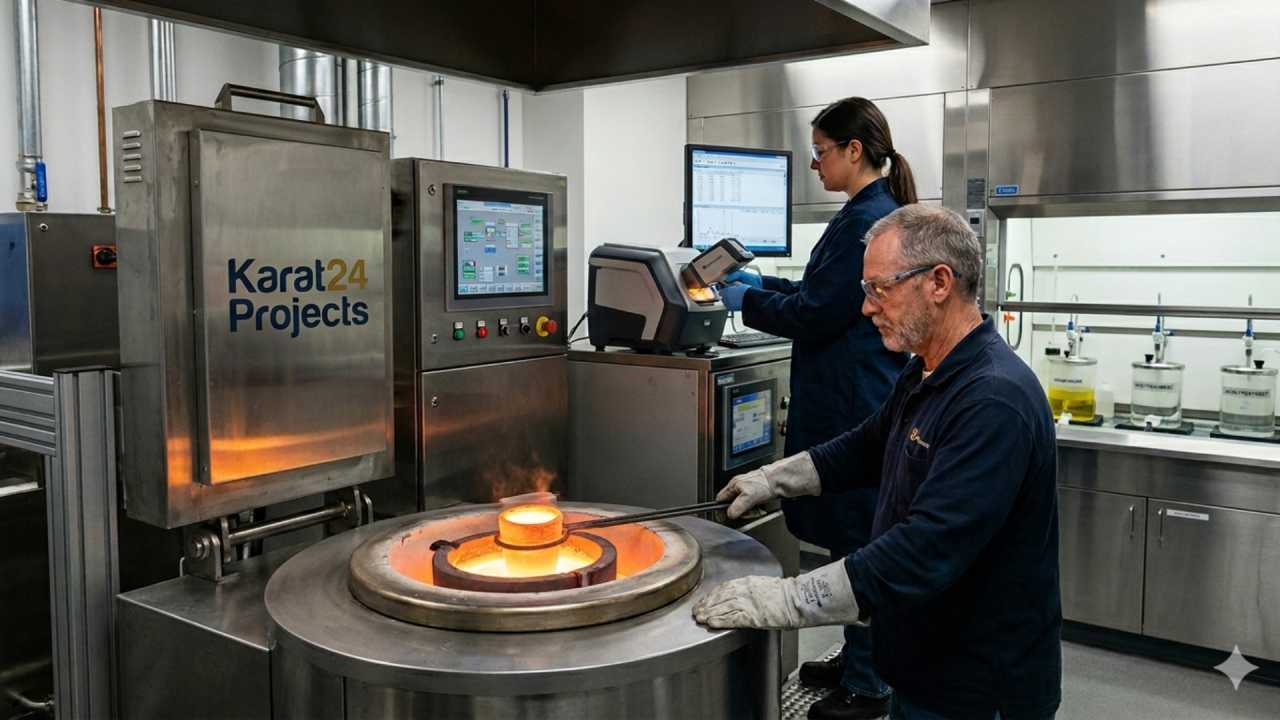
The pyrometallurgical process utilizes a high-temperature furnace to exploit differences in oxidation tendencies and densities between precious metals and base metals. The raw material—whether complex ore concentrate, industrial slag, or dirty scrap—is mixed with specific fluxes (such as borax, silica, sodium carbonate, and litharge/lead oxide) and a collector metal (typically lead, silver, or nickel).
When heated in a crucible to temperatures often exceeding 1000 degrees Celsius, the mixture melts and separates into two distinct liquid layers based on immiscibility and density. The flux reacts with base metal oxides to form a glassy, low-density top layer known as slag. Meanwhile, the heavy collector metal melts and migrates downward through the crucible, acting as a chemical sponge that dissolves and concentrates all the precious metals into a dense alloy pool at the bottom.
Once cooled, the slag is mechanically broken away, leaving the precious metal-bearing collector alloy. In a subsequent high-temperature thermal step called cupellation, this alloy is placed in a porous, bone-ash or magnesia vessel called a cupel and heated in an oxidizing atmosphere. Base metals and collector metals (like lead) oxidize rapidly. These oxides are either volatilized into the air handling system or absorbed into the porous walls of the cupel via capillary action. The unoxidizable noble precious metals remain on the surface of the cupel as a gleaming, consolidated metallic bead or large block known as a Dore bar.
Key Purposes and Applications
-
Fire Assay Purpose: Operates as the global gold standard for determining metal content, sampling accuracy, and laboratory-grade analysis. It provides the definitive certification used to settle multi-million dollar commercial transactions between mining operations and refineries.
-
Pyrometallurgical Refining: Used on an industrial scale to smelt bulk mining concentrates and recover precious metals from highly contaminated, low-grade scrap streams, such as crushed industrial crucibles, sweeps, and spent catalytic converters.
Key Advantages
-
Accurate Assay Results: Fire assay provides unmatched analytical precision for gold and silver, unaffected by the complex matrix interferences that can confuse modern electronic instruments.
-
Handles Dirty Scrap: Pyrometallurgy can comfortably process highly contaminated feedstocks containing heavy plastics, ceramics, glass, and mixed organic residues that would destroy chemical or electrolytic systems.
-
Effective for Complex Ores: Easily separates precious elements from refractory iron, zinc, and lead sulfide ores.
Limitations
-
Energy Intensive: Maintaining heavy industrial furnaces at extreme temperatures for extended durations demands immense fossil fuel or electrical energy inputs.
-
Emissions Concerns: The process generates significant combustion byproducts, particulate matter, and hazardous metal vapors (such as lead and cadmium) that require sophisticated multi-stage scrubbers and filtration plants.
-
Lower Final Purity: Pyrometallurgy alone rarely produces ultra-pure metals. It excels at concentrating precious metals to a 90%-98% Dore state, but further chemical or electrolytic refining is required to achieve commercial 99.99% market purity.
Industrial Industries
This approach is primarily utilized by primary mining concentrators, large-scale scrap smelting plants, and independent analytical testing laboratories servicing the global mining trade.
Chemical Refining Methods
Chemical refining, or hydrometallurgy, relies on wet-chemical processes to selectively dissolve, separate, and precipitate precious metals within aqueous solutions. This methodology is highly prized for its rapid reaction kinetics, flexibility, and capability to process a diverse range of secondary recycled materials.
How It Works
The chemical refining workflow relies on three sequential chemical phases: dissolution, selective separation, and reduction precipitation. First, the solid metal alloy or scrap is exposed to highly aggressive, concentrated acid mixtures that break the atomic bonds of the metals, converting them into soluble metal-chloride or metal-nitrate complexes. Once everything is in a liquid state, chemical engineers introduce highly selective reagents or solvent extractants that interact exclusively with one specific metal ion species while ignoring the others. Finally, a reducing chemical agent is added to the targeted solution, causing the dissolved metal ions to regain electrons, revert to their solid metallic state, and drop out of solution as a highly pure powder (sponge), which can then be filtered, washed, and melted.
Common Chemicals and Reagents
Hydrometallurgical facilities store and handle vast quantities of industrial chemicals:
-
Hydrochloric Acid: Provides the essential chloride ions required to stabilize precious metals in solution.
-
Nitric Acid: Acts as a powerful oxidizing agent capable of dissolving silver, base metals, and driving complex redox reactions.
-
Sulfuric Acid: Frequently deployed to selectively strip bulk copper and base metal contaminations from scrap before precious metal dissolution.
-
Sodium Metabisulfite: A selective reducing agent used to precipitate dissolved gold from acid solutions as pure metallic powder.
-
Chlorine Gas: Used as a high-temperature gaseous oxidant to convert base metals into volatile chlorides.
Popular Chemical Methods
-
The Miller Process: This is a high-temperature chemical variation performed in a molten state rather than an aqueous solution. Chlorine gas is bubbled directly into molten impure gold bullion. The base metals and silver react with the chlorine first, forming liquid chloride salts that float to the top for easy skimming. The Miller process is exceptionally fast, taking gold from low grades up to roughly 99.5% purity within hours, making it the preferred choice for primary mining refineries seeking rapid throughput before final Wohlwill electrolysis.
-
Aqua Regia Refining: A classic wet-chemical technique utilizing a freshly mixed solution of hydrochloric acid and nitric acid (typically in a 3:1 ratio). This potent mixture generates highly reactive volatile nitrosyl chloride and nascent chlorine, which easily dissolves gold and platinum-group metals into solution while precipitating silver out as solid silver chloride. Once filtered, the gold-bearing solution is treated with sodium metabisulfite, which selectively reduces the gold ions back into 99.99% pure gold sponge.
-
Wet Chemical Recovery: Heavily utilized in modern electronic waste (e-waste) processing facilities. It uses specialized leaching solutions, cyanides, or alternative lixiviants like thiosulfate to strip microscopic gold finger platings, palladium multi-layer ceramic capacitors, and silver traces from crushed circuit board matrices.
Key Advantages
-
Fast Processing: Reactions occur rapidly, allowing lots to be processed and chemically settled within hours rather than the days required for electrolysis.
-
High Recovery Rates: When managed correctly, wet-chemical techniques can recover over 99.9% of the targeted precious metal present in the solution.
-
Flexible for Small Batches: Excellent for small, variable refiners who handle custom lots of jewelry scrap or varied electronic components.
-
Highly Effective for Recycled Materials: Can selectively isolate individual metals out of a highly complex, chaotic mix of post-consumer scrap.
Limitations
-
Hazardous Chemicals: Requires handling large quantities of highly corrosive acids and, in some industrial applications, toxic gases or cyanides.
-
Waste Treatment Challenges: Generates substantial volumes of acidic, heavy-metal-laden wastewater and toxic chemical effluents that demand elaborate, legally compliant neutralizations and treatments.
-
Operator Safety Concerns: The generation of toxic gaseous fumes (such as red nitrogen dioxide or deadly chlorine gas) requires pristine engineered ventilation systems and stringent personal protective equipment protocols.
Industrial Industries
Chemical refining is the backbone of urban jewelry recycling operations, decentralized e-waste recycling depots, specialized small-to-medium independent refineries, and precious metal laboratory separation units.
Comparative Analysis
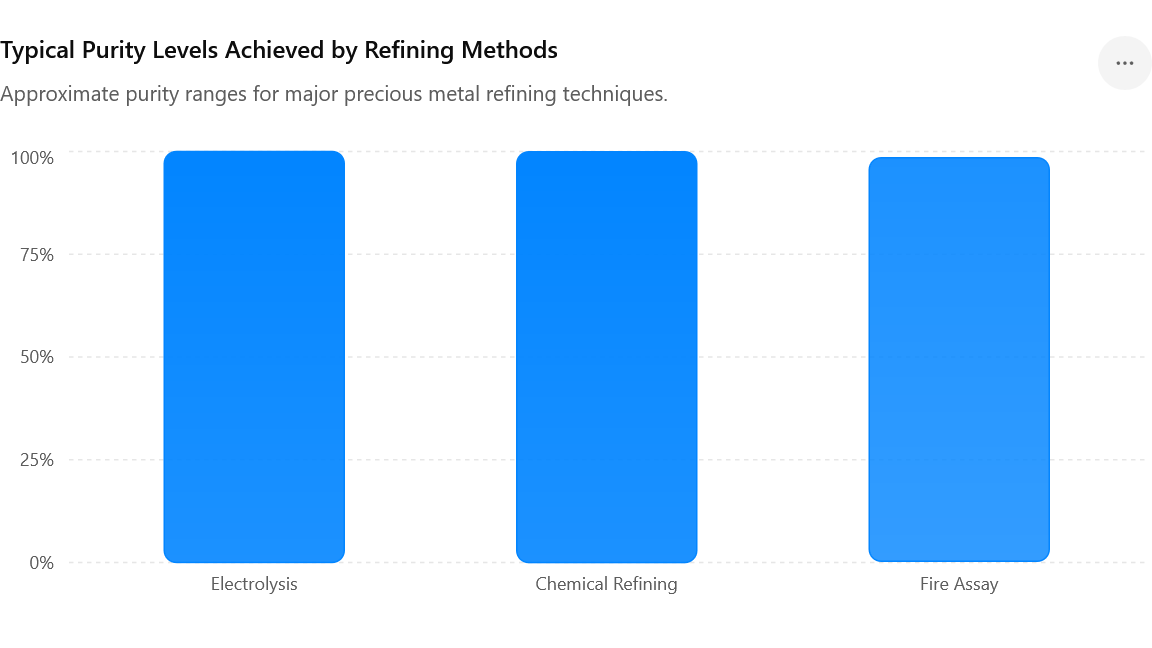
Choosing the optimal precious metal refining methodology is not a matter of finding a single “best” option; rather, it is about aligning the unique capabilities of a specific process with the physical characteristics of the incoming feedstock, economic constraints, and end-market requirements.
| Factor | Electrolysis | Fire Assay / Pyrometallurgy | Chemical Refining |
| Purity | Very High (99.99% – 99.999%) | Moderate (90% – 98% for Dore) | High (99.9% – 99.99%) |
| Speed | Medium (Takes days to weeks) | Fast (Takes hours for melt/separation) | Fast (Takes hours to a day) |
| Cost Structure | High initial capital setup; high working capital lock-up | High ongoing energy costs; high furnace maintenance | Significant variable chemical cost; high waste-treatment cost |
| Environmental Impact | Moderate (Acid management, power use) | High emissions (CO2, lead vapors, particulates) | Hazardous waste (Acid effluents, toxic gas emissions) |
| Scalability | Excellent (Modular tankhouse expansion) | Industrial Scale (Large furnace throughput) | Flexible (Easily scales down to bench or up to plant) |
| Best Analytical/Industrial Use | Fine Bullion, Minting, Electronics Grade | Ore Concentration, Scrap Analysis, Smelting | Recycling, E-waste, Jewelry, Small Batches |
Strategic Implementation and Combined Workflows
In the global industrial landscape, large-scale refineries rarely rely on just one of these methods in isolation. Instead, they engineer integrated, multi-stage hybrid workflows to maximize economic yields, minimize processing times, and achieve absolute product purity.
A standard integrated operational workflow inside an international refinery typically unfolds as follows:
[Raw Contaminated Scrap/Ore] -> [Pyrometallurgical Smelting] -> [Chemical Pre-treatment / Miller Process] -> [Electrolytic Refining] -> [Ultra-Pure Market Product]
-
Pyrometallurgical Smelting: Low-grade, highly contaminated materials (like complex ores or crushed catalytic converters) are first sent into a pyrometallurgical blast furnace. This step burns off organics and strips away bulk slag, concentrating the scattered precious metals into a dense, semi-pure metallic collector alloy bar (90% purity).
-
Chemical Pre-treatment or Miller Process: These intermediate bars are then treated via chemical methods or the high-speed Miller chlorine process to rapidly strip away the remaining bulk base metals (like copper or nickel) and silver, elevating the gold purity to roughly 99.5% in a matter of hours.
-
Electrolytic Refining: Finally, these 99.5% pure bars are cast into anodes and placed into an electrolytic cell (such as the Wohlwill or Moebius setup). Over the next several days, electrolysis completes the final precision purification, systematically removing the final trace fractions of impurities to yield pristine 99.999% pure investment bars or electronics-grade components.
By linking these technologies, the refinery utilizes pyrometallurgy to handle volume and dirt, chemical refining to gain speed and initial concentration, and electrolysis to achieve uncompromised final purity.
Environmental and Safety Considerations
Modern industrial precious metals refining operates under intense regulatory oversight and social scrutiny. Each method presents unique, hazardous challenges that require sophisticated engineering and strict risk management to protect workers and local ecosystems.
Electrolysis
While electrochemistry is visually cleaner than smoky furnaces, it carries hidden environmental and operational hazards. The massive electrical demand of continuous, multi-megawatt tankhouses contributes substantially to secondary carbon footprints if drawing from non-renewable electrical grids.
Furthermore, the liquid electrolyte solutions consist of highly concentrated, acidic metallic salts. Over time, these electrolytes accumulate high concentrations of toxic base-metal impurities (such as arsenic, antimony, and nickel) that render the solution inactive. Refineries must operate complex, dedicated water-treatment systems to selectively filter, neutralize, and safely crystallize these hazardous heavy-metal liquid wastes to prevent environmental contamination.
Fire Assay and Pyrometallurgical Smelting
The high-temperature thermal processing of ores and scrap generates significant direct environmental and workplace safety risks. Furnaces release heavy loads of carbon dioxide and particulate matter.
More critically, the traditional use of lead as a collector metal in fire assay and smelting introduces severe risks of workplace lead exposure and atmospheric lead emissions. Refineries must construct heavy-duty baghouses, multi-stage electrostatic precipitators, and gas scrubbers to capture volatile lead, cadmium, and mercury vapors before the furnace air stream can be safely vented. Workers must undergo routine blood-lead monitoring, wear positive-pressure respiratory protection, and work within strictly controlled airflow environments.
Chemical Refining
Wet hydrometallurgy represents an intense chemical management challenge. The use of vast quantities of boiling aqua regia, nitric acid, and chlorine gas creates a high-risk environment for catastrophic spillages and acute chemical exposure. The chemical reactions release dense, corrosive gases like nitrogen dioxide and chlorine, both of which can cause severe respiratory damage or death upon failure of ventilation systems.
The byproduct of hydrometallurgy is a massive stream of highly acidic wastewater contaminated with heavy metals and toxic complexes. Modern sustainability protocols mandate closed-loop chemical processing, where acids are chemically regenerated and reused within the plant, toxic vapors are captured via alkaline chemical scrubbers, and final wastewater streams undergo strict multi-phase chemical precipitation, settling, and filtration to ensure zero-liquid-discharge compliance.
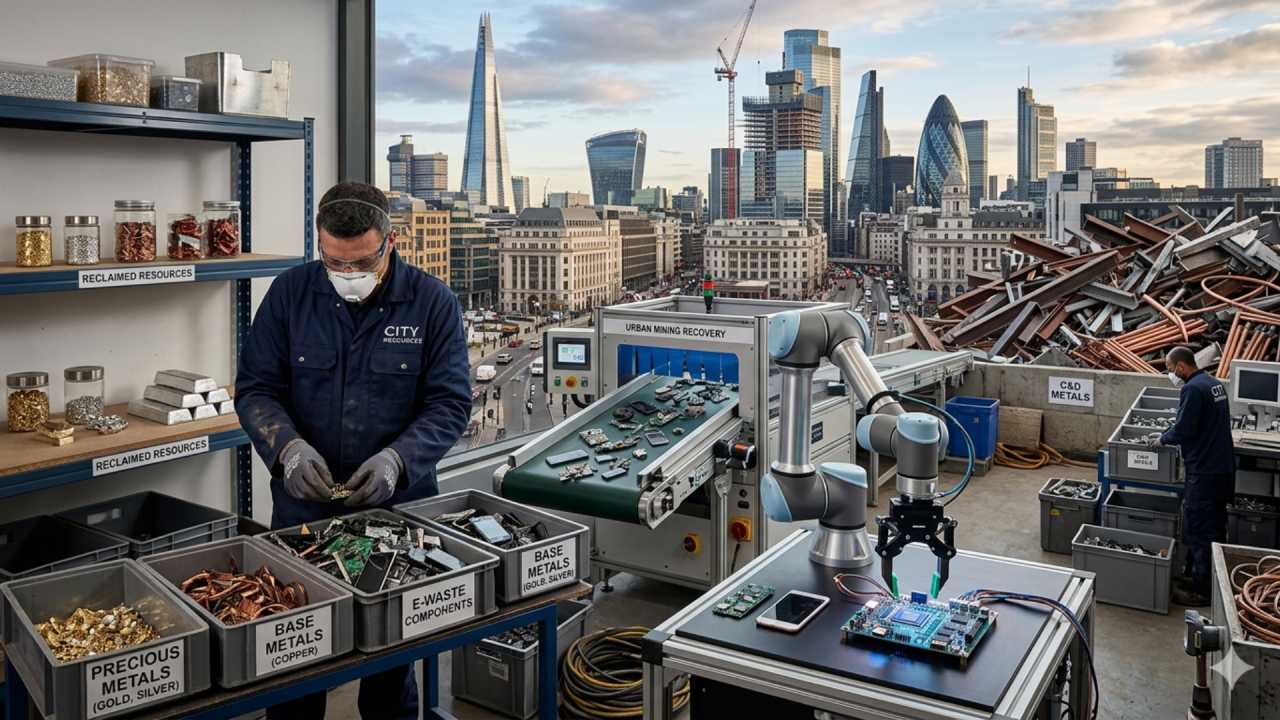
The global refining sector is actively shifting toward “urban mining” (recycling existing electronic and structural waste) to reduce the immense environmental disruption associated with primary territorial mining. Embracing a circular economy framework allows refineries to extract valuable resources from existing waste streams using highly controlled, closed-loop industrial processes.
Future Trends in Precious Metals Refining
The precious metals refining industry is undergoing an accelerated technological evolution, driven by shifting environmental regulations, rising processing costs, and a massive influx of new, highly complex feedstocks.
Green Refining Technologies and Hydrometallurgical Innovation
To bypass the hazardous environmental footprints of aggressive mineral acids and high-emission furnaces, researchers are developing alternative green refining technologies. Chief among these is bioleaching (or biomining), which utilizes specialized, non-pathogenic bacterial cultures (such as Acidithiobacillus ferrooxidans) to naturally break down mineral matrices and solubilize precious metals from low-grade ores and e-waste without generating toxic gas emissions.
Simultaneously, advanced hydrometallurgy is embracing ionic liquids and deep eutectic solvents. These designer eco-friendly solvents exhibit near-zero volatility, are highly biodegradable, and possess unique electrochemical properties that allow for the highly selective dissolution and recovery of precious metals directly at room temperature.
Artificial Intelligence, Automation, and Advanced Processing
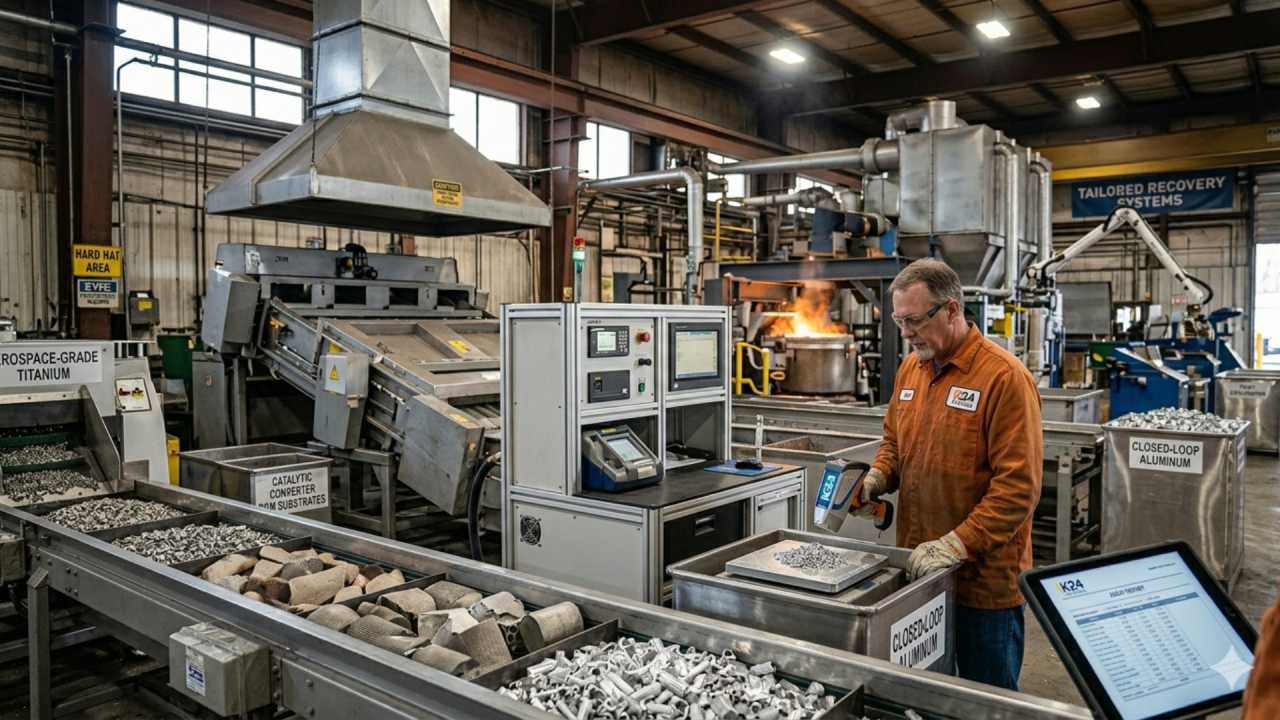
The modern refinery is increasingly automated. Artificial Intelligence (AI) and advanced machine learning algorithms are being integrated into the sampling and pyrometallurgical sorting phases. Automated optical and X-ray sorting systems use AI to scan, identify, and mechanically separate precious-metal-rich components from electronic scrap lines at blinding speeds.
Inside the refineries, automated robotic arms handle the physical casting of anodes, the mechanical stripping of heavy cathode plates, and the precise monitoring of cell voltages in electrolytic tankhouses. This removes human operators from high-temperature and acid-mist environments, drastically improving workplace safety.
Surging Demand and the Circular Economy
The ongoing global transition toward green infrastructure and advanced technology is driving unprecedented demand for ultra-pure precious metals and platinum-group elements:
-
Electric Vehicles: Require substantial gold, silver, and palladium inputs for advanced onboard electronics, battery management microchips, and autonomous sensor networks.
-
Solar Energy: The massive global expansion of photovoltaic solar panel installations relies heavily on vast quantities of high-purity silver paste for front-face electrical contacts.
-
Semiconductor Industries: The explosive growth of advanced computing architectures, AI data centers, and telecommunications infrastructure demands an unceasing supply of high-purity, defect-free bonding wires and sputtering targets.
As primary geological reserves become harder and more expensive to mine, the expansion of highly efficient, automated, and green precious metals refining technologies will dictate the speed and sustainability of our collective industrial future.
Final Thoughts
Precious metals refining is a highly complex metallurgical discipline where no single methodology is universally superior. The selection of an optimal refining strategy requires a careful evaluation of the physical and chemical state of the incoming feed material, desired final purity goals, initial capital and ongoing operational cost constraints, local environmental regulations, and overall production volume requirements.
Primary mining operations processing bulk, rocky ore concentrates will continue to rely on the raw processing power of pyrometallurgical smelting to initially concentrate their products. Decentralized urban recyclers and custom jewelry processors will leverage the rapid speed, flexibility, and targeted recovery profiles of aqueous chemical refining. Meanwhile, large-scale bullion producers and semiconductor material suppliers will consistently deploy electrolytic refining to achieve the uncompromising, ultra-pure standards required by global financial institutions and high-tech manufacturing.
Modern precious metal refining increasingly combines electrochemical, thermal, and chemical techniques to maximize purity, recovery, and sustainability.
By seamlessly bridging the gap between thermal concentration, chemical separation, and electrochemical purification, the global refining industry ensures that the world’s most valuable and functional elements are continuously reclaimed, purified, and re-circulated to power human progress.
Frequently Asked Questions
What is the most profitable gold refining method for small jewelry recycling businesses?
The most profitable method for small-scale jewelry recycling businesses is typically wet chemical refining using aqua regia. This is because chemical refining requires a significantly lower initial capital expenditure for equipment compared to large-scale electrolytic tankhouses or pyrometallurgical blast furnaces. A jeweler or local recycler can process custom, small batches of scrap gold, old rings, and bench sweeps in a matter of hours, achieving up to 99.99% purity. This rapid turnaround time dramatically reduces the amount of working capital locked up in unrefined inventory, maximizing cash flow and profitability for small operations.
How does the Wohlwill process differ from the Moebius process in electrolytic refining?
The primary difference lies in the target metal being refined and the specific composition of the chemical electrolyte used in the cell:
-
The Wohlwill Process is specifically designed for gold purification. It uses an electrolyte solution composed of gold chloride and hydrochloric acid, operated at high temperatures (around 65 to 70 degrees Celsius) with a combined alternating and direct current to prevent the passivation of silver impurities on the anode.
-
The Moebius Process is designed exclusively for silver purification. It operates at room temperature using a silver nitrate and nitric acid electrolyte solution. The silver deposits at the cathode as loose crystals that are mechanically scraped away, while any gold present falls into the anode slime bag for separate collection.
Why is fire assay considered the definitive gold purity test in commercial mining transactions?
Fire assay is recognized as the global legal standard for commercial mining transactions because it completely isolates noble precious metals from all background rock matrices and complex base metals through destructive thermal fusion. Unlike electronic methods like X-ray Fluorescence (XRF) or Inductively Coupled Plasma (ICP) spectroscopy, which can be thrown off by surface variations, microscopic coatings, or complex elemental interferences within a sample, fire assay completely homogenizes and separates the actual physical metal. The final weighed bead gives an absolute, highly precise quantitative measurement of the gold content across the entire bulk lot.
What are the environmental hazards of chemical gold refining with aqua regia?
The primary environmental and safety hazards of using aqua regia include the generation of toxic atmospheric emissions and highly corrosive wastewater:
-
Toxic Fumes: The chemical reaction between hydrochloric acid and nitric acid produces highly dangerous nitrosyl chloride and nitrogen dioxide gases, which appear as dense orange-red fumes. If inhaled, these gases cause severe respiratory tract damage and pulmonary edema.
-
Hazardous Wastewater: Once the gold is precipitated, the remaining liquid byproduct is a strongly acidic solution heavily contaminated with dissolved base metals like copper, nickel, zinc, and iron. If this effluent is not treated through strict multi-stage chemical neutralization, pH balancing, and metal precipitation, it can devastate local aquatic ecosystems and contaminate municipal water systems.
Can electronic waste be refined using pyrometallurgical smelting methods directly?
Yes, electronic waste can be processed using pyrometallurgical smelting, but it is rarely used as a standalone method for e-waste because of the high loss rates of certain trace elements and extreme emissions. In large industrial facilities, crushed circuit boards are often fed directly into secondary copper smelters as a minor part of the feed stream. The plastics and resin boards actually act as a fuel source in the furnace, while the metals melt into a collector alloy pool. However, this process must be coupled with high-efficiency air filtration systems to capture toxic dioxins, furans, and lead vapors generated by burning circuit board components, followed by chemical or electrolytic refining to isolate the individual precious metals.
What is the final purity level difference between the Miller process and electrolysis?
The final purity level difference is significant and determines how the metals can be used in the marketplace:
-
The Miller Process is a rapid gas-injection chemical method that can only purify gold up to approximately 99.5%. It is highly efficient at removing the bulk of base metal impurities quickly, making it ideal for primary mines to cast commercial bullion bars, but it cannot remove trace platinum-group metals or the final fractions of silver.
-
Electrolytic Refining (Wohlwill Process) takes pre-refined gold (often from the Miller Process) and pushes the final purity level up to 99.99% or 99.999%. This ultra-pure threshold is mandatory for investment-grade bullion traded on international exchanges and for the specialized fabrication of semiconductor microchips.