
The Future of Sustainable Gold Refining: New Tech
Why Sustainable Gold Refining Matters
Gold has held a unique position in human civilization for millennia, serving simultaneously as a symbol of wealth, a foundational pillar of global financial systems, and a critical material for cultural artifacts. In the modern era, its utility has expanded far beyond jewelry and central bank vaults. Today, gold is an essential component in advanced electronics, aerospace engineering, medical diagnostic equipment, and renewable energy technologies. As global demand for this precious metal continues to rise, driven by both traditional markets and expanding high-tech industries, the methods used to extract and refine it face unprecedented scrutiny.
The traditional process of gold refining is notoriously resource-intensive and environmentally damaging. For every ounce of pure gold produced, tons of rock must be mined, crushed, and treated with hazardous chemicals, leaving behind vast footprints of toxic waste, degraded landscapes, and significant greenhouse gas emissions. Historically, the economics of gold production prioritized yield and purity above all else, often treating environmental degradation as an unavoidable cost of doing business.
However, a profound paradigm shift is underway. Institutional investors are increasingly tying capital deployment to strict Environmental, Social, and Governance (ESG) criteria. Regulators worldwide are tightening limits on emissions, chemical waste, and water usage, while consumer awareness regarding the ethical and ecological footprint of luxury goods is at an all-time high. The concept of “green gold” is no longer just a marketing buzzword; it has become a commercial and regulatory imperative.
To survive and thrive in this changing landscape, the gold refining sector must undergo a fundamental transformation. The industry is moving away from its legacy as a pollution-heavy metallurgical practice toward a highly sophisticated, technology-driven sustainability model. By leveraging breakthroughs in green chemistry, biotechnology, artificial intelligence, and renewable energy, innovators are proving that it is possible to deliver high-purity gold while minimizing the impact on the planet.
Traditional Gold Refining and Its Environmental Problems
To understand the importance of modern technological interventions, it is necessary to examine the environmental liabilities inherent in legacy gold refining workflows. Traditional gold refining relies heavily on pyrometallurgical (heat-based) and hydrometallurgical (chemical-based) processes that have remained structurally unchanged for over a century. While highly effective at achieving the 99.99% purity required by financial and industrial markets, these methods inflict severe ecological damage.
Cyanide Leaching and Chemical Hazards
The bedrock of industrial gold extraction and preliminary refining is cyanidation, a hydrometallurgical process where crushed ore is treated with a sodium cyanide solution. The cyanide bonds with gold particles, dissolving them into a liquid solution from which the metal can later be recovered. While highly efficient even for low-grade ores, cyanide is an acutely toxic chemical.
The management of cyanide-laden wastewater and tailings—the residual materials left after processing—poses a permanent environmental threat. Tailings dam failures can release millions of liters of toxic slurry into local ecosystems, decimating aquatic life, poisoning drinking water supplies, and rendering surrounding land sterile for decades. Furthermore, even during normal operations, the volatilization of cyanide solutions can release harmful hydrogen cyanide gas into the atmosphere, requiring complex and expensive neutralization systems.
In artisanal and small-scale gold mining, which accounts for a significant portion of global gold production, the situation is often worse due to the widespread use of mercury. Small-scale miners use mercury to form an amalgam with gold particles. This amalgam is then heated over open flames to vaporize the mercury, leaving behind raw gold. This process releases massive quantities of gaseous mercury into the atmosphere, which precipitates into water systems, bioaccumulates in food chains, and causes severe neurological damage to mining communities.
Smelting Emissions and Carbon Footprint
Once gold is extracted from ore, it must be smelted and refined to eliminate remaining base metals like copper, lead, and iron. Traditional smelting involves heating the metal to temperatures exceeding 1,000 degrees Celsius in blast furnaces. This pyrometallurgical phase consumes massive amounts of energy, typically derived from fossil fuels, contributing heavily to the industry’s carbon footprint.
Beyond carbon dioxide, the smelting of gold ores containing sulfides releases substantial volumes of sulfur dioxide and nitrous oxides into the air. These gases are primary drivers of acid rain, which acidifies soil and water bodies, destroying forests and aquatic habitats. Smelting also volatilizes heavy metal impurities, releasing airborne particulates of lead, arsenic, and cadmium that pose severe respiratory and systemic health risks to nearby populations.
Water Resource Depletion and Waste Generation
Gold refining is an incredibly water-intensive industry. Large volumes of freshwater are required for ore washing, chemical preparation, cooling systems, and waste dilution. In many gold-producing regions, which are frequently located in arid or water-stressed environments, the industry’s massive water consumption competes directly with agriculture and domestic human needs, straining local aquifers and provoking social conflict.
The sheer volume of solid waste generated during the journey from raw ore to refined gold bar is astronomical. The industrial gold mining and refining sector generates billions of tons of waste rock and tailing solids annually. This waste is not inert; when exposed to air and water, sulfide minerals in the rock oxidize to form sulfuric acid, leading to acid mine drainage. This highly acidic water leaches heavy metals out of the surrounding rock, creating a toxic runoff that can contaminate regional water tables for centuries after a refining facility closes.
| Environmental Metric | Traditional Refining Impact | Sustainable Refining Target |
| Primary Chemical Reagent | Sodium Cyanide / Mercury | Biodegradable Amino Acids / Thiosulfate |
| Energy Source | Coal, Heavy Fuel Oil, Grid Gas | Solar, Green Hydrogen, Electrification |
| Water Utilization | High freshwater intake, linear use | Closed-loop recycling, zero-liquid discharge |
| Byproduct Management | Toxic tailing ponds, long-term storage | Neutralized, dry-stack tailings, repurposed slag |
The Push Toward Sustainable Refining
The transition toward eco-friendly refining methodologies is not merely a voluntary philanthropic shift; it is being propelled by a combination of regulatory mandates, shifting market dynamics, and the integration of circular economy principles.
The Regulatory Landscape and ESG Mandates
Governments and trans-national bodies are rapidly eliminating the regulatory loopholes that historically allowed polluting refineries to operate unchecked. Environmental legislation has become significantly more stringent, with steep financial penalties and the threat of operational closure for facilities that exceed strict emissions caps or mismanage toxic waste.
Simultaneously, the financial sector has institutionalized Environmental, Social, and Governance (ESG) metrics as core components of risk assessment. Refineries that cannot demonstrate a clear path toward decarbonization and chemical reduction face escalating capital costs, disinvestment, and the loss of insurance coverage.
Furthermore, international responsible sourcing frameworks, such as those established by the London Bullion Market Association (LBMA) and the Responsible Jewellery Council (RJC), have established strict verification protocols. Refineries must prove not only that their gold is conflict-free, but also that its extraction and refining conform to verified environmental safety standards to maintain institutional market access.
Market Pressures and Consumer Expectations
The modern consumer, particularly in the luxury goods and fine jewelry sectors, demands authenticity and ethical accountability. Buyers increasingly want to know the history of the gold they wear, seeking assurances that their jewelry did not contribute to toxic deforestation or river contamination. High-end jewelry brands have responded by pledging to source exclusively from verified sustainable refineries, creating a distinct market premium for ethically certified gold.
A similar trend is emerging in the technology sector. Consumer electronics manufacturers face consumer pressure to clean up their supply chains. Because gold is a vital component in computing infrastructure, these corporations are actively partnering with advanced refineries that can supply gold processed with a lower carbon and chemical footprint, turning corporate sustainability targets into a powerful commercial driver for green refining technology.
The Rise of the Circular Economy
The gold industry is recognizing that relying solely on newly mined, primary geological sources is unsustainable. This realization has accelerated the adoption of the circular economy paradigm, which emphasizes the elimination of waste through the continuous reclamation and recycling of existing materials.
Rather than viewing gold refining exclusively as an extension of mining, the modern industry increasingly views it as a specialized chemical processing discipline capable of treating diverse inputs. By shifting focus toward recycling and urban mining, the refining sector can drastically cut its reliance on primary ore extraction, capturing value from materials that are already above ground and eliminating the environmental liabilities of mining. Sustainable refining technologies have become a major competitive advantage, allowing forward-thinking companies to lower operational risks, cut waste disposal costs, and capture premium market segments.
New Technologies Transforming Gold Refining
To meet these market and regulatory demands, the metallurgical industry is deploying a wave of technological innovations. These advancements span green chemistry, biological processing, digital systems, and advanced thermal engineering, fundamentally altering how gold is isolated and purified.
Cyanide-Free Gold Extraction
Replacing sodium cyanide with non-toxic, eco-friendly chemical alternatives is one of the most critical goals of sustainable refining research. Scientists and chemical engineers have developed several viable alternatives that can extract gold efficiently without creating long-term toxic liabilities.
Thiosulfate Leaching
Thiosulfate leaching utilizes ammonium or sodium thiosulfate to dissolve gold. This chemical process operates in an alkaline environment and is particularly effective for carbonaceous and refractory ores—types of gold ore that are notoriously difficult to treat with traditional cyanidation. The primary environmental advantage of thiosulfate is its incredibly low toxicity profile compared to cyanide. Thiosulfate compounds degrade into harmless sulfur derivatives, eliminating the need for expensive, high-risk tailing containment infrastructure.
While historically constrained by higher reagent consumption and complex chemical control requirements, recent developments in stabilization agents have made thiosulfate a highly competitive industrial-scale option.
Glycine Leaching
An exciting breakthrough in green hydrometallurgy is the use of glycine, a simple, mass-produced amino acid, as a primary leaching agent. Glycine is non-toxic, fully biodegradable, and can be recycled within the refining loop. When combined with low concentrations of an oxidant, glycine selectively dissolves gold while leaving common base metals behind.
Because glycine operates effectively at ambient temperatures and neutral-to-alkaline pH levels, it dramatically reduces both the energy requirements and the corrosive wear on refining equipment. The environmental footprint of a glycine-based refinery is a fraction of a traditional cyanide plant, as the chemical waste can be safely integrated into agricultural fertilizers or safely neutralized without toxic residues.
Halide-Based Chemical Separation
Halide leaching involves using solutions containing chloride, bromide, or iodide to dissolve gold. Chloride leaching, in particular, operates at a very high kinetic rate, dissolving gold significantly faster than traditional cyanidation. Modern refinements in closed-loop engineering have solved legacy issues related to equipment corrosion and gas containment. By keeping the halide solutions within a completely sealed, automated circuit, refineries can achieve exceptional gold recovery rates from complex materials while recycling nearly 100% of the chemical reagents, preventing any hazardous discharge into the environment.
Bioleaching and Biotechnology
Biotechnology is redefining the boundary between engineering and nature through biomining and bioleaching. These processes leverage the natural metabolic capabilities of specific microorganisms to break down complex mineral matrices, exposing encapsulated gold particles for clean recovery.
Microorganisms in Metallurgy
Bioleaching primarily uses chemolithotrophic bacteria, such as Acidithiobacillus ferrooxidans and Sulfolobus species. These organisms thrive in acidic environments and obtain energy by oxidizing iron and sulfur minerals within gold-bearing rocks. When introduced to refractory sulfide ores, these bacteria digest the surrounding iron pyrite and arsenopyrite “cages” that trap gold, making the precious metal accessible for extraction without requiring intensive roasting or harsh chemical pre-treatments.
Benefits and Scalability Challenges
The primary environmental benefit of bioleaching is its minimal energy and chemical consumption. The process operates at low, atmospheric temperatures and eliminates the need for fossil-fuel-powered roasting furnaces, drastically lowering greenhouse gas emissions and completely avoiding sulfur dioxide pollution. Furthermore, biotechnology allows for the profitable processing of ultra-low-grade ores and legacy mining waste that were previously discarded as un-economical, promoting a more thorough utilization of existing resources.
However, biotechnology does face operational challenges:
-
Processing Velocity: Bacterial oxidation is fundamentally a biological process, meaning it takes days or weeks to achieve what pyrometallurgical smelting accomplishes in hours.
-
Bioreactor Scale: Scaling up biological systems requires vast bioreactor tanks with precise controls for temperature, aeration, and pH, requiring significant capital investment and a larger physical footprint for the processing plant.
-
Toxin Sensitivity: The microbial cultures can be sensitive to sudden changes in ore chemistry or the buildup of heavy metal toxins, which can stall the biological system and require sophisticated monitoring to maintain stability.
AI and Automation in Refining
The modern sustainable refinery is increasingly defined by its digital infrastructure. The integration of artificial intelligence, machine learning, and advanced automation allows processing plants to maximize efficiency while minimizing resource consumption and waste.
Process Optimization via Machine Learning
Gold refining is a highly complex chemical process where minor variations in ore composition, temperature, reagent concentration, and flow rates can cause significant changes in recovery yields. Industrial AI systems continuously analyze data from thousands of smart sensors embedded throughout the refining circuit.
By running these real-time data streams through predictive machine learning models, the system can instantly adjust operational parameters. For example, the automated circuit can instantly optimize chemical dosing down to the milligram or modulate furnace temperatures based on the exact composition of the material stream. This level of precision eliminates the traditional practice of chemical over-dosing, significantly reducing reagent waste and ensuring that every unit of energy consumed is utilized with maximum efficiency.
Digital Twins and Predictive Maintenance
Refineries are deploying “digital twins”—highly accurate, real-time virtual simulations of the entire physical refining plant. These digital twins allow engineers to simulate operational changes, test new chemical inputs, and optimize workflows in a virtual environment before implementing them on the factory floor.
Furthermore, AI-driven predictive maintenance systems analyze vibration, acoustic, and thermal data from heavy machinery like grinders, pumps, and centrifuges. By identifying mechanical wear and predicting failures weeks before they occur, the system prevents catastrophic equipment breakdowns. This eliminates emergency shutdowns, which are notorious for causing accidental chemical spills, energy spikes, and operational waste.
Green Energy Integration
To eliminate the heavy carbon footprint associated with pyrometallurgical processing and high-temperature electrolysis, refineries are aggressively transitioning their energy architectures toward renewable alternatives.
Electrification and Solar Thermals
Legacy smelting operations rely on burning coal, oil, or natural gas to melt metals. Modern sustainable refineries are replacing these fossil-fueled systems with advanced electric induction furnaces. When powered by a dedicated renewable energy mix—such as on-site solar arrays, wind turbines, or hydroelectric contracts—the direct carbon emissions of the melting and casting stages can be reduced to zero.
Additionally, pioneering facilities located in high-solar-radiation zones are experimenting with concentrated solar thermal systems. These installations use arrays of mirrors to focus sunlight, generating the extreme temperatures required for smelting directly from solar energy without any electrical conversion losses.
The Role of Green Hydrogen
For ultra-high-temperature metallurgical steps that historically required natural gas combustion, green hydrogen is emerging as a game-changing alternative. Generated via the electrolysis of water using renewable electricity, green hydrogen burns cleanly, producing only water vapor as a byproduct.
Integrating hydrogen-powered burners into refining furnaces allows facilities to maintain the intense thermal baseloads necessary for industrial bullion production, completely decoupling the metallurgical refining process from fossil fuel dependencies.
Water Recycling and Closed-Loop Systems
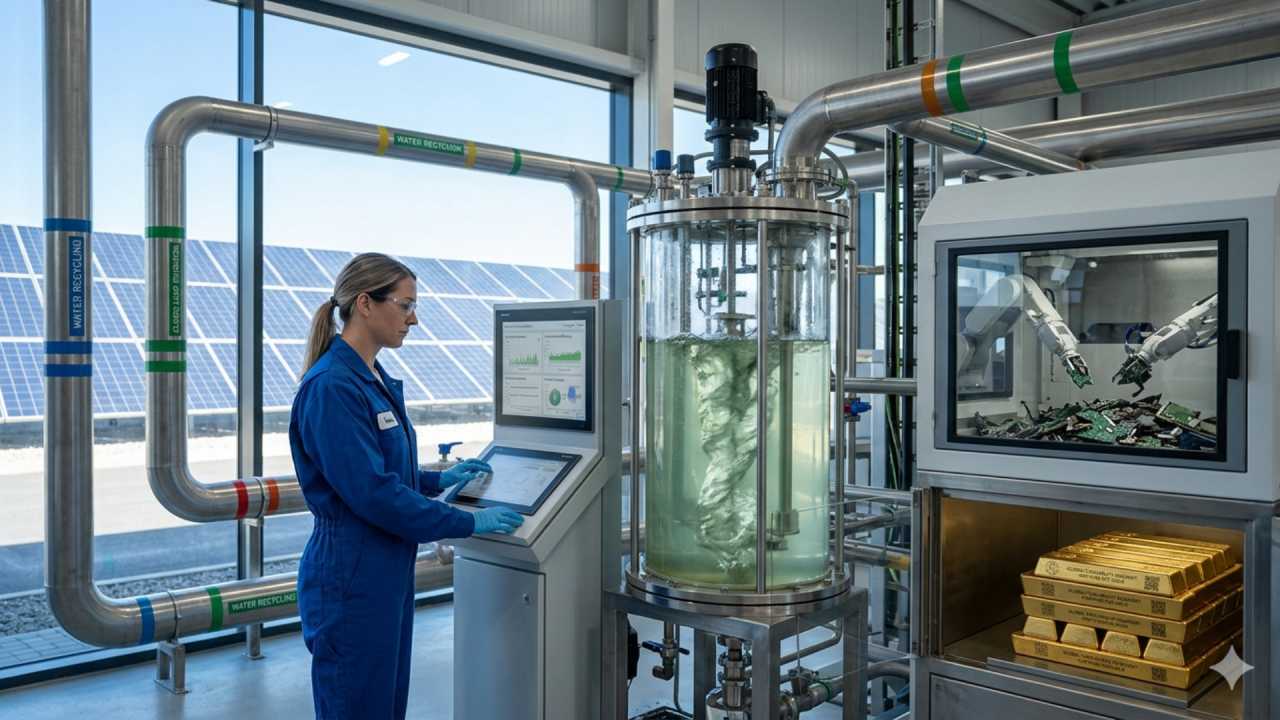
Water scarcity is one of the most pressing ecological challenges of our time, forcing sustainable refineries to reconsider how they manage this vital resource. The industry is rapidly shifting toward closed-loop water systems designed to decouple processing from local freshwater aquifers.
Zero-Liquid Discharge (ZLD) Technology
Advanced refineries are implementing Zero-Liquid Discharge (ZLD) systems, an engineering approach ensuring that no wastewater leaves the boundaries of the facility. ZLD plants utilize a sophisticated combination of reverse osmosis, ultrafiltration, and thermal evaporation technologies to treat industrial wastewater.
By separating dissolved salts, heavy metals, and chemical residues from the water stream, the system produces highly purified water that is immediately pumped back into the refining circuit. The remaining dry, solid waste crystalline byproducts can then be isolated, treated, and safely disposed of or repurposed for secondary industrial uses, entirely eliminating the risk of toxic runoff into local river systems.
Advanced Filtration and Remediation
Beyond ZLD, refineries are incorporating advanced nanotechnology filters and electrocoagulation systems. These technologies can target and isolate specific heavy metal ions from wastewater streams with remarkable precision. By reclaiming trace metals like copper, nickel, and zinc from the water, the refinery turns a waste-treatment obligation into an additional revenue stream, while ensuring that the water circulating within the plant remains free of contaminants that could disrupt the gold purification process.
E-Waste Gold Recovery (“Urban Mining”)
One of the most profound expansions of sustainable refining is “urban mining”—the extraction of gold from post-consumer electronics, including discarded smartphones, computers, television circuit boards, and server arrays.
The Electronics Commodity Gold Mine
The geological concentration of gold in natural ore deposits is surprisingly low; industrial mines often blast, haul, and crush an entire ton of rock to recover just one to five grams of gold. In contrast, a single ton of discarded computer circuit boards contains anywhere from 100 to 400 grams of gold, along with significant quantities of silver, copper, and palladium.
This makes e-waste an incredibly rich, high-grade source of precious metals. By focusing refining infrastructure on these above-ground, post-consumer resources, the industry can bypass the massive environmental devastation associated with landscape excavation, open-pit mining, and primary milling.
Modern Hydrometallurgical Recycling
Historically, e-waste recycling relied on primitive pyrometallurgical techniques: burning plastic circuit boards in open smelters to melt out the metals, which released highly toxic dioxins and furans into the atmosphere. Modern urban mining facilities use advanced, automated hydrometallurgical circuits instead.
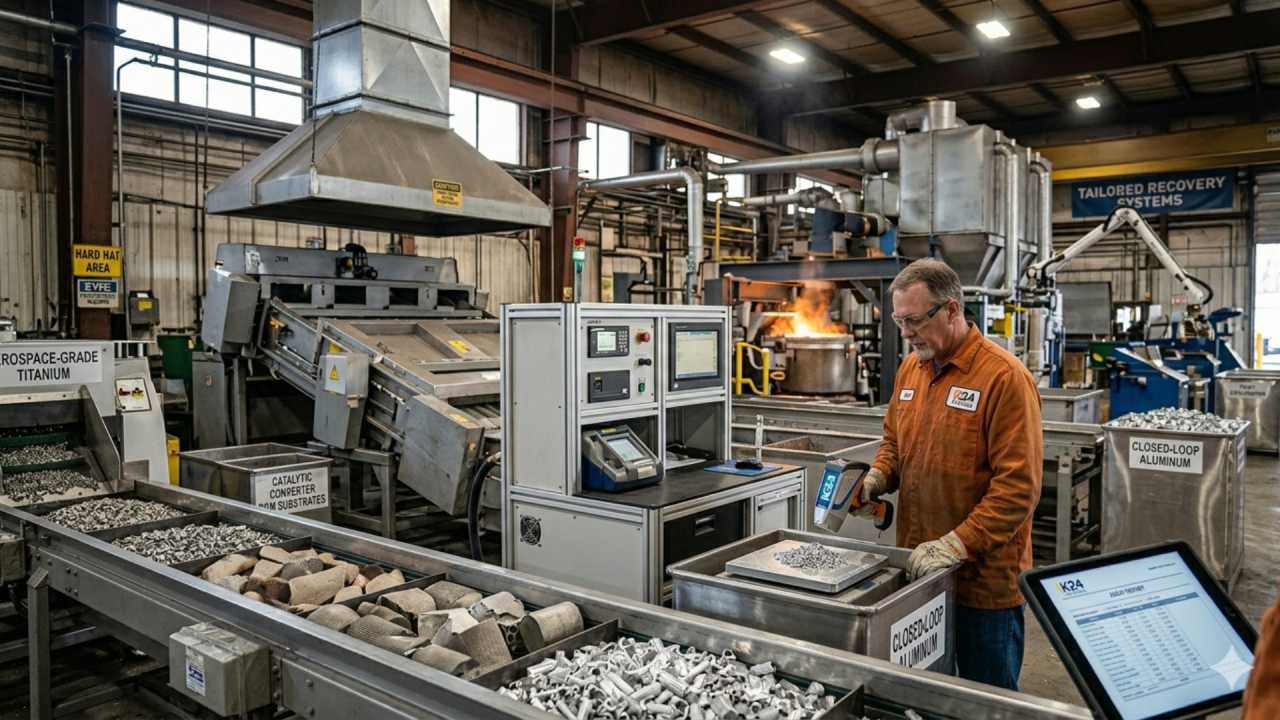
First, robotic sorting lines equipped with optical sensors and AI vision systems quickly strip components, separating plastic housings and batteries from the precious-metal-bearing boards. The isolated circuitry is then shredded and treated with green chemistry formulations, such as the previously discussed glycine or thiosulfate solutions. These solutions selectively dissolve the gold at room temperature, completely avoiding toxic air emissions and leaving plastics and base metals intact for individual recycling streams.
Blockchain and Traceability in Ethical Gold
Environmental sustainability is fundamentally linked to supply chain integrity. A refinery can deploy the cleanest chemical technology available, but if it unknowingly processes gold sourced from illegal mining operations that destroy protected rainforests, its sustainability claims are invalidated. To address this, the industry is adopting blockchain technology to create unalterable records of origin and custody.
Immutable Ledgers and Supply Chain Transparency
Blockchain technology operates as a decentralized, digital ledger that records transactions across a network of computers. In the context of ethical gold sourcing, every event in a gold unit’s journey—from its initial extraction or recycling collection to its chemical refining, casting, and final retail sale—is recorded as an immutable digital record.
Because these records cannot be altered, deleted, or backdated after entry, they provide an un-falsifiable audit trail. Any attempt to introduce illegally sourced or un-verified gold into a certified sustainable refining circuit is immediately flagged by the system, preventing the laundering of unethical gold into legitimate global markets.
Digital Gold Passports
To operationalize this level of transparency, refineries are issuing “Digital Gold Passports” for individual bullion bars. These passports utilize unique physical identifiers—such as laser-etched cryptographic micro-marks, isotopic signatures, or molecular markers embedded directly into the gold alloy.
Scanning these markers connects the physical metal to its digital twin on the blockchain ledger. This allows institutional buyers, industrial manufacturers, and retail consumers to instantly verify the complete history of the gold:
-
The exact mine or e-waste facility where the raw material originated.
-
The specific sustainable refining technologies used to purify the batch.
-
Verification of carbon offsets or renewable energy certificates utilized during processing.
-
Compliance certificates confirming zero-cyanide processing and ethical labor practices.
This level of radical transparency transforms gold from an anonymous, interchangeable commodity into a fully auditable, branded asset, providing a powerful economic incentive for sustainable operational models.
Economic Challenges and Industry Barriers
Despite the clear ecological advantages of modern sustainable gold refining technologies, their widespread adoption across the global market faces significant economic and structural hurdles.
High Capital Expenditure and Implementation Costs
The primary barrier to deploying green refining technologies is the substantial upfront capital expenditure required. Designing and constructing a modern refinery equipped with closed-loop zero-liquid discharge water systems, advanced AI automation, automated robotic sorting lines, and clean energy storage infrastructure demands tens of millions of dollars in initial investment.
For established refining operations operating on thin margins, scrapping legacy smelting furnaces and functional cyanidation tanks to install unproven green alternatives represents a major financial risk. The return on investment for these advanced systems is realized over long horizons, which can discourage conservative operators from making the transition.
Technology Scalability and Geopolitical Disparities
While many alternative chemical reagents, like glycine or thiosulfate, perform flawlessly in controlled laboratory settings and small-scale pilot plants, scaling these chemical reactions to process hundreds of tons of material daily presents massive chemical engineering challenges. Maintaining consistent reaction kinetics, preventing reagent degradation, and achieving the exact 99.99% purity thresholds required by global bullion markets at an industrial scale requires continuous calibration and specialized operator training.
Furthermore, there is a stark geopolitical divide in technology access. The majority of technological innovations are developed and funded in wealthy nations with robust capital markets and strict environmental oversight. However, a significant portion of the world’s primary gold extraction occurs in developing economies, often within informal or artisanal sectors.
Small-scale miners and regional refineries in these areas lack the financial resources, technical infrastructure, and stable power grids needed to implement advanced systems like AI process optimization or green hydrogen smelting. Forcing complex international compliance mandates onto these resource-constrained communities without providing adequate funding or technology transfer risks driving them into unregulated underground economies.
The Future Outlook: What Gold Refining Could Look Like by 2035
The long-term trajectory of the gold refining industry points clearly toward a complete technological overhaul. As the limitations of legacy metallurgical practices become commercially and legally untenable, the refinery of the mid-2030s will look vastly different from the industrial smelters of the past century.
The Lab-Like Refinery Ecosystem
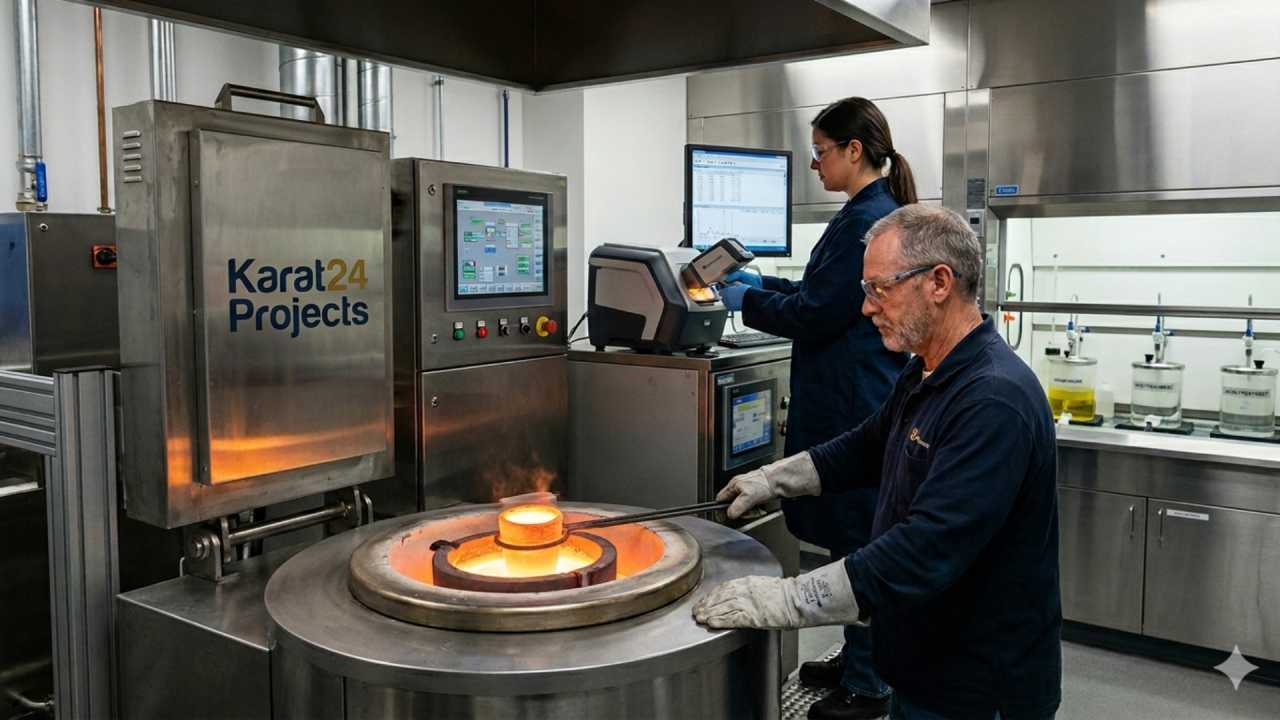
The traditional image of a dark, smoke-filled gold smelter will be largely obsolete. The future gold refining facility will look and function more like a clean-tech laboratory or an advanced pharmaceutical plant.
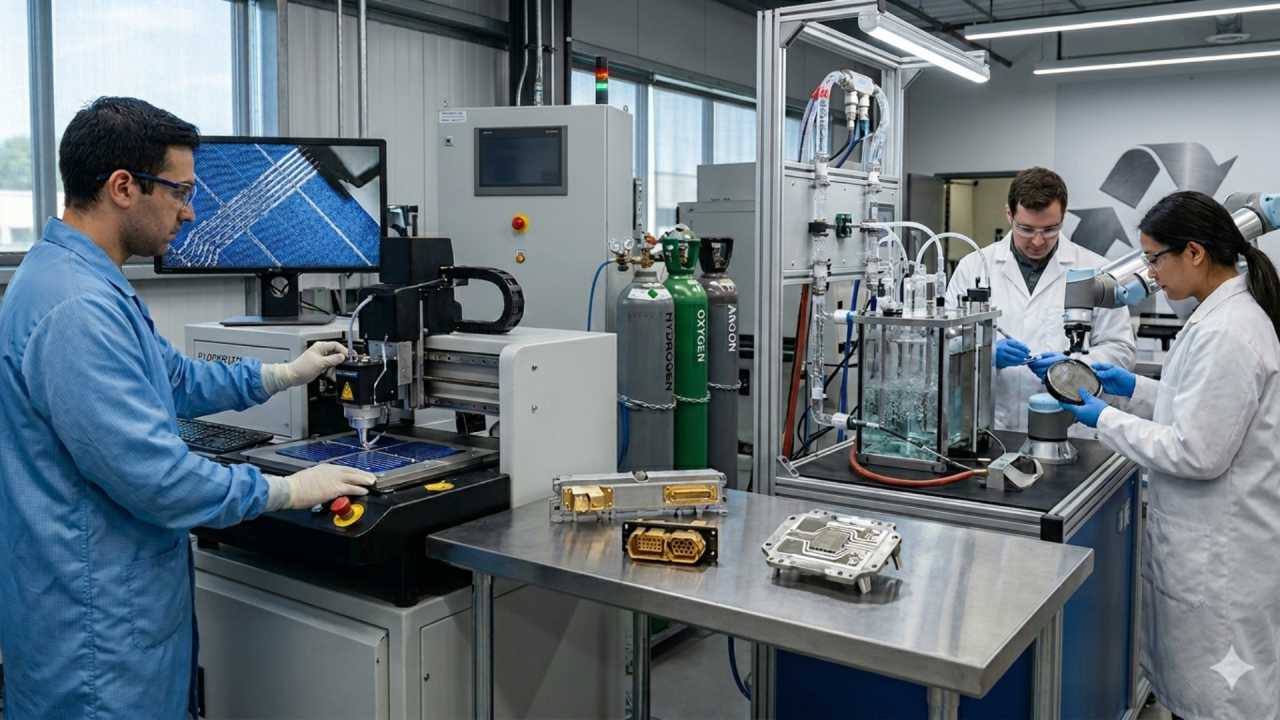
Processing floors will be fully enclosed, climate-controlled, and quiet, populated by automated chemical circuits and robotic handlers rather than workers exposed to extreme heat and toxic fumes. Operations will be managed by centralized artificial intelligence models that monitor molecular-level chemical separations, ensuring that resource inputs are perfectly balanced and that zero pollutants escape into the surrounding environment.
Carbon-Neutrality and Total Traceability
The industry will target complete carbon neutrality, with refineries operating entirely on decentralized renewable microgrids. The combination of high-efficiency electric induction ovens, hydrogen-fueled high-temperature burners, and massive on-site battery storage arrays will allow plants to operate continuously without consuming a single watt of fossil-fuel power.
Simultaneously, the global gold market will likely bifurcate into two distinct categories: fully traceable, ethically certified “green gold” that commands a premium price, and un-tracked, primary geological gold that faces escalating regulatory penalties, heavy discount rates, and restricted access to institutional exchanges.
The Preeminence of Urban Mining
As global electronic waste volumes continue to mount, urban mining centers will shift from a niche alternative to a dominant source of refined gold. Major metropolitan areas will establish specialized, localized green refining hubs to process the electronics discarded by their populations, turning city infrastructure into a sustainable loop.
Primary geological mining will still exist to satisfy baseline global demand, but its operations will be tightly controlled by biodegradable chemistry and bioleaching systems that preserve local water tables and landscapes. Ultimately, the transformation of gold refining will demonstrate that industrial advancement and environmental stewardship do not have to be mutually exclusive. Through sustained investment in technological innovation, the gold that secures our financial systems and powers our advanced technologies will be refined via processes that protect the future of our planet.
Frequently Asked Questions
What is the difference between traditional gold cyanidation and sustainable gold refining?
Traditional gold cyanidation uses sodium cyanide, an acutely toxic chemical, to dissolve gold out of rock or raw inputs. While highly effective, it creates immense environmental liabilities, including hazardous tailing ponds, and risks chemical spills that can destroy local ecosystems. Sustainable gold refining replaces cyanide with biodegradable chemical alternatives, integrates renewable energy, and uses automated closed-loop systems to minimize environmental impact and eradicate toxic byproduct generation.
How does eco-friendly gold extraction work without using cyanide?
Eco-friendly gold extraction relies on alternative chemical reagents that offer lower toxicity and a smaller carbon footprint. The most prominent methods include thiosulfate leaching and glycine leaching. Glycine, a naturally occurring, biodegradable amino acid, binds selectively with gold at ambient temperatures without emitting toxic gases. These alternative systems operate in sealed loops where the chemicals can be continually recycled and reused, drastically reducing chemical waste.
Can bacteria actually extract precious metals through biomining and bioleaching?
Yes, specific chemolithotrophic bacteria, such as Acidithiobacillus ferrooxidans, are actively used in biomining. These natural microorganisms survive by oxidizing the iron and sulfur minerals that lock gold inside complex, refractory ores. As the bacteria digest this mineral shell, the encapsulated gold is exposed for clean recovery. This process completely eliminates the need for fossil-fuel-powered roasting furnaces and cuts sulfur dioxide air pollution.
Why is recovering gold from electronic waste considered a sustainable alternative?
Recovering gold from electronic waste, or urban mining, is a foundational piece of the circular economy. Natural geological mines require crushing an entire ton of ore to yield just one to five grams of raw gold. In contrast, one ton of discarded computer circuit boards can yield between 100 and 400 grams of gold. By sourcing precious metals from above-ground post-consumer electronics, the refining sector bypasses the landscape destruction and high energy demands of primary mining.
What technologies are used for green gold recovery from electronics?
Modern electronic waste refining has moved away from burning circuit boards, which releases toxic fumes. Instead, high-tech facilities use advanced hydrometallurgical recycling systems. First, automated sorting lines utilizing artificial intelligence vision systems isolate gold-bearing components, such as CPU pins and memory chips. These components are then treated with eco-friendly chemical mixtures that dissolve and precipitate the gold cleanly at room temperature.
How do artificial intelligence and digital twins reduce waste in gold refineries?
Artificial intelligence optimizes the highly complex chemical reactions required to purify gold. Real-time data from smart sensors across the refining loop are analyzed by machine learning models to instantly adjust chemical dosing and furnace temperatures, preventing resource waste. Furthermore, digital twins create precise virtual simulations of the refinery, allowing engineers to test alternative reagents and map out predictive maintenance to stop accidental chemical leaks before they occur.
What is a digital gold passport and how does it prove ethical sourcing?
A digital gold passport is an unalterable record of custody backed by blockchain technology. Physical gold bars are assigned unique identifiers, like cryptographic micro-marks or specific isotopic signatures. These marks link the physical metal to its blockchain ledger, which records its complete history from the initial extraction or electronic recycling facility to the clean refining process. This radical transparency ensures the gold is conflict-free and processed via verified sustainable methods.