Expert Precious Metals Refining Services
The global economy is underpinned by materials that often go unnoticed in their raw form but are indispensable in their pure state. Precious metals—primarily gold, silver, platinum, and palladium—represent more than just wealth; they are the literal conductors of modern technology, the catalysts for environmental protection, and the foundation of high-precision manufacturing. However, these metals rarely exist in nature or industrial scrap in a state of absolute purity. This is where the critical science of precious metals refining becomes essential.
Precious metals refining is the complex process of separating and purifying valuable metals from impurities or other base metals. Whether sourced from deep-earth mining, industrial byproducts, or discarded consumer electronics, these materials must undergo rigorous chemical and thermal treatments to reach the standards required for trade and industry. As the world shifts toward a circular economy, the ability to reclaim these finite resources from secondary sources has transformed from a niche industrial service into a global necessity.
Industries ranging from aerospace and telecommunications to healthcare and luxury jewelry rely on consistent access to high-purity metals. Without professional refining, the “e-waste” in our drawers would remain a lost resource, and the jewelry industry would struggle with inconsistent quality. Karat24 Project stands at the forefront of this vital sector, providing sophisticated refining solutions that bridge the gap between raw scrap and investment-grade bullion. By leveraging advanced metallurgy and a commitment to precision, Karat24 Project ensures that every milligram of value is recovered, refined, and returned to the global supply chain.
What is Precious Metals Refining?
To understand refining, one must first distinguish it from mining and smelting. Mining is the extraction of ore from the earth. Smelting is the initial metallurgical process used to extract a base metal from its ore, usually involving heat and a chemical reducing agent. Refining, however, is the final, most sophisticated stage. It is the process of taking a “dore” bar or a collection of mixed scrap and removing all trace impurities to achieve a specific fineness, often 99.9% or even 99.99%.
The primary purpose of refining is standardization. In the world of precious metals, value is inextricably linked to purity. A gold bar that is 90% pure cannot be traded on international markets with the same ease or transparency as a 99.9% pure bar. Refining provides the “reset button” for metals, stripping away the history of the material—whether it was once a circuit board, a dental crown, or a piece of heirloom jewelry—and returning it to a pristine, elemental state.
The journey from raw material to usable metal is one of transformation. It begins with the intake of “feedstock,” which can vary wildly in composition. This material is homogenized, often through melting, to ensure that samples taken for analysis are representative of the whole. Once the exact metal content is known, the material undergoes specific chemical or electrochemical treatments designed to isolate the target atoms. The result is a product that meets the stringent requirements of the London Bullion Market Association (LBMA) or specific industrial ISO standards.
Types of Precious Metals Refined
Refining services are not “one size fits all.” Different metals possess unique chemical properties that require specialized handling and distinct recovery pathways.
Gold Refining
Gold remains the most recognized precious metal. Refining gold involves removing base metals like copper, nickel, or zinc, as well as other precious metals like silver or platinum. High-purity gold is essential for the investment sector and for specialized industrial uses where conductivity and corrosion resistance are paramount.
Silver Refining
Silver is refined in massive quantities, largely due to its extensive use in the photographic, solar energy, and electronics industries. Because silver is often a byproduct of lead or copper mining, and frequently found mixed with gold in jewelry scrap, silver refining focuses on large-scale electrolytic processes to achieve the high “four-nines” (99.99%) purity required for industrial applications.
Platinum Group Metals (PGMs)
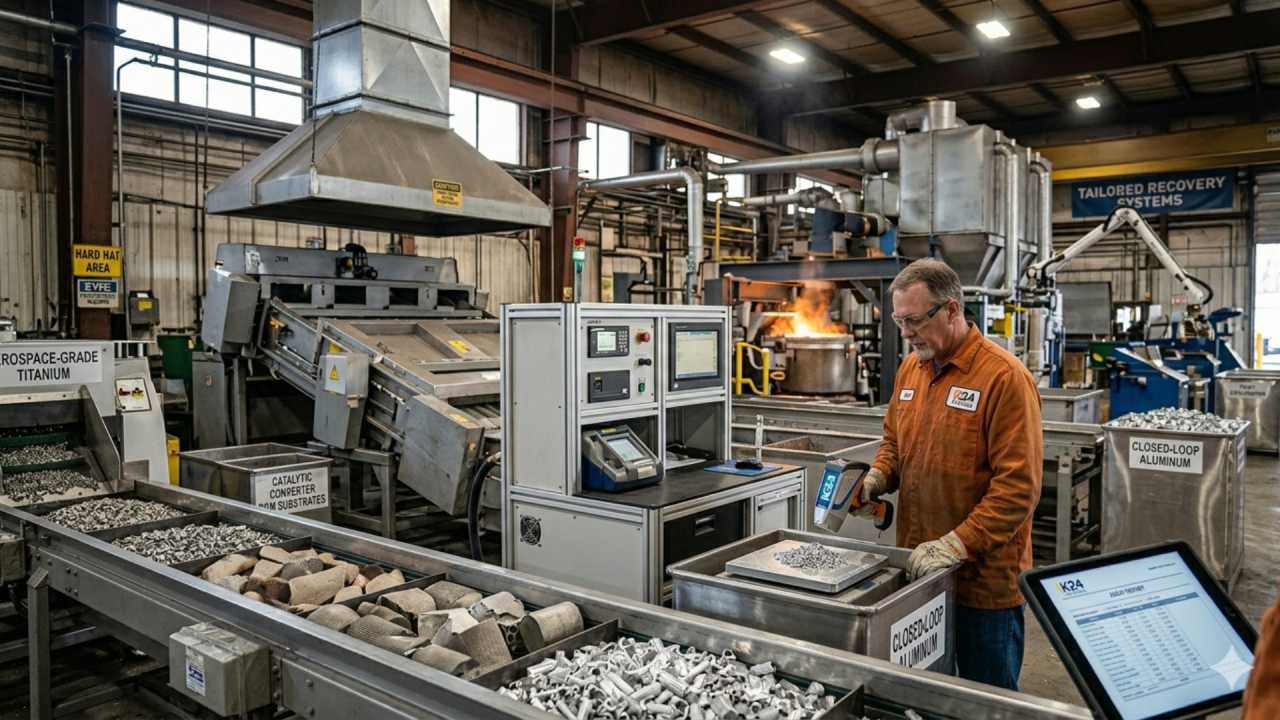
This group includes platinum, palladium, and rhodium. These metals are significantly rarer than gold and have much higher melting points. They are primarily recovered from automotive catalytic converters and industrial catalysts. The refining of PGMs is exceptionally technical and requires specialized chemical expertise, a field where Karat24 Project excels, ensuring that these high-value materials are not lost in the processing of more common metals.
Scrap Metals and E-Waste Recovery
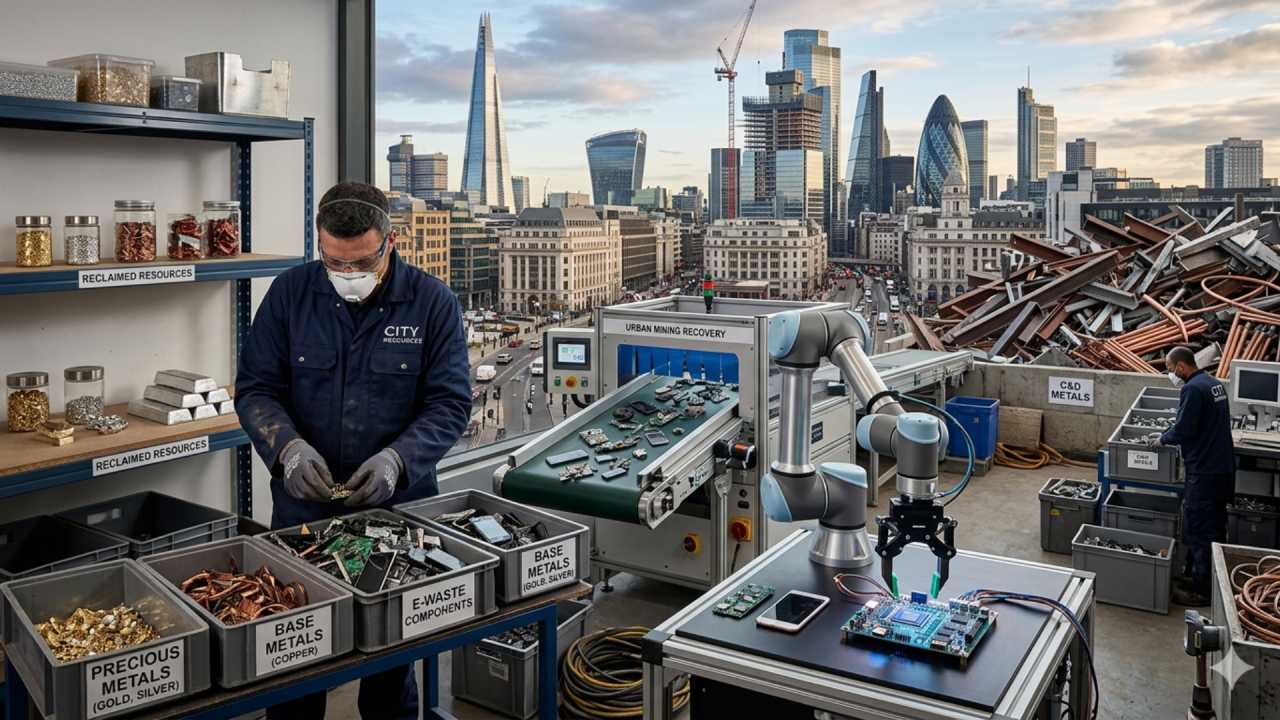
A modern frontier in refining is the recovery of precious metals from “urban mines”—discarded electronics. Computers, smartphones, and servers contain small but significant amounts of gold, silver, and palladium. Refining these materials involves pre-processing to separate plastics and glass before the remaining metallic “concentrate” is chemically treated to extract the hidden value.
Refining Methods and Technologies
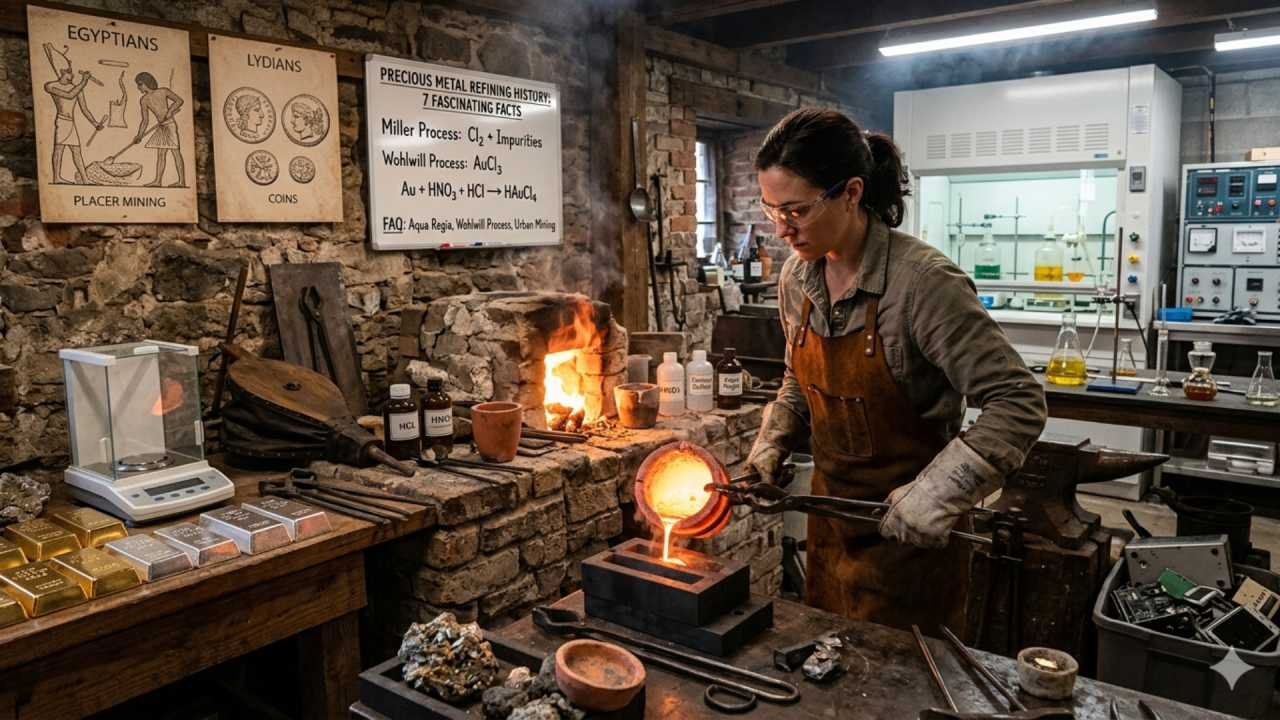
The methods used to refine precious metals have evolved from ancient fire-based techniques to sophisticated laboratory-controlled chemical reactions. Karat24 Project utilizes a suite of these technologies to ensure maximum recovery rates and environmental safety.
Pyrometallurgical Refining
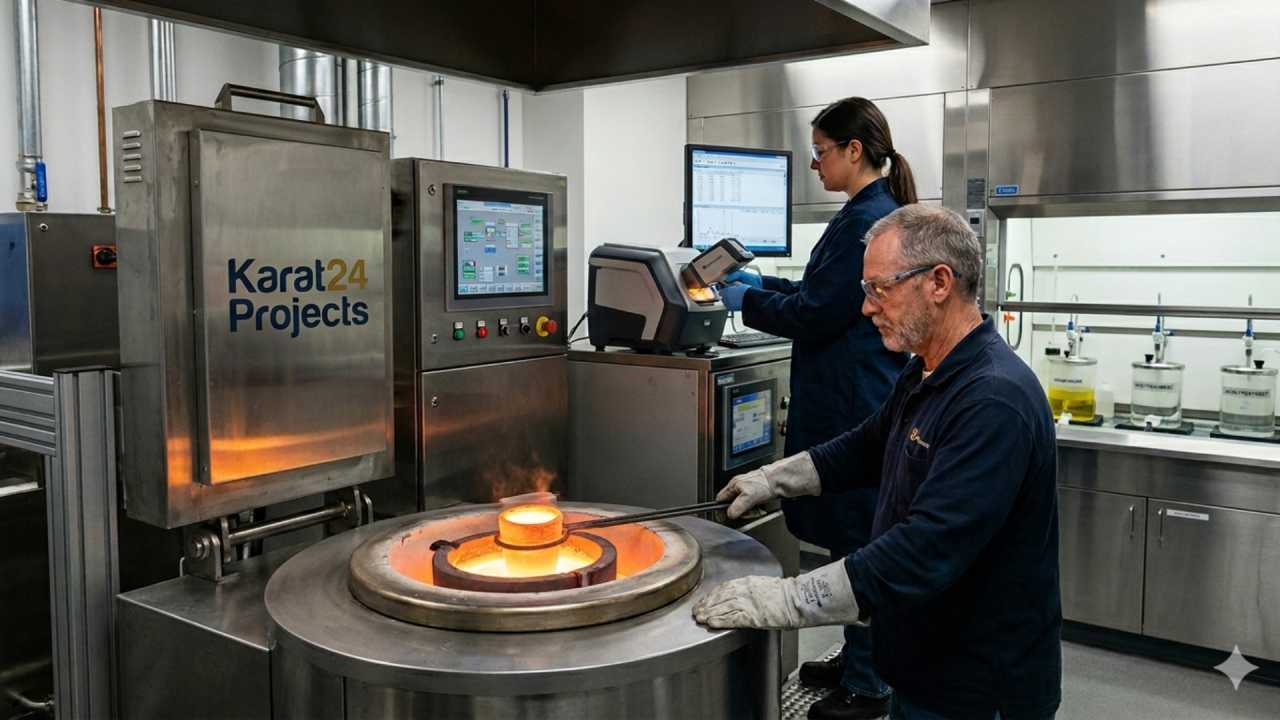
This method uses high-temperature furnaces to separate metals based on their melting points and their reactivity with oxygen. In a process called cupellation, precious metals are separated from base metals like lead or copper. While effective for large volumes of low-grade ore or scrap, pyrometallurgy is often just the first step, followed by more precise chemical methods.
Hydrometallurgical Refining
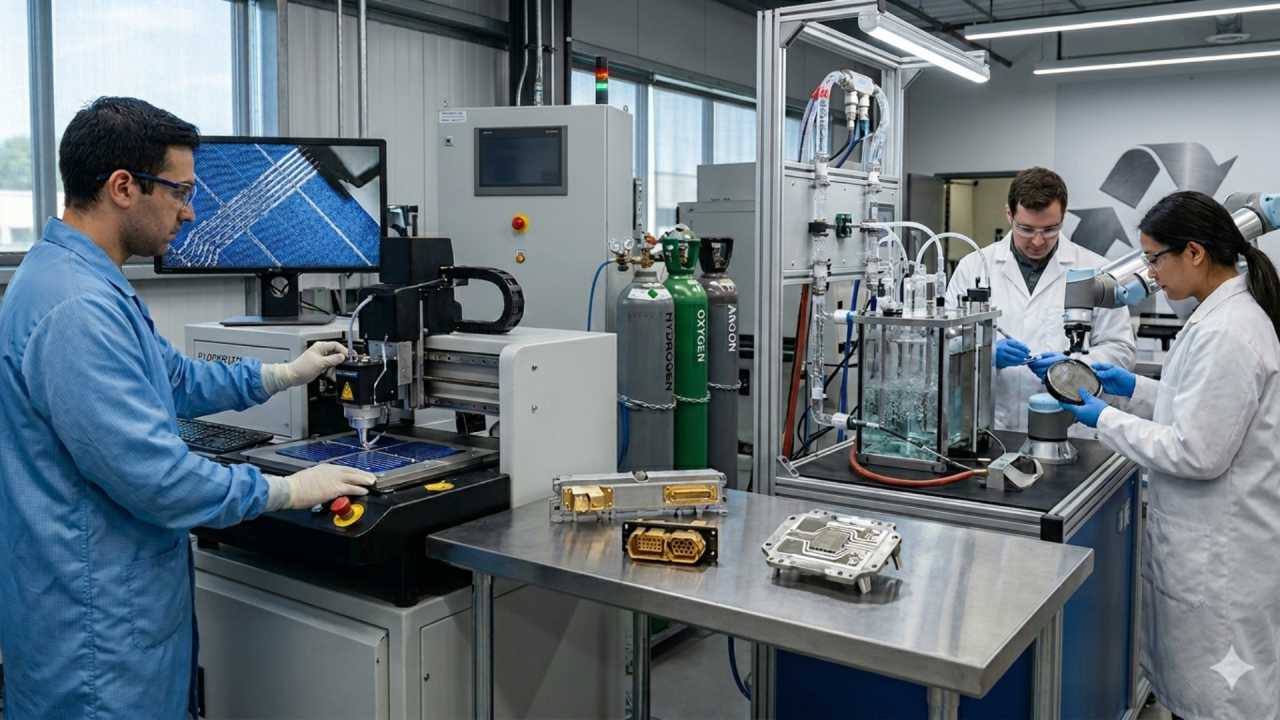
Hydrometallurgy involves the use of aqueous chemistry to recover metals from ores and concentrates. It is generally more precise than pyrometallurgy and allows for the separation of metals that are chemically similar. This process often involves leaching, where the metal is dissolved into a solution and then recovered through precipitation or electrowinning.
Electrolytic Refining
In this process, an impure metal acts as an anode in an electrolyte solution. When an electric current is applied, the metal dissolves from the anode and deposits in a highly pure form onto a cathode. This is the standard for silver refining (the Moebius process) and is also used for high-purity gold. It is prized for its ability to produce extremely high purity levels while effectively separating out impurities into “anode slime” which can then be processed for other trace metals.
The Aqua Regia Process
For gold refining, the Aqua Regia process is a gold standard. Aqua Regia, a mixture of nitric and hydrochloric acids, is one of the few substances that can dissolve gold. Once in solution, the gold is selectively precipitated out using a reducing agent such as sodium metabisulfite. This method is highly effective for refining jewelry scrap and small-to-medium batches of gold to 99.9% purity.
The choice of method depends on the initial purity of the material, the desired end-purity, and the specific mix of metals present. Karat24 Project integrates these methods with modern filtration and emission-control systems, ensuring that the process is as clean as it is efficient.
The Refining Process: Step-by-Step
Transparency is the foundation of a successful refining partnership. At Karat24 Project, the refining journey is a documented, rigorous process designed to protect the client’s assets and ensure accuracy.
1. Collection and Sorting
Everything begins with the intake of material. Scrap is weighed and sorted by type. High-grade scrap (like jewelry) is kept separate from low-grade industrial scrap or e-waste to ensure the most efficient processing route is chosen.
2. Sampling and Assaying
Before a final value can be assigned, the refinery must determine the exact metallic content. This is done through “melt sampling,” where the entire lot is melted into a homogeneous liquid, and a small, representative sample is taken. This sample is then tested using precision instruments.
3. Melting and Separation
Once the assay is confirmed, the bulk material is melted. Depending on the composition, fluxing agents may be added to help remove base metal oxides, which form a “slag” on top of the molten metal. The remaining concentrated precious metal alloy is then cast into anodes or granules for chemical treatment.
4. Chemical Purification
The concentrated metal undergoes the specific chemical or electrolytic processes mentioned previously. This is the stage where the metal is stripped of its final impurities. For instance, in gold refining, this is where the silver and platinum group metals are separated into their own distinct streams.
5. Final Product Formation
The purified metal, now in its most elemental state, is melted one last time and cast into its final marketable form. This could be 1-kilogram bars, smaller minted bars, grain (shot) for jewelers, or fine powders for industrial manufacturing. Each piece is stamped with its weight and purity, ready to return to the market.
Importance of Assaying and Quality Control
Assaying is the chemical analysis of a metal to determine its ingredients and quality. In refining, the assay is the “truth” upon which all financial transactions are based. A discrepancy of even 0.1% in an assay can represent thousands of dollars in value, making accuracy the most critical component of the refining business.
Modern Assaying Methods
-
Fire Assay: Often called the “Gold Standard,” this ancient method involves melting the metal with lead and flux. It remains the most accurate method for gold and is the industry benchmark for high-value transactions.
-
X-Ray Fluorescence (XRF): A non-destructive method that provides a quick analysis of the surface composition. While excellent for sorting and initial estimates, it is usually followed by more rigorous methods for final settlement.
-
Inductively Coupled Plasma (ICP): A high-tech method used to detect trace elements and impurities down to the parts-per-billion level. This is essential for ensuring that “four-nines” or “five-nines” purity has been achieved.
Karat24 Project employs a multi-tiered quality control system. By combining traditional fire assay with modern ICP technology, the refinery provides clients with an indisputable record of their material’s worth, ensuring that the final “settlement” is fair, transparent, and precise.
Industries That Rely on Precious Metal Refining
While we often think of gold as a store of value, its physical properties make it an industrial workhorse. Professional refining supports a vast ecosystem of manufacturing and technology.
Jewelry Manufacturing
Jewelers require gold and silver of specific karats and alloys. Refining allows the industry to recycle bench sweeps, old stock, and consumer trade-ins, turning them back into pure grain that can be alloyed into 14k, 18k, or platinum-iridium for new creations.
Electronics and Semiconductors
The digital age is built on precious metals. Gold is used in connectors and bond wires because it does not corrode. Silver is used for its unmatched electrical conductivity. Refining e-waste is the only way to sustainably source these materials for the next generation of hardware.
Automotive Industry
The automotive sector is one of the largest consumers of platinum, palladium, and rhodium. These metals are used in catalytic converters to reduce toxic emissions. Refining “spent” catalysts is a major global industry, and companies like Karat24 Project play a key role in recovering these rare metals so they can be reused in new vehicles.
Medical and Dental Applications
From silver-based antimicrobials to platinum-based cancer drugs and gold dental alloys, the medical field requires metals of the highest biological purity. Refining ensures these materials meet the stringent health and safety standards required for human use.
Investment and Bullion Markets
Central banks and private investors require bullion that meets specific “Good Delivery” standards. Professional refining ensures that bars are of a consistent weight, size, and purity, allowing them to be traded globally without the need for constant re-testing.
Environmental and Sustainability Considerations
The environmental cost of mining new precious metals is significant. For example, mining just one ounce of gold can require the movement of tons of earth and the use of substantial water and energy. In contrast, refining recycled gold uses a fraction of the energy and has a much smaller carbon footprint.
Sustainability in refining is no longer an option; it is a mandate. Karat24 Project is committed to the “Urban Mining” philosophy. By focusing on the efficient recovery of metals from industrial scrap and consumer waste, we reduce the pressure on natural ecosystems. Furthermore, modern refining facilities must manage their chemical outputs. This involves closed-loop water systems, advanced air filtration to capture any metallic dust or chemical fumes, and the responsible disposal of non-metallic waste products.
By choosing a refining partner that prioritizes eco-friendly practices, businesses can improve their own “Green” credentials and participate in a circular economy that values resource conservation over depletion.
Choosing the Right Refining Partner
Selecting a refiner is a decision based on trust, technology, and transparency. A poor choice can lead to lost value, slow turnaround times, or even legal liabilities if the refiner does not follow environmental regulations.
Key Factors to Consider:
-
Experience and Expertise: Does the refiner understand your specific material? Refining PGM-bearing industrial scrap is very different from refining 22k gold jewelry.
-
Transparency in Pricing: A reputable refiner like Karat24 Project provides clear fee structures. You should know exactly what the refining charges are, the treatment charges, and any “account maintenance” or shipping fees.
-
Technology and Infrastructure: Look for a partner that invests in modern assaying and chemical processing. High-tech facilities generally offer higher recovery rates.
-
Turnaround Time: In a volatile market, the time between sending your scrap and receiving your metal or payment is crucial. Efficient processes mean less exposure to market fluctuations.
-
Compliance: Ensure the refiner adheres to Anti-Money Laundering (AML) and “Know Your Customer” (KYC) protocols, as well as local environmental laws.
Benefits of Professional Refining Services
Why use a professional service like Karat24 Project instead of selling scrap to a local “cash-for-gold” outlet? The benefits are measurable.
-
Higher Recovery Rates: Professional refiners use chemical processes that can extract 99.9% of the metal present. Local buyers often use “averaging” or “weight-dropping” methods that favor the buyer, not the seller.
-
Better Pricing Accuracy: Because settlement is based on a scientific assay of the pure metal content, you are paid for exactly what you have, based on current global market prices.
-
Reduced Losses: Specialized equipment captures metallic dust and vapors that would otherwise be lost in a crude melting process.
-
Technical Support: Professional refiners can advise industrial clients on how to better collect and sort their scrap to maximize their returns.
Why Choose Karat24 Project
In an industry where precision is the product, Karat24 Project has built a reputation as a leader in precious metal solutions. We understand that our clients are not just sending us scrap; they are entrusting us with their capital and their livelihood.
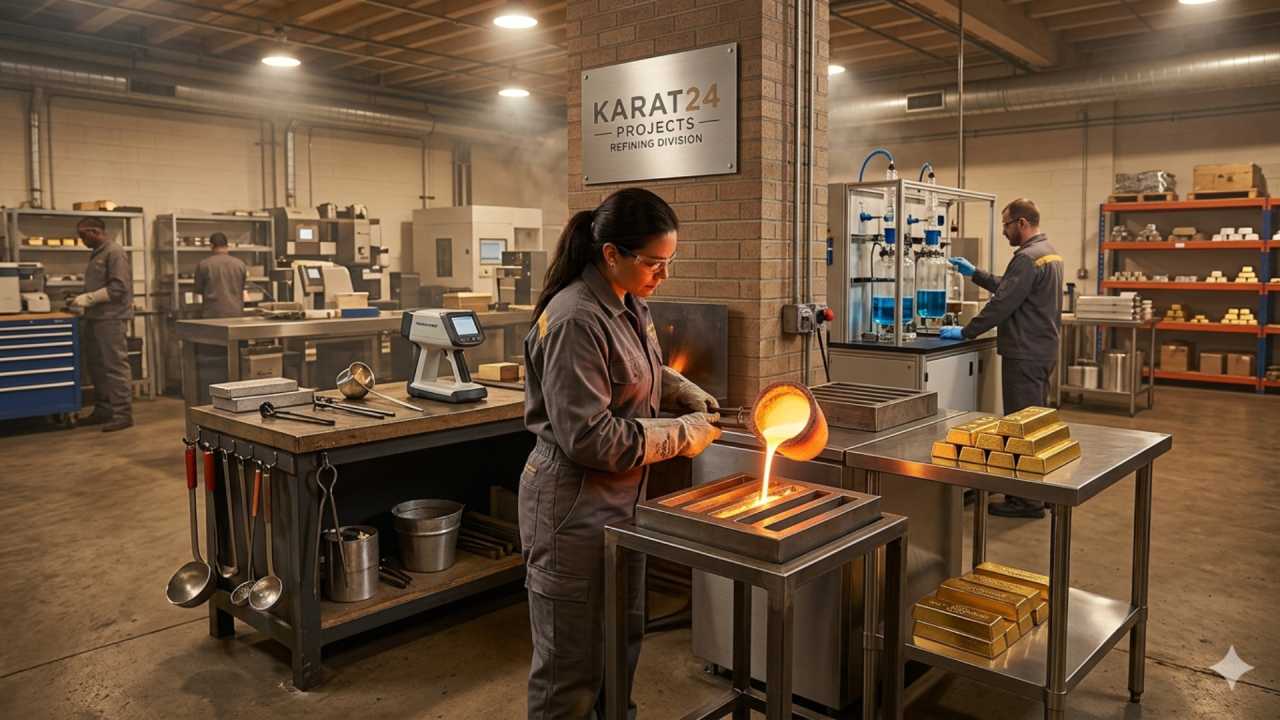
Our facility is designed around the principles of accuracy and speed. We utilize the latest in hydrometallurgical and electrolytic technologies to process gold, silver, and PGMs to the highest international standards. But beyond the machines, it is our customer-centric approach that sets us apart. We provide detailed reporting at every stage of the process, from the initial intake weight to the final assay results.
Whether you are a jewelry manufacturer looking to recycle your bench sweeps, an electronics recycler needing to process complex circuit boards, or an investor requiring high-purity bullion, Karat24 Project provides a reliable, transparent, and highly technical partnership. We don’t just refine metal; we refine the way you do business with precious metals.
Future Trends in Precious Metals Refining
The refining industry is undergoing a digital and green transformation. Automation and Artificial Intelligence (AI) are beginning to play a role in sorting complex e-waste, allowing for faster and more accurate identification of metal-bearing components.
There is also a growing global demand for PGMs driven by the “Green Hydrogen” economy. Platinum and iridium are essential for electrolyzers used to produce hydrogen fuel. As these technologies scale, the need for specialized refining services that can handle these rare and difficult metals will skyrocket.
Finally, “Green Refining” is becoming a competitive advantage. Facilities that can prove they use renewable energy and non-toxic chemical alternatives will become the preferred partners for global tech giants who are under pressure to clean up their supply chains. Karat24 Project is actively monitoring and integrating these trends to ensure we remain at the cutting edge of the industry.
Final Thoughts
The refining of precious metals is a cornerstone of the modern industrial world. It is a process that demands a unique blend of ancient metallurgical wisdom and state-of-the-art chemical science. By turning waste and raw ores into high-purity gold, silver, and platinum group metals, refineries ensure that these vital resources remain available for the technology, art, and medicine of tomorrow.
Success in this field requires more than just high-heat furnaces; it requires a commitment to transparency, environmental responsibility, and scientific precision. As we have explored, the journey from scrap to pure metal is complex, but with the right partner, it is a journey that yields maximum value and peace of mind.
Karat24 Project remains dedicated to being that partner. By bridging the gap between raw material and refined excellence, we help our clients unlock the true potential of their precious metal assets. In an ever-changing global market, one thing remains constant: the value of purity. Through expert refining, we ensure that value is never lost.