Sustainable Precious Metal Recovery: Green Solutions for Modern Refining
The modern world is built on a foundation of precious metals. From the smartphone in your pocket to the catalytic converter in your vehicle and the complex medical imaging equipment in hospitals, metals like gold, silver, platinum, and palladium are the silent engines of technological progress. However, the traditional methods of acquiring these materials—large-scale industrial mining—carry a heavy environmental price tag. As global consumption accelerates, the paradigm is shifting from extraction to reclamation.
Precious metal recovery is the process of extracting valuable metals from secondary sources, such as electronic waste (e-waste), industrial byproducts, and spent jewelry. When performed through eco-friendly lenses, this process becomes a cornerstone of the circular economy. The hidden value in our waste is staggering; we are currently sitting on an “urban mine” that is often richer in concentration than the geological mines found deep within the earth.
Sustainability in this sector is no longer just a buzzword; it is a necessity. By refining our way to sustainability, we move away from a linear “take-make-dispose” model and toward a regenerative system where every milligram of precious metal is kept in a continuous loop of utility. This article explores the evolution of recovery technologies, the economic imperatives driving change, and how organizations can transition toward responsible, low-impact refining solutions.
Why Precious Metal Recovery Matters
The urgency behind precious metal recovery is driven by a trifecta of environmental, resource-based, and economic factors. To understand why eco-friendly refining is the future, we must first examine the high cost of the status quo.
Environmental Impact
Traditional mining is one of the most ecologically disruptive activities on the planet. It often requires the removal of vast amounts of overburden, leading to large-scale deforestation and the destruction of biodiversity. Furthermore, the extraction of gold and platinum group metals (PGMs) from primary ores is incredibly resource-intensive. To produce just one ounce of gold, tons of rock must be excavated and processed.
The chemical toll is equally concerning. Conventional mining and low-standard refining often utilize toxic substances like cyanide and mercury to separate metals from ore. If not managed with extreme precision, these chemicals can leach into groundwater, poisoning local ecosystems and human water supplies for generations. Eco-friendly recovery solutions aim to mitigate these risks by bypassing the mine entirely and using “green” chemistry to process existing scrap.
Resource Scarcity
We live on a planet with finite resources. While the demand for high-tech electronics and renewable energy infrastructure is skyrocketing, the quality of available ore is declining. This means that miners must work harder and use more energy to extract the same amount of metal that was easily accessible fifty years ago.
Gold, silver, and palladium are essential for the green energy transition. Silver is a primary component in photovoltaic cells for solar panels, while platinum and iridium are critical for hydrogen fuel cells. If we do not master the art of recovery, we risk stalling the very technological advancements intended to save the planet.
Economic Opportunity
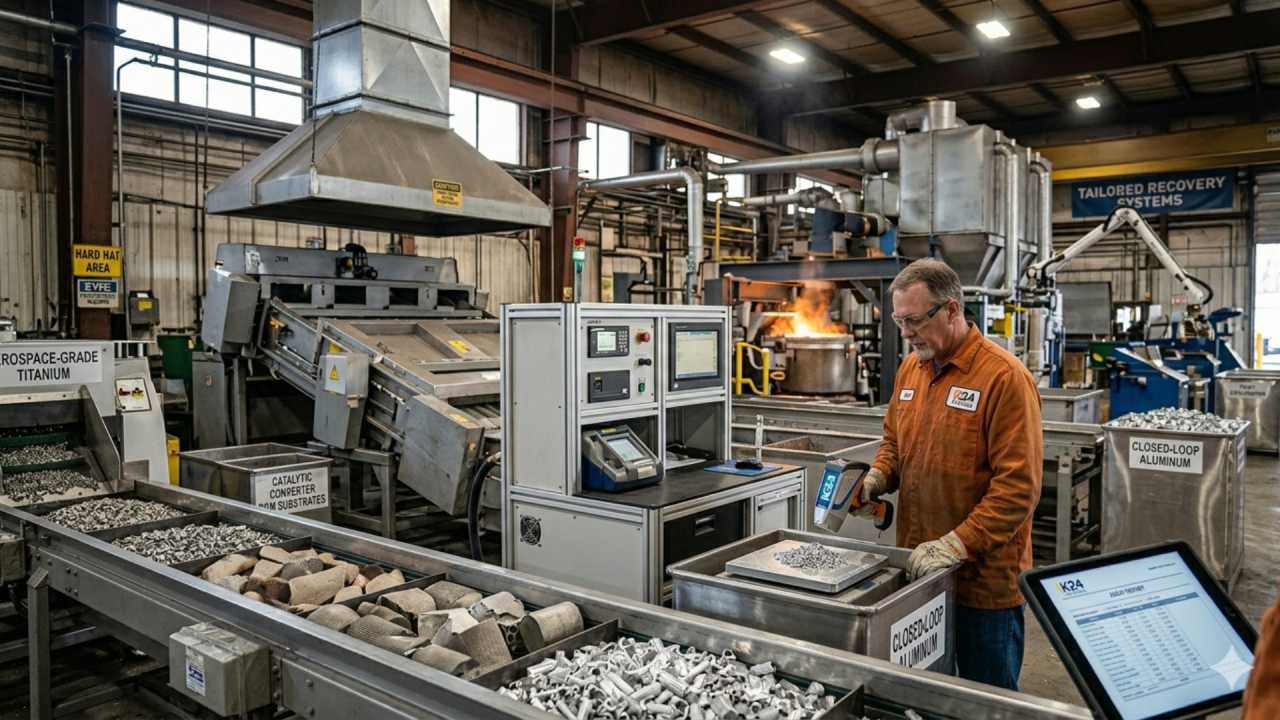
Sustainability and profitability are often viewed as opposing forces, but in the realm of precious metal recovery, they are perfectly aligned. Recovering metals from high-yield waste streams like circuit boards is often more cost-effective than primary mining. For industrial manufacturers, implementing a closed-loop system—where production scrap is immediately sent for refining and returned to the supply chain—can significantly reduce raw material costs and hedge against the volatility of global metal markets.
Key Sources of Recoverable Precious Metals
To build a robust recovery strategy, one must first identify where these valuable materials reside. The “urban mine” is diverse, ranging from consumer goods to heavy industrial chemicals.
E-Waste: The Digital Goldmine
Electronic waste is the fastest-growing waste stream in the world. Smartphones, tablets, servers, and laptops contain a sophisticated palette of elements. A typical circuit board contains gold-plated connectors, silver solder, and palladium-rich multi-layer ceramic capacitors. It is estimated that the concentration of gold in a ton of e-waste can be up to fifty times higher than the concentration in a ton of gold ore.
Industrial Waste and Catalysts
Many chemical and pharmaceutical processes rely on precious metal catalysts to trigger reactions. Over time, these catalysts become “spent” or contaminated. Rather than discarding them, sophisticated refining processes can strip the contaminants and recover the high-purity platinum or palladium within. Similarly, electroplating solutions used in the manufacturing of semiconductors and jewelry contain dissolved gold and silver that can be reclaimed through specialized precipitation or electrochemical methods.
Jewelry Scrap and Refining Residues
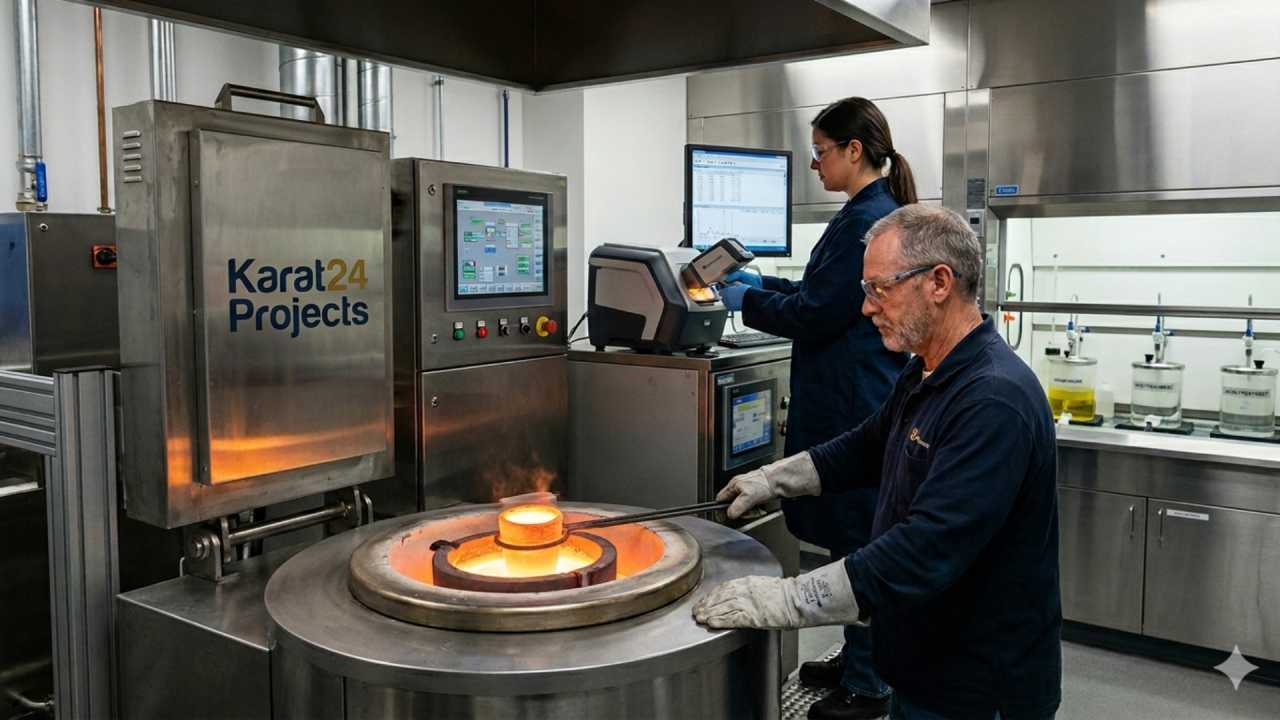
The jewelry industry has long practiced forms of recycling, but modern eco-friendly refining takes it a step further. This includes not just old rings and necklaces, but also the “sweeps”—the dust and filings collected from the floors of jewelry workshops. By utilizing clean refining technologies, karat24 projects and similar initiatives ensure that even the smallest particles are captured without releasing toxic fumes into the atmosphere.
Automotive Catalysts
Every modern internal combustion engine is equipped with a catalytic converter designed to reduce harmful emissions. These devices contain significant amounts of PGMs (Platinum, Palladium, and Rhodium). As the world shifts toward electric vehicles, the recycling of the existing fleet’s catalytic converters represents a massive reservoir of precious metals that can be redirected into new green technologies.
Traditional Recovery Methods vs Modern Eco-Friendly Approaches
The history of metal refining is marked by heavy industry and high emissions. However, the tide is turning toward “Green Refining,” which prioritizes low energy consumption and non-toxic reagents.
Traditional Methods
Pyrometallurgy (Smelting): This involves heating scrap to extremely high temperatures to melt and separate metals. While effective for large volumes, it is incredibly energy-intensive and produces significant carbon emissions. Furthermore, if the scrap contains plastics or flame retardants (common in e-waste), smelting can release dioxins and furans into the air unless expensive filtration systems are used.
Cyanide Leaching: In this process, a cyanide solution is used to dissolve gold from ore or scrap. While highly efficient, the toxicity of cyanide poses a catastrophic risk if a spill occurs. Managing the hazardous waste generated by this process is a major logistical and environmental challenge.
Eco-Friendly Alternatives
Bioleaching: One of the most exciting frontiers in metallurgy is the use of microorganisms. Certain bacteria and fungi have evolved to “eat” or dissolve metals as part of their metabolic processes. Bioleaching operates at room temperature and atmospheric pressure, drastically reducing energy needs. While slower than chemical leaching, it is incredibly clean and has a nearly zero carbon footprint.
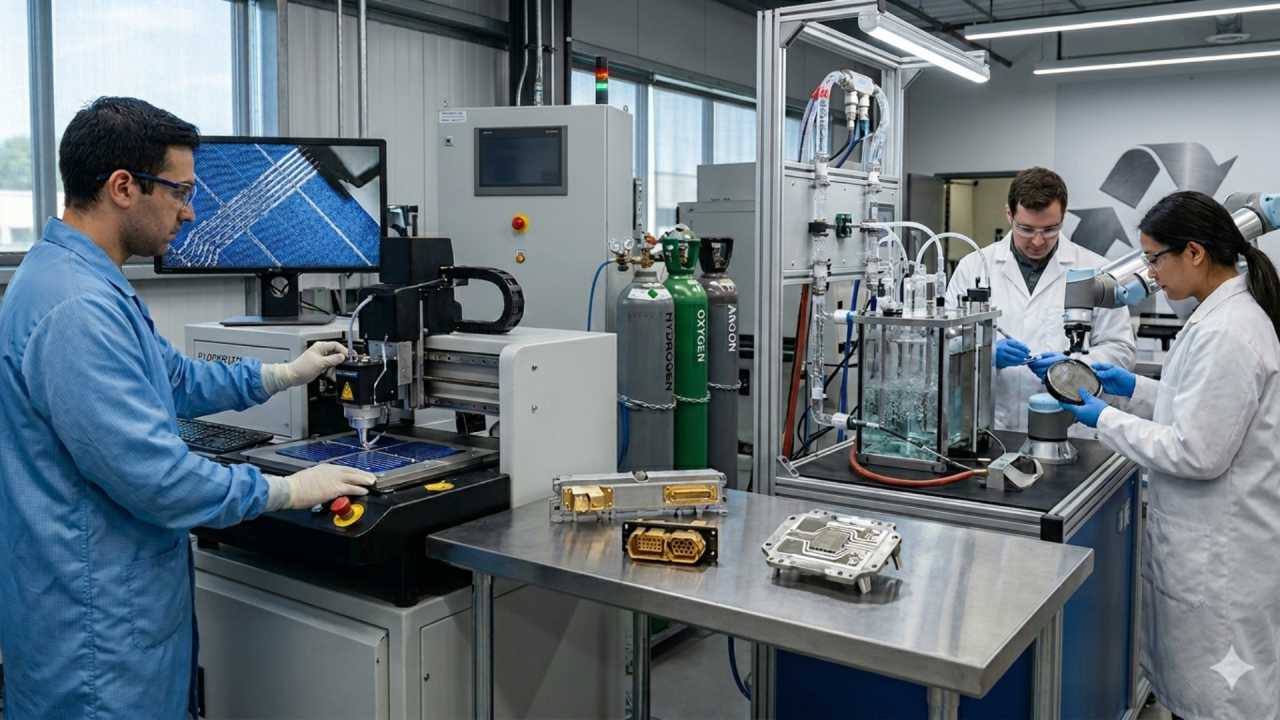
Electrochemical Recovery: This method uses electrical currents to migrate metal ions from a solution onto a cathode. Modern electrochemical cells are becoming highly selective, allowing refiners to pull specific metals out of a complex “soup” of melted electronics with surgical precision. This process is often closed-loop, meaning the liquid electrolyte can be reused multiple times.
Green Chemistry Solvents: Researchers are developing organic and biodegradable solvents that can replace harsh acids. These “lixiviants” are designed to be non-volatile and non-flammable, making the refining environment safer for workers and the surrounding community.
Innovative Eco-Friendly Technologies
Innovation is the engine of the sustainable refining movement. As we move deeper into the century, several key technologies are redefining what is possible in metal reclamation.
Hydrometallurgy Advancements
Hydrometallurgy involves using aqueous (water-based) solutions to recover metals. The modern eco-friendly approach focuses on “selective leaching.” Instead of dissolving everything and then separating it, new reagents are designed to target only the gold or only the silver, leaving base metals like copper and iron behind. This reduces the number of steps in the refining process and minimizes chemical waste.
Thiosulfate Leaching
As an alternative to cyanide, thiosulfate leaching is gaining traction. Thiosulfate is a non-toxic chemical often used in photography and medicine. When applied to gold recovery, it offers a much lower environmental risk profile. While it requires careful monitoring of pH levels and temperature to remain stable, it represents a significant leap forward in “human-safe” refining.
AI and Automation in Refining
The biggest challenge in recycling e-waste is the complexity of the feedstock. A bag of discarded phones contains hundreds of different materials. AI-driven robotic sorting systems can now identify and dismantle devices at high speeds, separating the high-value boards from the low-value plastics. By concentrating the precious metal content before it even reaches the refinery, these systems make the entire process more efficient and less energy-demanding.
Urban Mining Systems
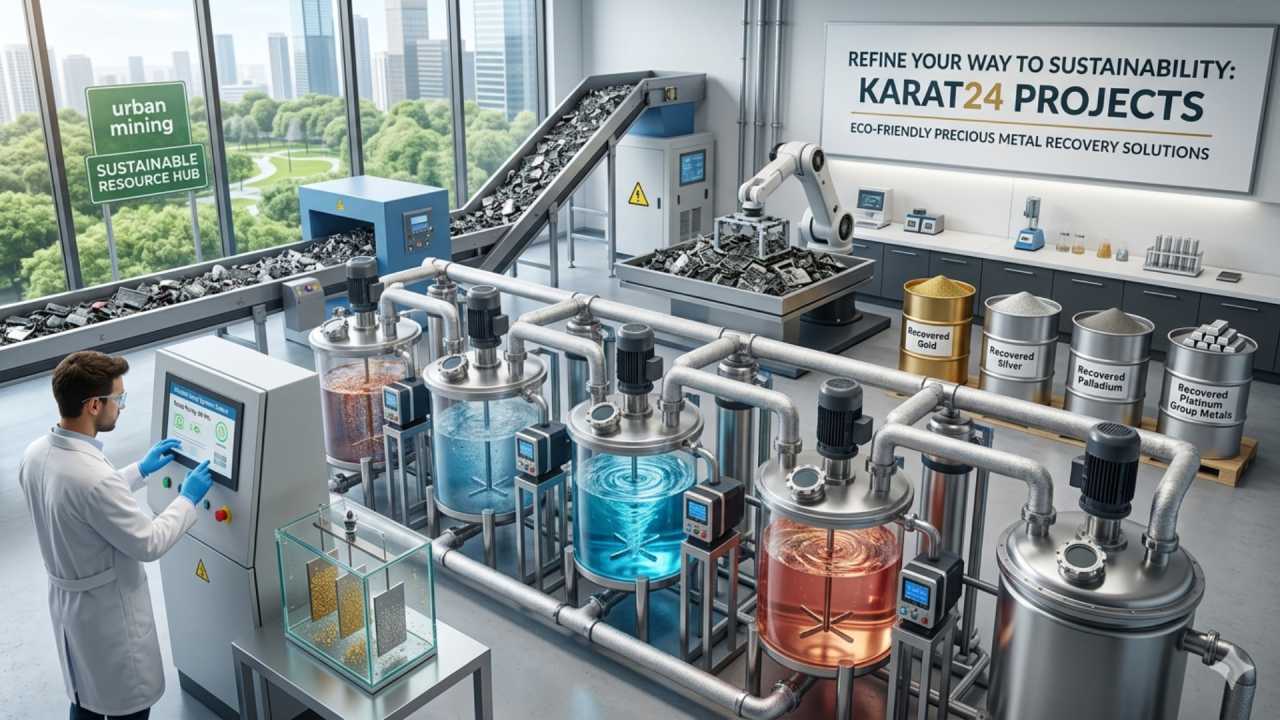
Urban mining is the concept of treating the city’s waste stream as a resource. New, decentralized refining modules are being developed that allow for “on-site” recovery. Imagine a large data center or an automotive plant having a small, self-contained refining unit that processes their scrap immediately. This reduces the carbon footprint associated with transporting heavy waste materials across the globe to centralized smelters.
The Role of the Circular Economy
The circular economy is an industrial system that is restorative and regenerative by design. In a linear economy, precious metals are mined, used in a product, and eventually buried in a landfill. In a circular economy, the “end of life” for a product is merely the beginning of its next life.
Precious metal recovery is the “closing of the loop.” When a company like karat24 projects implements a recovery system, they are ensuring that the gold used in a circuit board today becomes the gold used in a medical device tomorrow. This cycle reduces the “material footprint” of our society.
Furthermore, the circular economy encourages “Design for Disassembly.” If manufacturers know that their products will be refined at the end of their lifecycle, they are incentivized to build them in a way that makes metal recovery easier. This synergy between designers and refiners is essential for a truly sustainable future.
Industry Applications and Case Studies
To see the impact of eco-friendly recovery, we can look at how various sectors are integrating these solutions into their operations.
The Electronics Sector
Leading consumer electronics brands have begun setting ambitious goals for “closed-loop” materials. Some companies now use 100% recycled gold in their main logic boards. By partnering with specialized refiners who use hydrometallurgical processes, these brands can prove to their customers that their devices are not contributing to the destruction of rainforests.
The Automotive Industry
As the automotive world pivots toward sustainability, the recovery of PGMs from old exhaust systems has become a multi-billion dollar industry. Modern refiners use plasma arc technology—a high-efficiency, low-emission method—to process these catalysts. This recovered metal is then sold back to manufacturers to be used in the production of hydrogen electrolyzers, bridging the gap between fossil fuel past and renewable future.
Specialized Jewelry Refining
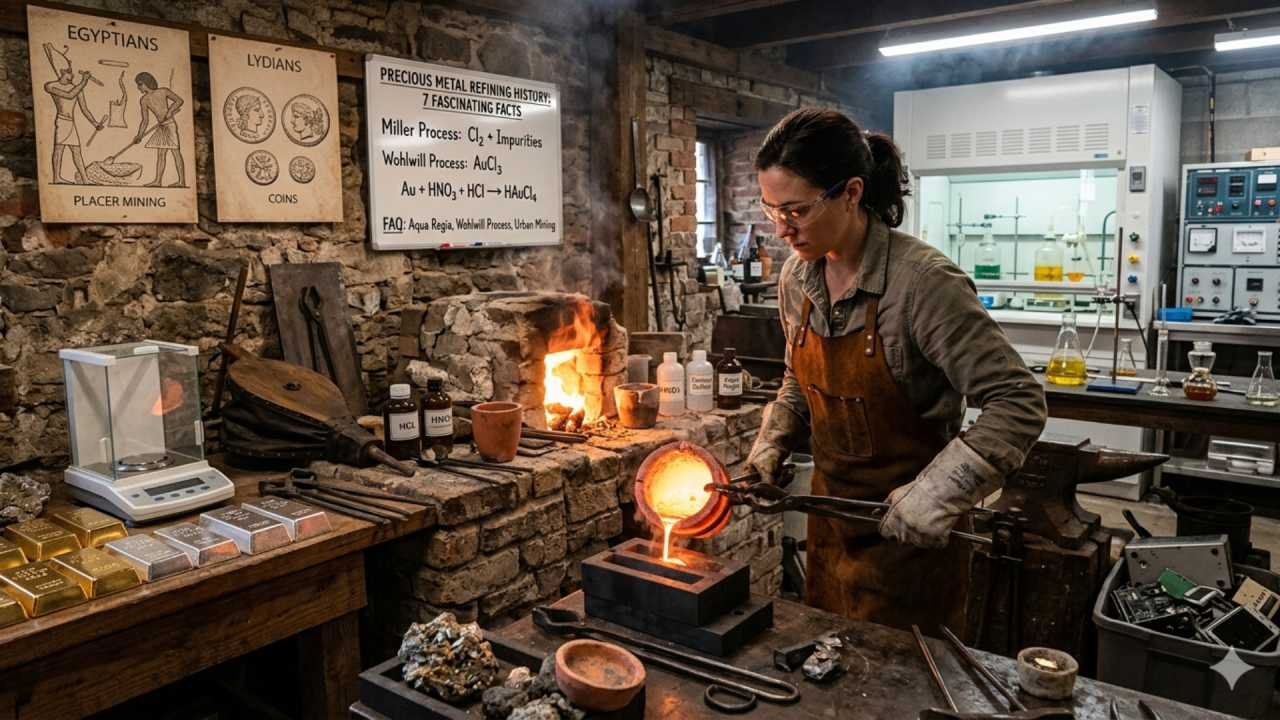
In the world of luxury goods, provenance is everything. Ethically sourced jewelry is no longer just about “fair trade” mining; it is about recycled content. Small-scale jewelry makers are increasingly using refining services that provide certified recycled gold. These refiners use small-batch, eco-friendly chemical processes that allow for the complete tracking of the metal from the scrap bucket back to the jeweler’s bench.
Challenges in Eco-Friendly Metal Recovery
While the benefits are clear, the path to universal eco-friendly refining is not without its hurdles. Acknowledging these challenges is vital for any organization looking to make the transition.
High Initial Investment
Eco-friendly technologies, particularly automated sorting and advanced electrochemical cells, require significant upfront capital. For many small to medium-sized enterprises, the cost of installing a “green” refining line can be daunting compared to the lower barrier to entry of traditional (though dirtier) methods.
Technology Limitations
Some green methods, like bioleaching, are currently slower than traditional chemical processes. In a high-volume industrial setting where “time is money,” the slower pace of biological recovery can be a hard sell. There is a constant need for research and development to scale these technologies to meet industrial speeds.
Collection and Sorting Issues
The “input” is often the weakest link. While we have the technology to refine metals cleanly, we struggle with the logistics of collecting waste. Only about 20% of global e-waste is formally recycled. Without a consistent and well-sorted supply of scrap, even the most advanced eco-friendly refinery will struggle to remain operational.
Regulatory Compliance
The transition to new chemicals and processes requires navigating a complex web of environmental regulations. Proving that a new “green” solvent is truly safe requires extensive testing and documentation, which can slow down the adoption of innovative solutions.
Regulations and Environmental Standards
To ensure that “eco-friendly” is not just a marketing claim, global standards and regulations have been established. These frameworks provide a roadmap for responsible refining.
-
The Basel Convention: This international treaty regulates the movement of hazardous waste across borders, ensuring that e-waste isn’t simply shipped to developing nations with lax environmental laws.
-
ISO 14001: This standard for environmental management systems helps refining facilities minimize their environmental footprint and comply with applicable laws.
-
Conflict-Free Standards: Many refiners now adhere to protocols that ensure their metal sources do not fund armed conflict. While often associated with mining, these standards are equally important in the secondary market to ensure that “recycled” metal isn’t being used to launder illegally mined gold.
Compliance with these standards is a hallmark of reputable organizations. Projects like karat24 projects emphasize the importance of transparency and adherence to international best practices to build trust with industrial partners.
Future Trends in Sustainable Metal Recovery
The future of precious metal recovery is bright, driven by both technological breakthroughs and a global shift in values.
The Rise of “Urban Mining” Hubs
We can expect to see the emergence of localized refining hubs in major metropolitan areas. These facilities will act as “resource cathedrals,” taking in the city’s waste and outputting high-purity metals, reducing the need for long-distance transport and creating “green-collar” jobs.
ESG-Driven Investment
Environmental, Social, and Governance (ESG) criteria are now a primary driver for investors. Companies that can demonstrate a robust circular economy strategy—including the recovery of precious metals—will find it easier to attract capital. This financial pressure will accelerate the retirement of old, polluting smelters in favor of modern, clean alternatives.
Decentralization and “Micro-Refineries”
As chemical processes become more efficient and safer, we may see the rise of micro-refineries. These compact, automated units could be housed within manufacturing plants, allowing for real-time recovery of production scrap. This would eliminate the risks and costs associated with transporting precious metal waste to external third-party refiners.
Advances in Molecular Recognition Technology (MRT)
MRT is a highly advanced method of separation that uses “chelating” agents to grab specific metal ions with incredible strength and selectivity. This technology allows for the recovery of metals at very low concentrations—parts per million—that were previously considered “unrecoverable.” As MRT becomes more affordable, it will open up new sources of metal recovery, such as from industrial wastewater.
Final Thoughts: Refining Responsibility
The journey toward a sustainable future is paved with the metals we choose to reclaim rather than discard. Precious metal recovery is a rare field where environmental ethics and economic logic converge. By moving away from destructive mining and toward innovative, eco-friendly refining, we protect our planet’s ecosystems while securing the materials needed for the next generation of technological breakthroughs.
Adopting these solutions requires a shift in mindset. It requires seeing a discarded phone not as trash, but as a resource. It requires industrial leaders to view their waste streams as potential profit centers. And it requires a commitment to the “green” technologies—from bioleaching to advanced hydrometallurgy—that make clean recovery possible.
As we look ahead, the work of organizations like karat24 projects reminds us that responsibility is the most precious element of all. Through sophisticated recovery and a commitment to the circular economy, we can ensure that our reliance on these valuable metals does not come at the expense of the earth. Refining is no longer just about purity of metal; it is about the purity of the process and the legacy we leave behind. The gold of tomorrow is already in our hands—we simply need the wisdom to refine it right.