Quality Precious Metal Refining with Guaranteed Purity & Certified Standards
In the global economy, few commodities carry the weight, history, and utility of precious metals. From the golden masks of ancient civilizations to the microscopic gold wiring in modern smartphones, these elements—gold, silver, platinum, and palladium—are the bedrock of value and functionality. However, the true value of these metals lies not just in their presence, but in their purity. Precious metal refining is the critical industrial process of separating these high-value elements from impurities and base metals to reach a state of nearly perfect elemental integrity.
Why does purity matter? For the jeweler, it ensures the structural integrity and luster of a ring. For the investor, it determines the liquid value of a bullion bar. In the medical field, high-purity platinum is used in life-saving devices where even a trace amount of a toxic impurity could be fatal. In the electronics sector, the conductivity of silver and gold must be absolute to ensure the speed and reliability of modern computing.
This article explores the intricate world of precious metal refining. We will delve into the science of purification, the rigorous standards that define “guaranteed purity,” and the ethical and environmental considerations that guide the industry. Achieving 99.99% purity is not merely a technical feat; it is a promise of quality that sustains global industries and protects financial investments.
Understanding Precious Metals
Precious metals are rare, naturally occurring metallic chemical elements of high economic value. Chemically, they tend to be less reactive than most elements, which is why they retain their luster and do not easily corrode or oxidize. The “big four” in the refining world are gold, silver, platinum, and palladium.
Common Metals and Their Traits
-
Gold (Au): Known for its extreme malleability and resistance to corrosion, gold is the ultimate store of value. It is essential in electronics due to its excellent conductivity and resistance to tarnish.
-
Silver (Ag): Silver possesses the highest electrical and thermal conductivity of any metal. While it tarnishes when exposed to sulfur in the air, its industrial utility is unmatched, particularly in solar panels and electrical contacts.
-
Platinum (Pt): Extremely dense and stable at high temperatures, platinum is a vital catalyst in automotive exhaust systems and a staple in high-end jewelry.
-
Palladium (Pd): A member of the platinum group, it is prized for its ability to absorb hydrogen and its role in reducing emissions in gasoline engines.
Natural Occurrence vs. Recycled Sources
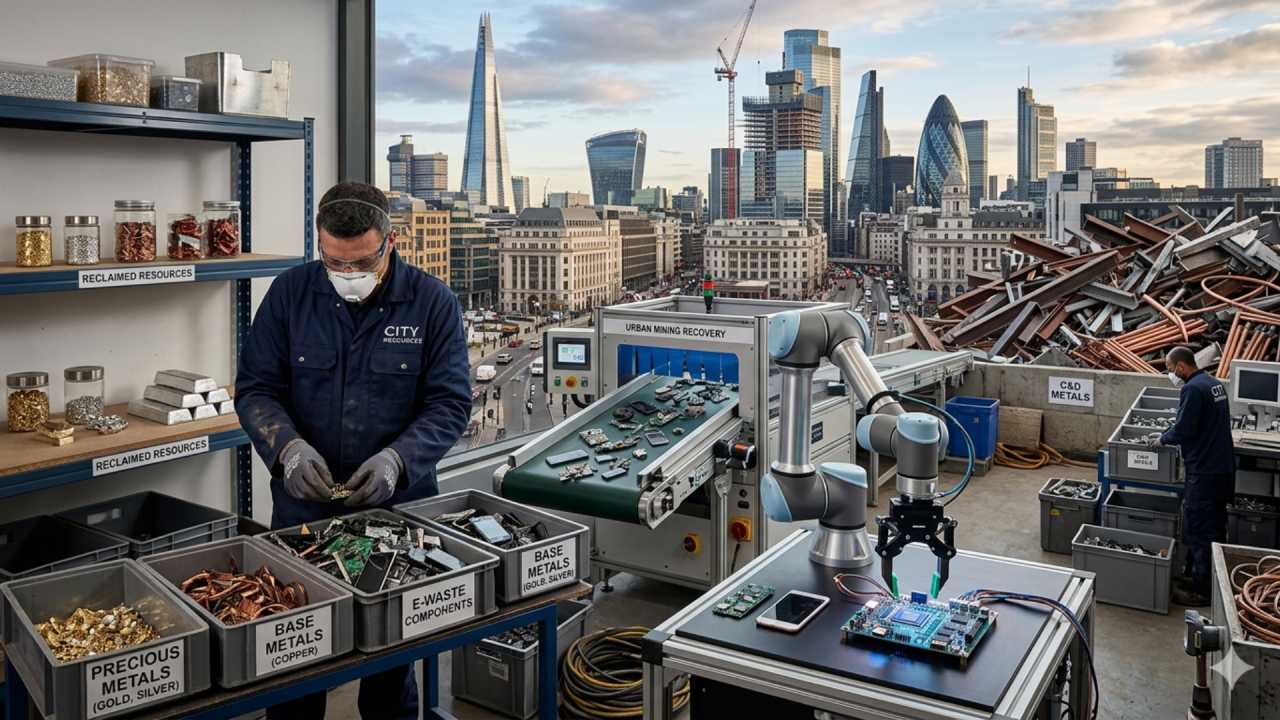
Precious metals are sourced in two primary ways: primary mining and secondary recycling. Primary mining involves extracting ore from the earth’s crust, which often contains only a few grams of precious metal per ton of rock. Secondary sources, or “urban mining,” involve recovering metals from end-of-life products like jewelry, dental scrap, and electronic waste.
Refining is necessary because these metals are rarely found in their pure state. In the earth, they are often bonded with copper, nickel, or lead. In recycled products, they are usually alloys—mixtures of metals designed for durability or specific colors (like 14k gold or sterling silver). To return these materials to a “pure” state where they can be traded on the market or used in high-tech manufacturing, the impurities must be stripped away through complex metallurgical processes.
What Guaranteed Purity Really Means
When a refiner speaks of “guaranteed purity,” they are referring to a measurable standard of elemental concentration. In the industry, this is often expressed as “fineness.”
Industry Purity Standards
The most common standards are 99.9% (often called “three-nines fine”) and 99.99% (“four-nines fine”). While the difference between 99.9% and 99.99% might seem negligible to a layperson, it represents a tenfold reduction in impurities. For high-end scientific applications or semiconductor manufacturing, even “five-nines” (99.999%) may be required.
Hallmarks and Certifications
A hallmark is a physical stamp on a metal object that certifies its purity and origin. These marks are the result of rigorous testing. When a bar of gold is stamped with “999.9,” it serves as a legal guarantee from the refiner to the buyer. This transparency is the lifeblood of the precious metals market; without it, trust would vanish, and the liquidity of these assets would plummet.
Misconceptions About Pure Metals
A common misconception is that “pure” means 100% free of other elements. In reality, achieving 100.000% purity is scientifically impossible outside of a controlled laboratory vacuum, and even then, it is fleeting. “Purity” in refining refers to meeting or exceeding the threshold where remaining trace elements no longer affect the metal’s physical properties or market value.
Sources of Raw Materials
The refining industry acts as a massive filter for the world’s metal supply. The inputs are as diverse as the industries they serve.
Mining and Industrial Scrap
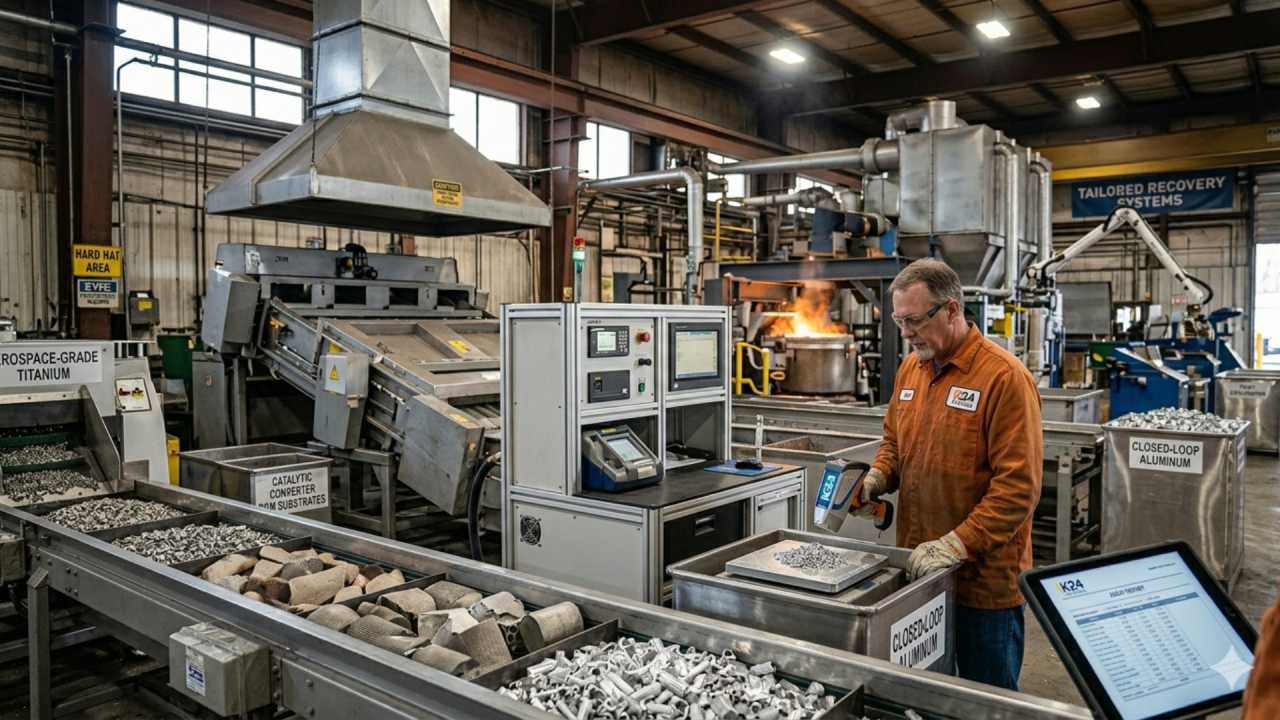
New metal from mines usually arrives at the refinery as “doré bars”—unrefined bullion that is typically 60-90% pure. On the industrial side, manufacturers often produce “scrap” during production, such as shavings from CNC machining or leftover wire from electronics assembly. This high-grade scrap is easily recycled because its composition is usually known.
E-Waste: The New Frontier
Electronic waste (e-waste) is one of the fastest-growing sources of precious metals. Circuit boards, processors, and connectors contain significant amounts of gold and palladium. However, e-waste is difficult to process because the precious metals are integrated with plastics, glass, and hazardous materials like flame retardants and lead.
Jewelry and Dental Scrap
Jewelry remains a steady source of material. As styles change or items break, consumers sell their gold and silver back to the market. Dental scrap, including old bridges and crowns, is also a high-value source, often containing complex alloys of gold, silver, and platinum group metals.
The Precious Metal Refining Process
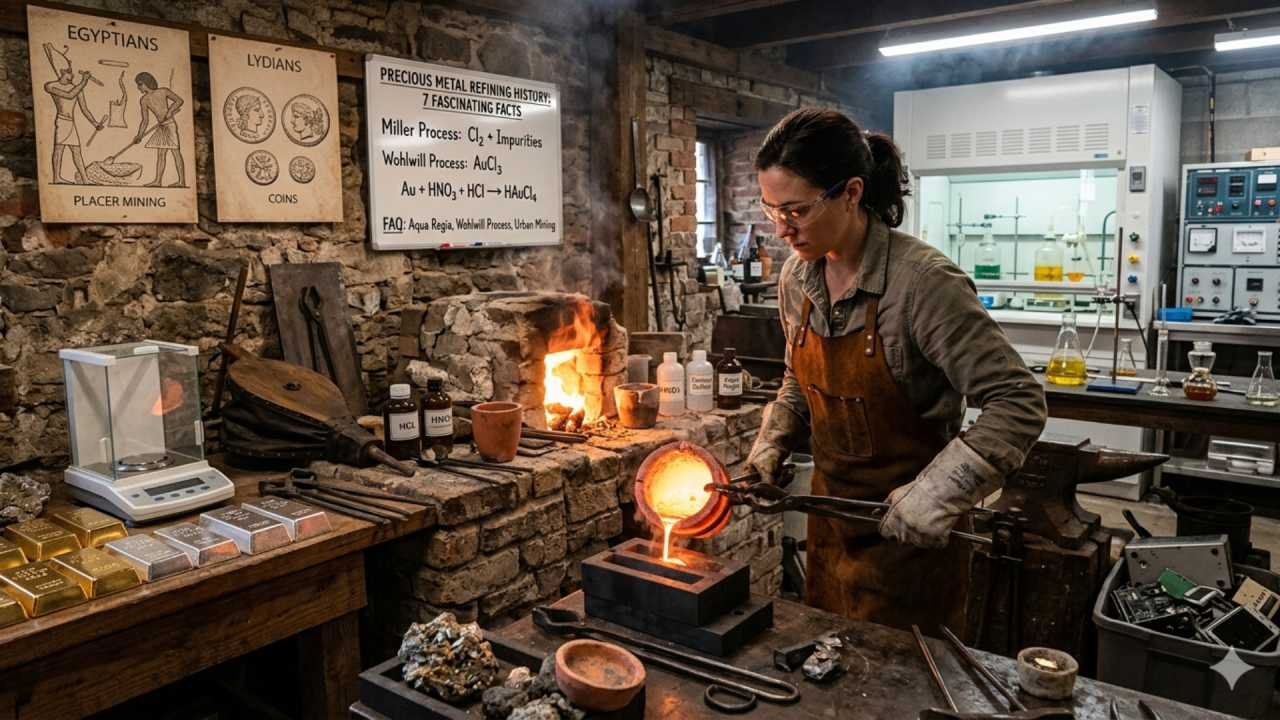
The heart of the industry is the refining process itself—a sophisticated blend of ancient smelting techniques and modern chemical engineering.
Pre-treatment and Sampling
Before any metal is melted, it must be accurately weighed and sampled. This is the “settlement” phase where the refiner determines how much precious metal is actually in the lot provided by the customer.
-
Sorting: Materials are categorized by type.
-
Incineration: For materials containing organic matter (like dental scrap or e-waste), the lot is burned to remove plastics and paper, leaving behind a concentrated ash.
-
Milling and Blending: The material is ground into a fine powder to ensure a homogeneous mixture for sampling.
Smelting
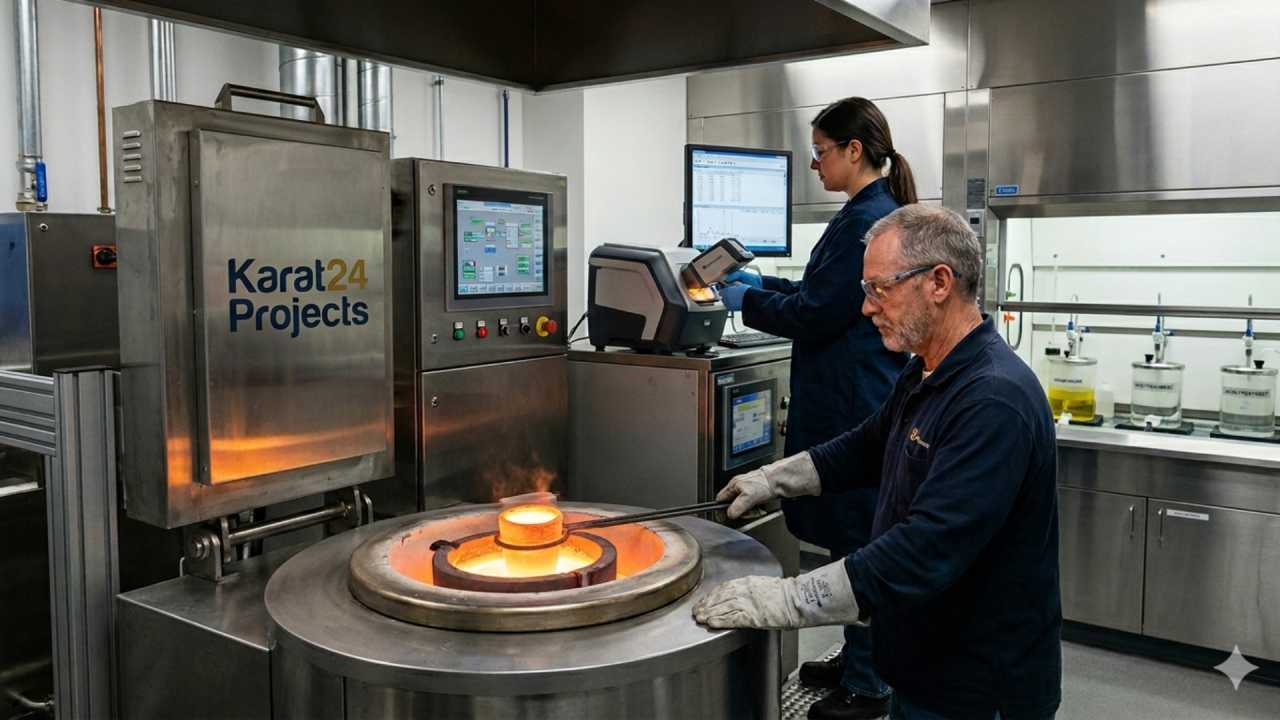
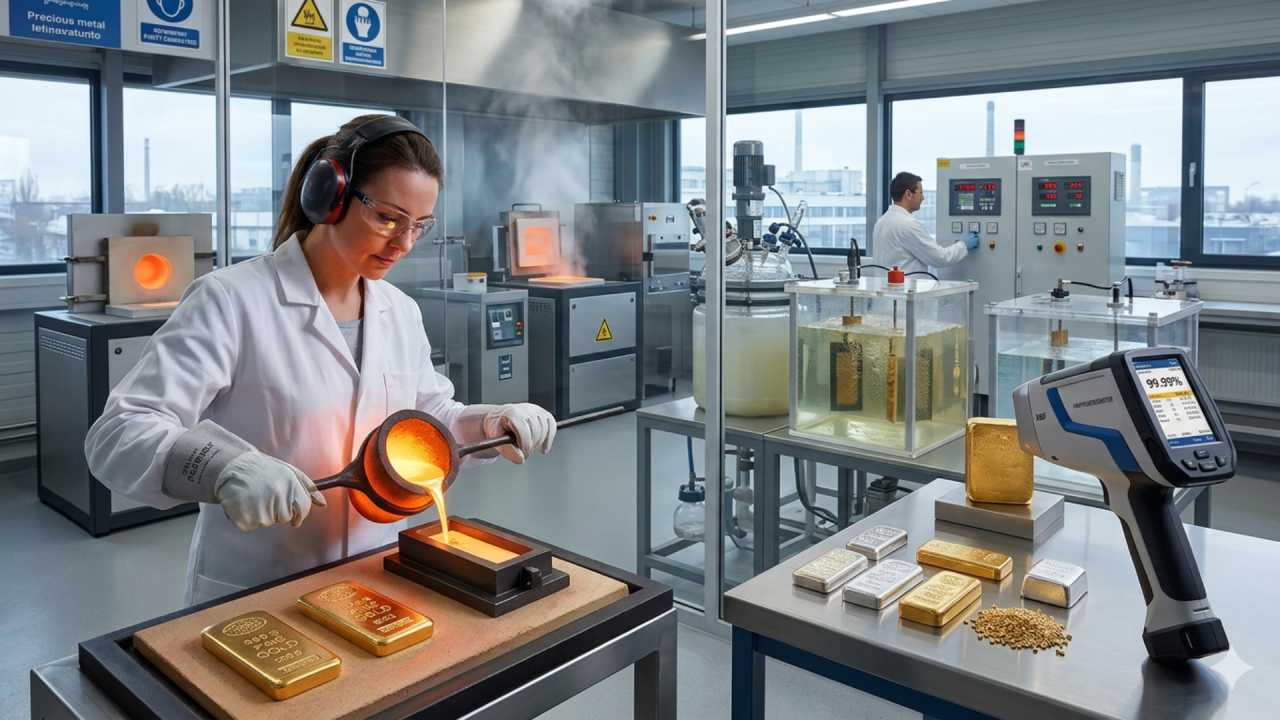
Smelting is the process of melting the material in a furnace with “fluxes”—chemicals like borax or soda ash that help separate the metal from oxides and impurities. In the furnace, the impurities rise to the top as “slag,” which is skimmed off, leaving behind a concentrated molten metal.
Chemical Refining
Once the bulk impurities are removed, the metal must be refined at the molecular level.
-
Aqua Regia Process: This is the most common method for refining gold. Aqua regia, a mixture of nitric acid and hydrochloric acid, dissolves the gold into a solution. The solution is then filtered, and a precipitating agent is added to “drop” the gold out of the liquid as a high-purity powder.
-
The Miller Process: This involves bubbling chlorine gas through molten gold. The impurities (like silver and copper) react with the chlorine to form salts that float to the surface, while the gold remains unaffected. This process can achieve 99.5% purity.
-
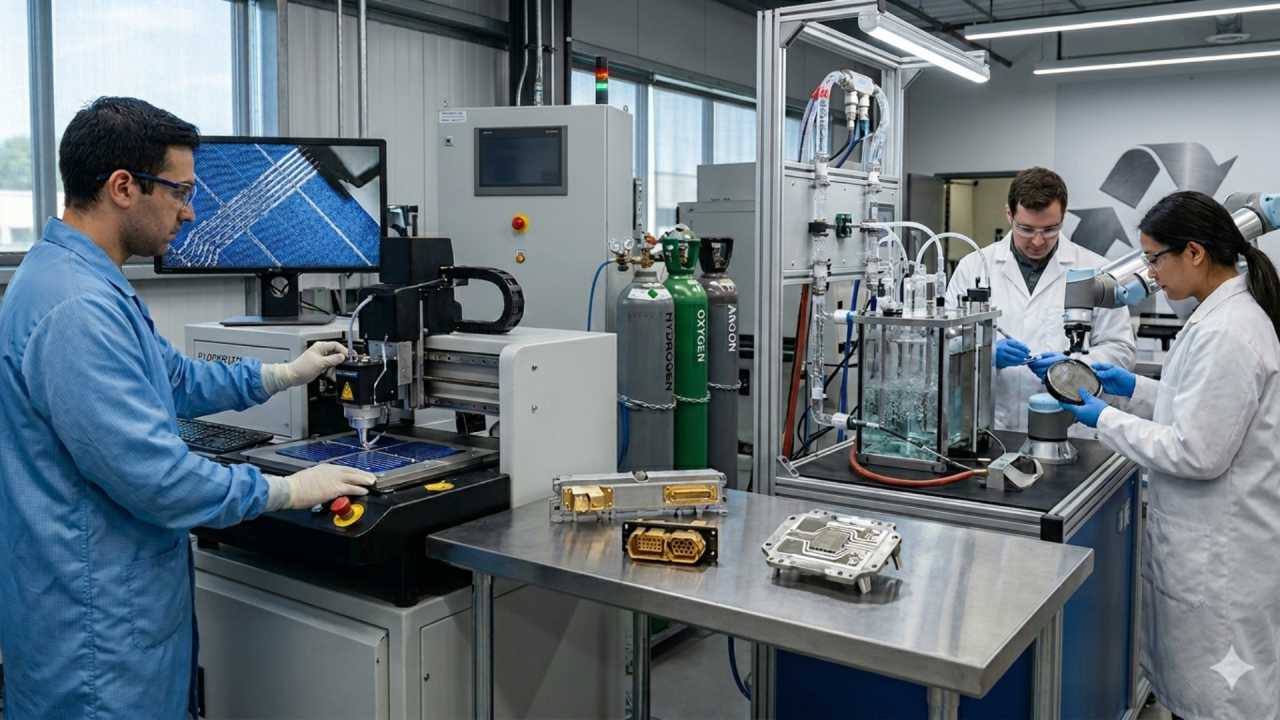
The Wohlwill Process: To reach 99.99% purity, the gold from the Miller process is used as an anode in an electrolytic cell. Through electrolysis, the gold is dissolved and redeposited onto a pure gold cathode, leaving all remaining impurities in the sludge at the bottom of the tank.
Final Purification
After chemical or electrolytic refining, the resulting “sponge” or crystals are washed, dried, and melted one last time. This final melt is poured into molds to create bars or shot (small grains). Throughout this final stage, repeated refining cycles may be used if the initial assay does not meet the “four-nines” requirement.
Quality Control and Testing Methods
Quality control is the barrier between a “refined” product and a “guaranteed” product. Refineries use a suite of analytical techniques to verify purity.
Fire Assay
The fire assay is the “gold standard” of the industry, a technique that has been used for centuries but remains the most accurate for gold. A small sample is melted with lead and silver in a bone-ash cup (cupel). The lead and base metals are absorbed by the cupel, leaving a bead of gold and silver. The silver is then dissolved in acid, and the remaining gold is weighed on a microbalance.
X-Ray Fluorescence (XRF)
XRF is a non-destructive method that uses X-rays to excite the atoms in a metal sample. As the atoms return to a stable state, they emit fluorescent X-rays unique to each element. An XRF analyzer reads these signals to provide a breakdown of the metal’s composition in seconds.
Inductively Coupled Plasma (ICP) Analysis
For the most demanding standards, ICP analysis is used. A sample is dissolved in acid and injected into a plasma torch at temperatures hotter than the surface of the sun. The light emitted by the vaporized elements is analyzed to detect impurities down to parts per billion (ppb).
Certifications and Industry Standards
In a global market, consistency is key. Certifications ensure that a bar of silver refined in one country is identical in quality to one refined in another.
LBMA and COMEX
The London Bullion Market Association (LBMA) maintains the “Good Delivery” list. Refiners on this list must meet stringent criteria regarding their financial standing, their history of production, and—most importantly—their ability to produce metal of a specific, verified purity. Similarly, the COMEX in New York sets standards for metals traded on the futures exchange.
ISO Certifications
ISO 9001 (Quality Management) and ISO 14001 (Environmental Management) are standard for top-tier refiners. These certifications prove that the refinery has documented processes to ensure every batch of metal is treated with the same level of care and precision.
Environmental and Ethical Considerations
Modern refining is not just about the purity of the metal, but the “purity” of the supply chain.
Sustainable Refining
Refining is energy-intensive and involves hazardous chemicals. Responsible refiners invest in closed-loop systems that capture and neutralize acid fumes (scrubbers) and recycle the water used in the process. By recovering metals from scrap rather than mining new ore, the industry significantly reduces its carbon footprint.
Ethical Sourcing
The issue of “conflict minerals” is a major concern. Leading refiners now implement strict “Know Your Customer” (KYC) and Due Diligence protocols. They must ensure that the gold they process does not come from regions where mining funds armed conflict or involves human rights abuses. This is often referred to as “Conflict-Free” refining.
Applications of High-Purity Precious Metals
The demand for guaranteed purity is driven by the specific needs of various sectors.
-
Investment: Central banks and private investors require 99.99% purity to ensure the value of their reserves is standardized and globally tradable.
-
Industrial Electronics: As devices get smaller, the risk of failure due to impurities in the conductive paths increases. High-purity gold and silver are non-negotiable in semiconductor manufacturing.
-
Aerospace: High-purity alloys are used in jet engines and satellite components where extreme heat resistance and reliability are matters of life and death.
-
Medicine: Platinum is used in pacemakers and cancer-fighting drugs (like Cisplatin). Any impurity in these materials could lead to toxic reactions in patients.
Choosing a Reliable Refining Partner
For businesses that generate precious metal scrap, choosing the right refinery is a critical financial decision.
Key Factors to Evaluate
-
Transparency: A good refiner will allow you to witness the sampling process or provide a detailed breakdown of the assay results.
-
Technology: Look for refiners using ICP and XRF technology alongside traditional fire assay.
-
Payment Terms: Reliable refiners offer clear turnaround times and competitive pricing based on the current market (spot) price.
-
Security: The facility should have rigorous security protocols to protect the high-value material from the moment it arrives until it is settled.
Red Flags
Avoid refiners that offer “flat rate” payouts without an assay, or those that cannot provide documentation of their environmental compliance and industry certifications. Lack of transparency in the sampling process is a major warning sign.
Future Trends in Precious Metal Refining
The industry is currently undergoing a technological revolution.
Automation and AI
AI is being used to sort e-waste more efficiently, using computer vision to identify high-value components on a conveyor belt. Automation in the lab is also reducing human error in the assaying process, leading to even more precise purity guarantees.
Green Chemistry
New, less toxic solvents are being developed to replace traditional acids like aqua regia. These “deep eutectic solvents” offer the potential to dissolve precious metals with much lower environmental impact and easier waste management.
Urban Mining Growth
As the world moves toward a circular economy, the focus is shifting from the earth to the landfill. “Urban mining” is becoming more sophisticated, allowing for the recovery of trace amounts of metals from everyday objects that were previously considered impossible to recycle.
Final Thoughts
The refining of precious metals is a cornerstone of the modern world. It is a bridge between raw, unrefined material and the high-performance products that drive our economy and technology. Guaranteed purity is more than a marketing slogan; it is a technical standard that requires a mastery of chemistry, a commitment to rigorous testing, and a dedication to ethical practices.
Whether it is a gold bar sitting in a vault, a silver contact in a solar panel, or a platinum catalytic converter, the quality of the metal defines its utility and value. By understanding the processes of smelting, chemical refining, and assaying, we can appreciate the immense effort required to bring these elements to their most perfect state. As technology advances and the need for sustainable sourcing grows, the precious metal refining industry will continue to evolve, ensuring that “purity” remains the gold standard of global industry.