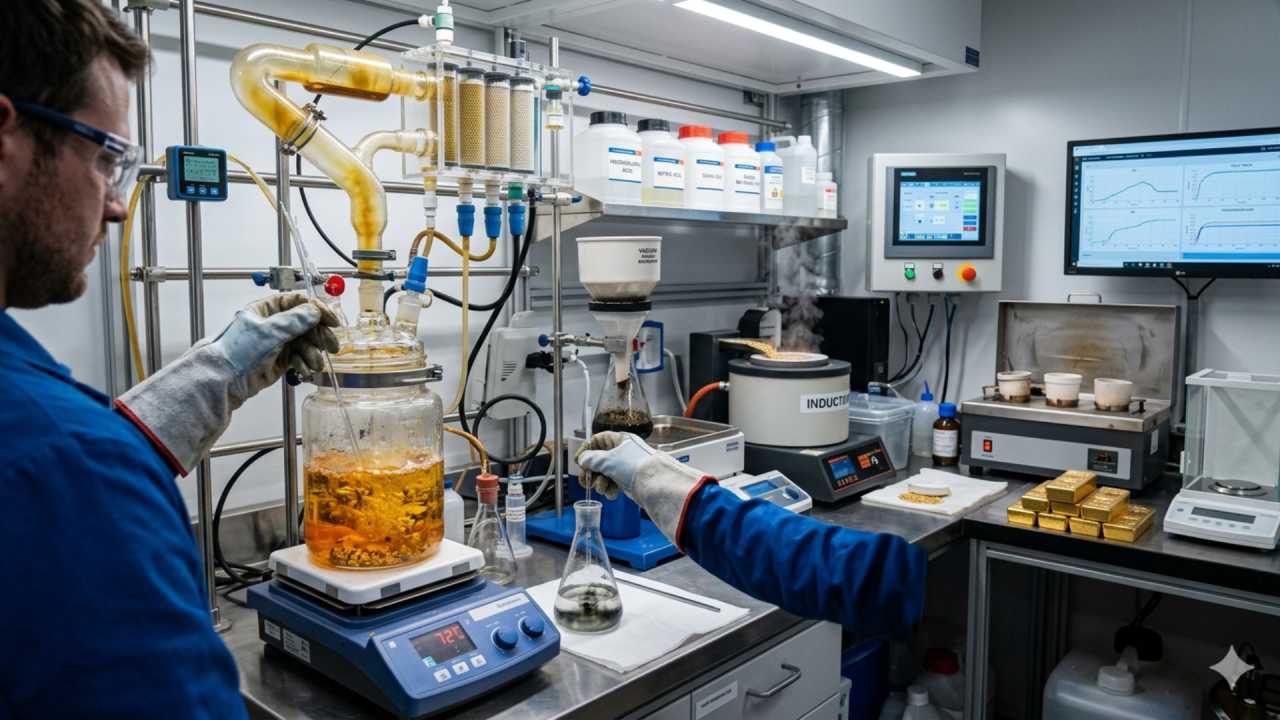
Gold Refining Process Optimization: Tips for Better Recovery and Efficiency
The global demand for high-purity gold continues to expand across diverse sectors. Beyond its traditional roles in currency, investment bullion, and jewelry manufacturing, gold has become an indispensable component in advanced electronics, aerospace engineering, medical technologies, and green energy applications. As industrial demand escalates, the margin for error in precious metal refining shrinks. For commercial refiners, mints, and industrial recycling facilities, refining efficiency is directly tied to profitability and market competitiveness.
Even minor process inefficiencies can result in substantial financial losses. Many refining operations face persistent challenges that erode their bottom line, including substandard recovery rates, excessive chemical waste, high energy expenditures, and accidental batch contamination. Maximizing throughput while maintaining stringent purity standards requires a systematic approach to process optimization.
By analyzing every phase of operation—from the initial sorting of raw feedstock to the final quality control assays—refiners can uncover latent opportunities for enhancement. Even small, incremental process improvements can significantly increase gold recovery and reduce operating costs. This comprehensive guide details the technical, operational, and strategic adjustments required to optimize your gold refining process for peak efficiency and maximum yield.
Understanding the Gold Refining Process
To successfully optimize a refining system, one must first possess a thorough understanding of its fundamental mechanics and chemical principles. Gold refining is the technical process of purifying crude gold, scrap jewelry, industrial waste, or mining concentrates by separating the elemental gold from base metals (such as copper, nickel, iron, and zinc) and other precious metals (such as silver, platinum, and palladium).
It is crucial to distinguish between three terms that are frequently used interchangeably but represent entirely different operational stages:
-
Recovery: The initial extraction phase where gold-bearing materials are collected, concentrated, or stripped from non-metallic substrates (such as electronic circuit boards or low-grade ores).
-
Smelting: A pyrometallurgical process where thermal energy and chemical fluxing agents are applied to melt the material, causing base metal impurities to oxidize and separate into a slag layer, leaving behind a concentrated dore alloy.
-
Refining: The final purification stage where the concentrated alloy is treated chemically, electrochemically, or thermally to achieve fine gold purities of 99.5% up to 99.99%.
Primary Refining Methodologies
Depending on the scale of operation, feedstock composition, and target purity, industrial refiners rely on several distinct methodologies.
The Miller Process
This pyrometallurgical technique involves bubbling gaseous chlorine through molten gold alloy. The base metals and silver react with the chlorine to form volatile or liquid chlorides that float to the top of the melt as a slag layer. The Miller process is fast and cost-effective for large-scale operations but is technically limited to achieving a maximum purity of approximately 99.5%.
The Wohlwill Process
An electrochemical refining method used to upgrade 99.5% Miller-grade gold to an ultra-pure 99.99% standard. The impure gold serves as the anode in an electrolyte solution of hydrochlorous acid and gold chloride, while pure gold sheets serve as the cathode. Under an electric current, gold dissolves from the anode and deposits onto the cathode in an exceptionally pure state, leaving impurities in the electrolyte or as anode slime.
Aqua Regia Refining
A widely adopted hydrometallurgical method where gold-bearing materials are dissolved in a precise mixture of nitric acid and hydrochloric acid. The resulting chloroauric acid solution is filtered to remove insoluble silver chloride and other solids, after which a selective reducing agent is introduced to precipitate pure gold powder. This method is highly versatile for small to medium industrial operations, capable of reaching purities of 99.9% to 99.99%.
Electrorefining
Similar to the Wohlwill process, this encompasses various specialized electrolytic cells designed to refine complex alloys, ensuring that silver and platinum group metals are systematically isolated and recovered alongside the primary gold yield.
| Method | Typical Purity | Best Suited For | Key Resource Intensity |
| Miller Process | 99.5% | High-volume primary mining dore | High thermal energy, gaseous chlorine gas |
| Wohlwill Process | 99.99% | Ultra-high purity industrial/bullion | High electrical consumption, high capital lockup |
| Aqua Regia | 99.9% – 99.99% | Scrap jewelry, electronic waste, medium scale | High chemical consumption, intensive filtration |
| Electrorefining | 99.9% – 99.99% | Complex polymetallic scrap alloys | Moderate electricity, precise chemical monitoring |
Choosing the Right Refining Method
Process optimization begins long before chemicals are mixed or furnaces are ignited; it starts with selecting the correct refining pathway for your specific material stream. Selecting an inappropriate method leads to systemic inefficiencies, elevated processing costs, and depressed yields.
When evaluating or re-engineering your refining matrix, several operational variables must be balanced:
-
Purity Requirements: If your end market requires 99.99% purity for semiconductor bonding wire or investment-grade bars, a single pass through a pyrometallurgical Miller line will not suffice. You will need to integrate a hydrometallurgical aqua regia setup or an electrochemical Wohlwill system.
-
Throughput Volume: High-volume operations processing hundreds of kilograms of dore per day benefit from the speed and low labor intensity of the Miller process. Conversely, batch-oriented facilities dealing with varied scrap materials achieve higher margins utilizing flexible hydrometallurgical setups.
-
Chemical Usage and Labor Intensity: Hydrometallurgical refining requires significant quantities of acids and precipitating reagents, requiring robust neutralization infrastructure and manual material handling. Electrolytic refining requires less daily chemical handling but ties up significant capital, as gold must remain in the electrolytic cells for extended periods to facilitate deposition.
Strategic Application
Aqua regia is best applied when dealing with heterogeneous feedstock containing unpredictable quantities of silver, copper, and base metals, such as recycled consumer jewelry or industrial scrap. Its capability to completely dissolve gold while rendering silver insoluble makes it highly efficient for rapid batch separation.
Electrorefining makes more sense when upgrading high-grade bullion consistently or when precious metals like platinum, palladium, or high concentrations of silver are present in the feedstock, allowing for sequential recovery from the anode slime and electrolyte without consuming vast volumes of single-use acids.
Improving Feed Material Preparation
A common operational flaw in precious metal refining is treating feed preparation as a minor preliminary step. Inadequate preparation of feedstock is a primary root cause of chemical inefficiency, incomplete dissolution, batch contamination, and suppressed gold recovery. To achieve maximum yields, feed materials must be systematically homogenized, sorted, and pre-treated.
Sorting and Segregation
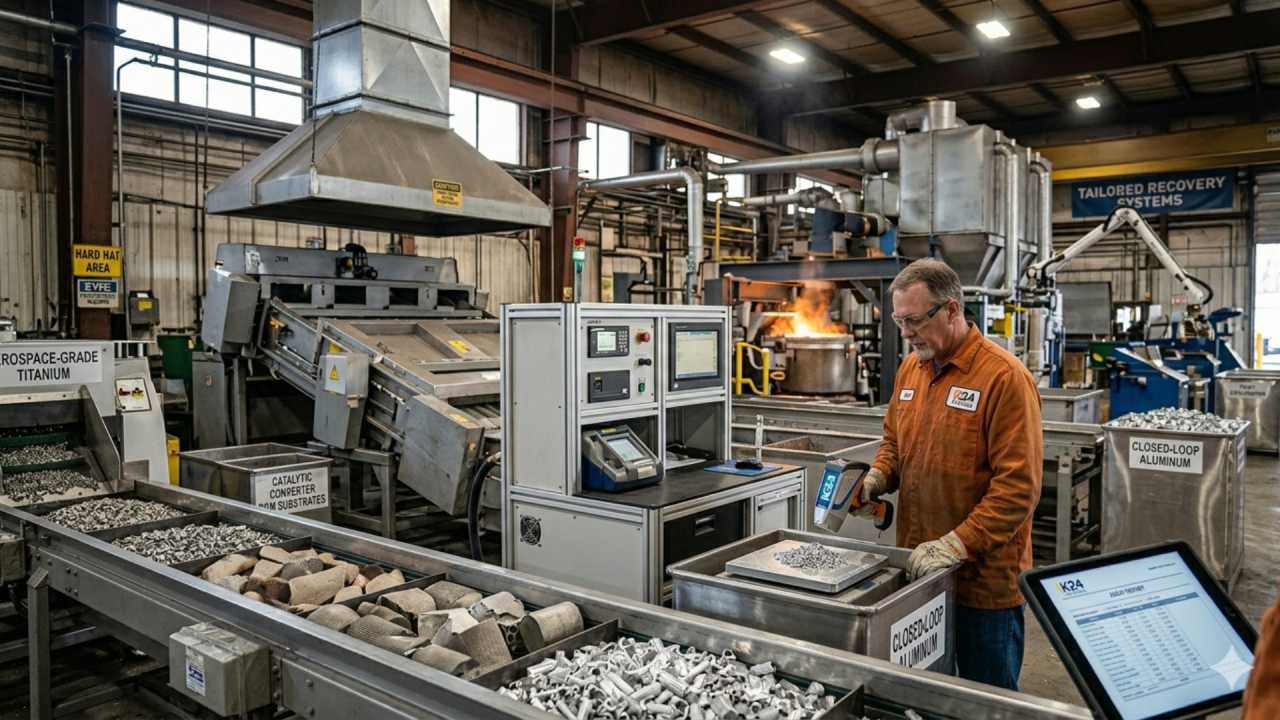
Feedstocks should be strictly categorized by their suspected composition before entering the refining stream. High-carat jewelry scrap must never be mixed with low-grade electronic components or dental alloys. Mixing incompatible streams introduces unnecessary chemical variables, requiring excess reagent consumption and complicating the downstream precipitation phases.
Mechanical Contaminant Removal
Plastics, organic resins, ceramics, and base metal framing should be mechanically stripped or separated wherever possible. Burning off plastics or allowing organics to enter chemical reactors creates complex organic compounds that can act as unintended chelating agents, binding to gold in solution and preventing complete precipitation.
Particle Size Optimization
For hydrometallurgical processes, dissolution rates depend heavily on surface area exposure. Processing large, solid chunks of gold alloy results in incomplete core dissolution, trapping unrefined gold within an insoluble outer shell of silver chloride or base metal oxides.
To prevent this, refiners should utilize a process called shotting or corn-popping. This involves melting the feed material and pouring it into a vortex of cold water, creating high-surface-area metal grains or granules. If processing electronic scrap or industrial catalysts, industrial grinding and crushing mills should be calibrated to yield an optimized particle size that balances rapid reaction speeds with manageable filtration dynamics.
Sampling, Assaying, and Moisture Control
You cannot optimize what you do not measure. Every incoming batch must undergo rigorous sampling and fire assay or X-ray fluorescence (XRF) analysis before processing. This establishes an exact baseline of expected yield, allowing plant managers to calculate precise stoichiometric chemical requirements.
Furthermore, moisture control is critical; wet or damp feedstock alters chemical concentrations and can introduce dangerous thermal shock or steam explosions when introduced into hot molten metals or concentrated acid environments.
Chemical Optimization for Better Recovery
The chemistry of gold refining requires precise control over equilibrium, temperature, and stoichiometry. Uncontrolled chemical addition is a primary source of escalating operational costs and metal loss.
Acid Concentration and Temperature Regulation
In aqua regia refining, the reaction rate and dissolution efficiency depend on maintaining an optimal ratio of hydrochloric acid to nitric acid (typically 3:1 or 4:1 by volume) alongside a controlled thermal profile. Reactions should be conducted in insulated, heated vessels capable of maintaining temperatures between 60 degrees Celsius and 80 degrees Celsius.
Elevated temperatures accelerate the kinetics of dissolution, ensuring that the acids are completely exhausted by the end of the digestion cycle. Running reactions cold leads to incomplete dissolution and leaves excess, unreacted nitric acid in the solution, which severely complicates the subsequent gold precipitation step.
Chemical Dosing Strategies
Rather than dumping predefined volumes of acid into a reactor based on guesswork, operations should implement incremental, demand-driven dosing. Based on the initial pre-refining assay, calculate the precise theoretical volume of acid required to dissolve the target base metals and gold.
Add the acids systematically, monitoring the reaction’s off-gassing and thermal output. This prevents over-saturation, reduces chemical waste, and limits the generation of toxic nitrogen dioxide fumes.
Eliminating Excess Nitric Acid
One of the most frequent mistakes in gold refining is the presence of residual nitric acid in the chloroauric acid solution. If excess nitric acid remains when a reducing agent (such as sulfur dioxide or sodium metabisulfite) is added to precipitate the gold, the nitric acid will continually re-dissolve the precipitated gold particles as fast as they form. This results in poor precipitation timing, incomplete yields, and gold remaining trapped in the waste solution.
To optimize this, refiners must employ a thorough de-noxing procedure. This can be achieved mechanically through targeted evaporation cycles or chemically by adding urea, sulfamic acid, or small, metered additions of pure gold shot to consume the remaining free nitric acid before introducing the precipitant.
Precipitation and pH Control
Once the solution is free of excess nitric acid, select an appropriate reducing agent to precipitate the gold. Sodium metabisulfite (SMB) is widely preferred for its safety and ease of use. The precipitation environment must be carefully monitored for pH and concentration.
Add the SMB slowly as a dissolved solution rather than a dry powder; this ensures a controlled reaction that grows dense, large gold crystals that settle quickly out of the liquid phase, making subsequent filtration far more efficient.
Equipment Upgrades and Process Automation
Manual refining methods are inherently prone to human error, batch variations, and safety hazards. Upgrading to modern, automated refining equipment is one of the most direct pathways to achieving a rapid return on investment through reduced labor costs, lower chemical waste, and accelerated batch cycle times.
Modern Induction Furnaces
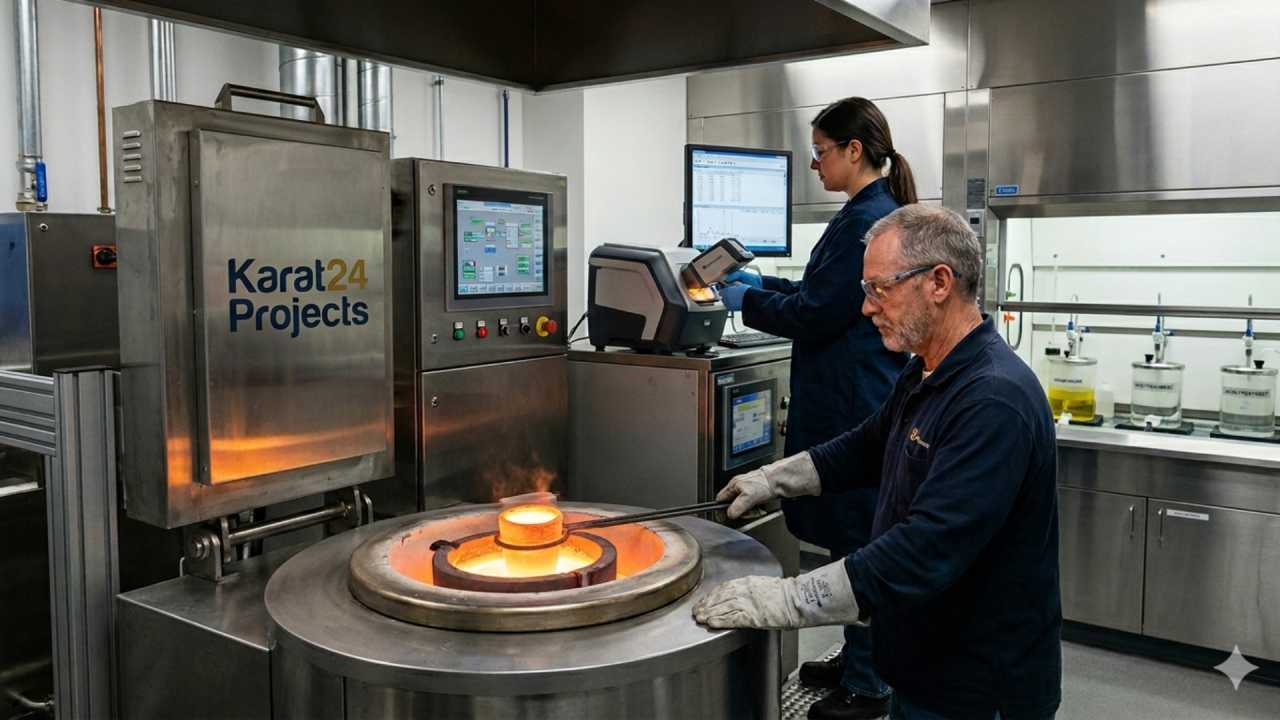
Traditional gas-fired furnaces suffer from uneven heat distribution, high thermal mass, and slow ramp times. Upgrading to modern electric induction furnaces allows for precise, instantaneous temperature control and creates an internal electromagnetic stirring effect. This stirring ensures absolute homogeneity of alloys during shotting or bar casting, which leads to highly accurate assay sampling and more predictable refining chemistry.
Automated Chemical Dosing and Temperature Control
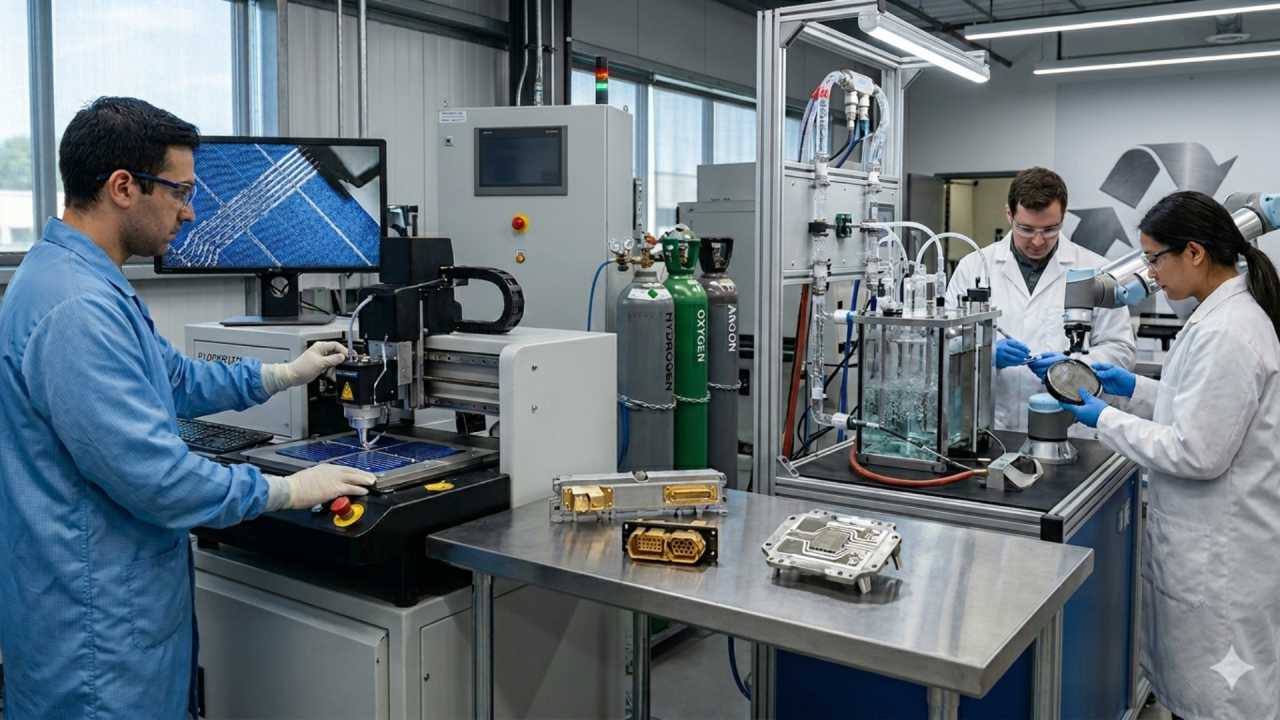
Integrating programmable logic controllers (PLCs) into chemical reactors allows for automated tracking of pH, oxidation-reduction potential (ORP), and solution temperature. Automated dosing systems can introduce acids and precipitating agents at mathematically optimized rates based on real-time sensor feedback. This eliminates the risk of human error, avoids chemical overconsumption, and maintains reactions at peak thermodynamic efficiency.
Industrial Filtration and Fume Scrubbing Systems
Slow, gravity-fed filtration through paper funnels is a major operational bottleneck that exposes fine gold particles to loss through tearing or overflow. Industrial refiners should invest in vacuum-assisted filtration units or closed filter presses equipped with high-efficiency, chemical-resistant membranes.
Additionally, state-of-the-art multi-stage fume extraction and scrubbing systems are vital. Modern scrubbers not only protect personnel and ensure environmental compliance by neutralizing acid mists and nitrous gases, but they can also be fitted with particulate traps that catch volatilized precious metal particles before they escape into the atmosphere.
Reducing Gold Losses During Refining
In precious metal refining, gold loss rarely occurs as a single large event; instead, it is a gradual depletion caused by small inefficiencies distributed across the entire process chain. Identifying and sealing these escape routes is fundamental to optimizing overall yields.
Identifying Channels of Material Loss
Gold can easily escape an operation via:
-
Filter Papers and Consumables: Fine gold powder embeds itself deep within the fibers of filter papers, crucibles, and stirring rods.
-
Refining Sludge and Insoluble Residues: Silver chloride cakes and base metal sludges often entrap sub-micron particles of elemental gold during precipitation.
-
Rinse Water and Liquid Effluents: Microscopic gold colloids can remain suspended in discarded acid waste streams or wash water.
-
Fumes and Exhaust Streams: High-temperature melting or violent chemical boiling can carry fine gold particulates up through exhaust hoods.
Implementing Rigorous Recovery Audits
A comprehensive mass-balance accounting system must be established. Every milligram of gold entering the facility must be accounted for in either the final refined product, the retained slag, or verified waste streams. Regular audits should be performed on all spent crucibles, discarded filter elements, and reactor cleaning residues.
Secondary Recovery Systems
To reclaim hidden residues and maximize total yield, operations should implement a secondary recovery loop. All spent filter papers, wipes, and protective gear used in cleanrooms should be dried, incinerated in a controlled furnace, and the resulting ash processed through a dedicated recovery cycle.
Discarded acid solutions should pass through a secondary precipitating tower or zinc-precipitation cementing cell before entering the final wastewater treatment system. Additionally, installing specialized settling tanks allows any ultra-fine, slow-settling gold particles an extended window to drop out of suspension, ensuring no precious metal is inadvertently flushed away.
Energy Efficiency and Cost Reduction
Optimization encompasses not only maximizing the mass of gold recovered but also minimizing the overhead expenses incurred during the recovery process. Energy consumption represents a substantial fixed cost in pyrometallurgical and high-temperature hydrometallurgical operations.
Thermal Optimization
Furnaces should be lined with advanced ceramic fiber insulation or high-performance refractory materials that demonstrate exceptionally low thermal conductivity. This reduces heat loss through the furnace walls, minimizes idle heating times, and lowers the electricity or fuel required per melt cycle.
Furthermore, scheduling production to run continuous, back-to-back batches prevents furnaces from cooling down completely between cycles, utilizing the residual thermal energy from the previous run.
Heat Recovery Systems
Large industrial facilities can optimize energy footprints by installing heat exchangers within the exhaust flues of melting furnaces or roasting ovens. The captured waste heat can be redirected to pre-heat incoming feedstock, maintain temperatures in chemical digestion vats, or supplement facility space heating, significantly reducing net energy expenditures.
Chemical and Resource Recycling
Implementing a closed-loop water reuse system reduces water consumption and minimizes wastewater treatment volumes. In some advanced setups, spent acids can be chemically regenerated or distilled to recover unreacted hydrochloric acid, mitigating both raw chemical procurement costs and environmental neutralization expenses.
Safety, Environmental Compliance, and Waste Management
An unoptimized refining operation is frequently an unsafe and non-compliant one. The regulatory and financial penalties associated with chemical spills, toxic gas releases, or illegal wastewater discharges can easily devastate a refining business. True process efficiency integrates safety and compliance directly into standard operating procedures.
Hazardous Material Handling and Engineering Controls
Refiners must manage high volumes of corrosive acids, toxic reagents, and hazardous off-gases. Facilities must be engineered with multi-tiered containment zones, acid-resistant flooring, and automated air-exchange ventilation systems. Personnel must be equipped with comprehensive personal protective equipment (PPE), including full-face respirators, acid-proof suits, and heavy-duty nitrile gloves.
Advanced Wastewater Treatment
Refining effluents are highly acidic and heavily contaminated with toxic base metal ions like copper, nickel, and lead, alongside trace heavy metals. An optimized waste management system utilizes multi-stage neutralization tanks where lime or sodium hydroxide is systematically introduced to alter the pH, forcing heavy metals to precipitate out as manageable, stable metal hydroxide sludges.
The remaining water can then be safely neutralized, filtered through activated carbon arrays, and verified via real-time discharge monitoring sensors to ensure absolute compliance with local environmental standards.
[Feedstock Dissolution] -> [Primary Filtration] -> [Gold Precipitation & Recovery]
                                    |                           |
                                    v                           v
                        [Insoluble Residues]         [Spent Acid Effluent]
                                    |                           |
                                    v                           v
                        [Secondary Recovery] -> -> -> [Neutralization & Treatment]
                                                                |
                                                                v
                                                     [Compliant Discharge]
Quality Control and Continuous Process Improvement
Process optimization is not a static milestone; it is an ongoing, iterative discipline. Maintaining high yields over months and years requires an embedded culture of quality control and process documentation.
Implementing Rigorous Key Performance Indicators
Refining operations should establish and track specific KPIs for every batch processed:
-
First-Pass Recovery Percentage: The percentage of gold successfully recovered in the primary refining step relative to the initial intake assay.
-
Reagent Efficiency Ratio: The volume of chemicals consumed per kilogram of refined gold produced.
-
Batch Cycle Time: The total time elapsed from feedstock intake to final bar casting.
-
Purity Consistency: The standard deviation of final purity scores across consecutive batches.
Systematic Assay Verification
Relying on a single analytical method introduces risk. An optimized quality control laboratory pairs rapid XRF scanning for intermediate process checks with classic, ultra-precise fire assaying or Inductively Coupled Plasma (ICP) optical emission spectrometry for final product certification. Regular cross-testing with independent, accredited third-party laboratories ensures that internal analytical tools remain perfectly calibrated.
Operator Training and Bottleneck Identification
Even the most advanced automated system will underperform if operators lack proper training. Comprehensive training programs ensure that technicians understand not only what buttons to push, but the underlying chemical and mechanical principles driving the process. Regular operational reviews should be conducted to identify processing bottlenecks—whether it is an underpowered filtration pump or a slow assay turnaround time—allowing management to direct optimization capital where it will yield the highest performance return.
Common Gold Refining Mistakes to Avoid
When attempting to streamline operations, refiners frequently fall victim to predictable errors that undermine their optimization goals. Awareness of these common pitfalls is vital for maintaining high yields:
-
Skipping Feed Analysis: Attempting to refine a batch without an accurate initial assay leads to blind chemical dosing, resulting in either unreacted feedstock or massive reagent waste.
-
Inadequate Rushing of the Precipitation Phase: Adding reducing agents too quickly or failing to completely eliminate residual nitric acid causes fine gold to re-dissolve or form ultra-fine colloidal suspensions that bypass filters entirely.
-
Poor Filtration and Washing Practices: Neglecting to thoroughly wash precipitated gold cakes with boiling distilled water and hydrochloric acid leaves residual base metal salts trapped within the gold powder, lowering the final bar purity.
-
Contamination via Cross-Utilization of Equipment: Using the same crucibles, stirring rods, or filtration units for different grades of metal or different steps of the process introduces unwanted copper, iron, or silver into fine gold batches.
-
Overusing Chemicals: Operating under the false assumption that “more acid equals faster refining” leads to skyrocketing material costs, excessive fumes, complex de-noxing steps, and increased hazards during wastewater treatment.
Cultivating Long-Term Efficiency
Optimizing a gold refining operation requires balancing chemical precision, advanced equipment integration, meticulous material accounting, and stringent safety protocols. By shifting from a reactive operational model to a proactive, data-driven approach, refiners can systematically eliminate areas of precious metal loss, trim excessive energy and chemical expenditures, and accelerate throughput velocities.
As refining technologies evolve, businesses that invest in efficiency, automation, and recovery optimization will remain more competitive and profitable. The path to higher yields does not depend on a single proprietary secret or a magical shortcut; it is achieved through continuous, disciplined optimization applied to every step of the refining journey. Utilizing the strategic insights detailed in this guide will ensure your refining facility operates at peak economic and technical performance, securing maximum returns from every gram of precious metal processed.
Frequently Asked Questions
How do I improve my gold recovery rate in aqua regia refining?
Improving your gold recovery rate requires a multi-tiered approach focusing on complete chemical elimination and precise temperature management. First, ensure that you thoroughly eliminate all excess nitric acid (de-noxing) using sulfamic acid or urea before adding your precipitant, as residual nitric acid will continually re-dissolve your recovered gold. Second, maintain your reaction temperature between 60 degrees Celsius and 80 degrees Celsius; cold solutions slow down dissolution kinetics, leaving undissolved gold trapped in the filter sludge. Finally, implement a secondary recovery loop by incinerating used filter papers and processing the ash to reclaim micro-particulates that slip through primary filtration.
What is the most efficient method for refining gold scrap at home vs commercially?
For small-scale or home refining, the hydrometallurgical aqua regia process is the most efficient because it requires minimal capital equipment, uses readily available acids, and can achieve purities up to 99.9% in small batches. However, for large-scale commercial operations, pyrometallurgical methods like the Miller process are preferred for high-volume feedstock because of their rapid processing times and low labor costs. Commercial operations then follow up with electrochemical methods like the Wohlwill process to refine the gold up to ultra-pure 99.99% investment standards, which is not economically or technically viable at a small scale.
Why am I losing gold during the precipitation phase?
Gold losses during precipitation are typically caused by poor chemical timing or incorrect solution pH. If you introduce your reducing agent (such as sodium metabisulfite) while the solution still contains unreacted nitric acid, the precipitated gold powder will immediately re-dissolve back into the liquid. Another common cause is rushing the reaction by adding dry precipitant powder too quickly, which creates an ultra-fine, colloidal gold suspension that is too small to be captured by standard filter paper. To prevent this, always dissolve your reducing agent in distilled water first, and add it slowly to a completely de-noxed solution to encourage the growth of heavy, easily filterable gold crystals.
How do you get 99.99% pure gold from electronic waste?
Achieving 99.99% purity from electronic waste requires a sequential multi-step process because of the high concentration of base metals (copper, nickel, iron) and plastics present in the feedstock. You must first mechanically strip and shred the components, followed by a magnetic separation phase. Next, perform a base-metal leach using nitric acid or a specialized stripping solution to dissolve the copper and nickel framework without dissolving the gold. Once the remaining gold concentrate is isolated, it must undergo aqua regia digestion, careful filtration, selective precipitation, and a final washing stage with boiling hydrochloric acid and distilled water to strip away any remaining microscopic trace impurities before melting.
What are the main causes of contamination in precious metal refining?
The primary causes of contamination include poor feedstock sorting, inadequate washing of the precipitated gold powder, and the cross-contamination of equipment. Mixing highly diverse alloys without pre-sorting introduces complex base metals that are difficult to isolate downstream. Furthermore, if the precipitated gold sponge is not thoroughly rinsed with boiling distilled water and hydrochloric acid before melting, trapped chemical salts and base-metal oxides will remain in the metal, dragging down final assay purities. Lastly, using the same melting crucibles, stirring rods, or filtration funnels for different batches without rigorous cleaning introduces unwanted elements into fine gold runs.