Confused by Gold Refining? Expert Guidance Made Simple
Gold has captivated humanity for millennia, serving as a symbol of wealth, a medium of exchange, and a critical component in modern technology. However, the journey from a piece of tarnished scrap jewelry or a discarded circuit board to a gleaming 24-karat gold bar is a complex, scientific, and often daunting process. For many individuals and businesses, the world of gold refining is shrouded in mystery, technical jargon, and perceived barriers to entry.
Why Gold Refining Feels Confusing
The confusion surrounding gold refining is not accidental; it is a highly specialized field that sits at the intersection of chemistry, metallurgy, and industrial engineering. One of the most common misconceptions is that refining is simply “melting down gold.” In reality, melting is just one small physical change in a much larger chemical journey. People often struggle to understand why their 14k gold ring cannot simply be “melted” into 24k gold without a series of intensive chemical interventions.
Beginners and businesses alike face a steep learning curve due to several factors:
-
Technical Terminology: Words like “aqua regia,” “electrolysis,” “cupellation,” and “parting” can be intimidating to those without a background in science.
-
Method Overload: There isn’t just one way to refine gold. Choosing between chemical, electrolytic, or pyrometallurgical methods depends entirely on the source material and the desired purity.
-
Safety and Environmental Concerns: The process involves volatile acids, toxic fumes, and high temperatures, leading to a natural (and healthy) hesitation for the uninitiated.
-
Regulatory Landscapes: Compliance with environmental laws, anti-money laundering (AML) regulations, and “know your customer” (KYC) protocols adds a layer of administrative complexity.
Our goal is to demystify this process. We believe that clarity leads to better decision-making and higher returns. By providing expert guidance and support, we transform a confusing industrial hurdle into a streamlined, profitable resource for our clients.
What Is Gold Refining?
At its most fundamental level, gold refining is the process of removing impurities from gold-bearing materials to achieve a higher level of purity. It is the ultimate “purification” stage of the gold lifecycle.
Refining vs. Recycling vs. Smelting
These terms are often used interchangeably, but they represent different stages of the process:
-
Recycling: This is the broad umbrella term for collecting gold-bearing scrap and putting it back into the supply chain.
-
Smelting: This is a preliminary process where raw ore or scrap is melted with fluxes to separate the metal from the “slag” (non-metallic waste). Smelting produces an alloy, but it does not usually produce pure gold.
-
Refining: This is the final, precise stage. It takes the output from smelting or high-grade scrap and chemically or electrically separates the gold atoms from other metals like silver, copper, platinum, or zinc.
Why Refining is Essential
Refining is essential because the global gold market operates on standardized purity. Whether gold is being used for investment bars, high-end jewelry, or aerospace components, the specific “fineness” (usually .999 or .9999) must be guaranteed. Refining allows for the infinite reuse of gold, ensuring that the same ounce of gold mined a century ago can be purified and used in a smartphone today.
Sources of Raw Gold Material
Gold does not always arrive at a refinery looking like gold. It comes in various forms, each presenting unique challenges.
Jewelry Scrap
The most common source, jewelry scrap includes broken chains, single earrings, and outdated pieces. This material is usually an alloy (10k, 14k, or 18k), meaning it contains significant amounts of copper, silver, or nickel.
Electronic Waste (E-Waste)
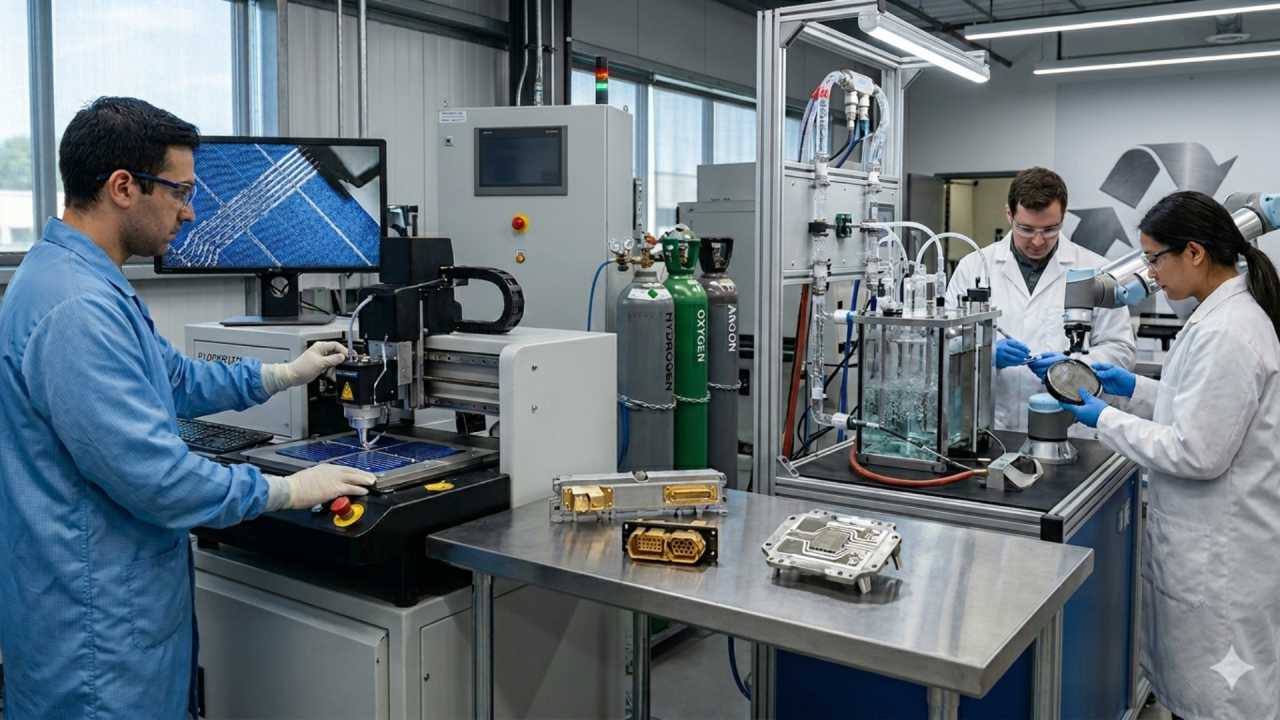
Modern electronics contain gold due to its excellent conductivity and resistance to corrosion. Gold is found on motherboards, CPU pins, and connectors. However, the concentration is low, requiring sophisticated extraction techniques to separate the gold from plastics and other base metals.
Gold Ore
For mining operations, the raw material is often rock or sand containing trace amounts of gold. This requires extensive pre-treatment and large-scale industrial refining.
Industrial Byproducts
Manufacturing processes in dentistry, plating, and aerospace often produce gold-bearing dust, sweeps, or solutions. These “industrial fines” require meticulous collection and specialized refining to recover every possible grain of value.
Overview of the Gold Refining Process
While specific methods vary, the high-level roadmap of gold refining generally follows a structured five-step path.
1. Collection and Sorting
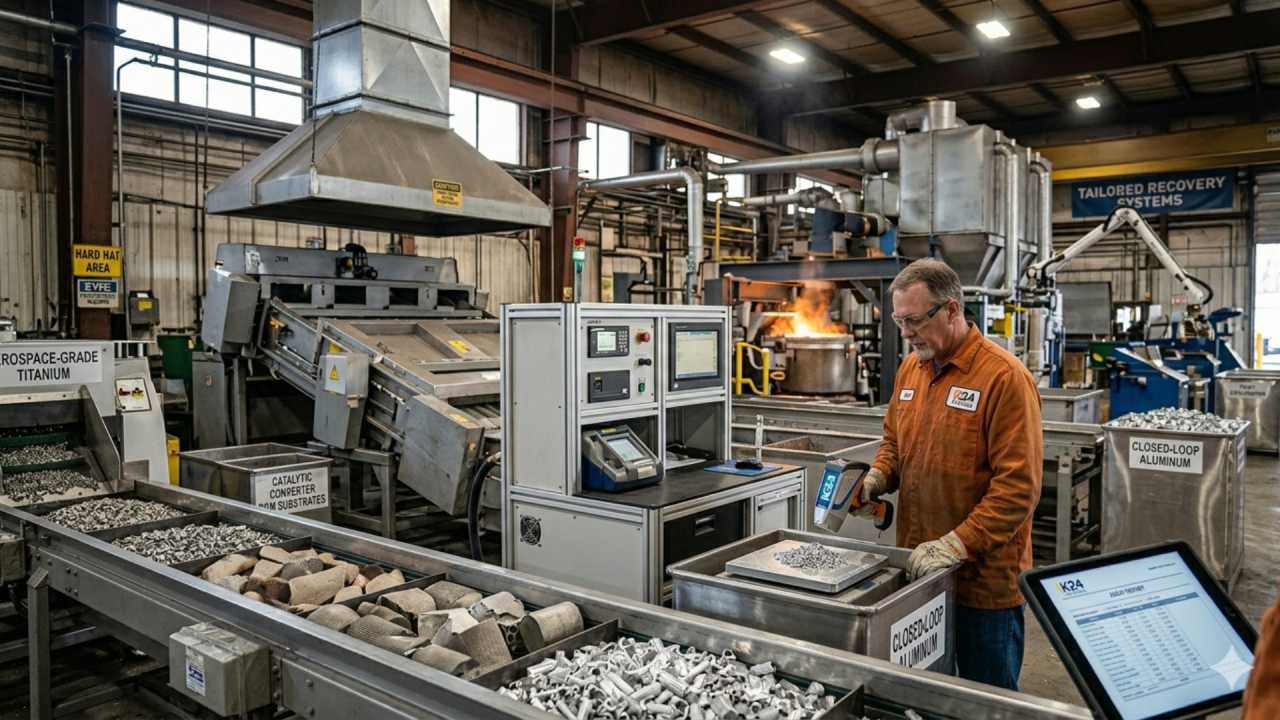
The process begins with the careful categorization of materials. You cannot refine e-waste the same way you refine jewelry scrap. Sorting ensures that the most efficient chemical path is chosen for each batch.
2. Pre-Treatment
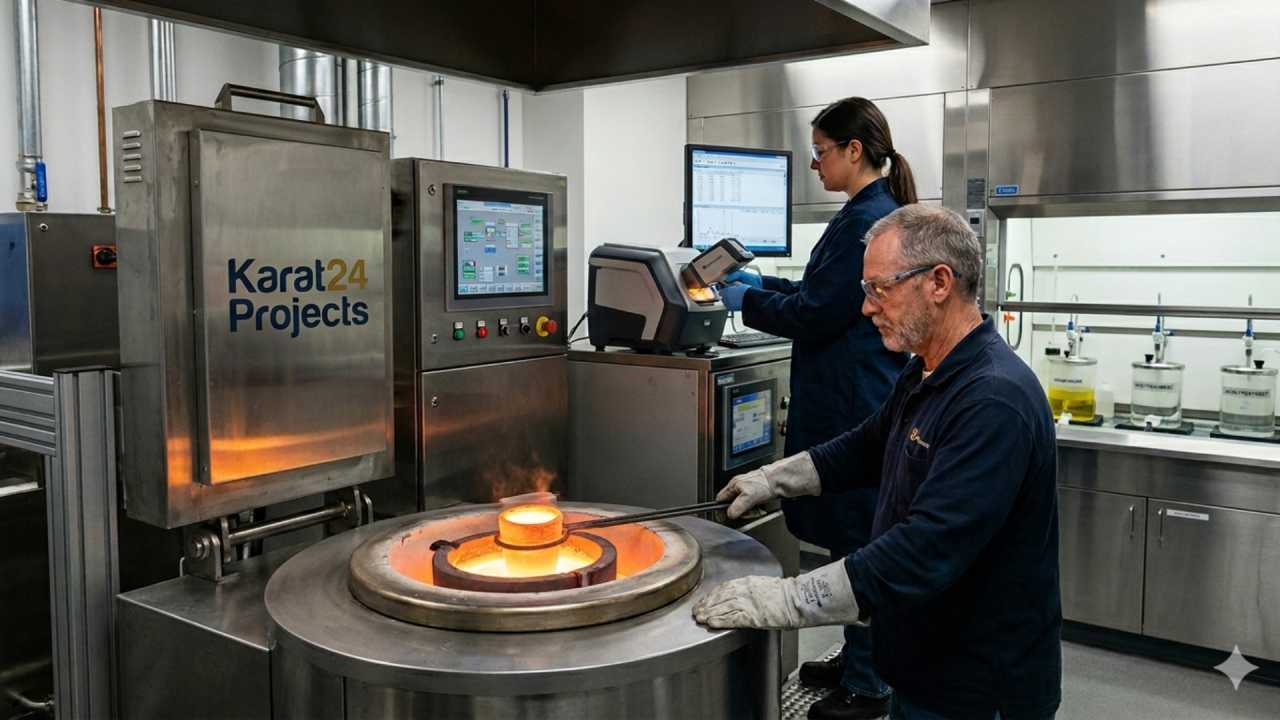
Before chemical refining can begin, the material often needs to be physically altered. This might involve grinding ore into powder, incinerating jewelry sweeps to remove organic matter, or “shaving” gold-plated components to expose the metal.
3. Extraction
In this phase, the gold is separated from the bulk of the waste material. This is often where smelting occurs, resulting in a “doré bar”—a semi-pure alloy of gold and silver.
4. Purification
This is the heart of refining. Using chemicals or electricity, the gold is isolated from all other metallic impurities. This is where the gold reaches its .999+ purity level.
5. Final Product Formation
Once purified, the gold is melted one last time and cast into its final form—usually bars, grains (shot), or wire—ready for the market or industrial use.
Major Gold Refining Methods Explained
To truly understand how gold becomes pure, one must look at the specific scientific methods employed in modern refineries.
Chemical Refining (The Aqua Regia Process)
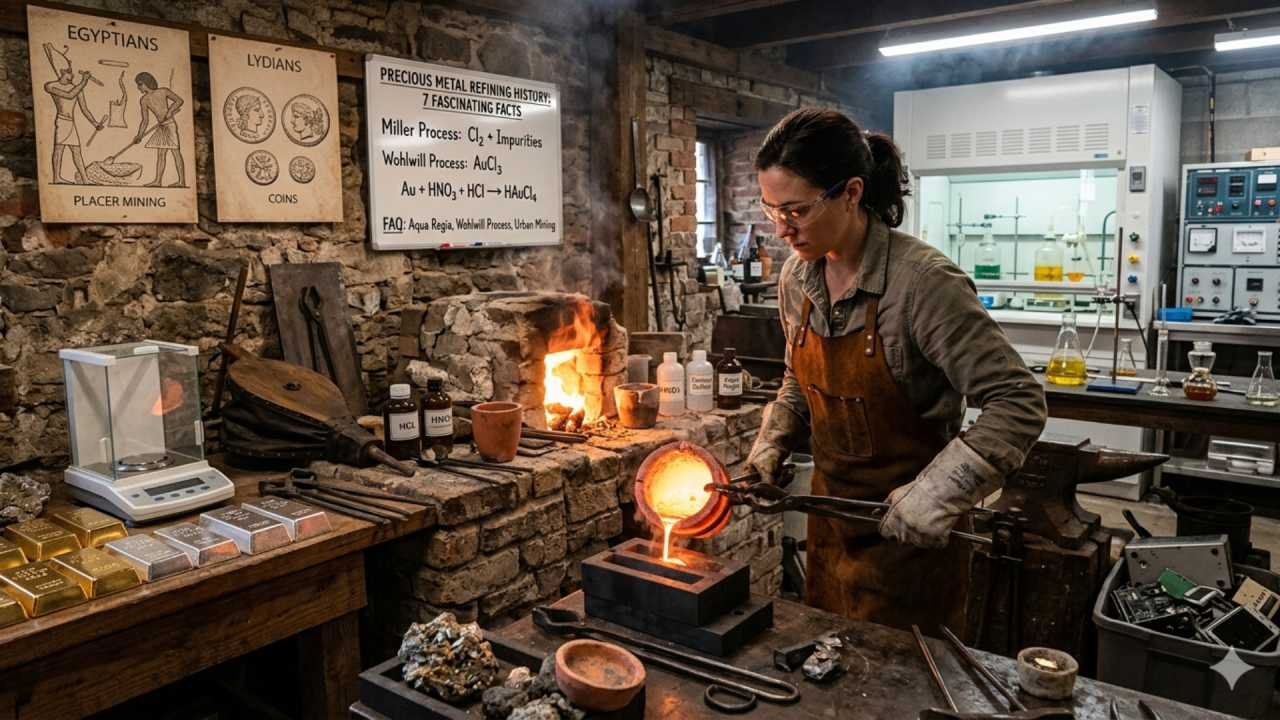
The Aqua Regia process is perhaps the most famous chemical refining method. It involves using a mixture of nitric acid and hydrochloric acid (traditionally in a 1:3 ratio).
-
The Process: The gold-bearing material is dissolved in the acid mixture, creating chloroauric acid. After filtration, a selective precipitant (like sodium metabisulfite) is added, which causes the pure gold to “drop out” of the liquid as a brown powder.
-
Pros: It is highly effective for smaller batches and can achieve very high purity (up to 99.95%).
-
Cons: It produces hazardous fumes (nitrogen oxides) and requires sophisticated ventilation and waste treatment systems.
Electrolytic Refining (The Wohlwill Process)
This method is used for large-scale industrial refining where ultra-high purity (99.99%) is required.
-
The Process: A gold alloy casting (the anode) and a thin sheet of pure gold (the cathode) are suspended in an electrolyte solution of gold chloride and hydrochloric acid. When an electric current is applied, gold dissolves from the anode and deposits onto the cathode in a state of extreme purity.
-
Pros: Produces the highest possible purity and allows for the recovery of platinum-group metals.
-
Cons: It is a slow process and requires a large amount of gold to be “tied up” in the system as the electrolyte and anodes.
Pyrometallurgical Process (Miller Process)
This is a high-temperature method often used for the initial refining of mined gold.
-
The Process: Gaseous chlorine is bubbled through molten gold. The chlorine reacts with impurities like silver and base metals to form chlorides, which rise to the surface as a slag or evaporate, while the gold remains unreacted.
-
Pros: Very fast and handles large volumes efficiently.
-
Cons: It can only reach a purity of about 99.5%, meaning it often requires a second stage of chemical or electrolytic refining to reach investment grade.
Hydrometallurgical Process
This modern approach uses aqueous (water-based) solutions to extract gold. While similar to chemical refining, it often focuses on more eco-conscious lixiviants (solvents) that are less aggressive than aqua regia, making it a growing choice for sustainable e-waste processing.
Challenges and Risks in Gold Refining
The path to pure gold is fraught with risks that necessitate professional oversight.
-
Handling Hazardous Chemicals: Working with concentrated acids and toxic gases poses immediate health risks. Without professional-grade fume hoods and personal protective equipment, the process is incredibly dangerous.
-
Environmental Impact: The waste products of refining—acidic solutions and heavy metal sludge—can devastate local ecosystems if not neutralized and disposed of according to strict environmental regulations.
-
Loss of Gold: This is the most significant financial risk. Inefficient refining, poor filtration, or “spillage” in the chemical stages can lead to the loss of gold in the waste stream. Professional refineries use “assays” to track every milligram.
-
Cost Inefficiencies: For the inexperienced, the cost of chemicals, energy, and specialized equipment can quickly outweigh the value of the recovered gold.
Why Expertise Matters in Gold Refining
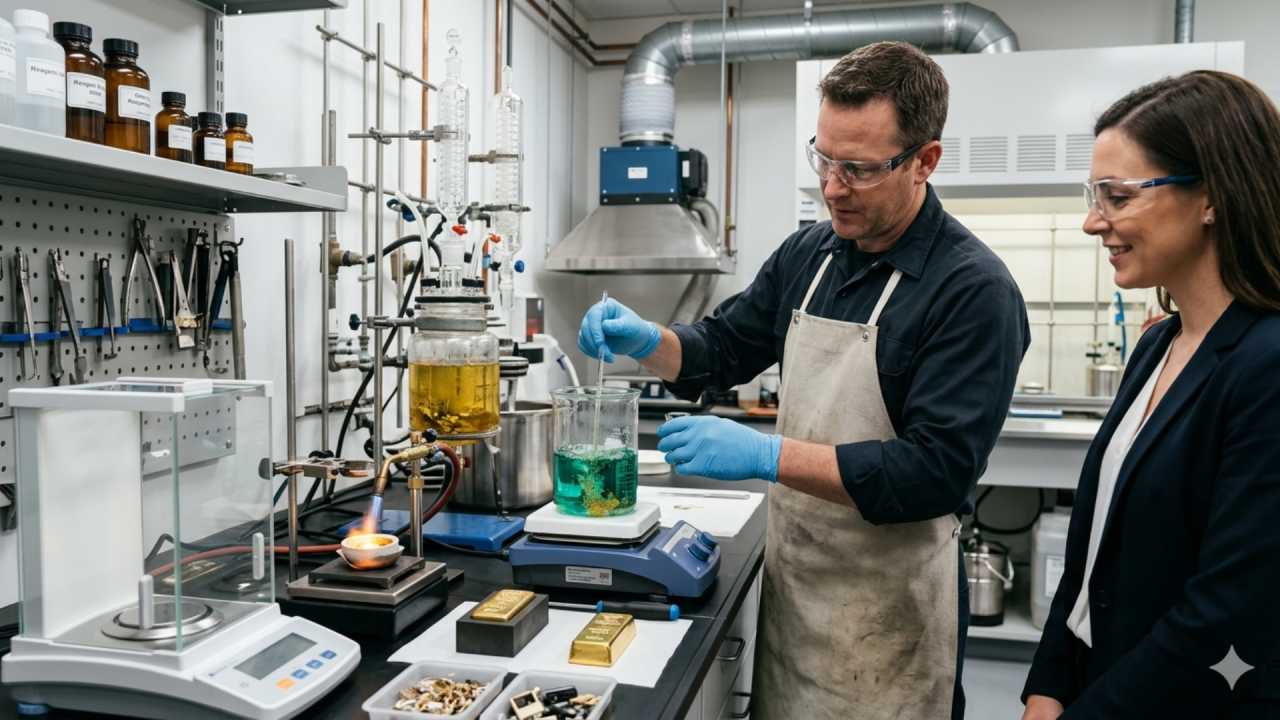
Precision is the difference between profit and loss in the gold industry. A professional refiner brings more than just chemicals to the table; they bring an infrastructure of trust and accuracy.
Expertise is required to determine the exact composition of the raw material before the process even begins. This “assaying” process uses techniques like X-Ray Fluorescence (XRF) or Fire Assay to ensure the client knows exactly how much gold is present. Furthermore, an expert understands the “yield”—knowing how much gold should be recovered versus how much is actually recovered—which is the hallmark of a transparent service provider.
How We Help: Your Expert Guidance System
We recognize that our clients are experts in their own fields—whether that is jewelry design, pawn brokerage, or electronics recycling—and they need a partner who is an expert in refining. Our guidance system is built on four pillars.
Consultation and Assessment
We don’t believe in a one-size-fits-all approach. Every client interaction begins with a deep dive into the material you have. We evaluate the volume, the estimated karatage or grade, and the presence of other valuable metals (like silver or palladium). This initial assessment sets the stage for a transparent partnership.
Process Selection
Based on the assessment, we select the refining method that offers the best balance of speed, purity, and cost-effectiveness. If you have high-grade jewelry scrap, we might suggest a rapid chemical process. If you have tons of low-grade e-waste, a hydrometallurgical approach might be better. We explain the “why” behind every choice.
End-to-End Support
Our team manages the logistics of the entire journey. This includes secure transportation, documented intake, the refining process itself, and the final payout or return of pure metal. We provide real-time updates so you are never left wondering about the status of your assets.
Quality Assurance
Every batch we refine is subjected to rigorous testing. We provide certified assay reports that prove the final purity of the gold. This certification is vital for businesses that need to maintain their own quality standards or for investors who require proof of value.
Safety and Environmental Responsibility
In the modern world, “how” you refine gold is just as important as “how much” you refine. We take our role as environmental stewards seriously. Our facilities are equipped with state-of-the-art scrubbers that neutralize acidic vapors before they reach the atmosphere.
We also implement closed-loop water systems to minimize consumption and ensure that no hazardous liquids enter the public sewage system. By choosing expert guidance, you are ensuring that your gold is refined in compliance with all local and international environmental laws, protecting both your reputation and the planet.
Technology and Innovation in Gold Refining
The refining industry is not stagnant. We stay at the forefront of technological advancements to provide our clients with the best possible results.
-
Automation: Automated chemical dosing and temperature control reduce the margin for human error, leading to more consistent yields.
-
Digital Monitoring: Our clients benefit from digital tracking systems that provide a “chain of custody” for their materials, ensuring security from doorstep to delivery.
-
Advanced Analytics: We use ICP (Inductively Coupled Plasma) spectrometry to detect impurities down to parts per billion, ensuring the highest level of certification.
Cost Factors in Gold Refining
Transparency in pricing is one of the ways we reduce confusion. Several factors influence the cost of refining:
-
Volume: Larger batches often benefit from economies of scale.
-
Complexity: E-waste or low-grade ore requires more pre-treatment and chemical processing than high-karat jewelry scrap.
-
Purity Requirements: Achieving 99.99% purity (four nines) is more resource-intensive than 99.5%.
-
Market Fluctuations: While the refining fee is often a flat rate or percentage, the overall value is tied to the current spot price of gold.
While DIY refining might seem cheaper on paper, the “hidden costs”—such as gold lost in the slag, the cost of hazardous waste disposal, and the high price of laboratory-grade chemicals—usually make professional services a much better ROI for businesses and serious hobbyists.
Common Mistakes to Avoid
In our years of guidance, we have seen many common pitfalls that can be easily avoided with the right support.
Trying DIY Refining Without Knowledge
The internet is full of “at-home gold refining” videos. Most of these ignore the extreme dangers of toxic gases like chlorine and nitrogen dioxide. Furthermore, the recovery rates in home setups are notoriously low.
Using Incorrect Methods for Material
Attempting to refine gold-plated items using methods meant for solid gold alloys is a recipe for disaster. This often results in a “messy” chemistry that makes the gold even harder to recover later.
Ignoring Safety Protocols
Safety isn’t just about the person doing the refining; it’s about the facility. Improper storage of acids can lead to fires or structural damage.
Choosing Inexperienced Service Providers
A refiner who cannot provide a clear assay report or explain their waste management process is a red flag. Professionalism and transparency are the non-negotiables of the industry.
Success Stories
We have helped a wide range of clients navigate the complexities of refining.
-
The Jewelry Manufacturer: A medium-sized jewelry house was losing an estimated 5% of their gold in “bench sweeps” and polishing dust. We implemented a specialized collection and refining protocol that increased their annual recovery rate to 99%, adding significant bottom-line value.
-
The E-Waste Startup: A new recycling company struggled to separate gold from high-end server boards efficiently. We provided the technical guidance to move them from a basic melting process to a sophisticated hydrometallurgical extraction, doubling their gold yield per ton of scrap.
-
The Private Investor: An individual with a collection of heirloom jewelry wanted to convert it into investment-grade bars. We guided them through the assaying process, refined the material to .999 purity, and provided the necessary certification for their portfolio.
Frequently Asked Questions
How long does the refining process take?
The timeline depends on the volume and the method. Small batches of jewelry scrap can often be refined in 24 to 48 hours, while large industrial electrolytic processes can take one to two weeks.
What purity can be achieved?
Through the Aqua Regia process, we consistently achieve 99.95%. For clients requiring 99.99% (investment grade), we utilize the Wohlwill electrolytic process.
Is it safe to send my gold via mail?
Yes, provided you use insured, tracked, and secure courier services. We provide guidance on how to package and manifest your materials to ensure they arrive safely at our facility.
What materials can you refine?
We refine a wide array of materials, including jewelry scrap, dental gold, gold shot, gold-plated electronics, and industrial sweeps. If it contains gold, we can likely refine it.
How do I get started?
The first step is a simple consultation. Reach out to us with a description of your material, and we will walk you through the assessment and shipping process.
Final Thoughts
Gold refining does not have to be a source of stress or confusion. While the science behind it is complex, the process of working with a professional should be simple, transparent, and rewarding. By bridging the gap between raw material and pure value, we empower our clients to make the most of their assets.
Whether you are looking to optimize a commercial recycling operation or simply want to realize the value of a jewelry collection, we are here to provide the expertise, safety, and support you deserve. Refining gold is a journey—let us be your guide every step of the way. Reach out today to schedule your initial assessment and take the first step toward clarity and confidence in your gold assets.