Precious Metal Refining: Custom Processes for Maximum Recovery
Precious metals like gold, silver, platinum, palladium, and rhodium are foundational to modern society. While their historical roles as currency and symbols of wealth remain relevant, their current value is heavily driven by industrial utility. These elements possess extraordinary physical and chemical properties, including exceptional electrical conductivity, high resistance to corrosion, and superb catalytic activity. Consequently, they have become indispensable across a vast spectrum of advanced applications.
The modern global economy relies on a consistent and highly pure supply of these elements to power critical industrial ecosystems. In electronics, they form the micro-contacts that ensure rapid data transfer. In environmental technology, they act as active catalysts that mitigate toxic automotive emissions. In healthcare, they serve as biocompatible materials for pacemakers and targeted cancer treatments. The aerospace sector depends on them for thermal shielding and reliable instrumentation in extreme environments. Simultaneously, traditional sectors like jewelry manufacturing and primary mining operations require robust infrastructure to process both raw concentrates and secondary scrap materials.
Because precious metals originate from exceptionally diverse sources—ranging from raw geological ores to spent electronic components and industrial chemical catalysts—a singular, standardized approach to processing them is functionally impossible. No single refining process fits every material or purity requirement. To maximize efficiency, preserve economic value, and meet stringent regulatory standards, the refining industry must deploy custom refining processes that are carefully tailored to the unique physical and chemical characteristics of each feed material.
Understanding Precious Metal Refining
To fully appreciate the necessity of customized industrial solutions, it is essential first to clarify what precious metal refining entails and distinguish it from related industrial terminologies. While the terms extraction, recovery, recycling, and refining are frequently used interchangeably in casual discourse, they represent distinct stages within the metallurgical lifecycle.
-
Extraction: This is the primary metallurgical phase where metals are separated from raw geological materials, such as mined ores or mineral concentrates.
-
Recovery: This phase involves retrieving metal-bearing compounds or elements from secondary streams, such as industrial wastewater, manufacturing scrap, or obsolete consumer products, preparing them for deep purification.
-
Recycling: This is the overarching circular economy loop encompassing the collection, sorting, dismantling, and processing of end-of-life products to reclaim their base or precious material content.
-
Refining: This is the ultimate, highly technical stage of purification. Refining isolates individual precious metal elements from complex mixtures of other metals and impurities, elevating their purity to precise commercial and industrial specifications.
The ultimate objective of precious metal refining is the systematic removal of all deleterious impurities until the target element meets strict institutional standards.
| Precious Metal | Common Industrial Feedstocks | Primary Target Purity Levels |
| Gold | Jewelry scrap, electronic waste, mining doré bars, dental alloys | 99.5%, 99.9%, 99.99% |
| Silver | Photographic waste, solar panel cells, silver bearings, mining by-products | 99.9%, 99.99% |
| Platinum | Chemical catalysts, laboratory equipment, thermocouple wires, medical implants | 99.9%, 99.95% |
| Palladium | Multi-layer ceramic capacitors, hydrogen purification filters, dental scrap | 99.9%, 99.95% |
| Rhodium | Nitric acid production gauzes, industrial chemical residues, glass manufacturing equipment | 99.9%, 99.99% |
Achieving these extreme levels of purity is not merely an aesthetic choice or a matter of prestige. In high-technology manufacturing, a variation of even 0.01% in material purity can drastically alter performance. For instance, trace amounts of iron or copper contamination in gold bonding wires can cause premature electrical failure in microprocessors. Similarly, microscopic impurities in platinum group metals can poison sensitive chemical catalysts, rendering multi-million-dollar industrial reactors inert.
Consequently, the global market operates on rigorous purity benchmarks established by bodies like the London Bullion Market Association (LBMA) and the London Platinum and Palladium Market (LPPM). Refiners must carefully validate and guarantee these standards through precise metallurgical processes.
Why Custom Refining Processes Matter
The fundamental challenge governing precious metal refining is the extreme variability of the incoming feedstock. Precious metals do not arrive at a refinery in neat, predictable packages; instead, they are bound within highly complex chemical matrices and physically intricate assemblies.
Different Feed Materials Require Different Methods
The metallurgical approach required to isolate a precious metal depends entirely on its source material. For instance, jewelry scrap typically consists of high-grade gold or silver alloys mixed with intentional base metals like copper, nickel, or zinc. The refinery’s primary challenge here is breaking down the alloy and separating these base elements without losing precious metals or destroying embedded gemstones, which may require specialized stone removal techniques.
In contrast, electronic waste presents a drastically different matrix. Here, precious metals are distributed as micro-coatings on circuit boards, interwoven with massive quantities of fiberglass, flame-retardant plastics, aluminum, iron, and hazardous materials like lead and cadmium. Refining electronic waste requires an intensive front-end mechanical dismantling and sorting process, followed by chemical treatments designed to isolate low-concentration precious metals from overwhelming masses of base materials.
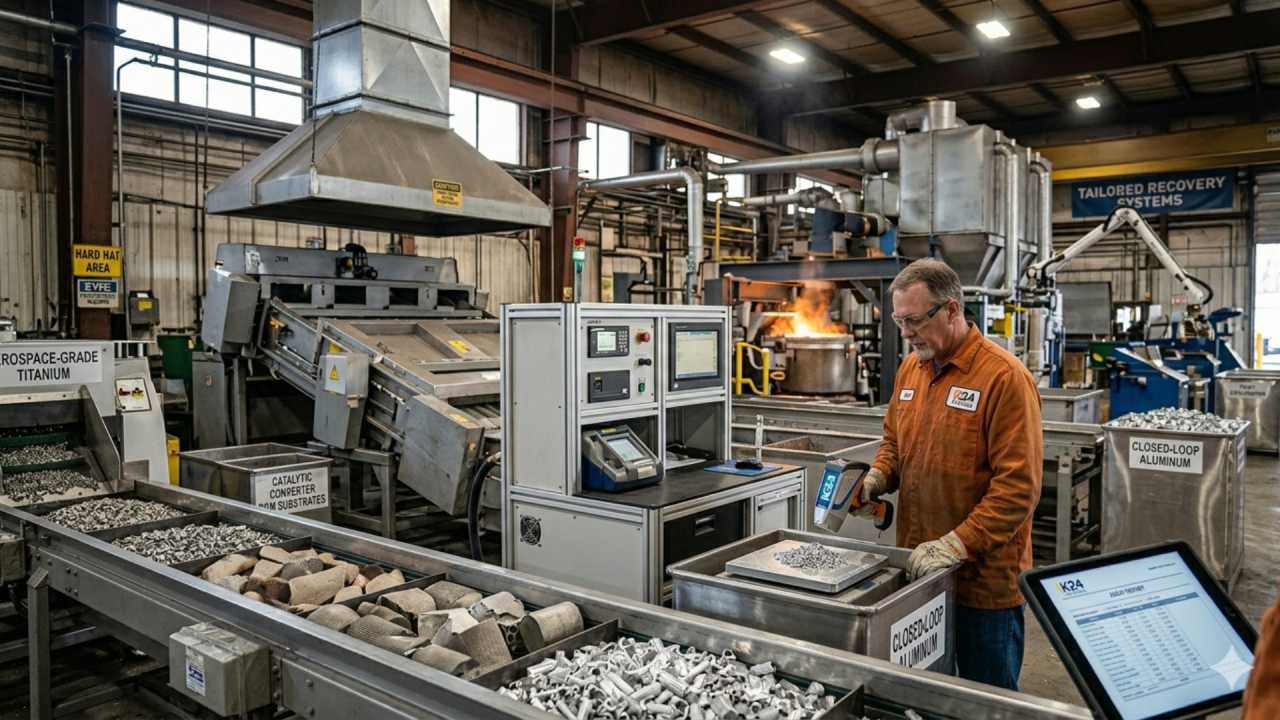
Industrial residues and catalytic converters represent yet another distinct category. Spent automotive catalytic converters contain platinum, palladium, and rhodium embedded within a durable, heat-resistant ceramic honeycomb structure made of cordierite. The precious metals constitute only a tiny fraction of the overall weight, typically measured in parts per million. Extracting these elements requires high-temperature pyrometallurgical smelting to melt the ceramic matrix, or intensive hydrometallurgical leaching to dissolve the active metals away from the inert support.
Variables Affecting Process Selection
When design engineers and metallurgists formulate a custom refining strategy, they must analyze several interconnected operational variables:
-
Metal Concentration: High-grade feeds (such as old bullion bars or manufacturing trim) can be introduced into direct chemical dissolution or electrolytic circuits. Low-grade feeds (such as mining slimes or industrial sweepings) require extensive upfront concentration and upgrading.
-
Contaminants: The presence of specific impurities can dictate or rule out certain refining paths. For example, high concentrations of selenium, tellurium, or bismuth in a silver stream require distinct chemical precipitation steps to avoid fouling downstream electrolytic cells.
-
Volume: Massive, continuous bulk material streams from mining operations favor large-scale pyrometallurgical smelting furnaces. Conversely, small, highly valuable batches of specialized medical or aerospace scrap demand precise, small-scale hydrometallurgical batch processing to ensure absolute material tracking.
-
Desired Purity: Reclaiming gold for standard jewelry manufacturing requires a purity of 99.5%, which can be achieved through rapid, cost-effective methods. Reclaiming gold for semiconductor components demands a 99.99% or 99.999% purity level, requiring multi-stage chemical or electrochemical separation.
-
Turnaround Time and Financing: Highly intensive chemical processes may yield maximum purity but can tie up valuable working capital in lengthy processing pipelines. Custom refining balances processing speed against ultimate metal yield to optimize financial outcomes.
-
Environmental Compliance: The feedstock’s chemistry dictates the air emission control systems and wastewater treatment facilities required. Feeds containing volatile elements like mercury or arsenic demand specialized capture systems, altering the viable processing options.
Benefits of Customization
Choosing to implement a tailored, material-specific refining process rather than a generic, one-size-fits-all procedure yields substantial commercial and operational advantages.
First, customized processes deliver significantly higher recovery rates. By matching the chemical reagents and thermal profiles directly to the material matrix, metallurgists prevent precious metals from becoming permanently trapped in slag phases or lost to waste effluents. Second, customization ensures superior output purity by proactively neutralizing specific troublesome impurities early in the cycle.
From an operational standpoint, targeted refining workflows dramatically reduce overall waste generation, allowing refiners to use smaller quantities of chemical acids or lower furnace temperatures. This reduction in chemical and energy consumption translates directly into cost efficiency. Finally, by eliminating redundant processing steps that do not align with the incoming material’s composition, custom refining pipelines accelerate overall turnaround times, allowing industrial clients to reclaim their valuable capital and return it to the market swiftly.
Major Precious Metal Refining Methods
Modern precious metal refining relies on four core technical methodologies: pyrometallurgy, hydrometallurgy, electrometallurgy, and advanced solvent extraction. Refiners often link these methodologies together in custom sequences to achieve optimal purity.
Pyrometallurgical Refining
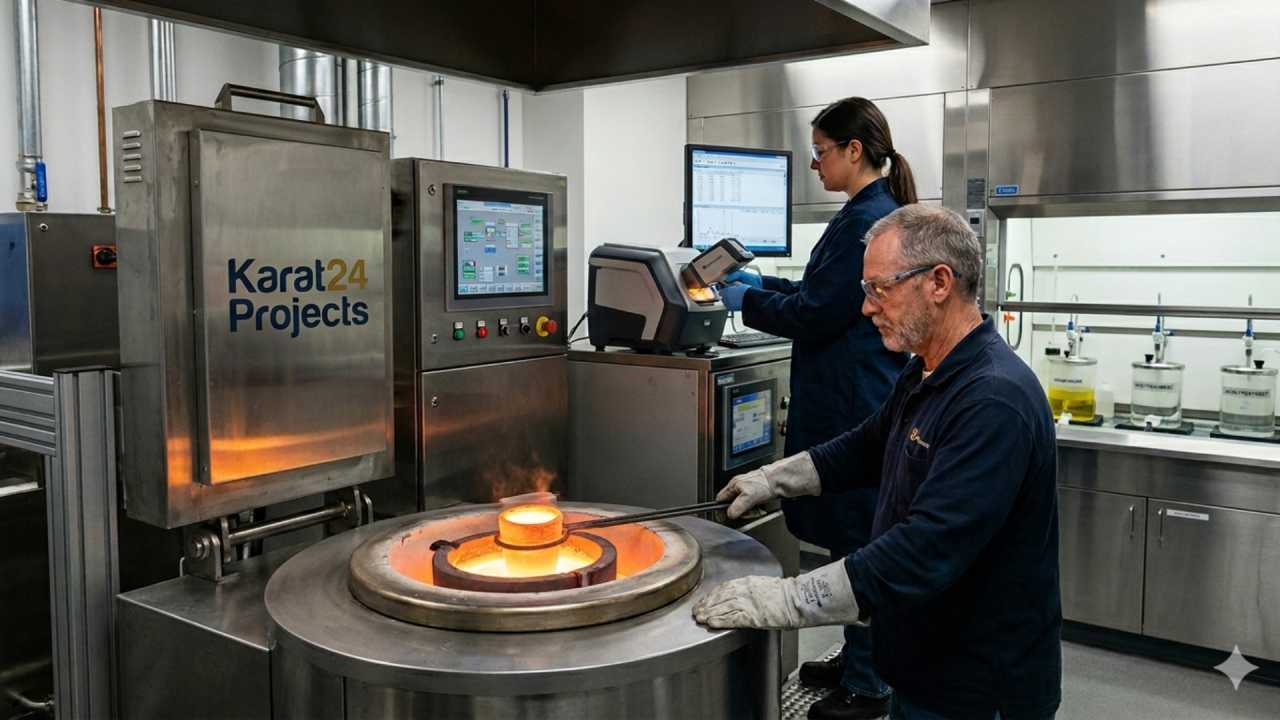
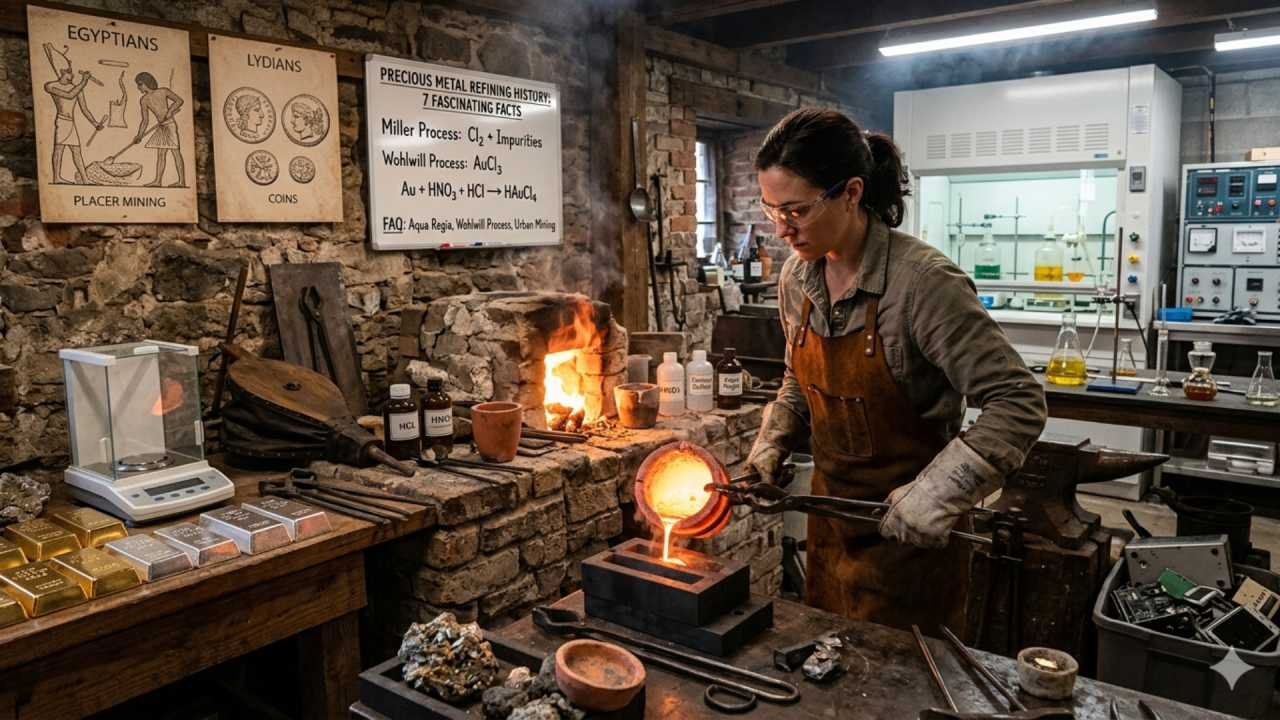
Pyrometallurgical refining relies on thermal energy to induce chemical reactions and phase separations at high temperatures. Incoming feedstocks are blended with specific chemical fluxes—such as borax, silica, and soda ash—and introduced into heavy-duty smelting furnaces operating well above 1,000 degrees Celsius.
Under intense heat, the material melts and separates based on density and chemical affinity. The base metals oxidize and combine with the fluxes to form a lightweight, glassy top layer known as slag. The heavy precious metals, resistant to oxidation, sink to the bottom of the furnace to form a dense, molten alloy pool, which is then cast into intermediate blocks called doré bars.
This high-temperature methodology is exceptionally well-suited for processing bulk, low-grade mining concentrates and large-scale industrial scrap where the primary goal is consolidating scattered metallic values into a manageable, concentrated form. Pyrometallurgy excels at handling massive volumes and burning away heavy organic or plastic contaminants without manual stripping.
However, its primary limitation is an inability to deliver ultra-high purity on its own. The resulting metal alloys almost always require further downstream purification. Additionally, pyrometallurgy is highly energy-intensive and requires substantial capital investment in complex baghouses, scrubbers, and thermal oxidation systems to safely capture airborne particulate matter and hazardous flue gases.
Hydrometallurgical Refining
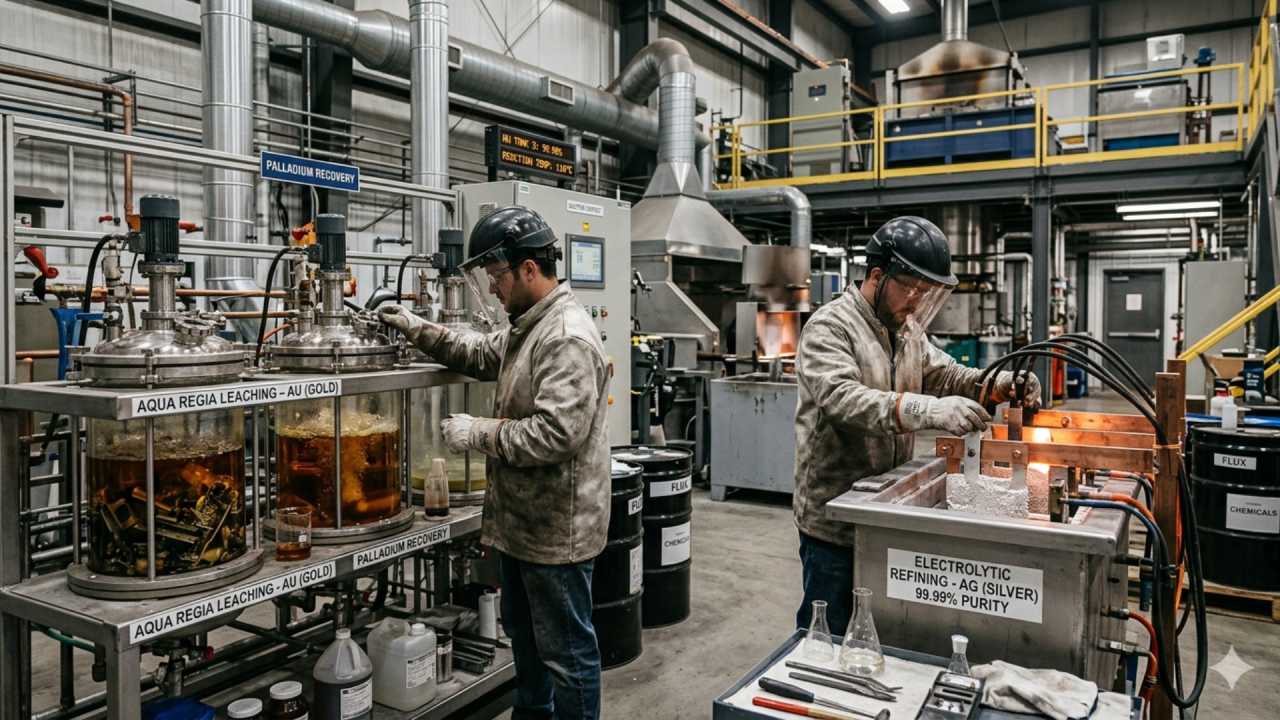
Hydrometallurgical refining utilizes aqueous chemistry to extract and purify precious metals. The process centers on selective chemical leaching, where complex acids and chemical solutions dissolve target metals while leaving undesirable impurities behind as solid residues. Once the precious metals are secured in a liquid solution, technicians introduce specific reducing agents, gases, or pH adjustments to selectively precipitate each metal back into a pure solid crystal form.
A cornerstone chemical mixture in this domain is aqua regia—a highly corrosive blend of concentrated nitric acid and hydrochloric acid. The nitric acid acts as a powerful oxidant that allows the hydrochloric acid to convert stable gold and platinum group metals into soluble chloro-complex ions.
For large-scale silver or gold recovery from mining ores, specialized industrial operations utilize carefully managed cyanidation processes, leveraging the affinity of cyanide ions to bind precious metals in alkaline water solutions. For materials rich in platinum group metals, intensive chlorination processes using gaseous chlorine dissolved in hydrochloric acid are deployed to break down stubborn alloys.
Hydrometallurgical systems are highly favored for processing complex electronic waste, industrial catalyst solutions, and high-purity scrap. Their primary advantage lies in their precision; by adjusting chemical parameters like solution pH, temperature, and reagent concentration, refiners can selectively isolate individual metals with extreme precision.
The downside, however, is the handling of massive quantities of corrosive, hazardous chemicals. This requires sophisticated, corrosion-resistant equipment made of specialized polymers or titanium, alongside rigorous, closed-loop wastewater neutralisation facilities to manage spent acid effluents.
Electrolytic Refining
Electrolytic refining, or electrometallurgy, applies electrical energy to drive ultra-high purification. In a typical electrolytic cell, an impure precious metal block (produced via pyrometallurgical smelting) is suspended as a positive electrode, or anode, within an acidic electrolyte solution. A thin sheet of pure target metal is placed opposite it as a negative electrode, or cathode.
When a precisely calibrated direct electrical current is passed through the system, the atoms in the impure anode lose electrons, dissolve into the electrolyte solution as charged ions, and migrate across the cell. Upon reaching the cathode, these ions regain electrons and deposit themselves as a pristine, ultra-pure crystalline metal layer. Crucially, the less noble base impurities either remain completely undissolved, dropping to the bottom of the tank as a highly valuable slurry known as anode slime, or stay permanently suspended in the electrolyte solution without migrating to the cathode.
This process is standard for manufacturing 99.99% pure gold through the Wohlwill process, which utilizes a gold chloride electrolyte. It is also used for silver purification via the Moebius or Thum processes, which rely on a silver nitrate bath.
Electrolytic refining delivers unparalleled output purities, making it the preferred method for producing semiconductor-grade bonding wires and investment-grade bullion bars. Its main limitations are speed and feedstock composition; the incoming anodes must already be highly concentrated (typically greater than 90% precious metal content) to prevent the electrolyte from quickly becoming fouled, and the electrochemical deposition process requires significant time to complete.
Solvent Extraction and Advanced Separation
Solvent extraction represents a highly specialized frontier in custom refining, used primarily to separate the platinum group metals (PGMs)—platinum, palladium, rhodium, ruthenium, iridium, and osmium—from one another. Because these elements share nearly identical atomic radii and chemical behaviors, conventional precipitation often fails to separate them cleanly.
The process operates by taking a complex, multi-metal acidic solution and mixing it vigorously with an immiscible organic liquid phase containing specialized, highly selective organic extractant molecules. These organic molecules are custom-engineered to lock onto one specific metal ion while ignoring the others.
After mixing, the two liquids naturally separate into distinct layers, like oil and water. The organic layer, now carrying the target metal, is skimmed off and transferred to a “stripping” reactor, where a different aqueous chemical solution breaks the organic-metal bond, yielding a highly concentrated, single-metal stream ready for final reduction.
This method allows for the continuous, automated, and highly selective separation of complex platinum group metal streams. It is indispensable for treating complex industrial waste streams, aerospace components, and advanced chemical catalysts.
While solvent extraction offers excellent process efficiency and automated continuous operations, it requires sophisticated chemical plant design, precise analytical monitoring, and careful management of flammable, volatile organic solvents.
Industry-Specific Refining Solutions
The true value of custom refining is best demonstrated by looking at how refining processes are modified to serve distinct commercial sectors.
Jewelry Industry
The jewelry sector requires a refining workflow characterized by rapid turnaround and meticulous material tracking, as manufacturers often need their casting scrap or bench sweeps refined and returned to production quickly to maintain liquid capital.
Jewelry scrap consists primarily of high-grade gold, silver, and platinum alloys. However, it also presents unique challenges, such as the presence of toxic base metals like cadmium (historically used in solders) and embedded precious gemstones like diamonds, rubies, or sapphires.
To handle this, custom refiners utilize specialized chemical boiling techniques to carefully dissolve the surrounding gold or silver matrix without damaging high-value gemstones. Once the metal is in solution, it undergoes rapid hydrometallurgical precipitation. This small-batch approach prioritizes security, precise weight accountability, and specialized gemstone recovery over massive bulk throughput.
Electronics Recycling
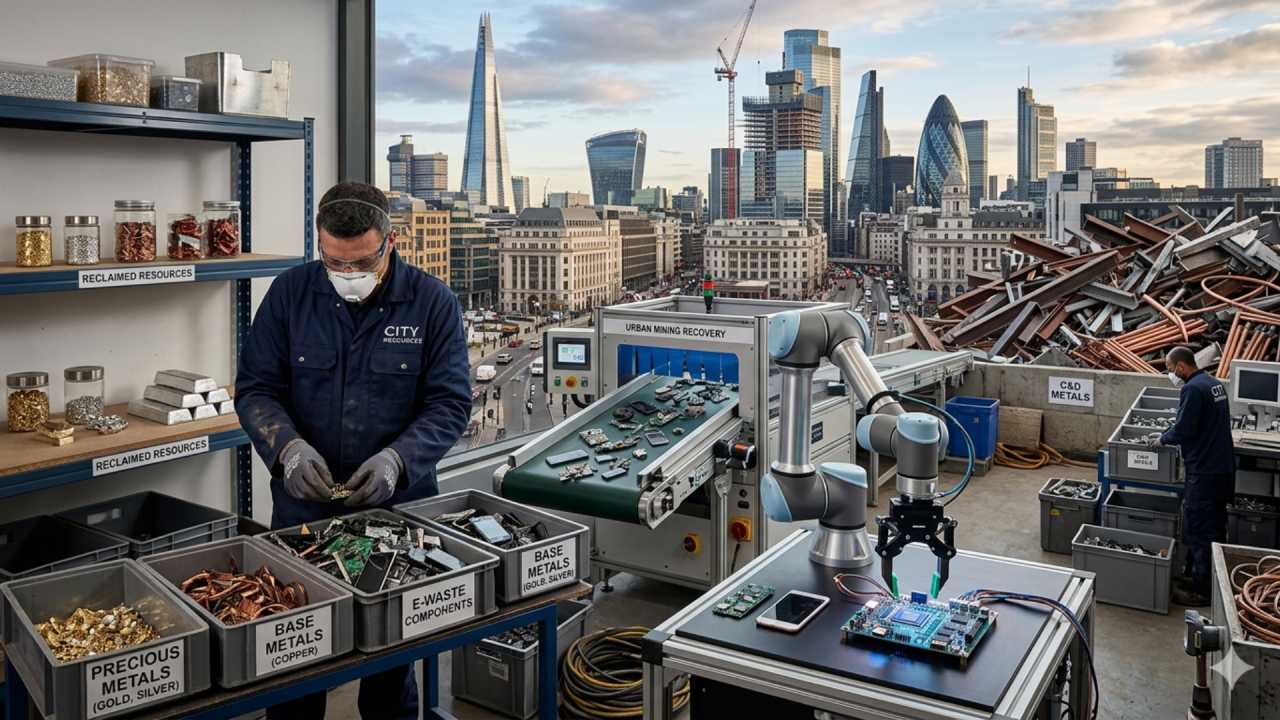
Electronics recycling, or urban mining, deals with incredibly low concentrations of precious metals embedded within massive volumes of highly complex consumer and industrial waste.
The primary challenge here is managing the sheer volume of non-metallic materials, including epoxy resins, fiberglass boards, halogenated flame retardants, and heavy metals like lead and antimony.
The custom refining solution begins with intensive mechanical preprocessing, including shredding, magnetic separation to remove ferrous metals, and eddy-current separation to isolate non-ferrous fractions. The resulting precious-metal-bearing concentrate is then fed into specialized pyrometallurgical copper smelters, which act as a collection medium, or routed through intensive hydrometallurgical leaching plants designed to selectively dissolve gold and palladium coatings while managing hazardous waste outputs.
Automotive Industry
The automotive industry generates millions of spent catalytic converters annually, making it the primary source for recycled platinum, palladium, and rhodium.
Refining these converters requires a highly specialized workflow due to the tough, inert ceramic honeycomb structure that houses the metals.
Refiners must first mechanically de-can the steel housing, crush the internal ceramic elements, and mill them into an ultra-fine powder. This powder is then fed into an advanced pyrometallurgical plasma arc furnace or an electric smelting furnace, where it is co-melted with a collector metal like copper or iron. The collector metal absorbs the scattered platinum, palladium, and rhodium atoms, creating a concentrated alloy bar that is subsequently dissolved and separated via advanced solvent extraction.
Medical and Dental Sector
The medical and dental fields utilize highly specialized, high-performance precious metal alloys. In medicine, platinum and iridium are fabricated into biocompatible electrodes for pacemakers and neurological implants. In dentistry, crowns, bridges, and inlays incorporate complex alloys containing gold, palladium, silver, and indium.
Because these components are used within the human body, the precision of purification must be absolute. Refiners handling medical and dental scrap deploy small-scale, ultra-precise hydrometallurgical batch reactors. The materials must be completely stripped of biological contaminants through advanced thermal sterilization before entering chemical dissolution.
The processing focus is centered on achieving exact, repeatable purification profiles that remove all traces of volatile or allergenic base metals, delivering pristine metals that can be safely refabricated into medical-grade components.
Mining and Industrial Operations
Primary mining operations and large-scale industrial chemical plants generate bulk, concentrated streams of precious metals that require high-throughput refining infrastructure.
Mines typically produce unrefined, intermediate precious metal blocks known as doré bars, which contain varying ratios of gold and silver alongside residual copper and iron. Industrial chemical manufacturing plants periodically retire massive chemical catalytic screens or process vessels containing spent platinum-group-metal liquid residues.
For these operations, custom refiners configure heavy-duty, continuous-feed pyrometallurgical smelters and high-capacity electrolytic tank houses. These industrial facilities operate continuously to handle multiple tons of material daily. The primary focus is maximizing thermal and chemical efficiency, minimizing per-ounce processing costs, maintaining automated process control, and integrating real-time automated assay monitoring to handle massive commercial metal settlements accurately.
Environmental Considerations
Modern precious metal refining operates within a strict framework of environmental regulations and social governance. Historically, metal refining was a highly polluting industry that generated heavy acid mists, toxic slag, and contaminated wastewater. Today, the sector has transitioned toward sustainable refining practices driven by global regulatory enforcement, strict corporate environmental, social, and governance (ESG) mandates, and consumer demand for responsible sourcing.
Modern refineries manage their waste streams through distinct, highly regulated containment and recycling loops to ensure minimal environmental impact:
| Waste Stream Type | Capture and Mitigation Method | Final Environmental Outcome |
| Airborne Emissions | Multi-stage chemical scrubbers and HEPA filtration arrays | Acidic gases neutralized; clean air discharge |
| Process Fluids & Acids | Vacuum distillation, ion exchange, and reverse osmosis | Reclaimed acids and water recycled back into processing loops |
| Solid By-products & Slag | Chemical stabilization and vitrification | Inert, non-hazardous dry cake compliant with landfill standards |
Modern refineries operate as tightly sealed, closed-loop systems. Volatile emissions from smelting furnaces and chemical vapors from hydrometallurgical acid leaching are routed through multi-stage chemical scrubbers and high-efficiency particulate air (HEPA) filtration arrays. These systems neutralize acidic gases like sulfur dioxide and nitrogen oxides, ensuring that only clean, compliant air leaves the facility.
Similarly, industrial wastewater management has undergone a major evolution. Refiners deploy advanced vacuum distillation, ion exchange, and reverse osmosis systems to continuously reclaim and recycle water and acids within their processing loops, striving for zero liquid discharge (ZLD) configurations.
Furthermore, custom precious metal refining plays an indispensable role in advancing the global circular economy. Mining primary metals out of the earth is an incredibly carbon-intensive endeavor that requires displacing millions of tons of geological rock, consuming vast amounts of energy, and altering local ecosystems.
In contrast, recovering precious metals from existing secondary resources—such as industrial scrap or electronic waste—slashes energy consumption and carbon emissions significantly. For example, recycling a single kilogram of gold from electronic waste generates a fraction of the carbon footprint associated with extracting the same amount from a primary conventional mine. By providing an efficient path for secondary resource recovery, custom refiners drastically reduce global dependency on raw mining operations, conserving natural resources and steering modern manufacturing toward a more sustainable path.
Innovations in Metal Refining
The refining landscape is continuously evolving, driven by engineering innovations that enhance processing accuracy, speed, and environmental safety.
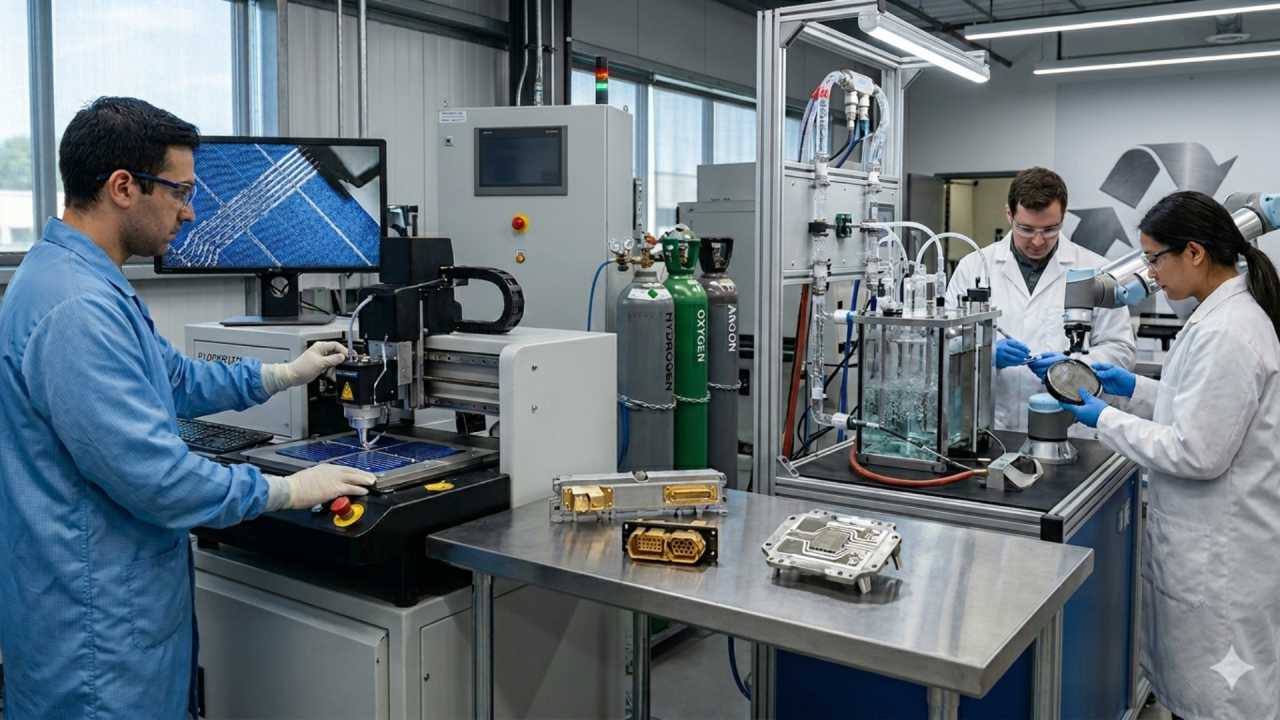
One major breakthrough is the widespread adoption of automation and advanced process monitoring within refining loops. Modern chemical reactors and electrolytic systems are outfitted with arrays of industrial sensors that track real-time changes in temperature, pH, fluid density, and electrical current density. These data streams are fed into centralized control systems that automatically modulate reagent flow rates and electrical inputs, maintaining optimal chemical conditions, preventing processing errors, and maximizing metal yields.
Simultaneously, the industry has seen significant advancements in real-time analytical assaying technologies. Historically, determining the exact composition of a complex metal batch required lengthy, manual wet-chemical analysis that could delay production for days.
Today, refiners utilize advanced instrumentation, including:
-
X-ray Fluorescence (XRF) Spectrometry: For rapid, non-destructive surface alloy analysis.
-
Inductively Coupled Plasma Optical Emission Spectrometry (ICP-OES): Capable of identifying and quantifying trace metal elements down to parts-per-billion levels within minutes.
These technologies enable instant feedstock characterization, allowing refiners to adapt their custom chemical recipes with extreme precision before processing begins.
½Finally, significant research and development is focused on creating cleaner, alternative chemical leaching systems to replace traditional, harsh acids. Metallurgists are successfully developing and scaling eco-friendly leaching solutions, such as thiosulfate and amino-acid-based formulations, which dissolve precious metals without generating toxic effluents or requiring aggressive volatile acids.
Additionally, new high-efficiency electrochemical cells and advanced ion-exchange resins allow for the targeted extraction of specific elements from low-grade solutions with much lower energy consumption. These technological innovations ensure that precious metal refining remains highly efficient, commercially viable, and aligned with modern environmental expectations.
Choosing the Right Refining Partner
Given the high financial value of precious metals and the technical complexities involved in purifying them, selecting an industrial refining partner is a critical commercial decision. A mismatched partnership can result in diminished metal recoveries, hidden processing fees, regulatory liabilities, or prolonged settlement delays that strain corporate cash flows.
When evaluating a prospective refining partner, industrial businesses should focus on several key operational attributes:
-
Experience with Specific Feedstocks: It is vital to confirm that the refiner possesses a proven track record handling your exact type of material matrix. A refiner that excels at processing bulk jewelry scrap may lack the specialized mechanical milling, pre-sorting, and chemical sampling infrastructure required to efficiently extract low-grade platinum group metals from complex automotive or chemical catalysts.
-
Recovery Transparency and Sampling Protocols: High-quality refiners operate with absolute transparency. They should possess sophisticated, certified sampling laboratories and allow clients to witness or audit the initial melting, homogenization, and assay sampling phases. The refiner’s commercial settlements should be based on clear, scientifically verified analytical data rather than subjective visual estimates.
-
Advanced Assaying Capabilities: Ensure the refinery utilizes modern analytical instrumentation, such as ICP-OES and fire assay systems, to guarantee that your feedstock’s true value is fully detected, including low-concentration secondary precious metals like rhodium or palladium that generic refiners might overlook.
-
Environmental and Regulatory Compliance: A refiner’s regulatory standing directly impacts your business’s reputational and legal safety. Verify that the refining facility holds all required local, national, and international environmental permits, operates certified emissions control systems, and strictly enforces responsible sourcing protocols to ensure metals are tracked through clean, conflict-free supply chains.
-
Security Protocols and Insurance Coverages: The refining facility must feature rigorous physical security infrastructure, including continuous video surveillance, biometric access controls, vaulted storage areas, and comprehensive metal-in-transit insurance coverage to safeguard your valuable assets against loss or theft.
-
Settlement Speed and Financial Terms: Inquire about standard processing turnaround times and available financial settlement options. Leading refiners offer flexible settlement structures, allowing clients to receive payouts in physical bullion bars, direct wire transfers, or via metal credits held in designated pool accounts, balancing financial liquidity against market pricing fluctuations.
By carefully vetting potential partners against these strict operational criteria, industrial enterprises can secure a reliable, high-performing relationship that consistently maximizes material yields, minimizes processing friction, and secures their bottom-line value.
Summary of Industrial Customization
To review how these diverse elements come together, the following table summarizes how custom refining processes align with specific industrial feedstocks to achieve target commercial outcomes:
| Industry Sector | Primary Feedstock Material | Predominant Custom Refining Path | Key Operational Metric |
| Jewelry Manufacturing | High-grade gold and silver scrap, casting gates, bench sweeps | Small-batch hydrometallurgical dissolution and selective gemstone chemical recovery | Maximum capital security and rapid batch settlement speed |
| Electronics Recycling | Circuit boards, multi-layer capacitors, semiconductor components | Mechanical sorting followed by pyrometallurgical smelting or targeted acid leaching | Efficient separation of trace precious metals from complex plastic matrices |
| Automotive Sector | Spent ceramic honeycomb catalytic converters | Mechanical milling combined with pyrometallurgical plasma smelting and solvent extraction | High-efficiency recovery of low-parts-per-million platinum group metals |
| Medical and Dental | Biocompatible implants, pacemaker electrodes, dental crowns and bridges | Specialized thermal sterilization followed by precision hydrometallurgical batch purification | Absolute removal of volatile or allergenic base metal contaminants |
| Mining Operations | Raw unrefined mining concentrates, intermediate doré bullion bars | High-capacity pyrometallurgical smelting furnaces and continuous electrolytic refining | Maximum daily material throughput and lowest processing cost per ounce |
Final Thoughts
Precious metal refining has evolved far beyond its traditional roots to become a highly precise engineering discipline. As modern technology advances, the demand for gold, silver, platinum, palladium, and rhodium will continue to expand, driven by their critical roles in next-generation electronics, green energy systems, and life-saving medical applications. Because these valuable elements are bound within increasingly complex and diverse material streams, the refining industry can no longer rely on standardized, rigid processing methodologies.
The implementation of custom refining solutions is the only viable path to successfully maximizing metal recovery rates, ensuring ultra-high purity outputs, and maintaining cost-effective industrial operations. By leveraging targeted combinations of pyrometallurgical, hydrometallurgical, and electrolytic processes, modern refiners can isolate these valuable elements from the most challenging matrices.
Simultaneously, the integration of automation, real-time analytics, and closed-loop environmental controls ensures that processing operations remain safe, compliant, and sustainable. For industrial businesses relying on precious metals, partnering with a technically capable and transparent refiner ensures that material value is fully realized, capital efficiency is optimized, and operations remain aligned with a sustainable, circular economy.
Frequently Asked Questions
What is the difference between precious metal recovery and refining?
While often used interchangeably, recovery and refining are distinct stages in the material lifecycle. Precious metal recovery is the initial step of capturing metal-bearing elements from secondary waste streams, such as electronic scrap, spent automotive catalysts, or industrial sludge. Precious metal refining is the subsequent, highly technical phase of deep purification. Refining takes those recovered, low-purity mixtures and systematically isolates the individual elements, removing base metal contaminants to elevate the final product to standardized commercial purity levels like 99.9% or 99.99%.
How do custom refining processes improve electronic waste recycling yields?
Electronic waste recycling yields are heavily dependent on custom refining processes because electronic components contain an incredibly diverse mix of fiberglass, toxic plastics, base metals, and low concentrations of micro-coated gold and palladium. A standard, one-size-fits-all melting process causes valuable metals to become trapped in the waste slag. Custom processing utilizes precise mechanical shredding and sorting followed by targeted hydrometallurgical leaching. This acid-based system selectively dissolves the precious micro-coatings away from the complex matrix, maximizing recovery rates while safely containing hazardous by-products like lead.
Which industrial refining solutions are best for platinum group metals recovery?
Platinum group metals recovery from complex industrial waste streams, aerospace components, and spent chemical catalysts requires advanced solvent extraction and high-precision hydrometallurgical separation. Elements like platinum, palladium, and rhodium share nearly identical atomic weights and chemical properties, making traditional thermal smelting insufficient for separation. Custom refiners dissolve the feedstock in a chlorination or aqua regia circuit, then use organic solvent extractants to selectively bind and pull each specific metal out of the solution one at a time, ensuring maximum purity.
Why is fire assay considered the gold standard for precious metal recycling analysis?
An accurate chemical analysis, or assay, is critical to ensuring transparent valuation before processing an industrial lot. Fire assay is universally recognized as the gold standard for precious metal recycling because it relies on high-temperature fusion to separate noble metals from base metals with unmatched precision. A small sample of the material is melted with a lead-oxide flux; the precious elements bind to the lead and sink, while impurities rise into a slag layer. The remaining metal bead is weighed on analytical balances, providing an accuracy profile of up to 1 part in 10,000 for gold and silver.
How does catalytic converter recycling isolate platinum palladium and rhodium?
Spent automotive catalytic converters contain microscopic amounts of platinum, palladium, and rhodium bonded to a highly durable, heat-resistant cordierite ceramic honeycomb structure. To isolate these elements, catalytic converter recycling centers must first mechanically shear the steel casings and mill the ceramic cores into an ultra-fine powder. This powder is then fed into custom pyrometallurgical plasma arc or electric furnaces alongside a collector metal like copper or iron. The intense heat melts the ceramic, allowing the heavy collector metal to absorb the scattered precious metal atoms and settle at the bottom for downstream chemical separation.
What are the environmental compliance requirements for industrial precious metal refiners?
Modern industrial refining solutions must comply with strict environmental, social, and governance (ESG) mandates and regional hazardous waste management laws. Because the processing of precious metals utilizes volatile thermal systems and corrosive acids, modern facilities must feature fully enclosed, closed-loop systems. Key compliance infrastructure includes:
-
Multi-stage gas scrubbers: To capture and neutralize nitrogen oxides and sulfur dioxide emissions before clean air discharge.
-
Vacuum distillation and reverse osmosis: To continuously purify and recycle process fluids, aiming for zero liquid discharge (ZLD).
-
Vitrification systems: To treat solid furnace slag, rendering it completely inert and safe for landfill disposal.
How can a business choose the right custom precious metals refining partner?
To protect your operational margins and ensure supply chain security, an industrial enterprise must vet a refining partner based on concrete operational capabilities rather than low fee structures alone. Look for a partner that possesses:
-
Feedstock specialization: Documented experience handling your specific material matrix (e.g., urban mining electronics vs. industrial chemical solutions).
-
Analytical verification: An ISO-certified laboratory utilizing both fire assay and Inductively Coupled Plasma (ICP-OES) testing.
-
Material transparency: A clear auditing protocol that allows you to verify gross weights, melt loss records, and final assay samples.
-
Flexible settlement terms: The financial capability to offer payouts via wire transfers, physical bullion bars, or metal pool account credits.