Gold Fever? Skip Panning—Refine Your Own Gold at Home
The Modern Gold Rush
The image of the grizzled prospector, knees deep in a freezing mountain stream with a rusted pan in hand, is etched into the collective consciousness of the world. From the frantic days of the California Gold Rush of 1849 to the brutal winters of the Klondike, “gold fever” has historically been a story of grit, luck, and often, profound disappointment. For centuries, the dream was simple: head to the wilderness, find a vein of quartz or a rich pocket of river gravel, and strike it rich.
But times have changed. While the lure of the yellow metal is as strong as ever, the geography of the hunt has shifted. The romanticized version of panning for gold is, for most people, a recipe for a sore back and a very empty wallet. The “modern” gold rush doesn’t take place in the Sierras or the Yukon; it takes place in the palm of your hand, in your junk drawer, and in the massive landfills of our digital age.
Today, the most accessible gold isn’t buried under a mountain; it is hidden inside the discarded technology of our daily lives. The twist is that instead of chasing a ghost in a riverbed, savvy individuals are turning toward “urban mining.” By recovering and refining gold from scrap materials using modern home refining setups, the contemporary prospector is trading the shovel for chemistry and the pan for a furnace.
What Gold Fever Looks Like Today
In the current economic climate, gold has reaffirmed its status as the ultimate hedge. When currencies fluctuate and inflation bites, gold remains a physical constant. This enduring value has birthed a new iteration of gold fever that is more analytical and systematic than its predecessor.
Today’s gold enthusiasts generally fall into three camps. First, there are still the traditionalists who enjoy the hobby of prospecting, often spending thousands on dredges and sluice boxes for a few grams of “color.” Second, there are the investors who stick to the safety of bullion and coins, focusing on wealth preservation.
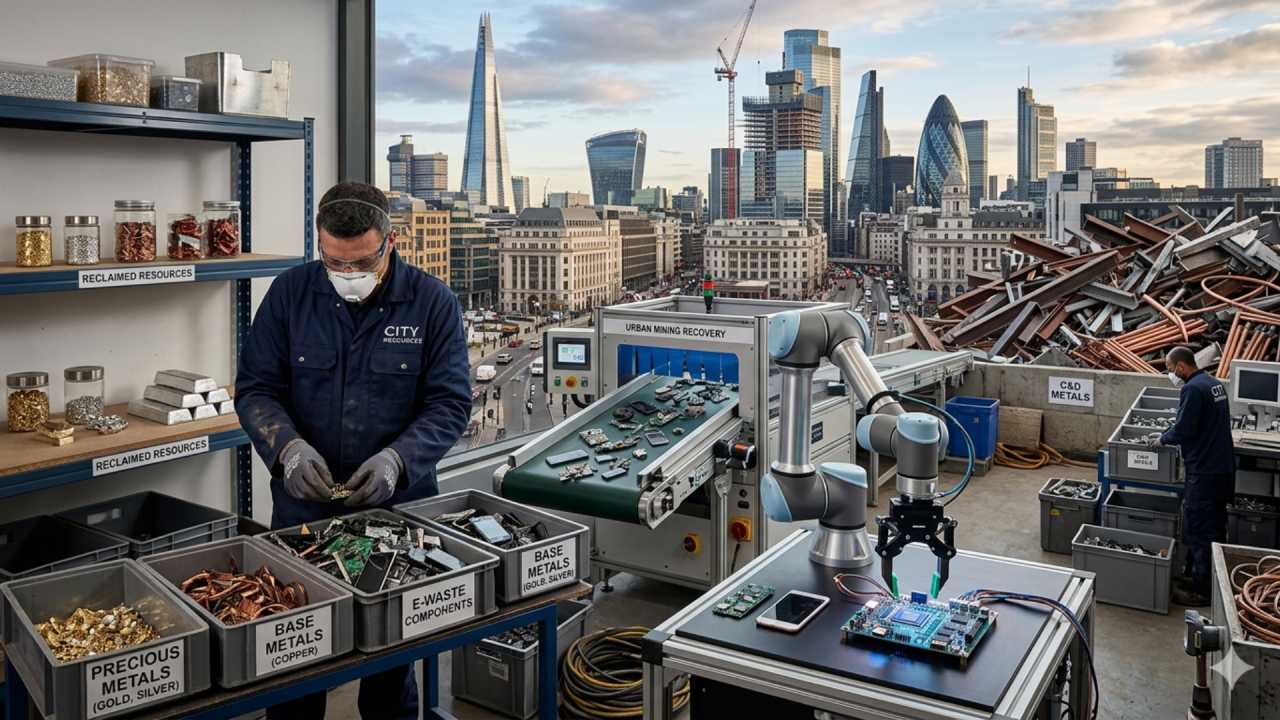
The third and fastest-growing group comprises the “urban miners.” These are people who recognize that a ton of discarded circuit boards contains significantly more gold than a ton of gold ore from a traditional mine. Urban mining focuses on scrap gold recovery from various sources:
-
Electronics (E-waste): High-end computers, telecommunication equipment, and vintage hardware often contain gold-plated connectors, pins, and integrated circuits.
-
Jewelry: Broken chains, single earrings, and outdated pieces that are worth more as raw metal than as decorative items.
-
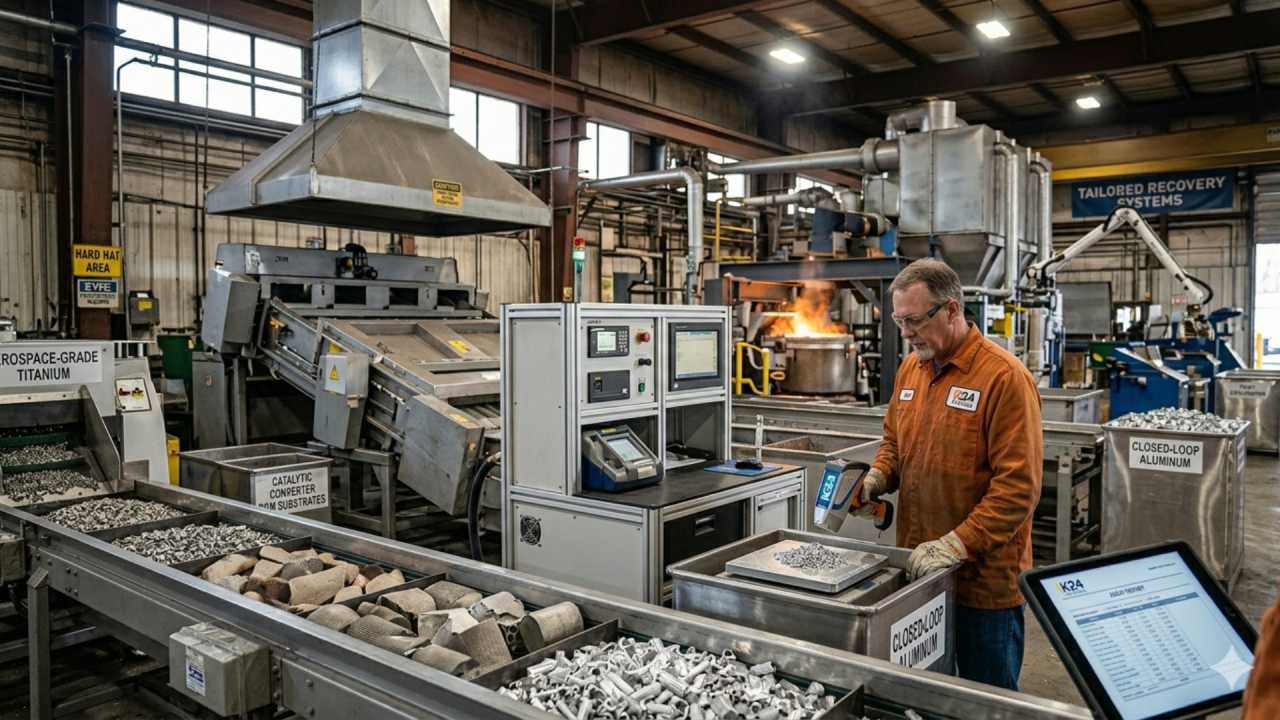
Industrial Scrap: Medical devices and aerospace components that utilize gold for its high conductivity and resistance to corrosion.
This modern fever is driven by the realization that we are surrounded by wealth disguised as waste.
Why Panning Is Not Practical for Most People
Before you buy a plane ticket to Alaska or a high-quality pan, it is crucial to understand why traditional prospecting is rarely a viable financial path for the average person.
Geographic Limitations
Gold is not distributed evenly. Unless you live in a specific geological “gold belt,” you are unlikely to find anything more than microscopic “flour gold.” For the majority of the population, the nearest gold-bearing river is hundreds or even thousands of miles away.
Low Yield vs. High Effort
Panning is back-breaking labor. A seasoned prospector might spend ten hours hunched over a stream to recover a fraction of a gram. When you factor in the cost of travel, equipment, and time, the hourly wage often works out to pennies. In contrast, the gold found in a few dozen high-grade motherboards can often exceed what a hobbyist panner finds in a month.
Permits and Environmental Restrictions
The days of “staking a claim” with a few wooden stakes and a prayer are largely over. Modern environmental regulations are strict. Many areas prohibit the use of motorized equipment (like suction dredges), and even hand-panning can be restricted in protected watersheds. Navigating the legalities of mineral rights is a headache that many find insurmountable.
The Reality of Return on Investment (ROI)
Traditional prospecting is a hobby, not a business model, for 99% of people. The capital expenditure for decent gear—and the fuel to get to the site—almost always outweighs the value of the gold recovered.
The Rise of Home Gold Refining
Because of the limitations of the “wild,” there has been a surge in interest in home gold refining. This is the process of taking scrap items—where gold is just one of many materials—and isolating the gold into its pure, metallic form.
The primary target for the home refiner is e-waste. Motherboards, CPUs, and RAM sticks are littered with gold. It’s used in the “fingers” (the connectors that plug into slots), the pins of the processors, and the microscopic wires inside the silicon chips themselves. While the amount of gold per device is small, the sheer volume of discarded electronics makes it a plentiful resource.
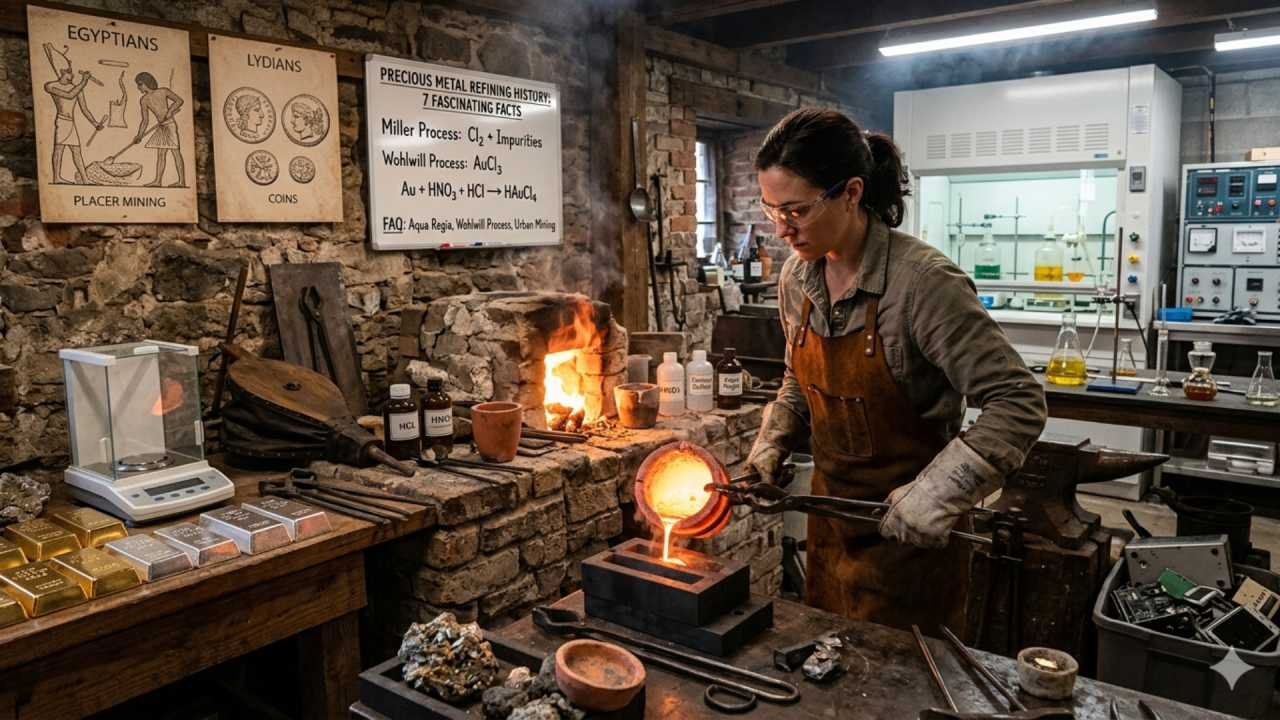
Home refining allows an individual to take a pile of “trash” and turn it into a 24-karat button of gold. However, it is a process that requires a shift in mindset. You are no longer a treasure hunter; you are a small-scale chemical processor. The equipment has become more accessible, with modular kits and specialized machines designed to handle the complexities of separation, making it possible for a dedicated individual to set up a lab in a garage or workshop.
What Is a Home Gold Refining Machine?
The term “home gold refining machine” can be a bit misleading. There is no single “magic box” where you drop a computer in one end and a gold coin pops out the other. Instead, refining is a multi-stage process that usually involves a combination of several different pieces of equipment.
Electrolysis Systems
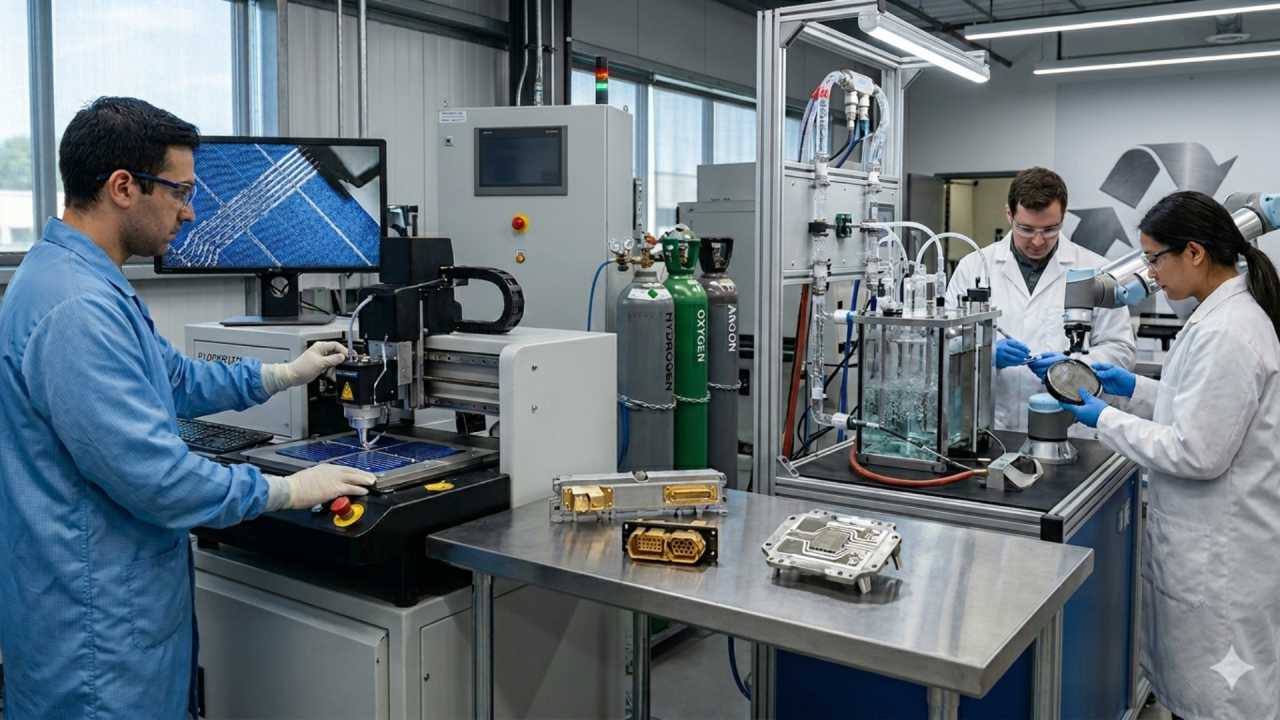
These systems use an electric current to move gold ions from a source (like gold-plated pins) through an electrolyte solution to a cathode. These are particularly popular for “stripping” gold plating without dissolving the entire base metal, making the process cleaner and more targeted.
Chemical Refining Kits
These are not machines in the mechanical sense but are curated sets of lab equipment. They typically include specialized glassware (like Florence or Erlenmeyer flasks), vacuum filtration systems, and precipitation chemicals. These kits are designed to guide the user through the process of dissolving scrap in acid (aqua regia) and then “dropping” the gold out of the liquid.
Smelting Furnaces
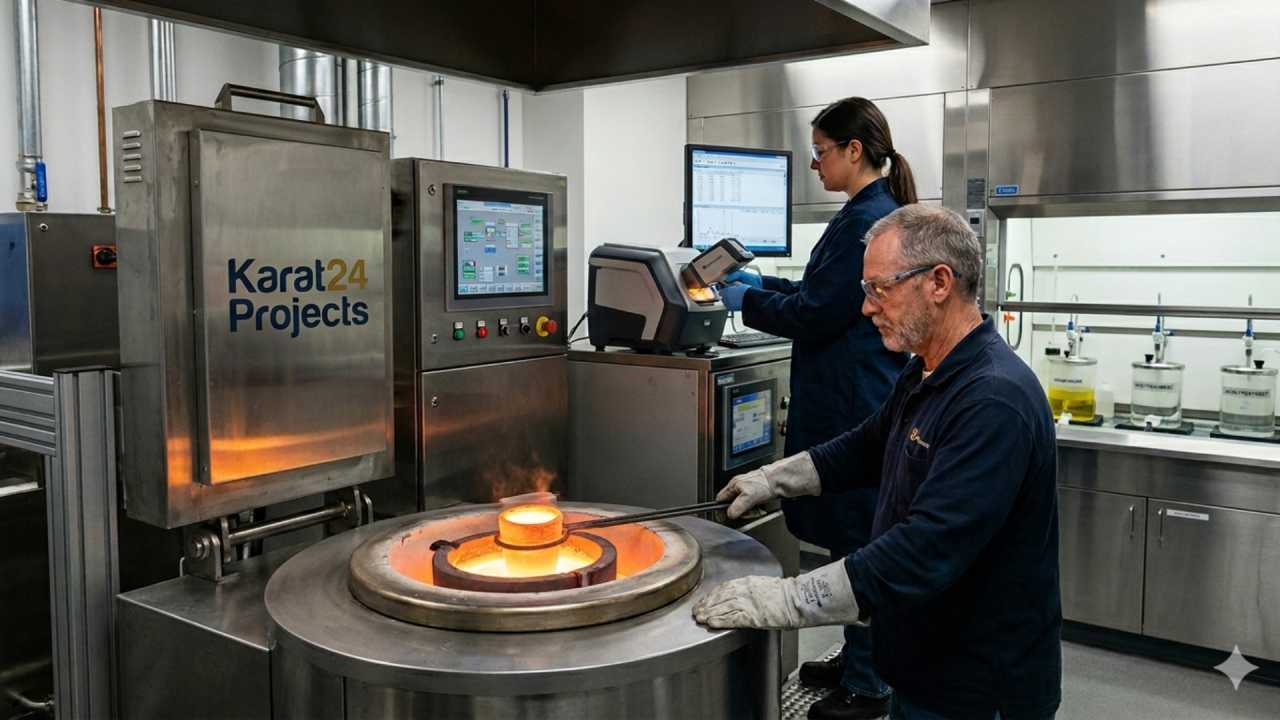
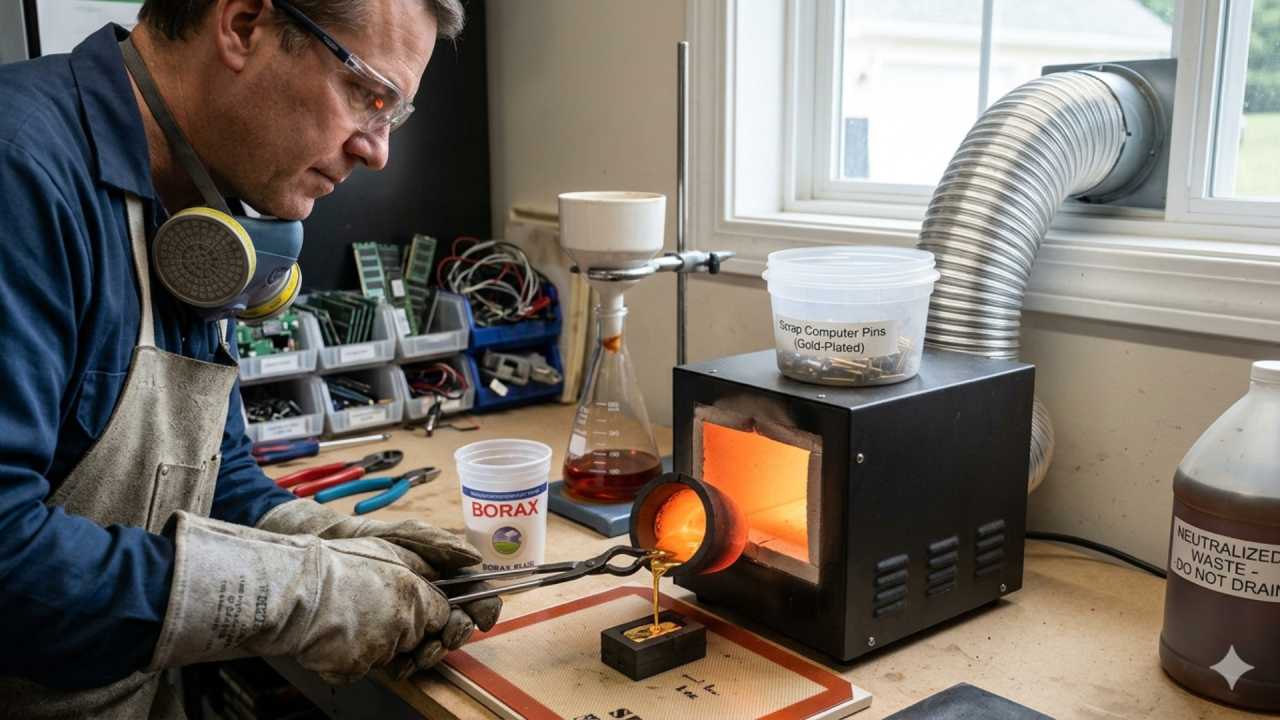
Once the gold has been recovered as a fine powder (called “gold mud” or “brown gold”), it must be melted. Small, high-induction electric furnaces or propane-fired kilns have become affordable. These machines can reach temperatures exceeding $1,064^\circ C$ ($1,947^\circ F$) to melt the powder into a solid, shiny ingot.
Unlike industrial refineries that process tons of material using massive vats, home setups are scaled for batches ranging from a few ounces to a few pounds of scrap.
How the Process Works (Simplified)
While the specifics can be complex, the path from scrap to gold follows a consistent logical flow. It is essentially a journey of elimination—removing everything that isn’t gold.
1. Collection and Sorting
The first step is the most labor-intensive: gathering material. This involves harvesting components from electronics. You aren’t just throwing the whole computer in; you are specifically targeting the gold-bearing parts, such as the gold-plated pins, connectors, and certain integrated circuits.
2. Pre-processing
Before chemicals are introduced, the material often needs to be physically prepared. This might involve “cropping” the gold fingers off a motherboard using a specialized shear or crushing ceramic CPUs to expose the internal gold-bonding wires.
3. Extraction
This is where the “machine” or chemical process comes in. In a chemical setup, the scrap is usually submerged in an acid bath. The goal is to get the gold into a liquid state (a gold-chloride solution). In an electrolytic setup, the electricity does the work of pulling the gold atoms off the base metal.
4. Filtration and Purification
The resulting liquid is a “soup” of chemicals and dissolved metals. Using a vacuum filtration system, the refiner removes any undissolved solids. Then, a selective chemical (like Sodium Metabisulfite) is added to the liquid. This chemical reacts only with the gold, causing it to turn back into a solid and settle at the bottom of the container as a fine powder.
5. Melting
The powder is washed, dried, and then placed in a crucible. The furnace heats the powder until it liquifies. Borax is often added as a flux to absorb any remaining impurities. Once molten, the gold is poured into a graphite mold, cooling into a recognizable bar or button.
Costs vs. Returns
Is home refining a gold mine or a money pit? The answer lies in your ability to source material and manage overhead.
Equipment Costs
A basic, safe setup—including a furnace, glassware, filtration system, and safety gear—will likely cost between $500 and $1,500. High-end automated electrolysis machines can cost significantly more.
Chemical and Material Costs
Acids (like Hydrochloric and Nitric), precipitation agents, and fluxes are ongoing expenses. Furthermore, you have the “cost” of the scrap. If you are buying e-waste on auction sites, the margins are thin. The real profit comes if you can source e-waste for free or at very low “scrap” prices from local businesses or recycling centers.
Time Investment
Refining is not fast. Sorting a single batch of e-waste can take hours, and the chemical reactions often need to sit overnight. If you value your time at a high hourly rate, home refining may seem inefficient. However, as a side hustle or hobby, the “sweat equity” can turn into a tangible asset.
Realistic Yield Expectations
To manage expectations: it takes a lot of scrap to get a little gold. You might need 20 to 30 high-grade older motherboards to produce a single ounce of gold. Modern electronics use thinner plating than older ones, meaning you need more volume today than you did twenty years ago.
Safety Considerations (CRITICAL)
This is the most important section of any guide on home refining. Unlike panning, which is mostly safe (aside from the occasional bear or sunburn), home refining involves genuine hazards.
Toxic Chemicals and Fumes
The chemicals used—specifically Nitric and Hydrochloric acids—are extremely corrosive. When they react with metals, they produce NOx gases (nitrogen dioxide), which are highly toxic and can cause permanent lung damage or death if inhaled. Refining must always be done in a dedicated fume hood or a very well-ventilated outdoor area.
Fire and Burn Risks
Smelting furnaces operate at temperatures that will melt skin and ignite clothing instantly. Working with molten metal requires specialized gear, including aluminized aprons and high-heat gloves.
Personal Protective Equipment (PPE)
At a minimum, a refiner needs:
-
Acid-resistant gloves (nitrile or neoprene).
-
A full-face shield or high-quality safety goggles.
-
An apron or lab coat.
-
A respirator with cartridges rated for acid gases.
Waste Disposal
The leftover liquid (spent acid) is a hazardous waste. It often contains dissolved copper, nickel, and lead. You cannot simply pour this down the drain; it will destroy your plumbing and contaminate the local water supply. It must be neutralized and disposed of according to local hazardous waste regulations.
Legal and Environmental Factors
Operating a small-scale refinery at home occupies a gray area in many jurisdictions. It is your responsibility to ensure you aren’t breaking the law.
Chemical Use and Storage
Some regions have restrictions on the quantity of concentrated acids an individual can possess. Proper storage in “acid cabinets” is often required by fire codes.
E-Waste Handling
In some states or countries, “processing” e-waste requires a specific recycler’s license. While most authorities won’t bother a hobbyist with a small box of boards, starting a large-scale garage operation could trigger environmental inspections.
The “Green” Responsibility
The irony of gold refining is that it can be very “dirty” for something so “pure.” Responsible refiners use “scrubbers” to neutralize fumes and ensure their waste metal (like copper) is also recycled rather than dumped. Being an urban miner means participating in the circular economy, and that requires environmental stewardship.
Pros and Cons of Home Refining
Before diving in, weigh the benefits against the significant hurdles.
Pros:
-
Value Recovery: You are literally creating wealth from things others throw away.
-
Sustainability: You are preventing heavy metals from sitting in landfills and reducing the need for destructive virgin mining.
-
Independence: There is a profound sense of self-reliance in being able to produce your own bullion.
-
Skill Acquisition: You will learn a great deal about chemistry, metallurgy, and electronics.
Cons:
-
High Barrier to Entry: The need for specialized equipment and chemical knowledge is significant.
-
Safety Risks: One mistake with acid or heat can have life-altering consequences.
-
Profitability Issues: Unless you have a steady stream of free, high-grade scrap, it is difficult to make a living solely from home refining.
-
Regulatory Scrutiny: Depending on where you live, the legal requirements can be a major hurdle.
Who Is This Actually For?
Home gold refining is not a “get rich quick” scheme for the casual observer. It is best suited for specific types of people:
The Technical Hobbyist
If you enjoy chemistry sets, tinkering with electronics, and don’t mind wearing a respirator for a few hours, this can be an incredibly rewarding hobby.
The E-Waste Scrapper
People who are already in the business of collecting scrap metal can significantly increase their profits by “up-refining” their gold-bearing material rather than selling it to a middleman for a fraction of its value.
The Small-Scale Recycler
Small computer repair shops that accumulate boxes of dead motherboards are perfectly positioned to benefit from home refining, as their “raw material” cost is essentially zero.
Alternatives to Consider
If the idea of handling acids and furnaces sounds too intense, there are other ways to benefit from the value of scrap gold without doing the refining yourself.
Selling to Professional Refiners
You can collect and sort the scrap (the “urban mining” part) and then sell the concentrated gold-bearing components to a professional refinery. They have the industrial equipment to do it more efficiently, and while they take a percentage, it saves you the risk and the equipment cost.
Investing in Bullion
If your goal is simply to own gold, it is almost always cheaper and easier to just buy a gold coin or an ETF. You avoid the chemicals, the labor, and the potential for loss during the refining process.
Collecting and Reselling
Sometimes, vintage electronics are worth more as “vintage tech” than as scrap gold. A 1970s computer might have $50 worth of gold in it but be worth $500 to a collector. Always check the resale value of the item before you reach for the acid.
Final Thoughts: Refine Smart, Not Reckless
The “Gold Fever” of the past was defined by the unknown—the hope that the next shovelful of dirt would change your life. The gold fever of today is defined by the known—the certainty that the digital age has left a trail of precious metal in its wake.
Refining your own gold with a home setup is a fascinating blend of science, recycling, and treasure hunting. However, the title of this article holds a warning: don’t pan for it. Don’t chase the romanticized, low-yield methods of the past. If you want to pursue gold, do it with the precision of a modern technician.
The opportunity isn’t found in chasing a vein in the rock; it’s found in understanding the value of what the rest of the world considers “spent.” If you have the patience to learn the chemistry, the discipline to maintain a safe environment, and the resourcefulness to find your scrap, you can turn your home into a miniature mint. Just remember: the most valuable tool in any refinery isn’t the furnace or the acid—it’s the knowledge of the person using them. Refine smart, stay safe, and let the modern gold rush begin in your own workshop.
Frequently Asked Questions About Home Gold Refining
Integrating a home gold refining machine into your workflow raises many questions regarding efficiency, legality, and technique. Below are some of the most common inquiries from those looking to master the art of precious metal recovery.
How much gold can you get from a computer motherboard?
The amount of gold recovered depends largely on the age and quality of the hardware. On average, older motherboards (pre-1990s) can yield significantly more than modern ones. Generally, you may need anywhere from 20 to 100 pounds of mixed computer scrap to recover a single troy ounce of gold. High-grade telecommunication boards and server scrap typically offer the highest yields for urban miners.
Is it legal to refine gold at home in a residential area?
Legal requirements vary by country and local municipality. While owning a gold refining machine is generally legal, the “processing” of hazardous materials and the storage of industrial acids may be restricted by local zoning laws or fire codes. It is essential to check your local environmental regulations regarding e-waste processing and chemical disposal to ensure your home laboratory remains compliant.
What are the best chemicals for gold recovery from e-waste?
The most common chemical method involves the use of Aqua Regia, a mixture of Hydrochloric Acid and Nitric Acid. However, for those looking for safer alternatives, there are “sub-standard” leaching processes using vinegar and peroxide for initial stripping, or specialized electrolytic stripping salts. Always prioritize chemicals that match your specific equipment and ventilation capabilities.
Can I use a small furnace to melt gold dust into bars?
Yes, a high-temperature electric induction furnace or a propane-fired kiln is an essential piece of equipment for the final stage of refining. Once you have precipitated your gold “mud” and washed it thoroughly, you can melt it at temperatures exceeding $1,064^\circ C$. Using a graphite crucible and a pinch of borax flux will help you achieve a clean, professional-looking gold button or bar.
What is the difference between gold stripping and gold refining?
Gold stripping is the process of removing the gold plating from a base metal (like copper pins) without necessarily dissolving the entire item. This is often done via electrolysis. Gold refining is the deeper process of purifying that stripped material to remove all base metal impurities, resulting in fine gold that is $99.9\%$ pure ($24$ karats).
Where can I find free e-waste for gold recovery?
Finding a consistent supply is the “secret sauce” of a profitable refining operation. Many small businesses, schools, and IT departments have “dead” hardware they are willing to give away to avoid disposal fees. Building relationships with local computer repair shops or attending estate sales can also provide a steady stream of gold-bearing material at little to no cost.
How do I safely dispose of spent refining acids?
Never pour used chemicals down a household drain. Spent acids contain dissolved heavy metals like copper and lead, which are toxic to the environment. You must neutralize the acid using a base like baking soda or lime until the pH is neutral, and then take the liquid to a certified hazardous waste collection center. Some refiners also use “copper dropping” methods to recover dissolved copper from the waste before disposal.