Jewelers’ Guide to Precious Metal Refining Services
In the intricate world of jewelry manufacturing and retail, the glint of a finished piece often overshadows the humble reality of its creation. For every polished engagement ring or hand-carved pendant, there is a trail of residue left behind: golden dust caught in the bristles of a polishing wheel, silver filings scattered across a wooden bench, and discarded remnants of platinum shanks. To the uninitiated, this is waste. To the professional jeweler, this is “found money”—liquid capital that is simply waiting to be reclaimed.
Precious metal refining is the industrial and chemical process of separating high-value metals like gold, silver, and platinum from impurities or other base metals. For jewelers, refining services are not merely a utility; they are a vital component of inventory control and profit recovery. In an industry where margins can be thin and the raw cost of materials is subject to the volatile swings of global commodities markets, the ability to efficiently recoup every milligram of precious metal can mean the difference between a struggling workshop and a thriving enterprise.
This guide is designed as a comprehensive resource for retail jewelers, independent artisans, large-scale manufacturers, and repair shop owners. Whether you are looking to process a few ounces of scrap gold or a barrel of floor sweeps, understanding the mechanics, economics, and ethics of refining is essential. By mastering the refining cycle, you can transform your “waste” into a consistent stream of revenue, ensuring that your business remains as sustainable as the metals you work with.
What Is Precious Metal Refining?
At its core, precious metal refining is the science of purification. It is the bridge between “scrap”—which may contain alloys, solder, gemstones, and organic debris—and “fine” metal, which is 99.9% pure or higher. The purpose of refining is to take materials that are no longer commercially viable in their current form and return them to a state where they can be traded as bullion or reused in the casting of new jewelry.
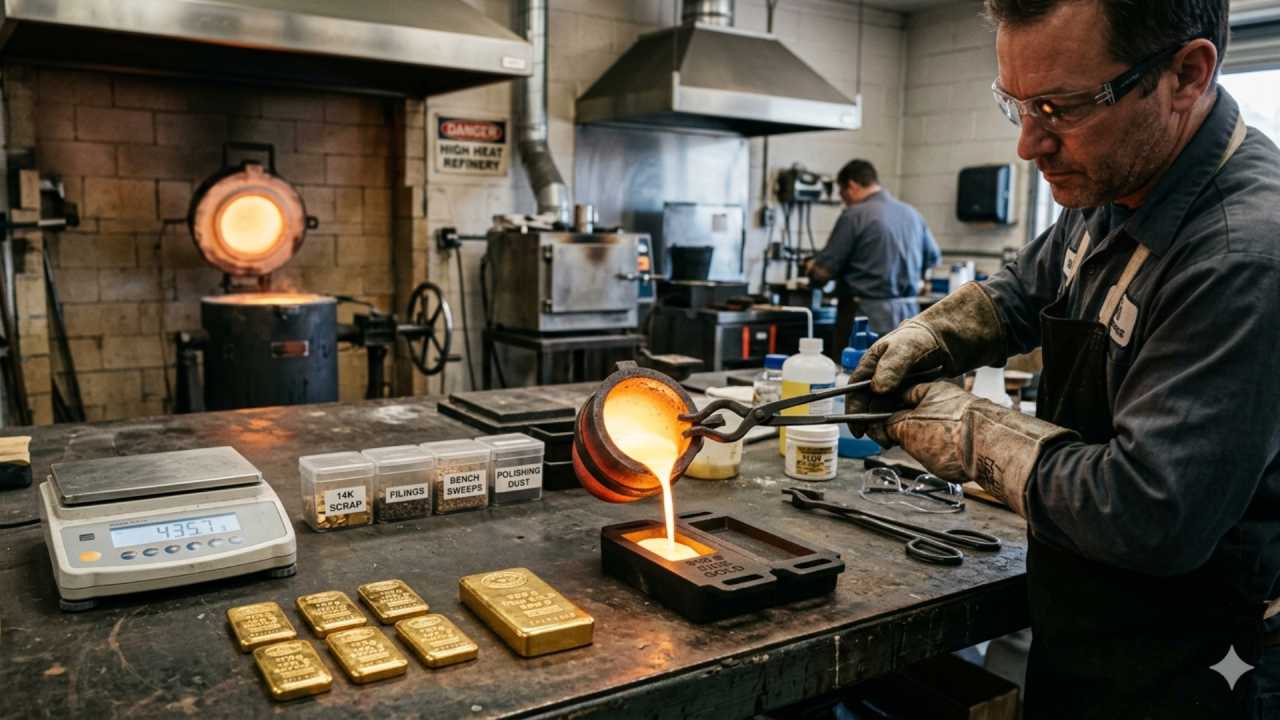
Jewelers generate a wide variety of materials that require refining, categorized primarily by their metal content and the amount of preparation needed to process them:
-
Scrap Jewelry: This includes broken chains, unsold inventory, and “buy-backs” from customers. While these are often high-grade (14K or 18K), they contain alloys like copper, zinc, or nickel that must be removed.
-
Bench Sweeps: The debris collected from the jeweler’s workbench. This is a “low-grade” material, as it often contains wood splinters, emery paper, and saw blades mixed with precious metal particles.
-
Polishing Dust: Collected by vacuum systems or “fishmouth” hoods at the polishing lathe. This material is often heavy with polishing compounds (rouge) and fibers from buffing wheels.
-
Lemel (Filings): The clean shavings and chips created during the filing and carving of metal. This is usually higher in value and easier to process than floor sweeps.
It is crucial to distinguish between assaying and refining. Assaying is the analytical process of determining the exact ratio of precious metals within a sample. It tells you what you have. Refining is the physical and chemical process of extracting those metals. You cannot have a fair refining payout without an accurate assay, as the assay provides the “map” for the refiner’s financial settlement.
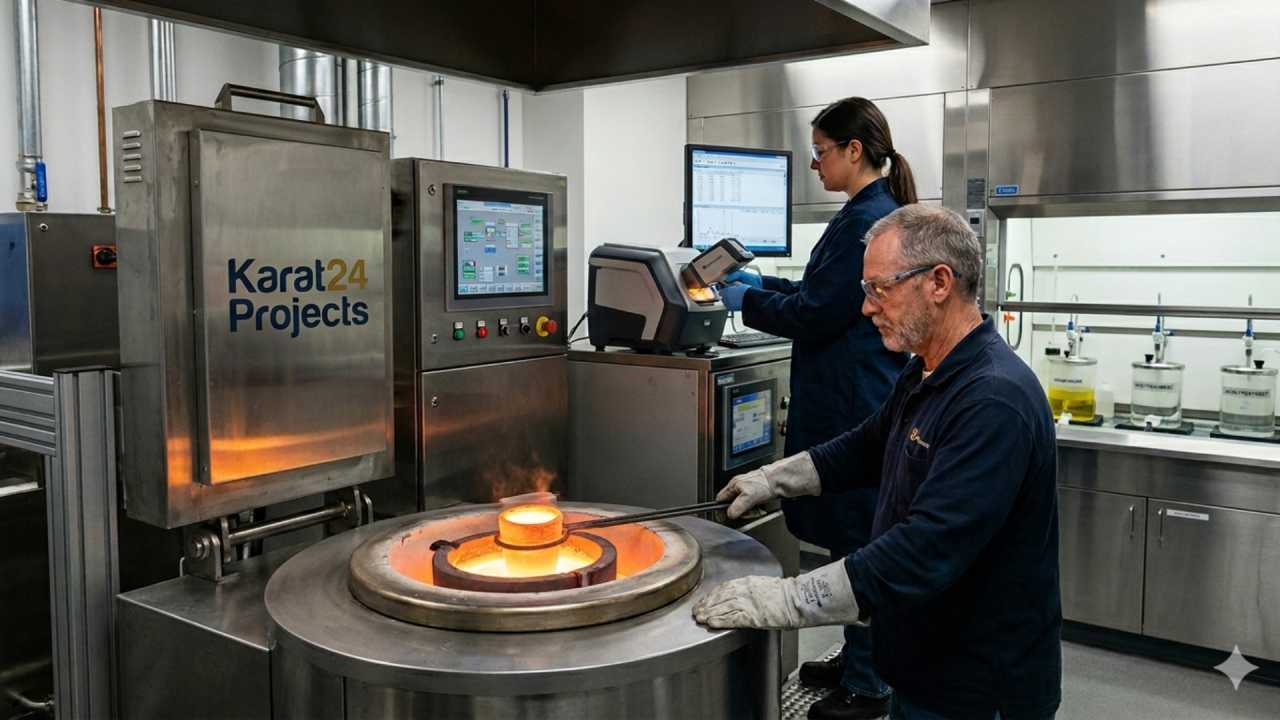
The refining cycle typically begins with the collection of waste, followed by a melting or incineration phase to homogenize the material, an assay to determine value, and finally, the chemical separation of the elements.
Types of Precious Metals Commonly Refined
While gold is the primary focus for most jewelry businesses, a modern refining service must be equipped to handle the full spectrum of precious metals. Each metal carries its own purity standards, market value, and metallurgical challenges.
Gold
Gold is the backbone of the refining industry. It is typically refined from various “karat” levels. Pure gold is 24K, but jewelry is usually 10K (41.7% gold), 14K (58.3%), or 18K (75%). Refiners must strip away the base metal alloys—copper, silver, and zinc—to return the gold to a 24K state.
Silver
Though silver has a lower price point per ounce than gold, the sheer volume generated in many shops makes it a significant part of the refining haul. Silver is often found in sterling form (92.5% purity). Because silver is highly reactive, it requires specific chemical treatments to separate it from copper.
Platinum Group Metals (PGM)
This group includes Platinum, Palladium, and Rhodium. These metals are prized for their durability and “true white” color.
-
Platinum: Highly dense and has a very high melting point, making it more difficult and expensive to refine than gold.
-
Palladium: Frequently used in white gold alloys and as a primary metal. Its volatility in price makes accurate refining essential.
-
Rhodium: Primarily used for plating. While jewelers rarely have “scrap rhodium,” it is often recovered from plating solutions or “spent” filters.
Understanding purity levels is vital for the jeweler. An 18K scrap lot is worth significantly more than a 10K lot of the same weight. Furthermore, the complexity of refining PGMs often results in different fee structures compared to simple gold and silver lots.
Refining Methods Explained
Refiners use various methods depending on the type of material and the level of purity required. Understanding these processes helps jewelers appreciate why some lots take longer to process than others.
Fire Assay
This is the “gold standard” for determining purity. A small sample of the metal is melted with lead and silver (a process called cupellation). The base metals are oxidized and absorbed into a porous crucible (cupel), leaving behind a bead of pure precious metal. This method is incredibly accurate and is used to determine the final payout for most jewelry scrap.
Chemical Refining (Aqua Regia Process)
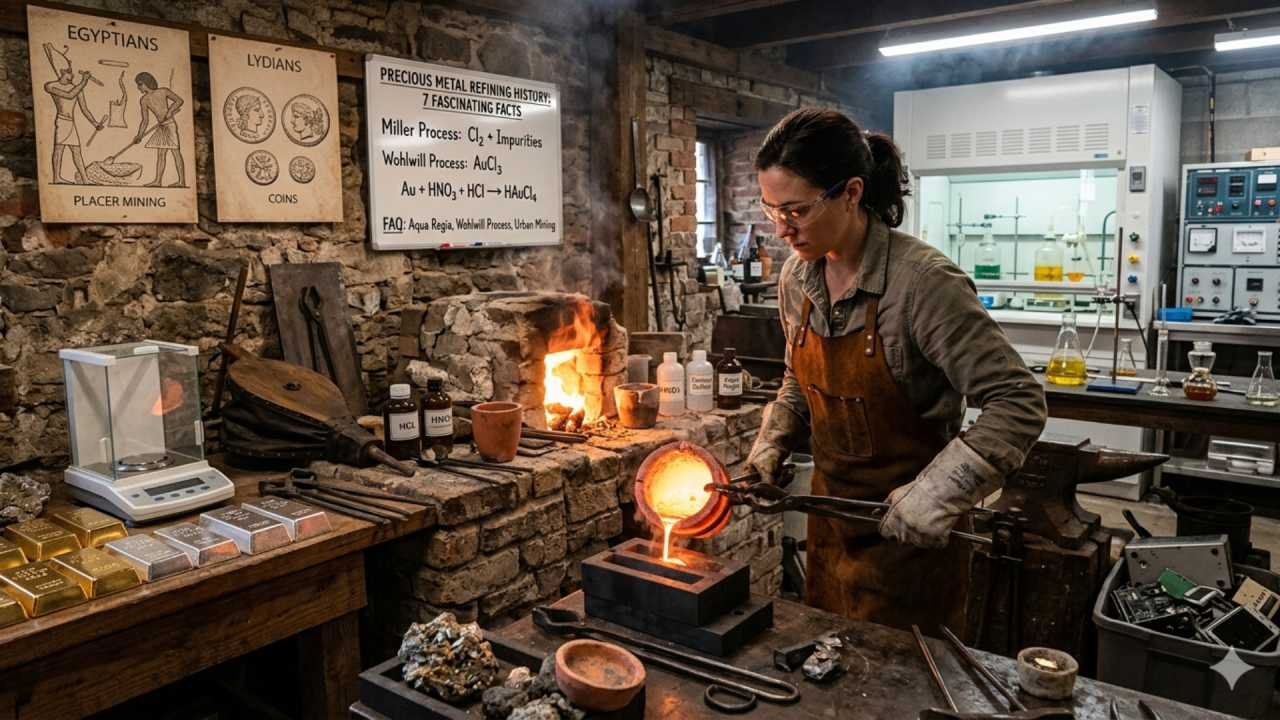
Aqua Regia, a mixture of nitric and hydrochloric acids, is used to dissolve gold. This creates a solution from which pure gold can be precipitated using specific chemicals like sodium metabisulfite. This method is highly effective for high-purity gold scrap and lemel.
Electrolytic Refining (Wohlwill Process)
For ultra-high purity gold (99.999%), the Wohlwill process is used. It involves using an impure gold anode and a pure gold cathode in an electrolyte solution. When an electric current is applied, gold dissolves from the anode and deposits onto the cathode. While slow, it produces the highest possible purity.
The Miller Process
This is a faster, large-scale method where gaseous chlorine is bubbled through molten gold. The chlorine reacts with impurities (like silver and base metals), turning them into chlorides that float to the top as a slag. It is efficient but generally only purifies gold to about 99.5%, which is sufficient for most commercial bullion but lower than the Wohlwill process.
The Refining Process Step-by-Step
When you ship your materials to a refiner, they undergo a rigorous series of steps to ensure transparency and accuracy.
-
Collection and Sorting: The jeweler segregates materials. It is best to keep high-grade scrap (jewelry) separate from low-grade scrap (sweeps).
-
Pre-treatment (Incineration and Melting): Low-grade materials like polishing dust and floor sweeps are burned in a furnace to remove organic matter (hair, paper, rouge). The remaining ash is then crushed and melted into a “button” or bar.
-
Assaying: Once the material is melted into a homogenous bar, a sample is taken (usually by drilling into the bar or taking a “pin tube” sample while the metal is molten). This sample is tested via fire assay or X-ray fluorescence (XRF) to determine the percentage of each precious metal.
-
Refining: The bulk metal is then subjected to the chemical or electrolytic processes mentioned above to separate the gold, silver, and PGMs.
-
Final Payout: Based on the assay results and the market price at the time of settlement, the refiner provides a payout. Jewelers can typically choose between a wire transfer (cash), physical bullion (coins or bars), or a credit to their “ounce account” for future casting grain purchases.
Timeline Expectations: High-grade scrap can often be settled in 24 to 48 hours. However, low-grade sweeps require incineration and complex processing, which can take anywhere from two to four weeks.
How Jewelers Make Money from Refining
Refining is not just a cleaning service; it is a profit-recovery strategy. There are three primary ways jewelers maximize their income through refining:
Recovering Value from “Invisible” Scrap
Every time a jeweler polishes a ring, a tiny fraction of a gram of metal is removed. Over a year, a busy shop might lose several ounces of gold to the polishing motor. By refining filters, floor mats, and even the “sludge” from ultrasonic cleaners, jewelers recover value from items that would otherwise be thrown in the trash.
Margin Improvement
By refining scrap and taking the payout in the form of casting grain, a jeweler avoids the “spread” or markup charged by bullion dealers. You are essentially recycling your own inventory at the lowest possible cost, which improves the margins on the next piece of jewelry you create.
Refining vs. Selling to Middlemen
“Gold buyers” or local scrap dealers provide convenience, but they pay a fraction of the actual melt value because they must eventually send that metal to a refiner themselves. By dealing directly with a primary refiner, the jeweler cuts out the middleman and keeps the 10% to 20% margin that would otherwise be lost.
Choosing the Right Refining Service
Selecting a refiner is one of the most important business decisions a jeweler makes. Because you are essentially sending “uncounted cash” in the mail, trust is paramount.
Reputation and Certifications
Look for refiners that are members of industry organizations like the Jewelers Board of Trade (JBT) or the Manufacturing Jewelers & Suppliers of America (MJSA). Check if they are certified by the Responsible Jewellery Council (RJC), which ensures ethical and environmental standards.
Settlement Options
Does the refiner offer flexibility? A good refiner should allow you to:
-
Receive cash via check or wire.
-
Receive “product exchange” for casting grain, solder, or wire.
-
Hold your metal in an “ounce account” until the market price reaches your target.
Transparency and Questions to Ask
Before shipping your first lot, ask the following:
-
What is your “split” or percentage payout for gold (e.g., 98% of the spot price)?
-
Are there hidden “treatment” or “environmental” fees?
-
Do you allow for “witnessing” of the melt for large lots?
-
How do you handle gemstones left in the scrap? (Do they break them out or dissolve the metal around them?)
Understanding Fees and Payout Structures
The “price” of refining is rarely a single number. It is a combination of several factors that determine your “Net Return.”
-
Refining Fees: This is often a per-ounce charge (e.g., $0.50 per ounce of material processed).
-
Assay Charges: A flat fee for the laboratory work required to test the metal.
-
Treatment/Lot Fees: Flat fees for handling the logistics of the shipment.
-
Percentage Payout: This is the most significant factor. A refiner might pay 98% of the gold value, 90% of the silver value, and 85% of the platinum value.
Common Pitfall: Many jewelers are lured by a refiner offering “99% Payout” but fail to notice high “lot fees” or “assay charges” that eat up the difference. Always calculate the Final Net Value (Total Value – All Fees) rather than just looking at the percentage.
Example: Refiner A offers 98% payout with a $50 assay fee. Refiner B offers 99% payout with a $150 assay fee. If you have a small lot, Refiner A is actually the more profitable choice.
Best Practices for Maximizing Returns
Efficiency in refining starts at the jeweler’s bench, not at the refinery.
Proper Scrap Segregation
Keep your metals separate. Mixing platinum filings with gold filings forces the refiner to use more complex processes, which leads to higher fees and lower percentage payouts. Use labeled containers for 14K Gold, 18K Gold, Sterling Silver, and Platinum.
Avoiding Contamination
Ensure that non-metallic debris is kept to a minimum. Avoid putting heavy steel springs (from clasps) or lead solder into your high-grade gold scrap. Contaminants like lead or iron can make the gold brittle and require extra refining steps.
Timing the Market
Precious metal prices fluctuate daily. Most refiners allow you to “lock in” a price on the day the assay is completed. Monitor market trends; if gold is at a historic high, it may be the perfect time to send in your floor sweeps.
Accurate Record Keeping
Weigh your scrap before you ship it. While the refiner’s scale is the “official” weight after melting (since moisture and combustible waste will be gone), having a “pre-melt” weight helps you track your recovery rate over time.
Environmental and Ethical Considerations
In the modern marketplace, consumers are increasingly concerned about the origin of their jewelry. Refining plays a massive role in the “Circular Economy.”
Sustainable Refining
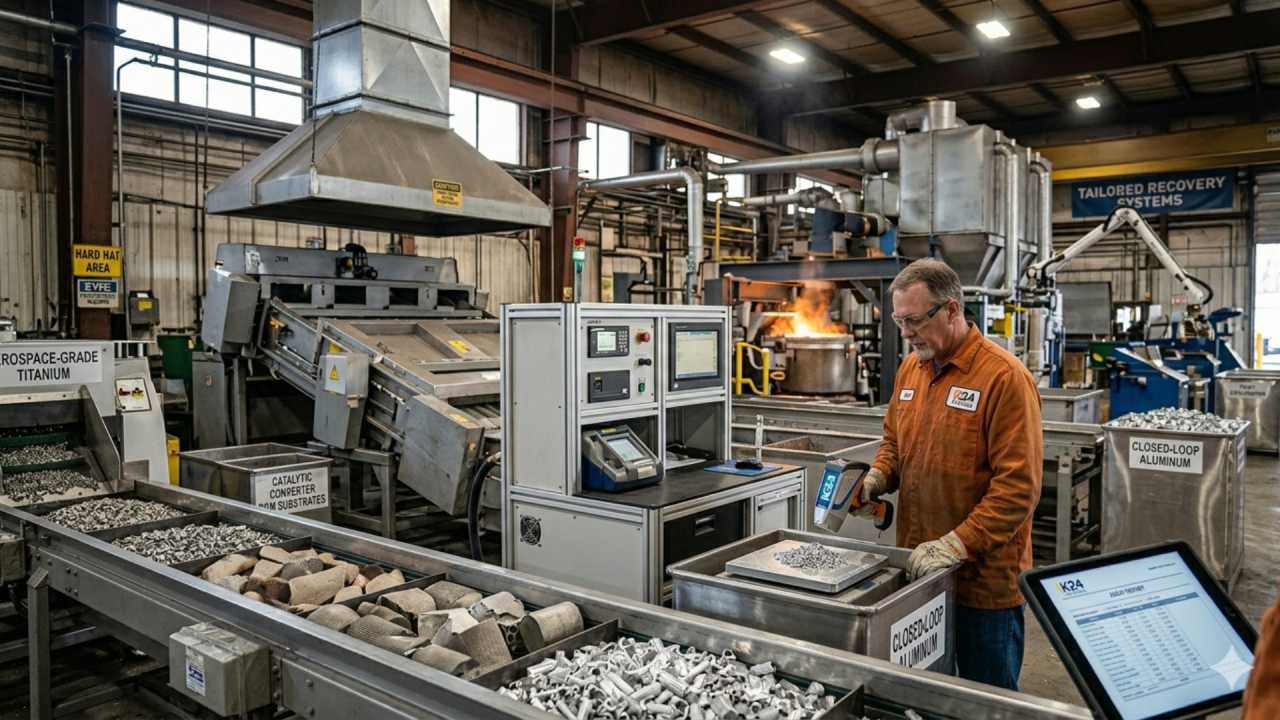
Refining is the ultimate recycling. Using refined metal reduces the demand for newly mined gold, which has a significantly higher environmental footprint. Many refiners now use “closed-loop” chemical systems to ensure that no toxic acids or fumes are released into the environment.
Compliance and Anti-Money Laundering (AML)
Legitimate refiners must comply with strict federal regulations (such as the USA PATRIOT Act in the United States) to prevent money laundering. This means you will likely need to provide business identification and tax information. This is a sign of a reputable refiner.
Ethical Sourcing
By using a refiner that is certified for “Conflict-Free” or “Sustainably Sourced” metals, you can market your jewelry as being made from 100% recycled materials—a powerful selling point for younger, eco-conscious consumers.
Common Mistakes Jewelers Make
Even experienced jewelers can lose money through poor refining habits.
-
Mixing Metals: As mentioned, mixing silver and gold lowers the efficiency of the chemical recovery and increases the “treatment” time.
-
Choosing Based Only on Fees: The lowest fee does not always mean the highest payout. If a refiner’s assay is inaccurate by even 1%, that loss far outweighs a $50 savings in fees.
-
Ignoring the “Sludge”: Many jewelers throw out the water from their ultrasonic cleaners or the filters from their sink traps. These materials often contain a surprising amount of heavy gold particles.
-
Poor Documentation: Failing to track the weight of scrap sent versus the weight recovered makes it impossible to audit the refiner’s performance.
Future Trends in Precious Metal Refining
The refining industry is evolving alongside the jewelry trade. Several key trends are shaping the future:
-
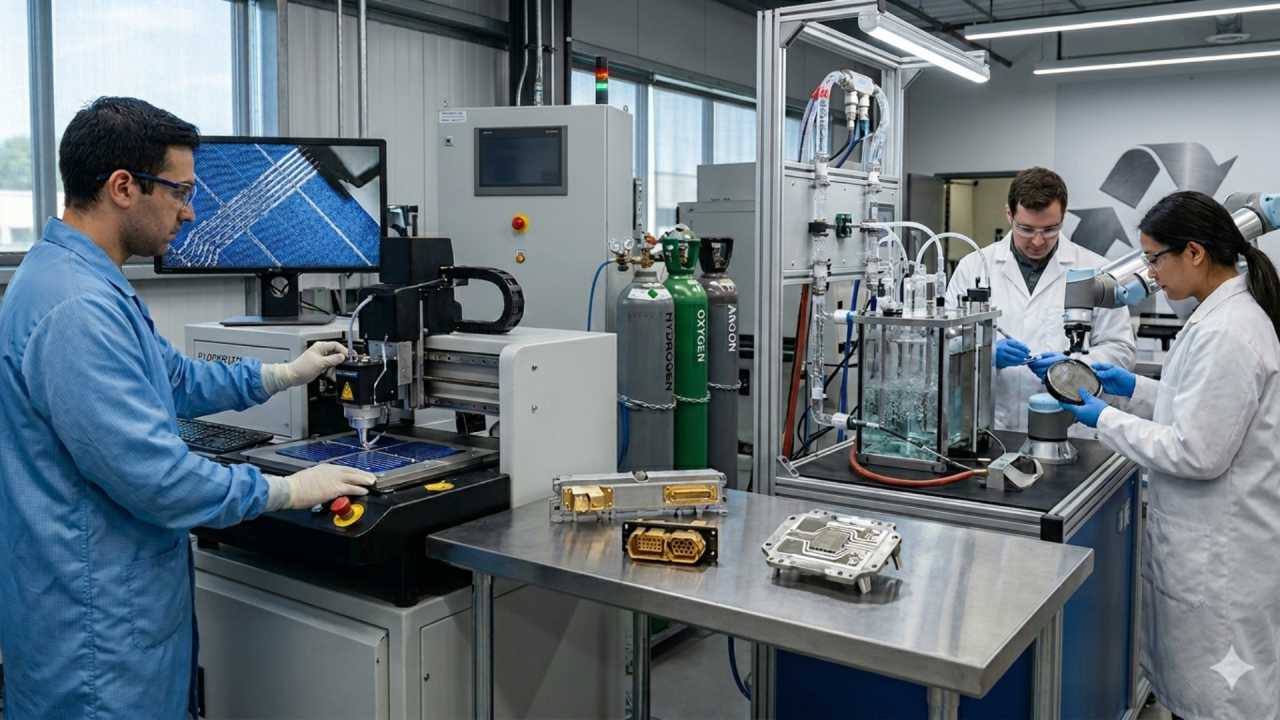
Technology Advancements: New laser-based assaying techniques (LIBS) are becoming faster and more accurate than traditional XRF, allowing for even quicker turnaround times.
-
Digital Tracking: Many refiners now offer “client portals” where jewelers can track their shipment in real-time, view photos of their melt, and see historical data on their recovery rates.
-
ESG Pressures: Environmental, Social, and Governance (ESG) standards are moving from “nice-to-have” to mandatory. Refiners are investing heavily in carbon-neutral processing and full-traceability documentation.
-
Increased Demand for Recycling: As mining costs rise and ore grades diminish, the industry’s reliance on “urban mining”—recovering metal from existing products—will only grow.
Final Thoughts
Precious metal refining is far more than a simple transaction; it is a critical business discipline that rewards organization, knowledge, and diligence. By understanding the chemical processes involved, the nuances of fee structures, and the importance of scrap segregation, jewelers can turn their workshop residue into a powerful engine for profitability.
In an era where sustainability is as valued as the craftsmanship itself, the ability to recycle and reuse precious metals is both an ethical necessity and a financial advantage. Treat your refining relationship as a partnership. Choose a refiner with a sterling reputation, maintain meticulous records, and never underestimate the value of the dust beneath your feet.
With a disciplined approach to refining, you ensure that no part of your hard work goes to waste, and every ounce of your talent is backed by the full value of the materials you master.