
Recovering Value from Precious Metal Scrap: A Comprehensive Guide to Urban Mining and Sustainable Refining
Precious metal scrap refers to any secondary material, discarded product, or industrial byproduct that contains recoverable quantities of high-value metals, primarily gold, silver, and the platinum group metals (PGMs). Unlike base metals such as iron or copper, which are abundant, precious metals are defined by their rarity, high economic value, and unique chemical properties. In the modern era, “scrap” is no longer viewed as waste; it is increasingly recognized as a vital “above-ground mine” that holds the key to sustainable resource management.
The recovery of these metals has never been more critical. As the global population grows and technology becomes more integrated into daily life, the demand for gold, silver, platinum, and palladium continues to climb. However, primary mining—the extraction of ore from the earth—is becoming increasingly difficult and expensive. Ores are declining in grade, meaning more earth must be moved to extract smaller amounts of metal, leading to massive energy consumption and environmental degradation.
Recovering value from scrap addresses three major global challenges. First, it mitigates resource scarcity by reintroducing existing metals into the supply chain. Second, it offers a significant economic advantage; the concentration of gold in a metric ton of circuit boards can be up to 40 to 80 times higher than in a metric ton of gold ore. Finally, the environmental impact of recycling is a fraction of that of mining. For instance, recycling platinum emits roughly one-twentieth of the carbon dioxide compared to primary extraction. This article explores the intricate journey of precious metal scrap from discarded waste to refined, high-purity bullion.
Types of Precious Metal Scrap
Precious metal scrap is categorized based on its origin and the complexity of its composition. Understanding these sources is essential for determining the appropriate recovery strategy.
a. Industrial Scrap
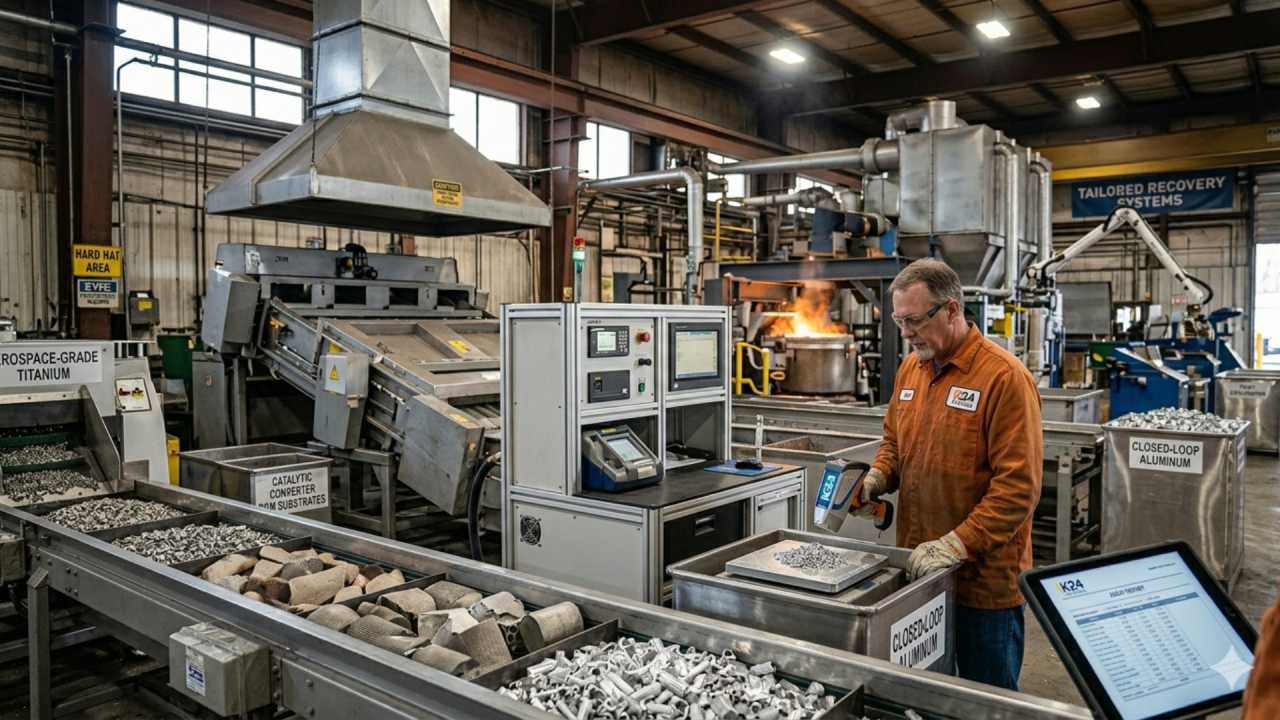
The industrial sector is a massive generator of high-grade scrap. In electronics manufacturing, scrap includes printed circuit board (PCB) trimmings, defective chips, and gold-plated connectors. Beyond electronics, the automotive industry provides a steady stream of “spent” catalytic converters. These devices contain platinum, palladium, and rhodium, which act as catalysts to reduce harmful emissions. In the aerospace sector, high-performance alloys and engine components often contain precious metals to withstand extreme temperatures and prevent corrosion.
b. Jewelry Scrap
The jewelry industry operates on a near-circular model. “Old scrap” consists of broken or outdated jewelry sold by consumers. “New scrap” or “manufacturing scrap” includes the dust, filings (often called “lemel”), and polishing residues generated during the jewelry-making process. Because jewelry is often made of high-purity alloys, this scrap is relatively easy to refine compared to complex electronic waste.
c. Electronic Waste (E-waste)
E-waste is perhaps the fastest-growing source of precious metals. Mobile phones, laptops, and servers contain gold in their contact points, silver in their solder and membranes, and palladium in their multi-layer ceramic capacitors (MLCCs). While the amount of metal per device is small, the sheer volume of discarded electronics creates a massive aggregate value. A single smartphone might contain only 0.03 grams of gold, but one million phones represent 30 kilograms of gold—worth millions of dollars.
d. Dental and Medical Scrap
Historically, dentistry has been a significant consumer of gold and palladium for crowns, bridges, and inlays. While ceramic alternatives are rising, “yellow gold” dental scrap remains a high-value stream. In the broader medical field, precious metals are found in specialized equipment, such as electrophysiology catheters, pacemakers, and certain surgical implants, where biocompatibility and conductivity are paramount.
e. Photographic Scrap
While digital technology has largely replaced film, photographic scrap remains relevant in medical X-rays and industrial radiography. Silver is the primary metal recovered here, extracted from spent “fixer” solutions and processed film. This was once the primary source of recycled silver globally and continues to be a niche but important recovery sector.
Precious Metals Commonly Recovered
The focus of recovery efforts centers on five primary metals, each prized for specific industrial and financial attributes.
-
Gold (Au): Known for its incredible conductivity and resistance to oxidation, gold is the “king” of recovery. It is found in almost every electronic device and remains the primary target for jewelry recyclers. Its market value is driven by both industrial demand and its role as a financial “safe haven” asset.
-
Silver (Ag): Silver has the highest electrical and thermal conductivity of all metals. It is recovered from solar panels, electronics, mirrors, and medical waste. While its price per ounce is lower than gold, the sheer volume of silver in the scrap market makes it a cornerstone of the recycling industry.
-
Platinum (Pt): A critical component in laboratory equipment, jewelry, and automotive catalysts. It is highly resistant to chemical attack and is prized for its catalytic properties.
-
Palladium (Pd): Often used interchangeably with platinum in many applications, palladium is essential for catalytic converters in gasoline engines. Its price has seen significant volatility due to supply constraints, making its recovery from scrap highly lucrative.
-
Rhodium (Rh): Perhaps the rarest and most expensive of the PGMs, rhodium is used primarily in catalytic converters to reduce nitrogen oxides (NOx). Because its price can reach several thousand dollars per ounce, even microscopic amounts are worth recovering.
Collection and Preprocessing
The recovery process does not begin in a furnace; it begins with logistics and preparation. Proper preprocessing ensures that the subsequent refining steps are efficient and cost-effective.
a. Collection Systems
Efficient collection is the biggest hurdle in the recycling chain. Large-scale industrial scrap is usually managed through direct contracts between manufacturers and refiners. Consumer scrap, however, moves through a fragmented network of local scrap dealers, specialized “cash for gold” shops, and municipal recycling centers. The goal is to aggregate small quantities into bulk shipments that can be processed industrially.
b. Sorting and Segregation
Not all scrap is created equal. Mixing different types of scrap can lead to “contamination,” making the refining process more difficult. For example, aluminum contamination in a gold melt can cause the resulting metal to be brittle. Sorting involves separating plastics, base metals (iron, aluminum), and precious metal-bearing components. While manual sorting is common for jewelry and large components, advanced facilities use automated systems like eddy current separators and optical sorters.
c. Size Reduction
To expose the precious metals trapped inside complex assemblies, the scrap must be broken down. Heavy-duty shredders and hammer mills crush electronics and industrial parts into smaller fragments. This increases the surface area for chemical treatments and allows for better mechanical separation of non-metallic materials like plastics and glass.
d. Sampling and Assaying
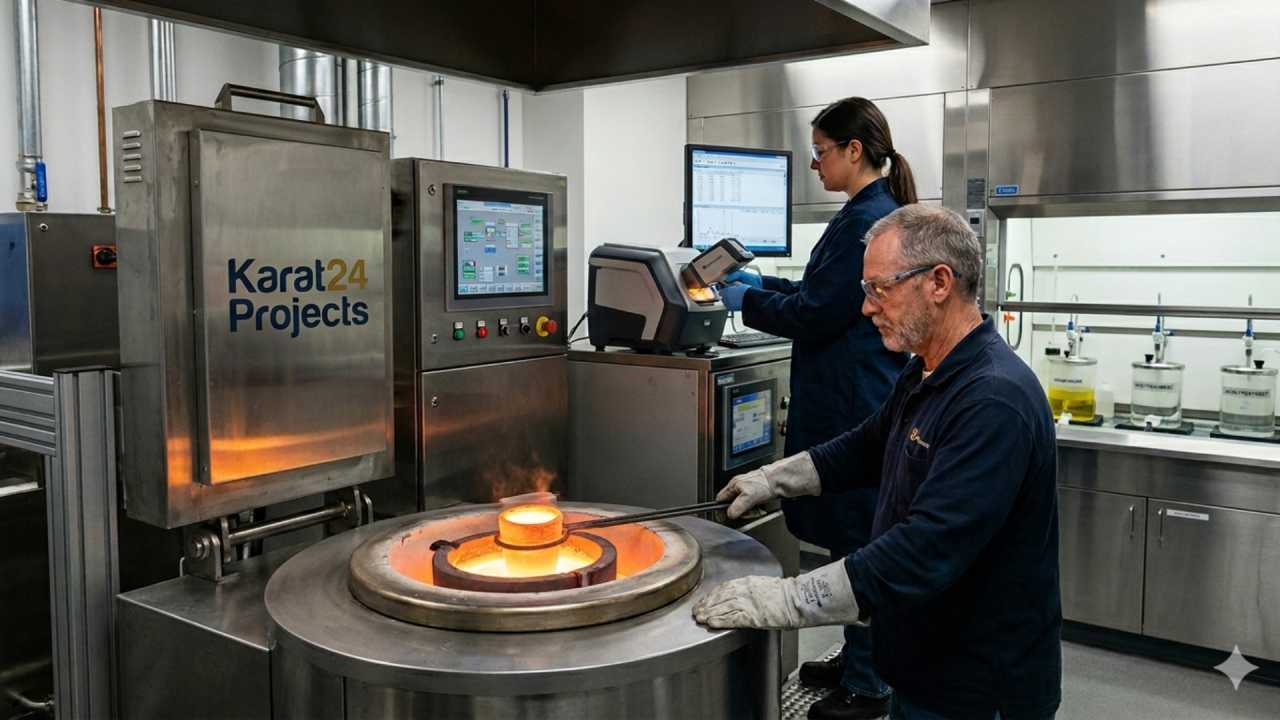
Before a refiner pays a scrap provider, they must know exactly how much metal is present. This is done through Sampling, where a representative portion of the scrap is taken. Assaying is the scientific analysis of that sample. Common methods include X-ray Fluorescence (XRF) for a quick surface scan and Fire Assay—the gold standard—which involves melting a sample to separate and weigh the precious metal content with extreme precision.
Recovery Techniques
Once the scrap is preprocessed and the value is determined, it undergoes one or more refining processes to separate the precious metals from the “waste” materials.
a. Pyrometallurgical Processes
Pyrometallurgy involves using high heat to separate metals.
-
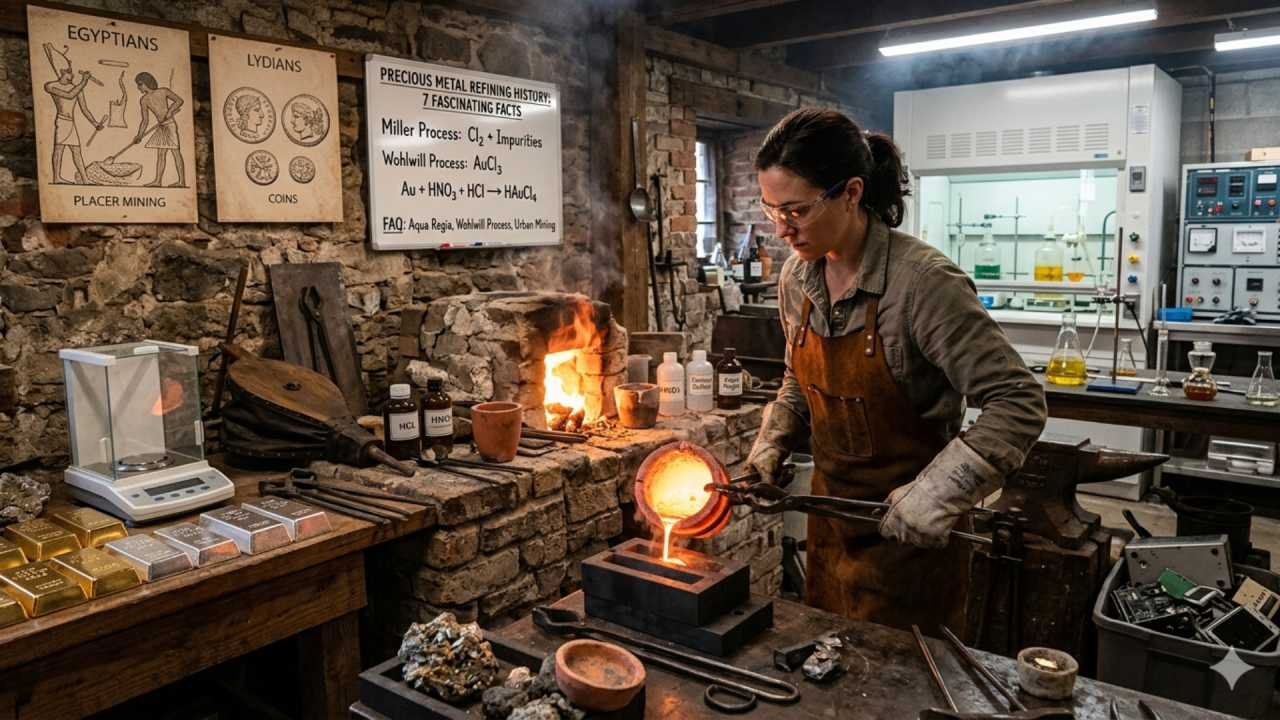
Smelting: The scrap is placed in a furnace with “fluxes” (chemicals that help remove impurities). Under intense heat, the precious metals melt and collect at the bottom of the furnace in a “collector metal” like copper or lead, while impurities rise to the top as “slag.”
-
Refining: The resulting alloy is then further processed to isolate individual metals.
-
Pros/Cons: These systems can handle large volumes of diverse scrap (high throughput). However, they are energy-intensive and require sophisticated filtration systems to capture toxic gases and dust emitted during combustion.
b. Hydrometallurgical Processes
This “wet” chemistry approach uses liquid solutions to dissolve and then recover metals.
-
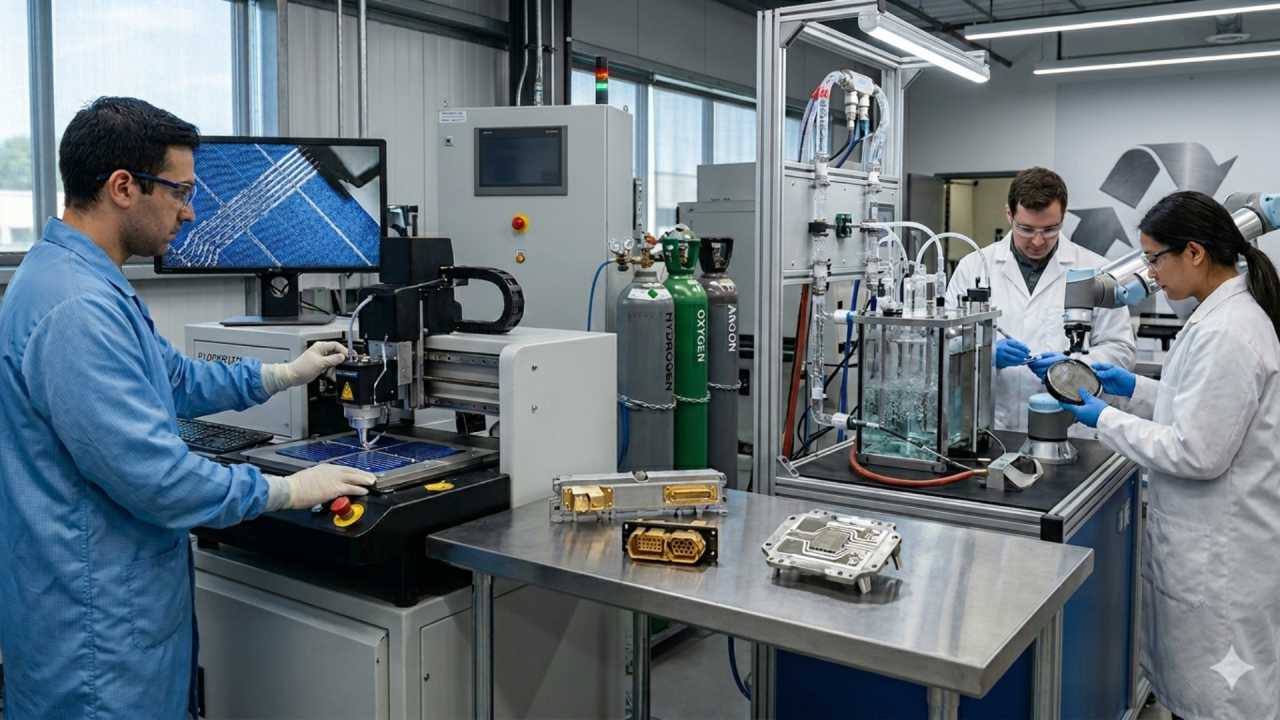
Leaching: The scrap is treated with a chemical agent (lixiviant) that selectively dissolves the precious metals. Common agents include Aqua Regia (a mixture of nitric and hydrochloric acid) for gold and platinum, or cyanide solutions for large-scale operations.
-
Solvent Extraction: Once the metals are in liquid form, specific solvents are used to pull one metal out of the mixture at a time.
-
Precipitation: Finally, a chemical “reducer” is added to the liquid, causing the dissolved metal to turn back into a solid powder (precipitate), which is then filtered out.
c. Electrometallurgical Processes
This method uses electricity to refine metals to ultra-high purity.
-
Electrorefining: An impure metal slab acts as an anode in a chemical bath. When electricity is applied, the metal dissolves and redeposits onto a cathode as a nearly 100% pure layer, leaving impurities behind.
-
Electrowinning: This is used to recover metals from dilute solutions, often after leaching. It “plates” the metal out of the liquid onto a cathode.
d. Biohydrometallurgy (Emerging)
In a push for “greener” recycling, scientists are using microbes to help. Certain bacteria and fungi can “eat” or bind to precious metals, leaching them out of e-waste without the need for harsh acids. While currently slower than traditional methods, bio-recovery is seen as a sustainable future alternative for processing low-grade scrap.
e. Mechanical Separation
This uses physical properties to separate materials without chemical changes. Gravity separation uses water or air to separate heavy gold particles from lighter plastic. Magnetic separation removes iron and steel, which would otherwise interfere with the precious metal refining process.
Environmental and Safety Considerations
The recovery of precious metals is a “double-edged sword.” While it saves resources, the chemicals used can be hazardous.
-
Toxic Chemicals: Cyanide, used in gold leaching, is highly toxic. Strong acids like Aqua Regia can cause severe burns and release nitrogen oxide fumes. Modern facilities use “scrubbers” to neutralize these gases and closed-loop systems to reuse chemicals.
-
Waste Disposal: After metals are extracted, the remaining “tailings” or sludge may contain heavy metals like lead or cadmium. This must be treated as hazardous waste to prevent soil and groundwater contamination.
-
Worker Safety: In formal refineries, workers wear extensive personal protective equipment (PPE). However, in informal sectors—common in developing nations—workers often burn circuit boards in open fires, inhaling lead and dioxins.
-
Regulations: International standards like the Basel Convention regulate the transboundary movement of hazardous waste (including e-waste) to ensure it isn’t simply dumped in countries with weak environmental laws.
Economic Aspects
The precious metal recovery industry is a multi-billion dollar sector driven by the volatile “spot price” of metals.
The primary economic driver is the Value of Recovered Metals vs. Cost of Processing. If the price of gold drops, low-grade scrap may no longer be profitable to process. Conversely, when prices spike, “urban mining” becomes a frenzy.
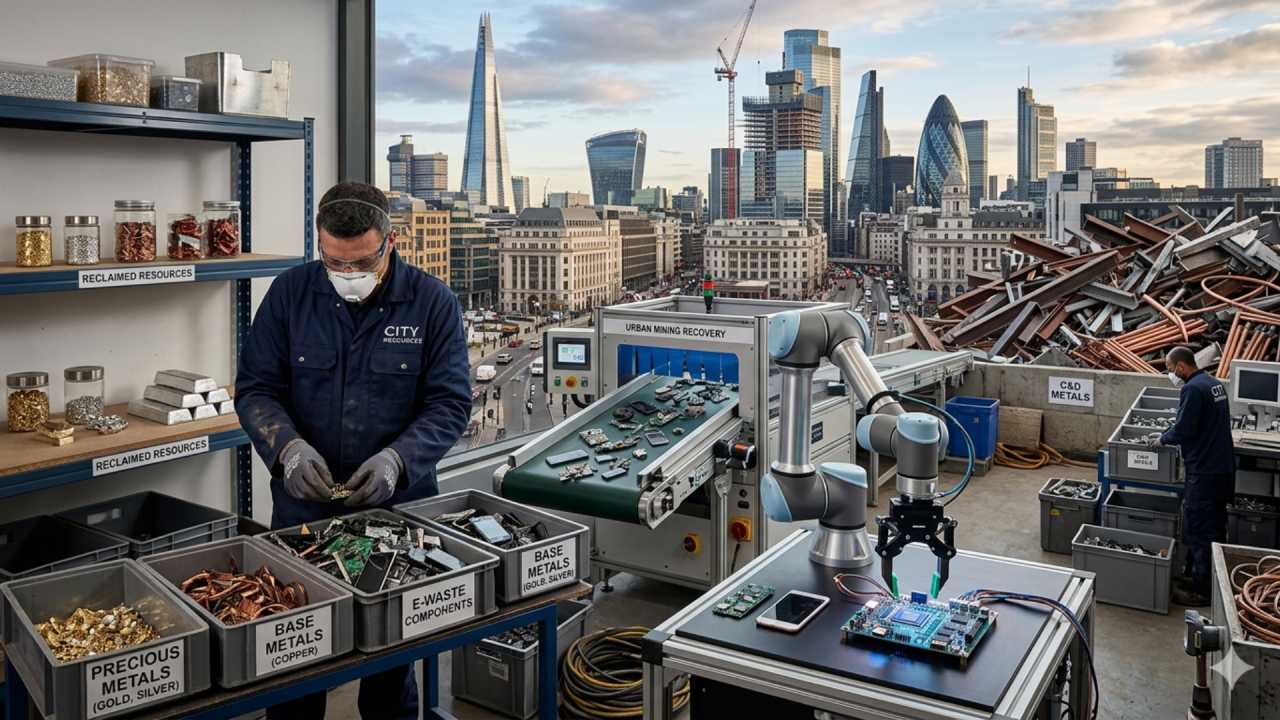
Urban Mining refers to the process of recovering raw materials from spent products and buildings rather than the earth. It is often more cost-effective than traditional mining because the “ore” (the scrap) is already above ground and located near centers of consumption (cities), reducing transportation costs.
Small-scale operations (local jewelers or pawn shops) focus on high-margin, low-volume scrap. Large-scale operations (global refiners) rely on volume and “economies of scale,” processing thousands of tons of material to extract profit from thin margins.
Challenges in Precious Metal Recovery
Despite the clear benefits, several hurdles remain:
-
Complex Material Compositions: Modern devices are “glued” and “soldered” in ways that make them difficult to disassemble. The use of multi-metal alloys and plastics makes separation a technical nightmare.
-
Low Concentrations: As technology advances, manufacturers “thrift”—they use less and less precious metal to achieve the same result. Recovering gold from a modern ultra-thin smartphone is much harder than from a bulky 1990s desktop computer.
-
The Informal Sector: In many parts of the world, e-waste is processed in “backyard” operations. This leads to low recovery rates (much of the metal is lost in the smoke or waste) and devastating health consequences for the community.
-
Regulatory Barriers: Strict environmental laws, while necessary, can make setting up a legal refinery extremely expensive, sometimes pushing the trade into the unregulated shadows.
Future Trends and Innovations
The future of precious metal recovery lies in technology and the “Circular Economy” model.
-
AI and Robotics: Artificial Intelligence is being used to train robots to identify and pick out specific components from a fast-moving conveyor belt of trash. This makes sorting faster and more accurate than human labor.
-
Green Leaching Agents: Researchers are developing non-toxic chemicals, such as amino acids or organic solvents, to replace cyanide and strong acids. These “green chemistry” solutions aim to make refining safe enough to be done in urban centers.
-
Design for Recycling: There is a growing movement to force manufacturers to design products that are easy to take apart. If a phone is held together with screws instead of permanent glue, its precious metal components can be recovered more efficiently.
-
Blockchain Tracking: To ensure “ethical” gold and silver, blockchain is being used to track scrap from the point of collection to the final refined bar, ensuring that the metal did not come from conflict zones or hazardous informal workshops.
Final Thoughts
Recovering value from precious metal scrap is no longer just a business opportunity—it is an environmental and strategic necessity. As we move toward a high-tech, low-carbon future, our reliance on metals like silver for solar panels and platinum for hydrogen fuel cells will only grow.
By transitioning from a “take-make-waste” model to a circular economy, we can ensure that the gold in our pockets today becomes the medical device of tomorrow. While technical and regulatory challenges remain, the combination of rising metal prices and innovative recovery technologies ensures that the “urban mine” will remain one of our most valuable resources. The true value of scrap lies not just in the gleam of the refined gold, but in the preservation of our planet’s limited natural wealth.