Why Every Jewelry Business Needs a Refining System
The Hidden Profits Most Jewelers Lose Daily
In the world of jewelry manufacturing and repair, what looks like dust is often a dividend. Precious metal waste is an unavoidable byproduct of the craft. Whether you are a solo artisan at a bench or a high-volume manufacturer, every time a file touches a ring or a polishing wheel hits a pendant, microscopic fragments of gold, silver, platinum, or palladium are liberated into the environment.
Most jewelry businesses significantly underestimate the sheer volume of precious metal they lose in their daily operations. These losses are rarely the result of a single catastrophic event; rather, they are the “death by a thousand cuts” of the jewelry industry. Tiny particles from polishing, filing, casting, and bench work settle into floor mats, get trapped in vacuum filters, and cling to the very aprons worn by staff.
With the market prices of precious metals reaching historic heights and remaining volatile, these “invisible” losses represent a significant leak in a company’s balance sheet. Recovering this material is no longer just a good housekeeping habit; it is a critical profit strategy. A formal refining system transforms these losses into a reclaimed revenue stream. This article explores why every retail jeweler, custom workshop, and manufacturer must view their waste not as trash, but as untapped inventory.
What Is a Jewelry Refining System?
A jewelry refining system is a structured, end-to-end operational process designed to capture, categorize, and process precious metal-bearing waste to recover its maximum financial value. It is not merely the act of selling old scrap; it is a comprehensive management philosophy that treats every byproduct of the jewelry-making process as a financial asset.
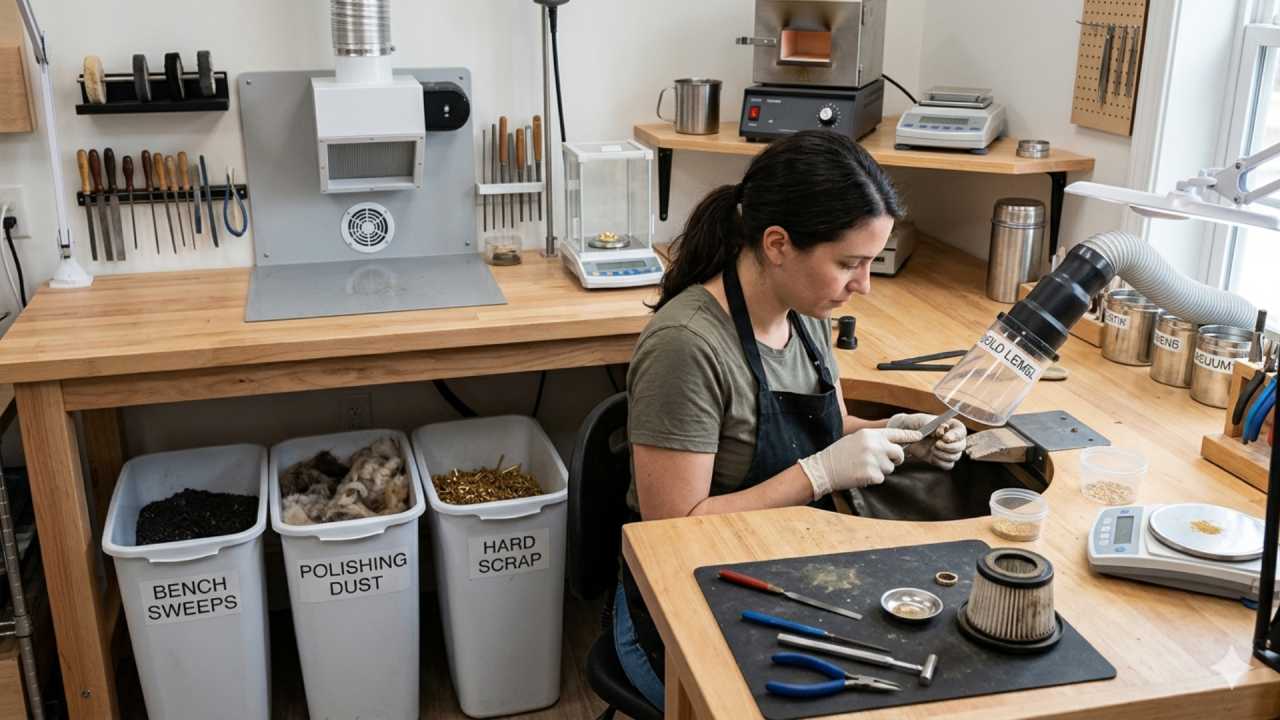
The system begins with collection. This involves specialized equipment and protocols to capture “bench sweeps”—the filings and small scraps that fall from the jeweler’s saw—and “lemel,” which refers to the fine dust created during filing and engraving. It extends to the recovery of polishing dust (also known as “fluff”) and the particulates trapped in ultrasonic cleaners and steam-cleaning sinks.
The Workflow of Recovery
An effective refining system follows a clear lifecycle:
-
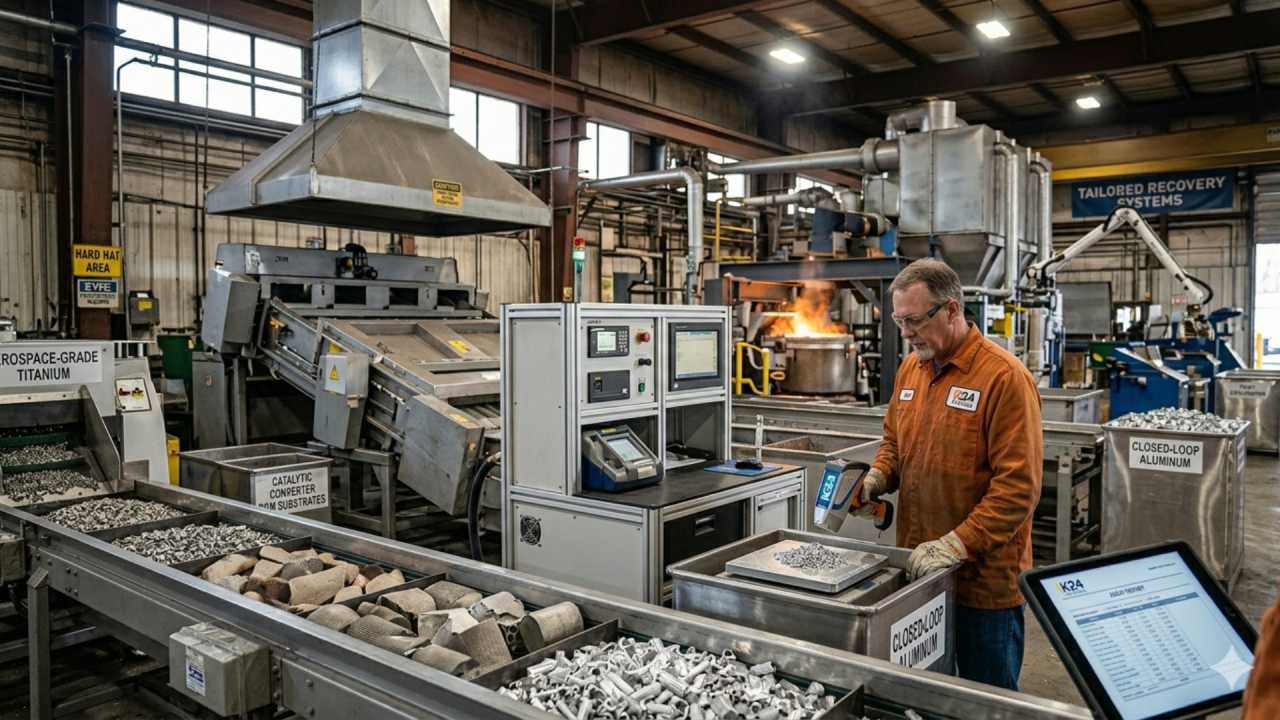
Collection and Segregation: Separating high-grade scrap (like casting sprues and clippings) from low-grade waste (like floor sweeps and used sandpaper).
-
Storage: Securely housing materials in specialized containers to prevent cross-contamination or accidental disposal.
-
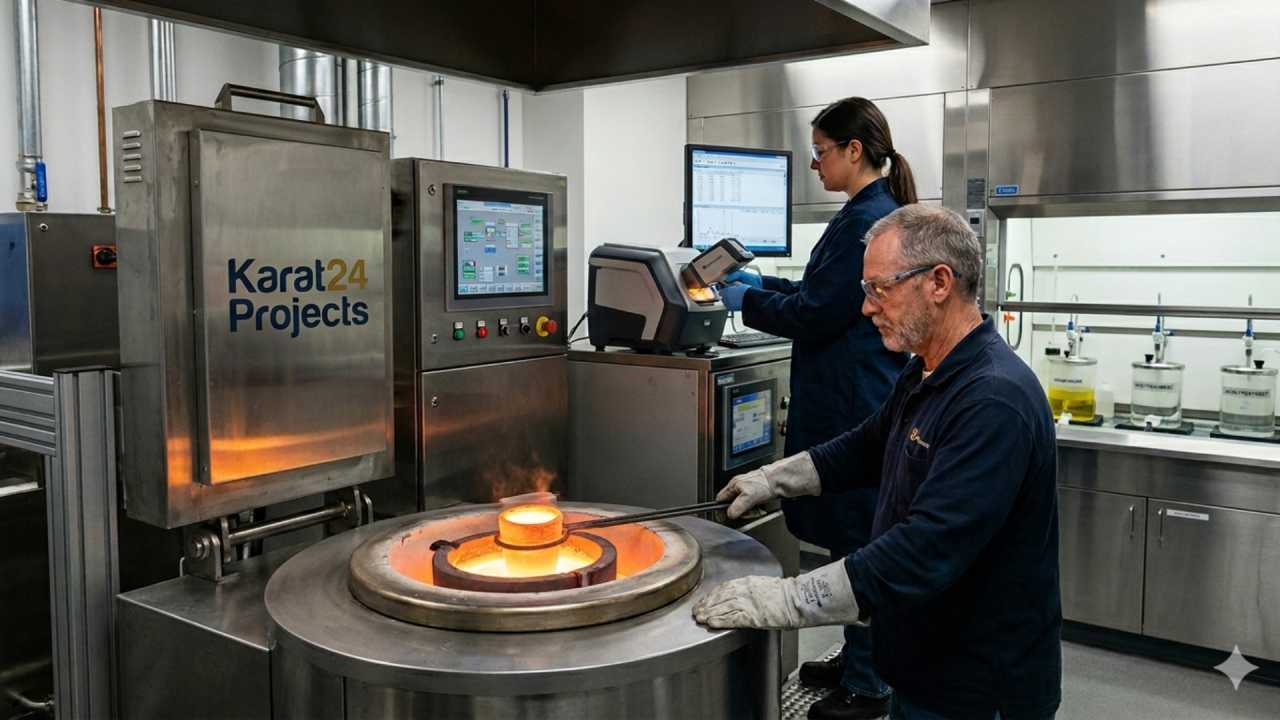
Processing: This includes the removal of non-precious stones, the melting of scrap into bars, and the assaying process to determine exact metal content.
-
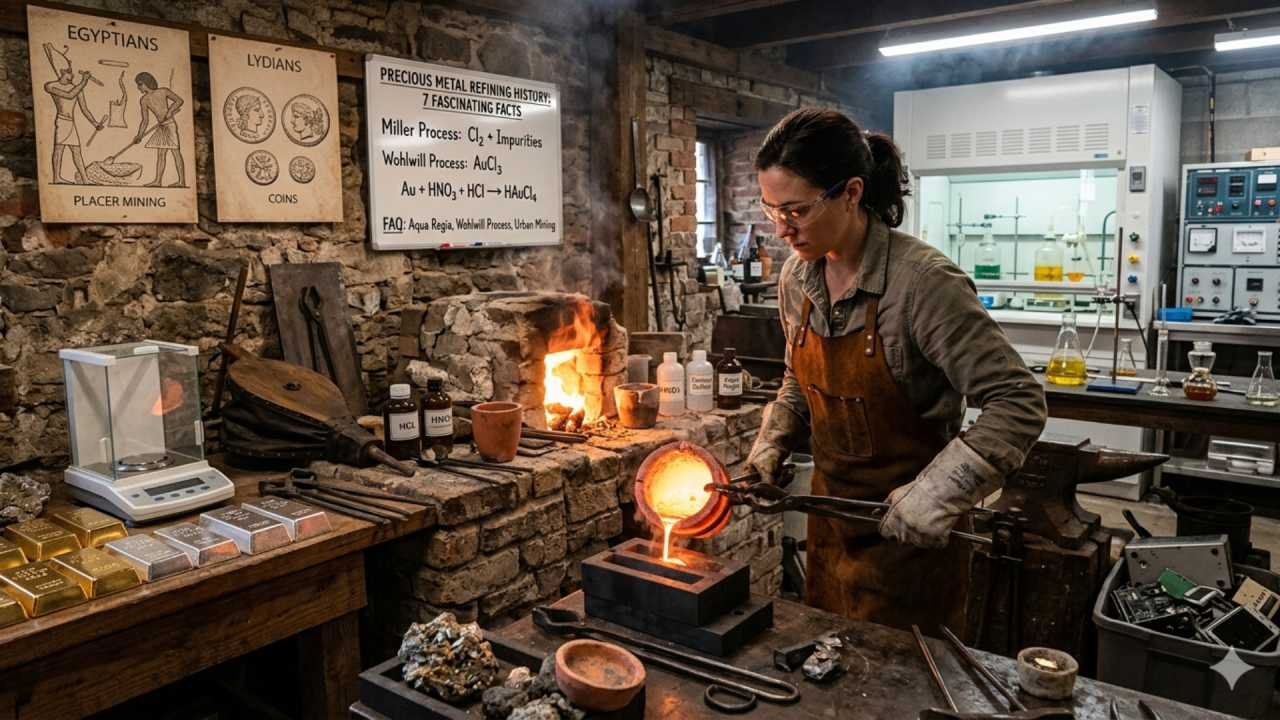
Refining: The chemical process of separating and purifying the metals to 99.9% purity.
-
Settlement: The final step where the business receives a payout, a credit to their metal account, or the return of pure grain for future production.
By implementing this workflow, a business ensures that materials like buffing wheels, vacuum bags, and even the sludge at the bottom of a sink are eventually converted back into working capital.
Where Jewelry Businesses Lose Money Without Realizing It
The primary reason jewelry businesses fail to maximize their profits is a lack of awareness regarding where metal goes. In many workshops, “lost” metal is simply accepted as a cost of doing business. However, when you look closer, the inefficiencies are staggering.
The Invisible Migration of Gold
Filing dust and polishing compounds are the most common culprits. Because these particles are often too small to see with the naked eye, they are easily swept into the regular trash or tracked out of the building on the soles of shoes. If a workshop does not have high-quality floor mats designed for metal retention, or if those mats are not vacuumed and refined regularly, thousands of dollars literally walk out the door every year.
Operational Inefficiencies
Losses also occur through poor handling. When different karats of gold are mixed with silver or platinum in the same scrap bin, the refiner must perform more complex separations, which can lead to higher refining fees and lower yields. Furthermore, many businesses suffer from “inventory bloating.” They purchase fresh casting grain or sheet metal at market prices while thousands of dollars in recoverable scrap sit in a drawer, unrefined and unproductive.
The Math of Loss
Consider a modest workshop that loses just half a gram of gold per day through various waste streams. At current market rates, that is several thousand dollars a year in lost revenue. For a larger manufacturer, the scale is multiplied. Without a refining system, this is not just a loss of material; it is a loss of pure net profit that has already been “earned” through the labor of the staff.
The Financial Benefits of an Organized Refining System
The most compelling argument for a refining system is, unsurprisingly, the bottom line. When a jeweler moves from a reactive “sell scrap when we need cash” approach to a proactive refining system, several financial levers are pulled simultaneously.
Increased Profit Margins and Cash Flow
By recovering value from waste, you effectively lower your Cost of Goods Sold (COGS). If you can recover 5 ounces of gold from your polishing dust and floor sweeps, that is 5 ounces you do not have to buy from a bullion dealer for your next production run. This directly boosts your margin on every piece sold. Additionally, regular refining cycles ensure that dormant assets are converted into liquid capital, improving the business’s ability to reinvest in new designs or marketing.
Improved Inventory Control and Accounting
A refining system forces a higher level of discipline. When you track what goes into your refining bins versus what you purchased, you gain a clearer picture of your production efficiency. This transparency makes it easier to spot theft, identify wasteful manufacturing processes, and maintain accurate tax records.
Protection Against Market Volatility
The precious metals market is famously unpredictable. By maintaining a consistent refining schedule, a business can “dollar-cost average” its metal recovery. Instead of being forced to sell a large pile of scrap when prices might be low, a regular system ensures a steady return of metal or cash, cushioning the business against sudden spikes in raw material costs.
Sustainability and Environmental Responsibility
In the modern marketplace, profitability and sustainability are no longer mutually exclusive. Consumers, particularly younger generations, are increasingly concerned about the origins of their jewelry. They want to know that the gold on their finger didn’t come at the cost of devastated ecosystems.
The Circular Economy
The jewelry industry is uniquely suited for a “circular economy”—a system where materials are continuously recycled and reused rather than discarded. Refining is the engine of this circularity. By maximizing the recovery of every grain of metal, jewelry businesses reduce the global demand for newly mined gold and silver.
Brand Image and Trust
Mining is an energy-intensive process that often involves significant environmental disruption. When a jeweler can honestly tell their customers, “We use recycled metals recovered directly from our workshop,” it builds immense brand equity. A robust refining system allows you to market your brand as ethically conscious and environmentally responsible, turning your waste management into a powerful marketing tool.
Key Components of an Effective Jewelry Refining Program
Implementing a refining system does not require a complete overhaul of your business, but it does require consistency. To be effective, a program should focus on five key pillars.
Proper Scrap Segregation
The first rule of refining is to keep your metals separate. Gold filings should never be mixed with platinum; 18k scrap should be kept away from 10k scrap whenever possible. Contamination complicates the refining process and can lead to lower returns. Use clearly labeled containers for different metal types and grades.
Advanced Dust Collection
High-quality vacuum systems at every bench and polishing station are the best defense against loss. These systems should use HEPA filters or specialized water-filtration units to trap the finest particulates. Beyond the machines, ensure the workshop is “closed-loop”—this means using specialized floor grates or sticky mats at the exits of the production area to catch dust from shoes.
Employee Training and Culture
A refining system is only as good as the people operating it. Staff must be educated on the value of the dust they create. Encourage a culture where “clean as you go” is seen as a financial task, not just a janitorial one. Simple habits, like wiping down a bench into a designated lemel bin rather than brushing it onto the floor, can save hundreds of dollars over a month.
Secure Storage and Tracking
Treat your refining bins with the same security as your finished inventory. Use a “chain-of-custody” log to record when bins are emptied, who handled the material, and the weight of the shipment before it is sent to the refiner.
Choosing the Right Refining Partner
Not all refiners are created equal. An ideal partner offers:
-
Transparent Assays: You should receive a detailed report showing the exact weight and purity of each metal recovered.
-
Flexible Payouts: The ability to choose between cash, bullion, or credit toward new product.
-
Reputation: Look for refiners with long-standing industry ties and environmental certifications.
Common Mistakes Jewelry Businesses Make
Even well-intentioned jewelers often fall into traps that cost them money. One of the most common mistakes is ignoring low-grade waste. Many shops focus only on their “hard scrap” (clippings and miscasts) while throwing away their polishing wheels, sandpaper, and vacuum bags. These items are often rich in precious metals and should be burned and refined as “sweeps.”
Another mistake is waiting too long to refine. While it might seem efficient to wait until you have a massive amount of scrap, this traps capital that could be working for your business. Furthermore, large piles of scrap are more susceptible to internal theft or misplacement.
Finally, many jewelers fail to document their losses. If you don’t know your “expected” recovery rate, you won’t know if your refiner is giving you a fair deal or if your shop’s vacuum system is failing. Data is the foundation of a profitable refining system.
Technology and Modern Refining Solutions
The refining industry has moved far beyond the simple “melt and pour” methods of the past. Modern technology has brought a new level of precision and transparency to the process.
XRF Analysis and Advanced Assaying
X-Ray Fluorescence (XRF) technology allows for non-destructive, near-instant analysis of metal alloys. While traditional fire assay remains the “gold standard” for final settlement, XRF provides a quick and accurate preliminary look at what is in a shipment. This technology helps bridge the trust gap between the jeweler and the refiner.
Digital Tracking and Automation
Modern workshops now utilize digital inventory systems that track metal from the moment it is checked out of the vault to the moment it is returned as scrap. Automated dust collection systems can now sense when a tool is in use and adjust suction power accordingly, ensuring that no particle escapes. These technological advancements make the refining system less of a manual chore and more of an automated part of the business infrastructure.
How Small Jewelry Businesses Can Start Implementing a Refining System
You do not need a 10,000-square-foot factory to benefit from a refining system. Small studios and retail repair shops can see immediate returns by taking a few simple steps.
-
The Audit: Spend one week observing your current waste. Where do you sweep? Where do you wash your hands? Where do your old polishing buffs go?
-
The Collection Kit: Buy four or five sturdy, sealable plastic containers. Label them: Hard Scrap (Gold), Hard Scrap (Silver), Bench Sweeps, and Polishing Waste.
-
Sink Traps: Install a precious metal recovery trap under your studio sink. This prevents heavy metal particles from being washed into the municipal sewer system.
-
The Refiner Search: Contact three reputable refining companies. Ask about their fees, their minimum shipment sizes, and their assay methods.
-
The Schedule: Commit to a refining cycle. For a small shop, this might be twice a year. For a busy retail store, it might be quarterly.
By starting small and focusing on consistency, a small business can build a system that eventually pays for its own upgrades and expansion.
Final Thoughts: Waste Is Not Waste—It’s Untapped Revenue
The jewelry industry is one of the few sectors where the “trash” is literally worth its weight in gold. In an era of tightening margins and intense competition, a jewelry business cannot afford to be negligent with its precious metal recovery.
Implementing a refining system is about more than just cleaning up a workshop; it is a fundamental business decision that impacts every aspect of the organization. It increases profit margins, stabilizes cash flow, protects the environment, and builds a brand that customers can trust.
When you stop viewing filings, dust, and old filters as waste and start viewing them as a secondary inventory, your perspective on profitability changes. A well-managed refining system ensures that the hard work you put into every piece of jewelry is fully realized in your financial success. In the end, the most successful jewelers are those who understand that every grain counts, and every grain recovered is a step toward a more sustainable and profitable future.
Frequently Asked Questions About Jewelry Refining and Metal Recovery
How much gold can be recovered from jewelry polishing dust?
The amount of gold recovered from polishing dust (often called “red rouge” or “fluff”) depends entirely on the volume of work and the efficiency of your dust collection system. On average, a busy retail jewelry shop can recover anywhere from several grams to several ounces of gold annually just from their polishing station. Because polishing compounds are heavy, the actual gold content usually represents a small percentage of the total weight of the waste, but the high value of gold makes it one of the most profitable materials to refine.
What is the difference between bench sweeps and lemel in jewelry manufacturing?
In jewelry manufacturing, “lemel” refers to the clean, fine metal shavings and dust created during filing, sawing, and engraving. Because it is relatively “clean” (low in organic waste), it has a high precious metal concentration. “Bench sweeps,” on the other hand, include everything else that falls from the workbench, including broken drill bits, sandpaper grit, saw blades, and floor dust. While lemel is more concentrated, bench sweeps often contain a surprising amount of value that jewelers accidentally overlook.
How often should a jewelry business send scrap to a refiner?
The ideal refining cycle depends on your cash flow needs and the volume of waste generated. Most medium-sized jewelry businesses find that quarterly refining (every three months) provides a consistent balance between recovering capital and minimizing shipping and assay fees. However, if gold prices are exceptionally high, or if you are holding a large amount of “hard scrap” like casting sprues, a monthly cycle may be more beneficial to keep your working capital liquid.
Can I recover precious metals from jewelry workshop sink water?
Yes, a significant amount of gold and silver is lost when jewelers wash their hands or rinse pieces after ultrasonic cleaning. Installing a “sink trap” or a multi-stage settlement tank is a critical part of a jewelry refining system. These traps catch the heavy metallic particles before they enter the main plumbing. Periodically, the “sludge” from these traps is dried and sent to the refiner as low-grade sweeps.
What are the most common gold refining mistakes that cost jewelers money?
The most expensive mistake is the “all-in-one” approach—mixing high-grade scrap with low-grade floor sweeps. This forces the refiner to use more expensive processing methods for the entire batch, eating into your profits. Other mistakes include failing to change vacuum filters regularly (which leads to metal escaping into the air) and not documenting the “dry weight” of a shipment before sending it out, which makes it impossible to verify the refiner’s results.
Is it better to receive cash or physical metal back from a refiner?
This depends on your business model. If you manufacture your own pieces, receiving “fine grain” (99.9% pure metal) back can be more cost-effective because you avoid the “spread” or commission fees associated with buying new metal from a bullion dealer. However, if you are a retail-only shop or a repair center, receiving a bank wire or a check is usually preferred to improve cash flow and pay for operational expenses.
How do I know if a jewelry refiner is honest and accurate?
Transparency is the hallmark of a reputable refiner. Always look for a partner that provides a detailed assay report for every batch, broken down by metal type and purity. Many modern refiners allow you to witness the melt or provide a “sample split” so you can have the material tested independently. High-quality refiners will also be compliant with environmental regulations regarding the disposal of chemical byproducts.