
Why Automation Matters in Precious Metal Refining
The global demand for precious metals—including gold, silver, platinum, palladium, and other platinum group metals (PGMs)—continues to accelerate at an unprecedented rate. Driven not only by traditional wealth preservation and jewelry sectors but also by the exponential expansion of advanced electronics, aerospace engineering, renewable energy systems, and automotive catalysts, the pressure on the refining industry has never been greater. Simultaneously, the focus of supply chains is shifting rapidly toward recycled precious metals, or secondary sourcing, as industrialized nations seek to secure reliable, ethical, and localized streams of these critical materials.
Historically, precious metal refining has been characterized by intense physical labor, high-temperature operations, complex chemical reactions, and significant safety hazards. Refiners have long wrestled with the inherent limitations of traditional methods: human error during critical chemical dosing, the physical risks of handling molten metals and volatile acids, inconsistent batch purities, and the slow, labor-intensive nature of manual sampling and assaying. In a market where a fractional variance in purity can equate to millions of dollars in lost yield or regulatory non-compliance, the margin for error has shrunk to near zero.
To meet these dual challenges of soaring volume demands and uncompromising quality standards, the refining industry is undergoing a profound industrial evolution. The rise of Industry 4.0 and smart manufacturing technologies has initiated a fundamental paradigm shift on the refinery floor. Modern refining is no longer purely a chemical discipline; it is increasingly a digital science. Industrial automation, advanced sensors, robotics, and data-driven systems are reshaping how these high-value materials are processed, isolated, and verified. Automation is transforming refining through enhanced efficiency, absolute precision, unprecedented worker safety, strict regulatory compliance, and a significantly reduced environmental footprint.
Understanding Precious Metal Refining Processes
To fully appreciate where and how automation integrates into a modern facility, one must first understand the fundamental metallurgical and chemical steps required to transform raw or scrap material into investment-grade purity. Precious metal refining encompasses the treatment of distinct metallic elements, each possessing unique physical and chemical properties. Gold and silver require specific separation techniques, while the platinum group metals—platinum, palladium, rhodium, iridium, osmium, and ruthenium—demand highly complex, multi-stage chemical isolation due to their high melting points and extreme resistance to chemical attack.
These metals arrive at refineries from a diverse array of primary and secondary sources. Primary sources include unrefined mining ores and dorė bars shipped directly from mine sites. Secondary sources, which now constitute a massive segment of the modern refining market, include industrial scrap, decommissioned electronic waste (e-waste), obsolete jewelry, and spent automotive catalytic converters. Each source material presents an entirely different chemical matrix, requiring custom pre-treatment, sorting, and processing paths.
Regardless of the source, the overarching journey of precious metal refining generally moves through several distinct and sequential stages:
First, sampling and assaying establish the precise metallic composition of the incoming material. This determines the commercial value of the batch and dictates the chemical recipe required for processing. Next, smelting utilizes high-temperature furnaces and fluxing agents to melt the raw materials, separating the base metals and slag from the concentrated precious metal alloy.
Once a concentrated material is obtained, chemical separation processes are employed. For gold, this often involves the Miller process, which uses gaseous chlorine to oxidize and separate base metal impurities from molten gold, or hydrometallurgical refining, where the metal is dissolved in chemical solutions like aqua regia to selectively precipitate pure gold.
For ultra-high purity requirements, electrorefining is utilized, such as the Wohlwill process, where gold is electrochemically dissolved and redeposited onto a pure cathode, leaving impurities behind in the electrolyte solution or as anode slime. Throughout these cycles, continuous filtration separates solid particulates from precious metal-bearing liquid streams. Finally, the ultra-pure metal is transferred to casting operations, where it is poured into commercial bars, grains, or specialized industrial shapes, followed immediately by final purity testing to certify the product for the global market.
Traditional Refining vs Automated Refining
The transition from traditional, manual refining methodologies to fully automated, sensor-driven ecosystems represents a quantum leap in industrial capability. For decades, refineries relied heavily on the tribal knowledge and physical dexterity of highly skilled operators. While human expertise remains invaluable, human physical execution introduces natural variability, physical fatigue, and operational bottlenecks that limit scalability and threaten process consistency.
To illustrate the sharp differences between these two operational philosophies, the table below highlights how core processing dynamics shift when automation is introduced:
| Operational Dimension | Traditional Refining | Automated Refining |
| Process Control | Manual adjustments based on periodic physical readings | Continuous, closed-loop, sensor-driven precision |
| Labor Intensity | Heavy manual handling, pouring, and chemical mixing | Robotics-assisted material transport and dosing |
| Contamination Risk | High risk due to open atmospheres and human contact | Minimized via sealed, digitally controlled environments |
| Throughput Capacity | Intermittent, batch-dependent, and slower cycles | High-velocity, continuous or semi-continuous processing |
| Maintenance Protocol | Reactive maintenance executed after equipment failure | Predictive maintenance driven by machine learning alerts |
| Data Integration | Isolated paper logs and delayed laboratory reports | Centralized, real-time dashboards with full traceability |
In traditional environments, process adjustments are inherently reactive. An operator pulls a manual sample, waits for a laboratory analysis, and then manually adjusts a valve or alters furnace temperatures. This delay creates operational lag, during which valuable chemical reagents may be wasted, or precious metals may remain tied up in inefficient processing loops. Furthermore, manual handling of heavy crucible molds and corrosive chemical carboys introduces a high risk of material spilling or cross-contamination between different customer batches.
Automated refining eliminates these systemic variances. By replacing subjective human observation with continuous digital metrics, the automated refinery transforms a hazardous, variable craft into a highly predictable, sealed, and continuously optimized industrial science.
Core Automation Technologies Used in Modern Refineries
The modern automated refinery is an interconnected web of hardware and software components working in perfect synchronization. These technologies do not operate in isolation; rather, they form an integrated infrastructure that monitors and controls every atom of precious metal moving through the facility.
Robotics and Automated Material Handling
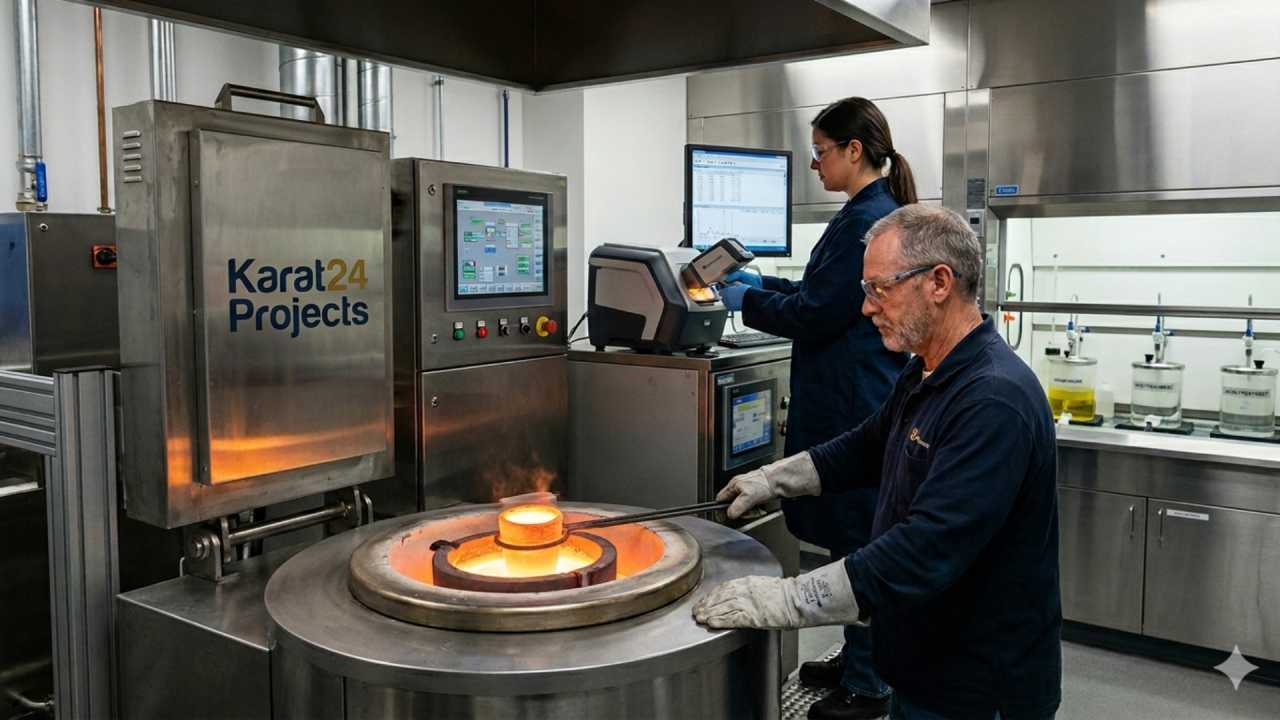
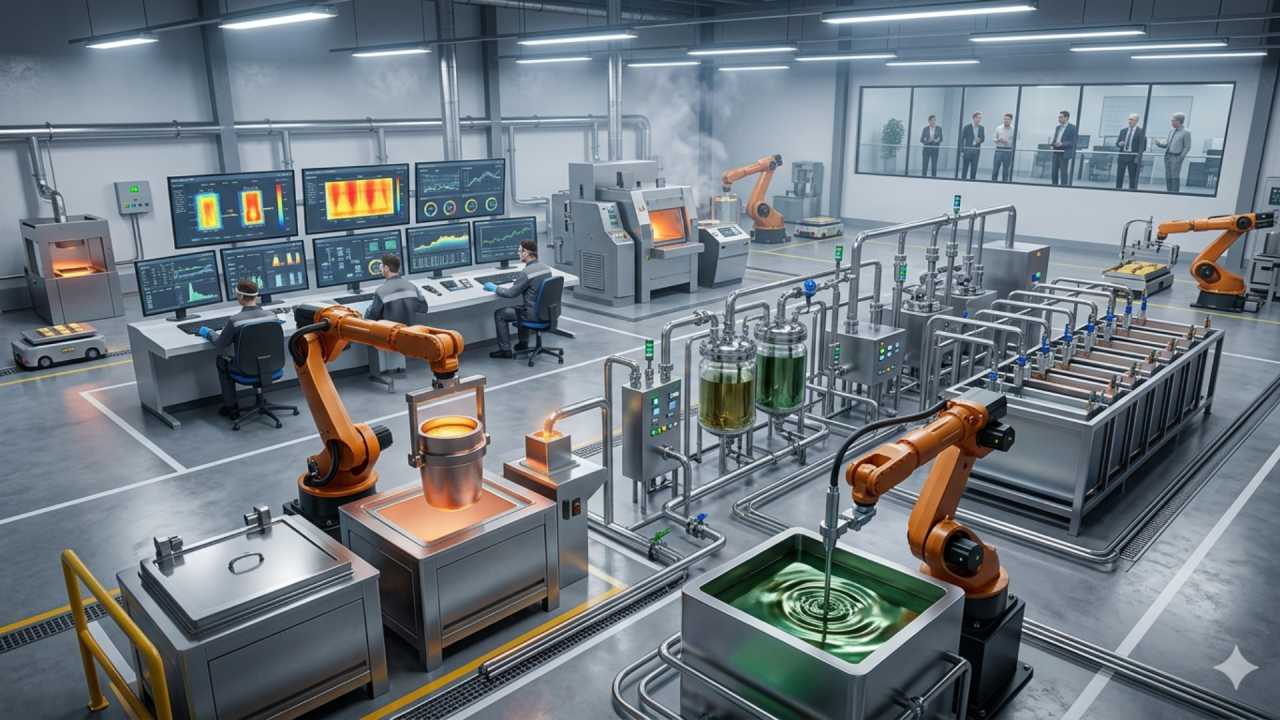
The physical handling of precious metals involves extreme environments, from roaring smelting furnaces operating well above one thousand degrees Celsius to chemical leaching tanks emitting highly corrosive vapors. Heavy-duty robotic arms, engineered with advanced thermal shielding and chemical-resistant coatings, are now widely deployed to perform tasks that were once dangerous for human operators. These robotic systems safely handle the charging of furnaces, the skimming of hazardous slag, and the high-precision pouring of molten metal into ingot molds.
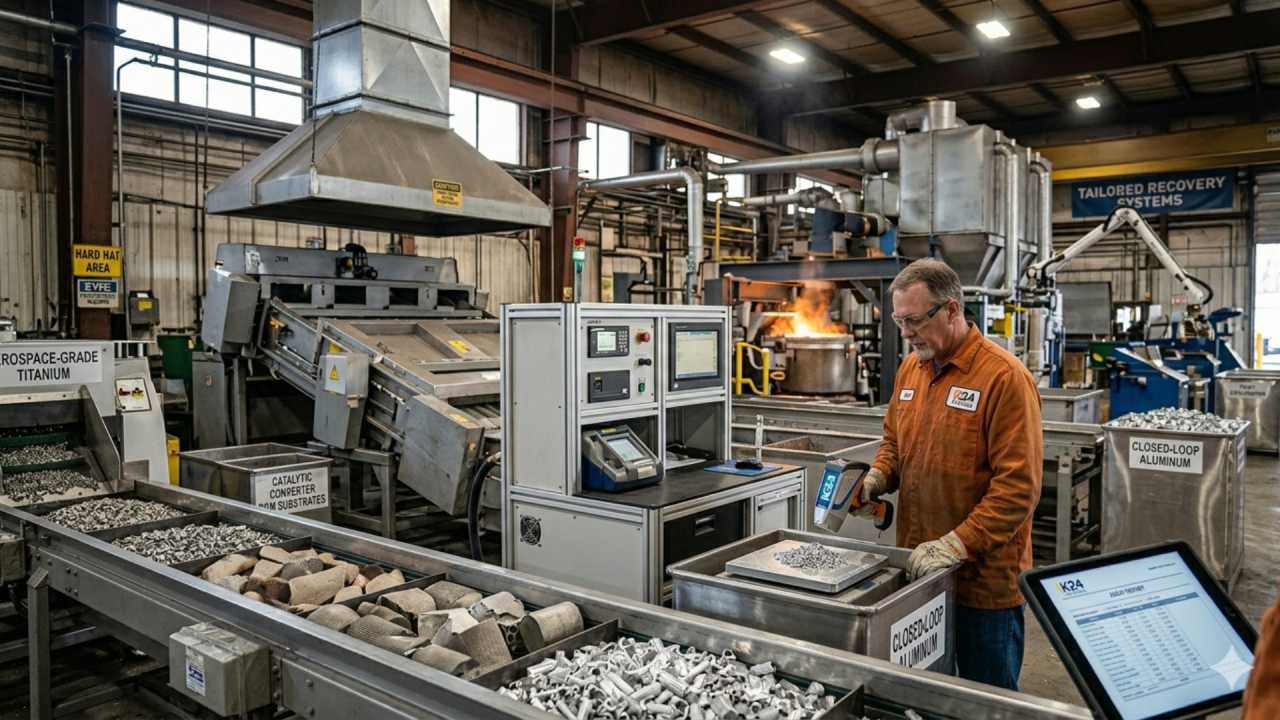
Beyond the foundry floor, automated material handling extends to conveyor networks and Automated Guided Vehicles (AGVs) that transport high-value scrap and chemical supplies across the plant. Automated loading and unloading systems feed e-waste or crushed catalytic converters into shredders and reactors at optimized feed rates. By using robotics for material handling, refineries drastically accelerate cycle times, eliminate the physical strain on human workers, and significantly reduce the likelihood of accidental drops, spills, or material loss during transport.
AI and Machine Learning
Artificial Intelligence (AI) and Machine Learning (ML) serve as the computational brain of the modern refinery. Precious metal refining is a multi-variable chemical puzzle where minute changes in temperature, pressure, solution acidity, and raw material composition can dramatically alter the final yield. ML algorithms excel at analyzing massive volumes of historical and real-time operational data to uncover complex patterns that escape human observation.
In practice, AI-driven process optimization systems continuously calculate the ideal ratios of chemical reagents needed for hydrometallurgical leaching based on the changing composition of incoming scrap metal. Predictive analytics models monitor the thermal profiles of smelting furnaces to forecast energy efficiency and flag structural anomalies before a catastrophic breach occurs. Machine learning is also heavily utilized in yield forecasting and anomaly detection, immediately alerting supervisors if the rate of precious metal recovery deviates from expected baselines, thereby preventing internal theft or processing inefficiencies.
IoT Sensors and Real-Time Monitoring
The Industrial Internet of Things (IoT) provides the sensory nervous system necessary for real-time control. Thousands of specialized IoT sensors are embedded throughout a modern refinery’s piping, tanks, furnaces, and ventilation hoods. These include digital temperature probes, continuous inline pH sensors, optical density meters, and electrochemical gas detectors.
Rather than relying on periodic manual checks, these sensors stream data continuously to centralized operational dashboards. If the pH level in a silver precipitation tank drifts outside its optimal zone by even a fraction of a point, the IoT network instantly logs the deviation and triggers an automated valve adjustment to correct the chemical balance. This tight, instantaneous feedback loop ensures total process consistency, drastically minimizes the generation of off-specification waste, and maintains safe operating pressures and gas levels across the entire plant floor.
Automated Assaying and Quality Control
Assaying is the bedrock of commercial trust in the precious metals industry. Traditional fire assaying and chemical titration methods are highly accurate but slow, requiring skilled chemists and hours of laboratory processing time. Modern smart refineries complement these traditional methods with automated assaying systems that deliver rapid, non-destructive, and highly precise quality control.
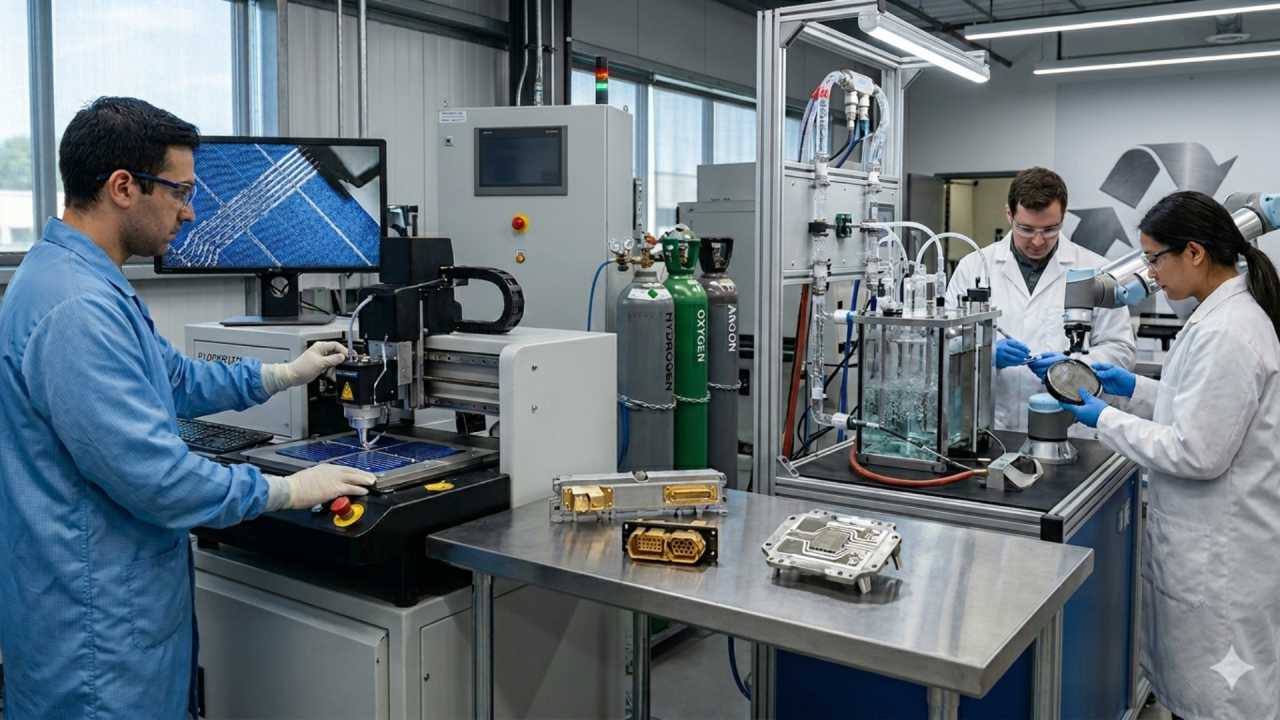
Automated robotic sampling stations extract representative portions of homogenized material directly from processing lines without human intervention. These samples are instantly delivered to automated X-ray Fluorescence (XRF) analyzers and Optical Emission Spectrometry (OES) systems. These digital instruments determine the exact purity and elemental breakdown of a sample within minutes. By linking these automated quality control tools directly to the refinery’s central software, the system can instantly stamp a digital certificate of purity on finished bars or dynamically alter upstream chemical processing if any trace impurities are detected.
PLC and SCADA Systems
At the operational foundation of refinery automation are Programmable Logic Controllers (PLCs) and Supervisory Control and Data Acquisition (SCADA) systems. PLCs are ruggedized industrial computers that directly execute specific tasks, such as opening a valve, starting a pump, or regulating a heating element based on pre-programmed logic.
The SCADA system acts as the overarching industrial software layer that aggregates data from these PLCs and sensors, presenting the entire refinery’s architecture on comprehensive graphical user interfaces. From a centralized control room, a small team of engineers can monitor and manage the entire facility, tracking the flow of materials through chemical separation, electrorefining, and casting. SCADA systems are also responsible for executing complex safety interlocks; for example, if an exhaust fan fails, the SCADA system instantly shuts down the corresponding chemical reactors to prevent the accumulation of toxic fumes, ensuring full automated asset protection.
Benefits of Automation in Precious Metal Refining
The strategic implementation of industrial automation delivers a profound competitive advantage, transforming a refinery’s financial performance, operational safety, and market reputation.
Efficiency and Productivity
One of the most immediate impacts of automation is a dramatic surge in manufacturing throughput and operational efficiency. Automated systems do not suffer from fatigue, require shift handovers, or pause for breaks; they enable a refinery to transition into a true twenty-four-seven operational model. Automated material handling and real-time process adjustments dramatically compress batch processing times, reducing the total duration that high-value precious metals remain locked within the refining pipeline. This accelerated velocity directly optimizes working capital, allowing refiners to settle customer accounts faster and increase total annual volume without physically expanding the facility.
Higher Recovery Rates
In precious metal refining, fractions of a percentage point dictate the boundary between high profitability and financial loss. Traditional manual dosing often leads to over-chemical or under-chemical treatment, which can inadvertently leave traceable amounts of precious metals bound within discarded slag or liquid wastewater streams. Automated dosing systems utilize high-precision flow meters and real-time analytical feedback to deliver the exact volume of acids, reducing agents, or gases required for perfect chemical isolation. This absolute precision ensures that maximum metal recovery is achieved on the very first pass, virtually eliminating chemical waste and preventing precious metal loss.
Improved Safety
Refining environments are inherently hazardous, characterized by intense radiant heat, high-voltage electrical currents used in electrolysis, and highly toxic gases such as chlorine, sulfur dioxide, and nitrous oxides. By placing robotic arms at the furnace face and using enclosed, automated piping systems for chemical transport, human workers are effectively removed from the most dangerous zones of the plant. Employees are transitioned from hands-on, high-risk labor into analytical supervisory roles within protected, climate-controlled control rooms, resulting in a dramatic drop in workplace accidents, chemical exposure incidents, and long-term industrial health liabilities.
Better Product Quality
Industrial buyers, mints, and technology manufacturers demand unyielding compliance with purity standards, typically requiring gold to be certified at 99.99% (“four nines”) or even 99.999% purity. Automated refining systems eliminate the operational inconsistency caused by varying human techniques. Because every step of the thermal and chemical process is executed under precise, digital parameters, the finished product exhibits identical purity and physical characteristics batch after batch, drastically reducing the cost of re-refining substandard material and cementing the refinery’s reputation for premium quality.
Cost Reduction
While the initial capital expenditure for automated machinery is significant, the long-term operational savings are profound. Labor expenditures are optimized as fewer operators are required to manage larger volumes of material. Energy-intensive processes, such as electric arc smelting and induction melting, are continuously monitored by AI algorithms to optimize thermal cycles and reduce power consumption. Furthermore, by precisely calculating chemical requirements, refineries achieve a massive reduction in the procurement costs of expensive chemical reagents and a corresponding drop in the costs associated with treating hazardous industrial effluents.
Regulatory Compliance and Traceability
Modern precious metal refiners operate under intense scrutiny from global regulatory bodies, environmental agencies, and international industry associations such as the London Bullion Market Association (LBMA). Compliance frameworks require absolute proof of responsible sourcing to ensure that metals do not originate from conflict zones, illegal mining operations, or money laundering networks.
Automation naturally supports these strict compliance demands by establishing an unalterable, comprehensive digital audit trail. Every batch of material processed is automatically logged by the SCADA and ERP software, which records its exact weight, chemical composition, processing time, temperature profiles, and final assay metrics. This automated data collection ensures seamless adherence to ISO standards, simplifies environmental reporting for emissions and waste management, and provides instant, audit-ready transparency to downstream buyers who demand fully traceable and ethically sourced materials.
Automation and Sustainability in Refining
The modern refining landscape is increasingly shaped by Environmental, Social, and Governance (ESG) mandates and intense societal pressure to reduce industrial carbon footprints. Historically viewed as an energy-intensive and chemically aggressive industry, precious metal refining is utilizing automation to redefine its relationship with the environment, demonstrating that high profitability and rigorous sustainability can coexist.
Automated environmental control systems are now standard in advanced refineries. These include automated emissions monitoring systems linked directly to chemical scrubbers and filtration units. If gas sensors detect a rise in hazardous emissions within a stack, the automated system dynamically adjusts the flow of neutralizing agents within the scrubber to neutralize the pollutants before they can escape into the atmosphere.
Furthermore, automation plays a critical role in waste minimization and circular economy initiatives. Automated water recycling systems continuously monitor the purity of process water, routing it through filtration and deionization loops so it can be safely reused within the refinery rather than discharged as industrial wastewater.
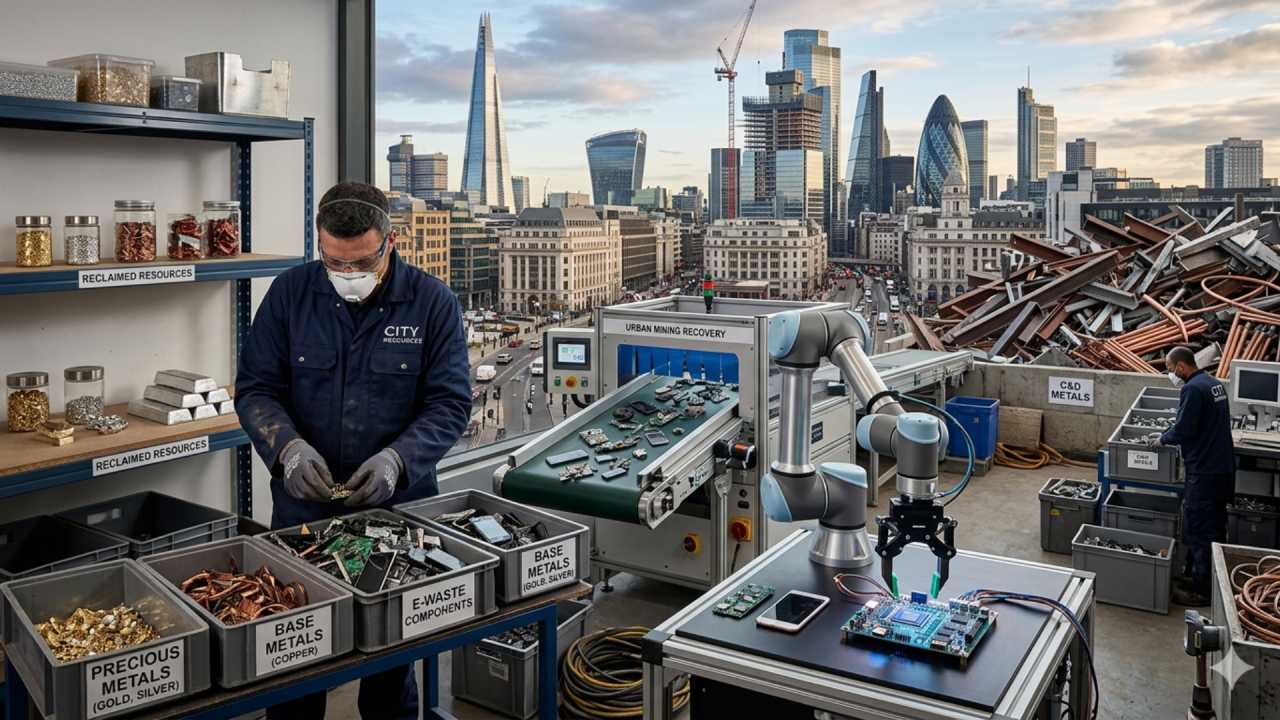
In the expanding sector of urban mining—the extraction of precious metals from discarded electronics and consumer waste—automation allows for the high-throughput sorting and processing of highly heterogeneous scraps. By utilizing automated optical sorting and robotic separation of electronic components, refiners can isolate precious-metal-bearing parts with high efficiency. This automated precision makes the recycling of e-waste commercially viable at a massive scale, reducing the global reliance on energy-intensive primary mining operations and driving a highly sustainable, closed-loop circular economy.
Challenges and Limitations of Automation
Despite the overwhelming advantages, the journey toward a fully automated refinery is not without significant practical hurdles, and a successful deployment requires a balanced understanding of its technological and financial limitations.
The most prominent barrier to entry is the exceptionally high initial investment required. Purchasing state-of-the-art robotics, embedding thousands of advanced industrial IoT sensors, upgrading to high-tier SCADA software, and overhauling physical plant layouts demands substantial capital. For small-scale or boutique refiners, these upfront deployment costs can be financially prohibitive, potentially widening the competitive gap between tier-one industrial operations and smaller local refiners.
Integration complexity presents another major operational hurdle. Many established refineries utilize a mixture of legacy machinery, analog infrastructure, and custom-built chemical tanks. Attempting to overlay modern digital sensors, automated PLC valves, and AI software onto decades-old hardware requires highly specialized engineering and often leads to prolonged operational downtime during the installation and calibration phases.
Cybersecurity concerns present another modern operational risk. As industrial control systems become increasingly connected to corporate networks and cloud-based analytical tools, they become potential targets for malicious cyberattacks, industrial espionage, or ransomware. Refiners must invest heavily in industrial cybersecurity protocols, firewalls, and network isolation to protect their automated lines from unauthorized disruption.
Finally, automation shifts the human talent requirement rather than eliminating it entirely. While manual labor decreases, the need for highly skilled technicians, automation engineers, industrial programmers, and data analysts rises exponentially. Refineries often face internal resistance to change from a legacy workforce and must invest heavily in comprehensive training programs. It is crucial to recognize that automation enhances human decision-making rather than fully replacing it; human metallurgical expertise remains absolutely vital for handling unprecedented process anomalies or interpreting highly complex assay discrepancies.
Future Trends in Smart Refining
The evolution of precious metal refining is far from complete. As technologies mature, the industry is peering into a future characterized by even deeper digital integration and autonomous operations.
One of the most promising future trends is the deployment of digital twins. A digital twin is a dynamic, real-time virtual replica of the entire physical refinery. By feeding continuous streams of IoT sensor data into this virtual model, plant managers can run predictive simulations, test the impact of modifying chemical flows or thermal profiles, and identify hidden operational bottlenecks without risking actual production assets or material throughput.
We are also witnessing the early stages of true AI-driven autonomous refining plants. Unlike current automated systems that rely on pre-programmed logic gates and human supervisory intervention, future smart refineries will leverage advanced neural networks capable of fully autonomous, real-time decision-making. These systems will independently alter entire chemical and thermodynamic pathways across the plant to optimize for changing energy prices, fluctuating chemical costs, and shifting purity requirements on the fly.
Traceability will also be enhanced through the integration of blockchain technology with automated data logging. By automatically writing unalterable refinery processing data directly from the SCADA system onto a decentralized ledger, the industry can create a flawless, tamper-proof digital passport for every single bar of gold or platinum produced. This absolute transparency will provide future consumers, investors, and industrial buyers with undeniable proof of a metal’s origin and processing history.
Finally, the continuous rise of urban mining—fueled by the rapid obsolescence of consumer electronics and the massive future volumes of retired electric vehicle (EV) batteries and electronic infrastructure—will drive the development of highly specialized, automated recycling refineries. These next-generation smart refineries will be explicitly engineered to handle multi-material recycling streams, utilizing advanced robotics and machine learning to sustainably reclaim precious metals from the global waste stream at a scale never before achieved.
Final Thoughts
The integration of automation into precious metal refining marks a definitive turning point in the history of metallurgy. Driven by the relentless global demand for ultra-high purity metals and the urgent industrial necessity for sustainable, traceable supply chains, modern refineries are rapidly shedding the manual, hazardous, and variable practices of the past.
By unifying heavy-duty robotics, artificial intelligence, real-time IoT monitoring networks, and advanced automated assaying tools under centralized SCADA architectures, contemporary refiners are achieving unprecedented operational milestones. The benefits are clear and multifaceted: substantial gains in throughput efficiency, maximized metal recovery rates, radical improvements in workplace safety, and flawless adherence to stringent global environmental and sourcing regulations.
While challenges regarding high upfront capital expenditure, integration hurdles, and the vital demand for new technical skill sets must be carefully navigated, the momentum toward smart manufacturing is unstoppable. Automation does not diminish the value of human metallurgical wisdom; rather, it empowers operators with the digital tools and real-time insights required to run optimized, flawless operations. As the global marketplace continues to penalize operational inefficiency and opaque supply chains, those refineries that proactively embrace comprehensive automation strategies today are firmly positioning themselves to become the undisputed market leaders of tomorrow.
Frequently Asked Questions About Precious Metal Refining Automation
How does automated gold refining improve precious metal recovery systems?
Automated gold refining radically improves precious metal recovery systems by replacing manual chemical mixing with closed-loop, sensor-driven dosing. Automated systems utilize high-precision flow meters and continuous inline pH sensors to calculate the precise volume of aqua regia or chlorine gas required for chemical separation. This absolute precision prevents under- or over-treatment of raw material, ensuring that maximum gold and silver are isolated on the first pass and minimizing the amount of residual metal trapped in discarded slag or industrial wastewater.
What are the benefits of using AI in metal refining for electronic waste recycling?
Implementing AI in metal refining allows facilities to effectively process highly unpredictable inputs, such as crushed e-waste, scrap electronics, and spent catalytic converters. Machine learning algorithms analyze historical batch data to forecast material yields and dynamically optimize the consumption of expensive chemical reagents. Furthermore, AI-driven process optimization identifies trace contamination early in the smelting or hydrometallurgical cycle, allowing for real-time temperature and chemical adjustments that prevent the ruin of high-value refinery batches.
How do robotic refining systems enhance worker safety in industrial metallurgy?
Robotic refining systems protect human operators by taking over tasks located in high-risk zones, such as furnace charging, slag skimming, and pouring molten metal at temperatures exceeding one thousand degrees Celsius. By using heavy-duty, thermally shielded robotic arms, refineries minimize human exposure to blast hazards, high-voltage electrorefining currents, and corrosive chemical fumes (such as nitrous oxides and sulfur dioxide). This shifts the human workforce into analytical, supervisory roles inside protected, climate-controlled control rooms.
Why are automated assaying systems critical for sustainable precious metal refining?
Automated assaying systems, utilizing non-destructive tools like X-ray Fluorescence (XRF) and Optical Emission Spectrometry (OES), provide instantaneous purity verification. From a sustainability standpoint, rapid automated assaying reduces the chemical waste and energy footprints associated with traditional fire assaying. Additionally, automated sampling stations ensure perfect homogenization and zero human bias, helping refineries accurately verify the purity of secondary, recycled scraps to back up their circular economy and green sourcing claims.
What role do PLC and SCADA systems play in smart refinery technology?
Programmable Logic Controllers (PLCs) act as the physical muscle of smart refinery technology, executing direct hardware actions such as starting pumps, controlling induction furnaces, or operating motorized valves. Supervisory Control and Data Acquisition (SCADA) systems serve as the centralized software brain, aggregating continuous data streams from thousands of plant-wide IoT sensors. Together, PLC and SCADA architectures allow a skeletal engineering crew to monitor entire continuous refining loops, enforce automated safety interlocks, and maintain flawless process consistency.
How does automation help refiners meet LBMA and responsible sourcing standards?
Automation supports compliance with the London Bullion Market Association (LBMA) and strict international environmental guidelines by creating an unalterable, fully automated digital audit trail. The integrated factory software logs the exact weight, origin, processing timeline, temperature profiles, and final purity assay metrics of every batch. This automated documentation removes human transcription error, prevents internal material diversion, and provides downstream industrial buyers and regulators with transparent, audit-ready proof of a clean, conflict-free supply chain.