Leading Precious Metals Refining Company: Gold, Silver & Sustainable Solutions
Precious metals have served as the bedrock of global economies and human civilization for millennia. From the golden masks of ancient pharaohs to the complex circuitry within a modern smartphone, metals like gold, silver, platinum, and palladium are prized not just for their luster, but for their unique physical and chemical properties. Their rarity, malleability, and resistance to corrosion make them indispensable across a vast spectrum of human activity. Today, these metals are more than just symbols of wealth; they are critical components in the transition to green energy, high-speed telecommunications, and advanced medical diagnostics.
However, precious metals are rarely found in their pure form. Whether they are extracted from the earth’s crust or recovered from discarded electronics, they often contain impurities that render them unsuitable for industrial or investment purposes. This is where the refining industry becomes the silent engine of the global economy. Refining is the sophisticated process of purifying these metals to a standard that meets the rigorous demands of global markets.
A leading precious metals refining company acts as a bridge between raw material and refined value. These entities ensure that gold is pure enough for bullion, that silver is conductive enough for solar panels, and that platinum is reactive enough for automotive catalysts. In an era where sustainability is paramount, the refining sector is also at the forefront of the circular economy, transforming “urban mines”—discarded waste—into high-value assets. Companies like karat24 projects exemplify the evolution of this industry, combining technical mastery with a commitment to ethical standards and logistical excellence.
Overview of the Precious Metals Refining Industry
The precious metals refining industry is a multi-billion-dollar global sector that operates at the intersection of mining, finance, and industrial manufacturing. At its core, refining is the metallurgical process of separating precious metals from impurities or other base metals. This industry is driven by a constant global demand for purity. Central banks require high-purity gold bars for reserves, jewelry manufacturers need consistent alloys, and the tech sector demands metals with near-zero levels of contamination to ensure the reliability of electronic components.
The market for refining is traditionally divided into two streams: primary and secondary. Primary refining involves processing ores and concentrates directly from mining operations. This is often done in close proximity to major mining hubs. Secondary refining, which is seeing rapid growth, involves the recycling of existing metal products. This includes everything from “old gold” jewelry and silverware to industrial catalysts and electronic waste (e-waste). As natural mineral deposits become more difficult and expensive to mine, the importance of secondary refining—and the efficiency of the companies performing it—has never been higher.
Geographically, the industry is concentrated in key financial and logistical hubs. Switzerland has long been the global epicenter of gold refining, known for its stringent quality controls and “Good Delivery” standards. However, the landscape is shifting. India and the United Arab Emirates (UAE) have emerged as massive refining hubs due to their high domestic consumption of gold. Meanwhile, the United States and Germany remain leaders in the refining of Platinum Group Metals (PGMs), driven by their advanced automotive and chemical industries. This global network ensures that precious metals can be processed, certified, and traded with liquidity and confidence across borders.
What Defines a Leading Precious Metals Refining Company?
In a competitive global market, not all refineries are created equal. A “leading” refining company is distinguished by several critical factors that go beyond simple smelting capabilities.
Advanced Refining Technology
The hallmark of a top-tier refiner is the ability to achieve extreme levels of purity, often up to 99.99% (four nines) or even 99.999% (five nines) for specific industrial applications. This requires a heavy investment in state-of-the-art chemical and electrochemical processes. Leading companies utilize automated systems to minimize human error and maximize the recovery of even the smallest traces of metal.
High Recovery Rates
When dealing with materials like palladium or gold, where every gram is worth a significant sum, the efficiency of the recovery process is paramount. Leading refiners have optimized their workflows to ensure that the maximum amount of metal is extracted from the feed material. Low recovery rates represent a direct loss to the client, making high-efficiency refiners the preferred choice for industrial partners.
Certifications and Compliance
Trust is the currency of the precious metals world. Leading companies hold prestigious certifications from organizations such as the London Bullion Market Association (LBMA) or the Responsible Jewellery Council (RJC). These certifications are not just badges of quality; they are proof that the company adheres to strict environmental, social, and governance (ESG) standards.
Environmental Responsibility
Refining is traditionally a resource-intensive process involving heat and chemicals. Industry leaders set themselves apart by implementing closed-loop water systems, advanced air filtration to capture emissions, and sustainable waste management protocols. They actively work to reduce their carbon footprint, recognizing that “green gold” is becoming a requirement for modern consumers.
Transparency and Ethical Sourcing
In the modern world, knowing where metal comes from is as important as knowing its purity. A leading refiner employs rigorous Due Diligence (DD) and Know Your Customer (KYC) protocols to ensure that no metals from conflict zones or child labor enter their supply chain. They provide full transparency to their clients, often utilizing digital tracking to verify the origin of the material.
Refining Process Explained
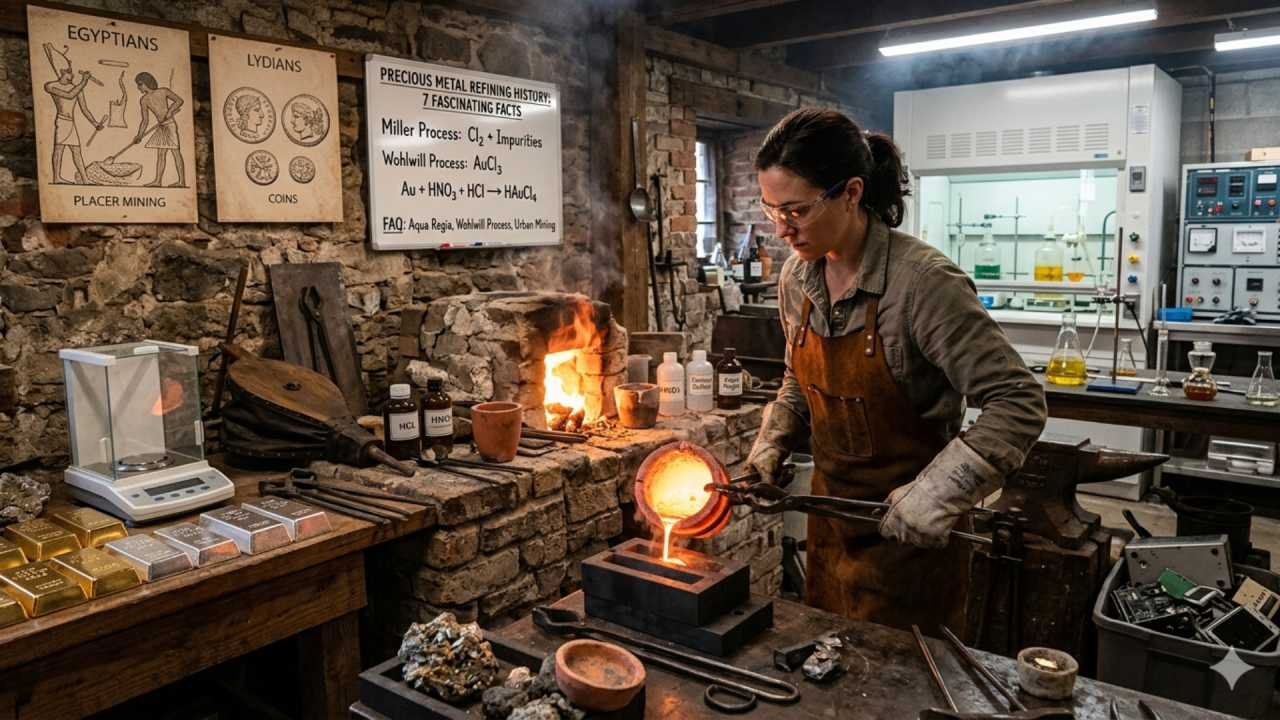
The journey from scrap or ore to a gleaming bar of pure metal is a complex sequence of physical and chemical transformations. While the specifics vary depending on the metal, the general workflow of a leading refiner follows a standardized, highly controlled path.
Collection and Sourcing
The process begins with the intake of raw materials. This can include “dore” bars from mines, industrial catalysts, dental scrap, jewelry, or shredded electronic components. Each batch is carefully logged and weighed upon arrival to ensure accountability.
Pre-treatment and Sampling
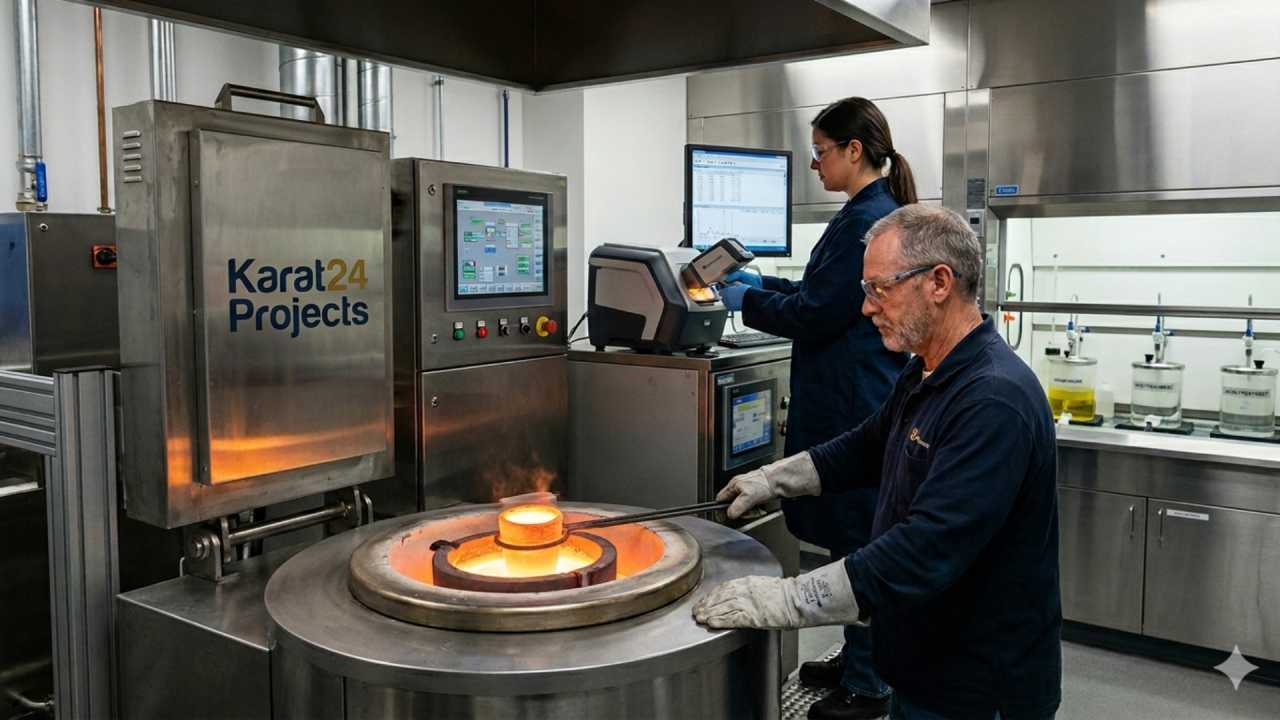
Before refining can begin, the material must be homogenized. For solid scrap, this often involves melting the material in an induction furnace to create a uniform liquid, from which a sample is taken. This sampling stage is critical; it determines the initial metal content and sets the value for the client. Advanced refiners use vacuum sampling or “pin tube” methods to ensure the sample is a perfect representation of the entire batch.
Pyrometallurgical Process (Smelting)
Many materials first undergo smelting. In this stage, the material is heated to extreme temperatures in a furnace along with fluxing agents. The flux reacts with impurities, forming a slag that floats to the top and can be removed. The resulting “anode” is a much more concentrated form of the precious metal, but it is still not pure enough for the market.
Hydrometallurgical Process (Chemical Refining)
To reach high purity, the concentrated metal is often dissolved in powerful acids—a process known as leaching. For gold, this often involves aqua regia, a mixture of nitric and hydrochloric acids. Once in solution, specific chemicals are added to selectively precipitate the gold while leaving other metals behind.
Electrolysis
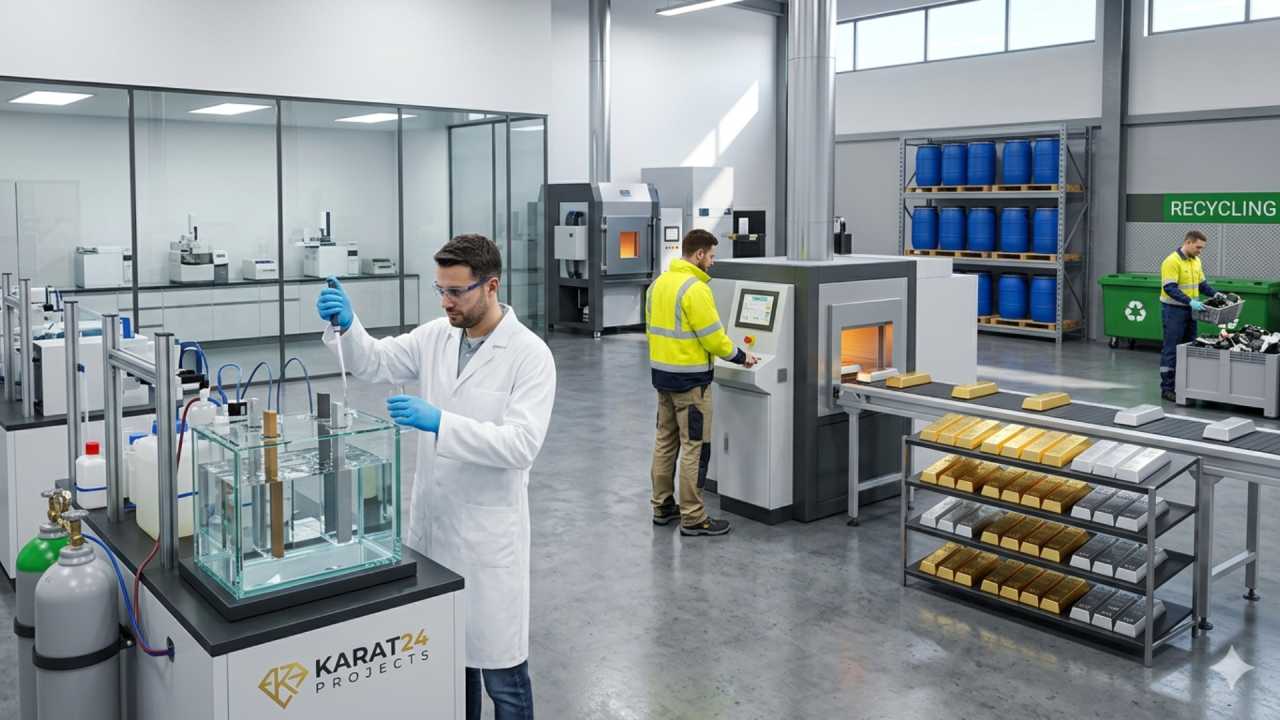
For the highest standards of purity, electrolysis is used. In a silver refinery, for example, impure silver anodes are placed in an electrolytic cell. Through the application of an electric current, silver ions migrate from the anode and deposit themselves onto a pure silver cathode. Impurities either remain in the solution or fall to the bottom as “anode slime,” which is then processed to recover other precious metals like gold or platinum.
Final Production and Assaying
Once refined, the metal is melted one last time and cast into various forms: grains, small bars, or large 400-ounce “Good Delivery” bars. Before leaving the facility, the final product undergoes a final assay—often using X-ray Fluorescence (XRF) or Inductively Coupled Plasma (ICP) spectroscopy—to certify its exact purity.
Services Offered by Top Refining Companies
A leading refiner is more than just a factory; it is a full-service provider for the precious metals lifecycle. Companies like karat24 projects offer a suite of services designed to meet the diverse needs of their global clientele.
-
Comprehensive Refining: Handling the full spectrum of precious metals, including Gold, Silver, Platinum, and Palladium. This allows clients to send “mixed” scrap and receive credit for all contained precious metals.
-
Assaying and Laboratory Services: Providing third-party-grade analysis of metal content. These labs use fire assay—the “gold standard” of testing—alongside modern digital equipment to provide pinpoint accuracy.
-
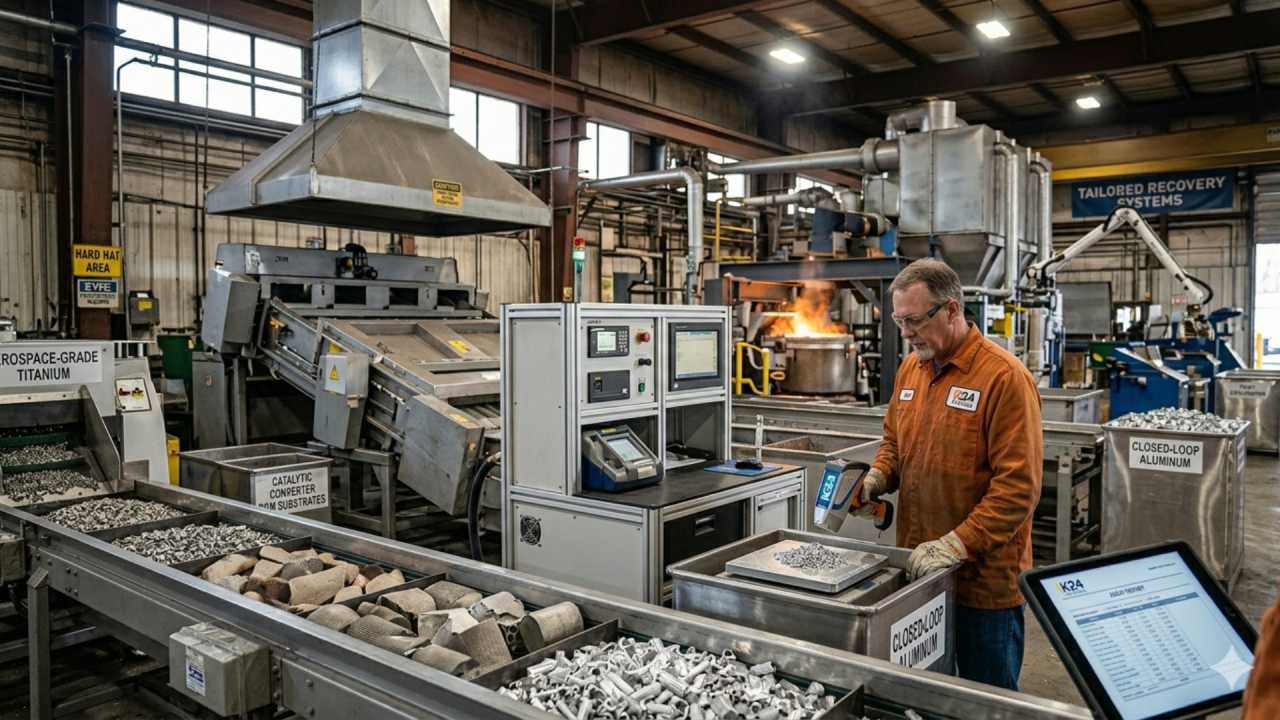
Industrial Recycling: Partnering with the electronics and automotive sectors to recover PGMs from catalytic converters and gold/silver from circuit boards. This service is essential for manufacturers looking to meet “circular economy” targets.
-
Bullion Production: Transforming refined metal into tradable assets. This includes the minting of investment-grade bars and coins that carry the refiner’s stamp, a symbol of guaranteed quality.
-
Logistics and Secure Storage: Managing the high-risk movement of precious materials. Leading refiners often have partnerships with armored transport services and provide high-security vaulting for their clients’ assets.
-
Financial Services: Offering hedging options and metal accounts. This allows clients to “lock in” prices during the refining period, protecting them from market volatility.
Applications of Refined Precious Metals
The output of a refinery feeds into almost every sector of modern life. The versatility of these metals means that demand is rarely static; when one sector slows down, another often picks up the slack.
Jewelry and Luxury Goods
This remains the largest consumer of refined gold and a significant consumer of silver and platinum. The jewelry industry requires metals that are not only pure but also alloyed correctly for durability and color.
The Electronics Revolution
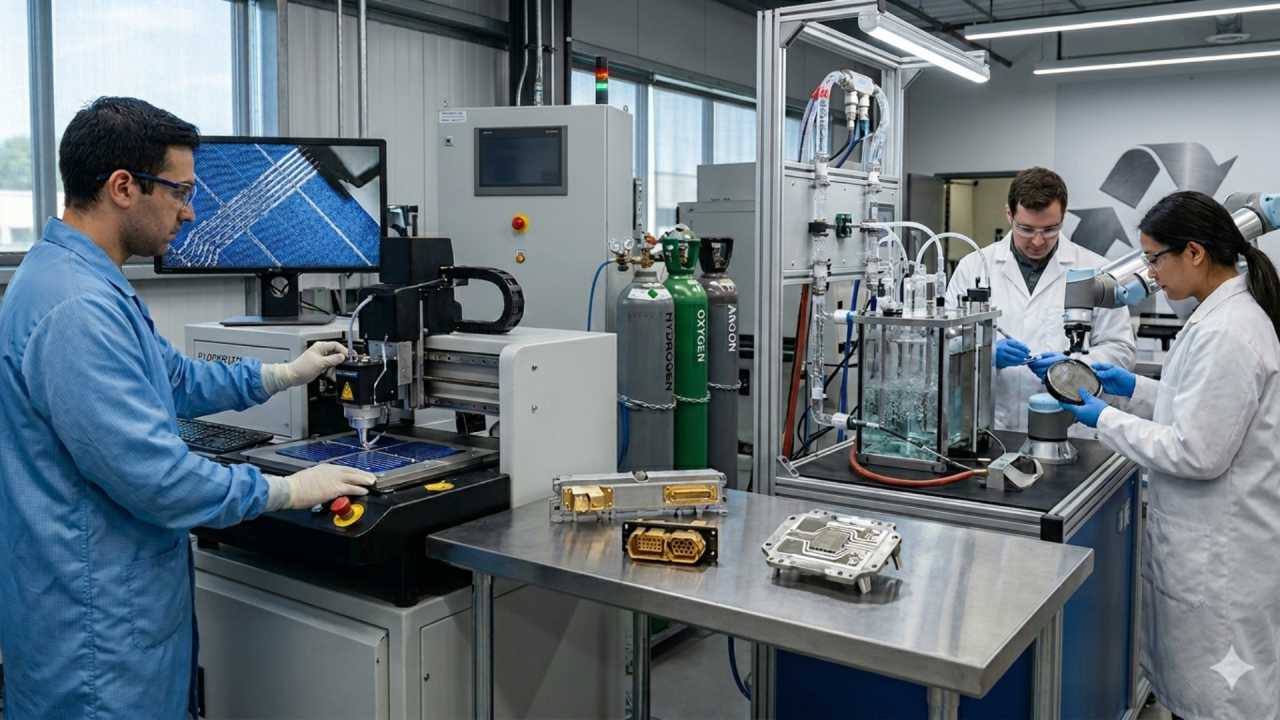
Gold and silver are unparalleled conductors. Every smartphone, tablet, and laptop contains tiny amounts of these metals in connectors and switch contacts. As the world moves toward 5G and more complex computing, the demand for ultra-high-purity refined metals in the electronics sector continues to climb.
Automotive and Green Energy
Platinum, palladium, and rhodium are essential for catalytic converters, which reduce harmful emissions from internal combustion engines. Furthermore, silver is a primary component in photovoltaic (solar) cells, while platinum is becoming crucial for hydrogen fuel cell technology.
Medical and Dental
Gold and silver have long been used in dentistry for their biocompatibility. In modern medicine, gold nanoparticles are being used in cancer treatments, and silver’s antimicrobial properties make it a staple in advanced wound dressings and medical equipment.
Investment and Central Banking
Refined bullion is a “safe haven” asset. During times of geopolitical or economic uncertainty, investors flock to refined gold and silver bars as a store of value that is not tied to any specific currency or government.
Sustainability and Ethical Practices
The “Leading” status of a refining company is now inextricably linked to its ethical footprint. The industry has moved away from a “no questions asked” approach to one of radical transparency.
Conflict-Free Sourcing
Top refiners adhere to the OECD Due Diligence Guidance for Responsible Supply Chains of Minerals. This ensures that the gold and silver they process do not finance armed conflict or contribute to human rights abuses. By performing rigorous audits on their suppliers, companies like karat24 projects ensure that their products are “clean” from mine to market.
Environmental Stewardship
Modern refineries are designed to be “zero-discharge” facilities. This means that all chemicals used in the leaching process are neutralized and recycled, and no toxic runoff enters the local environment. Advanced scrubbing systems are used to ensure that the air released from the smelting furnaces is free of particulates and harmful gases.
The Rise of Recycled Gold
There is a growing consumer preference for products made from 100% recycled precious metals. Leading refiners are responding by creating dedicated “recycled” product lines, which have a significantly lower carbon footprint than metals sourced from primary mining.
Technology and Innovation in Refining
The refining industry is currently undergoing a digital and technological transformation. Innovation is focused on two areas: increasing recovery efficiency and enhancing traceability.
Automation and AI
Robotics are now being used to handle hazardous materials and perform repetitive tasks like pouring molten metal. Meanwhile, Artificial Intelligence is being used to optimize furnace temperatures and chemical dosages in real-time, reducing waste and energy consumption.
Green Chemistry
Researchers are developing new, non-toxic solvents to replace traditional acids like aqua regia or cyanide-based solutions. These “green” chemicals make the refining process safer for workers and the environment while maintaining high recovery rates.
Blockchain for Traceability
One of the most exciting innovations is the use of blockchain technology to create a digital “passport” for a bar of gold. From the moment the ore leaves the mine or the scrap enters the refinery, every step of its journey is recorded on an immutable ledger. This gives the end consumer absolute certainty about the ethical origins of their purchase.
Challenges in the Industry
Despite its importance, the refining sector faces a unique set of challenges that require constant adaptation.
-
Market Volatility: The prices of precious metals can swing wildly based on interest rates, inflation, and geopolitical events. Refiners must manage their “work-in-progress” inventory carefully to avoid financial losses.
-
Regulatory Complexity: Different countries have different rules regarding the import, export, and processing of precious metals. Navigating this “alphabet soup” of regulations requires a dedicated legal and compliance team.
-
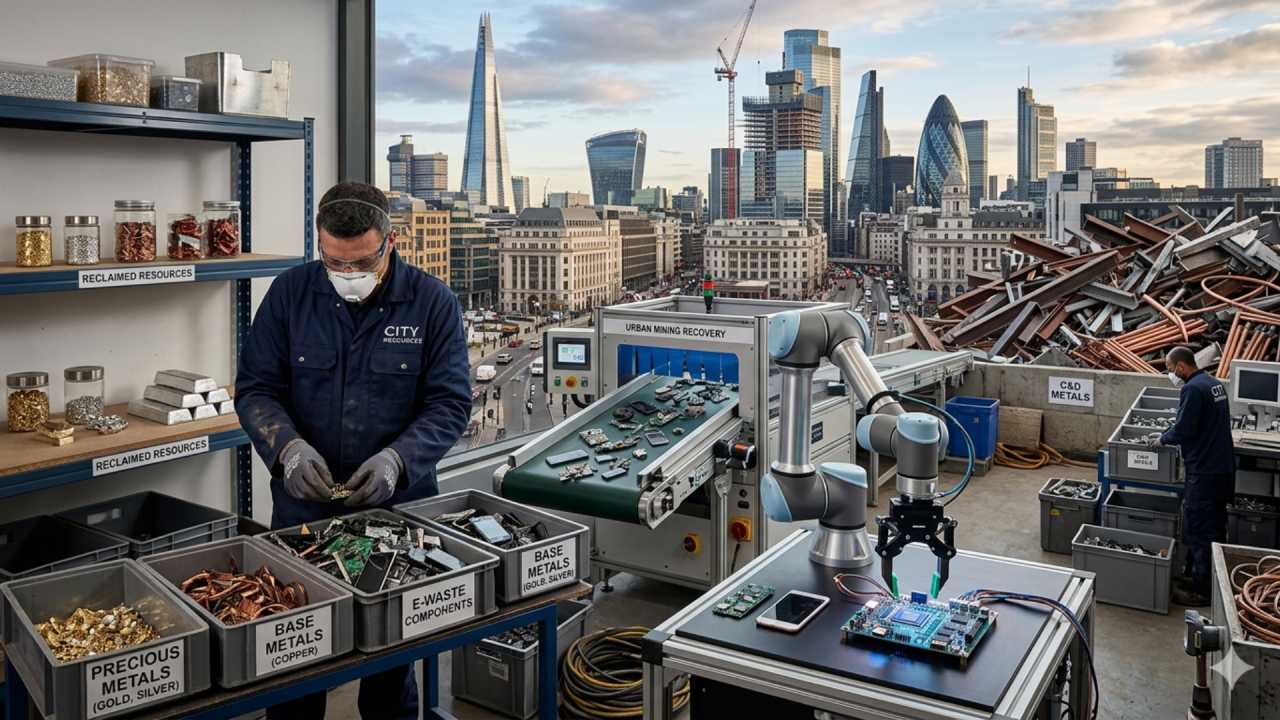
E-Waste Complexity: While e-waste is a massive source of precious metals, it is also incredibly complex. A single circuit board contains dozens of different elements, many of which are hazardous (like lead or mercury). Extracting the gold and silver safely and economically is a major technical hurdle.
-
Energy Costs: Refining is an energy-intensive business. Rising global energy prices put pressure on margins, forcing companies to find more efficient ways to operate.
Case Study: The Excellence of karat24 projects
In the landscape of modern refining, karat24 projects serves as a prime example of how a company can integrate diverse services to lead the market. Rather than focusing solely on the chemical act of refining, the company has built a reputation for its holistic approach to precious metals management.
What sets a project-based approach apart is the emphasis on bespoke solutions for industrial and institutional clients. Whether it is managing the large-scale recovery of metals from decommissioned industrial equipment or providing a transparent gateway for jewelry manufacturers to recycle their production scrap, the focus is on maximizing value through precision. By prioritizing state-of-the-art assaying and maintaining a strict adherence to international ethical standards, such organizations provide the “trust infrastructure” that the global precious metals market requires to function smoothly.
Future Outlook of Precious Metals Refining
The future of the refining industry is bright, driven by the global transition to a high-tech, low-carbon economy.
Urban Mining
The “mines of the future” will not be underground; they will be in our warehouses and recycling centers. The shift toward urban mining is inevitable as the concentration of precious metals in e-waste is often much higher than in natural ore. Refiners who master the art of e-waste processing will dominate the market in the coming decades.
Green Tech Demand
The explosion of the Electric Vehicle (EV) market and the growth of renewable energy infrastructure will require massive amounts of silver, copper, and PGMs. Refining companies will be the primary suppliers of the high-purity materials needed to build these technologies.
Increased Regulation
Expect to see even tighter controls on the “provenance” of metals. As consumers become more conscious of their environmental impact, the demand for certified “carbon-neutral” or “ethically sourced” refined products will become the industry standard rather than a niche offering.
Final Thoughts
A leading precious metals refining company is far more than a simple processor of scrap. It is a sophisticated technological entity, a guardian of ethical standards, and a vital link in the global economic chain. By transforming raw, impure materials into high-purity assets, these companies enable everything from the creation of beautiful jewelry to the manufacturing of life-saving medical devices and the stability of national reserves.
As the industry moves forward, the focus will continue to shift toward sustainability and digital transparency. Companies like karat24 projects demonstrate that the future of refining lies in the balance between technical excellence and responsible stewardship. For as long as humanity values these rare and remarkable metals, the refiners who process them with the highest levels of integrity and efficiency will remain at the very heart of global commerce. In a world of changing values and evolving technology, the refined purity of gold, silver, and platinum remains a constant—a testament to the enduring importance of the refining industry.