Jewelers: Refine Your Bench Scraps & Maximize Material Yield
In the world of professional jewelry making, the difference between a thriving studio and one struggling with overhead often lies in the dust on the floor. For the bench jeweler, precious metal is not just a raw material; it is liquid capital. However, because gold, silver, and platinum are often worked in such minute quantities during sawing, filing, and polishing, it is easy to develop a psychological disconnect regarding the value of what falls off the bench.
Refining your bench scraps and maximizing material yield is not merely a housekeeping chore. It is a fundamental pillar of business sustainability. Every milligram of gold leafed into a polishing buff or swept into a vacuum bag represents a portion of your profit margin. In an era of fluctuating market prices and increasing competition, the ability to reclaim and reuse every possible grain of metal is what allows a jeweler to maintain competitive pricing while protecting their bottom line.
This guide is designed for bench jewelers, workshop managers, and studio owners who want to transform their perspective on waste. By treating scrap as an asset rather than a byproduct, you can unlock a hidden revenue stream that is already sitting right under your feet.
What Counts as Bench Scrap?
To maximize your yield, you must first understand the various forms that precious metal waste takes. Not all scrap is created equal, and the way you categorize it will dictate how efficiently it can be refined or reused.
Clean Scrap
Clean scrap consists of high-quality metal leftovers that have not been contaminated by solder, stones, or base metals. This includes offcuts from sheet and wire, unused casting sprues, and “oops” pieces that were never soldered. Because the purity is known and the metal is uncontaminated, clean scrap is the most valuable and the easiest to recycle in-house.
Dirty Scrap
Dirty scrap refers to pieces that have been joined with solder or contain remnants of other materials. When you saw a ring sizing out of a 14k gold band that has already been soldered multiple times, that piece is “dirty.” The presence of solder lowers the overall karat and introduces zinc, cadmium, or other alloys that can make the metal brittle if simply melted back down.
Fine Waste
This is where many jewelers lose the most money. Fine waste includes the microscopic particles generated by sawing and filing. These particles are often so light they become airborne or settle into the crevices of your bench. Without a proper “skin” or catch-tray, these filings migrate into your clothing or the floor, becoming nearly impossible to recover.
Sweeps
Sweeps are the “everything else” category. This includes the dust from your floor, the contents of your vacuum bags, and the worn-out bristles of your bench brushes. It also includes “bench skins”—the leather or heavy fabric aprons caught under the bench pin. While sweeps look like dirt, they often contain a significant percentage of precious metal that can only be recovered through professional fire assay.
Liquid Waste
Often overlooked, liquid waste includes spent pickle solutions, ultrasonic cleaner liquids, and rinse water. When you pickle a piece of gold or silver after soldering, a tiny amount of metal ions are stripped into the solution. Over months of work, that blue-tinted pickle pot contains recoverable copper and fine silver.
Understanding Precious Metal Loss Points
Professional jewelry making is a subtractive process. We start with more metal than we need and remove it until the desired form remains. To maximize yield, you must identify exactly where the “leakage” occurs in your workflow.
Filing and Sawing
The most immediate loss happens at the bench pin. A standard jeweler’s saw blade has a thickness (kerf) that turns solid metal into dust with every stroke. If you are sawing out an intricate filigree design, you might be turning 15% to 20% of your metal into dust. If that dust isn’t caught immediately, it is effectively gone from your inventory.
Polishing and Buffing
Polishing is essentially high-speed sanding. As the buffing wheel spins, it removes a microscopic layer of metal to create a mirror finish. This metal becomes embedded in the polishing compound (rouge) and the fibers of the wheel. If you do not have a dust collection system attached to your polishing lathe, you are venting profits into the air.
Torch Work and Oxidation
Every time you heat metal, oxidation occurs. While the actual weight loss from firecoat is minimal, the subsequent pickling and cleaning processes remove those oxidized layers. Over repeated anneals and solderings, the cumulative loss becomes measurable.
Casting Inefficiencies
In the casting room, the “button” and the “sprue” are necessary for a successful pour, but they represent tied-up capital. Furthermore, if your casting trees are poorly designed, you may experience “turbulence” or “flashing,” which wastes metal or results in failed casts that require complete recycling.
Setting Up an Efficient Scrap Collection System
Organization is the enemy of waste. To manage your scraps effectively, you need a system that makes collection a passive part of your daily routine. This is where many practitioners utilize karat24 projects methodologies—prioritizing systematic tracking to ensure nothing is lost in the shuffle.
Dedicated Containers
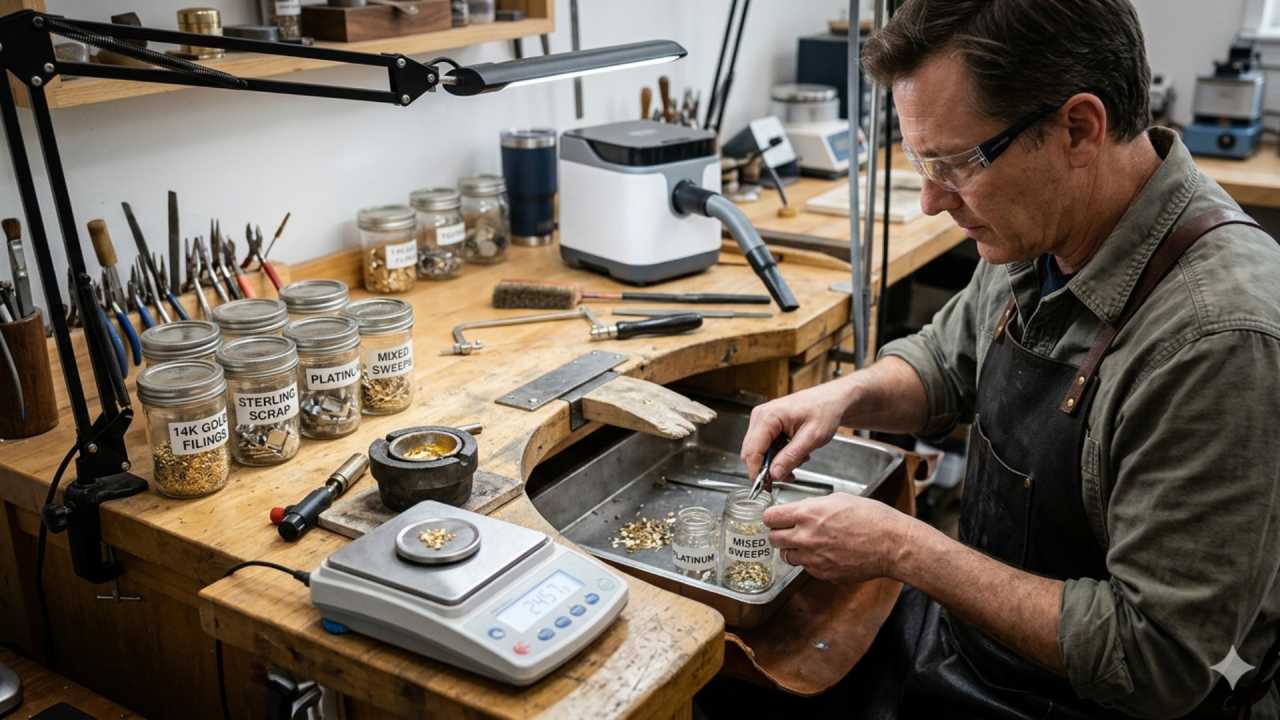
Never mix your metals. Even if you plan on sending everything to a refiner, keeping 14k gold, 18k gold, and sterling silver in separate, labeled containers will increase your payout. Refiners charge for the labor of separation; the more work you do for them, the more money stays in your pocket. Use clear, screw-top jars for filings and heavy-duty bins for larger offcuts.
Bench Trays and Skins
Your bench should be equipped with a catch-all. Traditional jewelers use a leather “skin” pinned to the underside of the bench. Modern workstations often use sliding metal trays. Whatever your preference, the goal is the same: nothing should hit the floor. At the end of every day, use a dedicated bench brush to sweep the dust from your work area into the center of the tray.
Personal Collection Methods
Believe it or not, your clothes are a major scrap thief. Fine gold dust clings to wool and cotton. Professional studios often provide technicians with dedicated aprons or smocks that stay in the shop. These aprons are eventually sent to the refiner to be burned and assayed. Similarly, a “wash station” for hands that drains into a settling tank can recover a surprising amount of metal that would otherwise go down the drain.
Specialized Vacuum Systems
A household vacuum is not sufficient for a jewelry studio. You need a high-HEPA filtered system designed for metal recovery. These systems pull dust directly from the source—the bench pin or the polishing wheel—and trap it in a bag that can be processed.
Best Practices for Handling and Storing Scrap
Once you have a collection system, you must maintain its integrity. Contamination is the primary reason for low refining yields.
-
Avoid Steel Contamination: When filing gold, ensure your files are clean. If steel shards from a broken saw blade or a stray iron binding wire get into your gold scrap, it can ruin a melt. Use a magnet to “sweep” through your scrap jars regularly to pull out any ferrous metals.
-
Keep Sandpaper Separate: Used sandpaper contains abrasives like silicon carbide or aluminum oxide. If mixed with bench sweeps, it increases the bulk of the waste without adding value, and some abrasives can be difficult to separate during the fluxing process.
-
Dry Storage: Ensure that sweeps and polishing waste are kept dry. Damp waste can grow mold or undergo chemical reactions that make the refining process more difficult and potentially dangerous during the melt.
-
Security: High-value scrap should be treated like cash. Store your scrap containers in a fireproof safe at the end of the day. It is a common mistake to leave “worthless-looking” jars of dust on the bench, making them easy targets for theft.
Pre-Refining Preparation: Getting Scrap Ready
Before you send your material to a professional refiner, a little bit of preparation can significantly increase your return. Refiners often charge “treatment fees” for material that requires extra processing.
Cleaning Dirty Scrap
If you have scrap with heavy amounts of grease, oil, or wax (common in casting scraps), clean it in an ultrasonic cleaner or a degreasing solution. If you send “oily” scrap to a refiner, the weight of the oil is included in the initial “wet weight,” but disappears during the melt, leading to a discrepancy in your expected yield.
Removing Non-Metal Materials
Use pliers to pull out any synthetic stones, cubic zirconia, or glass. While a refiner can handle these, they add weight and volume to the flux. If there are valuable natural gemstones involved, never send them to a refiner; the heat of the assay process will destroy almost all stones except for diamonds (and even diamonds can be scorched). Use a stone removal acid (like a boiling alum solution or specialized chemical strippers) to reclaim stones before refining the metal.
Drying and Consolidation
If you are sending floor sweeps or vacuum bags, ensure they are tightly sealed. If you are sending liquid waste, many jewelers prefer to evaporate the water first or use “zinc precipitation” to drop the metal out of the solution so they are only shipping solids.
In-House Recycling vs. Professional Refining
One of the most important decisions a jeweler makes is when to melt their own metal and when to outsource the job.
In-House Recycling
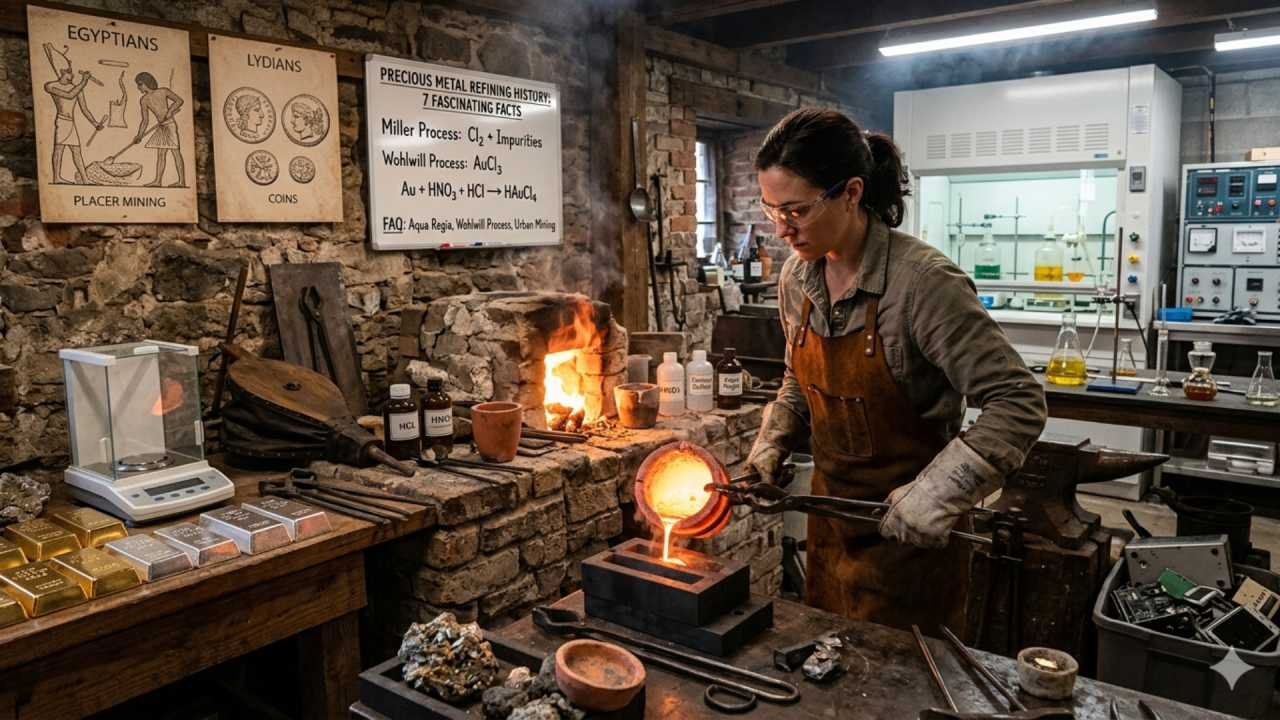
This is best for clean scrap. If you have 18k yellow gold offcuts, you can melt them with a torch, add a little fresh alloy or fine gold to “sweeten” the mix, and roll it out into new sheet or wire.
-
Pros: Immediate turnaround, no refining fees, no shipping costs.
-
Cons: Risk of brittle metal if solder is present; inability to accurately “karat” the metal without an XRF analyzer.
Professional Refining
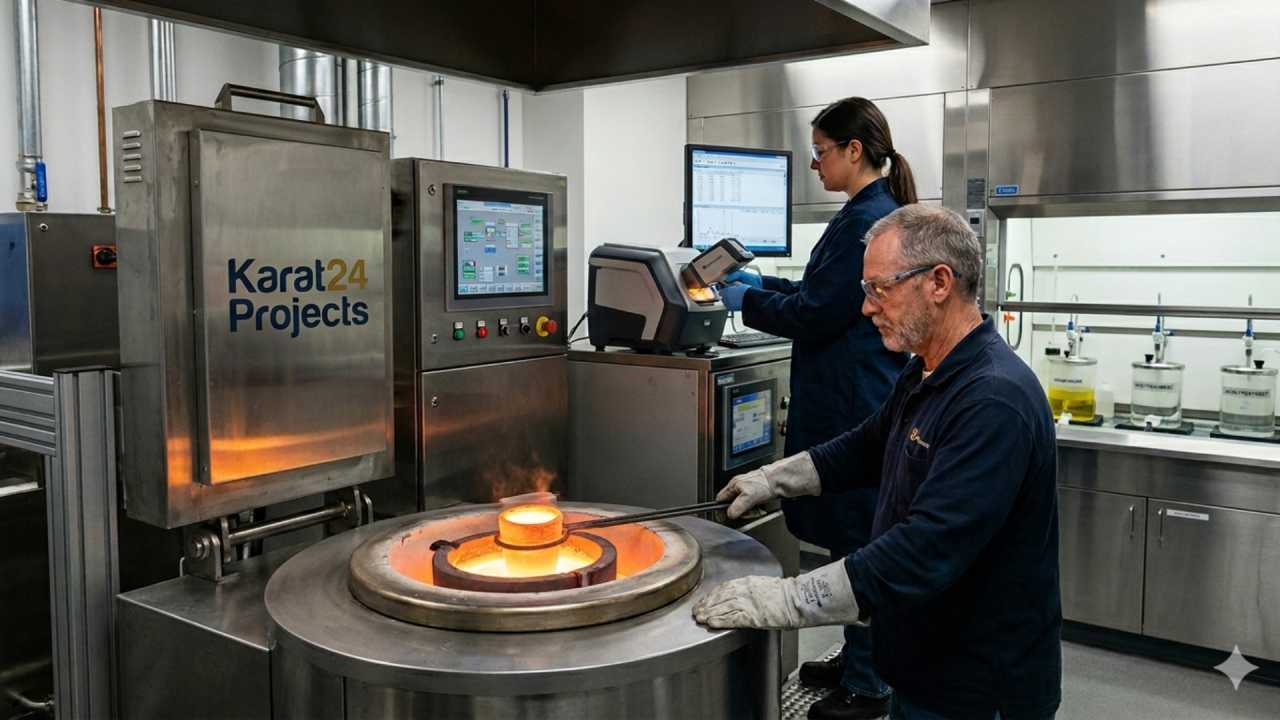
This is mandatory for sweeps, filings, and mixed-karat scrap. A professional refiner has the chemicals (aqua regia) and furnaces necessary to separate gold from silver, copper, and platinum group metals.
-
Pros: Guaranteed purity of returned metal; ability to recover value from “invisible” waste like floor dust.
-
Cons: Fees (typically 5% to 15% of total value), shipping insurance costs, and wait times.
The general rule of thumb is: if it’s solid and clean, keep it in-house. If it’s dust or soldered, send it out.
How Refining Works (Demystified)
Understanding the process helps you communicate better with your refiner and ensures you aren’t being taken advantage of.
-
The Weigh-In: The refiner weighs your material as it arrives. This is the “incoming weight.”
-
The Melt/Incineration: Sweeps are burned to remove paper, hair, and dust. Metal scrap is melted into a “homogenized” bar.
-
Assaying: A small sample is taken from the molten metal or the resulting bar. This sample is analyzed using fire assay (the gold standard for accuracy) or X-ray Fluorescence (XRF).
-
Separation: Using electrolysis or chemical precipitation, the metals are separated into pure .999 fine gold, silver, etc.
-
Settlement: You are paid based on the “fine content” found in the assay, minus the refiner’s fee, usually based on the market price (London Fix) on the day the assay is completed.
Choosing the Right Refiner
Not all refiners are equal. Since you are essentially sending someone a box of “uncounted cash,” trust is paramount.
-
Transparency: A good refiner should provide a detailed breakdown of the weight received, the weight after melt, the assay percentage, and the specific fees charged.
-
Turnaround Time: While fire assay takes time, a refiner should be able to give you a settlement within 5 to 10 business days for standard scrap.
-
Minimums: Some large industrial refiners won’t deal with small studio quantities. Look for a refiner that caters to independent jewelers.
-
Reputation: Ask other jewelers in your community. A refiner that has been in business for decades and has a physical presence is generally a safer bet than an “online only” operation with no track record.
Maximizing Yield: Practical Bench Tips
High-yield jewelry making starts with better habits at the bench. Here are actionable tips to reduce your loss from the start:
-
Use Coarser Files Strategically: Fine files create “floater” dust that stays in the air longer. Use the coarsest file possible for the bulk of the work, then move to finer abrasives. The larger the metal particle, the more likely it is to fall straight into your catch tray.
-
Work Over a Surface: Never “chase” a piece of jewelry around the bench. Keep the work centered over your skin or tray. If you must move to a different station (like a stone-setting block), bring a portable tray with you.
-
Minimize Over-Polishing: Many beginners try to “fix” deep scratches with a polishing wheel. This removes a massive amount of metal. Instead, use burnishers or graduating grits of sandpaper to remove the scratch before the buffing wheel ever touches the metal.
-
Optimize Casting Trees: When using karat24 projects for production runs, calculate your sprue weights carefully. Over-sized buttons keep too much of your capital tied up in “scrap” that has to be cleaned and remelted, increasing your oxidation loss over time.
Tracking and Measuring Your Recovery Rate
You cannot manage what you do not measure. To truly maximize your material yield, you should track your “Metal In” vs. “Metal Out.”
Keep a logbook of the weight of the metal you buy. At the end of a project, weigh the finished piece and the scrap generated. If you bought 10 grams of gold and the finished ring is 6 grams, you should have 4 grams of scrap. If you only find 3.5 grams in your jar, you have a 5% “unaccounted loss.”
Over time, this data will tell you which processes in your shop are “leaky.” Perhaps your polishing station needs a better filter, or perhaps a specific employee needs better bench habits. Turning scrap recovery into a Key Performance Indicator (KPI) changes the culture of a workshop from “clean-up is a chore” to “clean-up is a bonus.”
Environmental and Ethical Considerations
In the modern market, consumers are increasingly concerned with the origin of their jewelry. Maximizing your yield is not just a financial move; it is an environmental one.
Precious metal mining is an energy-intensive and often ecologically damaging process. Every gram of gold you recover from your bench is a gram of gold that does not need to be mined from the earth. By running a high-yield studio, you can authentically market your pieces as being made from “recycled” or “circular” metal sources. This resonates deeply with younger demographics who value sustainability.
Furthermore, proper waste management ensures that chemicals from your shop (like pickle or plating solutions) are handled responsibly. Sending these to a refiner for metal recovery is often the safest way to dispose of them, as the refiner has the industrial equipment to neutralize the acids properly.
Common Mistakes That Cost Jewelers Money
Avoid these frequent pitfalls to ensure your refining checks are as large as possible:
-
Mixing Gold and Platinum: Platinum has a much higher melting point. If platinum filings get into your gold scrap, they won’t melt during a standard gold assay, potentially leading to an inaccurate reading or “stones” in your resulting ingot.
-
Throwing Away “Low-Value” Dust: Many jewelers think silver dust isn’t worth the effort. However, if you work in both silver and gold, that “silver” dust is almost certainly contaminated with gold. Over a year, that “silver” jar might contain several hundred dollars worth of gold.
-
Sending Unprepared Scrap: If you send a box of scrap that is 20% plastic bags, 10% old sandpaper, and 5% unremoved stones, the refiner will charge you a “junk fee.” Clean your scrap before it leaves your door.
-
Ignoring Polishing Waste: The “sludge” in your polishing machine’s filter is often the most gold-rich material in the shop. Never throw it away. Dry it out and send it in a sealed container.
-
Poor Record Keeping: If you don’t know how much you sent, you won’t know if the payout is fair. Always weigh your scrap on a calibrated scale and take a photo of the weight before shipping.
Case Example: Turning Scrap Into Profit
Consider a two-person independent workshop. Before implementing a strict recovery system, they were sweeping their floors once a week and throwing the dust in the trash. They didn’t use a dust collector for polishing and mixed all their gold karats in one jar. Their annual refining return was approximately $1,200.
After adopting the principles outlined in this guide—including separating karats, installing a HEPA-filtered bench vacuum, and collecting their wash-station sludge—their annual recovery jumped to $4,800.
That $3,600 difference was pure profit. It covered the cost of new tools for the shop and a holiday bonus for the staff, all from material that was previously being walked out of the door on the soles of their shoes.
Conclusion: From Waste to Asset
The mastery of the jeweler’s bench is often measured by the beauty of the finished piece. But the mastery of the jewelry business is measured by what remains when the piece is gone. By implementing a rigorous scrap collection system and treating every filing as a fraction of a dollar, you elevate your craft from a hobby to a high-performance enterprise.
Refining your bench scraps is not a sign of frugality; it is a sign of professional respect for the precious materials we are privileged to work with. When you maximize your material yield, you reduce your dependency on suppliers, lower your environmental footprint, and ensure that your hard work translates directly into financial security.
Start tomorrow. Brush down your bench, empty your vacuum, and begin seeing the “dirt” in your shop for what it truly is: gold.