Why the Demand for Silver Refining Is Rising in 2026
Silver, often hailed as “poor man’s gold,” is anything but poor in its utility and significance to the modern world. Beyond its historical role as a monetary metal and a cherished element in jewelry, refined silver stands as an indispensable component across a multitude of high-tech and industrial applications. Silver refining, the process of purifying silver from raw ores, scrap, or industrial byproducts to achieve high levels of purity (typically 99.9% or higher), is the bedrock upon which these critical applications are built. As we move through 2026, the demand for silver refining is not just growing; it’s surging, driven by a powerful confluence of global economic shifts, burgeoning green technologies, relentless technological advancement, and evolving investment dynamics.
This article will delve into the multifaceted drivers behind this escalating demand, exploring why refined silver is more crucial than ever and the challenges and opportunities facing the refining industry in this transformative year and beyond.
Global Economic and Industrial Trends
The global economy in 2026 continues its post-pandemic recovery and expansion, with industrial growth and urbanization trends acting as significant tailwinds for silver demand. Manufacturing sectors worldwide are experiencing a surge, particularly in areas like electronics and medical devices, where silver’s unique properties are highly valued.
There’s a noticeable trend of reindustrialization in Western economies, as countries prioritize onshoring supply chains to enhance resilience and reduce dependency on singular regions. This strategic shift is spurring domestic manufacturing, which, in turn, boosts the demand for essential raw materials like silver within these regions. Simultaneously, developing markets, especially in Asia like India and Southeast Asia, are undergoing rapid industrialization and urbanization. This growth translates into a substantial increase in demand for everything from consumer goods and infrastructure to advanced electronics, all of which rely on silver. The Asian Development Outlook (April 2025) highlights that “Regional growth is forecast at 4.9% in 2025,” driven by solid domestic demand and electronics exports, underscoring the significant contribution of these regions to global industrial activity and, consequently, silver consumption.
Silver in Clean Energy & Green Technology
Perhaps one of the most significant drivers of rising silver refining demand in 2025 is the relentless global pivot towards clean energy and green technologies. Silver’s exceptional electrical conductivity makes it irreplaceable in many of these applications.
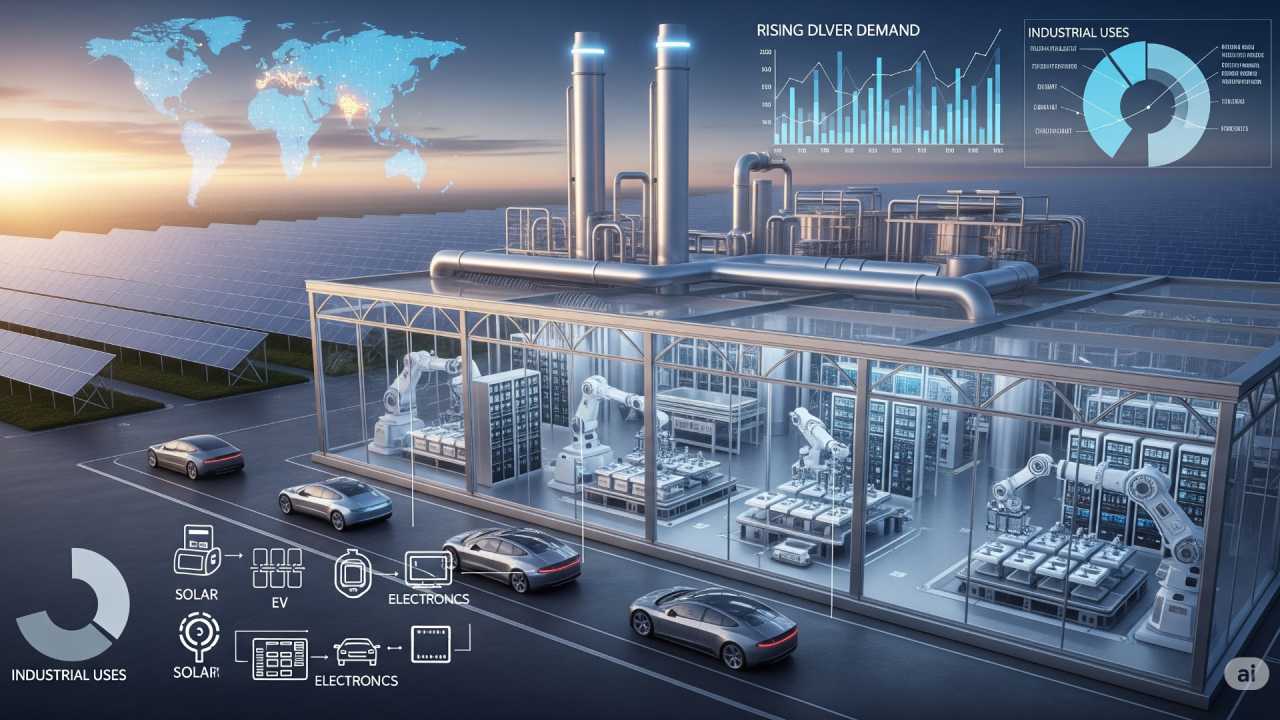
Solar panels, particularly photovoltaic (PV) cells, are a prime example. Silver paste is screen-printed onto the surfaces of crystalline silicon solar cells to form electrical contacts, efficiently collecting and transmitting the generated electricity. Despite ongoing efforts by manufacturers to reduce the amount of silver used per panel, the sheer volume of new solar installations worldwide means that total silver consumption in this sector continues to climb. The Silver Institute projects a 20% increase in the solar PV market this year alone.
The electric vehicle (EV) and hybrid vehicle revolution also heavily relies on silver. EVs contain significantly more silver (25-50 grams per vehicle) than conventional cars (15-28 grams). Silver is critical in battery management systems, power electronics and control modules, electric motor contacts, charging infrastructure components, and advanced driver assistance systems (ADAS). Beyond vehicles, silver finds use in wind turbines, hydrogen fuel cells, and smart grids, which are integral to modernizing energy infrastructure.
Government incentives, such as the U.S. Inflation Reduction Act (IRA), the EU Green Deal, and China’s robust green push, are further accelerating the adoption of these technologies. These policies provide financial support, tax credits, and regulatory frameworks that encourage investment in renewable energy projects and sustainable manufacturing, directly translating into higher demand for refined silver.
Technological Advancements and Electronics
The relentless pace of technological advancement and the explosion of consumer electronics are also voracious consumers of refined silver. The market for consumer electronics, including 5G phones, wearables, and Internet of Things (IoT) devices, is experiencing robust growth. Global Growth Insights projects the Consumer Electronics Market to grow to USD 1464.96 billion in 2025, a CAGR of 4.9%. The report further notes that “the demand for smart home devices, AI-powered electronics, and IoT-enabled gadgets has surged by 75% over the past few years.”
Silver’s unmatched electrical and thermal conductivity makes it indispensable in semiconductors, where it is used in die-attach materials, conductive adhesives, high-frequency circuit elements, and EMI shielding components. The rise of AI-related hardware infrastructure, including massive server farms and edge computing, is particularly silver-intensive. A typical AI server farm can require 2-3 times the silver content of traditional data centers due to higher power density, more complex cooling systems, and greater interconnection requirements. The electronics sector currently consumes approximately 250 million ounces of silver annually, with AI-related applications accounting for the fastest-growing segment of this demand.
Beyond consumer gadgets and computing, medical technology growth also contributes significantly. Silver’s potent antimicrobial properties make it invaluable in diagnostic tools, medical device coatings (e.g., catheters, endotracheal tubes), wound dressings, and even water purification systems, all aimed at preventing infections and promoting healing. The global silver-based antimicrobial agent market is expected to grow to USD 649.9 million by 2033 from USD 257.5 million in 2023, exhibiting a CAGR of 9.7% during the forecast period.
Investment & Monetary Demand for Silver
While industrial applications represent the lion’s share of silver demand, investment and monetary demand also play a crucial role in pushing refining needs. In times of economic uncertainty and rising inflation, silver is often sought after as a hedge against currency devaluation, similar to gold but with greater volatility due to its dual nature as an industrial commodity.
2026 is witnessing a significant rise in both retail and institutional silver investments. Individual investors are increasingly drawn to silver coins, bars, and Exchange Traded Funds (ETFs) as accessible ways to diversify their portfolios and protect wealth. Analysts are bullish on silver ETFs for 2026, with strong industrial demand and potential supply shortages driving predictions of a bull run. Citi analysts, for instance, expect silver prices to rise beyond $40 per ounce in the coming months, citing “robust investment demand” and “consecutive years of deficit.”
Central banks, while traditionally focusing on gold, are also closely watching precious metal reserves. While direct silver purchases by central banks aren’t as prominent as gold, the broader sentiment towards precious metals as safe-haven assets in a de-dollarizing world indirectly supports silver’s investment appeal. The general trend of central banks bolstering their gold reserves amidst geopolitical tensions and inflation worries (as highlighted by the World Gold Council’s 2025 survey showing 76% of central banks planning to increase gold holdings) creates a positive environment for the entire precious metals complex, including silver.
Supply Chain Pressures & Recycling Needs
Despite surging demand, global silver mining output is facing significant challenges, creating a widening supply deficit. The World Silver Survey 2025 projects a 117.7 million ounce (Moz) deficit in 2025, marking the fifth consecutive year of supply shortfall. Mine output is projected to reach only 835 million ounces in 2025, a substantial 7.23% decrease compared to 2014 production levels.
This decline is attributed to several factors, including the depletion of high-grade silver ores in existing mines, making extraction more costly and less efficient. Furthermore, bringing new mines online is a lengthy and capital-intensive process, often taking 7-10 years from discovery to production. As a result, new production cannot quickly respond to price signals, further exacerbating the supply-demand imbalance.
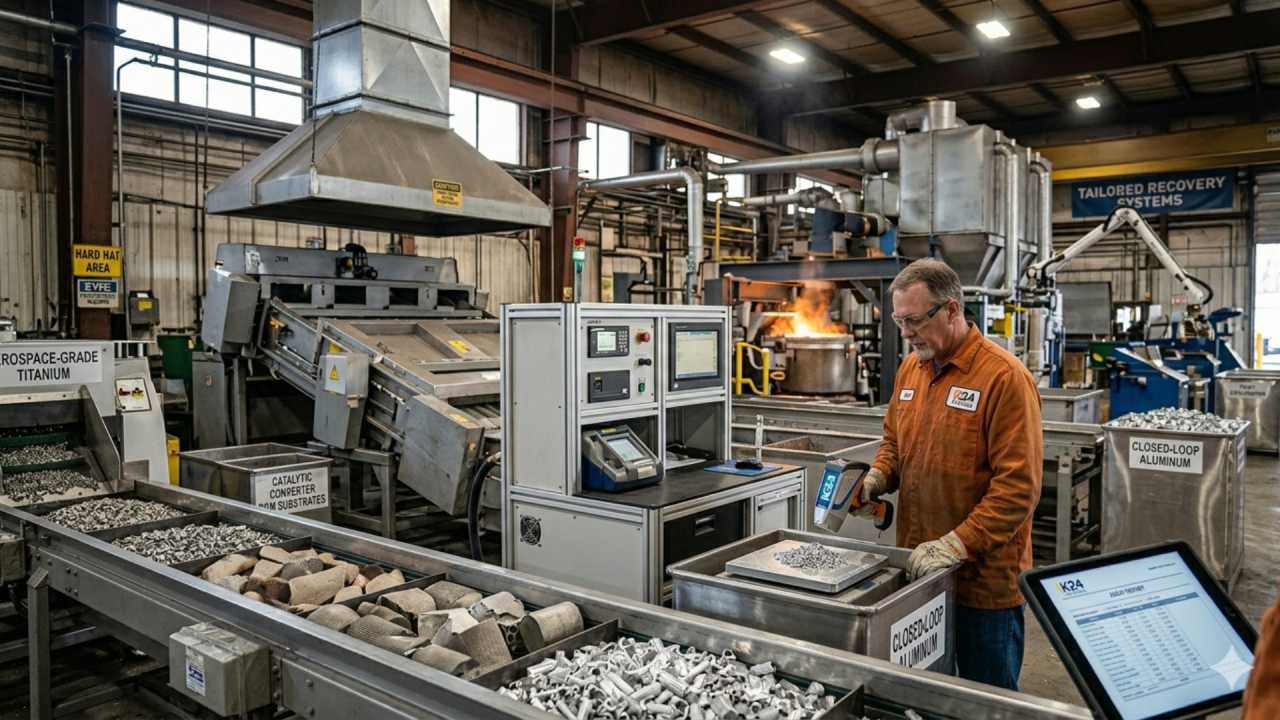
This persistent supply pressure underscores the critical need to refine scrap silver. E-waste (discarded electronics), old jewelry, and industrial byproducts represent a significant untapped resource. While the Precious Metals E-Waste Recovery Market is projected to reach USD 11.8 billion by 2025, growing at a CAGR of 4.6%, the report also notes that “the formal documented collection and recycling of e-waste amounted to only 9.3 million MT” out of 53.6 million MT produced in 2019, highlighting vast untapped potential.
Increased recycling initiatives and refining capacity expansions are becoming imperative to bridge the supply gap. Technological advancements in processing electronic waste and higher silver prices are incentivizing increased scrap recovery. However, challenges remain, including the low concentration of silver in many consumer products and the complex, energy-intensive recovery processes.
Geopolitical and Regulatory Factors
Geopolitical dynamics and evolving regulatory frameworks also play a role in shaping the demand for silver refining. Trade tensions between major economic blocs can impact the raw silver trade, potentially leading to shifts in sourcing and encouraging domestic refining capacities. For instance, countries seeking to secure critical mineral supplies might prioritize domestic refining to reduce reliance on external markets.
Environmental regulations are increasingly stringent, pushing refining operations to adopt cleaner, more sustainable practices. This can make mining more challenging and costly, further emphasizing the importance of recycling and efficient refining. Some major producing nations, particularly in Latin America, are implementing policies to capture greater value from mineral resources, potentially leading to export restrictions or higher royalty requirements, which could impact global silver flows and spur regional refining investments.
Furthermore, the strategic classification of silver as a critical mineral by some nations underscores its importance for national security and economic stability. This can lead to strategic national reserves and policies aimed at securing domestic supply chains, including refining capabilities.
Challenges Facing the Silver Refining Industry
Despite the surging demand, the silver refining industry faces several significant challenges. The technological complexity of modern refining processes, especially for extracting silver from diverse and complex scrap sources like e-waste, requires continuous innovation and substantial investment in advanced equipment.
Environmental, Social, and Governance (ESG) compliance requirements are becoming increasingly stringent. Refiners must adhere to strict regulations regarding emissions, waste disposal, and water usage, which can drive up operational costs. Companies like Fastenal, in their 2025 ESG Report, highlight the ongoing efforts to improve ESG-related systems and processes, signaling the industry-wide push for sustainability.
Skill shortages in specialized areas, such as chemical engineering and metallurgy, pose a significant hurdle for refining companies looking to expand or modernize. Attracting and retaining talent capable of managing complex refining operations is crucial. Moreover, the capital costs associated with building new refining facilities or upgrading existing ones are substantial, requiring significant financial commitment.
Finally, regional imbalances in refining capacity can create bottlenecks. While some regions might have advanced refining infrastructure, others may lag, leading to inefficiencies in the global supply chain and increasing the need for cross-border transport of unrefined materials.
Future Outlook: 2025 and Beyond
The projections for silver demand and refining growth in 2025 and beyond are overwhelmingly positive. Industry experts project silver reaching $40-41 per ounce by the end of 2025. Keith Neumeyer, CEO of First Majestic Silver, notes that “The supply-demand fundamentals of the metal are extraordinary right now,” and anticipates that the market “may be in the early stages of a multi-year bull cycle similar to the one witnessed from 2002-2012.”
Emerging technologies are set to further bolster silver demand. Beyond current applications, research into new uses in areas like quantum computing, advanced catalysts, and next-generation batteries suggests a continued expansion of silver’s industrial footprint.
The refining sector is likely to see consolidation and modernization as companies seek economies of scale and invest in advanced, more efficient, and environmentally compliant technologies. This will be crucial for meeting the escalating demand, especially from recycled sources.
For investors and businesses, these trends present strategic opportunities. Investing in companies with robust refining capabilities, those focused on advanced recycling technologies, and exploration companies with promising silver discoveries could yield significant returns. The increasing recognition of silver’s critical role in both the green economy and the digital revolution makes it an attractive asset for long-term growth.
Final Thoughts
In conclusion, the rising demand for silver refining in 2025 is a testament to the metal’s indispensable role in shaping our future. Driven by a powerful combination of global industrial growth, the accelerating adoption of clean energy technologies, relentless innovation in electronics and AI hardware, and robust investment interest, the need for high-purity refined silver has never been greater.
While challenges related to supply chain pressures, technological complexity, and stringent regulations persist, they also serve as catalysts for innovation and strategic investment in the refining sector. Meeting the burgeoning demand for silver will depend heavily on enhancing refining capabilities, particularly through advanced recycling initiatives, and fostering a skilled workforce. As the world continues its trajectory towards a greener, more connected, and technologically advanced future, the importance of silver refining will only grow, making it a critical industry to monitor and invest in for years to come.