Scaling Precious Metals Refining Operations: Strategies for Business Growth
The global demand for precious metals—spanning gold and silver to the critical platinum group metals (PGMs) like palladium and rhodium—has reached unprecedented levels. This demand is driven not only by traditional investment and jewelry sectors but also by the rapid expansion of high-tech manufacturing, green energy technologies, and automotive catalysts. For many small to mid-sized refining businesses, this surge presents a significant opportunity. However, moving from a boutique or artisanal operation to an industrial-scale facility is a complex journey fraught with technical and operational hurdles.
Scaling up a refining business is not merely about buying larger vats or hiring more hands; it is a fundamental transformation of how a business handles value. Many operations hit “scaling bottlenecks” where the manual processes that worked for small batches become inefficient, dangerous, or legally non-compliant when applied to larger volumes. A true industrial-scale operation requires a shift in mindset toward high-throughput processing, precision recovery rates, and rigorous regulatory adherence.
To scale successfully, a business must harmonize five key pillars: throughput capacity, recovery efficiency, regulatory compliance, cost management, and automation. This article explores the strategies and solutions necessary for growing refining businesses to expand their footprint, increase their margins, and solidify their position in the global precious metals market.
Understanding the Precious Metals Refining Value Chain
Before a business can scale, it must have a crystal-clear understanding of its value chain. Refining is a multi-stage process where value is “unlocked” from various feedstocks. Understanding where the most value is lost or where time is wasted is the first step toward expansion.
Sources of Feedstock
As a refinery grows, its hunger for raw material increases. Feedstock typically falls into several categories:
-
Scrap Jewelry: Often high-grade but requires extensive sorting and stone removal.
-
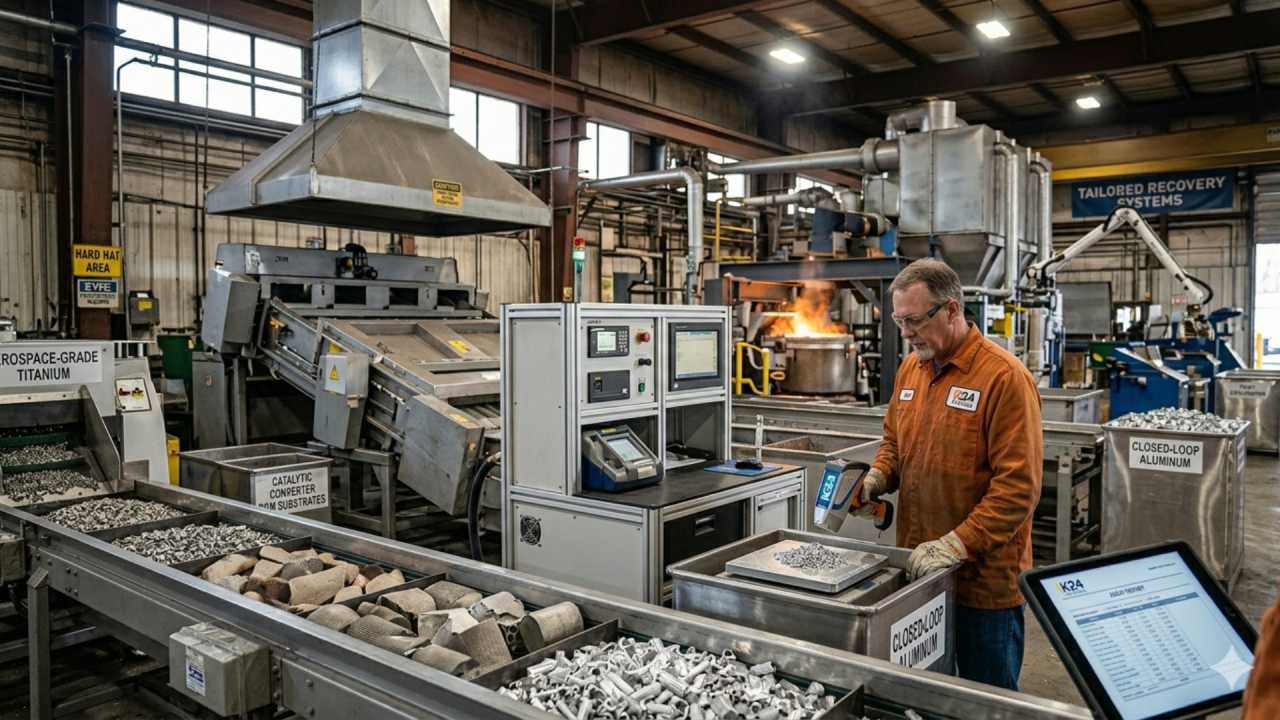
Electronics (E-waste): Low-grade per ton but high-volume, requiring sophisticated pre-treatment to separate metals from plastics and ceramics.
-
Industrial Catalysts: Rich in PGMs, often requiring specialized chemical leaching or smelting.
-
Mining Doré Bars: High-purity semi-refined bars that require final purification.
Core Refining Steps
The workflow generally follows a path of collection, sorting, and sampling, followed by pre-treatment. Pre-treatment might involve shredding electronics or melting scrap into anodes. The heart of the operation is the refining process itself—usually chemical (aqua regia) or electrolytic—which separates the desired metals from impurities. Finally, the metals are purified, cast into bars or grains, and resold.
Identifying Bottlenecks
In many growing businesses, bottlenecks appear during the assay and sampling stage. If you cannot accurately determine the metal content of an incoming batch quickly, your capital remains tied up in “work-in-progress” (WIP) inventory. Other common bottlenecks include slow chemical filtration cycles or inadequate furnace capacity for melting large volumes of scrap. Identifying these pinch points is essential before investing in new infrastructure.
Key Challenges When Scaling Refining Operations
Scaling a refinery is rarely a linear process. As volume increases, new challenges emerge that were non-existent at a smaller scale.
Feedstock Inconsistency
At a small scale, a refiner might know every supplier personally. At an industrial scale, you deal with a wide variety of feedstock qualities. Managing the variability of e-waste versus industrial sludge requires different processing lines and sophisticated pre-sorting.
Recovery Rate Losses
In refining, a fraction of a percentage point is the difference between profit and loss. When processing 10 kilograms, a 0.5% loss is unfortunate; when processing 10 tons, it is a financial disaster. Maintaining high recovery rates becomes significantly harder as volumes increase because chemical reactions become more difficult to control, and “drag-out” (metal lost in waste streams) increases.
Labor and Safety
The refining industry faces a perennial shortage of skilled metallurgists and chemical engineers. Furthermore, as operations grow, the sheer volume of hazardous chemicals and high-temperature equipment increases the risk profile. Managing safety protocols for 50 employees is exponentially more complex than managing for five.
Cash Flow and Inventory
Precious metals refining is capital-intensive. When you scale, more gold and silver are “in the pipes” at any given time. This means millions of dollars in value are sitting in tanks or furnaces rather than in your bank account. Managing this “metal float” and the associated price volatility is a major hurdle for growing firms.
Infrastructure Expansion Strategies
When the decision to scale is made, the physical layout and equipment of the refinery must evolve. There are two primary schools of thought: modular expansion and massive centralized upgrades.
Modular Plant Design
For growing businesses, modular design is often the most sustainable path. Instead of building one massive, unproven line, the refinery adds parallel modules. This allows for incremental growth and ensures that if one line needs maintenance, the others can continue to operate. It also allows the business to dedicate specific modules to different types of metal, such as one line for gold and another for silver or PGMs.
Upgrading Thermal Systems
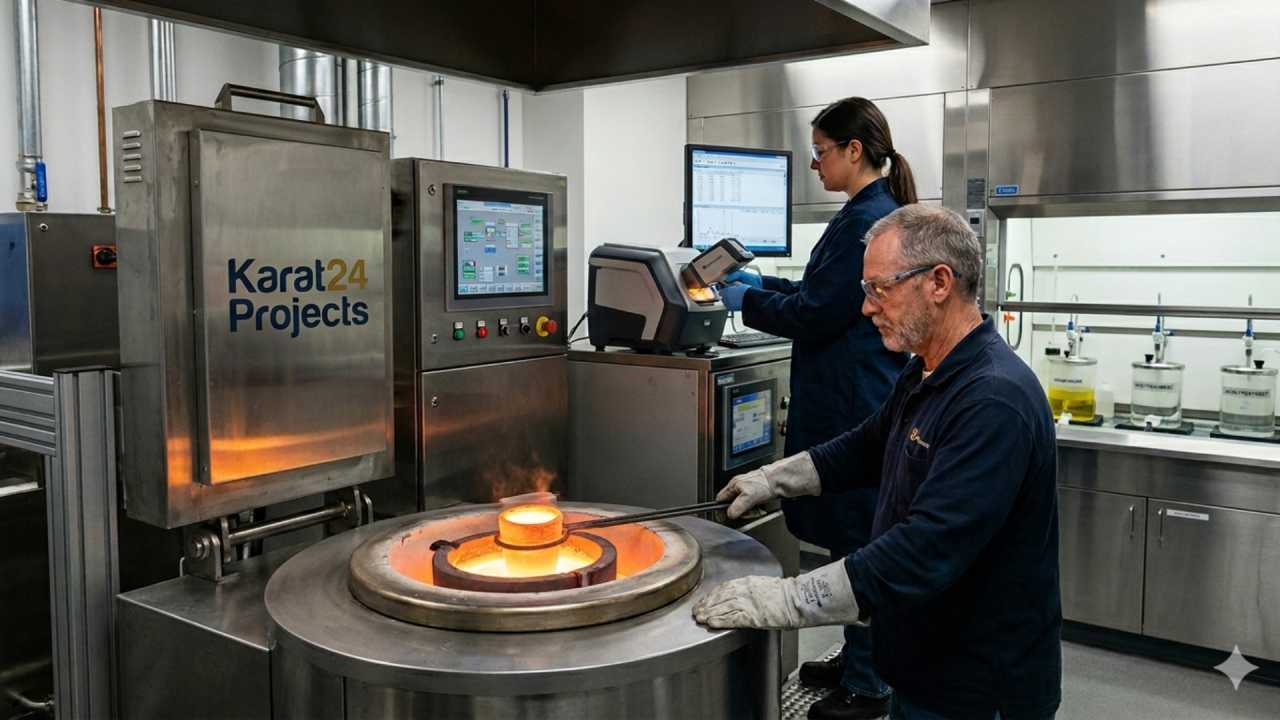
As throughput increases, traditional gas-fired furnaces often fall short. Upgrading to high-frequency induction furnaces or plasma systems offers faster melt times, better temperature control, and lower emissions. Induction melting, in particular, provides an inherent stirring action that ensures a more homogeneous melt, which is critical for accurate sampling.
Layout and Material Flow
A common mistake in scaling is simply “cramming” more equipment into an existing space. Efficient scaling requires a rethink of material flow. This involves a “lean” manufacturing approach where the distance between the receiving dock, the assay lab, the refining floor, and the vault is minimized. Secure, climate-controlled storage for high-value materials must be integrated into the very heart of the facility design.
Technology and Automation in Modern Refining
In the modern era, technology is the most powerful lever for scaling. Automation reduces human error, increases safety, and provides the data needed for continuous improvement.
Advanced Assaying
The foundation of a profitable refinery is the assay. Moving away from traditional fire assay for every single sample (which is time-consuming) toward automated systems like X-Ray Fluorescence (XRF) for rapid screening and Inductively Coupled Plasma Optical Emission Spectroscopy (ICP-OES) for high-precision liquid analysis is vital. These technologies allow for faster settlement with suppliers and more precise control over the refining process.
Digital Tracking and IoT
Scaling requires knowing where every gram of metal is at any given moment. Implementing an Enterprise Resource Planning (ERP) system tailored for the metals industry allows for real-time tracking of batches. IoT sensors on furnaces and chemical tanks can monitor temperature, pH levels, and pressure, alerting operators to deviations before they lead to metal loss or equipment failure.
Robotics and Material Handling
The movement of heavy crucibles or the sorting of thousands of circuit boards is labor-intensive and dangerous. Robotics can be utilized for furnace loading, casting operations, and even AI-assisted sorting of e-waste scrap. By automating the “dull, dirty, and dangerous” tasks, a refinery can scale its volume without a linear increase in its workforce.
Improving Recovery Rates and Yield Efficiency
Profitability in refining is determined by the “yield”—the amount of pure metal recovered compared to the amount present in the original feedstock.
Chemical Optimization
To improve yields at scale, refiners must move beyond basic aqua regia recipes. This involves optimizing the concentration of acids, controlling the rate of precipitation, and using advanced flocculants to ensure that even microscopic particles of gold or platinum are captured.
Secondary Recovery Loops
No refining process is 100% efficient in a single pass. Large-scale operations implement secondary recovery loops where waste acids (barren solutions) and slags are re-processed to catch residual trace amounts of metal. This “closed-loop” approach can increase overall recovery by 0.5% to 1.5%, which, at scale, translates to significant annual revenue.
Electrolytic Refining
For high-purity silver and gold, electrolytic refining is the gold standard for scaling. By using electricity to migrate metal ions from an impure anode to a pure cathode, refiners can achieve 99.99% (four nines) purity with very high consistency. Modern electrolytic cells are now more energy-efficient and can be monitored digitally to ensure optimal deposition rates.
Supply Chain and Feedstock Sourcing at Scale
A large-scale refinery is a “beast” that must be fed constantly. Scaling the refinery’s capacity is useless if the sales team cannot secure enough feedstock to keep the machines running.
Building Supplier Networks
Moving from spot-purchasing to long-term contracts is a hallmark of a scaled operation. This involves building relationships with e-waste aggregators, industrial manufacturers, and jewelry chains. Many successful refiners offer “toll refining” services, where they charge a fee for the service rather than buying the metal outright, which reduces the refinery’s exposure to price fluctuations.
Logistics and Security
Scaling means more trucks entering and leaving the facility. This requires an investment in high-level security infrastructure, including armored vehicle bays, sophisticated surveillance, and biometric access controls. Furthermore, logistics optimization—finding the most cost-effective and secure way to transport heavy, high-value materials—becomes a core competency of the business.
Regulatory Compliance and Environmental Considerations
As a refining business grows, it moves from the “local” radar to the “national and international” radar. Compliance is not an administrative burden; it is a license to operate.
Environmental Stewardship
Refining involves hazardous chemicals like nitric acid, hydrochloric acid, and cyanide. Scaling up means generating more waste. Industrial refiners must invest in advanced air scrubbers to neutralize nitrogen oxide (NOx) fumes and wastewater treatment plants that ensure zero discharge of heavy metals into the local environment.
International Standards and ESG
To sell to major banks or electronics manufacturers, a refinery must often comply with standards set by organizations like the London Bullion Market Association (LBMA). These standards cover “Responsible Sourcing,” ensuring that metal does not come from conflict zones or contribute to human rights abuses. Environmental, Social, and Governance (ESG) criteria are increasingly important for securing investment and building a brand in the modern market.
Financial Planning for Expansion
Scaling requires a significant injection of capital. Managing the financial health of the business during a period of rapid growth is a delicate balancing act.
CAPEX vs. OPEX
The initial investment in new furnaces, buildings, and technology represents Capital Expenditure (CAPEX). However, the increased utility bills, chemical costs, and specialized labor represent Operating Expenditure (OPEX). A growing business must conduct a thorough break-even analysis to ensure that the increased volume will cover the higher OPEX and eventually pay off the CAPEX.
Hedging Against Volatility
When you hold large amounts of gold or silver, a 5% drop in market price can be devastating. Scaled refineries use sophisticated financial hedging—such as futures and forward contracts—to lock in prices and protect their margins. This allows the business to focus on the “refining spread” (the margin earned on the service) rather than gambling on the direction of the metal market.
Workforce Scaling and Skill Development
A refinery is only as good as the people operating the equipment. Scaling requires a transition from “master-apprentice” training to formal, standardized systems.
Hiring and Retention
Attracting metallurgical talent is competitive. Growing businesses should look to partner with universities or technical colleges to create a pipeline of talent. At the same time, the refinery must hire specialists in areas that a small shop might ignore, such as health and safety officers, environmental compliance managers, and data analysts.
Safety Culture
In an industrial environment, safety must be the top priority. Scaling involves implementing rigorous standard operating procedures (SOPs). Every employee must be trained not just in how to do their job, but in how to respond to chemical spills, fires, or equipment malfunctions. A single major accident can shut down a scaled operation for months or permanently.
Scaling in Practice: A Strategic Scenario
Consider a hypothetical refinery that has spent years processing 500 kilograms of gold scrap per month using manual chemical leaching. To scale to 5,000 kilograms (5 tons) per month, the business must fundamentally change its approach.
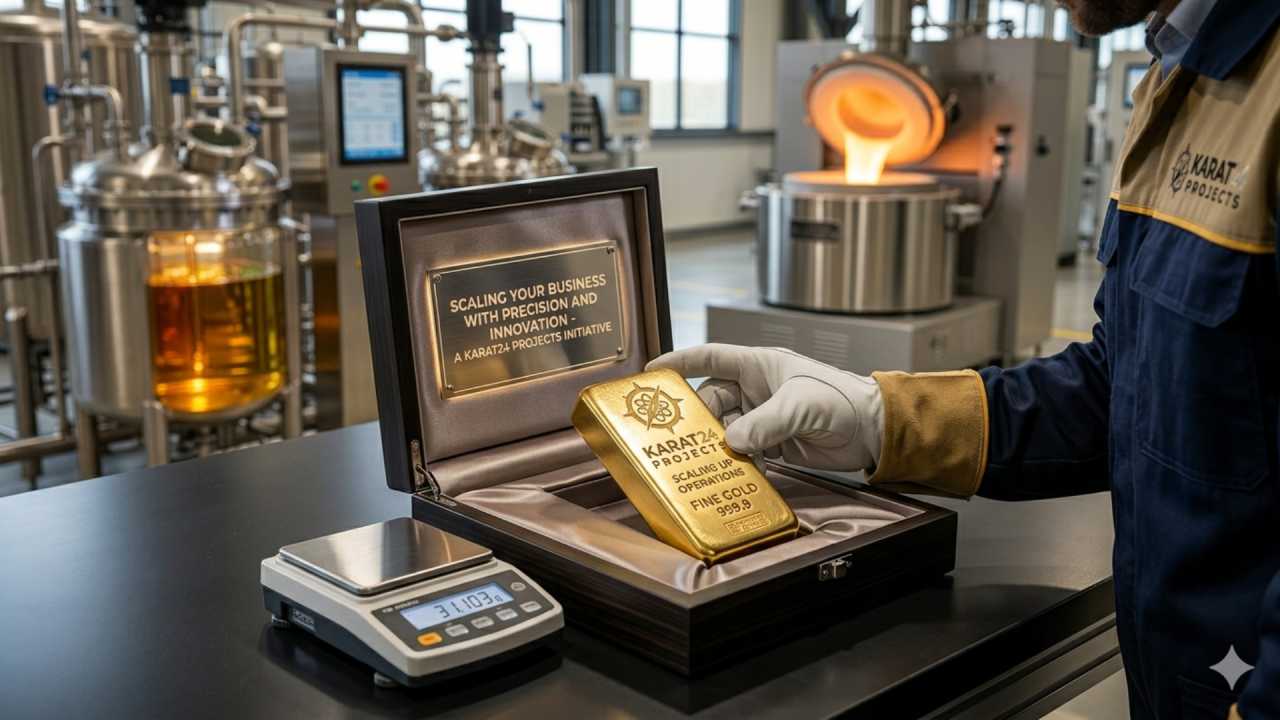
In this scenario, the business would first move from small glass beakers to large-scale, automated titanium or polypropylene reactors. They would replace manual weighing with integrated load-cell scales that feed data directly into an ERP system. To handle the increased volume, they would install an induction furnace capable of 100-kilogram melts and an automated grain-shotting system for the final product.
By implementing these changes, the refinery reduces its “turnaround time” (the time from receiving scrap to delivering pure metal) from ten days to four days. This faster cycle significantly reduces the amount of capital tied up in inventory, allowing the business to reinvest that cash into further marketing and feedstock acquisition.
Future Trends in Precious Metals Refining
The refining industry is undergoing a “green” and “digital” revolution. Staying ahead of these trends is essential for any business planning to scale for the long term.
Urban Mining and the Circular Economy
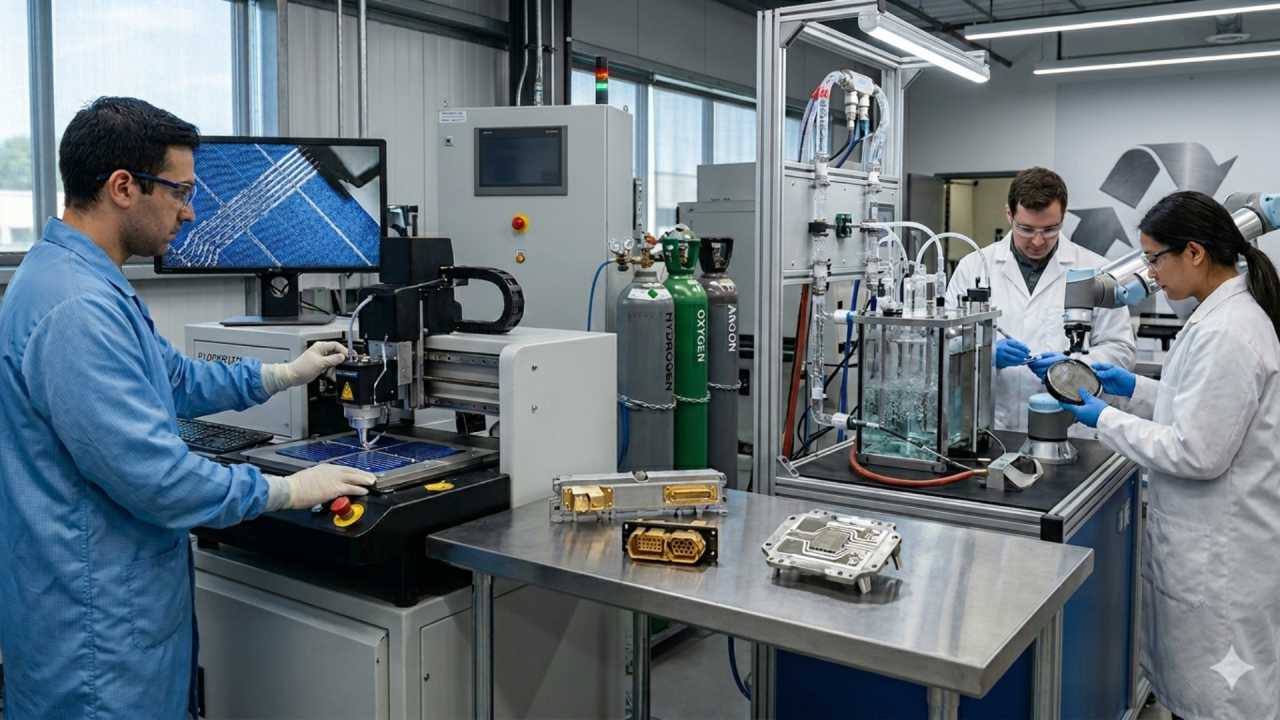
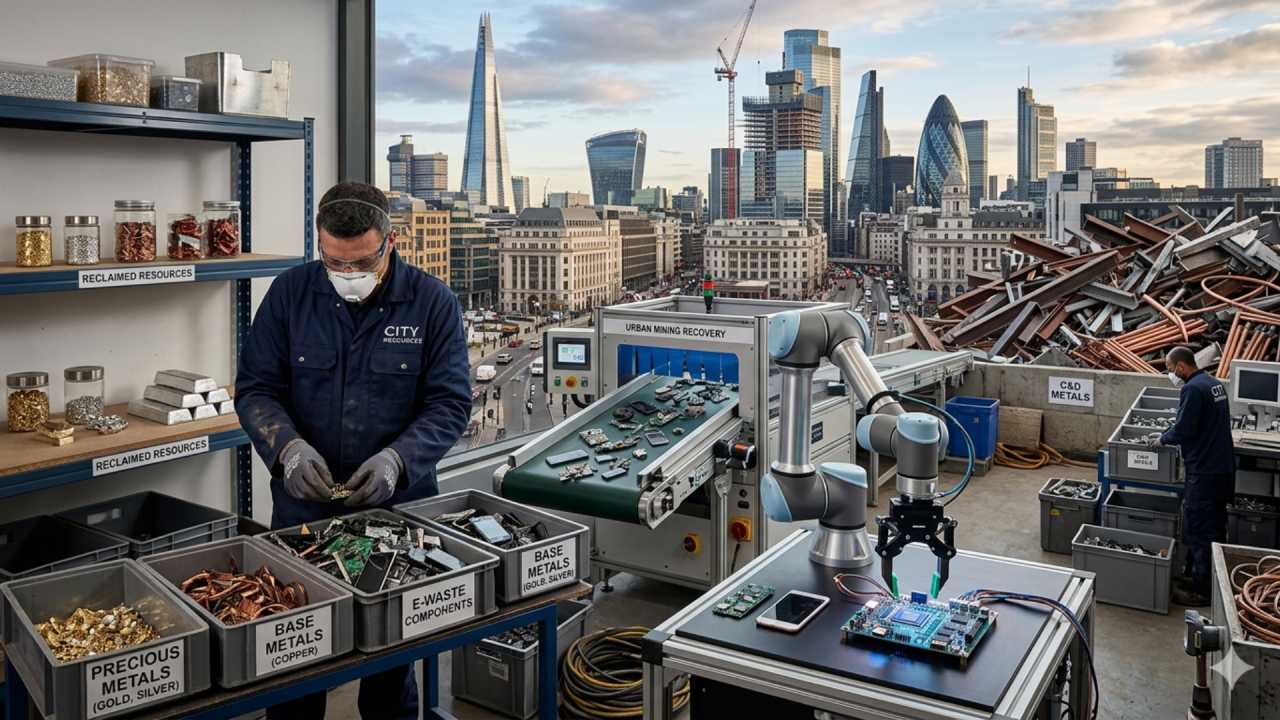
The focus is shifting from traditional mining to “urban mining”—recovering metals from end-of-life products. Refineries that specialize in e-waste or hydrogen fuel cell scrap will be well-positioned as the world moves toward a circular economy.
Green Chemistry
New, less toxic solvents are being developed to replace traditional acids. While still in the early stages for large-scale application, “green refining” offers the potential for lower compliance costs and a smaller environmental footprint, which is a major selling point for corporate clients.
Blockchain for Traceability
Blockchain technology is being used to create a digital “passport” for every bar of metal. This provides an immutable record of where the metal came from and how it was refined, meeting the highest standards of transparency and responsible sourcing.
Final Thoughts
Scaling a precious metals refining operation is a monumental task that requires a blend of chemistry, engineering, finance, and diplomacy. It is a journey from the art of the bench to the science of the factory. For businesses that can successfully integrate advanced technology, modular infrastructure, and rigorous compliance, the rewards are substantial.
As the world continues to demand more precious metals for everything from smartphones to satellite components, the role of the industrial refiner becomes more critical than ever. Scaling up is not just about getting bigger; it is about getting smarter, safer, and more efficient. By focusing on these core pillars, a growing refining business can transform itself into a leader in the global metals market, providing the essential materials that power the modern world.
Frequently Asked Questions
What is the difference between gold smelting and gold refining for small businesses?
While often used interchangeably, smelting and refining are distinct stages. Smelting is the initial thermal process where ore or scrap is melted to separate the bulk metal from impurities (slag), usually resulting in a semi-pure “doré” bar. Refining is the high-precision chemical or electrolytic process that follows smelting, designed to remove the remaining trace impurities and achieve a standardized purity of 99.9% or 99.99%. For a growing business, understanding this distinction is vital for determining where in the value chain you want to compete.
How can I improve gold recovery rates from e-waste at an industrial scale?
Improving recovery rates in urban mining requires a combination of sophisticated pre-treatment and chemical optimization. Implementing automated shredding and magnetic separation ensures that the high-value components are concentrated before they reach the chemical stage. Utilizing multi-stage leaching processes and secondary recovery loops to capture trace metals from barren solutions can significantly increase your overall yield. Small adjustments in pH levels and the use of modern flocculants also prevent microscopic metal particles from being lost in the waste stream.
What are the best machines for a growing precious metals refinery?
For businesses scaling up, the best equipment focuses on throughput and consistency. Key investments include high-frequency induction furnaces for rapid, homogeneous melting and titanium reactors for aqua regia processes that resist corrosion. Automated assay equipment like XRF and ICP-OES are essential for fast and accurate material testing. Digital process control systems (SCADA) are also recommended to monitor real-time data, which helps in maintaining safety and efficiency during continuous operations.
Is it more profitable to refine gold or platinum group metals (PGMs)?
While gold and silver have higher trading volumes and simpler refining processes, PGMs like palladium and rhodium often offer higher margins due to their extreme rarity and technical difficulty in refining. However, PGM refining requires more complex solvent extraction and higher capital expenditure for specialized equipment. Many growing businesses start with gold and silver to build cash flow before expanding into the specialized niche of PGM recovery.
What environmental regulations apply to precious metals refining operations?
Scaling a refinery brings greater scrutiny from environmental agencies. Businesses must comply with regulations regarding hazardous waste disposal, air emissions (specifically nitrogen oxides from acid leaching), and wastewater treatment. Implementing a Zero Liquid Discharge (ZLD) system and high-efficiency air scrubbers is not only a legal requirement in many jurisdictions but also an essential part of a “green refining” brand strategy that attracts high-end industrial clients and investors.
How do I manage financial risk in a high-volume refining business?
The primary financial risk in scaling is metal price volatility. Because your capital is tied up in the metal being processed, a sudden price drop can erode your margins. Successful industrial refiners use hedging strategies, such as futures or forward contracts, to lock in prices at the time of purchase. Additionally, transitioning from buying scrap to “toll refining”—where you charge a service fee and return the pure metal to the client—shifts the price risk away from your business.
Why is urban mining considered the future of the precious metals industry?
Urban mining—the recovery of metals from electronic waste and industrial scrap—is becoming a primary feedstock because it is more energy-efficient than traditional mining. It requires significantly less earth to be moved and fewer chemicals to be used per gram of metal recovered. As global sustainability standards tighten, refineries that can efficiently process e-waste are gaining a competitive advantage by participating in the circular economy and appealing to ESG-conscious buyers.