Precious Metal & Chemical Safety: Essential Guidelines
The refining of precious metals is an ancient craft that has evolved into a highly sophisticated, multi-billion-dollar modern industry. Whether extracting gold from discarded electronics, separating platinum group metals from industrial catalysts, or parting silver in a boutique jewelry studio, the underlying chemical principles remain the same. To liberate these high-value elements from complex matrices, refiners must employ some of the most reactive, corrosive, and toxic substances known to chemical science.
While the economic incentives of recovering gold, silver, platinum, and palladium are substantial, the operational risks are equally immense. Precious metal refining is fundamentally an aggressive chemical process. The reagents required to dissolve inert, noble metals do not differentiate between target feedstocks and human tissue, respiratory systems, or the surrounding environment. Without rigorous safety protocols, a refinery can quickly transform from a profitable enterprise into a site of catastrophic injury, acute poisoning, or severe environmental liability.
The primary hazards encountered in a refining environment include highly toxic airborne fumes, severe chemical burns, sudden exothermic explosions, chronic heavy metal exposure, and long-term environmental contamination. Mitigating these risks requires a comprehensive understanding of chemical behaviors, dedicated engineering controls, appropriate personal protective equipment, and an unyielding commitment to regulatory compliance.
“A successful refinery is not only efficient — it is safe, compliant, and environmentally responsible. True operational excellence is measured not by the troy ounces produced, but by the zero-incident record of the facility that produced them.”
Understanding Precious Metal Refining Processes
To establish effective safety protocols, one must first understand the specific chemical methodologies deployed across various scales of refining. Each method relies on distinct chemical reactions, and each introduces unique operational hazards.
Aqua Regia Refining
Aqua regia, a Latin term meaning “royal water,” is a highly corrosive mixture of concentrated hydrochloric acid and concentrated nitric acid, typically prepared in a volume ratio of 3:1. This potent combination is primarily used to dissolve gold and platinum group metals. The nitric acid acts as a powerful oxidizer, while the hydrochloric acid provides chloride ions to form stable coordination complexes, effectively pulling the precious metals into solution.
The primary hazard of aqua regia refining is the immediate and violent generation of toxic gases, including nitrosyl chloride, nitrogen dioxide, and chlorine gas. The reaction is highly exothermic. If the temperature is not carefully regulated, or if the feedstock contains volatile impurities, the mixture can boil over violently or cause catastrophic containment failure in closed vessels.
Nitric Acid Parting
Nitric acid parting is a classic metallurgical technique used to separate silver from gold in alloys where the gold content is relatively low (typically less than 25 percent, a process historically known as “inquartation”). The alloy is treated with concentrated nitric acid, which selectively dissolves the silver, copper, and other base metals, leaving behind a high-purity gold sponge.
The main danger in nitric acid parting is the massive, rapid evolution of nitrogen oxides, characterized by dense, orange-brown fumes. This reaction can easily spiral out of control if too much acid is added to a finely divided metallic powder, resulting in rapid boiling, acid splashing, and acute respiratory hazards for anyone in the immediate vicinity.
Electrolytic Refining
Electrolytic refining, such as the Wohlwill process for gold or the Moebius process for silver, uses an electric current passing through an acidic electrolyte solution to migrate pure metal ions from an impure anode to a high-purity cathode. The chemicals used include gold chloride solutions with hydrochloric acid or silver nitrate solutions with nitric acid.
While chemically more stable than aqua regia digestion, electrolytic refining introduces electrical hazards paired with corrosive liquids. The continuous passage of electrical current can cause electrolysis of water, generating flammable hydrogen gas at the cathode and oxygen at the anode. This creates a persistent risk of localized explosions if ventilation is inadequate and ignition sources are present.
Smelting and Fluxing
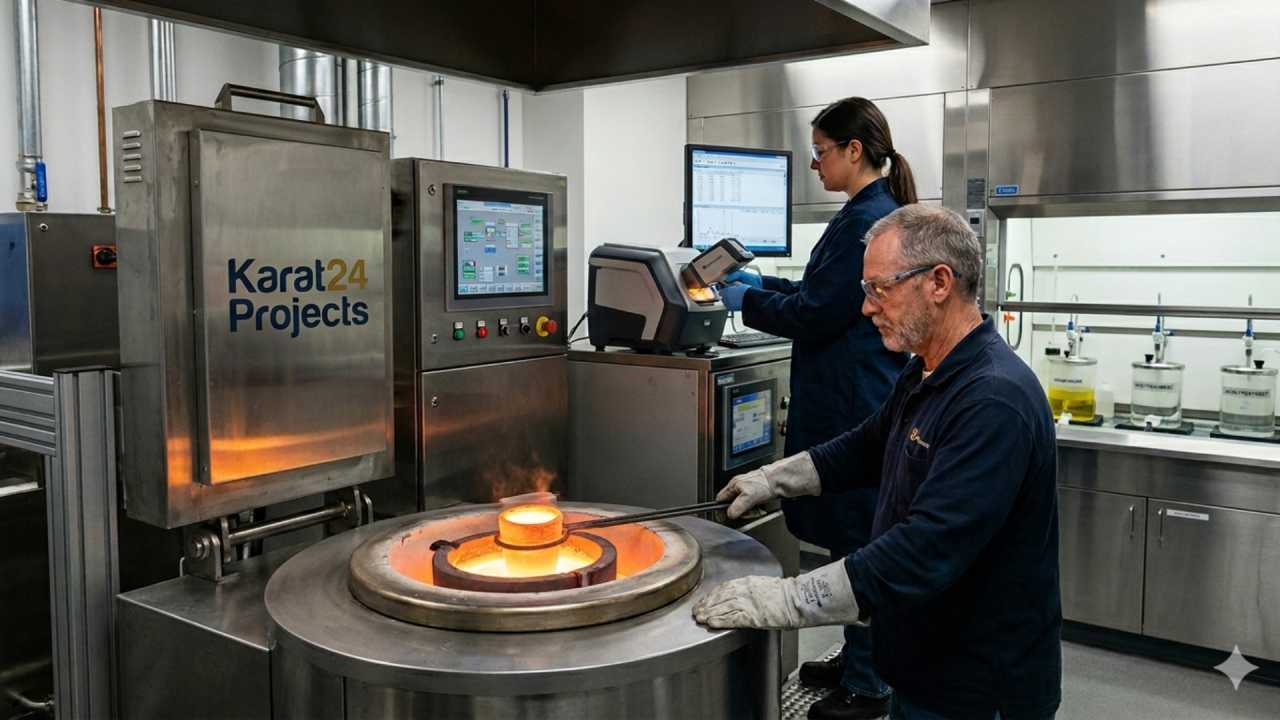
Smelting involves heating precious metal concentrates, sweeps, or precipitates to extreme temperatures (often exceeding 1000 degrees Celsius) in a crucible, using chemical fluxes such as borax, silica, sodium carbonate, and lead oxide. The fluxes react with base metal impurities to form a liquid slag, which floats on top of the molten precious metal.
The main hazards here are thermal and respiratory. Smelting generates intense radiant heat, risks of molten metal splashes, and highly toxic fumes containing volatilized base metals, lead, arsenic, and sulfur dioxide.
Cyanide Leaching
Used primarily in industrial mining operations and large-scale secondary recovery, cyanide leaching dissolves gold and silver from low-grade ores or scrap using dilute solutions of sodium cyanide or potassium cyanide under alkaline conditions.
The hazard associated with cyanide is extreme and immediate lethality. If a cyanide solution drops below an alkaline pH (typically below pH 10.5), it instantly reacts to generate hydrogen cyanide gas—a rapid-acting systemic asphyxiant that can be fatal within minutes of inhalation.
Precipitation and Recovery Methods
Once precious metals are dissolved in solution, they must be selectively precipitated back into solid metallic form. Refiners use selective reducing agents such as sulfur dioxide gas, sodium metabisulfite, ferrous sulfate, hydrazine, or zinc dust.
Each precipitant brings distinct chemical risks. For instance, using sodium metabisulfite in an acidic solution releases sulfur dioxide gas, a severe respiratory irritant. Hydrazine is a known carcinogen and a highly reactive reducing agent that can cause explosive reactions if mixed with strong oxidizers.
Hazardous Chemicals Used in Refining
A deep understanding of the individual chemicals utilized during refining is the foundation of any comprehensive safety program. Chemicals must be cataloged by their utility, immediate dangers, long-term risks, and strict storage incompatibilities.
Acids
-
Hydrochloric Acid: Used as a primary component of aqua regia and for stripping base metals. It is highly corrosive to skin and eyes, and its ambient vapors cause severe respiratory irritation. Long-term exposure leads to chronic bronchitis and the erosion of tooth enamel. It must be stored in dedicated, vented plastic or rubber-lined containers, strictly away from strong oxidizers and concentrated nitric acid until intentional mixing is required.
-
Nitric Acid: Used in parting, aqua regia formulation, and silver dissolution. It is both a strong, corrosive acid and a powerful oxidizing agent. Contact with skin causes immediate tissue destruction and deep yellow staining. Inhalation of its vapors can cause delayed pulmonary edema, a fatal condition where the lungs fill with fluid hours after exposure. It must be stored in dedicated glass or compatible fluoropolymer containers away from organic solvents, reducers, and combustible materials, as it can spontaneously ignite them.
-
Sulfuric Acid: Used in stripping cells, acid sweeps, and neutralizing processes. It has an extreme affinity for water, generating intense heat upon dilution. Concentrated sulfuric acid causes rapid, deep tissue charring upon contact. Chronic exposure to sulfuric acid mists is linked to an increased incidence of laryngeal cancer. It must be stored in heavy-duty high-density polyethylene (HDPE) or steel containers (depending on concentration) and kept far away from water sources, bases, and organic compounds.
Oxidizers
-
Hydrogen Peroxide (Concentrated): Used in combination with hydrochloric acid as an alternative to aqua regia for milder digestions. At industrial concentrations (30 percent and above), it is a violently reactive oxidizer. Contact with skin causes instant bleaching and chemical burns. It can decompose explosively if contaminated with trace metals. It must be stored in original, vented containers to prevent pressure buildup, away from all organic chemicals and reducing agents.
-
Sodium Nitrate: Used as a dry oxidizer substitute in specific fluxing or refining recipes. It poses minimal inhalation risk as a solid but presents a severe fire and explosion hazard when mixed with finely divided metals or reducing agents at elevated temperatures. It must be stored in a cool, dry area away from organic acids and flammable materials.
Toxic Compounds
-
Cyanides (Sodium/Potassium Cyanide): Used for selective leaching. Cyanide ions inhibit cellular respiration by binding to the iron atoms in cytochrome oxidase enzymes, preventing cells from using oxygen. Exposure can occur through skin absorption, ingestion, or inhalation of hydrogen cyanide gas. It must be stored under absolute lock and key, in airtight containers, completely isolated from any acids, moisture, or carbon dioxide in the air.
-
Chlorine Gas: Generated directly during aqua regia reactions or intentionally introduced via gas injection for gold purification (the Miller process). It is a severe pulmonary irritant that reacts with water in the lungs to form hydrochloric and hypochlorous acids, causing immediate asphyxiation and tissue damage. It requires specialized gas containment, scrubber systems, and real-time electronic monitoring.
-
Metal Salts (e.g., Gold Chloride, Silver Nitrate): These are intermediate compounds in the refining loop. They are highly toxic if swallowed or absorbed. Silver nitrate causes permanent grey-blue skin discoloration (argyria). They must be handled with full chemical containment and stored in secure, labeled containers.
Solvents and Cleaners
-
Ammonia (Ammonium Hydroxide): Used to dissolve silver chloride precipitates and neutralize acidic residues. It is extremely irritating to the eyes and respiratory tract. Crucially, when ammonia is mixed with silver or gold solutions under specific conditions, it can form explosive fulminates (such as fulminating silver or gold), which can detonate violently with the slightest physical shock or temperature change. It must be handled with extreme caution and never stored alongside halogens, nitric acid, or precious metal solutions.
-
Acetone and Alcohols (Isopropanol, Ethanol): Used for degreasing scrap metal and drying refined powders. They are highly flammable liquids with low flashpoints, presenting severe fire risks in facilities utilizing open flames or high-temperature furnaces. They must be stored in approved fireproof safety cabinets away from oxidizers, acids, and ignition sources.
| Chemical | Primary Use in Refining | Main Hazard | Essential PPE Required |
| Hydrochloric Acid (32-37%) | Aqua regia component, base metal stripping | Severe skin burns, choking acid vapors | Acid-resistant apron, nitrile/neoprene gloves, face shield |
| Nitric Acid (68-70%) | Aqua regia component, silver parting | Deep tissue destruction, deadly NOx gas generation | Heavy butyl rubber gloves, chemical splash goggles, face shield, acid suit |
| Sulfuric Acid (98%) | Stripping solutions, waste neutralization | Extreme exothermic charring, severe internal burns | Face shield, heavy neoprene gloves, acid-resistant apron, safety boots |
| Sodium Cyanide | Selective gold/silver leaching | Extreme systemic toxicity, rapid fatal asphyxiation | Full-face respirator with multi-gas/cyanide cartridge, double gloves, chemical suit |
| Ammonium Hydroxide | Precipitate purification, neutralizing | Severe respiratory irritant, forms shock-sensitive explosives | Full face shield, chemical goggles, nitrile gloves, local exhaust |
| Acetone | Degreasing feedstock, drying powders | Flash fires, highly volatile flammable vapors | Solvent-resistant gloves (Viton or specialized laminate), safety glasses, explosion-proof ventilation |
Toxic Fumes and Airborne Hazards
The most pervasive day-to-day threat in a precious metal refinery does not come from liquid spills, but from the invisible or brightly colored gases generated during chemical processing. Inhalation of these gasses can cause instant damage to the human respiratory system or long-term chronic illness.
Nitrogen Oxides (NOx)
Nitrogen oxides, primarily nitric oxide and nitrogen dioxide, are the immediate byproduct of any refining step that involves nitric acid. Nitrogen dioxide is easily identifiable as a dense, heavy, reddish-brown or orange gas. However, its distinct appearance should not falsely reassure operators; it is highly insidious.
When inhaled, NOx gases do not always cause immediate, severe pain or coughing, which can lull an operator into believing they have not received a dangerous dose. Once inside the lungs, the gas slowly dissolves into the moisture of the alveolar membranes, converting into nitric and nitrous acids. This initiates a delayed chemical burn inside the lungs. Hours after exposure, often after the worker has gone home, they may experience sudden, severe shortness of breath due to delayed pulmonary edema. This condition can rapidly become fatal if left untreated.
Chlorine Gas
Chlorine gas is a greenish-yellow, highly pungent gas that evolves during aqua regia reactions, especially when the solution is heated, or when hypochlorite (bleach) solutions are mixed with acids during alternative refining methodologies. Unlike NOx, chlorine gas produces an immediate, violent choking sensation, burning of the eyes, and severe irritation of the upper respiratory tract.
Acute exposure can cause vocal cord spasms, severe bronchial burns, and immediate chemical asphyxiation. Chronic low-level exposure damages lung elasticity over time, leading to reactive airways dysfunction syndrome (RADS).
Sulfur Dioxide
Sulfur dioxide is generated whenever sulfur-bearing feeds are smelted or when reducing agents like sodium metabisulfite are added to acidic gold solutions. It is a colorless gas with a suffocating, sharp odor reminiscent of a struck match. It dissolves instantly in the upper respiratory tract to form sulfurous acid, causing acute bronchoconstriction, coughing, and severe throat irritation. For individuals with asthma, even trace amounts can trigger life-threatening respiratory distress.
Metal Vapors and Dusts
Airborne hazards are not limited to gases. High-temperature processes like smelting, cupellation, and casting volatilize base metals and precious metals alike. Silver vapors can settle in the respiratory tract and eyes, causing irreversible systemic staining.
Far more dangerous, however, are the contaminant metals often found in electronic scrap or low-grade jewelry alloys:
-
Lead: Volatilizes during cupellation and accumulates in bone and soft tissue, causing profound neurological damage, kidney failure, and reproductive toxicity.
-
Cadmium: Commonly found in older silver brazing alloys and electronics, cadmium has an incredibly low boiling point. Inhaling cadmium oxide fumes causes “metal fume fever” in the short term, but can progress to fatal chemical pneumonitis and permanent kidney damage. It is also a potent, regulated carcinogen.
Engineering Controls for Airborne Hazards
Relying on masks or respirators as a primary defense against these airborne hazards is an unacceptable safety failure. Engineering controls must be the primary line of defense:
-
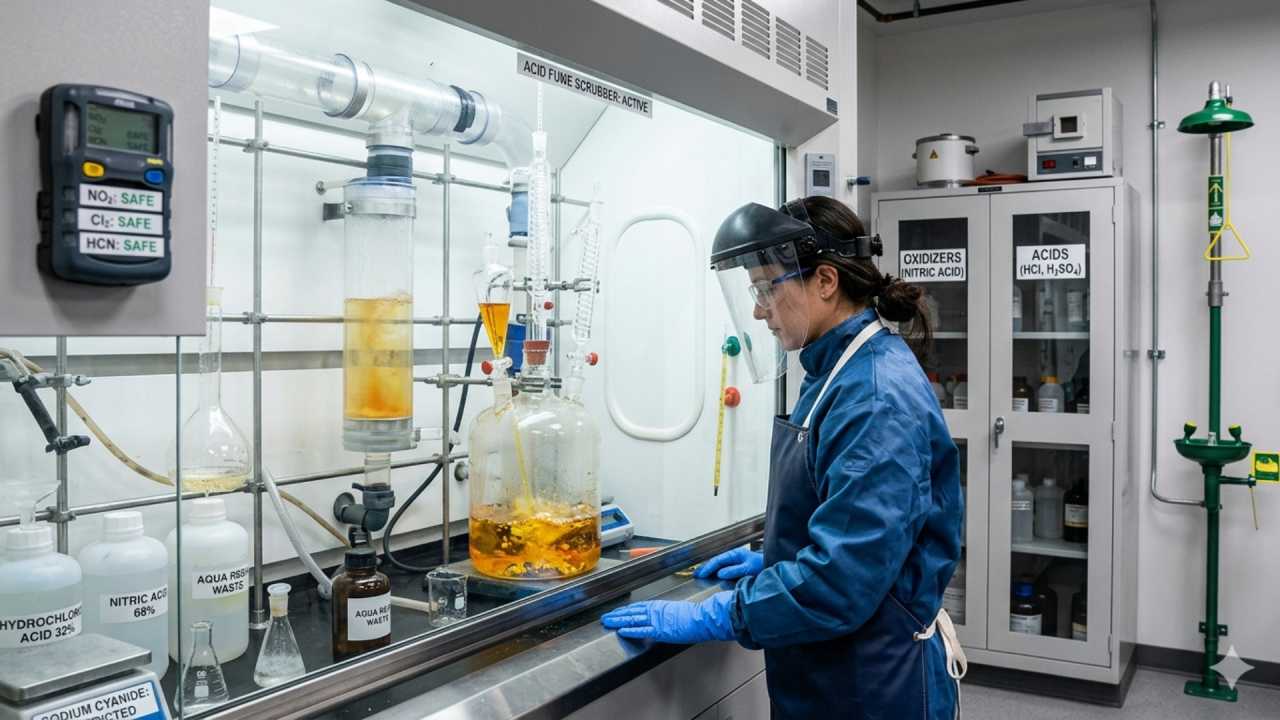
Fume Hoods: All chemical digestions must take place inside custom-engineered chemical fume hoods constructed from acid-resistant materials (such as polypropylene). The hood must maintain a continuous, certified face velocity (typically 100 to 120 feet per minute) to ensure fumes are pulled away from the operator’s breathing zone.
-
Wet Scrubbers: Exhaust air from fume hoods cannot simply be vented into the atmosphere. It must pass through a multi-stage wet scrubbing system. These systems force the exhaust air through a packed tower sprayed with a counter-current neutralizing solution (such as sodium hydroxide for acid fumes) to chemically strip the toxic gases out of the airflow before discharging it outside.
-
Local Exhaust Ventilation (LEV): For furnaces, smelting stations, and pouring areas, specialized high-temperature hoods or canopy hoods must be positioned directly over the heat source to capture metal fumes at the point of origin.
-
Air Monitoring: Facilities should be equipped with continuous electronic gas detectors featuring audible and visual alarms tuned to detect trace levels of nitrogen dioxide, chlorine, hydrogen cyanide, and sulfur dioxide.
Personal Protective Equipment Requirements
Personal Protective Equipment (PPE) is fundamentally the last line of defense in a hierarchy of safety controls. It does not eliminate a hazard; it merely interposes a physical barrier between the hazard and the worker. In a precious metal refinery, standard laboratory or industrial gear is wholly inadequate.
Essential PPE Ensemble
-
Chemical-Resistant Gloves: Standard disposable nitrile gloves (4 to 6 mil thickness) offer virtually zero protection against concentrated nitric or sulfuric acid; they will degrade or catch fire within seconds of contact. Operators must use heavy-duty, extended-cuff gloves composed of materials rated explicitly for the chemicals in use, such as thick neoprene, butyl rubber, or specialized multi-layer laminate materials. Gloves must be long enough to extend well up the forearm and should be worn over or tucked into sleeves according to the splash risk profile.
-
Face Shields and Safety Goggles: For high-volume acid transfers or agitation, safety glasses with side shields do not provide sufficient protection against splashes. Workers must wear chemical splash-proof goggles that form a complete seal around the eyes, topped with a full-length clear chemical face shield to protect the forehead, cheeks, neck, and throat.
-
Acid-Resistant Aprons and Suits: Standard cotton lab coats will dissolve instantly when touched by concentrated sulfuric or nitric acid. Refiners must wear heavy-duty, fluid-impermeable aprons or full suits manufactured from neoprene, PVC, or specialized fluoropolymer materials.
-
Respirators: When engineering controls are being maintained, serviced, or in emergency scenarios, workers must wear half-face or full-face air-purifying respirators (APRs) or powered air-purifying respirators (PAPRs). These respirators must be fitted with specific cartridges designed to neutralize chemical vapors: typically a combination of Acid Gas cartridges (for hydrochloric acid, sulfur dioxide, chlorine) paired with a P100 particulate pre-filter to capture toxic metal dusts and mists. Note that standard acid gas cartridges have very limited effectiveness against nitrogen oxides; specialized, color-coded NOx cartridges must be utilized, or operators must switch to supplied-air respirators (SAR).
-
Chemical-Resistant Footwear: Steel-toe boots made of leather will absorb acid and degrade rapidly. Refinery workers require chemical-resistant rubber or PVC boots with integrated safety toes and non-slip soles.
Inspection, Maintenance, and Limitations
All PPE must be inspected prior to every single use. Gloves must be checked for pinholes using an air-inflation test. Face shields must be checked for cracking or cloudiness caused by chemical degradation.
Respirator facepieces must undergo both positive and negative user seal checks before the worker enters a hazardous environment. Cartridges must be tracked rigorously and replaced on a strict schedule based on exposure calculations, rather than waiting until the operator smells or tastes a chemical break-through.
Safe Chemical Handling and Storage
Proper chemical storage and handling protocols prevent minor oversights from compounding into catastrophic chain reactions. A refinery layout must be dictated by chemical compatibility, not operational convenience.
Chemical Segregation Protocols
Storing chemicals alphabetically or simply placing them on available shelving is a recipe for disaster. Reagents must be segregated strictly according to their chemical properties:
-
Acids vs. Bases: Concentrated acids (like nitric or hydrochloric) must never be stored in the same cabinet as strong bases (like sodium hydroxide or ammonium hydroxide). An accidental leak of both could trigger a highly exothermic neutralization reaction, boiling the chemicals and releasing dense chemical mists.
-
Oxidizers vs. Organics: Nitric acid, hydrogen peroxide, and sodium nitrate must be physically isolated from organic solvents (acetone, alcohols), organic acids (formic acid), and structural wood or paper packaging. Contact can cause instant, spontaneous ignition.
-
Cyanides vs. Acids: This is the most critical segregation rule in any metallurgical facility. Cyanide compounds must be stored in a completely separate room or a highly secured, dry cabinet far away from any acid storage. If an acid spill migrates across a floor and contacts a cyanide spill, it will instantly generate a cloud of lethal hydrogen cyanide gas, rendering the entire facility fatal to enter.
Proper Labeling and Containers
Every container inside a refinery, from a bulk 55-gallon drum to a tiny 50ml sample vial, must be clearly labeled in accordance with the Globally Harmonized System (GHS). Labels must include the exact chemical name, concentration, primary hazard pictograms, signal words, and precautionary statements.
Furthermore, all primary chemical processes must occur within secondary containment systems. Secondary containment trays or bunds must be constructed of material chemically compatible with the primary container and must possess a volumetric capacity equal to at least 110 percent of the largest single container within the bund, ensuring that a total structural failure of a reaction vessel or storage jug will not result in chemical migration across the facility floor.
Storage Environmental Conditions
Chemical storage areas must be climate-controlled, dry, and continuously ventilated to prevent the buildup of fugitive acid vapors. Acid cabinets should be constructed of high-density polyethylene or coated wood rather than standard steel, which corrodes rapidly. Corrosion of metal shelves can lead to structural collapses, dropping glass bottles of concentrated reagents onto hard concrete floors.
Safe Transfer and Dilution Procedures
When transferring concentrated liquids, operators must use dedicated chemical siphons or drum pumps rather than attempting to manually pour from heavy, awkward bulk containers.
When preparing dilute acid solutions, refiners must follow the unyielding rule of chemical safety: Always add acid to water, never add water to acid. Concentrated acids, particularly sulfuric acid, release an immense amount of heat upon hydration. If water is poured directly into a beaker of concentrated sulfuric acid, the initial drop of water converts into steam, causing the concentrated acid to sputter, boil violently, and erupt out of the container directly onto the operator.
Spill Preparedness and Mitigation
No matter how rigorous the handling protocols, a refinery must be prepared for structural failures and human error. Every facility must feature specialized spill kits positioned right outside chemical handling zones.
These kits must include:
-
Ample quantities of inert absorbent pillows and socks.
-
Chemical neutralizers equipped with built-in color-changing indicators (such as sodium bicarbonate or calcium carbonate for acid spills, and citric acid or sodium bisulfate for base spills).
-
Commercial chemical spill solidifiers.
Critically, emergency eyewash stations and safety deluge showers must be located within 10 seconds of unobstructed walking distance from any point where hazardous chemicals are handled. These safety fixtures must be tested weekly to flush out sediment and verify that they deliver a continuous supply of tepid, clean water capable of running for at least 15 continuous minutes.
Emergency Response Procedures
When an accident occurs in a refinery, there is zero time for hesitation or consulting instruction manuals. Emergency response actions must be practiced through regular drills until they are a matter of muscle memory.
Initial Response to Acid Burns
If a worker is splashed with concentrated acid, every second determines the severity of permanent tissue scarring. The affected individual must be moved immediately to the safety deluge shower. All contaminated clothing, shoes, and jewelry must be cut away while the water is running.
Do not attempt to neutralize the acid on the victim’s skin with a base like sodium bicarbonate; the neutralization reaction is highly exothermic and will inflict severe thermal burns on top of the chemical burns already occurring. The skin must be flushed with copious amounts of running water for a minimum of 15 to 20 minutes. Emergency medical services must be summoned immediately.
Inhalation Exposure Protocols
If a gas leak occurs or a reaction boils over outside a fume hood, releasing toxic NOx, chlorine, or sulfur dioxide, the immediate response must be evacuation. Operators must not attempt to stay and “save” a batch of precious metal.
The evacuation route must be upwind of the source of the leak. Affected personnel must be moved instantly into fresh air. If the individual is unconscious or struggling to breathe, trained personnel should administer supplemental oxygen while waiting for emergency medical professionals to arrive.
Because of the risk of delayed pulmonary edema associated with nitrogen oxides, any worker who has significantly inhaled orange-brown fumes must be placed under medical surveillance for at least 24 hours, even if they initially claim to feel completely fine.
Chemical Spill Containment
In the event of a substantial chemical spill without immediate personnel injury, the containment protocol follows a strict sequence: Isolate, Contain, Neutralize.
-
Isolate: Evacuate non-essential personnel from the area and shut off any open flames, furnaces, or ventilation systems that could spread flammable vapors or draw toxic fumes into other areas of the building.
-
Contain: Don appropriate heavy-duty PPE and deploy spill socks or inert absorbents around the perimeter of the spill to prevent it from entering floor drains, moving under wall partitions, or contacting incompatible chemical storage areas.
-
Neutralize: Slowly apply the appropriate neutralizing agent from the outer perimeter inward toward the center of the spill. Monitor the reaction carefully, as large-scale neutralization can generate significant heat and bubbling. Once fully neutralized, the slurry can be absorbed and transferred into approved hazardous waste disposal drums.
Fire Hazards and Suppression
Refineries present a complex fire landscape. A fire might involve electrical components of a furnace, volatile organic solvents, or highly reactive chemical compounds.
Standard water-based fire suppression systems can be disastrous in a refinery. Applying water to an acid spill causes violent boiling and spattering. Applying water to a molten metal crucible or a furnace running at 1100 degrees Celsius triggers an instantaneous steam explosion, throwing molten metal and slag across the entire facility.
Therefore, refineries must utilize specialized fire suppression systems:
-
Class D Extinguishers: Must be placed near smelting and furnace areas to extinguish fires involving combustible metals or reactive fluxes.
-
Carbon Dioxide or Clean Agent Extinguishers: Required for electrical fires involving electro-refining rectifiers and control panels, preventing water damage and electrocution hazards.
-
Class ABC Dry Chemical Extinguishers: Positioned near exits for general structural fires, but used with caution around chemical process tanks.
Environmental and Regulatory Compliance
Precious metal refining is heavily scrutinized by environmental and occupational health authorities worldwide. The discharge of heavy metals or untreated acidic streams into public ecosystems carries severe criminal and financial penalties.
Wastewater Treatment and Heavy Metal Precipitation
A refinery cannot discharge a single drop of liquid waste into municipal sewer systems without comprehensive pretreatment. Refining wastewater is typically highly acidic and heavily laden with dissolved toxic heavy metals like copper, nickel, zinc, iron, lead, and trace amounts of precious metals.
The standard treatment workflow requires a multi-stage industrial wastewater treatment system:
-
pH Adjustment: The waste streams are collected in heavy duty agitation tanks where alkaline solutions (such as sodium hydroxide or lime) are added to raise the pH.
-
Hydroxide Precipitation: As the pH rises to specific optimal zones (typically between pH 8.5 and 9.5), the dissolved heavy metal ions lose their solubility and precipitate out of solution as solid metal hydroxides.
-
Flocculation: Polymer flocculants are added to bind the fine microscopic precipitate particles together into larger clumps called flocs.
-
Clarification and Filtration: The solution passes through a clarifier or a plate-and-frame filter press. The filter press traps the solid heavy metal residues, consolidating them into a concentrated filter cake, while allowing the clean, neutralized water to exit. This water must pass continuous digital pH and clarity testing before being cleared for discharge.
The clear effluent water is safely sent to the municipal sewer system, while the dry filter cake is isolated and directed to a secure hazardous waste landfill for final disposal.
Hazardous Waste Disposal
The solid filter cakes, spent catalysts, contaminated PPE, and exhausted acid solutions that can no longer be recycled are classified as hazardous waste. These materials must be stored in approved hazardous waste drums with explicit labelling.
A certified, licensed hazardous waste haulage company must manage the transport of these wastes to an authorized treatment, storage, and disposal facility (TSDF). The refinery must maintain an unvarying paper trail of waste manifests, detailing the cradle-to-grave lifecycle of every kilogram of hazardous waste generated.
Air Emissions Compliance
Just as liquid discharges are regulated, air emissions are bound by strict clean air standards. Scrubber performance must be documented continuously.
Wet scrubbers require regular maintenance, including checking nozzle patterns to avoid channelization of gases, verifying chemical concentrations in the scrubbing liquid, and inspecting fan impellers for acid-induced stress cracking. Stack testing must be scheduled routinely to verify that the emission of particulates and acid gases remains safely beneath local environmental protection limits.
Worker Safety Regulations
Refinery management must maintain absolute alignment with occupational health frameworks (such as OSHA or equivalent domestic pollution and safety boards). This includes providing a workplace completely free of recognized hazards, conducting mandatory baseline and annual medical monitoring for workers exposed to lead, cadmium, or noise, and maintaining a complete library of Safety Data Sheets (SDS) that are immediately accessible to all employees on every shift without requiring special authorization.
Common Safety Mistakes in Small Refining Operations
While large industrial refineries benefit from dedicated safety engineering teams, smaller refining operations—such as boutique recyclers, jewelry workshops, and independent electronic scrap refiners—frequently suffer from dangerous, improvised practices.
-
Mixing Incompatible Reagents out of Sequence: A classic error is adding concentrated nitric acid directly to hot, concentrated hydrochloric acid that already contains highly reactive metallic dust. This triggers flash boiling and instant gas eruption. Another catastrophic mistake is adding urea or ammonia to precious metal solutions that contain unreacted silver or gold ions without understanding the exact parameters required to prevent the generation of shock-sensitive fulminating explosives.
-
Relying on Inadequate or Residential Ventilation: Many small-scale refiners attempt to process scrap in a garage or basement using standard household box fans, bathroom exhaust fans, or improvised flexible dryer venting. These systems lack the face velocity to pull heavy acid vapors away from a worker’s face and are typically constructed of materials that will dissolve, corrode, or spark when exposed to acid mists, presenting immediate fire and inhalation dangers.
-
Repurposing Household Containers: Storing industrial-strength refining chemicals in plastic milk jugs, soda bottles, or food storage jars is an incredibly common and highly hazardous practice. These consumer-grade plastics are rarely rated for concentrated acids and will degrade, turn brittle, and leak over time. Furthermore, placing clear chemicals in food containers introduces a catastrophic risk of accidental ingestion.
-
Improper or Shared PPE: Reusing disposable gloves, using scratched or cracked face shields, or sharing un-sanitized, poorly fitting respirators that have not undergone formal fit testing compromises the worker’s safety barrier entirely.
-
Working Alone: Refining should never be conducted as a solitary activity. If an operator is overcome by toxic fumes, splashed with acid in the eyes, or incapacitated by an explosion, they cannot execute emergency response protocols or call for help. Having a trained buddy present ensures that immediate safety intervention is always available.
-
Overheating Reactions: Attempting to speed up the dissolution of precious metals by turning hot plates to maximum settings often results in a runaway exothermic reaction. The solution boils over, cracks the glass beaker, and drops highly concentrated acid onto the hot element, instantly generating a massive cloud of toxic fumes and splashing corrosive liquid across the workstation.
Building a Safety-First Refining Culture
Developing a secure, high-yield refining environment requires shifting the organizational mindset from viewing safety as an administrative burden to recognizing it as an operational necessity. Safety cannot be an afterthought; it must be completely woven into the fabric of daily production.
Implementing Standard Operating Procedures (SOPs)
Every process within the refinery must be guided by a granular, written Standard Operating Procedure (SOP). The SOP must detail not only the chemical weights and temperatures required for production, but must also explicitly state the specific engineering controls required, the exact PPE ensemble mandated for that specific step, and the direct emergency shutdown procedures to execute if the reaction exhibits anomalous behavior. These SOPs must be reviewed annually and updated whenever equipment changes or new feedstocks are introduced.
Routine Training and Safety Audits
Employee training must go far beyond a brief orientation video. Refiners must undergo regular, practical training sessions that include live emergency response simulations, respirator fit testing, and practical spill kit deployment exercises.
Furthermore, management must implement a regime of internal safety audits. These audits should comprehensively evaluate:
-
The structural integrity of chemical storage racks and secondary containment systems.
-
The actual face velocity and mechanical health of all fume hoods and wet scrubbers.
-
The cleanliness and expiration status of all first aid and spill kit materials.
-
The accurate documentation of chemical inventories and hazardous waste manifests.
Final Thoughts
The refining of precious metals remains an inherently hazardous undertaking. The powerful chemical forces required to break down complex metallic matrixes and isolate high-purity gold, silver, platinum, and palladium are unforgiving of human error, poor engineering, or compromised safety protocols.
However, these substantial chemical risks are entirely manageable. By implementing robust engineering controls such as dedicated fume hoods and wet scrubbers, strictly enforcing the use of specialized chemical personal protective equipment, maintaining meticulous chemical segregation, and cultivating a proactive safety culture, a refinery can operate with complete security.
Investing in comprehensive chemical safety systems is not a drag on corporate profitability; rather, it is a foundational pillar of long-term economic viability. Preventing a single major chemical spill, worker injury, or environmental enforcement action saves an operation from devastating financial liabilities, reputational destruction, and operational downtime. In the competitive landscape of precious metal recovery, the most profitable and efficient refinery will always be the one that prioritizes safety above all else.
Frequently Asked Questions
What is the safest way to refine gold at home or in a small workshop?
The safest way to refine gold at home or in a small workshop is to use alternative, acid-free systems like thermal smelting with flux compounds if you are working with high-purity scrap, or to strictly utilize a certified benchtop chemical fume hood if you are handling chemical digestions. Many amateur refiners incorrectly believe that working outdoors or near an open window provides enough protection. However, outdoor winds can unpredictably swirl toxic vapors back into your breathing zone. For small-scale operations, using a sealed, negative-pressure containment box paired with a dedicated chemical wet scrubber is the only reliable way to neutralize hazardous fumes before they escape into the surrounding environment.
How do you neutralize aqua regia safely after gold precipitation?
To safely neutralize aqua regia after gold precipitation, you must first allow the solution to cool completely to room temperature. Once cooled, slowly add a cold urea solution or sulfamic acid to destroy any unreacted residual nitric acid. After the initial effervescence stops, you can begin neutralizing the remaining hydrochloric acid by slowly adding an alkaline solution, such as dissolved sodium carbonate (washing soda) or sodium hydroxide.
Never add dry neutralizing powders directly to a hot or un-treated aqua regia solution, as this will trigger instant violent boiling and dangerous acid splattering. Always monitor the temperature of the vessel during this process, and ensure it is done entirely inside a functional fume hood.
What are the symptoms of nitrogen dioxide gas exposure in refining?
The symptoms of nitrogen dioxide gas exposure can be terrifyingly deceptive because severe internal damage often occurs with very little initial discomfort. Immediate signs of low-to-moderate exposure include a mild cough, slight irritation in the throat, a faint burning sensation in the eyes, and a metallic taste in the mouth.
However, heavy exposure to the distinct orange-brown nitrogen dioxide fumes can cause delayed pulmonary edema. This means that hours after you leave the refining area—often after you have gone to sleep—your lungs can slowly fill with fluid. This shows up as a sudden, severe shortness of breath, chest tightness, cyanosis (blue-tinted lips or skin), and an intense cough that produces a frothy sputum. Anyone who inhales a visible amount of orange gas must seek immediate emergency medical evaluation.
How should nitric acid and hydrochloric acid be stored in a refinery?
Nitric acid and hydrochloric acid must be stored in separate, dedicated, corrosion-proof chemical cabinets. While both are strong acids, they are completely incompatible for storage. Nitric acid is a powerful oxidizing agent, whereas hydrochloric acid is a highly volatile mineral acid. If a leak occurs and the two liquids mix on a shared storage shelf or spill tray, they will spontaneously react to form aqua regia, releasing highly toxic chlorine and nitrosyl chloride gases into your facility.
Ensure your nitric acid cabinet is completely free of organic materials, wood, or paper packaging, and verify that all cabinets feature high-density polyethylene secondary containment trays to catch any accidental drips or container leaks.
Can you use standard respirators for precious metal chemical fumes?
No, standard nuisance-dust masks or basic construction respirators offer absolutely zero protection against precious metal chemical fumes. To handle volatile gases like chlorine, sulfur dioxide, or hydrogen chloride mists, operators must use a certified half-face or full-face respirator fitted explicitly with specialized Acid Gas cartridges.
Furthermore, standard acid gas cartridges are ineffective against nitrogen dioxide fumes. If your refining process generates nitrogen oxides, you must use specialized cartridges featuring a specific end-of-service-life indicator for nitrogen dioxide, or upgrade to a supplied-air respirator system. All respirators must undergo formal fit-testing to ensure an airtight seal against the operator’s face.
What is the difference between aqua regia refining and cyanide leaching safety?
The difference lies in how these processes threaten human life. Aqua regia refining is highly aggressive and corrosive, relying on concentrated acids that pose immediate risks of severe skin burns, exothermic boil-overs, and the continuous generation of choking, visible acid mists.
In contrast, cyanide leaching uses dilute, alkaline solutions that are not inherently corrosive to the touch, but are incomparably more lethal. Cyanide is a rapid acting systemic poison. While an acid splash damages the local tissue it touches, a small splash of cyanide solution absorbed through the skin or a brief inhalation of invisible hydrogen cyanide gas can completely shut down cellular respiration, causing unconsciousness and death within a matter of minutes. Cyanide refining requires specialized antidotes on-site and entirely separate isolation protocols.